
Why These TypeScript AI Review Tools Matter
- TypeScript became the most used language in 2025 per GitHub’s Octoverse. AI tools created 91% longer PR review times because code generation sped up 3-5x.
- Free AI code review tools like Gitar, CodeRabbit, and open-source options help teams review more TypeScript, but most only give suggestions without auto-fixes.
- Gitar leads this list with validated auto-fixes, CI healing, and monorepo support, and it outperformed suggestion-only tools in hands-on TypeScript benchmarks.
- Free tiers often come with privacy tradeoffs, complex setup, and weak handling of TypeScript generics and interfaces. Trials like Gitar’s unlock full capability.
- Start with Gitar’s 14-day Team Plan trial to automatically fix broken TypeScript builds and ship higher quality code faster.
How We Benchmarked TypeScript AI Review Tools
We tested each tool on real TypeScript repositories. The focus stayed on type safety accuracy with a 95% or higher target, fix speed on interfaces and generics, and monorepo handling.
Evaluation criteria covered TypeScript fit, setup effort, privacy controls, auto-fix depth, and CI or VS Code integration.
We combined SERP research, Reddit threads, GitHub stars, and direct hands-on testing. Gitar consistently outperformed competitors by shipping validated auto-fixes instead of comments, with stronger CI context awareness than traditional code reviewers.
Top 7 Free AI Code Review Tools for TypeScript
1. Gitar: Auto-Fix Engine With 14-Day Team Plan Trial
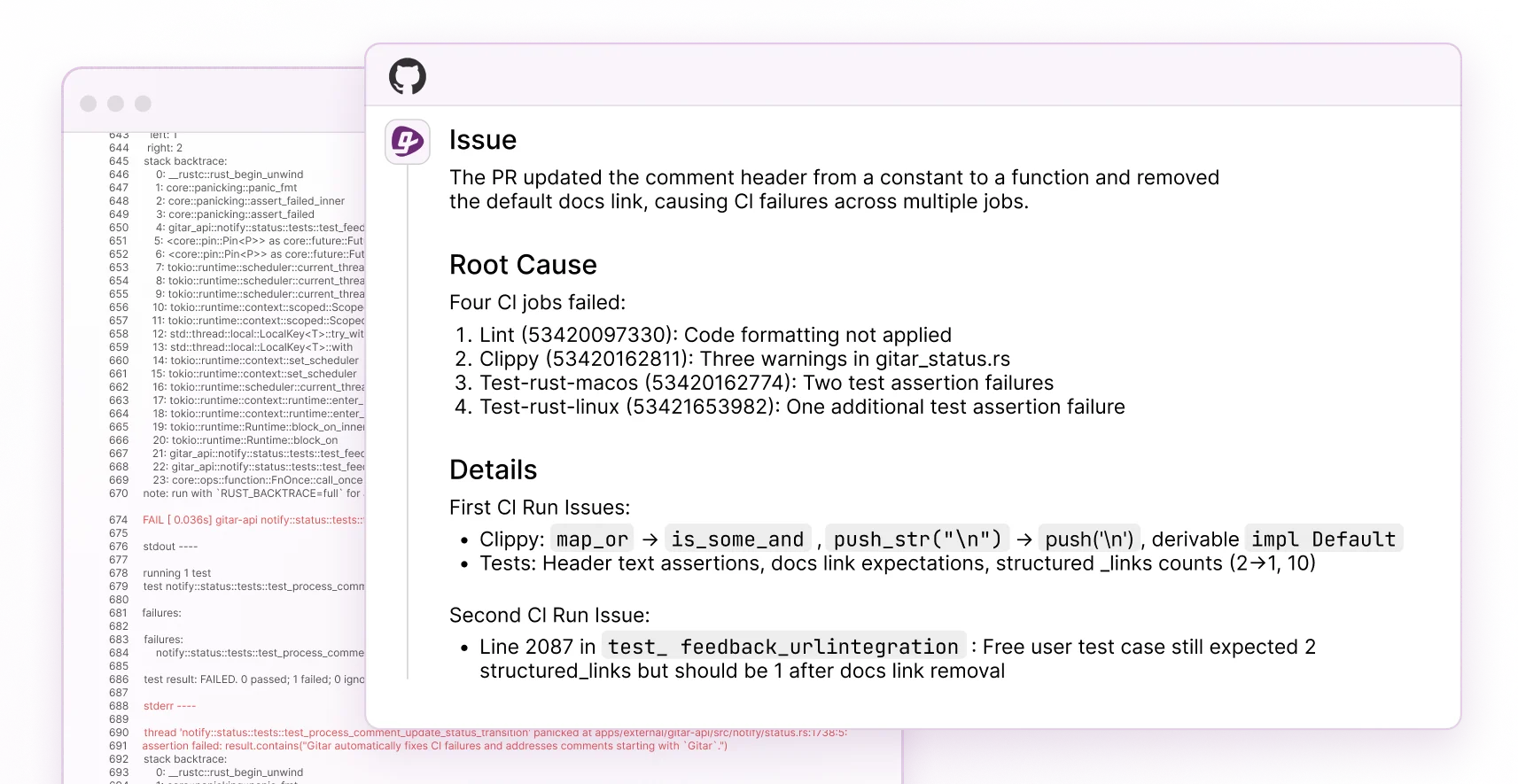
Gitar focuses on production-grade auto-fixes and moves beyond suggestions to resolve CI failures and apply review feedback automatically.
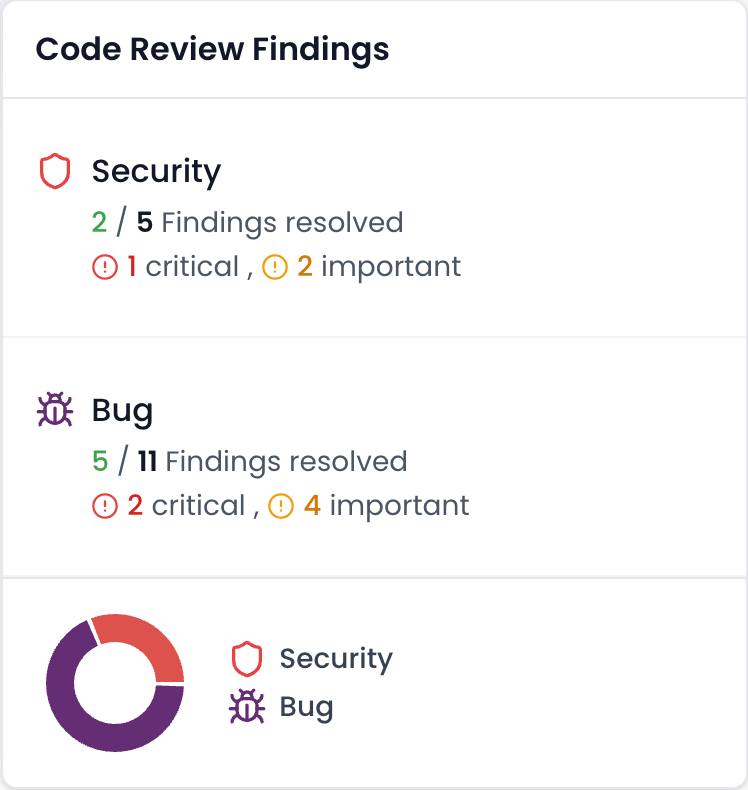
Key features: Full PR analysis, security scanning, bug detection, performance review, and auto-fix.
Setup: Install the GitHub App and start the 14-day Team Plan trial at docs.gitar.ai. See the Gitar documentation for installation details.
|
Pros |
Cons |
|
Auto-fixes CI failures automatically |
Trial period limited to 14 days |
|
Single dashboard comment, no noisy threads |
Requires GitHub or GitLab integration |
|
Supports TypeScript and several other languages |
Advanced features require a paid plan |
|
Validates fixes against CI pipelines |
Custom rule configuration has a learning curve |
Ideal for: Teams buried in PR backlogs that need guaranteed green builds instead of suggestion-only reviews.
2. CodeRabbit Free Tier: Multi-Platform Suggestions
CodeRabbit offers automated PR summaries and inline comments with basic TypeScript analysis, but it stops at suggestions and does not apply auto-fixes.
Key TypeScript features: Surface-level diff analysis, basic type checks, and integration with more than 40 linters.
Setup: Connect a GitHub or GitLab repository and install the VS Code extension for a smoother workflow.
|
Pros |
Cons |
|
Supports GitHub, GitLab, and Bitbucket |
Free tier limited to basic summaries |
|
Integrates over 40 SAST scanners |
Medium false positive rate |
|
Line-by-line PR comments |
No auto-fix support |
TypeScript benchmark: Processes more than 13M PRs with surface diff-based analysis. It catches basic type errors but struggles with complex generics.
Ideal for: Teams that need multi-platform coverage and basic TypeScript review without auto-fix.
3. villesau/ai-codereviewer: Open-Source GitHub Action
villesau/ai-codereviewer is an open-source GitHub Action that uses OpenAI GPT-4 for AI-powered code reviews and avoids extra infrastructure for TypeScript projects.
Key TypeScript features: Contextual TypeScript analysis, customizable review prompts, and support for complex codebases.
Setup: Add a YAML workflow under .github/workflows and configure the OpenAI API key in repository secrets.
|
Pros |
Cons |
|
Completely free and open-source |
Requires an OpenAI API key, which adds usage cost |
|
Fast GitHub Actions setup |
No built-in CI failure handling |
|
Highly customizable review prompts |
Manual configuration effort |
TypeScript benchmark: Uses OpenAI GPT-4 for contextual TypeScript code reviews. Accuracy depends heavily on prompt quality.
Ideal for: Open-source projects and teams that accept DIY setup and API costs.
4. Snyk Code: Security-First TypeScript Scanning
Snyk Code focuses on security-driven static analysis with strong TypeScript coverage and prioritizes vulnerability detection over general code quality.
Key TypeScript features: Security hotspot detection, dependency vulnerability scanning, and TypeScript-specific security patterns.
Setup: Connect the repository through the Snyk dashboard and configure security policies.
|
Feature |
Gitar |
CodeRabbit |
Snyk Code |
|
Auto-fix |
✓ Validated fixes |
✗ Suggestions only |
✗ Detection only |
|
CI integration |
✓ Full healing |
✗ Comments only |
✓ Scanning |
|
Free tier limits |
14-day full trial |
Basic summaries |
Limited scans |
5. Syntha: Paste-Based TypeScript Checks
Syntha uses a paste-tool approach for TypeScript code reviews and gives quick analysis without any repository integration.
Key TypeScript features: Snippet-focused analysis, type safety checks, and fast feedback loops.
Setup: Copy and paste code into the web interface. No installation is required.
|
Pros |
Cons |
|
No setup or integration overhead |
No repository-wide context |
|
Quick snippet-level analysis |
Manual copy-paste workflow |
|
Privacy-friendly for small samples |
Limited to small code blocks |
Ideal for: Fast TypeScript snippet validation without connecting a full repository.
6. Claude and ChatGPT: Manual LLM Review Workflows
Claude and ChatGPT can support TypeScript code review through manual copy-paste workflows and custom prompts.
Key TypeScript features: Flexible analysis guided by prompts and support for complex TypeScript patterns when instructions stay precise.
Setup: Create review prompts and manually copy code sections into the chat for analysis.
|
Pros |
Cons |
|
Highly customizable prompts and review style |
Completely manual process |
|
No single vendor lock-in for tooling |
No automation or CI integration |
|
Flexible depth of analysis |
Time-intensive workflow for large PRs |
Ideal for: Developers who accept manual workflows and want flexible, customized TypeScript analysis.
7. VS Code Hybrids: ESLint Plus AI in the IDE
VS Code extension stacks combine traditional linting with AI helpers and provide real-time TypeScript feedback inside the editor.
Key TypeScript features: Real-time type checks, AI-enhanced error explanations, and a tightly integrated development workflow.
Setup: Install VS Code extensions, then configure TypeScript compiler options and ESLint rules.
|
Pros |
Cons |
|
Immediate IDE feedback while coding |
Limited to individual developer workflows |
|
Works with existing linting and tooling |
No team-wide PR review automation |
|
Low barrier to entry |
Requires manual configuration |
Ideal for: Individual developers who want richer IDE support and AI-powered TypeScript insights.
Where Free Tiers Struggle and When Gitar’s Trial Helps
Free AI code review tools share several pain points. Common issues include privacy concerns with cloud analysis, self-hosting complexity, slow VS Code integrations, and strict usage caps. Reddit threads often describe frustration with suggestion-only tools that still require manual edits.
CodeRabbit charges 24 to 30 dollars per seat and Greptile charges 30 dollars per seat for suggestion engines. Gitar’s 14-day Team Plan trial instead unlocks full auto-fix capability with no seat limits during the trial.
For TypeScript teams working in monorepos with complex type systems, the gap between suggestions and validated fixes becomes critical for maintaining development speed.
TypeScript-specific needs such as monorepo handling, generic constraint validation, and interface compatibility checks demand deep codebase understanding that most free tiers do not provide.
Free AI Code Review for TypeScript FAQs
Best Free AI Code Review Tool for TypeScript GitHub PRs
Gitar delivers the most complete option through its 14-day Team Plan trial and focuses on auto-fixes instead of comments alone. CodeRabbit’s free tier offers basic summaries, and open-source tools require manual setup. Gitar automatically resolves CI failures and applies review feedback for you.
How Gitar’s Trial Compares to CodeRabbit’s Paid Plans
Gitar’s trial includes full auto-fix capability, CI healing, and validated fixes that keep builds green. CodeRabbit’s 24 to 30 dollar monthly plans provide suggestions and comments but still need manual work. Gitar’s healing engine validates each fix against CI, while CodeRabbit leaves teams uncertain that suggested changes will pass.
Reliable Open-Source AI Code Review for TypeScript
villesau/ai-codereviewer offers a strong open-source GitHub Action built on OpenAI GPT-4, but it requires API key setup and usage spend. SonarQube Community Edition supports static analysis but lacks AI-level contextual reasoning. For teams that want zero infrastructure management, Gitar’s trial removes most setup friction.
Tools That Work Best With VS Code for TypeScript
GitHub Copilot, Cody from Sourcegraph, and Tabnine ship VS Code extensions with solid TypeScript support. These tools focus on code generation instead of full review. Gitar fits into VS Code workflows through GitHub or GitLab integration and adds review automation that complements coding assistants.
Handling TypeScript Monorepos With Free AI Tools
Most free tiers struggle with monorepo complexity and cross-package dependencies. Gitar’s trial includes monorepo dependency analysis and hierarchical memory that keeps context across packages. CodeRabbit’s free tier offers surface-level analysis only, and open-source tools usually need heavy configuration for monorepo support.
Pick Gitar When You Need Real TypeScript Fixes
Suggestion engines often charge premium prices for comments that still demand manual edits. Gitar’s 14-day Team Plan trial shows the impact of autonomous review with validated auto-fixes.
Run it on your TypeScript repository and see the difference between suggestion streams and production-ready solutions.