
Written by: Ali-Reza Adl-Tabatabai, Founder and CEO, Gitar
Key Takeaways for Startup Engineering Leaders
- AI coding tools have increased PR sizes by 33% and review times by 91%, which slows teams with 10-50 developers.
- Gitar leads as the top AI code review tool with validated auto-fix capabilities for CI failures across GitHub Actions, GitLab CI, and CircleCI.
- Competitors like CodeRabbit and Greptile provide suggestions but require manual implementation, so they do not deliver true automation.
- Auto-fix tools like Gitar deliver $750K+ annual ROI for 20-developer teams by removing manual toil and keeping builds green.
- Startup teams can start a 14-day free trial to automate fixes and boost shipping velocity immediately.
Evaluation Methodology for Startup-Focused Code Review
We tested these tools on real Python, JavaScript, and Go codebases, using criteria that match startup needs for speed and budget. Our evaluation covered auto-fix rates, CI failure resolution, setup complexity, and total cost of ownership for teams scaling from 10 to 50 developers. See the Gitar documentation for detailed integration and setup examples.
Key criteria included automated fix application, because suggestion-only tools still force developers to apply changes manually and slow delivery. We also evaluated deep CI context across GitHub Actions, GitLab CI, and CircleCI, which matters for teams running diverse pipelines. Setup complexity played a major role, since tools that take more than 5 minutes to deploy create adoption friction for busy teams. Finally, we assessed noise reduction versus notification spam and checked for native Jira and Slack integrations. Against these criteria, Gitar’s healing engine architecture stood out for teams that want reliably green builds instead of manual suggestion implementation.
Top 7 AI Code Review Tools Ranked for Startups
We ranked these tools by how well they deliver automated fixes instead of only suggestions, because automation drives startup velocity. Tools that heal CI failures and reduce manual work rank higher than tools that only comment on code. Here is why Gitar takes the top position.
1. Gitar: Healing Engine for Consistently Green Builds
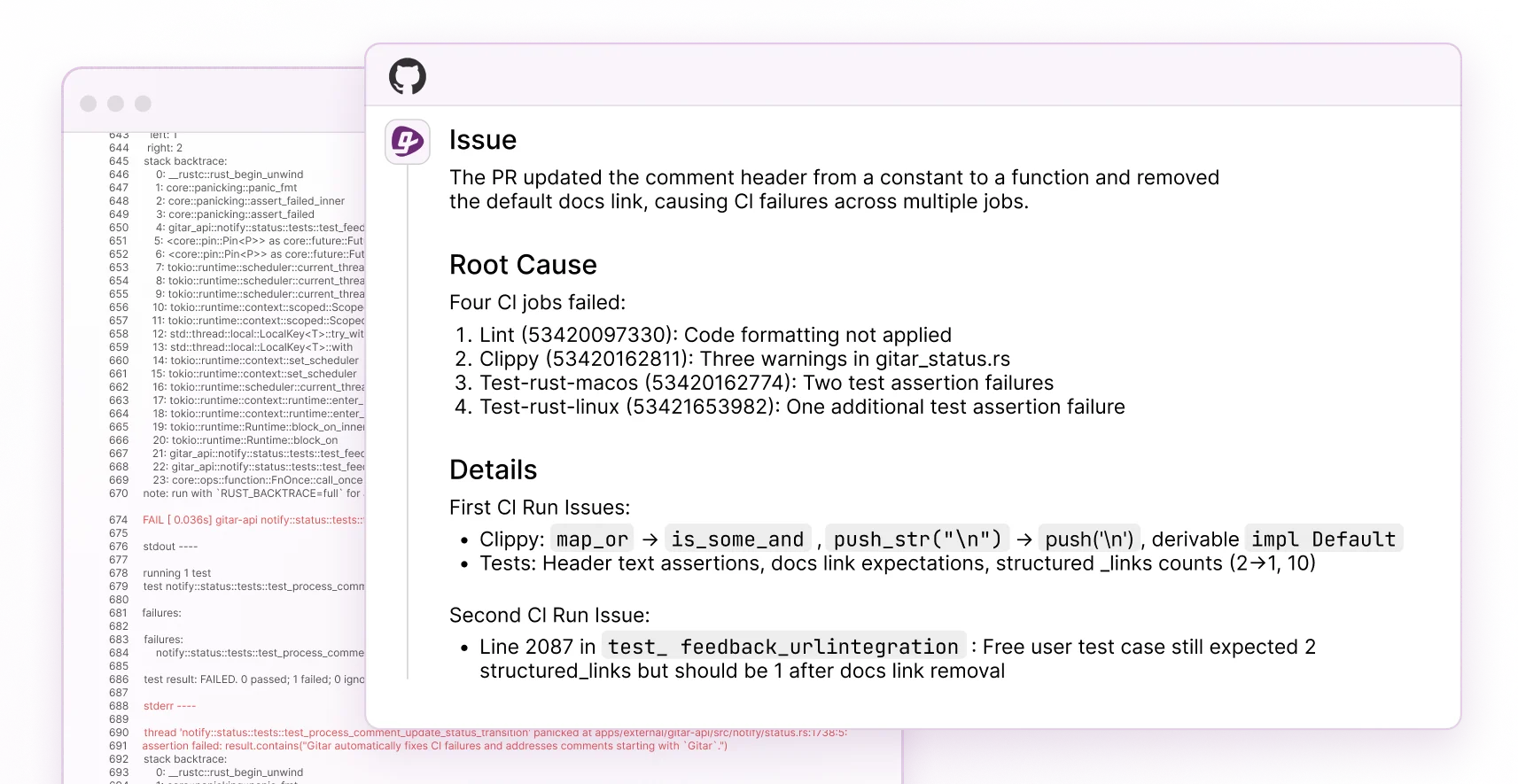
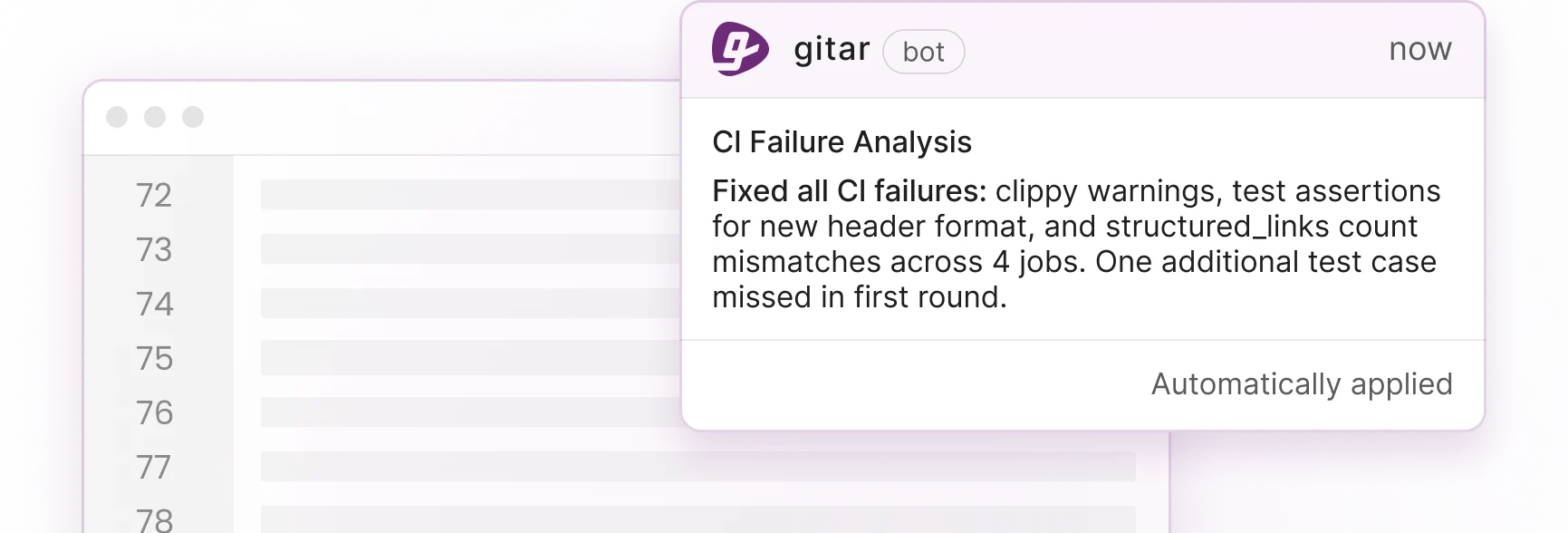
Gitar automatically fixes CI failures and implements review feedback instead of leaving a long list of suggestions. When lint errors, test failures, or build breaks occur, Gitar analyzes failure logs, generates validated fixes, and commits them directly to your PR, while keeping a single, clean dashboard comment instead of notification spam. For full details, review the Gitar documentation.
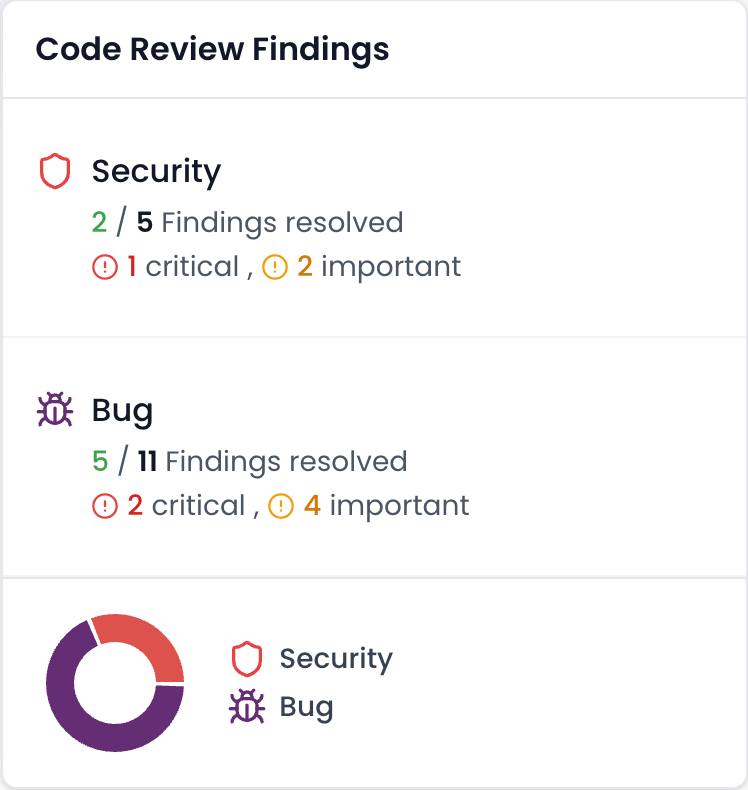
Key features include automatic CI failure resolution across GitHub Actions, GitLab CI, CircleCI, and Buildkite. It also provides single-comment PR summaries that update in place, natural language workflow rules without YAML complexity, and deep analytics for CI failure patterns. Teams report strong velocity gains after removing manual fix cycles from their daily work.
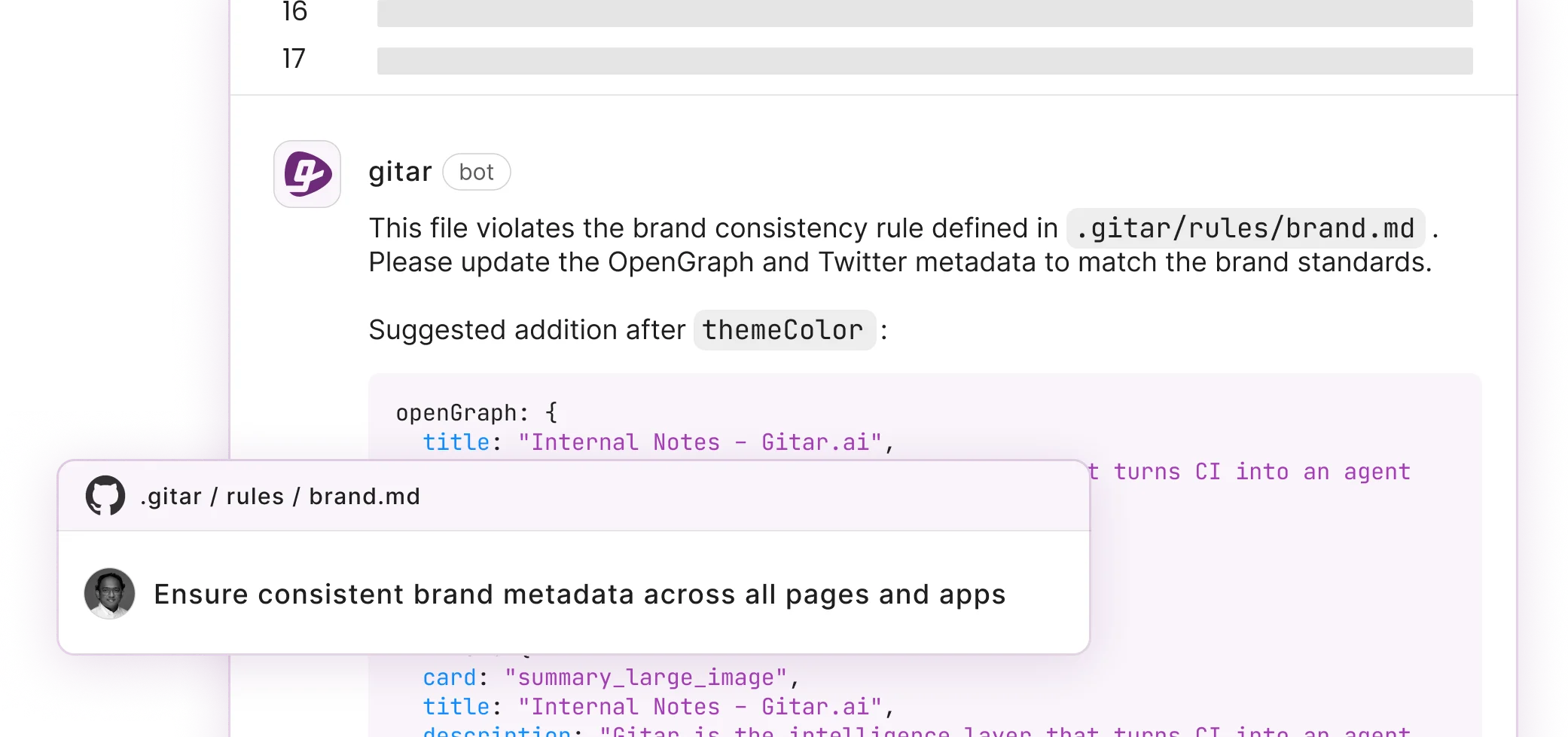
Pricing includes a 14-day free Team Plan trial with no seat limits during the trial, while competitors often charge $450 to $900 per month for suggestion-only tools. The healing engine validates every fix against your actual CI environment before committing, which gives you green builds instead of guesswork.
Start your 14-day free trial of Gitar to see auto-fix in action on your own CI failures.
2. CodeRabbit: Structured Feedback with Manual Implementation
CodeRabbit provides comprehensive PR analysis with structured feedback on security, logic flaws, and performance risks. Priced at $24 per user per month, it offers severity levels and committable fix suggestions directly in GitHub workflows.
Strengths include detailed security scanning and multi-platform support for GitHub, GitLab, Bitbucket, and Azure DevOps. However, independent benchmarks rate it 1/5 for catching systemic issues, and it lacks CI auto-fix capabilities. Teams still implement all suggestions manually.
Best for: Teams that want comprehensive analysis and accept manual fix work.
3. Greptile: Deep Context with Higher False Positives
Greptile delivers highly context-aware codebase analysis and understands relationships across your entire repository. At $30 per developer monthly, it provides structured inline feedback with deep architectural insight.
The platform excels at full codebase context but shows the highest false positive rate in independent evaluations. Like other suggestion engines, it lacks auto-fix and CI healing capabilities, so developers must implement every recommendation.
Best for: Large codebases where architectural context outweighs the need for automated fixes.
4. BugBot: Multi-Pass Analysis with Resolution Tracking
BugBot performs eight-pass diff analysis with medium depth and low-to-medium false positive rates. Processing over 2 million PRs monthly, it sees 70% of flagged issues resolved before merge, which signals good accuracy for actionable findings.
The platform provides solid detection capabilities at scale but does not offer auto-fix functionality that removes manual work. Teams still implement suggested changes themselves, which limits velocity gains for fast-moving startups.
Best for: Teams that prioritize detection accuracy over automation.
5. Qodo Merge: Configurable Rules with Limited Automation
Qodo Merge offers $0 for 30 PRs or $30 monthly for unlimited PRs, with configurable AI reviews based on rule-driven engineering standards. It supports multiple git providers and interactive PR commands like /review, /describe, and /improve.
The pricing model works well for budget-conscious startups, but the tool focuses on suggestions instead of automated fixes. The rule-based system improves consistency, yet it does not remove the manual implementation bottleneck that slows delivery.
Best for: Budget-focused teams that want customizable review standards without auto-fix.
6. Graphite: Stacked PR Workflow Optimization
Graphite at $25 monthly targets teams using stacked PR workflows. Shopify reported 33% more PRs merged per developer after adoption, and teams reduced median PR merge time from 24 hours to 90 minutes.
The platform excels at workflow optimization and has proven velocity improvements, but the stacked PR model requires process changes that may not fit every startup. It offers some one-click fixes but still lacks comprehensive CI auto-healing.
Best for: Teams already using or ready to adopt stacked PR workflows for faster iteration.
Ready to eliminate manual fix cycles? Try Gitar’s healing engine free for 14 days and measure the impact on your team’s velocity.
7. DIY and Open-Source: Maximum Control with Heavy Overhead
Open-source options like PR-Agent and SonarQube Community Edition reduce license costs but demand significant setup and maintenance. Self-hosted tools often require 8GB VRAM GPUs and 6 to 13 week deployment timelines, which rarely suit fast-moving startups.
These solutions usually lack architectural awareness for cross-service changes and show high false positive rates. Projects like villesau/ai-codereviewer have not been updated since December 2023, which creates long-term maintenance burdens for lean engineering teams.
Best for: Teams with dedicated DevOps resources and strict compliance rules that block SaaS adoption.
Now that we have reviewed each tool individually, you can compare their core capabilities side by side to see the most important differences.
Side-by-Side Comparison of Auto-Fix Capabilities
The table below highlights the key distinction: only Gitar offers validated auto-fix and CI healing, while other tools stay suggestion-only and require manual work.
|
Tool |
Auto-Fix |
CI Integration |
Pricing |
|
Gitar |
Yes (Validated) |
Full (Actions/GitLab/CircleCI) |
14-day free trial |
|
CodeRabbit |
Suggestions only |
Limited |
$30/month |
|
Greptile |
No |
No |
$30/month |
|
BugBot |
No |
Limited |
Custom pricing |
The Auto-Fix Advantage and Startup ROI
Auto-fix delivers real ROI because it replaces manual suggestion handling with validated, committed fixes. Gitar’s healing process analyzes failures, validates fixes against your CI environment, and commits working solutions, which removes the daily cycle of reading suggestions, applying changes, and hoping they pass.
For a 20-developer team, this shift moves annual cost from roughly $1M in manual toil to about $250K with automated fixes, creating a $750K productivity gain. This ROI comes from time savings and from reduced cognitive overhead, since teams report that reviewing AI-generated code often creates more “text noise” than value. That is why this consolidated approach proves essential for keeping attention on real problems instead of generic observations.
Key Buying Considerations for Startup Teams
Startup teams should weigh total cost of ownership, not just monthly license fees. Suggestion-only tools demand ongoing manual implementation, while auto-fix platforms like Gitar remove that overhead and free developers to focus on product work. Cross-platform compatibility also matters for teams that use GitLab or CircleCI alongside GitHub, and trial periods help you prove ROI before you commit budget.
The 45-minute daily savings per developer from automated fixes compounds quickly, which equals 225 hours monthly for a 10-person team and roughly matches adding another full-time engineer through efficiency alone.
Frequently Asked Questions
What is the best free AI code review option for startups?
Gitar provides a full-featured 14-day Team Plan trial that includes auto-fix capabilities, CI integration, and unlimited team members. Unlike competitors that restrict free tiers, Gitar exposes the complete platform so you can measure real ROI before paying.
Which AI code review tools support GitLab and CircleCI?
Gitar offers native integration with GitLab CI and CircleCI along with GitHub Actions, and it delivers the same auto-fix and healing capabilities across all of them. Most competitors focus mainly on GitHub, which limits options for teams using other CI and CD platforms.
Do any AI code review tools actually auto-fix CI failures?
Gitar currently stands alone as the platform that automatically fixes CI failures instead of only suggesting changes. When builds break, tests fail, or lint errors appear, Gitar analyzes the failure, generates a validated fix, and commits it directly to your PR. Other tools stop at suggestions that still require manual work.
What ROI can a 30-developer startup expect from AI code review automation?
A 30-developer team that spends time each day on CI and review issues loses a large amount of productive capacity. Auto-fix tools like Gitar can cut this time significantly, saving substantial budget each year while improving sprint velocity and reducing frustration with broken builds.
How long does setup take for AI code review tools?
Gitar installs in under 5 minutes through a GitHub App or GitLab integration and immediately starts providing PR analysis and auto-fix capabilities. Most competitors offer similar installation times, but only Gitar delivers instant value through automated fixes instead of requiring new workflows to apply suggestions.
Conclusion: Auto-Healing Beats Suggestion-Only Reviews
Startup engineering teams facing growing PR volumes and frequent CI failures benefit most from tools that fix problems, not just point them out. Gitar’s healing engine provides that capability, while many competitors charge $15 to $30 per developer for suggestion engines that still depend on manual effort.
The productivity gains from removing manual fix cycles justify the investment quickly for teams that want higher velocity and less review noise. For startups that treat engineering time as their scarcest resource, healing engines represent the next stage of AI code review.
Install Gitar today and start shipping higher quality software faster with automated CI fixes.