

Key Takeaways
- AI code generation speeds up development 3-5x but increases PR review time by 91% because of bugs and vulnerabilities in merge requests.
- Most free AI code review tools restrict private GitLab repos or only offer suggestions without auto-fixes, which creates manual bottlenecks.
- Gitar leads with free unlimited private repo support, comprehensive PR analysis, security scanning, and a healing engine for CI failure auto-fixes.
- Hands-on tests show Gitar resolves lint errors in 45 seconds with validated commits, outperforming suggestion-only tools like CodeRabbit.
- Install Gitar in 30 seconds for free GitLab code review that automatically fixes CI failures and accelerates delivery.
How We Tested GitLab AI Code Review Tools
Our evaluation focused on four critical criteria for GitLab teams: seamless merge request integration with inline comments, unlimited private repository support, automatic CI failure fixes, and setup simplicity. We ran hands-on tests using sample Python and JavaScript private repositories and measured lint error resolution speed and CI auto-fix accuracy. Each tool was assessed for GitLab-specific features including merge request summaries, security scanning, and compatibility with both GitLab Cloud and self-hosted instances. Our accuracy benchmarks reflect 42-48% bug detection improvements from DORA 2025 Report findings.
Quick Comparison of Free GitLab AI Code Review Options
| Tool | Free Private Repos | Auto-Fix CI | Setup Time |
|---|---|---|---|
| Gitar | Unlimited | 14-day trial | 30 seconds |
| CodeRabbit | OSS only | No | 5 minutes |
| GitLab Duo | Native limited | Guided fixes | Native |
| CodeAnt AI | 14-day trial | No | 5 minutes |
Start with Gitar’s unlimited free repo support and see why it outperforms paid alternatives.
The 7 Best Free GitLab AI Code Review Tools
1. Gitar: Unlimited Private Repos and CI Auto-Fixes
Gitar delivers free AI code review for unlimited private GitLab repositories. Competing tools often charge $15-30 per developer for suggestion-only feedback, while Gitar includes comprehensive PR analysis, security scanning, and bug detection at no cost. The platform’s healing engine goes beyond traditional review by analyzing CI failure logs, generating validated fixes, and committing them directly to merge requests.
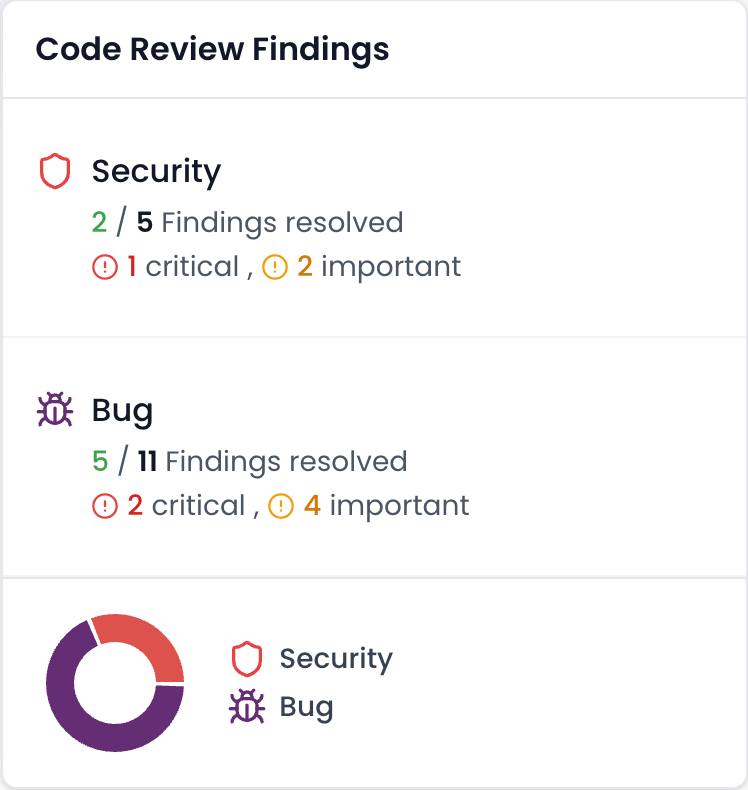
In our private JavaScript repository test, Gitar fixed a lint error in 45 seconds and updated a single dashboard comment with the resolution. The tool integrates cleanly with GitLab merge requests and consolidates findings into one updating comment instead of flooding notifications. Setup takes under 30 seconds and only requires installing the GitLab app, with no extra configuration.
Gitar’s 14-day free trial for auto-fix features includes CI failure analysis, automatic commit generation, and green build guarantees. The healing engine validates fixes against your CI environment before applying them, which helps ensure production safety. Teams overwhelmed by AI-generated code issues can turn a review bottleneck into an automated workflow that preserves code quality while speeding delivery.
2. CodeRabbit: Strong Analysis for Open Source Only
CodeRabbit is widely used on GitLab with automatic line-by-line comments and severity rankings, but its free tier covers only open-source projects. Private repositories require paid plans starting at $12-24 per month per developer. The tool integrates 40+ linters and SAST scanners and delivers contextual reviews with under 3% unhelpful comment rates.
CodeRabbit detects security vulnerabilities and architectural issues through multi-layered analysis and reaches 46% accuracy in detecting real-world runtime bugs. The tool still operates as a suggestion engine and does not apply fixes automatically, so developers must implement and validate changes manually.
Key drawbacks include the open-source-only free tier, lack of automatic CI failure resolution, and notification overload from many inline comments per merge request. Private GitLab teams need paid plans, which raises costs for larger groups.
3. GitLab Duo: Native AI Review with Basic Automation
GitLab Duo provides native free AI code review for GitLab merge requests, including inline suggestions and PR summaries, and keeps data within GitLab. The tool lives directly in the GitLab interface and avoids third-party installations, so every GitLab user can access it.
Our testing showed that GitLab Duo works well for basic merge request summaries and simple inline suggestions. It offers guided fixes for CI pipeline failures and vulnerabilities through the Duo Agent Platform. It still lacks Gitar’s full healing engine for automatic CI failure resolution and green build guarantees.
GitLab Duo offers less automation than specialized auto-fix tools and supports limited customization. It suits teams that want a starting point but not those handling complex AI-generated code issues.
4. CodeAnt AI: Security-Heavy Scanning with Trial Limits
CodeAnt AI offers a free tier with direct GitLab integration, support for 49 languages, and AI-suggested fixes. The platform focuses on security scanning and detects SQL injection, secrets exposure, and compliance violations. Teams report CodeAnt AI cuts review time by about 50% on large codebases.
CodeAnt AI includes SAST scanning, secret detection, and configurable compliance gates inside GitLab merge requests. It supports GitLab Cloud and self-hosted instances and carries SOC 2 and ISO 27001 certifications.
The main limits are a 14-day free trial, paid pricing from $10-20 per user monthly, and no automatic CI failure fixes. Advanced capabilities sit behind paid tiers, which restricts long-term free use.
5. Qodo Merge (CodiumAI): Open Source with Narrow Auto-Fix
Qodo Merge is open-source and free, integrating with GitLab through marketplace installation, webhooks, or CI/CD. The tool generates structured reviews and PR descriptions and allows configuration with labels and custom rules. As an open-source option, it offers transparency and room for customization.
Qodo Merge shines at detailed merge request descriptions and structured feedback and supports slash commands such as /implement for automated code changes. Hosted integration remains straightforward and flexible.
Its auto-fix scope remains limited compared with full CI healing engines and it lacks deep CI failure analysis. Some self-hosted setups require extra effort. It supports agentic actions but does not match Gitar’s automatic handling of complex build failures.
6. Git AutoReview: Human-Validated Reviews with Daily Caps
Git AutoReview offers a free tier with 10 AI reviews per day and supports GitLab with human-approved inline comments. The tool focuses on accuracy and uses human validation to reduce AI hallucinations, creating a hybrid review model.
Git AutoReview works across GitLab, GitHub, and Bitbucket and connects through a VS Code extension. The human approval step helps cut false positives that appear in fully automated tools.
Daily quotas limit scalability, there is no automatic CI failure resolution, and human validation slows the process. Active teams quickly hit the 10-review daily ceiling.
7. Refact.ai: Lightweight GitLab Integration for Simple Checks
Refact.ai offers basic AI code review with a quick 2-minute GitLab setup. The tool focuses on fast deployment and simple inline suggestions for common code quality problems.
Our testing showed that Refact.ai handles basic lint errors and simple quality checks with very little configuration. It suits teams that want lightweight AI help without complex features.
Free usage quotas, no CI failure analysis, and no auto-fix capabilities limit its reach. Refact.ai fits minimal review needs but not complex workflows. Experience Gitar’s comprehensive auto-fix capabilities that move beyond basic suggestions and actually resolve CI failures.
Why Gitar’s Auto-Fix Model Beats Suggestion-Only Tools
AI code review tools differ most in how they handle problem resolution. Traditional tools such as CodeRabbit and Greptile identify issues but leave implementation to developers, which creates a suggestion bottleneck and fails to solve the core productivity problem.
| Capability | Gitar | Others |
|---|---|---|
| Auto-apply fixes | 14-day trial | No |
| CI failure analysis | Yes | No |
| Validate fixes | Yes | No |
| Green build guarantee | Yes | No |
Gitar’s healing engine analyzes CI failure logs, identifies root causes, generates contextual fixes, and validates them against your build environment before committing. This workflow achieves high success rates for automatic CI failure resolution and saves teams significant time. When AI-generated code contains 75% more logic issues, automated validation becomes essential for code quality.
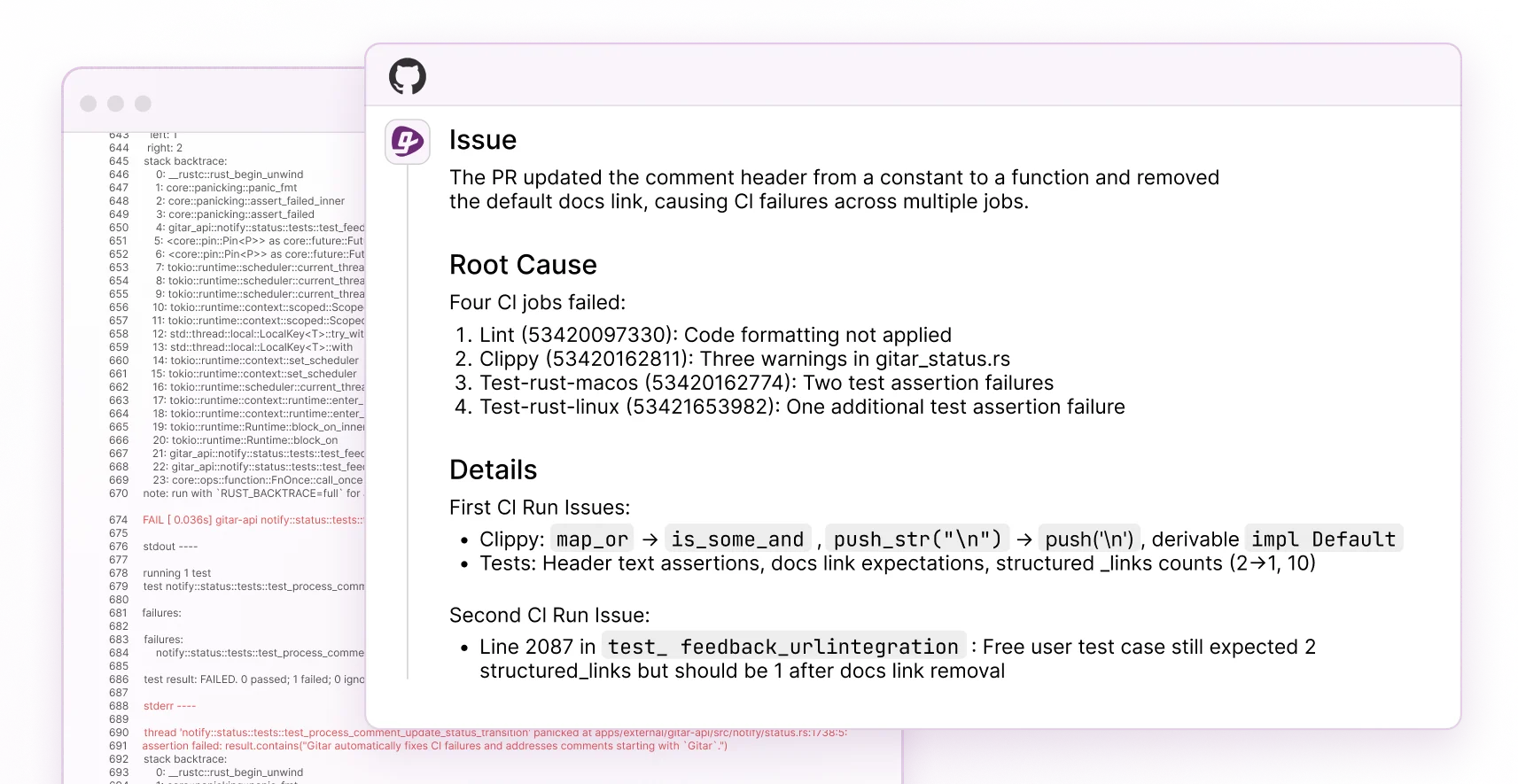
Start your 14-day auto-fix trial and experience the difference between suggestions and working solutions.
What Developers Say About GitLab AI Reviewers
Developer communities often highlight the gap between suggestion engines and practical solutions. Forum discussions emphasize the need for tools that avoid PR spam while providing private AI assistance, and users want control instead of merge requests filled with automated comments. Many developers now prefer tools like Gitar that consolidate feedback into a single updating comment and deliver real fixes instead of endless suggestions.
How GitLab Teams Should Choose an AI Reviewer
Small teams gain the most from Gitar’s unlimited free private repository support because it removes per-seat costs that grow quickly with other tools. Enterprise teams should look closely at CI complexity and choose platforms where the healing engine can emulate full build environments, including SDK versions and dependency configurations. The real decision sits between suggestion engines and auto-fix platforms and between paying for comments or adopting tools that actually resolve issues.
Frequently Asked Questions
Which tool offers the strongest free support for GitLab private repositories?
Gitar provides free AI code review for unlimited private GitLab repositories with no seat limits or usage caps on core review features. CodeRabbit restricts free access to open-source projects and CodeAnt AI limits free use to 14-day trials. Gitar keeps full code review functionality for private repositories permanently and includes security scanning, bug detection, and merge request analysis at no cost.
What are CodeRabbit’s free tier limitations for GitLab?
CodeRabbit’s free tier supports only open-source projects and requires paid plans starting at $12-24 per developer monthly for private repository access. The tool offers strong contextual analysis and integrates more than 40 linters, but private GitLab teams must pay for core features. This structure makes CodeRabbit costly for larger teams when compared with Gitar’s unlimited free private repository support.
How do I set up AI code review on GitLab merge requests?
Setup time depends on the tool. Gitar offers the fastest path and only needs a GitLab app installation that takes under 30 seconds and connects automatically to merge requests. CodeAnt AI and CodeRabbit usually require about 5 minutes for webhook and permissions configuration. GitLab Duo works natively with no external setup and Qodo Merge installs from the marketplace in about 2 minutes or through CI/CD.
Which free tools automatically fix CI failures in GitLab?
Gitar stands out with a healing engine that fixes CI failures automatically and offers a 14-day free trial that includes log analysis, validated commits, and green build guarantees. GitLab Duo supports guided fixes for pipeline failures and vulnerabilities through the Duo Agent Platform. Tools such as CodeRabbit and CodeAnt AI focus on suggestions and require manual implementation.
What are the best open-source alternatives to paid GitLab AI review tools?
Qodo Merge is the strongest open-source option and integrates with GitLab through marketplace installation, webhooks, or CI/CD. It offers structured reviews, customizable rules, and /implement commands for automated code changes. Git AutoReview provides human-validated suggestions but limits teams to 10 reviews per day. Teams that need full CI auto-fixes and unlimited private repository support often choose Gitar’s free tier, which surpasses open-source options while keeping strong control and transparency.
Conclusion: Pick Tools That Fix Problems, Not Just Flag Them
The 2026 AI code review landscape splits between expensive suggestion engines and full solution platforms. Tools like CodeRabbit charge $15-30 per developer for comments that still require manual work, while Gitar delivers unlimited free code review and real problem resolution through its healing engine. GitLab teams facing a 91% increase in PR review time from AI-generated code can avoid paying for suggestions and instead adopt a platform that fixes issues automatically.
Install Gitar now to automatically fix broken builds and start shipping higher quality software, faster. See the difference between AI tools that only identify problems and platforms that actually solve them.