
Written by: Ali-Reza Adl-Tabatabai, Founder and CEO, Gitar
Key Takeaways for 2026 AI Code Review Tools
- AI coding assistants speed up coding but slow PR reviews by 91%, creating $1M annual losses for 20-developer teams from manual fixes.
- Healing engines like Gitar auto-fix CI failures for guaranteed green builds, delivering stronger ROI and higher team efficiency than suggestion tools.
- Gitar combines 30-second installation, deep integrations (GitHub, GitLab, Jira, Slack), and up to $750K annual savings for teams of 20+ developers.
- Suggestion tools such as CodeRabbit and GitHub Copilot still require manual work, miss over 50% of bugs, and lack CI context or auto-fixing.
- Start a 14-day free trial with Gitar to experience autonomous code healing and cut PR review times by up to 75%.
AI coding assistants have transformed how developers write code, but they created a new bottleneck in reviews. Teams now face a 91% increase in PR review times and up to $1 million in annual productivity loss for a 20-developer team due to manual fixes and context switching. This guide walks through the 2026 landscape of AI code review tools and explains why autonomous healing platforms like Gitar now outperform suggestion-only tools.
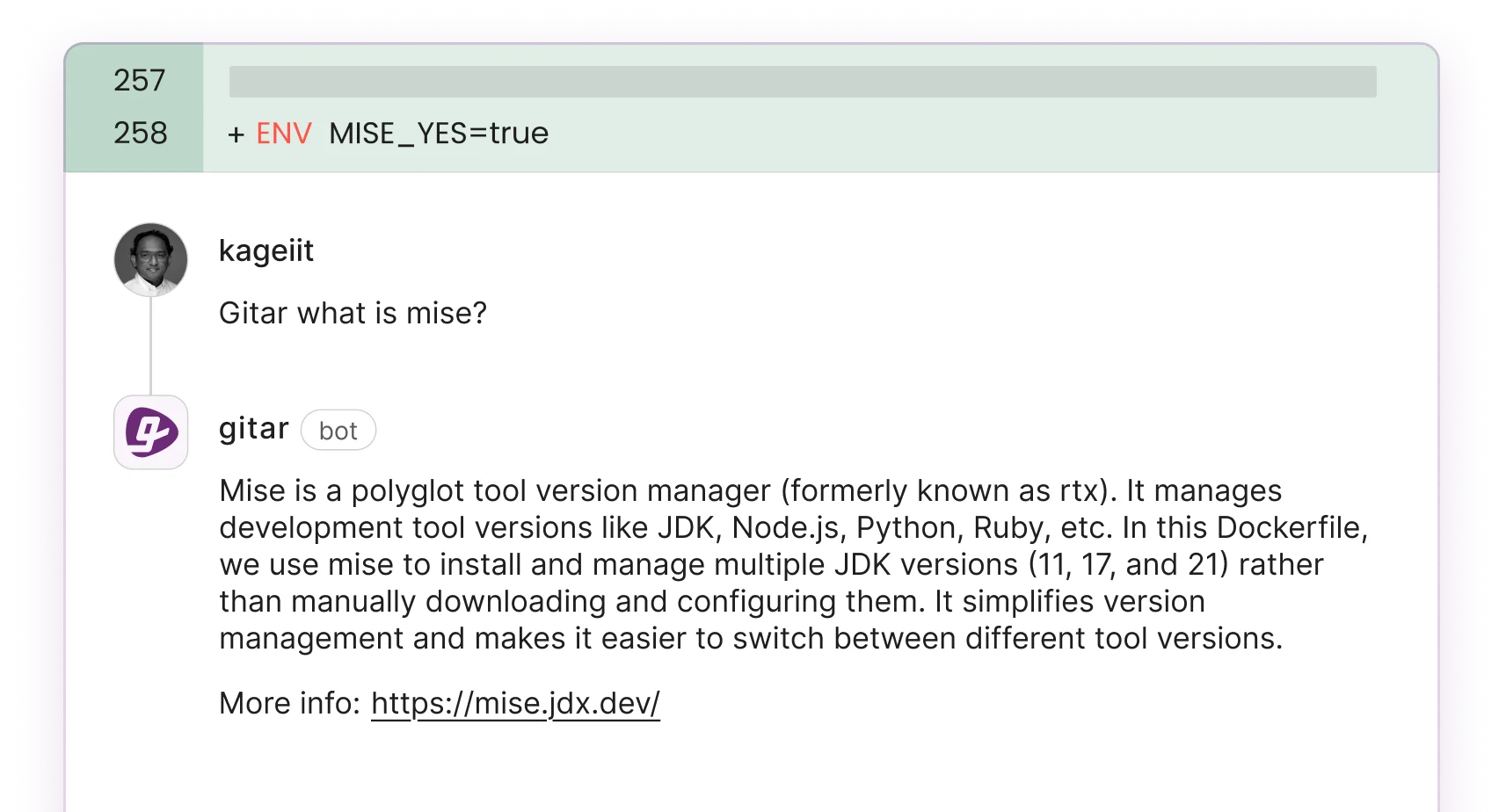
How We Evaluated AI Code Review Platforms
Our 2026 evaluation focuses on team-scale impact instead of individual developer convenience. We weight autonomous CI fixing and commit capabilities at 40%, PR consolidation and workflow efficiency at 25%, and integrations with GitHub, GitLab, CI/CD, Jira, and Slack at 20%. Pricing and ROI for teams of 20 or more developers account for 10%, with enterprise scalability and security controls covering the remaining 5%.
Sources include vendor documentation such as Gitar’s technical specifications, independent benchmark studies, and hands-on trials. These trials measure the 75% time savings that healing engines achieve compared to suggestion-only tools.
Using these criteria, we evaluated eight leading platforms across both healing and suggestion categories. The sections below summarize what teams can expect from each option.
2026 AI Code Review Landscape: Healing vs Suggestion Engines
The 2026 AI code review market splits into two clear categories. Healing engines automatically fix code and validate changes in CI. Suggestion engines leave comments and lightweight patches that still require manual work. Leading tools include Gitar for autonomous CI healing, CodeRabbit for GitHub-focused suggestions, Greptile for context-rich analysis, GitHub Copilot for basic review, Qodo for enterprise suggestions, Cursor Bugbot for editor-native workflows, Devin Review for agentic fixing, and open-source options like PR-Agent.
The trend favors teams that adopt auto-fixing platforms instead of relying on manual suggestion workflows. These teams see faster merges, fewer broken builds, and lower review fatigue.
Try Gitar’s Team Plan free for 14 days to see autonomous healing in your own CI pipeline.
Deep Dive: Leading AI Code Review Tools for Teams
#1 Gitar: Autonomous CI Healing for Guaranteed Green Builds
Gitar is the only platform in this comparison that consistently fixes your code instead of only suggesting changes. When CI fails because of lint errors, test failures, or build breaks, Gitar’s CI agent keeps full context from PR open to merge, finds root causes, applies fixes, and verifies results inside your CI environment. The platform posts a single dashboard comment that updates in real time, which removes notification spam and scattered feedback.
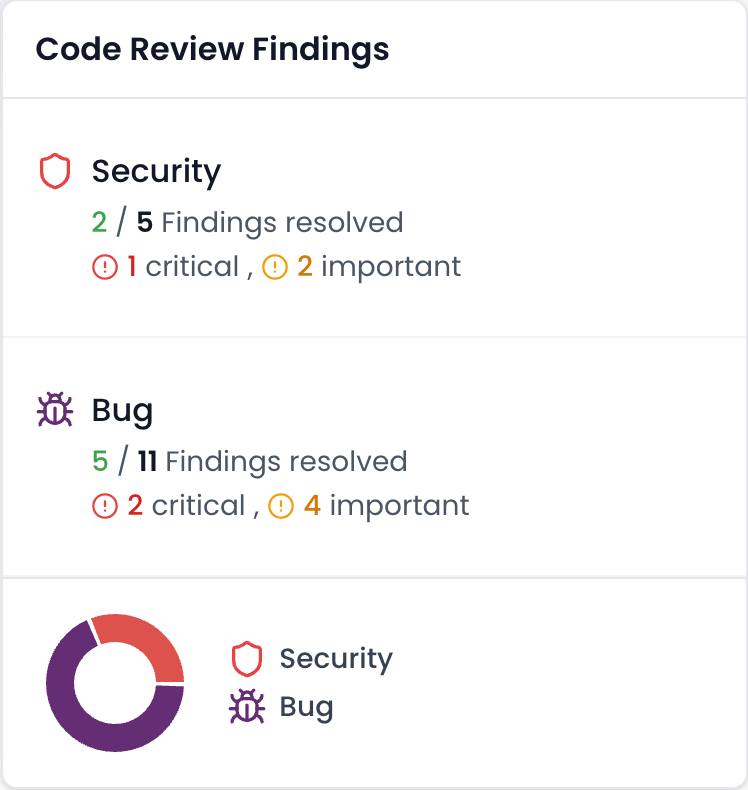
Key strengths include 30-second installation, natural language repository rules, and unlimited repositories during the 14-day trial. Teams report significant review time savings backed by production usage. Recent updates add GPG-signed commits, configurable PR merge blocking, and Jira integration with OAuth 2.0 support. Gitar fits best for teams of 20 or more developers that want guaranteed green builds and automated outer-loop workflows.
CodeRabbit: High-Volume Suggestions for GitHub-Centric Teams
CodeRabbit leads the suggestion engine category with deployment across more than 1 million repositories. Pricing ranges from $12 to $24 per developer per month, with 46% bug detection accuracy and integrations for GitHub and GitLab. The system learns team preferences over time and supports one-click commits for simple fixes.
Limitations remain significant for teams that care about CI stability. CodeRabbit misses 54% of bugs, offers no autonomous CI fixing, and cannot read Linear or Jira for business context. Developers still spend substantial time implementing suggested changes and chasing CI failures manually.
Greptile: Codebase Understanding Without Auto-Fixing
Greptile costs $20 per developer per month and builds knowledge graphs of codebase architecture, with teams reporting four times faster merges due to better impact understanding. The platform excels at mapping change dependencies across large and complex repositories.
Greptile focuses on analysis only. It does not auto-fix issues and does not integrate with project management tools such as Zendesk or Confluence. Teams still need a separate solution for CI healing and workflow automation.
See how Gitar combines deep context with automatic fixes to ship higher quality software faster.
GitHub Copilot: Lightweight PR Review for Existing Users
GitHub Copilot Code Review, launched in late 2025, offers automatic PR analysis in under 30 seconds for existing Copilot users at $19 per developer per month. Teams already using Copilot can enable review with almost no additional setup.
Reviews remain shallow because Copilot lacks context from tools like Jira or Slack. The product does not analyze CI failures or perform autonomous fixes, so teams still handle broken builds manually.
Other Notable Tools for Specific Use Cases
Qodo 2.0: Enterprise-focused tool at $30 per developer per month with 57% bug detection accuracy and multi-repository awareness. It supports complex environments but does not provide auto-fixing.
Cursor Bugbot: Editor-native solution at $40 per month plus Cursor’s $20 base subscription, offering autofix via background agents and about 40% review time savings. Teams must adopt the Cursor editor to benefit.
Devin Review: Beta product with a 70% resolution rate for auto-fixing flagged bugs. It moves beyond pattern matching by applying logical reasoning to complex issues.
PR-Agent: Open-source and self-hosted with full customization and strong data sovereignty. It suits regulated industries but requires ongoing infrastructure management and maintenance.
Side-by-Side Comparison for 20-Developer Teams
|
Tool |
Auto-Fix CI |
Team Pricing |
Key Integrations |
ROI (20-Dev Team) |
|
Gitar |
Yes, full CI healing |
14-day trial, then paid |
GitHub, GitLab, Jira, Slack |
$750K annual savings |
|
CodeRabbit |
No, suggestions only |
$12-24/dev/month |
GitHub, GitLab, IDEs |
Marginal, manual work |
|
Greptile |
No, analysis only |
$20/dev/month |
GitHub, GitLab |
4x faster merges |
|
GitHub Copilot |
No, basic review |
$19/dev/month |
GitHub native |
Shallow improvements |
Key Tradeoffs for Engineering and DevOps Leaders
Engineering leaders care most about ROI and development velocity, while DevOps teams focus on CI reliability and lower failure rates. Gitar’s zero-setup approach delivers the savings outlined earlier for 20-developer teams compared to tools that still depend on manual work despite premium pricing.
Common objections to autonomous fixing tools center on trust and complexity. Teams worry about trusting automated commits, so Gitar provides configurable approval workflows that allow a gradual rollout from suggestion mode to auto-commit. Integration complexity is another concern, yet most tools require significant setup while Gitar installs in about 30 seconds.
Security-conscious teams extend these concerns to data control and compliance. Gitar addresses this with enterprise deployment options that run agents inside existing CI infrastructure, which keeps sensitive data within your environment.
Ready to validate the ROI tradeoffs? Start a 14-day trial and measure the impact on your CI failures.
Real-World Feedback and 2026 Product Updates
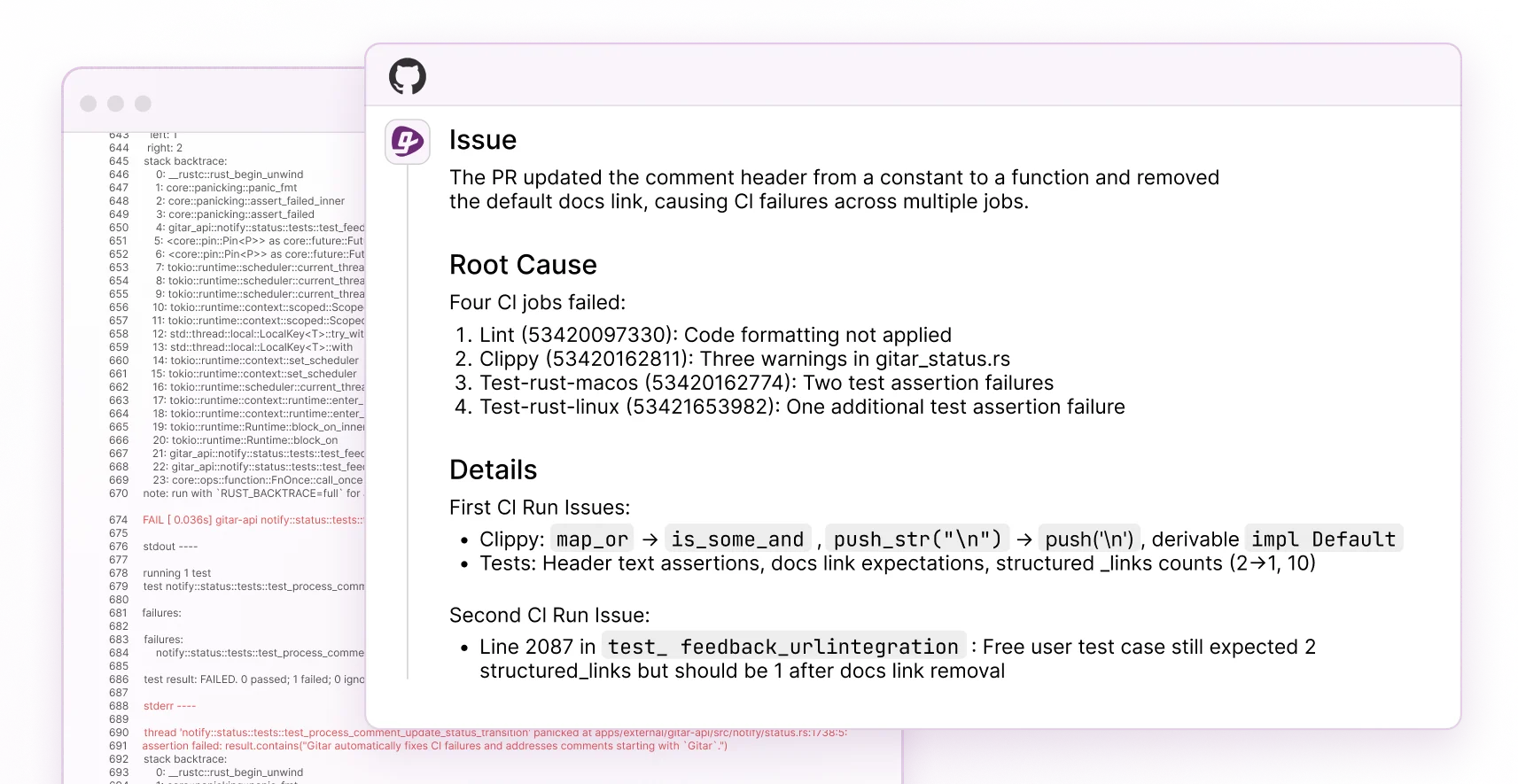
Developers frequently report notification fatigue from suggestion engines and frustration with recurring CI failures. Gitar tackles this with a single dashboard comment that consolidates all findings and updates in real time. This approach keeps PRs readable and reduces noise.
Teams also highlight Gitar’s ability to detect unrelated PR failures, which separates infrastructure flakiness from real code bugs. Traditional reviewers lack this CI context, so they often misdiagnose failures and waste time on false alarms.
Why Platforms Like Gitar Go Beyond Code Review
The market is shifting from point solutions toward complete development intelligence platforms. Gitar’s platform includes CI failure resolution, workflow automation, deep analytics, and integration layers. These capabilities transform the entire outer loop, not just the review step.
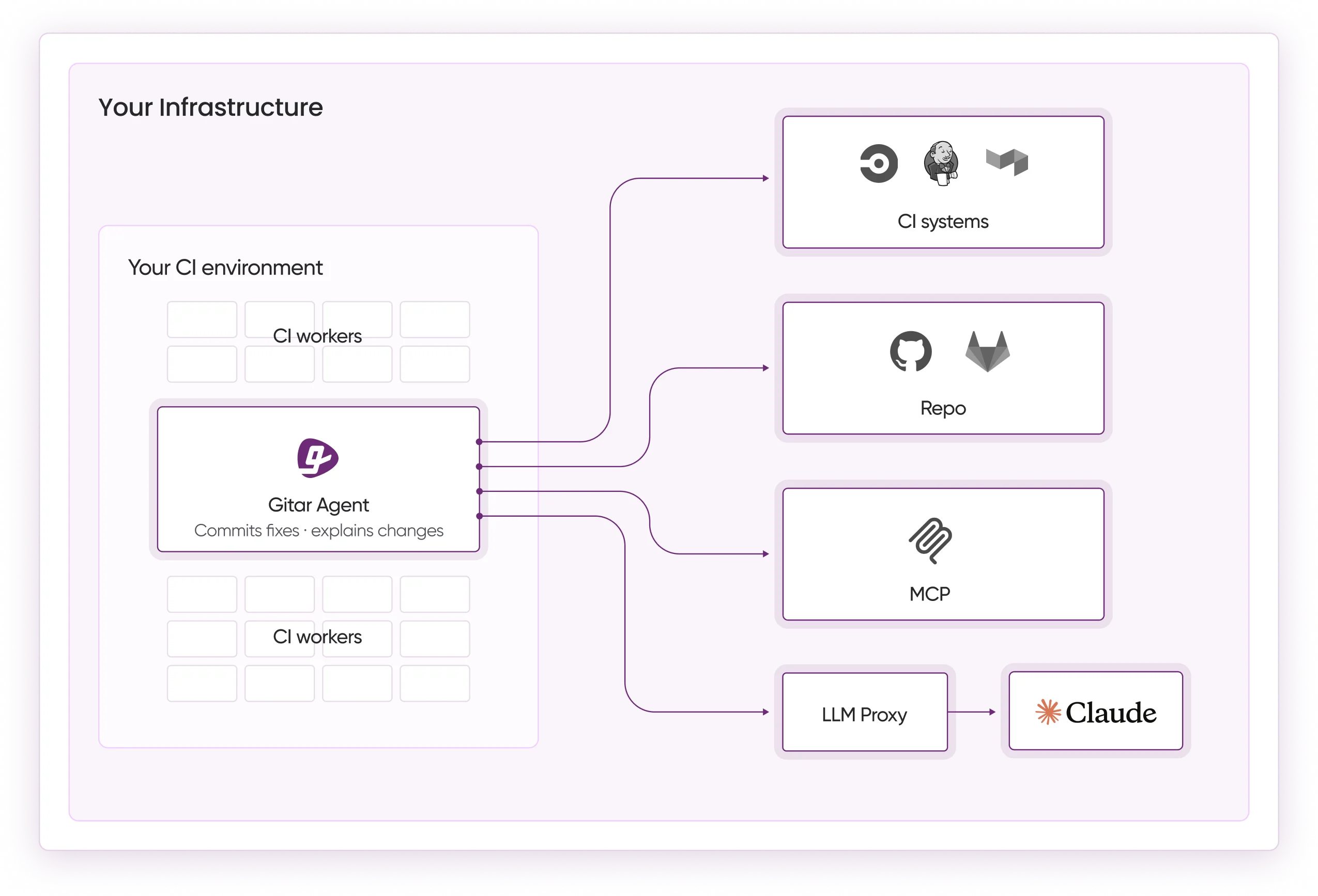
Teams that adopt this platform model gain consistent visibility from commit to deployment and reduce manual coordination across tools.
Conclusion: Choosing the Right Tool and Next Steps
Autonomous fixing now defines the leading edge of AI code review. Suggestion engines still charge premium prices while leaving manual work to developers. Gitar instead delivers guaranteed green builds through intelligent healing and tight CI integration.
Use the comparison table to narrow your shortlist, then validate results in your own environment. Gitar’s trial lets you experience the difference without long-term commitment.
Start your 14-day Gitar trial now and see how autonomous fixing changes your review workflow.
Frequently Asked Questions
What is the most cost-effective AI code review tool for teams?
Gitar provides a comprehensive 14-day trial of its Team Plan with no seat limits, including auto-fixing, CI healing, and workflow automation. Teams can measure ROI before moving to paid plans. Open-source tools such as PR-Agent exist, but infrastructure and maintenance overhead often exceed managed solution costs for teams of 20 or more developers.
How should teams measure ROI from AI code review tools?
Teams can calculate ROI by tracking time saved from fewer CI failures, faster PR merges, and reduced context switching. A 20-developer team that spends one hour daily on CI and review issues loses about $1 million in productivity each year. Tools like Gitar that automatically fix issues can achieve the savings mentioned above for similar teams. Suggestion-only tools deliver smaller gains because developers still perform most implementation work.
Do AI code review tools support GitLab and other platforms?
Most modern AI code review tools support more than one platform. Gitar integrates with GitHub, GitLab, CircleCI, and Buildkite while keeping functionality consistent across environments. CodeRabbit supports GitHub and GitLab, and GitHub Copilot remains limited to GitHub. Teams should align tool choices with their existing stack to avoid vendor lock-in.
Can teams safely trust automated code fixes from AI tools?
Trust grows through staged automation. Teams can start in suggestion mode and approve every fix, then enable auto-commit for specific failure types such as lint errors or simple test fixes. Gitar validates all fixes against the actual CI environment before committing, which ensures changes work with your dependencies, secrets, and configurations.
How does Gitar compare to CodeRabbit for team workflows?
CodeRabbit focuses on suggestions and comments, so developers still implement fixes manually. Gitar automatically applies and validates changes, which removes much of the repetitive work. CodeRabbit costs $12 to $24 per developer each month for suggestion-only features, while Gitar’s trial includes full auto-fixing capabilities. For teams that prioritize velocity and less manual effort, Gitar’s healing engine model delivers stronger ROI than suggestion engines.
What is involved in switching from existing code review tools?
Most AI code review tools install as GitHub or GitLab apps, which keeps disruption low. Gitar installs in about 30 seconds and immediately starts adding value through its dashboard comments. Teams can run multiple tools in parallel during evaluation, then disable older solutions after validating the new tool’s effectiveness. The critical requirement is clean integration with your CI/CD pipeline and project management systems.