
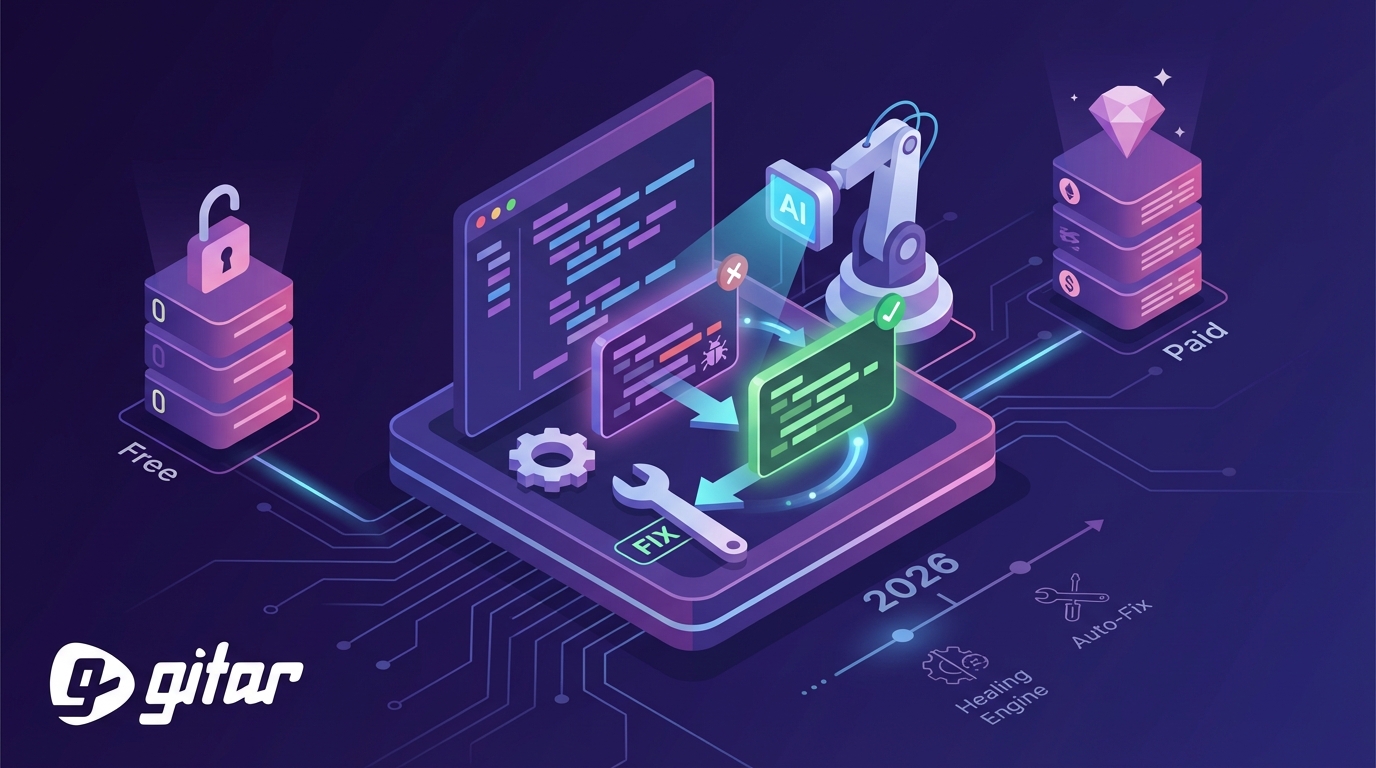
Key Takeaways for 2026 AI Code Review Tools
- AI coding tools speed up development but create PR review bottlenecks, while healing engines like Gitar auto-fix CI failures for green builds.
- Gitar ranks first in 2026 as a free unlimited healing engine, outperforming paid suggestion tools like CodeRabbit and Greptile.
- Gitar’s key differentiator is CI-validated fixes, while many competitors only add comments that still require manual work.
- Teams save more than $375K annually with Gitar’s single-comment dashboard, cross-CI support, and zero per-seat pricing.
- Install Gitar today to automate broken build fixes and ship higher-quality software faster.
How We Evaluated 2026 AI Code Review Platforms
Our evaluation criteria focused on real engineering outcomes instead of marketing claims. We assessed auto-fix capabilities, pricing transparency, CI integration depth, notification quality, scalability for large teams, and integration ecosystems.
The analysis used vendor documentation, developer community feedback, and hands-on testing with production codebases. We compared tools against 2026 benchmarks such as GitHub statistics, GitClear reports on AI code quality, and real deployment data from engineering teams.
Top 7 AI Code Review Tools in 2026: Snapshot Ranking
The leading AI code review tools for 2026 are: 1. Gitar (free unlimited healing engine), 2. CodeRabbit ($15+ per seat, suggestions only), 3. Greptile ($30 per seat, context-heavy suggestions), 4. Qodo (logic and test fixes), 5. Aikido (security autofix), 6. DeepSource (static analysis autofix), and 7. CodeAnt AI (CI-integrated suggestions).
This ranking favors healing capabilities over suggestion volume, cost efficiency over feature bloat, and proven CI integration over theoretical claims. Tools that fix code and validate changes against CI pipelines rank higher than tools that only comment on pull requests.
Install Gitar now, automatically fix broken builds, and start shipping higher quality software faster → https://gitar.ai/
1. Gitar: Best Free AI Code Review Healing Engine
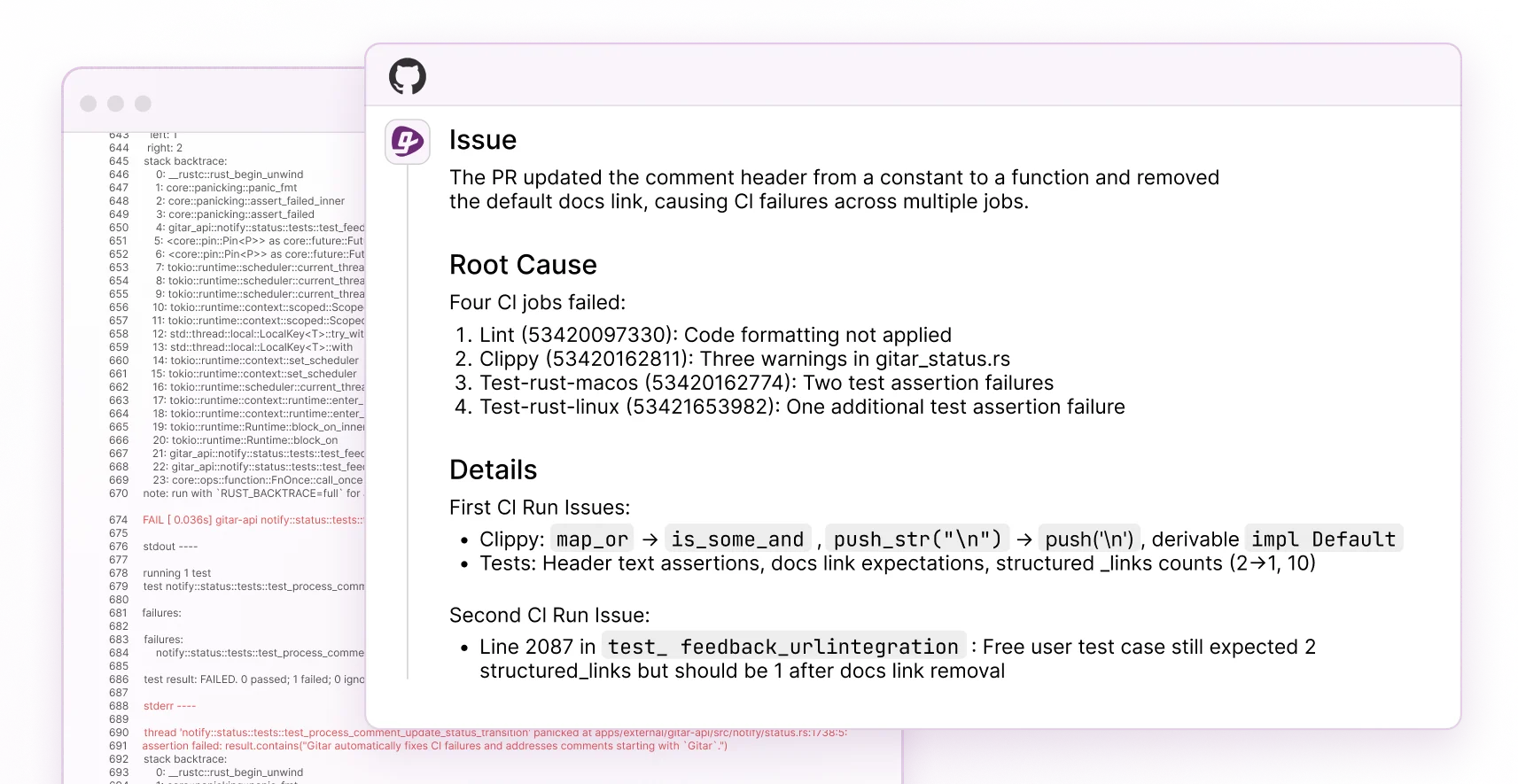
Description and Use Cases: Gitar focuses on CI failure resolution, automatic review feedback implementation, and workflow automation. Unlike suggestion engines, Gitar analyzes failed CI checks, generates validated fixes, and commits them automatically while keeping a single, clean dashboard comment.
Key Features: Gitar provides comprehensive PR summaries, inline code fixes, and a hierarchical memory system that learns team patterns. It supports natural language repository rules and a single updating comment interface that removes notification spam. The platform integrates with Jira and Slack to keep context aligned across tools.
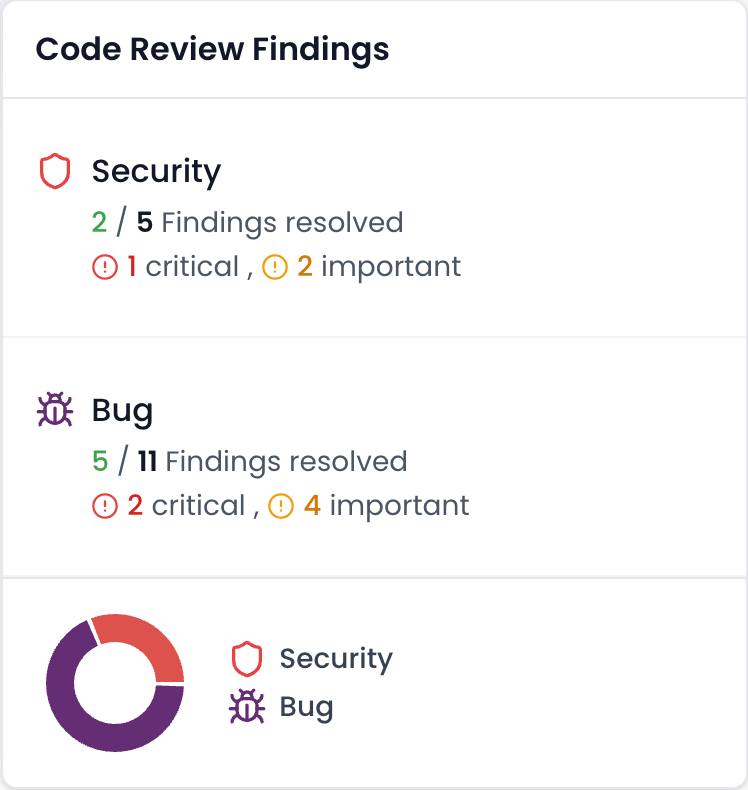
UX and Implementation: Installation takes about 30 seconds through a GitHub App, with no credit card or account setup required. Teams can start in suggestion mode, then enable auto-commit for trusted fix categories as confidence grows.
Pricing: Core code review features stay completely free for unlimited repositories and users. Auto-fix features include a 14-day free trial, with no seat limits and no hidden charges.
Strengths: Gitar delivers more than $375K annual ROI for a 20-developer team and handles over 50M lines of code at enterprise scale. CI validation supports green build guarantees. The healing engine model removes the manual work that suggestion-only competitors still require.
Install Gitar now, automatically fix broken builds, and start shipping higher quality software faster → https://gitar.ai/
2-7. Detailed Competitor Breakdowns
CodeRabbit: CodeRabbit offers conversational code reviews with pricing from $12-25 per user monthly. It provides accurate suggestions but lacks CI auto-fix capabilities and often generates many inline comments that create notification noise. It supports multiple Git platforms and basic CI integration.
Greptile: Greptile uses repository knowledge graphs to deliver deep codebase context at $30 per user monthly. It excels at bug detection but remains suggestion-only and faces context window limits on large pull requests. It does not provide auto-commit or CI validation.
Install Gitar now, automatically fix broken builds, and start shipping higher quality software faster → https://gitar.ai/
Qodo: Qodo delivers fast reviews under two minutes with detailed severity breakdowns. It offers moderate CI support and competitive pricing but focuses mainly on logic and test improvements instead of full CI failure resolution.
Aikido: Aikido specializes in security-focused code review with team pricing at $25 monthly per contributing developer. It provides automated security fixes but has limited coverage outside security vulnerabilities.
DeepSource: DeepSource focuses on static analysis with pricing starting at $150 for 10 developers monthly. It emphasizes code quality metrics and some automated fixes but does not offer full CI failure analysis.
CodeAnt AI: CodeAnt AI supports Git-integrated PR workflows with policy gates and quality enforcement. It offers advanced AST-based context but remains primarily suggestion-focused without guaranteed fix validation.
Side-by-Side Comparison: Gitar vs Other AI Review Tools
|
Feature |
Gitar |
CodeRabbit |
Greptile |
Others |
|
Auto-apply & validate fixes |
Yes (14-day free trial) |
No |
No |
Partial |
|
CI failure analysis/auto-commit |
Yes |
No |
No |
Limited |
|
Free unlimited repos |
Yes |
No |
No |
No |
|
Single comment dashboard |
Yes |
No |
No |
Varies |
|
Cross-CI (CircleCI/Buildkite) |
Yes |
GitHub-only |
Limited |
Varies |
|
Pricing per dev |
$0 |
$15+ |
$30 |
$9-25+ |
The cost comparison shows a large gap for growing teams. A 20-developer team pays $450-900 monthly for competitors plus about $1M annually in productivity losses from manual CI fixes. Gitar removes both categories of cost and delivers roughly 75% velocity gains through automated healing.
Key Buying Factors for Engineers, Leaders, and DevOps
Engineers care about reduced context switching and clean interfaces, and Gitar’s single comment approach cuts notification fatigue while auto-fixes resolve issues during off-hours. Engineering leaders focus on velocity and ROI, and Gitar’s free core features with measurable productivity gains provide clear financial value.
DevOps teams need self-healing CI that reduces rerun costs and maintenance overhead. Gitar’s natural language rules replace complex YAML configurations and simplify pipeline management.
Teams often worry about trust in automated commits, which Gitar addresses with a configurable suggestion mode. Some leaders also question the sustainability of free offerings, and Gitar’s broader platform business model beyond code review supports long-term stability.
FAQ: Common Questions About AI Code Review
What are the best free AI code review tools?
Gitar delivers the most complete free tier with unlimited repositories, users, and full code review capabilities. Other tools such as Aikido and DeepSource provide limited free tiers, while CodeRabbit and Greptile require paid plans for serious usage. Gitar’s free plan includes PR summaries, security scanning, and bug detection without seat limits or credit card requirements.
How does AI code review handle CI failures?
Most AI code review tools only suggest fixes for CI failures and still require manual implementation. Gitar’s healing engine analyzes failure logs, generates validated fixes, tests them against your CI environment, and commits working solutions automatically. This workflow removes repeated failed builds, manual debugging, and extra CI runs that drain engineering time.
How do CodeRabbit and Gitar compare?
CodeRabbit focuses on conversational code review with detailed suggestions and costs $15 or more per developer monthly, while still requiring manual fixes. Gitar offers comparable review quality for free and adds auto-fix capabilities that CodeRabbit does not provide. Teams that switch from CodeRabbit report major time savings and less notification noise with Gitar’s single comment interface.
Is automated code fixing reliable?
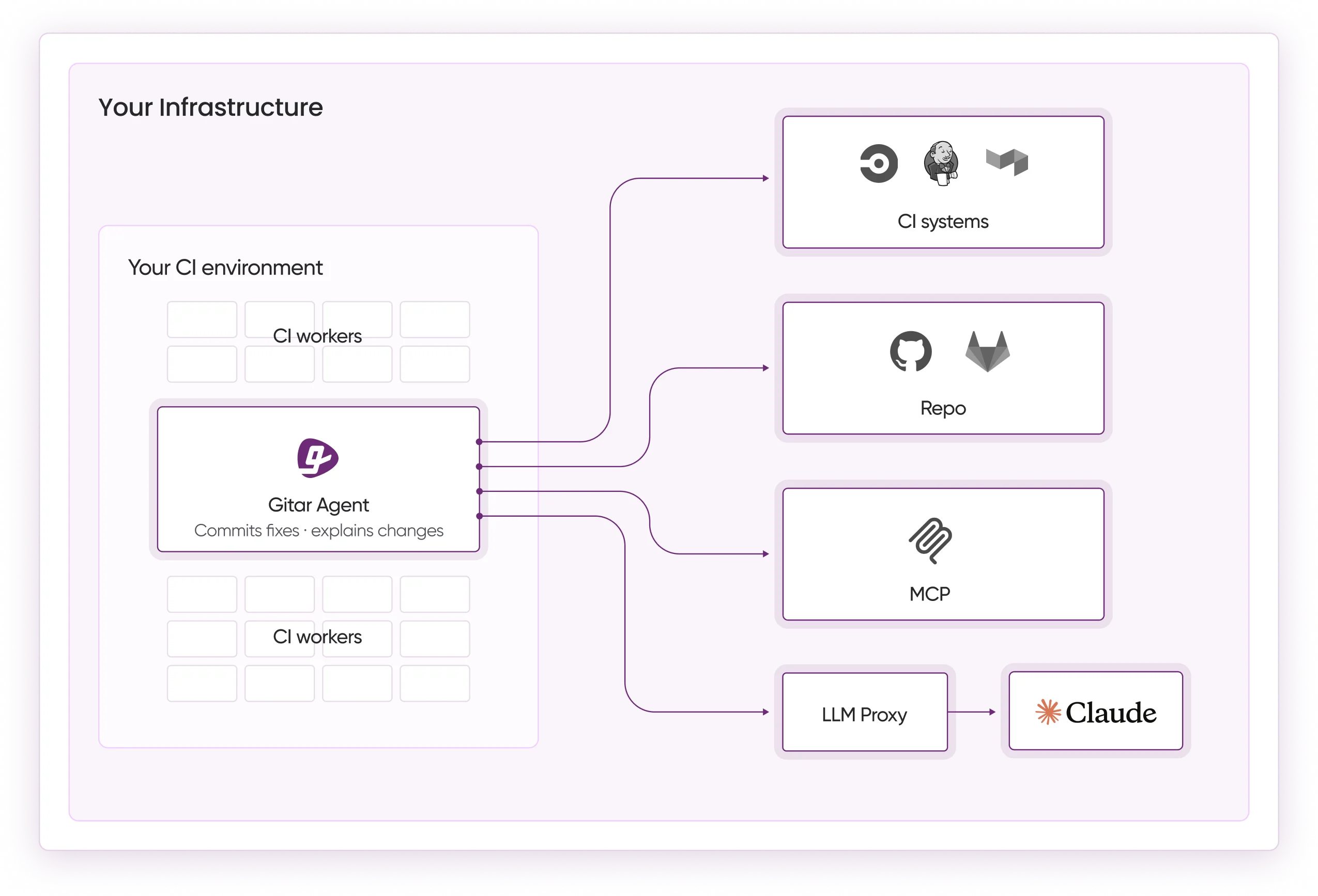
Reliability depends on CI validation instead of raw suggestion quality. Tools that only suggest fixes without testing them against your build environment provide no guarantee of success. Gitar validates every fix against your full CI pipeline, including SDK versions, dependencies, and third-party integrations, before committing changes.
How can teams measure ROI for AI code review?
Teams can track developer time spent on CI failures, review cycles, and context switching. A typical 20-developer team loses about one hour daily per developer to CI and review friction, which costs roughly $1M annually. Tools that fix issues instead of only commenting can recover about 75% of this lost productivity while also removing per-seat tool costs.
Conclusion: Choose Free Healing Engines Over Paid Suggestion Tools
The AI code review market has moved beyond suggestion engines that charge premium prices for basic commentary. Healing engines that automatically fix and validate code now define the next generation of development tools. Gitar’s free healing engine delivers stronger outcomes than paid suggestion tools while removing per-seat licensing costs.
Install Gitar now, automatically fix broken builds, and start shipping higher quality software faster → https://gitar.ai/