

Key Takeaways
- CodeRabbit speeds up PR reviews with instant summaries, 46% bug detection accuracy, and security scanning, often cutting merge times in half.
- CodeRabbit still requires manual fixes, creates notification overload, and offers no automatic resolution for CI failures.
- Pricing starts at $15 per developer per month after a short free trial, which can cost teams $3,600 to $7,200 per year.
- Gitar delivers unlimited free code review, automatic CI failure fixes, and single consolidated comments across GitHub, GitLab, and more.
- Teams that switch to Gitar gain automation that resolves issues CodeRabbit only flags, while reducing costs and improving productivity.
Top 10 Ways CodeRabbit Improves Code Review
CodeRabbit provides AI-powered code review features that support software quality and help teams move faster.
1. Instant PR Summaries and Analysis
Teams report time to first code review reduced from about 5 days to about 2 days. CodeRabbit generates structured summaries so reviewers quickly understand changes and focus on the most important issues.
2. High-Accuracy Bug Detection
CodeRabbit reaches 46% accuracy in detecting real-world runtime bugs. It combines Abstract Syntax Tree analysis, Static Application Security Testing, and generative AI feedback.
3. Comprehensive Security Scanning
The platform flags security vulnerabilities, unsafe control flows, and potential attack paths. This protection matters because AI-generated code can contain up to 2.7 times more security issues without strong review.
4. Faster Merge Cycles
Time to merge PRs drops from 12 hours to 6 hours. This improvement helps teams ship features and fixes more quickly.
5. Higher Throughput for Growing Teams
Pull requests per month increased 36% (520 → 705) for teams using CodeRabbit. Teams handle more work without a matching increase in review overhead.
6. Multi-Platform Integration
CodeRabbit connects with GitHub, GitLab, and Bitbucket. Teams can keep a similar review experience across different version control systems.
7. Skill Growth for Junior Developers
Detailed feedback on code quality, maintainability, and best practices helps junior developers learn faster. They receive contextual guidance on every pull request.
8. Support for Many Programming Languages
CodeRabbit supports more than 20 programming languages. Polyglot teams can use one tool across multiple stacks.
9. Custom Review Rules for Each Codebase
Teams adjust review rules to match their codebase and reduce noise. The system adapts to project-specific standards and preferences.
10. Fewer Forced Merges
Forced merges dropped by more than 60% (8.6% → 3.5%). This shift points to better code quality and less pressure to skip reviews.
Developer feedback still highlights several gaps that affect daily workflows and real productivity.
CodeRabbit Drawbacks That Slow Real-World Teams
Many developers describe practical issues with CodeRabbit that reduce its impact in production environments.
Suggestions-Only Approach
CodeRabbit flags issues but does not apply fixes. Developers describe CodeRabbit as “noisy, overly rigid, or disconnected from real-world workflows”. Every suggested change still needs manual implementation.
Notification Overload
The platform posts many inline comments on each PR. These comments can flood inboxes and Slack channels and break focused work sessions.
No CI Integration
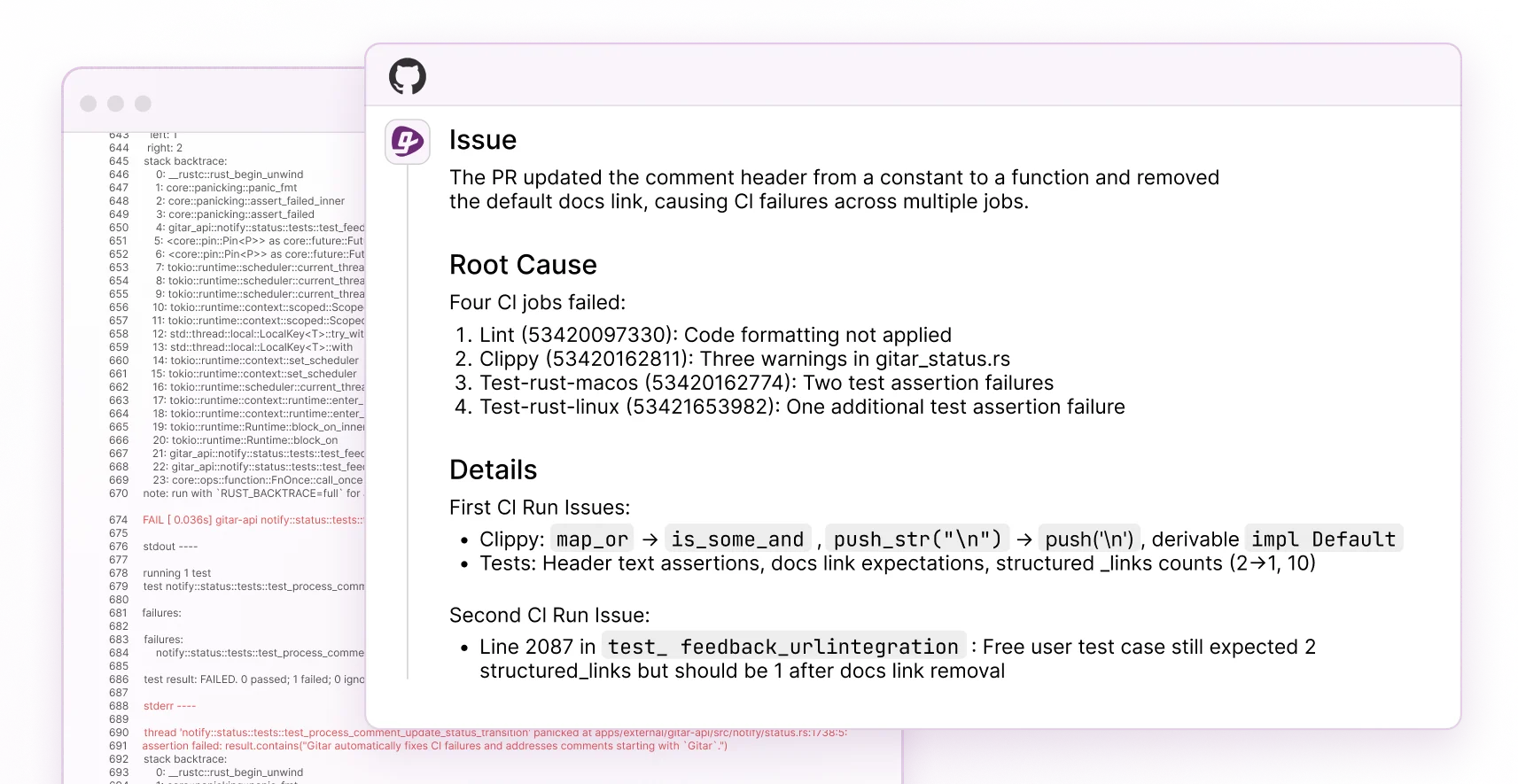
CodeRabbit does not connect directly to CI/CD pipelines. It cannot fix build failures, test errors, or deployment problems that block merges.
Limited Auto-Fix Capabilities
Some tools can apply fixes and validate them against CI. CodeRabbit instead leaves developers to implement changes manually and hope they resolve the root cause.
| Capability | CodeRabbit | Impact |
|---|---|---|
| Auto-fix CI failures | No | Manual developer work required |
| Notification style | Multiple inline comments | Inbox and Slack flooding |
| Fix validation | No | No guarantee that fixes work |
Step-by-Step Guide to Getting Started with CodeRabbit
Teams can set up CodeRabbit in a few clear steps.
1. Install the GitHub App
Go to the CodeRabbit GitHub marketplace listing and install the app. Grant the required repository permissions.
2. Add the VSCode Extension
Install the CodeRabbit VSCode extension to bring reviews into your IDE. This setup provides real-time feedback while you code.
3. Configure Custom Rules
Define project-specific review rules and tune the feedback style. Align these settings with your team’s coding standards.
4. Start Reviewing Pull Requests
CodeRabbit analyzes new PRs automatically and posts structured feedback. Developers see inline comments and summary reports for each change.
The free trial lasts 14 days with full functionality, and most ongoing use requires a paid plan.
CodeRabbit Pricing and What the Free Tier Really Covers
CodeRabbit pricing includes a Free Plan at $0 with a 14-day Pro trial, a Lite Plan at $15 per developer per month, and a Pro Plan at $30 per developer per month. The free tier covers open-source projects, while private repositories require a paid subscription.
A 20-developer team pays between $300 and $600 per month, or $3,600 to $7,200 per year. That spend still buys suggestion-only functionality that depends on manual work.
Growing search volume for “coderabbit free” suggests frustration with these limits and the gap between trial expectations and long-term costs.
Why Gitar Stands Out as a Free CodeRabbit Alternative
Gitar removes CodeRabbit’s main constraints while keeping strong code review features at no cost.
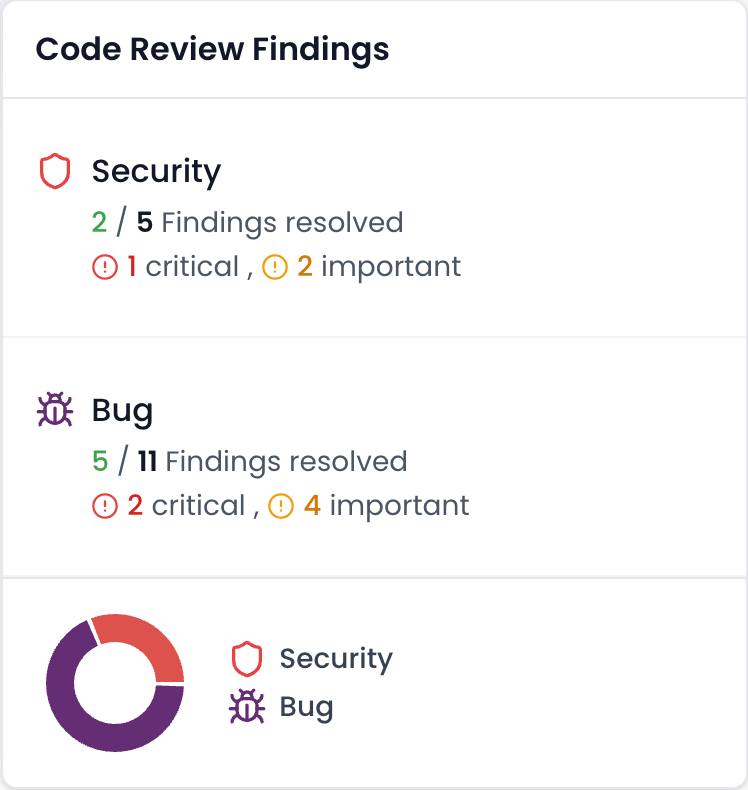
Gitar automatically fixes CI failures, applies review feedback, and ships validated code changes that keep builds green. CodeRabbit only points to problems, while Gitar resolves them.
Gitar offers unlimited free code review for all repositories, automatic CI failure resolution, and a single consolidated comment instead of notification spam. It integrates with GitHub, GitLab, CircleCI, and Buildkite. Install Gitar now to see automated fixes in your existing workflow.
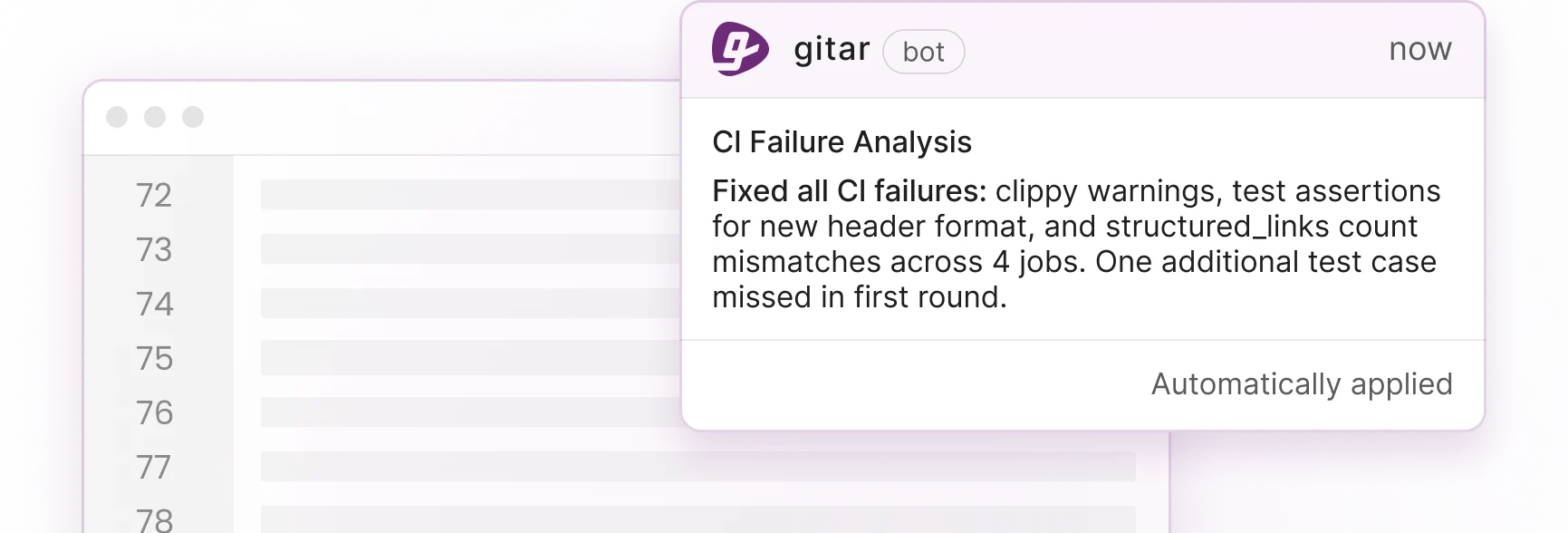
The ROI difference is clear. A 20-developer team saves $450 to $900 each month compared with CodeRabbit plans, while gaining automation that actually closes issues instead of just listing them.
| Capability | CodeRabbit | Gitar |
|---|---|---|
| PR summaries | Yes | Yes (Free) |
| Auto-fix CI failures | No | Yes (14-day free trial) |
| Pricing | $15–30 per developer | Free code review |
| Notification style | Multiple inline | Single updating comment |
Gitar vs. CodeRabbit: Workflow Impact Comparison
A side-by-side view highlights where Gitar delivers stronger support for modern development workflows.
| Feature | CodeRabbit | Gitar | Winner |
|---|---|---|---|
| Platform support | GitHub-focused | GitHub, GitLab, CircleCI, Buildkite | Gitar |
| Scalability | Seat limits | Unlimited free repositories and users | Gitar |
| Fix validation | No | Yes, through CI integration | Gitar |
| Auto-commit fixes | No | Yes (14-day free trial) | Gitar |
Gitar’s healing engine validates fixes against real CI environments. Teams ship changes that already pass their pipelines instead of hoping suggested edits solve the problem.
Frequently Asked Questions About CodeRabbit and Gitar
Is CodeRabbit completely free to use?
CodeRabbit includes a 14-day free trial and free access for open-source projects. Private repositories require paid subscriptions that start at $15 per developer per month, so the free tier rarely covers commercial teams.
How does Gitar’s auto-fix capability differ from CodeRabbit’s suggestions?
CodeRabbit identifies issues and leaves comments with potential fixes, and developers then implement changes and hope they work. Gitar analyzes CI failures, generates fixes, tests them in your actual build environment, and commits working solutions directly to your PR.
Which tool works better with VSCode for daily development?
CodeRabbit offers a VSCode extension that brings reviews into the editor. Gitar focuses on fewer interruptions through a single updating PR comment that consolidates feedback and keeps your development flow intact.
What ROI can teams expect from automated code review tools?
Teams using automated code review often see review cycles move about 70% faster and save significant engineering time. With Gitar’s free tier plus autofix features during the 14-day free trial, a 20-developer team avoids $450 to $900 in monthly competitor costs while gaining automation that resolves issues instead of only identifying them.
How easy is it to switch from CodeRabbit to Gitar?
Most teams switch in about 30 seconds. Install the Gitar GitHub app or GitLab integration, and Gitar immediately starts providing code review with automated fixes. Gitar works out of the box with your existing repositories and CI pipelines, without configuration migration.
Conclusion: When to Choose Gitar Over CodeRabbit
CodeRabbit brings useful AI review features that improve productivity and code quality, but it stops at suggestions and leaves fixes to your team. Its pricing model and lack of automated remediation limit its value for teams that want real relief from review and CI toil. Install Gitar now to get free, unlimited code review with automated CI fixes that keep builds green, without credit cards, seat limits, or the manual burden that still exists with CodeRabbit.