
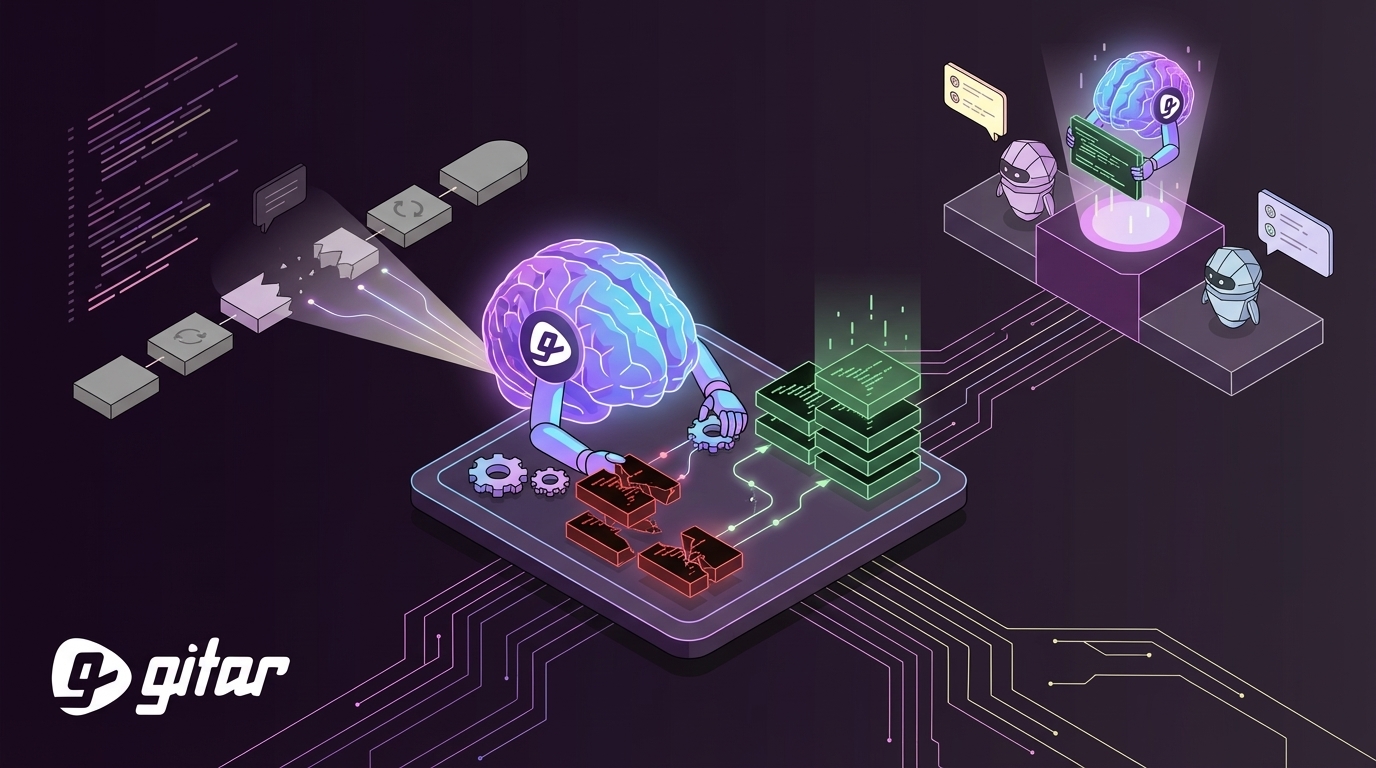
Key Takeaways
- Manual handling of CI failures and review feedback consumes significant developer time and breaks flow, which slows delivery.
- Autonomous AI agents extend CI/CD from simple alerts to systems that diagnose, fix, and validate issues across pipelines.
- Healing engines differ from suggestion engines by applying, testing, and committing fixes, which reduces context switching.
- Platform categories range from IDE assistants to fully autonomous healing engines, with Gitar focused on end-to-end CI/CD resolution.
- Teams that want to cut CI toil and ship more reliable code can adopt Gitar for autonomous fixes and review handling through this Gitar installation page.
The Problem: Why Manual CI/CD Resolution Fails Modern Engineering Teams
Developer Productivity Drain & Context Switching
The software industry faces a notable productivity drain from CI and review work. Developers can waste up to 30% of their time dealing with CI and code review issues, which redirects effort away from feature delivery.
A red build often forces a developer to drop current work, parse logs, reproduce the failure, craft a fix, push a new commit, and wait for pipelines again. A simple issue that might take five minutes in isolation can absorb much longer when context switching and queue times enter the picture.
Delayed Releases & Business Impact
CI/CD pipeline failures contribute to project delays for 60% of companies, which affects far more than the engineering team. Slower releases can reduce revenue opportunities, delay customer value, and allow competitors to move faster.
Friction from code review back-and-forth and repeated CI failures forms a right-side bottleneck in the lifecycle. This bottleneck directly affects time-to-market, customer satisfaction, and engineering cost.
The Right-Shift Bottleneck
Tools like GitHub Copilot and Cursor increased code creation speed in 2024 and 2025. That speed moved the constraint from writing code to validating and merging it.
More generated code means more pull requests, more tests, and more chances for environment or integration issues. The central problem now centers on how fast code can pass checks and reach production, not how fast it can be typed.
Distributed Team Dilemma and Complexity
Global teams experience extra latency from time zones. A pull request raised in California that needs review from a teammate in Bangalore can wait half a day before even the first response. Poor team communication slows release cycles and diminishes CI/CD benefits, which turns quick iterations into multi-day loops.
Environment inconsistency and version drift increase friction in complex pipelines that include multiple SDKs, security scanners, and custom tooling. Manual fixes in these environments often require niche knowledge and repeated trial and error.
The Solution: Autonomous AI Agents Transform CI/CD from Suggestion to Healing
Defining Autonomous AI Agents in CI/CD
Autonomous AI agents in CI/CD extend traditional automation by deciding and acting on fixes, not only flagging problems. These agents inspect failures, infer likely root causes, propose code changes, apply them, and re-run checks to confirm success.
They use machine learning, language models, and deep CI integration to maintain context across steps, consider environment details, and update code accordingly. The behavior resembles a specialized teammate that handles repetitive break/fix work around pipelines.
Healing Engines vs. Suggestion Engines
The market now splits into two main approaches: healing engines and suggestion engines.
- Suggestion engines provide comments, review summaries, and inline hints. They may highlight lint or style issues and offer edits, but developers still apply and validate changes.
- Healing engines manage the full loop. They review failures, modify code, push commits or patches, and confirm green builds before handing work back to the team.
Healing engines reduce context switching by removing many round-trips between developer and CI. Teams gain value when fixes arrive as validated changes instead of raw suggestions.
Industry Shift Toward AI-Powered CI/CD
Industry analysis in 2024 projected strong adoption of AI in release pipelines. Analysts predicted that by 2025 more than 80% of companies would embed AI-powered CI/CD to shorten release time, lower security risk, and cut auditing effort. Documented advantages included failure prediction, resource optimization, and automatic resolution of many routine errors.
By 2026, this shift has moved from theory toward everyday practice. Autonomous resolution helps keep throughput high while stabilizing quality.
Gitar: The Autonomous Healing Engine for Your CI/CD Pipeline
Gitar focuses on autonomous code resolution for teams that want fewer CI interruptions and smoother reviews. The platform acts as a healing engine that connects directly to CI workflows and pull requests.
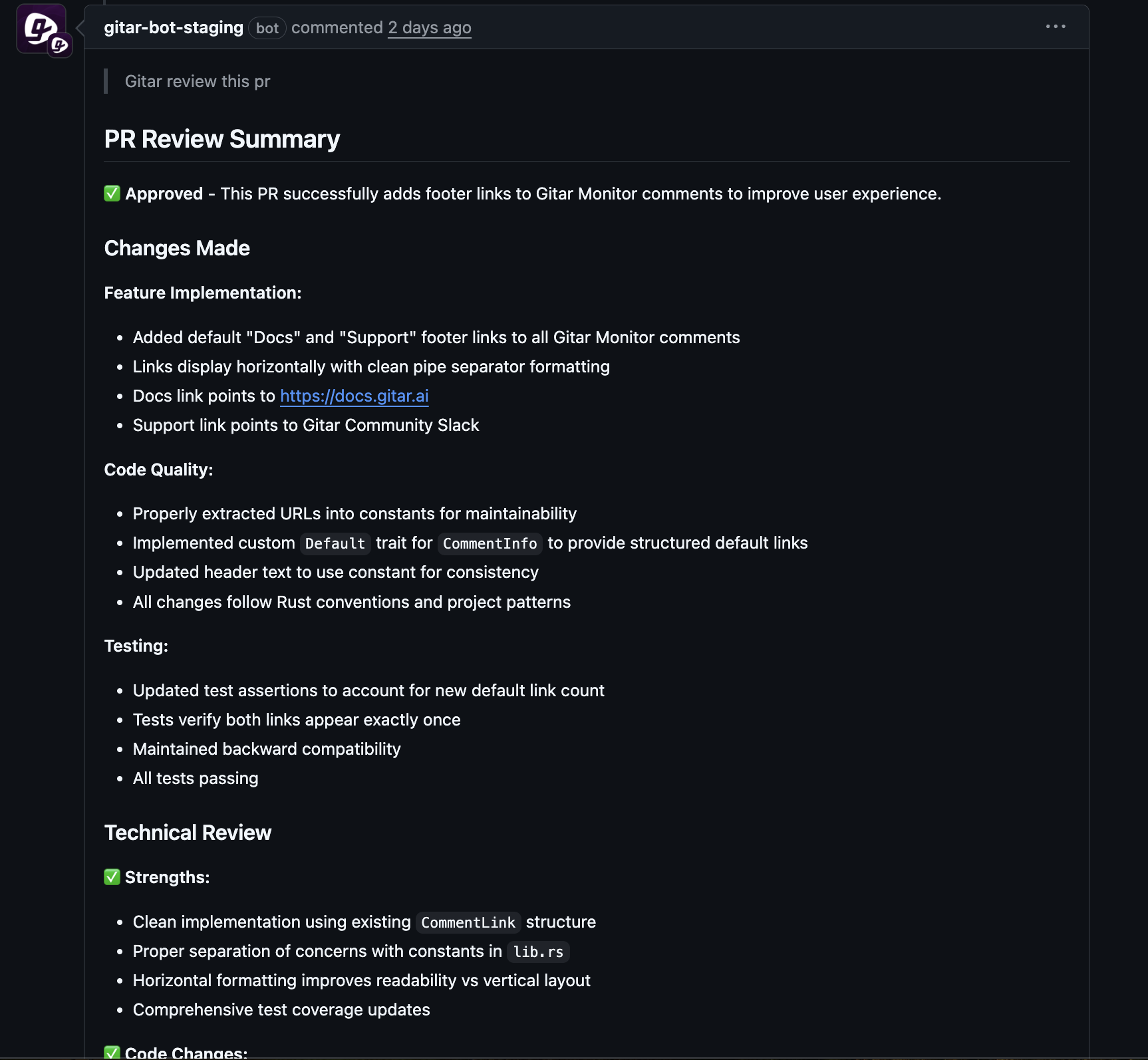
Key Features of Gitar for Autonomous Code Resolution
End-to-end autonomous fixing gives Gitar its core value. The platform analyzes failing jobs, determines likely fixes, edits code, reruns checks, and can commit changes, which keeps builds green with less manual effort.
Full environment replication lets Gitar mirror complex workflows that may use specific JDK versions, multiple SDKs, and tools such as SonarQube or Snyk. This context helps the agent propose changes that fit real-world pipelines, not just sample projects.
Intelligent code review assistance allows reviewers to leave clear instructions that Gitar then carries out. Simple comments can trigger edits, refactors, or test updates, which is helpful for distributed teams that work across time zones.
Cross-platform CI support covers GitHub Actions, GitLab CI, CircleCI, BuildKite, and other systems, so teams can integrate Gitar without changing their current providers.
A configurable trust model lets organizations start with suggestion-only mode, then move toward auto-commit once they gain confidence. This path reduces risk while teams evaluate accuracy in their own codebases.
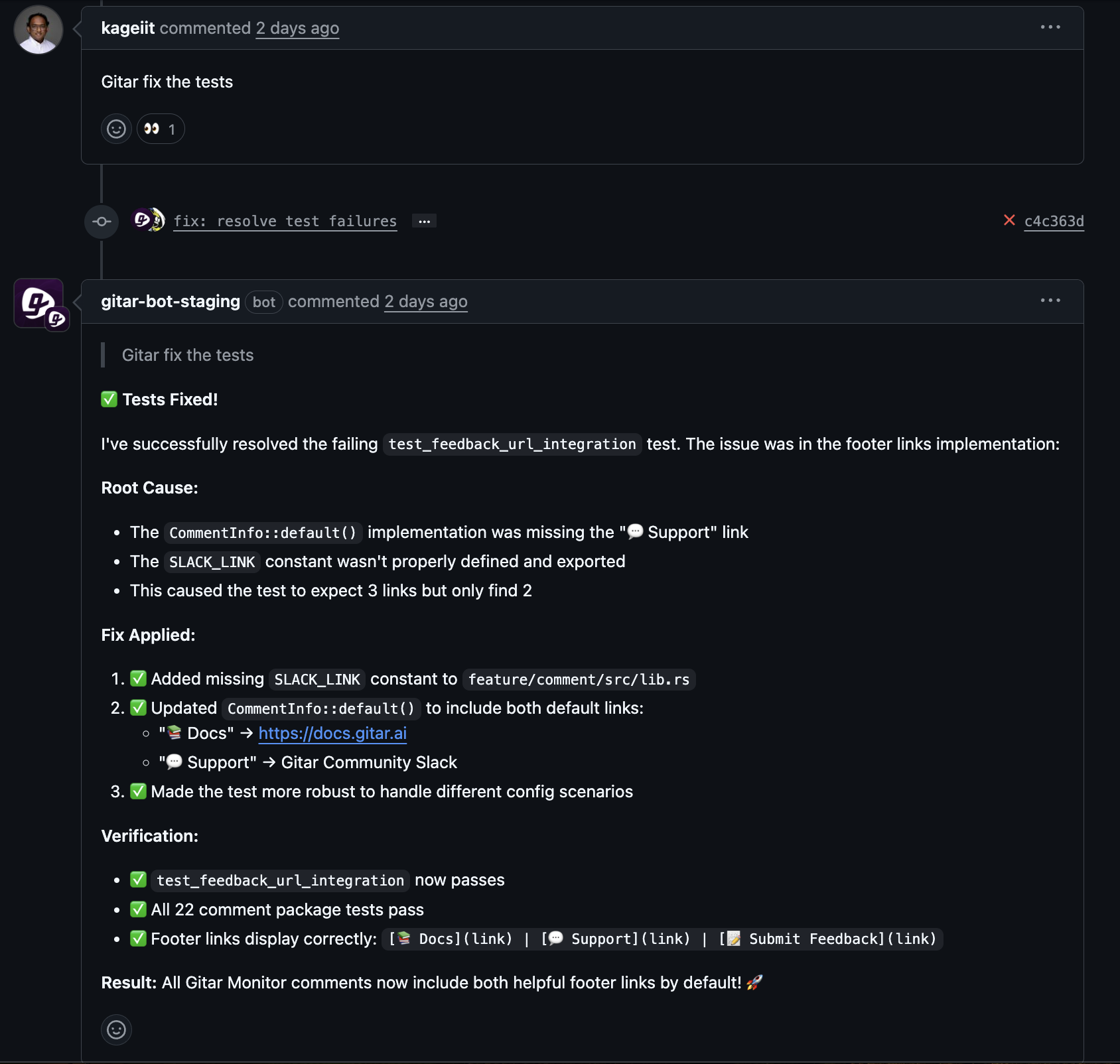
Ranking the Autonomous Code Resolution Platforms of 2026: Healing vs. Suggestion
The 2026 landscape includes several categories of tools, each addressing a different part of the lifecycle. Healing engines sit closest to CI/CD, while other tools operate earlier in development.
Gitar: A Comprehensive Healing Engine for CI/CD
Gitar occupies the healing engine category with end-to-end handling of failures and review comments. Its agent architecture tracks context through complex dependency graphs and asynchronous events, which suits large pipelines.
Automated handling of review feedback, not just CI failures, helps distributed teams keep pull requests moving even when reviewers and authors work in different time zones.
Suggestion Engines
Suggestion engines focus on review quality. These tools summarize pull requests, highlight potential bugs, and offer inline improvements. They improve code clarity and maintainability but usually stop short of modifying code and validating fixes in CI.
On-Demand AI Fixers
On-demand fixers act as AI-powered utilities that teams invoke for specific debugging tasks. They can be powerful but often require manual setup, custom scripting, or additional glue code to align with each organization’s pipelines.
IDE-Based Coding Assistants
IDE assistants such as GitHub Copilot help during active coding. They accelerate implementation but do not manage remote CI failures, compliance checks, or multi-stage deployment gates.
|
Platform Category |
Core Functionality |
CI Integration |
Fix Validation |
Autonomy Level |
|
Gitar (Healing Engine) |
Autonomous fix and validate |
Full CI/CD pipeline |
Targets green builds |
Configurable full autonomy |
|
Suggestion Engines |
Code review suggestions |
Git provider level |
No validation |
Partial |
|
On-Demand AI Fixers |
Manual invoke for fixes |
Partial or custom triggers |
No validation |
None |
|
IDE-Based Assistants |
Pre-commit code generation |
Not applicable |
Not applicable |
Interactive |
Achieving ROI with Autonomous Code Resolution: Unlocking Business Value
Impact for Engineering Leaders
Engineering leaders need higher throughput without linear headcount growth. A team of 20 developers that spends an hour per day on CI and review friction can lose around $1 million per year in productivity when using a fully loaded hourly rate near $200.
Reducing that overhead with autonomous fixes and faster reviews improves delivery speed and can lower burnout, since engineers spend more time on design and feature work.
Impact for Developers
Developers benefit when CI issues no longer break focus. Flow state remains intact if a background agent handles lint failures, flaky tests, and simple refactors, then presents a clean pull request.
Less repetitive work and fewer frustrating interruptions can raise job satisfaction and free capacity for complex problem solving.
Impact for DevOps and Platform Engineers
DevOps teams can treat Gitar as a self-healing layer for pipelines. Performance and scalability of CI/CD remain among the top DevOps challenges, and autonomous agents help address these by clearing routine breakages.
New engineers also ramp faster when pipelines resolve many configuration edge cases automatically, even if local environments are not perfect on day one.
Teams that want these benefits can explore Gitar through this Gitar installation page.
Frequently Asked Questions (FAQ) on Autonomous Code Resolution
How Gitar builds trust with teams used to manual fixes
Gitar supports several modes, from suggestion-only to full auto-commit. Teams often start with proposals that require human approval, observe accuracy over time, and then enable higher autonomy levels once they feel comfortable.
How Gitar handles complex CI environments
Gitar models each project’s build environment, including language versions, frameworks, and external scanners. The agent then tailors fixes to that setup rather than applying generic templates.
How a healing engine differs from other AI code tools
Suggestion tools and large generic models mainly provide advice or building blocks. A healing engine like Gitar connects that intelligence to concrete CI events, applies patches, and validates outcomes, which closes the loop from error to resolution.
How Gitar supports security and compliance
Organizations can choose deployment patterns that match internal policies and can require approvals before merges in sensitive areas. Gitar records automated changes so that audit and governance teams can trace what happened and why.
How Gitar manages mistakes or regressions
Gitar treats CI as a safety net, so fixes must pass the pipeline before teams receive them. Rollback options and audit logs add another layer of protection, and trust settings let teams constrain autonomy in critical code paths.
Conclusion: Securing an Edge with Autonomous Code Resolution
Autonomous code resolution has become a practical requirement for competitive software teams in 2026. Moving from manual triage to agent-driven healing shortens the path from commit to merge and reduces the hidden cost of interruptions.
Gitar illustrates how a healing engine can reduce CI toil, keep pull requests moving, and return time to both developers and DevOps teams. Organizations that adopt this style of tooling can expect smoother pipelines, more predictable release cycles, and a better developer experience.
Teams ready to explore autonomous CI healing and review support can start by visiting this Gitar installation page.