
Written by: Ali-Reza Adl-Tabatabai, Founder and CEO, Gitar
Key Takeaways for AI-Driven CI/CD in 2026
- AI coding tools shifted the development bottleneck to PR reviews and CI/CD maintenance, with review times up 91% and CI failures causing major delays.
- Gitar leads as the free AI code review tool with validated auto-fix for CI failures, guaranteeing green builds unlike paid suggestion-only competitors.
- Competitors like CodeRabbit, Qodo, and Greptile offer solid reviews but lack comprehensive CI auto-fixing, charging $15-30 per developer monthly.
- Gitar’s healing engine analyzes failures, generates and validates fixes, and auto-commits, saving teams about $1M annually in productivity for 20-developer teams.
- Teams can implement autonomous CI/CD with Gitar in 30 seconds at gitar.ai for faster, higher-quality software delivery.
#1: Gitar – Free Healing Engine That Guarantees Green Builds
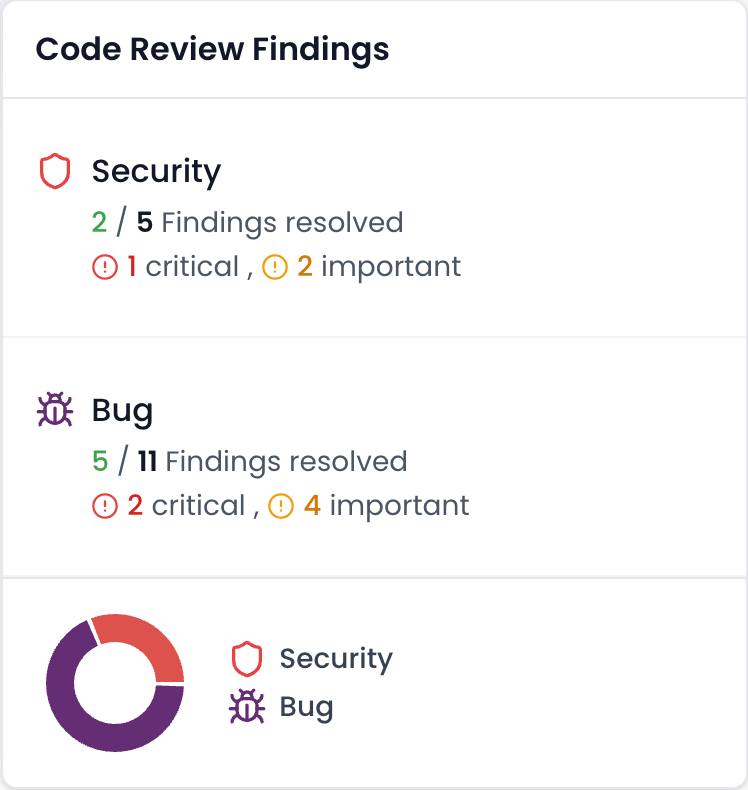
Gitar delivers free unlimited AI code review with validated auto-fix capabilities for CI failures. Competing tools charge $15-30 per developer for suggestions, while Gitar offers comprehensive PR analysis, security scanning, and bug detection at no cost, plus a 14-day free trial of auto-fix features.
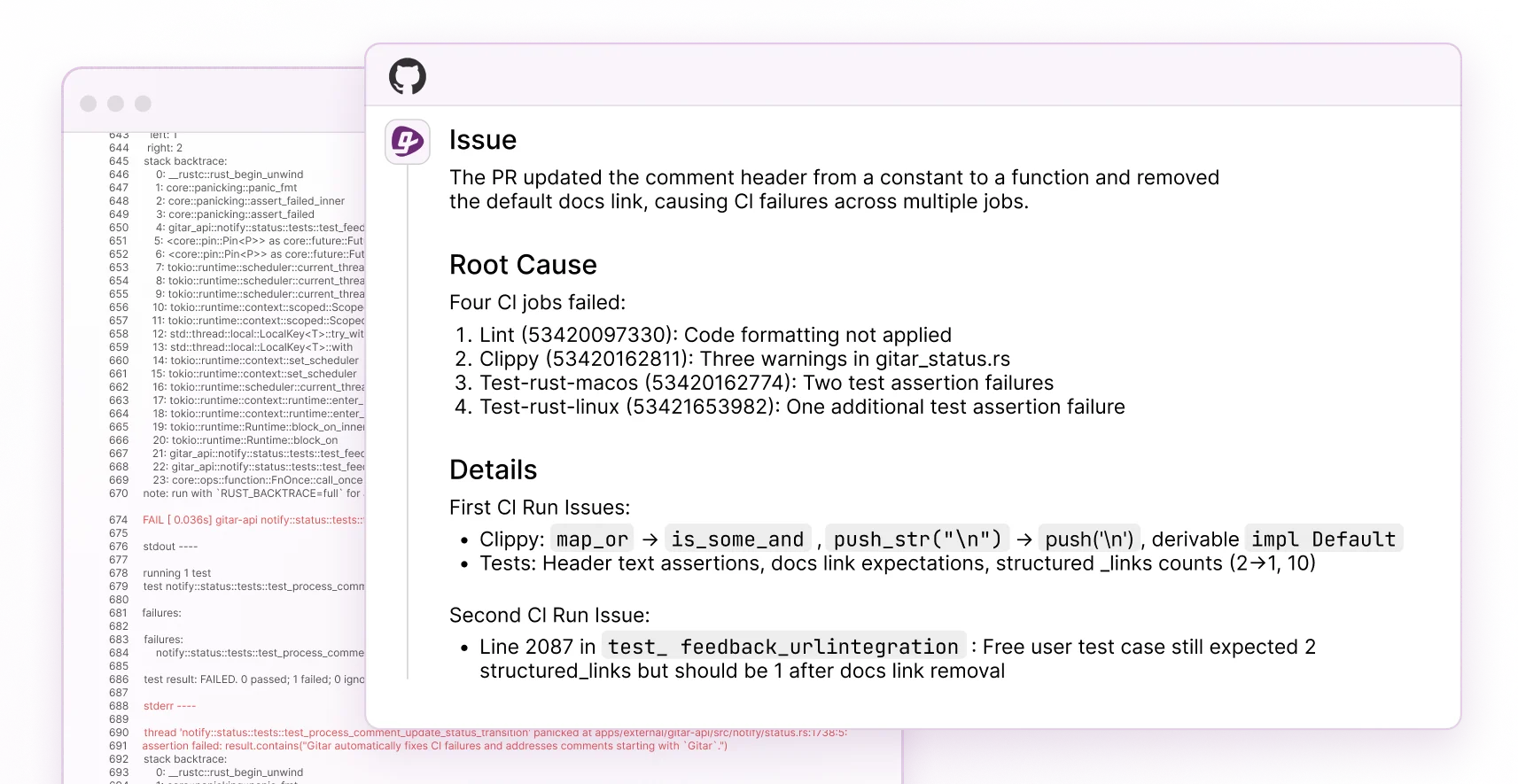
The core advantage comes from Gitar’s healing engine architecture. When CI fails from lint errors, test failures, or build breaks, Gitar analyzes failure logs, generates contextual fixes, validates them against the full CI pipeline, and commits working solutions automatically. This approach replaces guesswork with validated fixes that keep builds green.
Key capabilities include:
- 30-second installation across GitHub and GitLab
- Single updating dashboard comment that consolidates all findings, which reduces notification spam
- Cross-platform support with natural language workflow rules in .gitar/rules/*.md files
- Enterprise-grade security with SOC 2 Type II compliance and zero data retention options
- Integration layer connecting Jira, Slack, and Linear for consistent context flow
Pinterest validates Gitar at enterprise scale, processing more than 50 million lines of code with thousands of daily PRs. The platform caught high-severity security vulnerabilities in Copilot-generated code that Copilot itself missed. Tigris engineering teams report that Gitar’s PR summaries are “more concise than Greptile/Bugbot,” and Collate’s engineering lead highlights the “unrelated PR failure detection” feature that saves “significant time” by separating infrastructure flakiness from real code bugs.
Gitar’s rollout model builds trust step by step. Teams start in suggestion mode, watch automated fixes in action, then enable auto-commit for validated failure types. The agentic harness maintains hierarchical context per line, per PR, per repo, and per organization. It learns team patterns over time instead of starting from scratch on every PR.
#2-4: CodeRabbit, Qodo, and Greptile as Solid but Limited Options
CodeRabbit delivers high review accuracy with 46% bug detection rates in benchmarks and supports GitHub, GitLab, and Azure DevOps. The platform offers SOC 2 and GDPR compliance with strong contextual learning. However, CodeRabbit works only as a suggestion engine, charges $15-30 per developer monthly, and does not handle CI failure analysis or automated fix application. It generates many inline comments that increase notification fatigue while leaving root problems unresolved.
Qodo (formerly Codium) uses a persistent Codebase Intelligence Engine for deep architectural understanding across repositories, with 15+ automated PR workflows. The platform excels at multi-repo context and rules enforcement, with pricing around $30 monthly. Qodo supports agentic workflows with fix validation and automated resolutions. It still lacks full CI failure analysis and direct commit functionality for broken builds.
Greptile offers AI-powered code review with full codebase context at $30 per developer monthly. It supports mainstream languages like Python, JavaScript, and Java, includes self-hosting options, and meets SOC 2 Type II standards. The platform builds detailed code graphs for cross-file reasoning but reaches only 24% bug detection rates in benchmarks and lacks CI integration or automated fix capabilities.
All three alternatives share consistent gaps. They charge high per-seat prices and do not provide comprehensive CI failure analysis or validated auto-fix capabilities that resolve the core Right-Shift Bottleneck.
Gitar vs. Competitors: CI Auto-Fix and Cost at a Glance
|
Capability |
Gitar |
CodeRabbit |
Qodo |
Greptile |
|
PR Summary |
Yes (Free) |
Yes ($15-30/seat) |
Yes ($30/seat) |
Yes ($30/seat) |
|
Inline Suggestions |
Yes (Free) |
Yes |
Yes |
Yes |
|
CI Auto-Fix |
Yes (14-day trial) |
No |
No |
No |
|
Fix Validation |
Yes |
No |
Yes (limited) |
No |
|
Platform Support |
Multi-platform |
GitHub-focused |
Multi-platform |
GitHub-focused |
The total cost of ownership gap is significant. Manual CI fixes consume about 30% of developer time across the industry, which equals $375,000 annually in productivity losses for a 20-developer team. Gitar removes most of these costs, while competitors add $450-900 monthly in tool spend without closing the automation gap.
How Autonomous CI/CD Maintenance Works in Practice
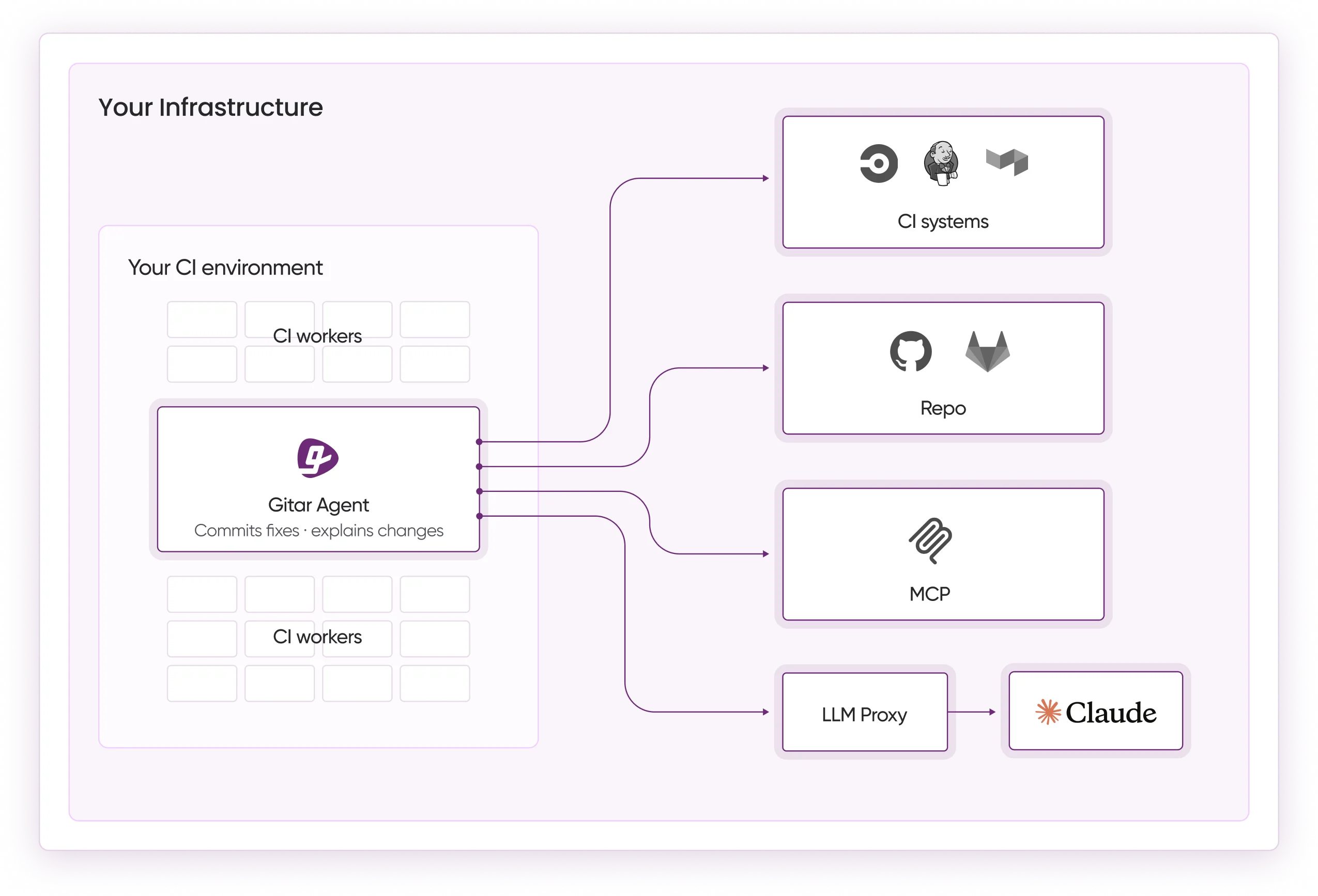
Autonomous CI/CD maintenance runs through AI agents that act as CI pipelines with LLMs in decision seats, using control loops to observe state, decide actions, execute, and validate results. The workflow starts with failure log analysis and identifies root causes using context from build environments, dependency conflicts, and test patterns.
AI agents improve on traditional code review by delivering continuous feedback loops instead of one-time suggestions. Autonomous remediation iterates until fixes resolve violations without adding new ones and confirms accuracy before human review. This approach cuts the 30-40% of QA capacity usually spent on maintenance while keeping quality high.
Implementation best practices focus on strong guardrails. Teams should set up shift-left guardrails where agents’ proposed changes are validated before they reach production, with policy checks, security scanning, and compliance validation. Organizations also benefit from agent-friendly CI/CD pipelines that use composable modules, clear abstractions, and well-documented patterns.
The market opportunity continues to grow quickly. GitHub Actions usage grew 35% year-over-year as teams struggle to keep pipelines reliable while AI-generated code volume increases. Autonomous static analysis remediation workflows address this pressure by providing self-healing capabilities that adapt to application changes in real time.
Frequently Asked Questions About AI CI/CD Maintenance
What is the best free AI code review tool in 2026?
Gitar stands out as the most complete free AI code review solution in 2026. It offers unlimited PR analysis, security scanning, and bug detection without seat limits or credit card requirements. Competing tools charge $15-30 per developer for suggestion-only workflows, while Gitar includes a 14-day free trial of auto-fix capabilities that actually resolve CI failures instead of only flagging them.
How does AI fix CI failures automatically?
AI fixes CI failures through a multi-step healing process. It analyzes failure logs to understand root causes, generates contextual code fixes using full codebase awareness, validates those fixes against the complete CI pipeline, and commits working solutions automatically. This method differs from suggestion engines because it validates that fixes work in real environments instead of relying on manual follow-through.
What are the advantages of AI agents over traditional code review?
AI agents deliver continuous feedback loops and autonomous remediation, while traditional review depends on one-time manual checks. Agents maintain context across PRs, learn team patterns over time, and can execute fixes directly instead of handing off tasks to humans. This capability addresses the Right-Shift Bottleneck where AI-generated code volume overwhelms human review capacity.
How do autonomous static analysis remediation workflows function?
Autonomous static analysis remediation workflows run through iterative validation cycles. They propose fixes, verify that those fixes resolve violations without creating new issues, and enforce quality standards through automated testing. These workflows plug into existing CI/CD pipelines and provide self-healing behavior that adapts to application changes while keeping developers in control for final approval.
Which platforms support autonomous CI/CD maintenance solutions?
Leading autonomous CI/CD maintenance solutions support platforms such as GitHub, GitLab, CircleCI, and Buildkite. Cross-platform compatibility matters for enterprise teams that use diverse toolchains. Integrations usually extend to project management tools like Jira and Linear and communication platforms like Slack for end-to-end workflow automation.
Conclusion: Restore Engineering Velocity with Gitar
The Right-Shift Bottleneck defines post-AI software development, where rapid code generation creates heavy review and CI maintenance workloads. Many vendors respond with expensive suggestion engines that keep manual work in place, while Gitar commoditizes code review and delivers validated healing automation.
The competitive landscape shows a clear gap. Established players charge premium prices for incremental improvements and still ignore core automation needs. Gitar’s free foundation and guaranteed green builds through validated fixes deliver stronger ROI than tools that cost $450-900 monthly and still depend on manual implementation.
Code review now functions as table stakes rather than a profit center. Real value comes from a complete development intelligence platform that includes automated workflows, deep analytics, and CI as an agent platform. Gitar’s strategy of offering the foundation for free and building comprehensive automation on top signals the future of development tooling.