
Key Takeaways
- CI build failures consume significant developer time and create a persistent resource allocation problem for engineering teams.
- Autonomous automation shifts work from manual debugging to automatic remediation, which reduces context switching and protects focus time.
- Healing engines that fix issues directly deliver greater resource gains than suggestion engines that only point out problems.
- Gitar applies autonomous CI fixes and code review updates across common CI platforms to improve productivity for engineers, leaders, and platform teams.
- Teams can install Gitar to automatically repair broken builds and reallocate developer time to higher-value work.
The Problem: Why Current CI/CD Bottlenecks Cripple Resource Allocation
Engineering teams often face a resource allocation gap, where poor CI and CD performance can slow development so much that manual work appears faster. Skilled engineers spend many hours on repetitive debugging instead of feature delivery and design improvements.
CI build failures demand a high maintenance workload, and developers commonly lose about an hour each workday to CI-related issues. For a 20-person engineering team, that can reach roughly 5,000 hours per year, equal to more than two full-time developers focused only on fixing broken builds.
Context switching increases this cost. A developer who moves on to a new task and then receives a CI failure notification must reload mental context. A simple 15-minute fix can turn into an hour of lost productivity. Frequent interruptions limit the deep work needed for complex problem-solving and architecture decisions.
Distributed teams see additional friction. A developer in California may push code that fails CI and depends on input from a teammate in Berlin. A straightforward fix can then stretch across days as people hand work back and forth across time zones.
The Solution Category: Using Autonomous Automation for Better Resource Allocation
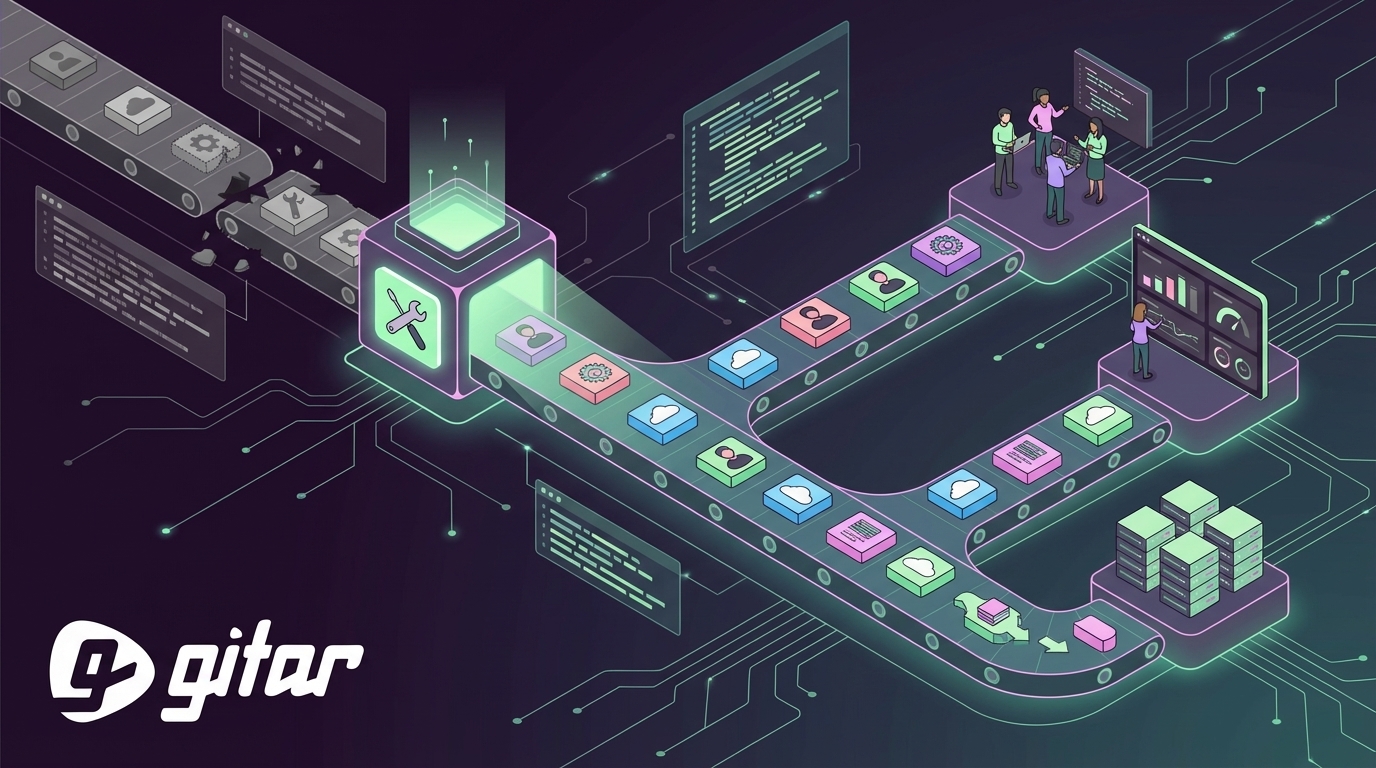
Higher automation reallocates work away from manual CI firefighting and toward meaningful engineering output. Instead of assigning developers to routine failures, autonomous systems handle common CI issues so that smart monitoring can flag anomalies quickly and suggest corrective steps with far less manual effort.
Earlier CI and CD improvements mainly targeted speed and reliability. The current evolution focuses on the intelligent use of developer time. Continuous integration enables earlier bug detection and reduces both fix time and long-term cost, and autonomous remediation extends this benefit by addressing failures with limited human input.
The shift from suggestion engines to healing engines defines this change. Suggestion engines highlight problems but still require developer implementation and validation. Healing engines diagnose and remediate issues directly. When this works reliably, CI becomes a resource multiplier instead of a bottleneck.
Modern automation must understand real-world pipeline complexity. Flaky tests and other unreliable steps require careful handling and specific mitigation strategies. Effective systems interpret logs, infer root causes, and apply context-aware fixes inside each project environment.
Gitar: An Autonomous CI Healing Engine for Smarter Resource Allocation
Gitar operates as an autonomous AI agent that fixes failing CI pipelines and applies code review feedback. Instead of only reporting issues, Gitar updates code, validates changes, and pushes commits that restore green builds with minimal developer involvement.
The platform improves resource allocation across several dimensions.
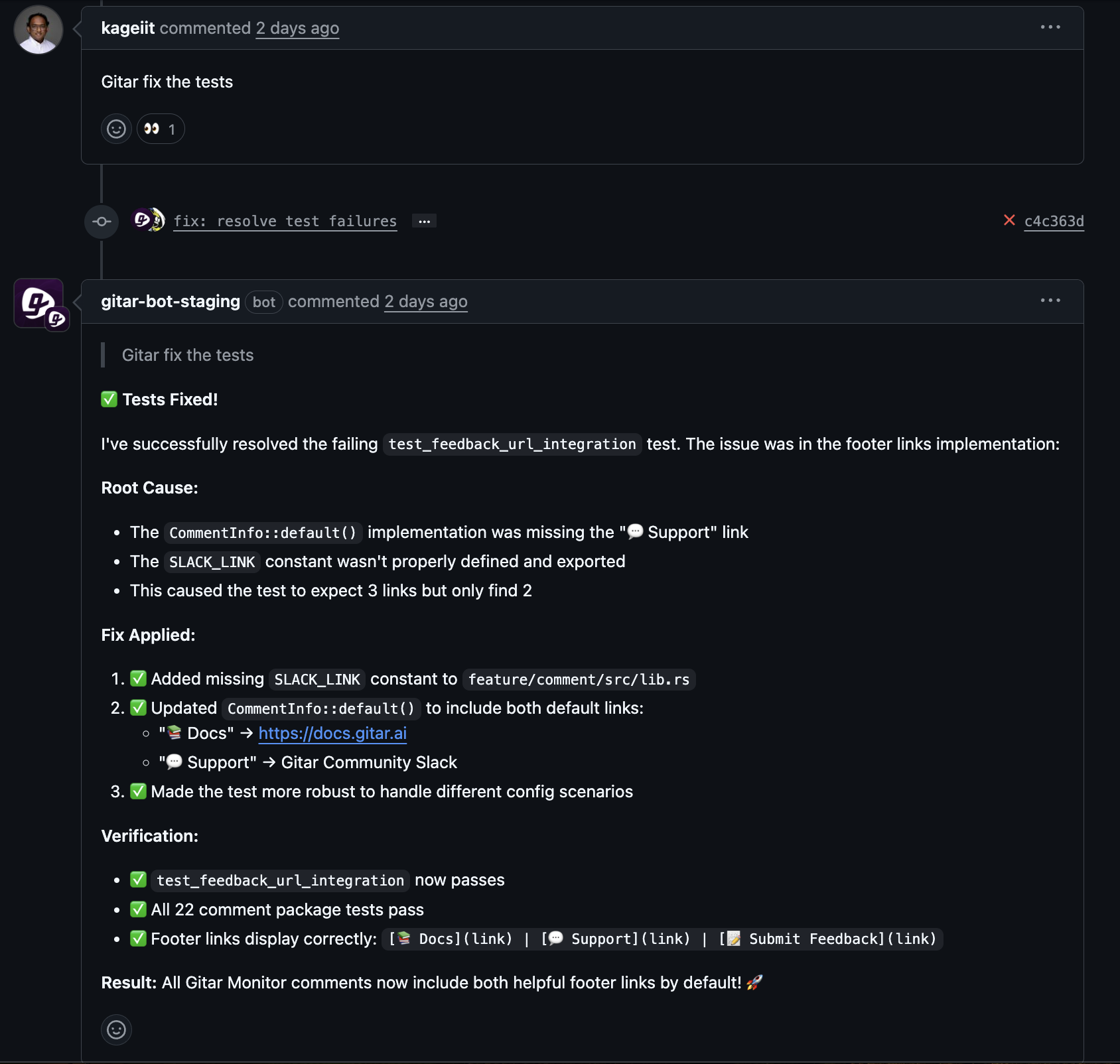
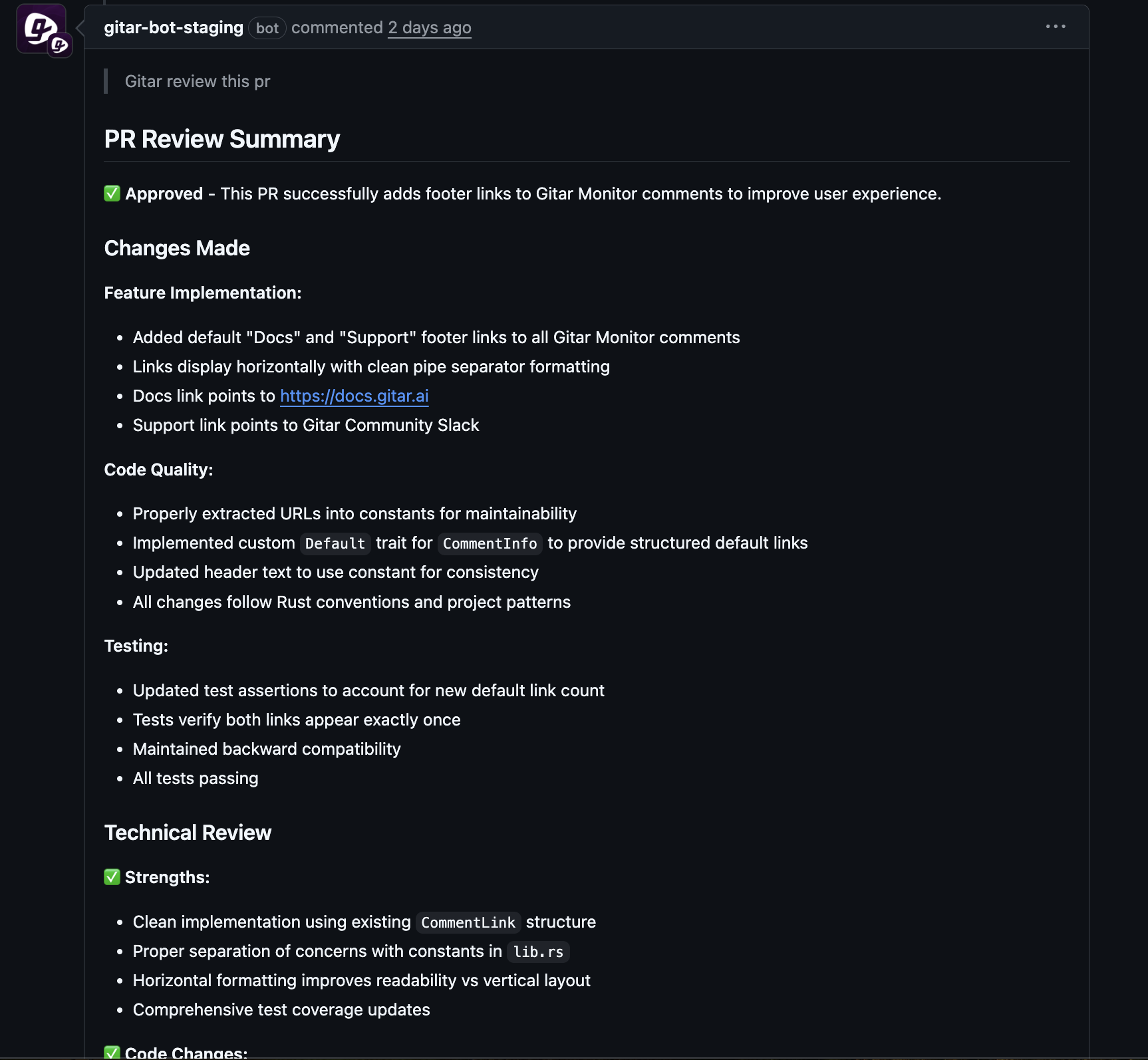
Autonomous CI fixing keeps pipelines healthy. When a CI check fails, Gitar reads logs, proposes code edits, tests changes, and commits fixes to the pull request branch. This covers many linting issues, test failures, and common build errors.
Code review assistance converts feedback into concrete commits. When reviewers leave clear instructions in comments, Gitar can implement the requested change and include an explanation in the commit message or follow-up comment.
Configurable trust levels let teams control automation. Organizations can begin in suggestion mode, where Gitar prepares fixes and humans approve them. As teams gain confidence, direct-commit modes with rollback options provide stronger time savings.
Cross-platform support allows consistent behavior across CI providers. Gitar integrates with GitHub Actions, GitLab CI, CircleCI, and Buildkite, which helps standardize CI automation in varied environments.
How Gitar Improves Resource Allocation Across the Engineering Organization
For Software Engineers: Protecting Flow and Enabling Feature Work
Gitar protects uninterrupted focus time for engineers. Automatic CI fixes and code review updates remove many of the small interruptions that break concentration. Developers can push pull requests with the expectation that common failures will receive automatic remediation.
This shift lets engineers spend more time building features, exploring design options, and tackling complex problems. Overnight failures often appear resolved by the time developers return, with pull requests ready for review instead of a backlog of red builds.
For Engineering Leaders: Increasing Velocity and Managing Cost
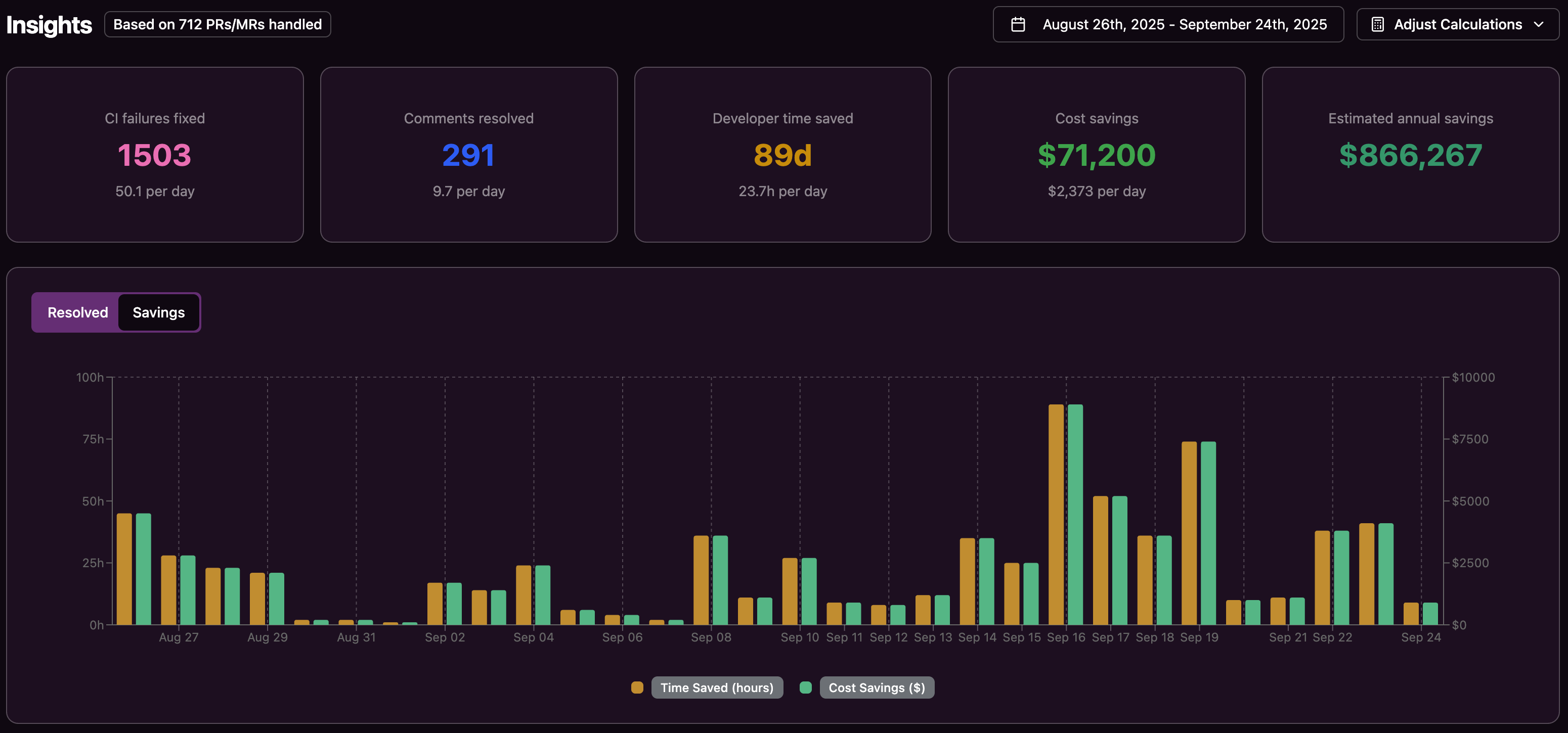
Engineering leaders see the impact through improved throughput and lower opportunity cost. Automated fixes reduce time spent on broken builds, which supports stronger velocity metrics and more predictable delivery.
For a team of 20 developers, partial automation coverage can reclaim thousands of hours per year that would otherwise go to maintenance tasks. Those hours can then shift toward roadmap features, platform investments, or quality improvements.
For DevOps and Platform Engineers: Keeping Pipelines Stable
Platform and DevOps teams benefit from healthier pipelines and fewer emergency requests. Optimized pipelines that use parallelization and early fail-fast testing already cut down on wasted run time. Gitar complements these techniques by repairing many of the failures that still occur.
The result is fewer repeated failed runs, lower CI infrastructure spend, and faster onboarding for new engineers who no longer need deep expertise in every pipeline configuration to be productive.
Install Gitar to scale autonomous CI automation across your development infrastructure.
Healing Engines vs. Suggestion Engines: A Different Automation Model
Healing engines and suggestion engines take very different approaches to resource use. Suggestion engines report problems and sometimes propose patches. Developers must still apply changes, rerun pipelines, and validate outcomes. Healing engines focus on diagnosing, fixing, and confirming issues without extra manual steps.
|
Approach |
Resource Impact |
Developer Interruption |
Time to Resolution |
|
Suggestion engines |
High manual overhead |
Frequent context switching |
Hours to days |
|
Healing engines |
Automatic remediation |
Minimal interruption |
Minutes |
|
Manual debugging |
High resource use |
Strong flow disruption |
Often hours with delays |
|
Gitar |
Optimized allocation |
Protected focus time |
Autonomous fixing |
Gitar focuses on this healing model. AI code reviewers such as CodeRabbit can offer insights and generate patches, but many teams still need to perform the last mile of application and validation. Gitar is built to handle that last mile automatically and keep builds green.
Well-constructed CI and CD pipelines support faster deployments and higher-quality releases. Continuous, autonomous maintenance by a healing engine keeps those pipelines in a healthy state instead of relying on reactive debugging.
Teams that rely only on suggestion engines often still lose many developer hours to implementation and verification. Teams that use Gitar can direct more of those hours toward strategic work, which compounds into faster feature delivery and steady technical improvement.
Putting Higher Automation to Work in 2026
Higher automation changes how engineering organizations use their most limited resource: developer attention. Accurate automated predictions and fixes can sharply reduce maintenance effort when implemented through reliable healing engines, not just advisory tools.
Organizations that adopt autonomous CI healing will spend less time on manual debugging and more time on work that advances product and business goals. CI failures turn from recurring interruptions into background tasks handled by automation.