
Written by: Ali-Reza Adl-Tabatabai, Founder and CEO, Gitar
Key Takeaways
- AI coding tools boost PR volume 60%, which creates review bottlenecks that can cost teams $1M+ annually in lost productivity.
- Structured PR templates with checklists, branch protection, and CODEOWNERS keep reviews consistent and assign the right reviewers automatically.
- Automated CI gates in GitHub Actions block merges on failures, so human reviewers focus on high-value feedback instead of broken builds.
- Gitar auto-fixes CI failures, implements review comments, and guarantees green builds, moving from suggestions to real, validated solutions.
- Teams that apply these practices with Gitar’s 14-day free trial typically cut review cycles by 75% and ship features faster.
Why Code Review Bottlenecks Need More Than Templates
AI coding tools generate more pull requests than most teams can comfortably review. Reviewers lose hours each week context switching, chasing failing tests, and repeating the same checklist questions. Traditional AI reviewers add comments but still leave engineers to fix issues by hand.
Structured PR templates, strong branch protection, and CI gates reduce noise, yet they do not remove the manual work of repairing failures. Teams need a system that not only highlights problems but also fixes them safely. This is the gap Gitar’s healing engine fills.
Solution: Gitar, the AI Healing Engine for Code Review
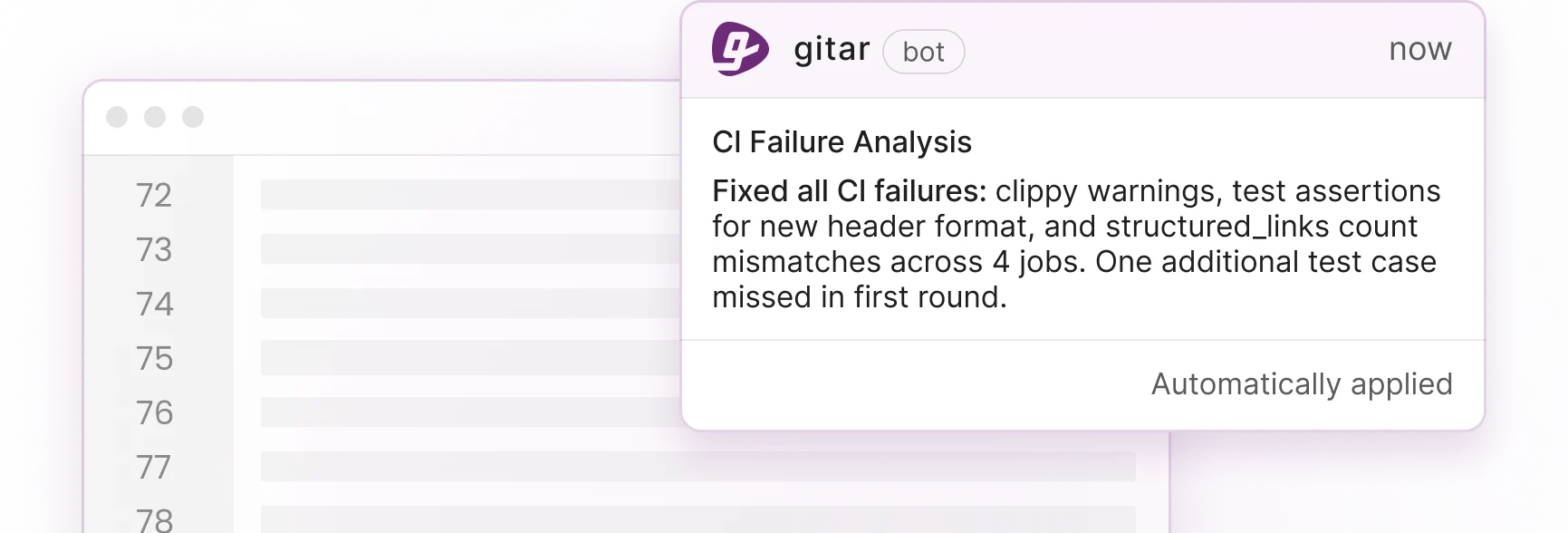
Gitar transforms code review from suggestion to solution. Unlike competitors that leave comments requiring manual work, Gitar automatically fixes CI failures, implements review feedback, and guarantees green builds. When lint errors or test failures occur, Gitar analyzes the failure, generates the correct fix, validates it, and commits the solution automatically. See Gitar documentation for implementation details.
The following table highlights the core capability gap between traditional AI reviewers and Gitar’s healing approach.
|
Capability |
Competitors |
Gitar |
|
Auto-apply fixes |
No |
Yes |
|
CI auto-fix |
No |
Yes |
|
Green builds |
No |
Yes |
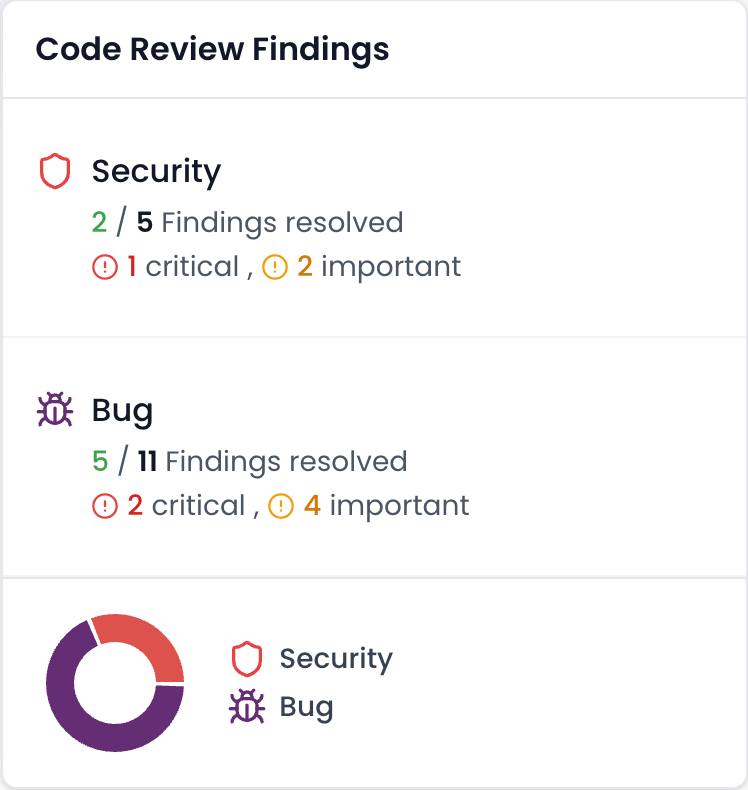
Gitar consolidates CI analysis, review feedback, and rule evaluations into a single dashboard comment that updates in place. Teams avoid notification spam and scattered inline comments. Reviewers see one clean interface with complete context.
Start your 14-day free Team Plan trial to put these automation practices into action with Gitar.
The next nine practices build a complete system for automated, reliable code review. Each practice reinforces the others and increases the impact of tools like Gitar.
1. Craft Structured PR Templates That Guide Reviewers
Structured PR templates give every reviewer the same clear context. GitHub supports standardized pull request templates through a PULL_REQUEST_TEMPLATE.md file in the .github directory, with sections for description, change type, and testing.
Create a comprehensive template that walks both authors and reviewers through the review. Start with WIP status and completion checklists so everyone knows whether the PR is ready. Add testing instructions and verification links so reviewers can confirm behavior without guessing. Include risk assessment and deployment notes to surface production impact early. Link related issues and documentation updates so the change never appears in isolation.
Example template structure:
2. Enforce Templates with Branch Protection and CODEOWNERS
Branch protection and CODEOWNERS turn your templates into enforceable standards. GitHub protected branches block direct pushes to main and require one or more approvals before merging. CODEOWNERS files then assign the right reviewers automatically based on file paths.
Use a focused set of branch protection settings that work together as a gate. Require pull request reviews before merging so no change skips human or AI review. Require status checks to pass so failing tests or scans never reach production. Keep branches up to date to avoid merging stale code. Restrict pushes to matching branches so all changes flow through the same controlled path.
Example CODEOWNERS configuration:
3. Automate CI Gates with GitHub Actions Workflows
Automated CI gates catch broken code before reviewers spend time on it. GitHub status checks run tests, linters, and security scans on every pull request and block merges when checks fail. This keeps review time focused on design and correctness.
Start with a simple GitHub Actions workflow that runs your core checks on each PR.
Use path filtering with settings like paths-ignore: [“*.md”, “docs/**”] so CI skips runs for documentation-only changes. This keeps pipelines fast and reduces wasted compute.
4. Integrate Gitar as Your AI Reviewer and Summarizer
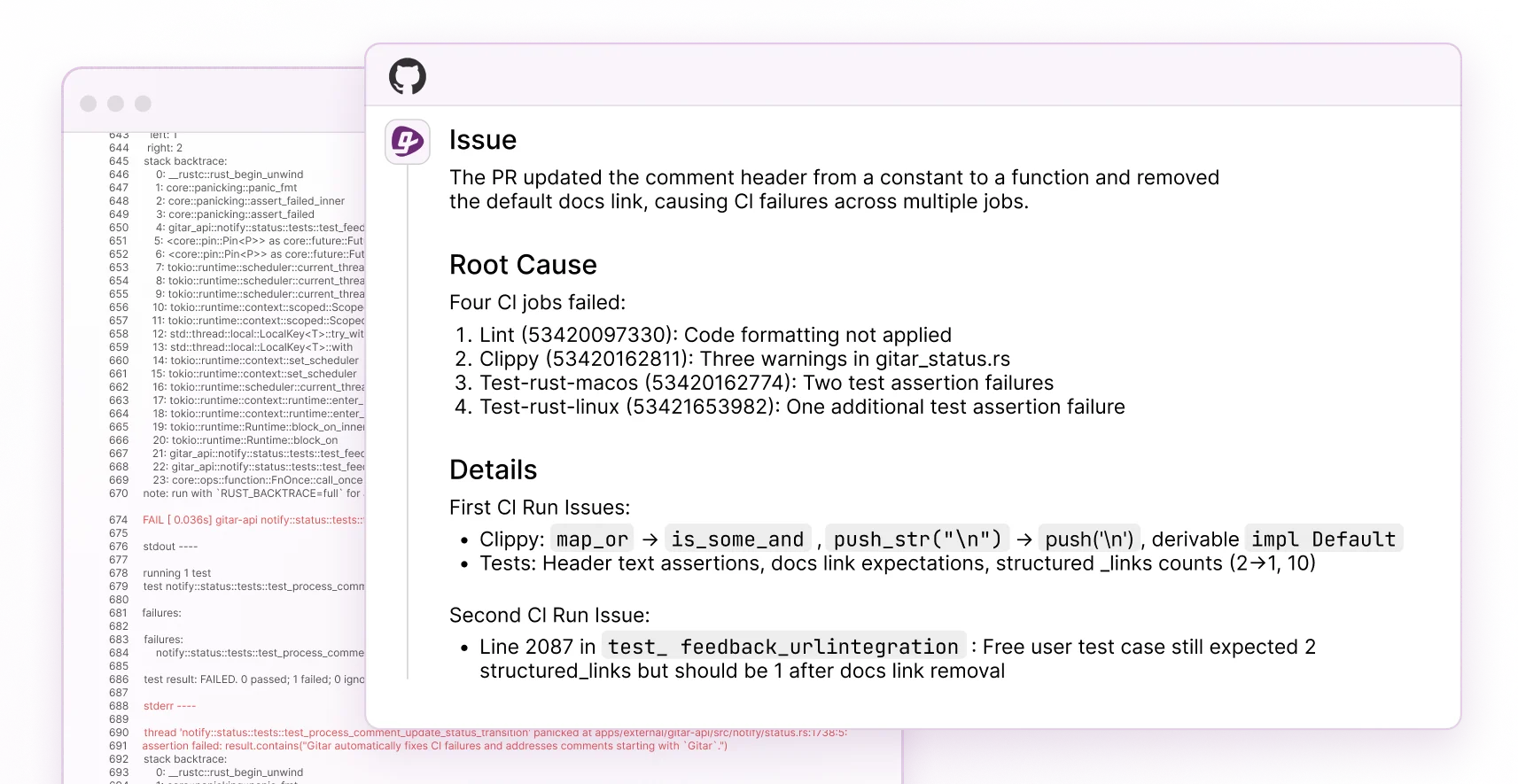
AI reviewers amplify the value of your templates and CI gates. Gitar adds deep analysis on top of your existing process. Install the GitHub App to receive a single living dashboard comment that consolidates high-value insights instead of noisy inline threads.
Gitar’s core capabilities work together as one review layer. Automatic PR summaries explain changes in business terms. CI failure analysis and auto-fixes repair broken builds. Security and performance checks highlight risky patterns. @gitar commands let reviewers request focused actions without leaving the PR.
Configure review thresholds and enable PR merge blocking based on code review verdict severity. This keeps quality high while Gitar accelerates the path to a green build. For configuration examples and advanced options, see the Gitar setup and rules documentation.
Even the strongest AI reviewer performs best when each PR stays focused and manageable. The next practice keeps change size within that sweet spot.
5. Keep PRs Under 400 LOC with Clear Prompts
Smaller pull requests ship faster and contain fewer bugs. PRs larger than 400–800 lines sharply increase bug risk and review delays. Studies across 212,687 PRs show 200–400 line changes reach 66–75% defect detection rates.
Use a simple size checklist. Target under 400 LOC per PR whenever possible. Use stacked PRs for large features so each step remains reviewable. Separate refactors from feature work to avoid mixing concerns. Break complex changes into logical commits and try to touch five files or fewer per PR.
Add automated size checks in your CI pipeline that flag oversized PRs and suggest splitting strategies. This keeps both human and AI reviewers effective.
6. Add Security and Performance Checklists to Every PR
Security and performance checks belong in the PR flow, not as an afterthought. GitHub Advanced Security integrates secret scanning, CodeQL code scanning, and dependency review as automated checks. Combine these tools with human-readable checklists in your template.
Security checklist items guide authors through common failure points. Confirm there are no hardcoded secrets or API keys. Validate all user input. Guard against SQL injection and XSS. Run dependency vulnerability scans and verify authentication and authorization logic.
Performance items keep regressions out of production. Review database query patterns for efficiency. Watch memory usage and API response time impact. Confirm caching strategies and resource cleanup. Place these lists directly in the PR template so authors self-check before reviewers engage.
7. Use Gitar Auto-Fix for CI Failures and Review Feedback
Auto-fix capabilities remove the most painful review bottlenecks. On October 2, 2025, Gitar added CI failure analysis that automatically inspects failures and reports insights in the dashboard comment. The platform now combines that analysis with targeted fixes and validation. For a full feature walkthrough, see the Gitar CI and auto-fix guides.
When CI fails, Gitar follows a clear healing sequence. It first analyzes failure logs to understand the root cause. With that context, it generates code fixes using knowledge of the full codebase. Gitar then validates those fixes by running your tests. After successful validation, it commits the solution automatically and updates status in the single dashboard comment so everyone sees progress in one place.
Configure natural language rules in .gitar/rules/*.md to control behavior:
Use @gitar commands for on-demand changes. For example, “@gitar refactor this to use async/await” triggers an automatic refactor plus validation, which shortens feedback loops even further.
8. Track Code Review Metrics and ROI
Clear metrics show whether your automation efforts work. Group 107 highlights Review Cycle Time, from PR opened to merged, as a key efficiency metric. DORA benchmarks define elite teams as having Time-to-First-Review under 1 hour and review completion under 6 hours.
These improvements translate into concrete, measurable outcomes. The following table shows typical results teams achieve after combining these practices with Gitar’s automation.
|
Metric |
Before |
After Gitar |
Savings |
|
Time on CI/review |
1hr/day |
15min |
$750K/yr |
|
Review cycle time |
48hrs |
12hrs |
75% faster |
|
CI failure rate |
25% |
5% |
80% reduction |
|
Context switching |
Multiple/day |
Near-zero |
25% productivity |
Track a small set of core metrics. Monitor time to first review and review completion time. Watch change failure rate and defect escape rate. Include developer satisfaction scores so you see how automation affects morale as well as throughput.
9. Build Feedback Loops and a Review-Friendly Culture
Automation delivers lasting value only when culture supports it. GitHub reviewers should aim to give initial feedback within 24 hours of PR creation so authors keep context and momentum.
Use a simple culture checklist that aligns with your automated workflow. Encourage positive, constructive feedback that focuses on code, not people. Set a 24-hour first review SLA and treat it as a team habit. Celebrate time saved through automation and highlight examples where Gitar prevented incidents. Train the team on @gitar commands and features so everyone can benefit. Run regular retrospectives on the review process and recognize reviewers who provide clear, thoughtful comments.
Establish feedback loops around your automation. Track which auto-fixes save the most time and extend those patterns to more repositories. Adjust rules and templates based on real-world outcomes so your system keeps improving.
Install Gitar now to apply these practices, automatically fix broken builds, cut review time by up to 75%, and ship higher quality software faster.
Frequently Asked Questions
We use CodeRabbit. How is Gitar different?
CodeRabbit provides suggestions that still require manual implementation. Gitar automatically fixes issues and validates that the fixes work. CodeRabbit charges $15–30 per seat for comments, while Gitar offers a 14-day free trial of full auto-fix capabilities. Instead of paying for suggestions you must still apply, you get working solutions that drive green builds.
Can we trust automated commits to our codebase?
Gitar supports configurable automation levels so you stay in control. Start in suggestion mode and approve every fix while you build trust. Enable auto-commit for specific failure types, such as lint errors or test fixes, as confidence grows. All commits are GPG-signed and include detailed explanations. You choose how aggressive automation should be while Gitar handles validation and implementation.
Our CI pipeline is complex. Will Gitar work for us?
Complex CI environments benefit the most from Gitar. The platform emulates your full environment, including SDK versions, multi-dependency builds, and third-party integrations. Enterprise deployments run the agent inside your own CI with access to secrets and caches. Fixes are validated in the same conditions that run in production, not in a simplified sandbox.
How do we set up PR checklists in GitHub?
Create a .github/pull_request_template.md file in your repository with markdown checklists. Include sections for description, testing verification, security considerations, and documentation updates. GitHub automatically applies this template to new PRs. Combine it with branch protection rules that require status checks and CODEOWNERS for automatic reviewer assignment based on file changes.
What is the learning curve for these practices?
Most teams see quick wins from structured PR templates and automated CI gates within the first week. Gitar’s natural language rules remove complex YAML configuration, since you describe behavior in .gitar/rules/*.md files. The 14-day trial gives full access to auto-fix features so teams can experience the end-to-end workflow before committing.
Conclusion: Turn Code Review into a Healing Workflow
The AI coding surge created a review bottleneck that suggestion-only tools cannot relieve. These nine practices build a strong foundation for automated code review with PR templates, yet real change comes from a healing engine that fixes code, not just comments on it.
Gitar extends your existing process into autonomous problem-solving. While many tools charge premium prices for basic commentary, Gitar proves its value through working fixes and measurable velocity gains during the trial period.
The metrics you track translate into real business impact. Faster review cycles and fewer CI failures accelerate your release cadence and reduce firefighting. The bottleneck shifts away from manual toil and back to creative problem solving, where developers create the most value.
Install Gitar now to put these practices into production, keep builds green, and let your team focus on shipping features instead of chasing failures.