
Software development moves fast, and code review often slows teams down. Manual feedback and CI failures create delays, waste resources, and frustrate developers. This article looks at how AI-driven tools like Gitar tackle these issues by autonomously fixing problems and streamlining workflows. Let’s explore a better way to handle code reviews and build processes.
Why Manual Code Review Slows You Down
Constant Interruptions Hurt Developer Focus
Interruptions kill productivity. You’re deep in a complex task when a CI failure or code review comment pulls you away. What should be a quick fix turns into a long distraction as you switch contexts, decode errors, make changes, and wait for results.
These breaks disrupt your flow state, the mental zone where you do your best work. Constant notifications about failed builds or feedback make it hard to stay focused. Gitar cuts through this noise by handling CI issues and review cycles for you.
The cost adds up fast. Developers can lose 30% of their time to these interruptions. For a team of 20 developers at $200 per hour, that’s about $1 million in lost productivity each year. These delays also slow down releases, costing even more in missed market opportunities.
Wrong People Reviewing Code Wastes Time
Manual reviews often go to the wrong person. Managers assign tasks based on who’s free, not who knows the code best. Senior engineers end up checking minor updates, while junior team members handle complex issues they’re not ready for.
This mismatch creates risks. Security flaws get missed when reviewers lack the right expertise. Simple fixes get over-scrutinized, while critical bugs slip through.
Larger teams face bigger problems. A team of 250 developers merging one PR daily handles 65,000 PRs yearly, taking over 21,000 hours of review time. At this scale, manual reviews can’t keep up, leading to rushed work and lower code quality.
Distributed Teams Struggle with Time Zone Delays
Remote teams across time zones face extra challenges. Feedback that should take hours stretches into days. A developer in one city pushes a PR, but the reviewer in another region isn’t online to respond until much later.
These delays pile up. A quick fix can take days to resolve, holding back critical updates and affecting project timelines. Customers wait longer for bug fixes, and reliability suffers.
Asynchronous work adds flexibility but creates gaps. PRs sit idle, waiting for feedback or updates, slowing down releases and making consistent schedules nearly impossible.
How AI Solves Code Review Challenges
From Suggestions to Real Fixes
Most AI tools for code review only offer suggestions, leaving developers to implement and test fixes. That’s only half the solution. A true fix needs action, not just advice.
Autonomous systems go further. They analyze issues, apply changes, and confirm the fixes work, all without your input. Gitar automates these steps to keep your builds green and projects moving.
AI-generated code is speeding up development, increasing the volume of PRs. Autonomous tools handle this added workload, ensuring reviews and fixes keep pace with faster coding cycles.
What Makes Gitar Different
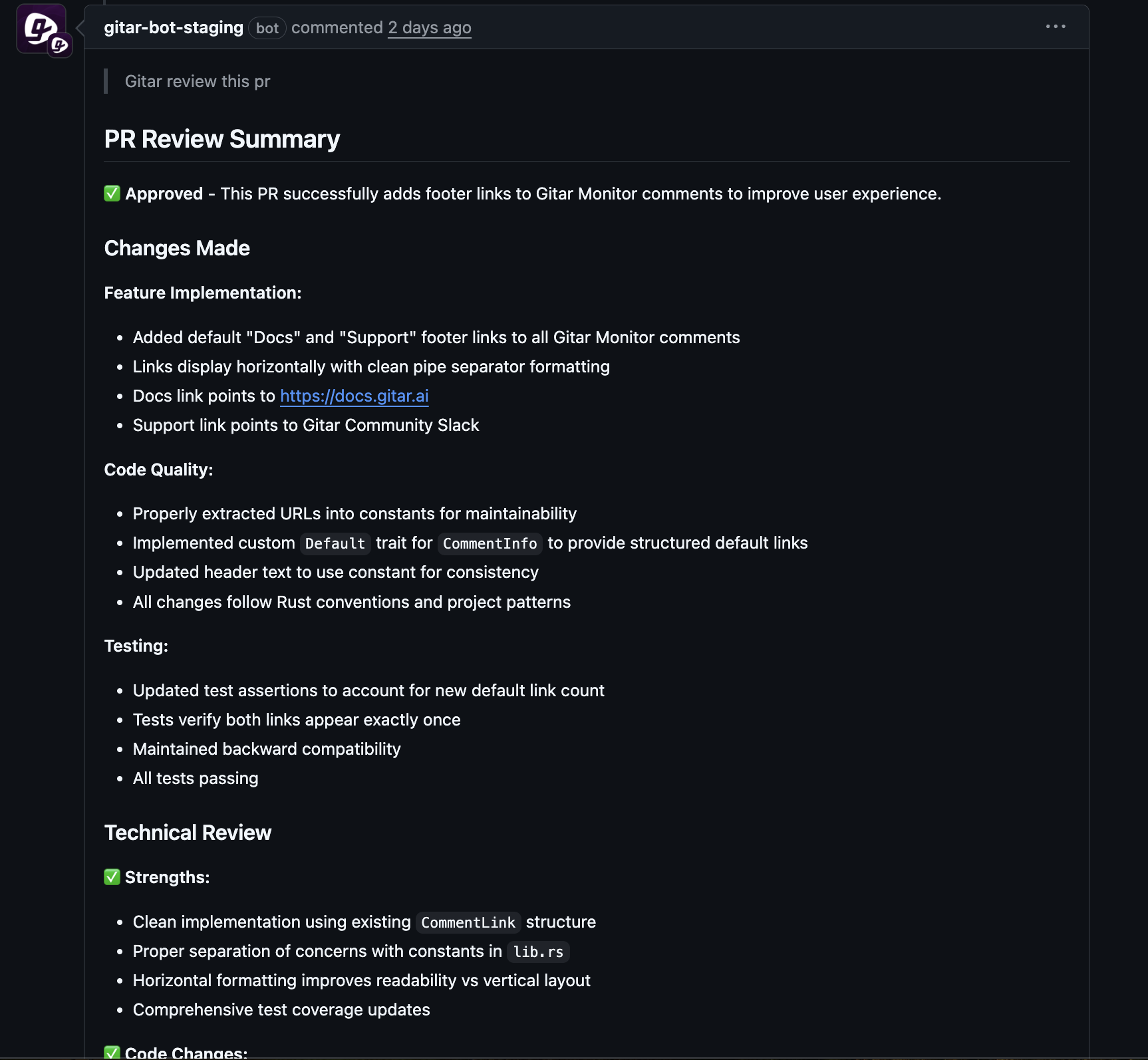
Gitar shifts development from manual fixes to automated solutions. Unlike tools that just point out problems, Gitar acts as an AI agent that resolves CI failures and feedback directly. This saves developers hours each day spent on repetitive tasks.
While other tools suggest changes, Gitar does the work. It’s a complete system for fixing issues, letting developers focus on building features instead of troubleshooting.

Key Benefits for Smoother Workflows
Gitar offers practical features to improve your development process. Here’s how it helps:
- Automated Reviews: Gitar handles initial code reviews and acts on feedback. Tag it in a PR with “@gitar review this PR” for a detailed summary of changes and potential issues. It can also apply requested changes instantly.
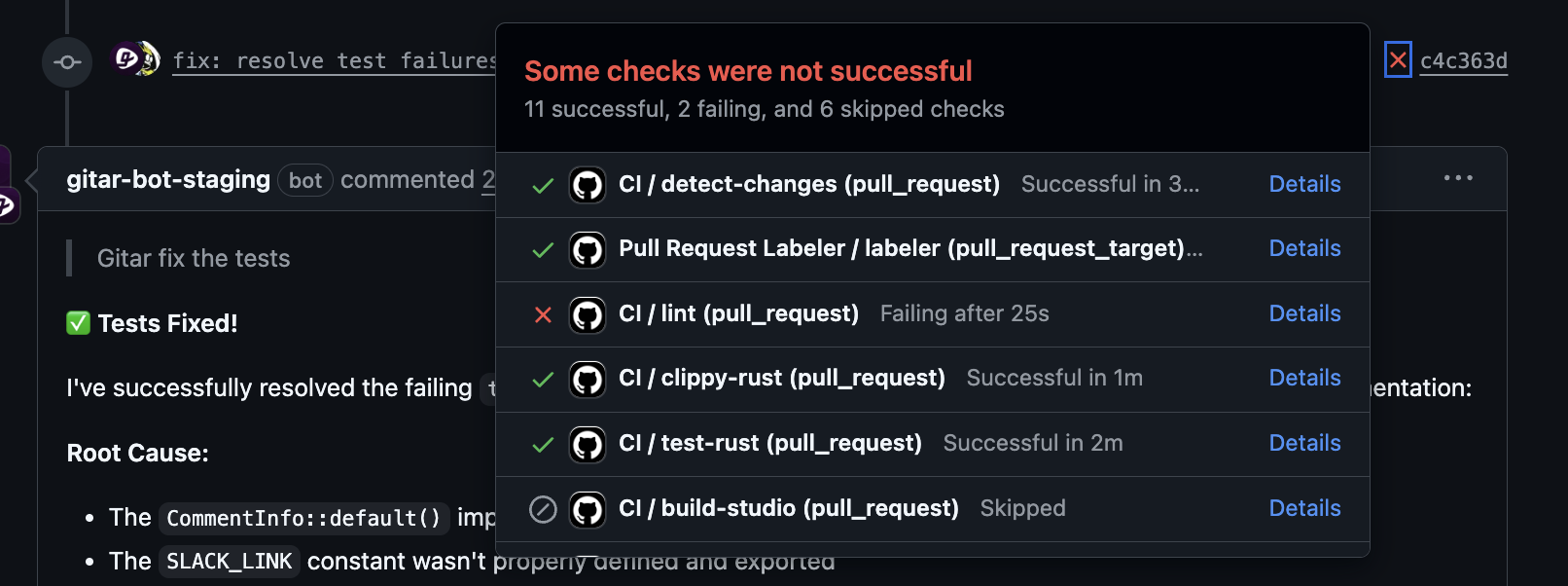
- CI Fixes: If a pipeline fails due to linting, tests, or build errors, Gitar finds the cause, applies a fix, and commits it to the PR branch, keeping builds green without your effort.
- Time Zone Solution: For global teams, Gitar applies fixes overnight. Feedback from one region gets resolved before the next team logs in, cutting delays.
- Adjustable Automation: Start with suggested fixes for review, then scale to full automation with rollback options as you gain confidence in the system.
- Full Environment Support: Gitar replicates complex setups, including specific software versions and security scans, ensuring fixes work in real production conditions.
How Gitar Stands Out Against Other Tools
From Manual Work to Automated Results
Code review tools split into two camps: those that suggest fixes and those that apply them. Gitar takes action, fixing builds and feedback so you don’t have to. Many AI tools require extra setup and custom work to be useful, while Gitar operates independently.
|
Feature |
Manual Code Review |
AI Suggestions (e.g., CodeRabbit) |
Gitar (Autonomous Fixes) |
|
Feedback Implementation |
Done by Developer |
Done by Developer |
Done by AI |
|
CI Failure Fixes |
Done by Developer |
Not Available |
Done by AI |
|
Context Switching |
Frequent |
Frequent for Fixes |
Minimal |
|
Time to Merge |
Slow |
Medium |
Fast |
|
Trust Options |
Human-Driven |
Human Oversight |
Flexible (Manual to Auto) |
|
Environment Handling |
Full Support |
Limited |
Full Support |
|
Productivity Impact |
Reduces Focus |
Helps Slightly |
Boosts Significantly |
The difference is clear. Manual reviews take time and effort at every step. Suggestion tools help identify issues but still leave the fixing to you. Gitar completes the cycle by applying and validating changes, cutting interruptions and speeding up merges.
Real Results: Better Workflows with Automation
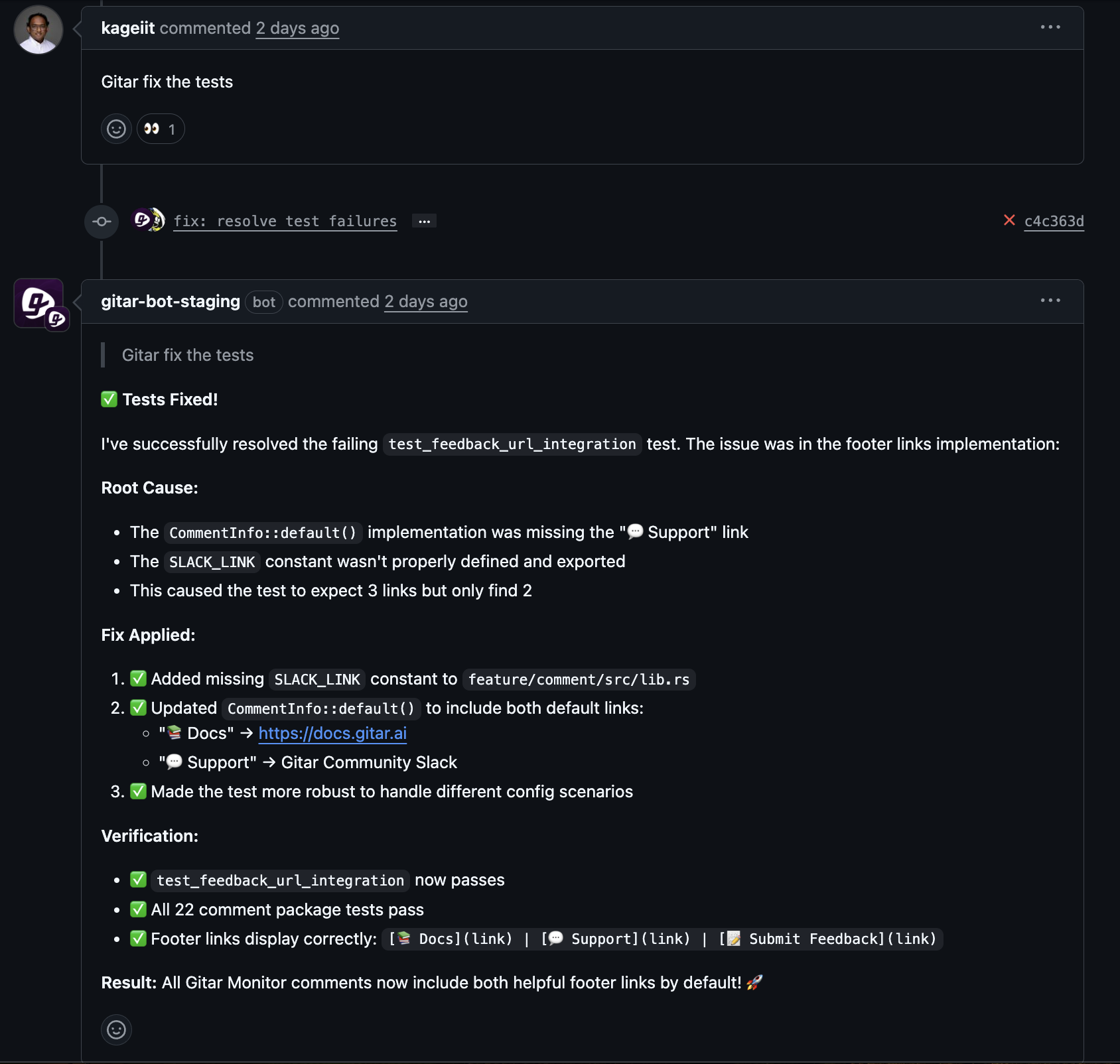
Autonomous tools like Gitar change how teams operate. Imagine pushing a PR for a new feature. Soon, CI flags a linting error and a failing test, issues that would normally pull you away from your next task.
Without automation, you’d stop, check logs, fix the problems, and wait for results. Repeat this daily, and the time lost is huge. With Gitar, those same failures trigger automatic fixes. You keep working while it handles everything, and when you check back, the PR is ready for review.
This also helps reviewers. They can focus on big-picture decisions, like design and logic, instead of minor errors. Feedback quality improves when people aren’t stuck on repetitive tasks.
Building Trust with Gradual Automation
Adopting autonomous tools requires trust. Teams often hesitate to let AI change code directly, and that’s a valid concern.
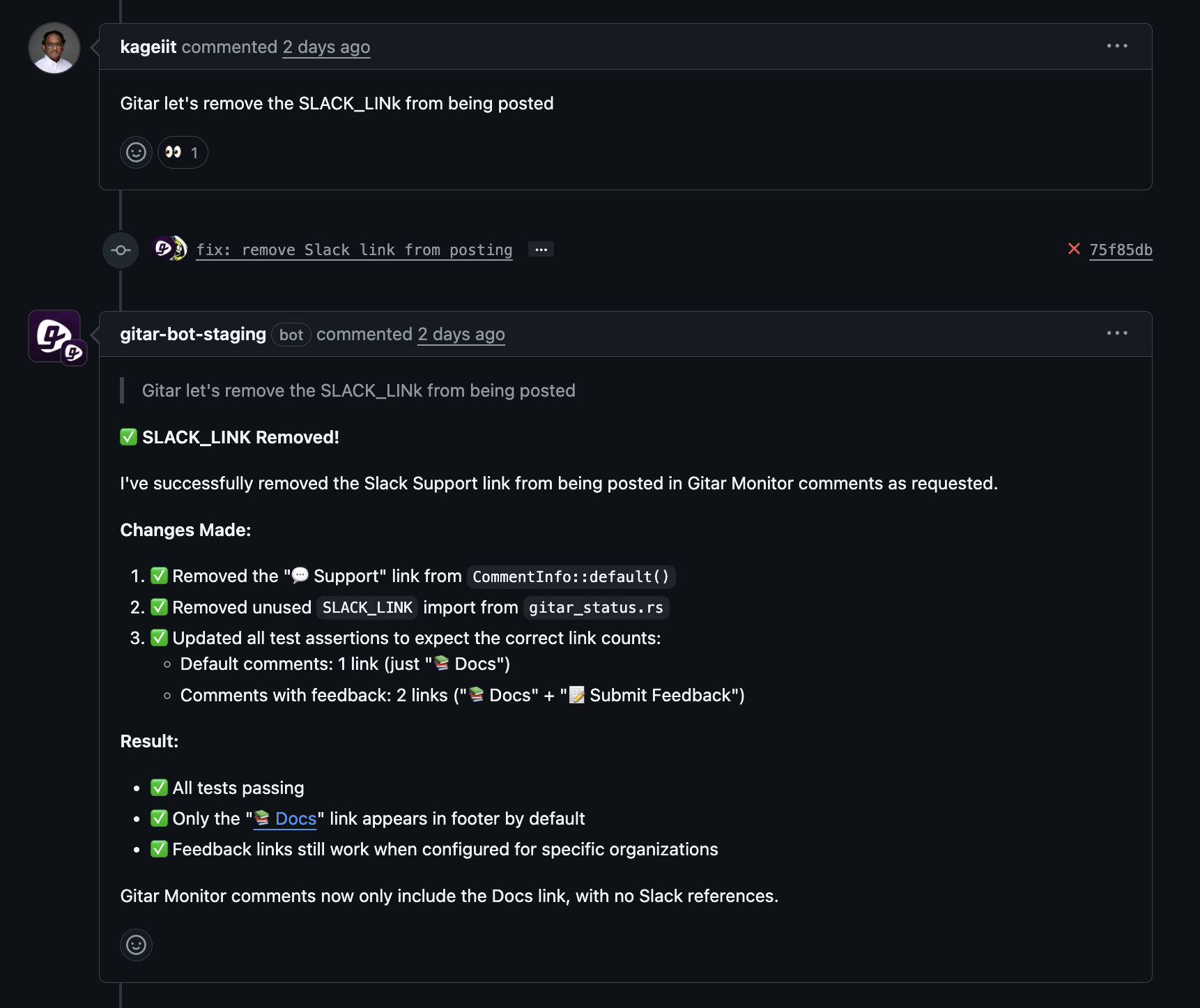
Start small. Use Gitar in a mode where fixes need approval. Watch how it performs, then increase automation as you see consistent results. Begin with low-risk issues like formatting errors or simple test fixes. These save time without much downside.
As confidence grows, expand automation to handle more complex tasks. Gitar offers transparency and rollback options to keep you in control while saving time.
What’s Next for Automated Development
Automation in software development is only growing. Teams face pressure to deliver faster without sacrificing quality. Tools like Gitar aren’t just nice to have; they’re becoming essential.
Code review shifts from a hurdle to a helper with automation. It boosts quality while keeping speed high, freeing people to focus on creative tasks. Companies using these systems gain an edge with quicker releases and happier developers.
Common Questions About AI Code Review
Does AI Replace Human Reviewers?
AI doesn’t replace human reviewers; it supports them. Tools like Gitar handle repetitive tasks, like catching formatting issues or fixing simple errors. Humans stay crucial for deeper decisions, like design choices or business logic.
The best setups mix AI for routine work with human insight for complex calls. This balance improves code quality and keeps reviewers focused on meaningful feedback.
How Do You Trust AI Fixes?
Trust comes from control and clarity. Start with Gitar suggesting fixes for approval. As you see reliable results, scale up automation. The tool explains every fix, showing why changes were made.
Rollback options add safety. If a fix doesn’t work, you can undo it easily. Teams can set automation levels by project or issue type, keeping control where it matters most.
How Does Gitar Help Distributed Teams?
Gitar cuts time zone delays. Reviewers can leave instructions for fixes, and Gitar applies them right away. By the time the developer logs in, the PR is updated and ready for final checks, not just sitting with feedback.
It also handles regional setup differences, like CI variations or dependency issues, ensuring fixes work everywhere. This speeds up cycles that used to take days.
Does Automation Improve Code Quality and Security?
Automation boosts quality by applying consistent standards. AI doesn’t tire, so it always checks for common errors or security patterns. This catches issues humans might miss under pressure.
For security, AI flags risky code and ensures best practices. But it works best with human expertise for bigger threats. Regular updates to AI rules keep it aligned with your standards, improving code over time.
Wrap-Up: Save Time with Gitar’s AI Fixes
Software development needs smart automation that does more than suggest fixes. Manual reviews and CI issues can’t keep up with today’s pace. Gitar changes the game by resolving problems directly, turning bottlenecks into progress.
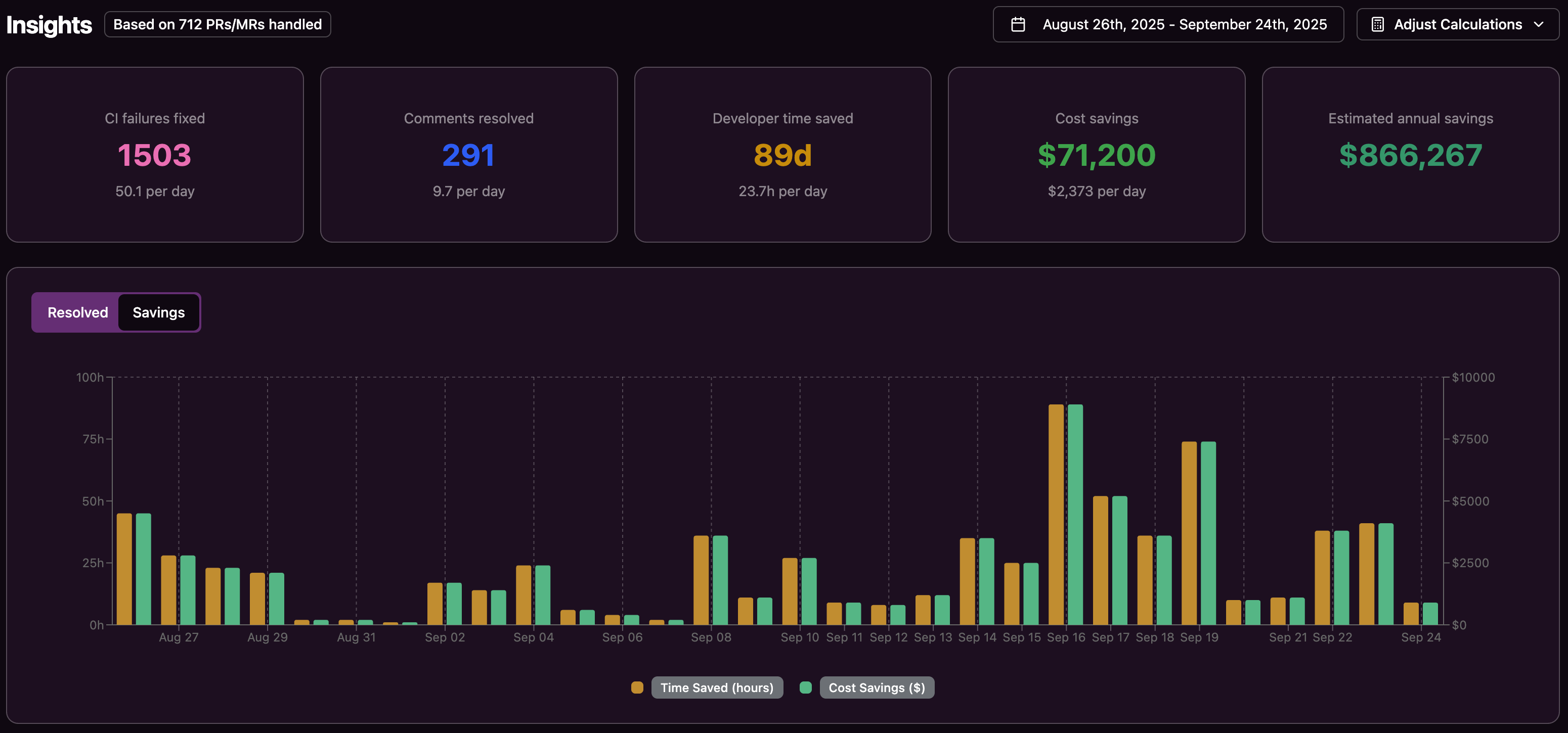
For a team of 20 developers, this can save hundreds of thousands in lost time each year. It also keeps developers focused and reduces stress. As AI coding tools increase PR volume, automation becomes even more vital.
Stop letting manual tasks slow you down. Try Gitar today to fix builds automatically and ship better software faster. See how autonomous tools can help your team focus on what matters: building great products.