
Manual code reviews and CI failures slow down engineering teams, delay releases, and drain energy. This article dives into how an autonomous AI tool like Gitar can handle fixes and feedback, cut interruptions, and boost productivity. See how it changes the game for continuous integration and delivery.
Why Manual Code Reviews Hurt Your Team: The Real Cost of CI Delays
Context Switching and Developer Burnout
Context switching takes a heavy toll on developers. A failing build or CI error pulls you out of focused work to fix trivial issues like linting errors or tests. Studies show it takes about 23 minutes to regain focus after an interruption, and for complex tasks, recovery can take even longer.
These constant disruptions create a reactive mindset. Instead of solving meaningful problems, developers spend energy on routine debugging. Up to 30% of their time can go to CI issues and code review cycles. For a 20-person team with an hourly cost of $200, that’s around $1 million in lost productivity each year.
Beyond finances, the mental strain adds up. Developers join the field to create, not to sift through error logs or wait for minor approvals. This mismatch fuels burnout, raises turnover, and lowers team morale.
CI Failures and Unreliable Tests: Slowing Down Delivery
Complex CI pipelines often fail at multiple points, even on simple changes. Flaky tests frequently cause issues, failing due to timing problems or external dependencies rather than bad code. These tests pass locally but falter in CI, leaving developers puzzled.
Build errors also arise from mismatched scripts, tool versions, or environment settings. A minor dependency conflict can turn a quick merge into hours of debugging. Such CI failures directly stall development, disrupt workflows, and delay critical releases with wider project impacts.
Even small configuration errors in YAML files or scripts, like a misplaced space, can stop a deployment pipeline. These issues demand manual fixes, further slowing progress.
Want to fix builds automatically? Install Gitar now to ship better software faster.
Time Zone Gaps: A Challenge for Global Teams
Distributed teams face extra hurdles with code reviews. A 12.5-hour time difference between San Francisco and Bangalore can stretch a simple pull request into days. Feedback given at the start of one developer’s day might not be seen until the next by their counterpart across the globe.
Each round of comments or CI failure adds 12 to 24 hours of waiting. For teams on tight schedules or managing releases across regions, these delays become major obstacles. Traditional AI tools don’t help much, as their suggestions still need manual action, keeping developers stuck in the same slow cycle.
More Code, Bigger Merge Problems: The Right-Shift Effect
AI coding tools like GitHub Copilot speed up code creation, but they move bottlenecks to validation and merging. More code means more pull requests, tests, and failure points. Every line must pass CI checks, reviews, and security scans, often taking more time than writing the code itself.
This shift from creation to validation demands a different focus. Developers end up debugging pipelines or addressing feedback instead of building features. The result? Tools meant to save time can create new workloads at the delivery stage.
Gitar: Your AI Partner for CI Fixes and Faster Reviews
Gitar stands out as an autonomous AI agent that doesn’t just spot issues, it resolves them. Unlike tools offering only suggestions, Gitar analyzes CI failures or feedback, finds the root cause, applies fixes, and validates them, all without developer input.
Here’s what Gitar offers:
- Automatic fixes and validation for issues like linting errors or test failures, ensuring builds stay green.
- Full replication of complex CI environments with specific SDKs and tools like SonarQube, for accurate solutions.
- Direct action on review feedback within pull requests, cutting down on manual exchanges.
- Flexible trust settings, from suggestions to auto-commits, with rollback options for control.
- Support for multiple platforms like GitHub Actions, GitLab CI, and CircleCI, unlike single-system competitors.

Ready to save time and speed up releases? Book a demo with Gitar today.
How Gitar Boosts Team Speed Instantly
Stop Context Switching and Protect Developer Focus
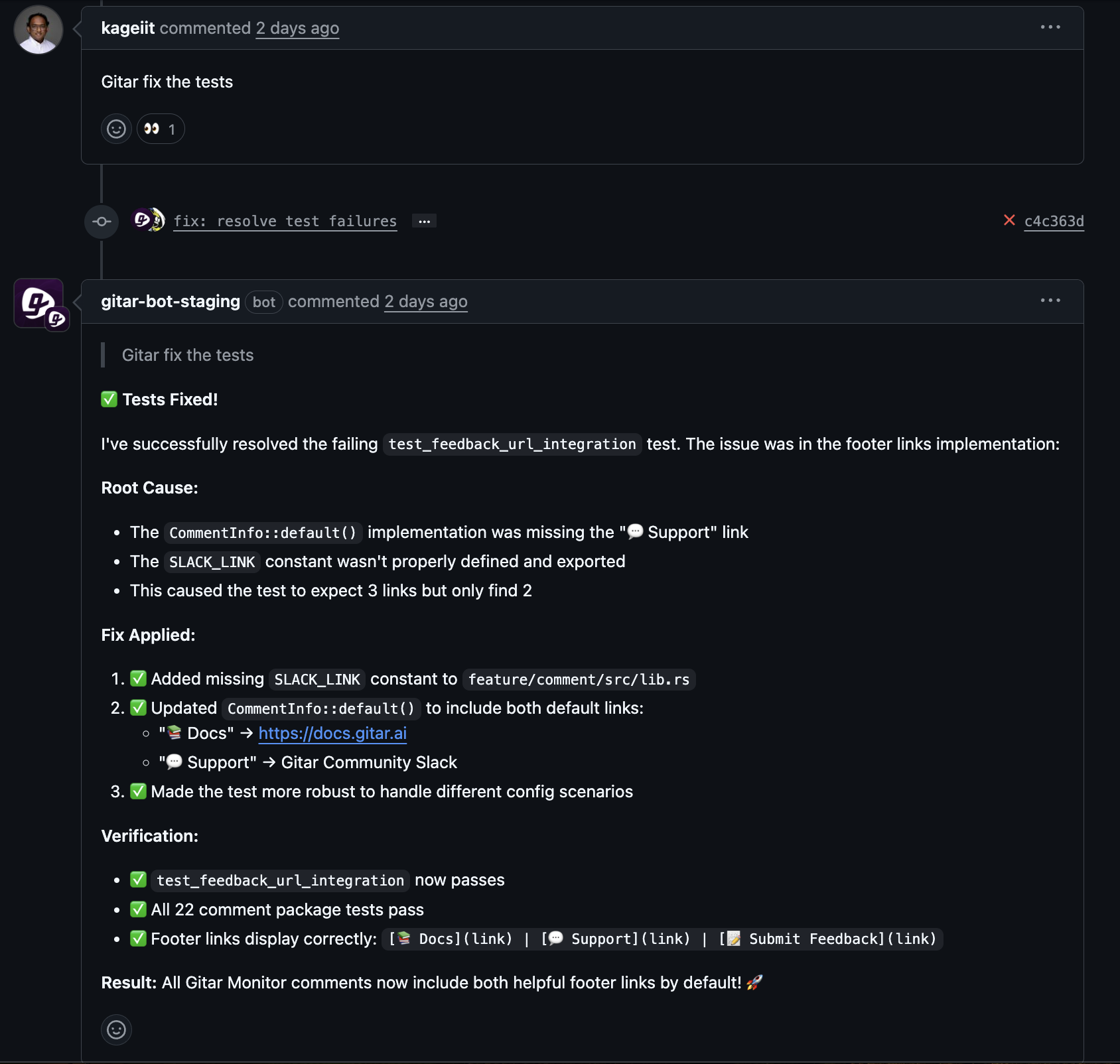
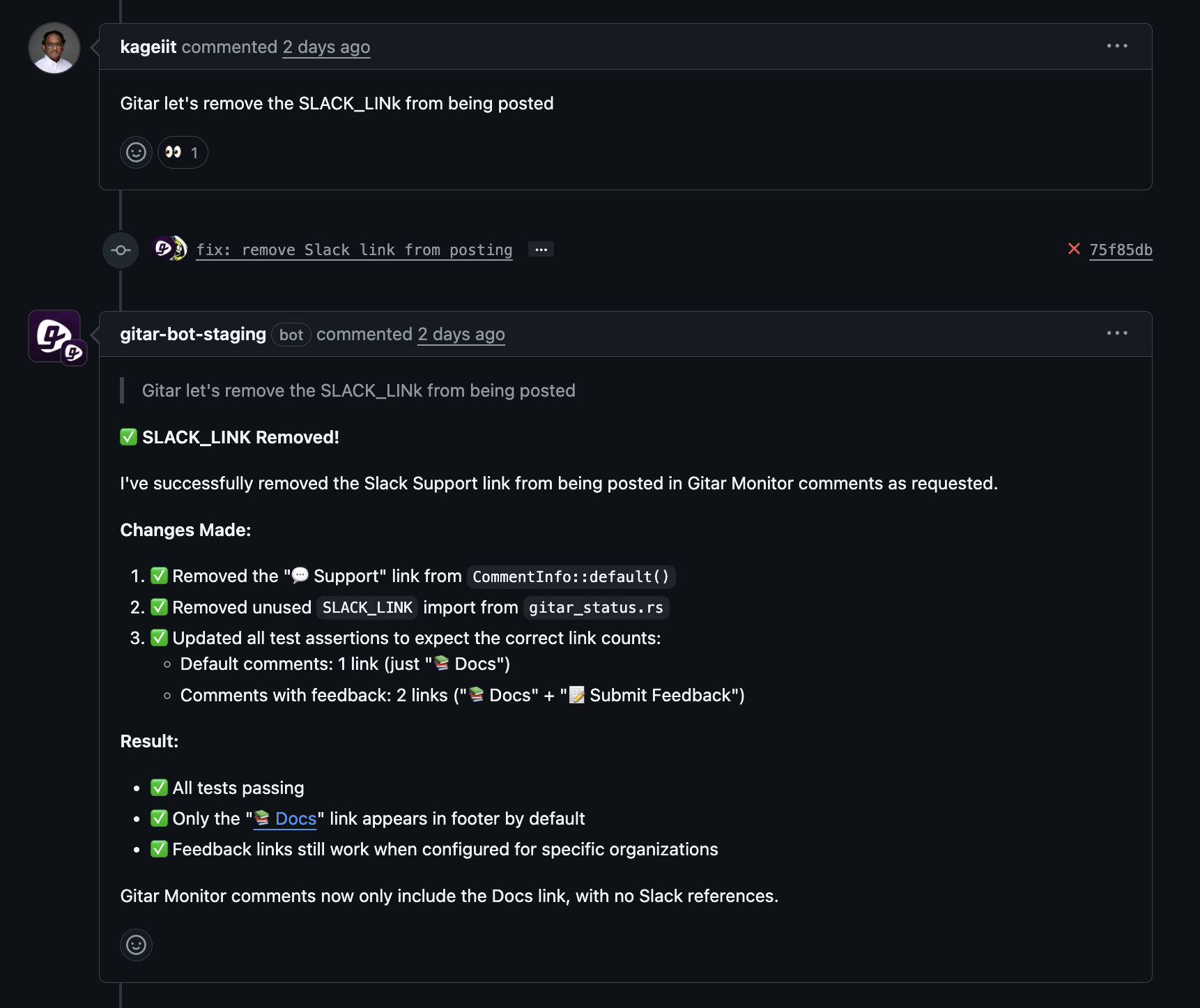
Gitar keeps developers in their flow by handling CI disruptions. When a build fails due to a linting issue or test error, Gitar steps in to analyze logs, fix the problem, and commit the update, often before anyone notices.
Developers experience a shift in workflow. They push a commit, move to their next task, and later find that Gitar has fixed the issue with a clear note. Instead of interruptions, they see completed pull requests ready to merge. This lets them focus on creative work, driving real productivity.
Speed Up Reviews for Distributed Teams
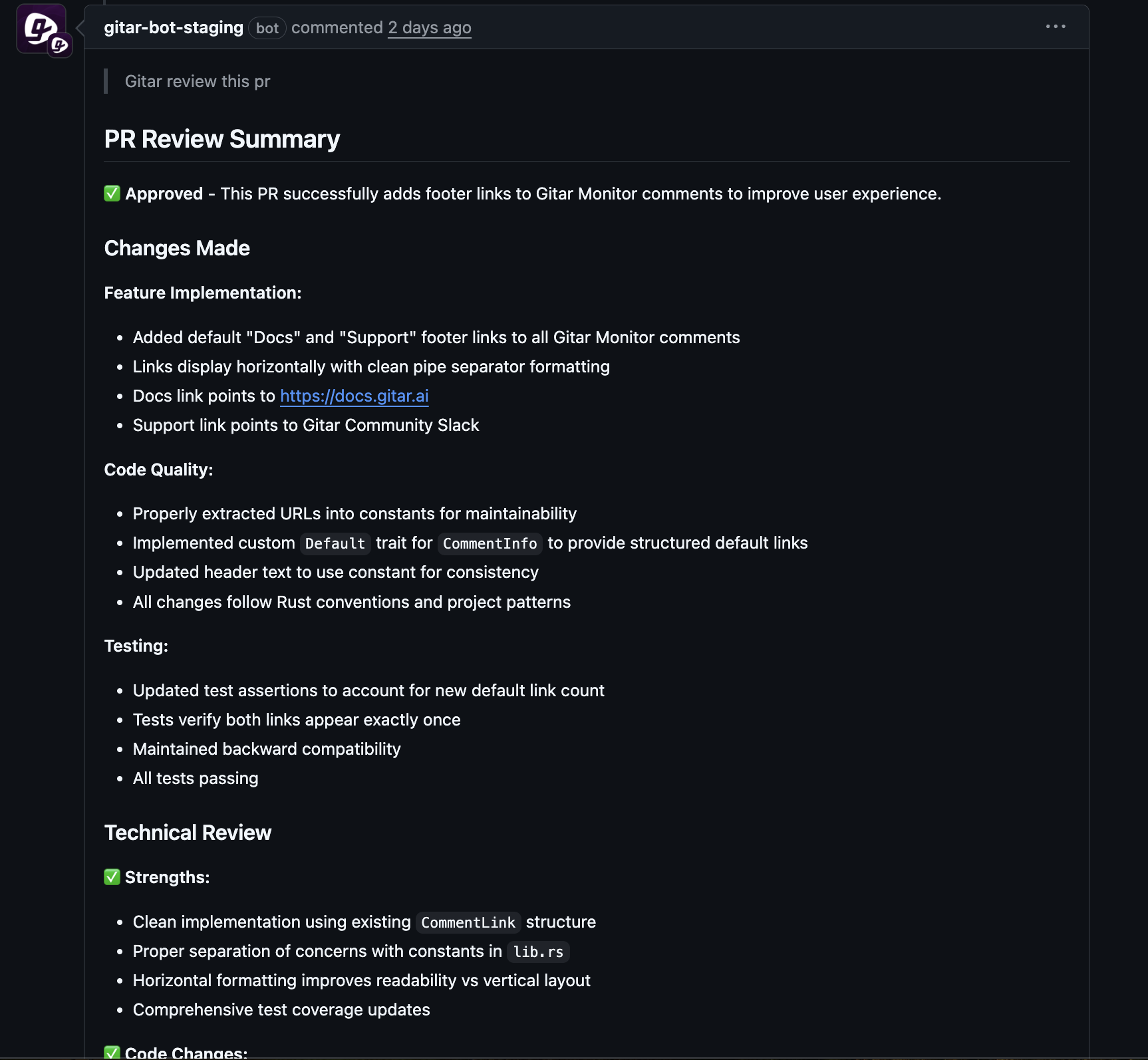
Code reviews often slow down when balancing detail with speed. Gitar changes this by acting on feedback directly. A reviewer can leave a comment tagging Gitar, which then applies the change and commits it with an explanation. For global teams, this means feedback gets handled instantly, even across time zones.
This cuts waiting time significantly. Fixes are ready for approval before the original developer logs in, making collaboration smoother and faster for teams spread worldwide.
Handle Complex CI Builds Without Hassle
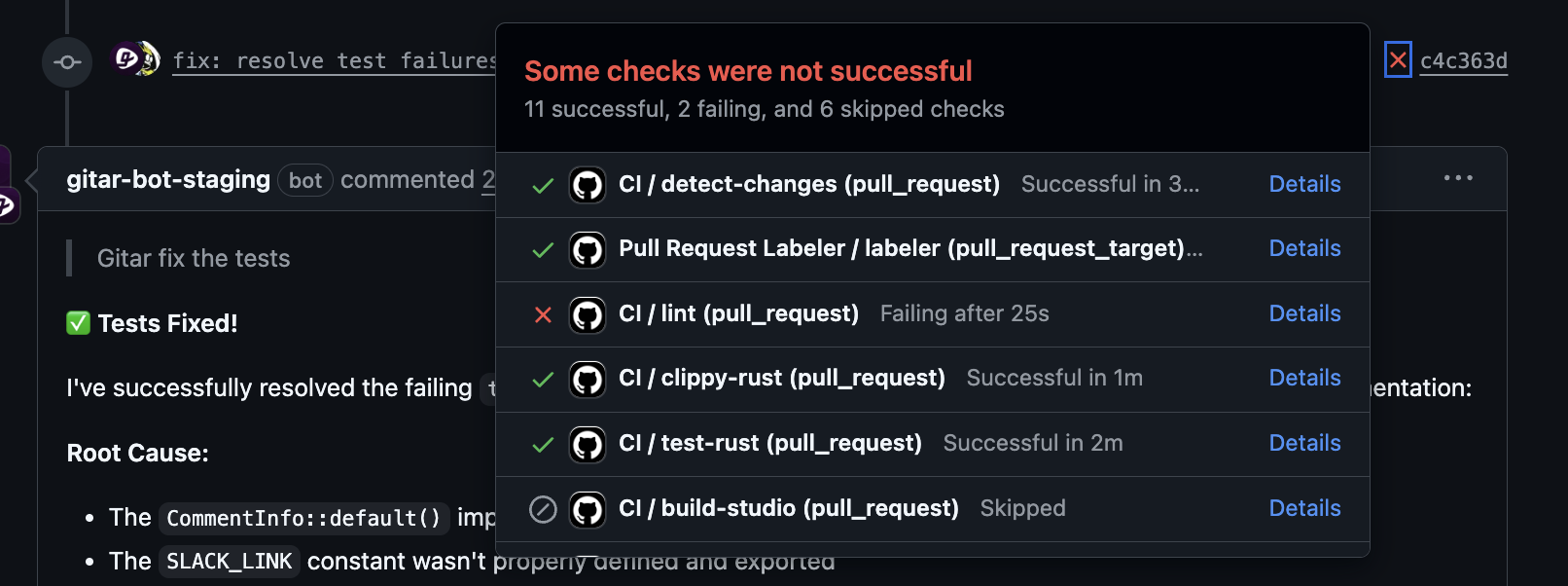
Enterprise CI setups come with unique challenges, like specific JDK versions or custom security tools. Gitar manages these by mirroring the full environment, including dependencies and scripts, before applying fixes.
This ensures solutions work in real conditions, tested against the entire pipeline. For teams with legacy systems or strict regulations, Gitar’s approach prevents new issues while maintaining build stability.
Calculate the Financial Gains from CI Automation
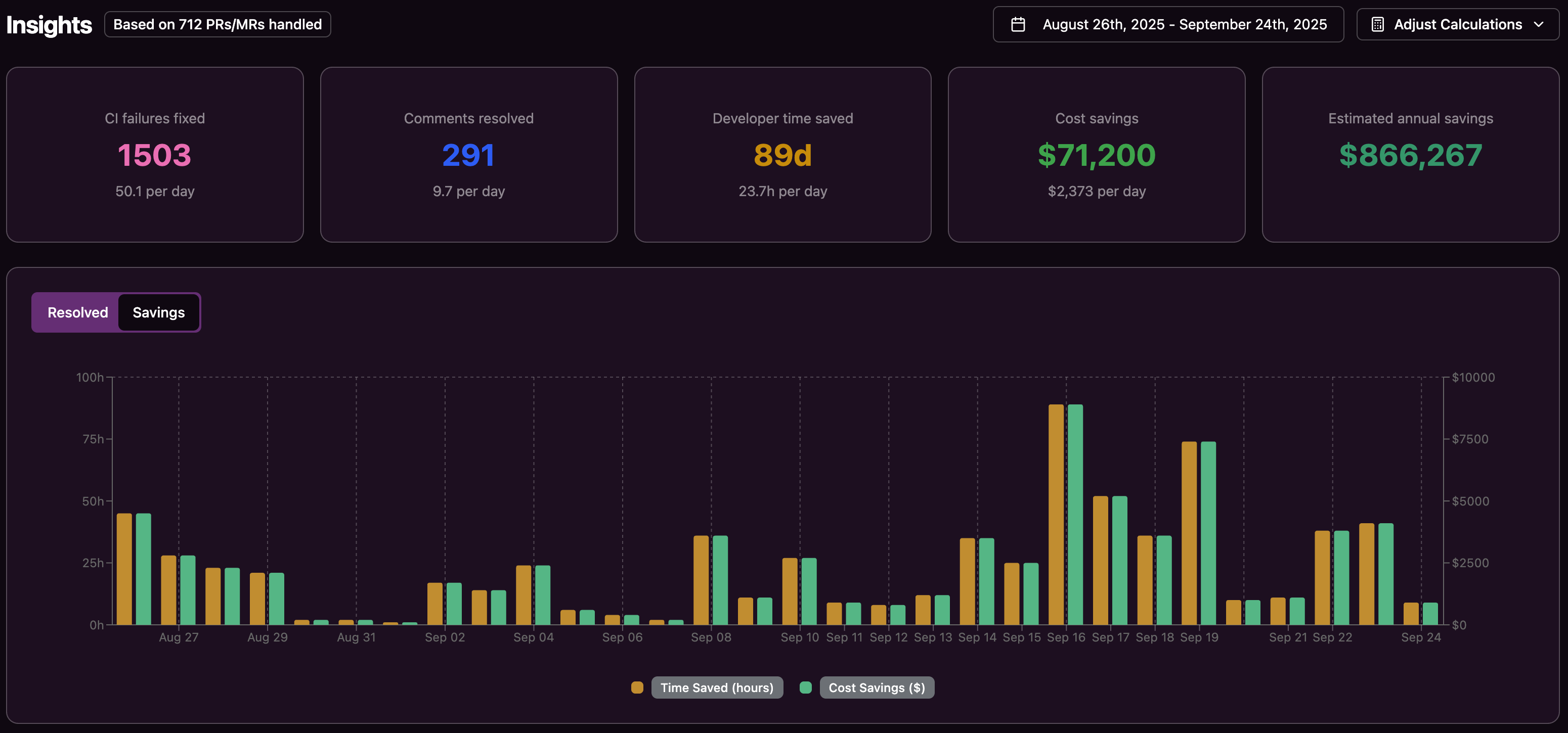
Automating CI fixes saves more than just time. For a 20-developer team spending one hour daily on CI issues, that’s 5,000 hours a year. At $200 per hour, it costs $1 million in lost productivity. Add delayed releases, and the impact grows.
If Gitar handles just half of these issues, savings reach $500,000 yearly for that team. Plus, developers feel less frustrated, and delivery speeds up, benefiting the whole organization.
Ready to cut costs and ship faster? Install Gitar now for better builds.
Gitar Compared to Other AI and Manual Tools
Gitar works as an autonomous fix engine, not just a suggestion tool. While other solutions offer ideas that still need manual effort, Gitar completes the job from fix to validation.
|
Feature |
Gitar (Autonomous Fix Engine) |
AI Review Tools (Suggestions) |
Manual Process |
On-Demand AI Fixes |
|
Action Level |
Applies fixes and validates builds |
Only suggests changes for manual action |
Fully manual debugging and fixing |
Fixes need manual activation |
|
CI Validation |
Ensures builds pass full pipeline |
No validation, relies on developer |
Manual testing needed |
Limited validation, no guarantees |
|
Environment Fit |
Matches full setup with dependencies |
Generic ideas, no context |
Developer must know environment |
Basic context, lacks depth |
|
Autonomy |
Full automation with adjustable trust |
Needs human action for all changes |
All manual effort |
Manual start per issue |
|
Time Zone Delays |
Cuts waits with instant fixes |
Still needs cross-zone coordination |
Full delays for global teams |
Manual start slows global work |
While suggestion tools provide input, they don’t solve the effort bottleneck. Gitar removes this by acting independently, saving time over other AI reviewers or on-demand fixes that lack full context.
Common Questions About Automating CI Fixes with Gitar
How Does Gitar Manage Complex Enterprise CI Systems?
Gitar handles intricate setups by mirroring enterprise workflows, including specific tool versions and security scans like SonarQube. It ensures fixes pass all stages, reducing risks for legacy or regulated systems with full pipeline testing.
What If We’re Unsure About Automated Code Changes?
Gitar offers a flexible trust model. Start with suggestion mode for approval before commits. As confidence grows, switch to auto-commit with rollback options and detailed logs, keeping you in control while automating tasks.
Can Gitar Cut Delays for Global Teams?
Yes, Gitar enables async work across time zones. A reviewer’s feedback gets implemented by Gitar instantly, ready for the developer’s next session. This removes traditional waiting periods for distributed teams.
How Is Gitar Different from Tools Like GitHub Copilot?
Copilot aids code writing pre-commit, while Gitar focuses post-commit, fixing CI failures and feedback in repositories. They can work together: Copilot creates code, and Gitar ensures it meets quality standards.
What Happens If Gitar’s Fix Causes an Issue?
Gitar includes rollback options and clear logs for every change. Fixes are tested against the full CI pipeline to minimize errors. If something goes wrong, you can revert changes with full visibility through standard git tracking.
Final Thoughts: Increase Speed, Lift Morale, and Deliver More
Moving from manual CI debugging to AI automation reshapes how development teams work. Gitar cuts the productivity loss of CI issues, potentially saving a 20-person team hundreds of thousands annually. More importantly, developers focus on meaningful tasks, boosting satisfaction.
As a partner, Gitar frees teams to solve tough problems and deliver value. It reduces CI friction and streamlines reviews, helping maintain focus and build better software with less stress.
Automation is the future of development, enhancing creativity. Teams adopting it now gain an edge in speed, retention, and feature delivery.
Ready to stop debugging and start delivering? Request a demo with Gitar to transform your CI and review process.