
Unreliable CI/CD pipelines sap developer productivity with every failed build. You push a pull request, expecting smooth integration, only to face a flood of errors that break your focus. Debugging logs, fixing issues, and waiting for rerun pipelines steal valuable time and mental energy.
These disruptions cost engineering teams heavily each year. A smarter approach involves building self-healing CI/CD pipelines with AI-driven automation, reducing manual fixes and keeping workflows uninterrupted. Install Gitar now to fix broken builds automatically and see how autonomous management reshapes your delivery process.
Why Unreliable CI/CD Pipelines Cost You Time and Money
Unreliable CI/CD pipelines drain resources far beyond just debugging time. For a team of 20 developers, CI failures can eat up about one hour per developer daily. That adds up to 5,000 hours lost each year, costing around $1 million at an average rate of $200 per hour.
Context switching makes this worse. When a pull request fails, developers lose not only the minutes spent on a fix but also the focus needed to return to their original task. Task switching can cut productivity by up to 40%, turning a small CI issue into a major time sink.
Morale takes a hit too. Engineers prefer tackling complex challenges over fixing repetitive errors. Constant pipeline issues lead to frustration, burnout, and even turnover, with replacement costs for a skilled developer often exceeding $200,000 due to recruitment and onboarding.
Delays in delivery also hurt business outcomes. Top development teams deliver software 30% faster, gaining a competitive edge. CI bottlenecks slow releases, miss customer needs, and let rivals pull ahead.
Traditional fixes, like manual debugging or basic suggestion tools, don’t solve the core problem. They still require developers to act, test, and verify changes, keeping the cycle of interruption alive.
How Self-Healing CI/CD Saves Developer Focus
A self-healing CI/CD pipeline uses AI to detect, analyze, and fix issues without human input. This automation shifts pipelines from constant headaches to reliable systems that keep developers in their flow.
These systems catch failures early and resolve them instantly. Instead of interrupting developers with alerts, they handle the problem backstage, ensuring builds stay green without breaking focus.
Gitar takes this further by acting on failures directly. Whether it’s a lint error, test failure, or build issue, Gitar’s AI identifies the cause, applies a fix, and commits it to your pull request. Install Gitar now to automate broken build fixes.

Key Gains from Gitar’s Automation
Using Gitar shifts your CI/CD experience with clear, measurable benefits. Here’s what you get:
- Eliminates manual fixes, saving hours on every failure.
- Keeps developers focused by handling issues in the background.
- Speeds up merge times with instant, verified solutions.
- Maintains consistent code quality through automated standards.
- Supports complex setups with multiple tools and dependencies.
Core Strategies for Strong Automated Test Coverage
Catch Issues Early with Shift-Left Testing
Shift-left testing focuses on finding defects early in development, where fixes cost less. Defects caught in production cost six times more to fix than during coding. Starting with thorough unit tests ensures quick feedback on logic errors and edge cases.
Integration tests follow, checking how components work together and spotting issues in data flow or dependencies. Static analysis tools, like ESLint, flag code quality or security problems before review, reducing later rework. Automating these tests on every commit keeps feedback fast and workflow smooth.
Build a Balanced Test Strategy for Reliability
High test coverage numbers mean little if tests fail to catch real issues or remain unstable. A smart strategy prioritizes quality over quantity, using a testing pyramid: many fast unit tests, fewer integration tests for system interactions, and minimal end-to-end tests for key user paths.
Flaky tests, failing unpredictably due to timing or external factors, undermine trust in CI systems. Unstable tests can erode confidence in pipelines. Combat this by isolating tests, using mocks for external services, and avoiding fixed delays in favor of flexible wait conditions.
Integrate Testing Smoothly into CI/CD Workflows
Automated tests must run at the right pipeline stages without slowing progress. Parallel execution across multiple workers cuts wait times, while intelligent selection runs only tests tied to recent changes, balancing speed and coverage.
Clear reporting matters too. Detailed failure messages and direct links to code help developers fix issues quickly. Using containers for test environments ensures consistency, while managing test data avoids conflicts between runs.
How Gitar Fixes CI/CD Failures Automatically
Detect and Resolve Issues Without Manual Effort
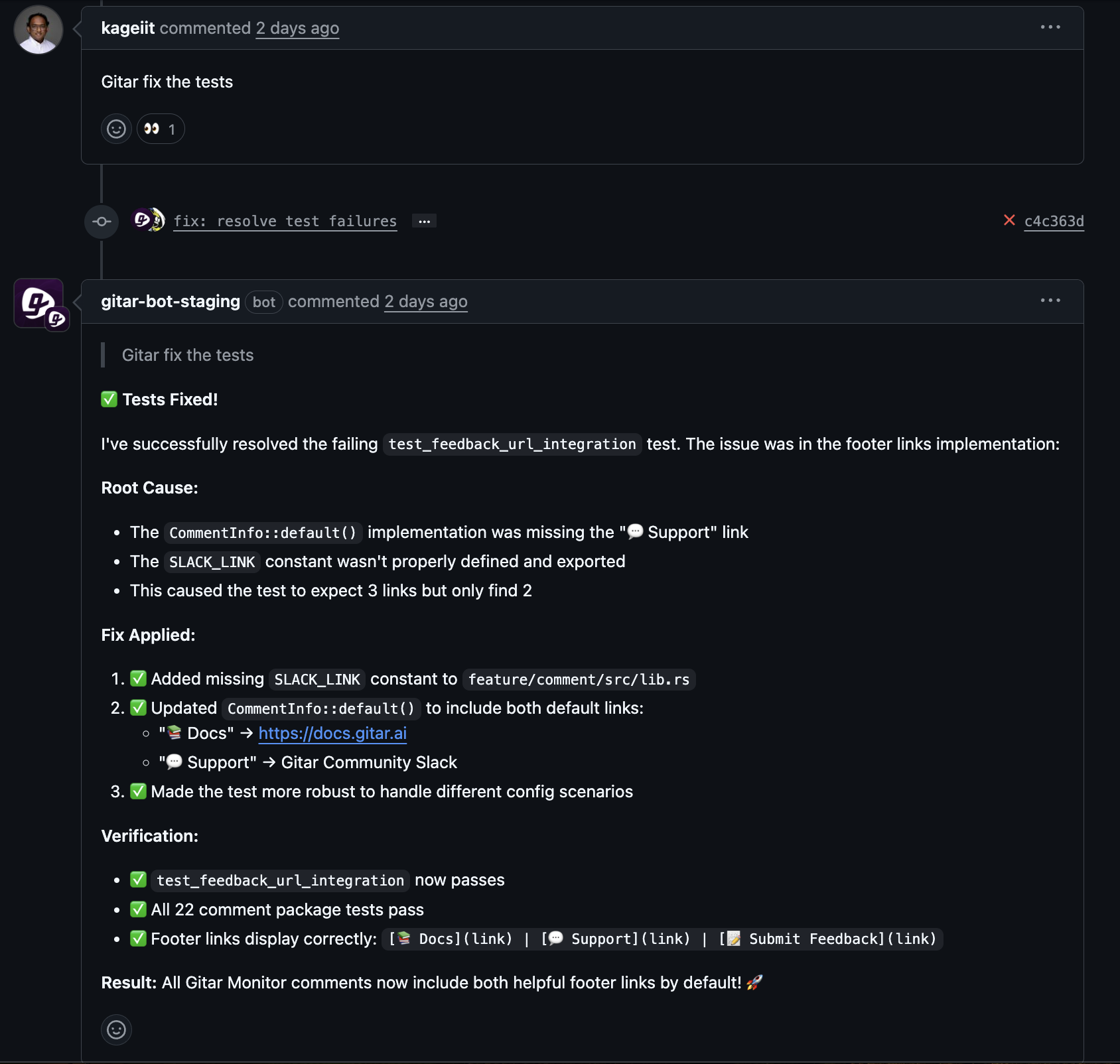
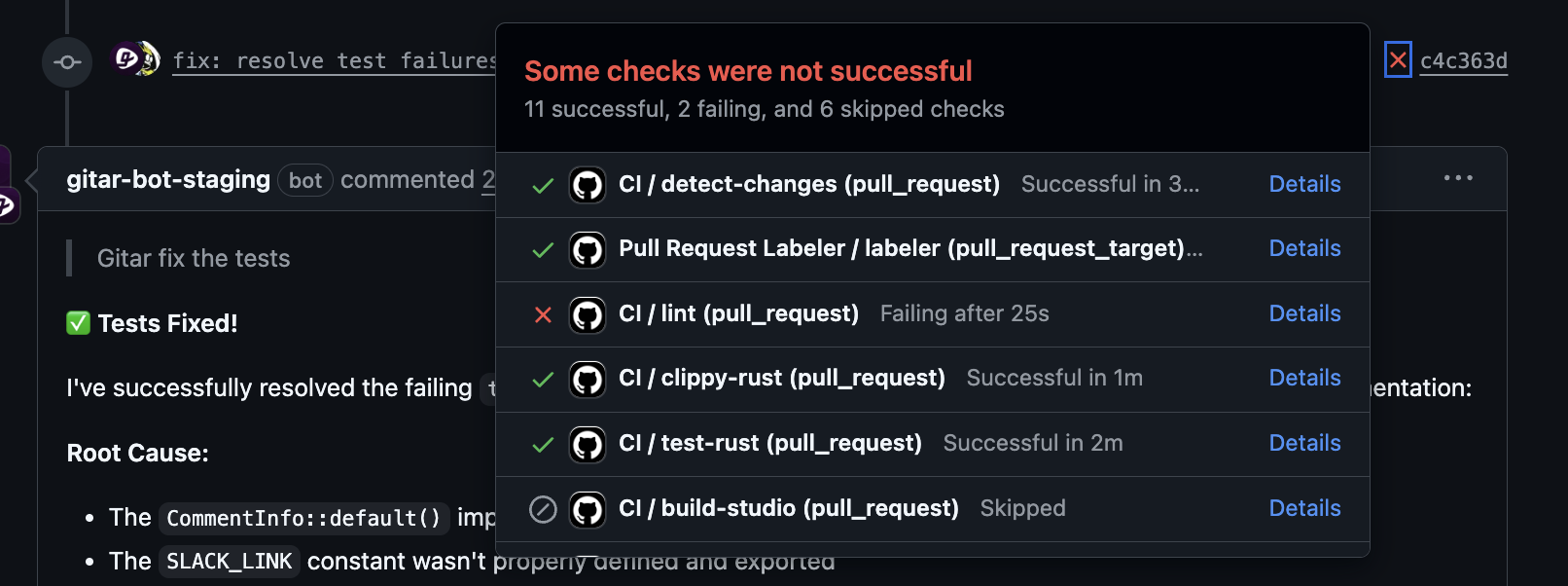
Gitar changes the game by automating the full cycle of CI failure handling. When a test, lint, or build check fails, its AI digs into the logs, identifies the root cause, and applies a fix. For example, it updates failing snapshots, corrects lint violations, or fixes build script errors, then commits the solution.
Here’s how it works in practice:
- Detects a failure in CI logs.
- Analyzes the cause of the issue.
- Creates a targeted fix.
- Commits the change with an explanation.
- Verifies the fix passes all CI checks.
This often completes in minutes, keeping merges fast. Unlike suggestion tools, Gitar tests fixes against your full CI setup, ensuring they don’t create new problems.
Maintain Code Quality with AI Assistance
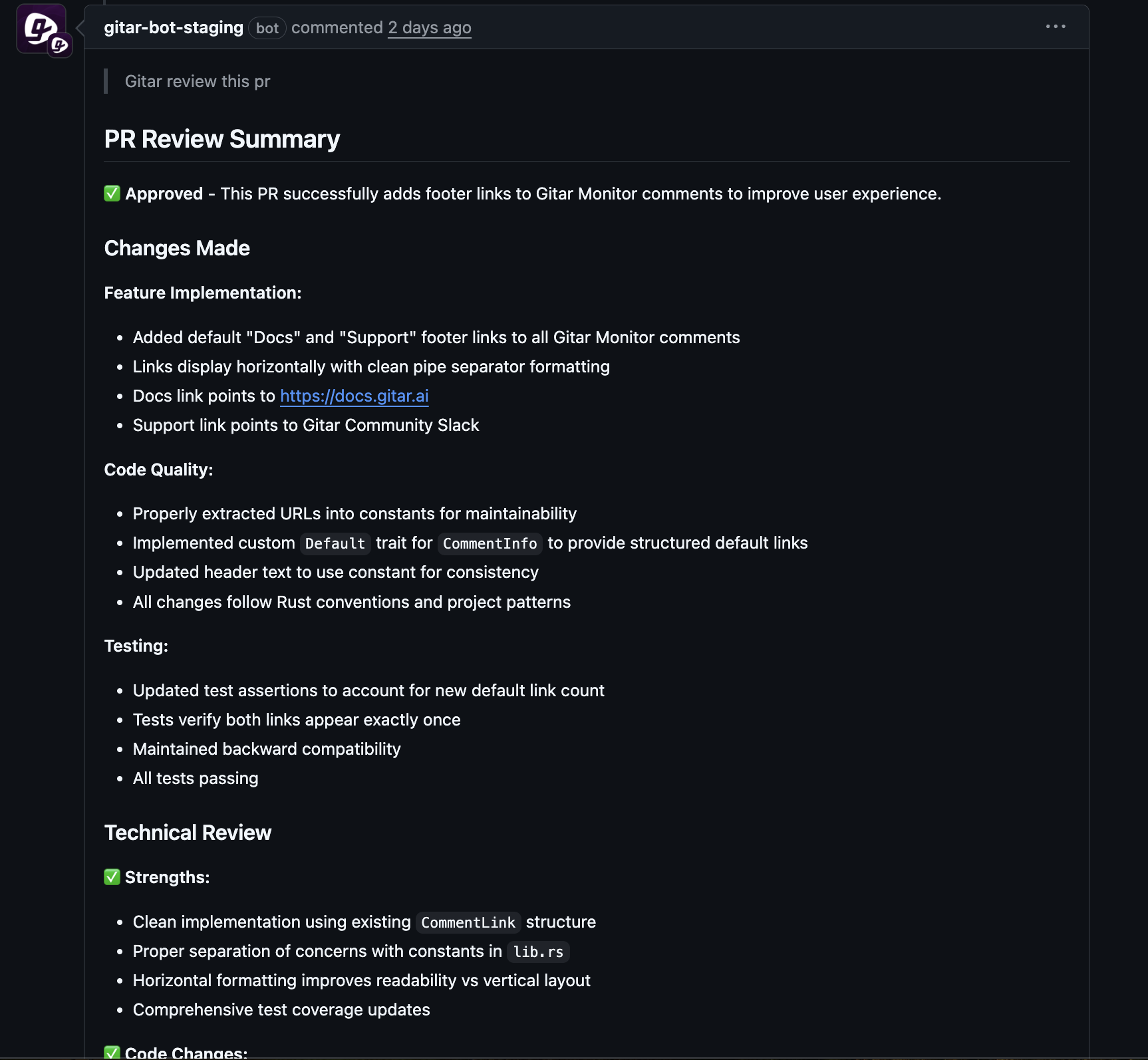
Gitar goes beyond quick fixes by boosting long-term code health. It can generate tests to improve coverage based on simple instructions from developers. It also adapts to complex environments, matching specific JDK versions, multi-SDK setups, and third-party tools like SonarQube, ensuring fixes fit your system.
For team collaboration, Gitar integrates into pull request comments. Tag it with a request, and it makes changes or reviews code, posting clear updates. This speeds up feedback across time zones.
Gitar vs. Manual and Suggestion-Based Tools
|
Feature |
Manual Fixing |
AI Suggestion Tools |
Gitar (Autonomous) |
|
Failure Resolution |
Manual, Slow |
Offers Ideas Only |
Automatic, Verified Fix |
|
Context Switching |
High, Disruptive |
Still Occurs |
None, Focus Stays |
|
Validation |
Manual Reruns Needed |
Manual Action Required |
CI-Verified Automatically |
|
Time-to-Merge |
Delayed Often |
Some Speed Gain |
Faster, No Bottlenecks |
Gitar stands out by taking full action, not just suggesting fixes. This cuts interruptions completely, unlike other tools that still demand developer effort. Install Gitar now to automate build fixes.
Common Questions on Automated Testing and Self-Healing CI/CD
Can Gitar Manage Complex CI/CD Setups?
Gitar handles intricate enterprise systems by mirroring your exact CI environment. It supports specific JDK versions, Docker setups, and tools like SonarQube or Snyk for security scans. Fixes are tested against your full configuration for compatibility across platforms like GitHub Actions, GitLab CI, and CircleCI.
What If I’m Hesitant About Automated Fixes?
Gitar offers adjustable automation levels for building trust. In conservative mode, fixes appear as suggestions for review and approval. As confidence grows, switch to automatic commits with rollback options. Detailed logs explain every change for full visibility.
Does Gitar Help with Unstable Tests?
Gitar focuses on resolving CI failures rather than fixing test flakiness directly. However, it reduces the impact by quickly handling failures, giving teams time to address root causes. It often spots flaky patterns and applies fixes when feasible.
How Does Gitar Fit Into Current Workflows?
Gitar connects easily with GitHub, GitLab, and CI platforms like CircleCI. Setup takes minutes, authorizing it as an app. It runs in the background, fixing failures without changing how developers work. Notifications appear in familiar tools like Slack or pull request comments.
What’s the Financial Benefit of Using Gitar?
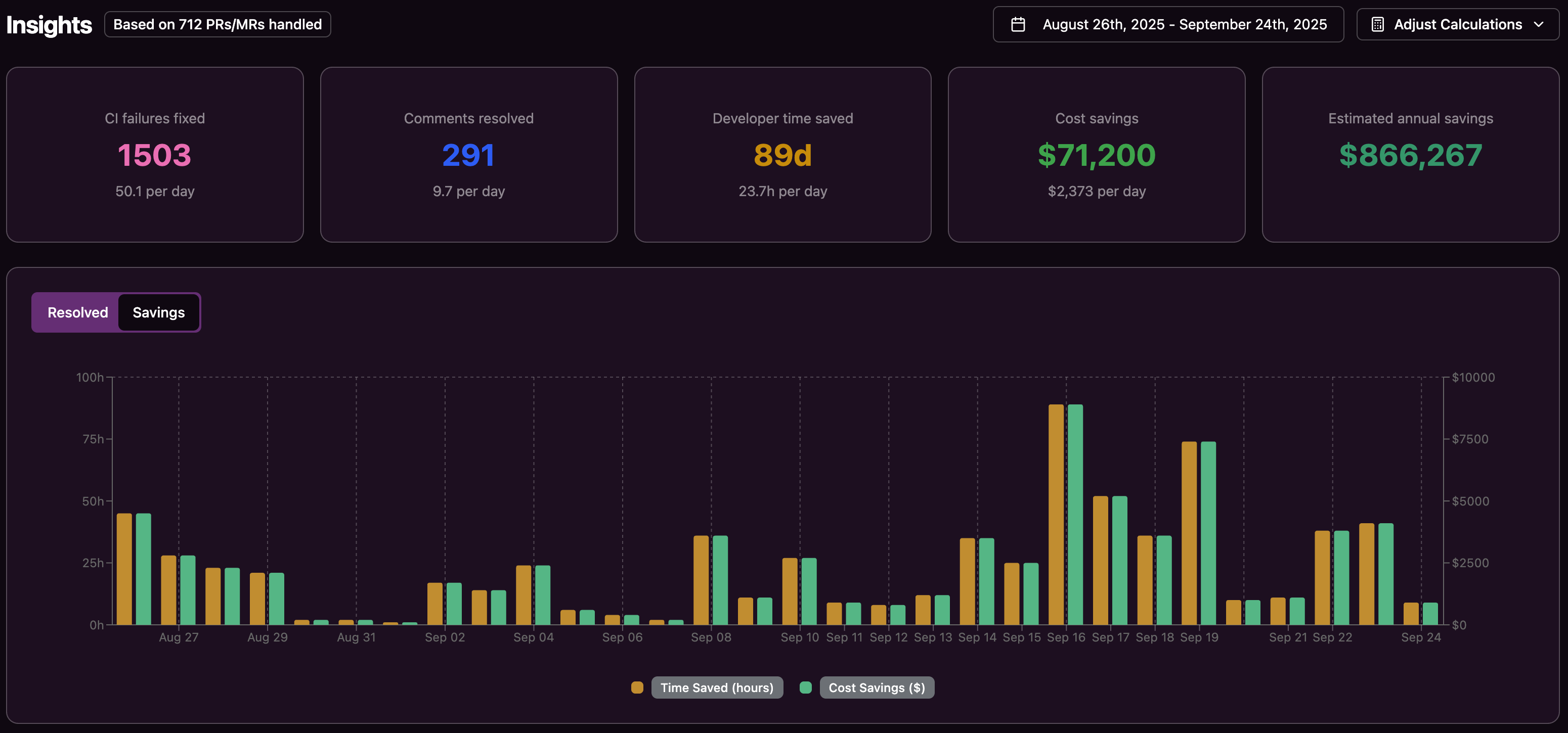
For a 20-developer team, CI issues waste about 5,000 hours yearly, costing $1 million at $200 per hour. Gitar recovers a large share of this time by cutting manual fixes and context switches, adding value through better morale and faster feature delivery.
Step Into the Future of CI/CD with Automation
Moving from manual CI fixes to self-healing pipelines changes how teams deliver software. With intelligent automation, failures turn into minor background events instead of daily roadblocks.
Teams adopting autonomous systems like Gitar gain an edge with quicker releases, happier developers, and dependable software. It goes beyond suggestions, fixing issues directly to keep momentum high.
Picture a setup where CI failures resolve before you notice, letting your team focus on creating instead of fixing. Install Gitar now to automate broken builds and build a pipeline that empowers innovation.