
Last updated: February 27, 2026
Key Takeaways
- Automated testing blocks 80% of routine code issues before human review, which sharply cuts PR review times as AI code volume grows.
- AI coding tools like GitHub Copilot generate code 3-5x faster but increase review bottlenecks by 91%, so teams need stronger CI coverage.
- Teams should run linting, branch protection, parallel tests, and coverage gating to catch syntax, logic, and quality issues automatically.
- Gitar’s AI healing engine auto-fixes CI failures, guarantees green builds, and outperforms suggestion-only tools while keeping PR analysis free.
- Teams save more than $750K per year in productivity; install Gitar now to reach sub-1-hour reviews with zero setup.
The New Bottleneck: AI-Driven PR Volume Overwhelms Reviews
AI coding has shifted the main development bottleneck from writing code to reviewing and fixing it. GitHub now sees 82 million monthly pushes, and AI-generated code contains 75% more logic issues than human-written code. Review capacity has become the limiting factor for delivery speed.
Teams report that 60% of project delays come directly from CI pipeline failures. Developers bounce between writing new features and repairing broken builds, which fragments focus and slows progress.
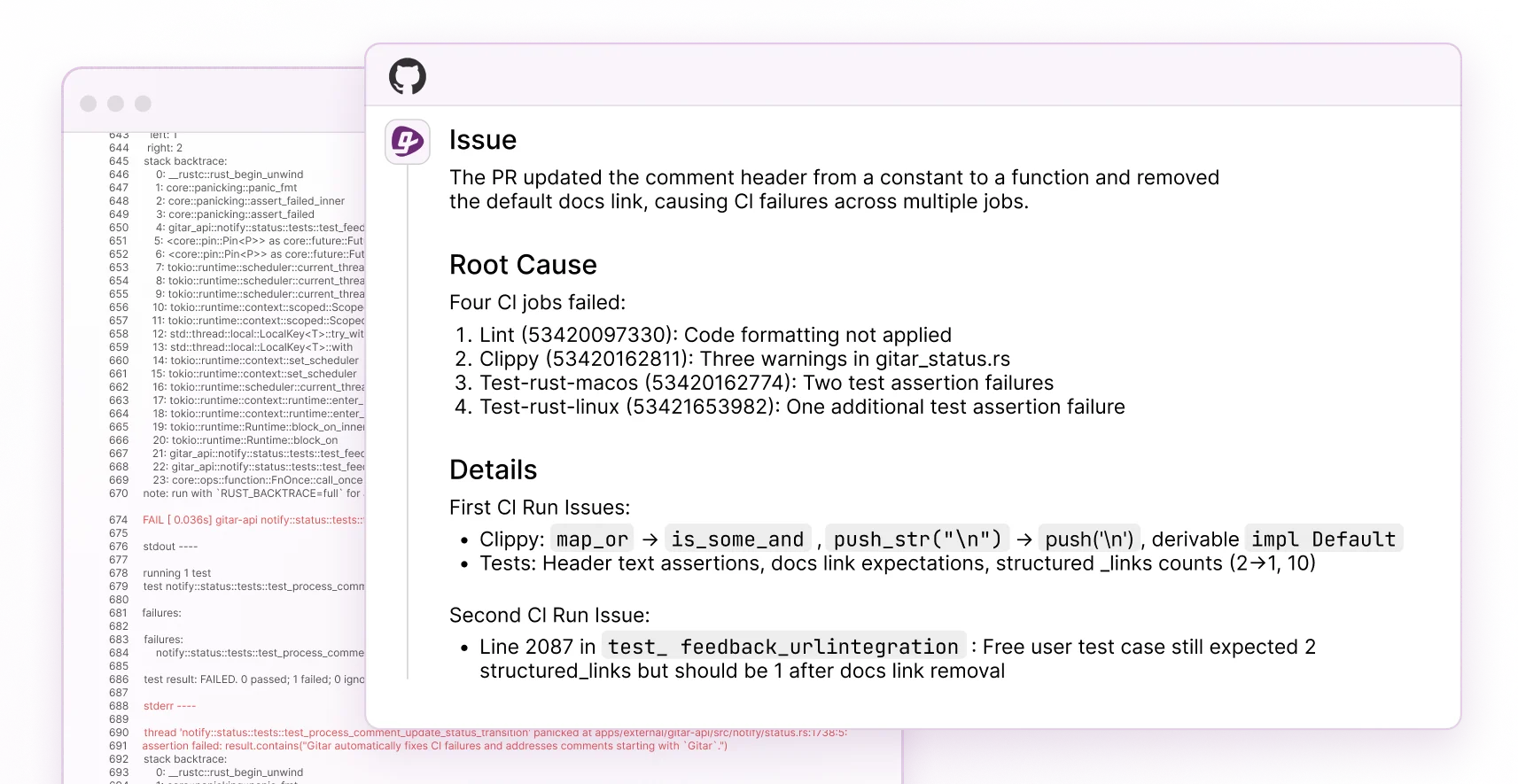
Traditional code review tools often make this worse by flooding teams with suggestions without actually fixing anything. When a lint error appears, developers read comments, apply changes by hand, push new commits, and wait for CI again. This loop can repeat several times for a single PR.
Work that should be automated turns into repetitive manual labor, so AI coding adoption does not translate into real velocity gains. The gap between code generation speed and review capacity keeps growing.
A trust problem amplifies the pain. AI reviewers that rely on the same models used for generation introduce confirmation bias at scale. Only 30% of AI-suggested fixes get accepted, which wastes attention and time. Gitar solves this with validated fixes and deep CI integration. See Gitar documentation for integration details.
Automated Testing in CI/CD as Your First Quality Gate
Automated testing in CI/CD pipelines acts as the first quality gate before human review. Teams configure linting, static analysis, unit tests, and integration tests to run on every PR. Branch protection rules then require all checks to pass before a merge can proceed.
This approach removes roughly 80% of routine issues such as syntax errors, formatting problems, and basic logic bugs before reviewers even open the PR. Parallel test execution across multiple environments keeps coverage high without stretching CI times.
Coverage reports give clear metrics on how much of the codebase tests actually exercise. Reviewers can quickly see whether a change ships with enough test depth.
Traditional automated testing still stops at detection. When tests fail, developers must debug, patch, and rerun pipelines by hand. Context switching between coding and repair work slows the entire team.
Teams now look for healing engines like Gitar that analyze failures, propose concrete fixes, and validate them against the full CI pipeline. This closes the loop from detection to resolution.
Gitar’s Healing Engine: Free PR Analysis, Paid Autofix
Gitar stands apart from traditional review tools by offering full PR analysis for free and autofix features through a 14-day free trial. Competing tools often charge $15-30 per developer for suggestions that still require manual work.
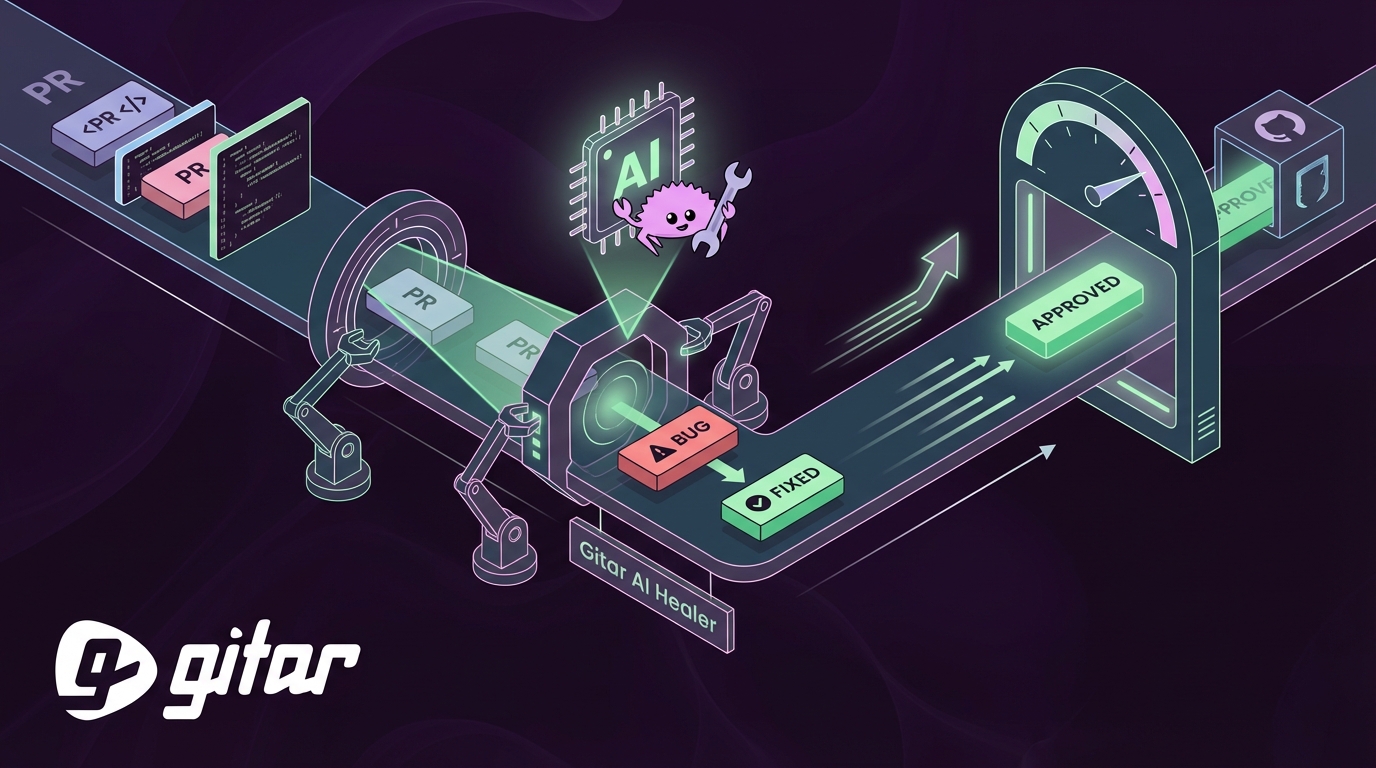
Gitar’s healing engine resolves CI failures, applies review feedback, and delivers guaranteed green builds instead of just pointing at problems.
|
Capability |
CodeRabbit/Greptile |
Traditional Testing |
Gitar |
|
PR Analysis |
Paid ($15-30/seat) |
Manual |
Free |
|
Inline Suggestions |
Paid |
N/A |
Free |
|
Autofix CI Failures |
No |
No |
Yes (14-day trial) |
|
Green Build Guarantee |
No |
Partial |
Yes |
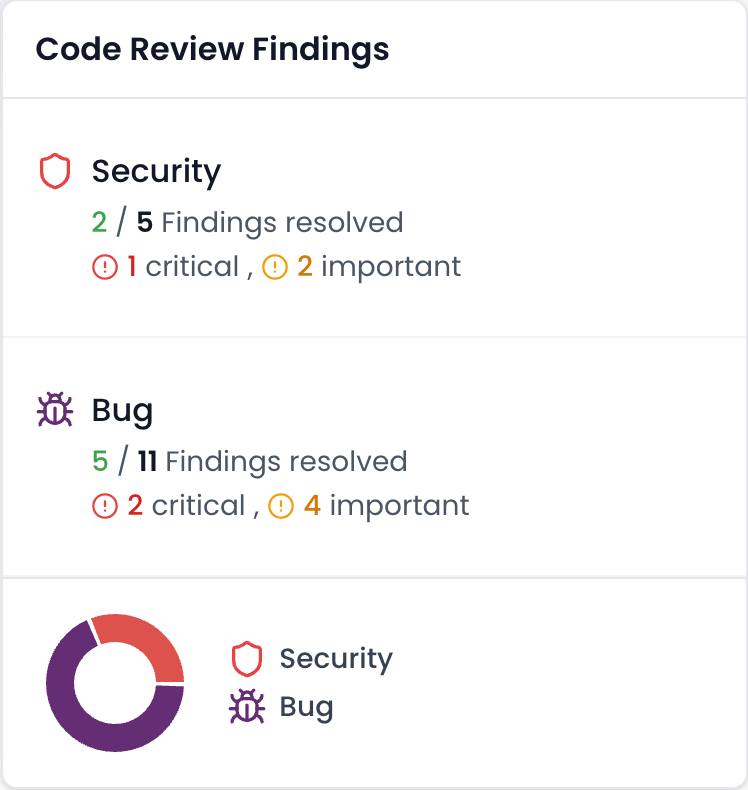
Gitar consolidates findings into a single dashboard-style PR comment that updates in place. Teams avoid notification spam while still getting complete analysis in one location.
Pinterest manages more than 50 million lines of code through Gitar. Collate’s team calls out the “unrelated PR failure detection” feature, which separates infrastructure incidents from real code bugs and saves hours of debugging.
Gitar’s natural language rule system lets teams automate workflows without complex YAML. Hierarchical memory keeps context across PRs, which improves fix accuracy over time. Install Gitar to fix builds automatically and see the difference between suggestion engines and true healing platforms.
7 Practical Ways to Speed Up PR Review with Tests
1. Add Comprehensive Linting in GitHub Actions
Automated linting should catch syntax errors, formatting issues, and style violations before reviewers see the code. For Python projects, integrate tools like Black and flake8 directly into GitHub Actions.
2. Enforce Passing Tests with Branch Protection
Branch protection rules prevent merges when CI checks fail. In GitHub, open repository Settings, then Branches, and require status checks for all automated tests. This keeps broken code out of the main branch.
3. Use Small PRs and Parallel Test Execution
Smaller, focused PRs move through review faster and run tests more efficiently. Configure CircleCI or GitLab CI to execute test suites in parallel across multiple environments:
test: parallel: 4 script: – npm run test:unit – npm run test:integration – npm run test:e2e
4. Gate Merges with Coverage Thresholds
Coverage gating stops merges when coverage falls below a defined threshold. Integrate coverage reports into PR comments so authors and reviewers see test completeness immediately.
5. Deploy Gitar to Repair CI Failures Automatically
Gitar can analyze and fix CI failures without manual effort. When lint errors, test failures, or build breaks occur, Gitar generates validated fixes and commits them directly to the PR. This removes the repetitive debugging cycle.
For installation and configuration steps, review the Gitar documentation.
6. Add Static Analysis for Security and Maintainability
Static analysis tools such as SonarQube and CodeQL detect security vulnerabilities, code smells, and maintainability issues automatically. These checks catch problems that unit tests often miss and provide clear remediation guidance.
7. Use Natural Language Rules for Workflow Automation
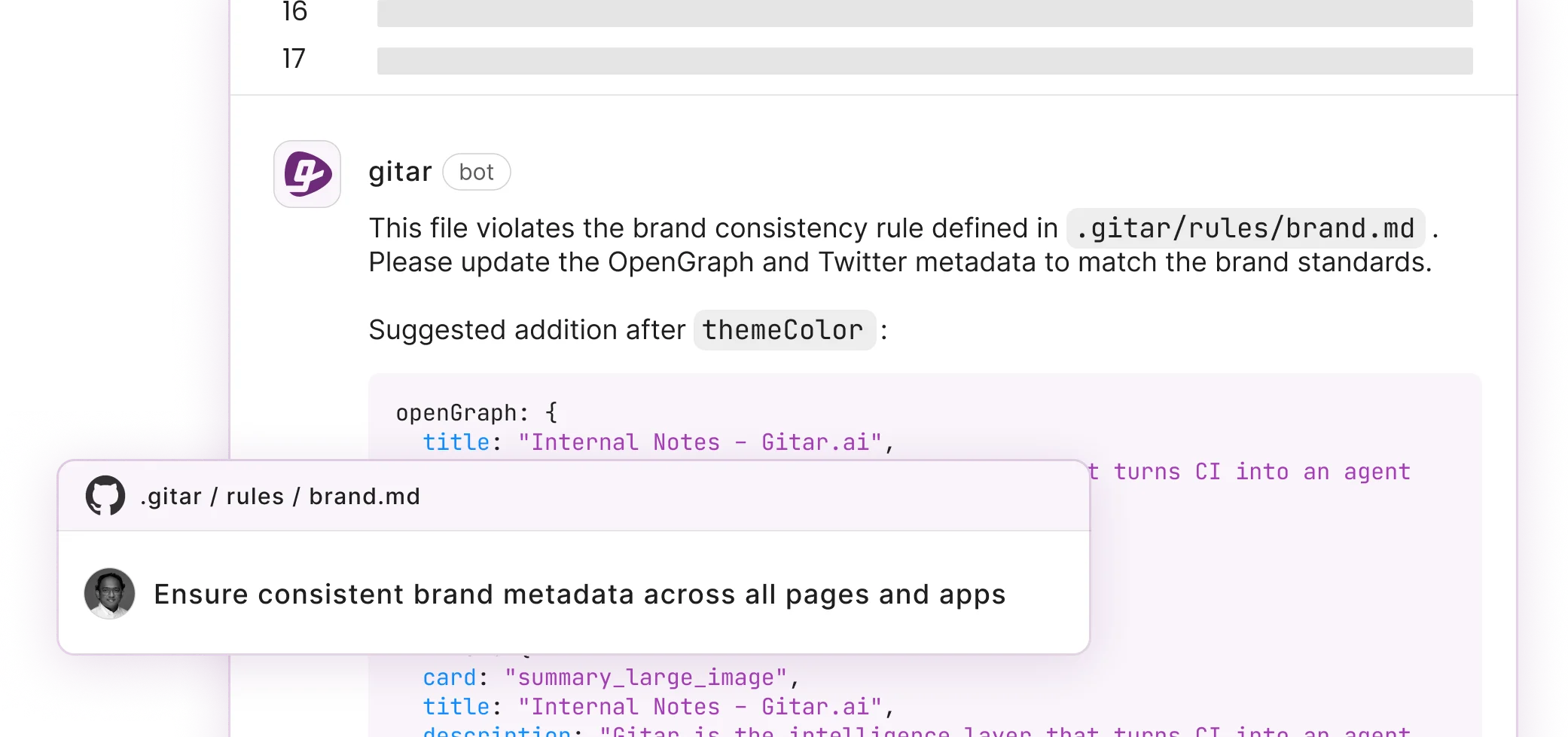
Gitar’s repository rules let you automate decisions with plain language instead of scripts. For example, a .gitar/rules/security.md file can assign security reviewers whenever authentication code changes.
This keeps specialized reviewers focused on the right changes.
ROI and Real-World Results from Gitar
Automated testing combined with AI healing delivers significant financial impact. A 20-developer team often loses around $1 million each year to CI friction and review delays. Developers spend about one hour per day on manual fixes and context switching.
Gitar cuts that overhead to roughly 15 minutes per day, which yields about $750,000 in annual productivity savings. Those gains come from fewer broken builds, faster reviews, and less time lost to interruptions.
Pinterest’s rollout across more than 50 million lines of code shows that Gitar works at enterprise scale. Tigris engineering teams report that Gitar’s PR summaries are “more concise than Greptile/Bugbot” because of the single-comment design.
Collate’s engineering lead highlights the unrelated failure detection feature, which stops developers from chasing infrastructure issues that only appear to be code problems.
ROI also includes reduced tool spend. Gitar’s free tier replaces $450-900 in monthly costs for suggestion-only tools while delivering actual fixes instead of just reports.
FAQ: Automated Testing and Gitar in Real Workflows
How does automated testing work for Python teams using GitHub Actions?
Python teams can set up GitHub Actions workflows that run pytest, coverage analysis, and linting tools like Black and flake8 on every PR. Parallel jobs handle unit tests, integration tests, and static analysis at the same time. Branch protection rules then block merges when any check fails.
Gitar enhances this setup by automatically fixing common Python issues such as import errors, syntax problems, and failing tests.
What approach works best for GitHub Actions code review automation?
Effective automation in GitHub Actions combines linting, formatting checks, required status checks, and parallel test execution across versions or environments. The workflow should also include coverage reporting, security scanning, and dependency vulnerability checks.
AI tools that fix failures, not just flag them, complete the loop. This combination keeps broken code out of the main branch and gives developers fast, actionable feedback in PR comments.
How can teams speed up PR review with tests in GitLab environments?
GitLab teams can accelerate reviews by building CI pipelines that run automated tests, linting, and security scans on every merge request. Approval rules then require all checks to pass before merging.
Parallel job execution and dependency caching reduce CI runtime. Integrating Gitar adds automatic CI failure resolution and natural language rules for reviewer assignment. Single-comment summaries keep notifications manageable.
What makes Gitar different from other automated testing tools?
Gitar does more than detect problems. It fixes them. Conventional CI and review platforms run tests and report failures, then stop.
Gitar reads failure logs, uses full codebase context to generate fixes, validates those fixes against the CI pipeline, and commits working code automatically. This healing engine removes the manual debugging loop and delivers guaranteed green builds.How does automated testing integration work across different CI platforms?
Modern automated testing strategies carry across GitHub Actions, GitLab CI, CircleCI, and Buildkite through shared patterns. Teams use containerized environments, parallel execution, and consistent reporting formats.
Gitar supports all major CI systems. It detects your environment configuration and adapts its healing engine to your existing pipeline. The same capabilities apply whether you run GitHub’s cloud actions or an on-premise GitLab instance. Refer to the Gitar documentation for CI integration guides.
Deploy Gitar Now for Sub-1-Hour Reviews
AI coding has moved the bottleneck from writing code to reviewing and fixing it in CI. Traditional automated testing finds issues but still leaves the repair work to developers. Suggestion-only tools add cost without closing the loop.
Teams need strong automated testing combined with AI healing that resolves failures, not just lists them. Gitar delivers enterprise-grade review, automatic CI repair, and workflow automation without the $15-30 per developer monthly fees that competitors charge.
Teams reach sub-hour review cycles through validated fixes, unified notifications, and guaranteed green builds that remove debugging overhead.
Install Gitar now, automatically fix broken builds, and ship higher quality software faster with zero setup time and no credit card required. Move your development workflow from reactive firefighting to proactive automation that scales with AI-accelerated code generation.