
Software development faces a new challenge. AI tools have sped up coding, but debugging CI failures and handling code review feedback still slow down the process of merging code into production. This creates a frustrating delay for developers eager to move forward.
Self-healing CI, powered by autonomous AI agents, offers a solution. These systems don’t just suggest fixes, they actively detect issues, apply corrections, and validate changes, turning failed builds into successful ones without manual effort.
This article dives into how automated CI fixes can enhance developer productivity, reduce wasted time in engineering teams, and streamline CI/CD pipelines to speed up delivery while improving job satisfaction.
Why CI Failures Slow Developers Down
CI failures drain developer time and focus. You push a pull request expecting a smooth process, only to face errors like linting issues or failing tests. A quick fix turns into an hour of distraction, pulling you away from meaningful work.
The impact is significant. Developers may spend up to 30% of their time addressing CI and code review problems. For a 20-person team, this can add up to around $1 million in lost productivity each year. Beyond the immediate debugging, context switching and loss of momentum take a toll on morale.
Distributed teams face even bigger hurdles. Time zone differences can stretch a simple review into days. A developer in California waiting for feedback from a teammate in India deals with delays that disrupt workflow and delay progress.
Many AI tools aim to help but often stop at suggesting solutions, leaving developers to apply and validate fixes. Meanwhile, AI coding tools increase code output, creating more pull requests and more chances for CI issues, shifting the bottleneck to validation and merging.
Gitar: Your Solution for Self-Healing CI and Automated Testing
Gitar changes the game by moving from manual debugging to automatic resolution. This AI agent handles CI failures and code review feedback, saving developers hours each day spent on routine checks and fixes.

Here’s what sets Gitar apart:
- Complete Fix Automation: Applies fixes, validates them against full CI processes, and ensures pull requests pass all checks.
- Accurate Environment Matching: Mirrors complex setups with specific SDKs, languages, and tools like SonarQube or Snyk.
- Smart Code Review Support: Acts on reviewer feedback within pull requests, executing instructions independently.
- Flexible Trust Settings: Offers modes from cautious suggestions for review to direct auto-commits with rollback options.
- Wide CI Compatibility: Works with GitHub Actions, GitLab CI, CircleCI, BuildKite, and other platforms.
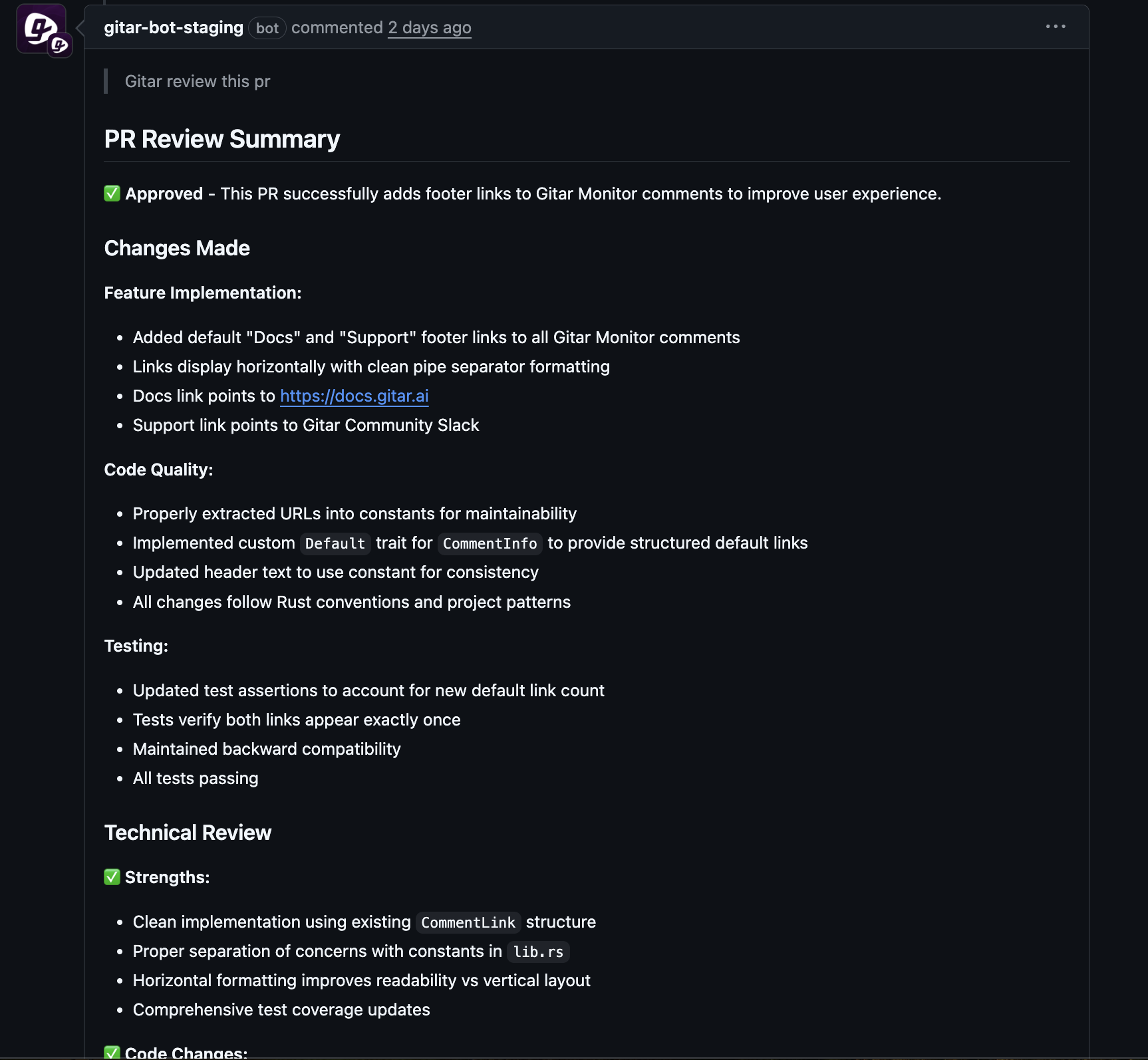
Gitar builds trust with adjustable settings. Teams can start with a review-before-apply approach, then move to automatic commits as confidence grows, always with the ability to undo changes if needed.
Ready to streamline your CI process? Install Gitar now and ship better software faster.
How Autonomous CI Fixes Improve Developer Workflow
Keep Focus by Reducing Interruptions
Staying focused becomes easier with autonomous CI fixes. When Gitar resolves CI issues automatically, developers can work on new features without stopping to debug. You submit a pull request and move on, knowing routine problems are handled.
This saves mental energy for bigger challenges. Senior engineers especially benefit, delegating minor fixes to AI while tackling complex design or strategy tasks. Code reviews shift to higher-level feedback, which Gitar can implement directly.
Speed Up Merging and Deployment
Automated fixes cut down the time from commit to merge. Gitar removes the repetitive debug cycle, letting teams deliver features quicker and respond to user needs faster.
Distributed teams see major gains. A reviewer in one time zone can leave feedback for Gitar to handle overnight. By morning, fixes are ready for final approval, shrinking review cycles significantly.
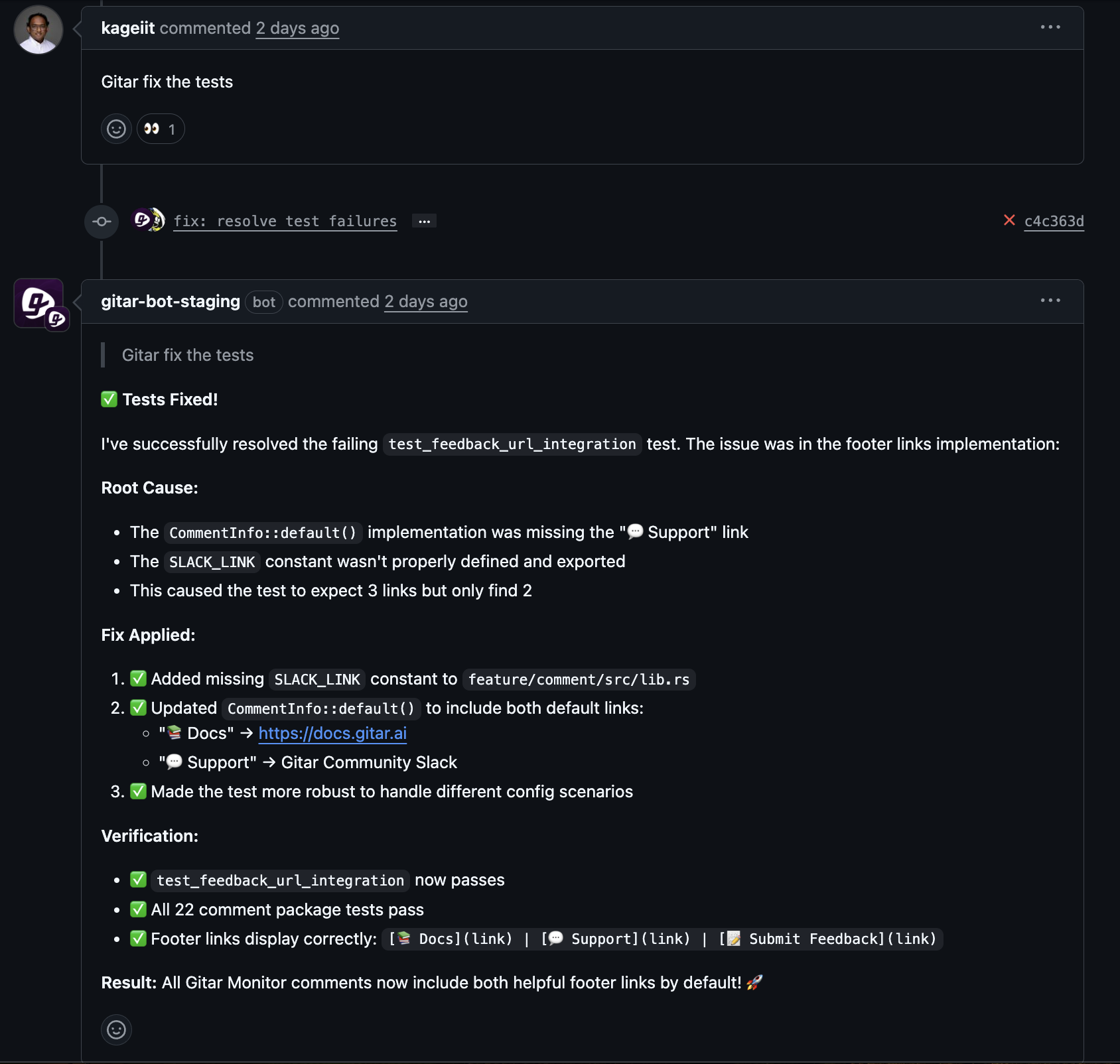
Turn CI from Obstacle to Ally
With more code comes more validation challenges. Gitar solves this by handling failures automatically, ensuring the pipeline keeps pace. CI stops being a barrier and starts supporting faster, quality-focused delivery.
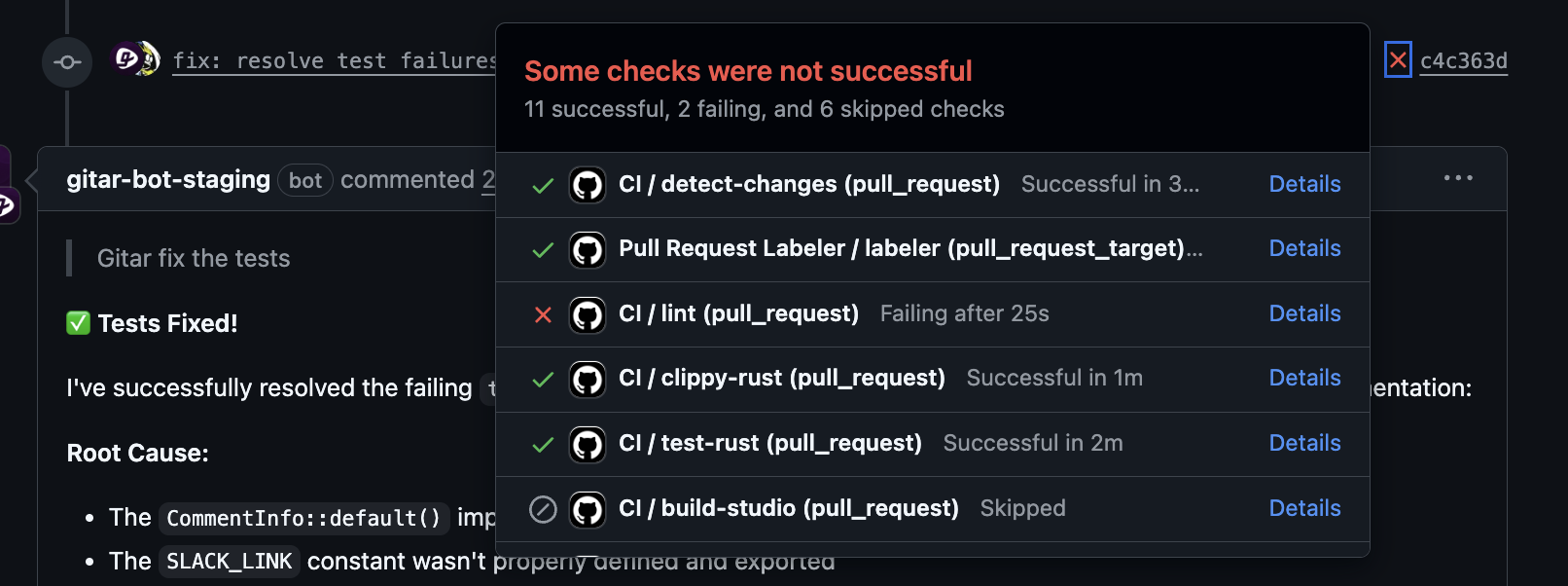
How Gitar’s Healing Approach Differs from Suggestions
Gitar stands out by taking full control of fixes. Unlike tools that only suggest solutions, this healing engine applies corrections and validates them, creating a truly hands-off process for developers.
|
Feature |
Gitar (Healing Engine) |
AI Reviewers (Suggestion Tools) |
Manual Workflow |
|
Automatic Fix Application |
Yes, applies and commits fixes |
No, only suggests |
Requires manual effort |
|
Guaranteed Build Success |
Yes, validates against full CI |
No, suggestions may fail |
Relies on trial and error |
|
Environment Matching |
Supports full enterprise setups |
Limited context |
Uses local developer setup |
|
Effort Reduction |
Full automation option |
Partial, manual steps remain |
High manual workload |
This table shows why healing engines like Gitar mark a step forward. Suggestion tools offer insights but still demand effort. Gitar takes on the full task, especially in complex enterprise setups with varied dependencies and tools.
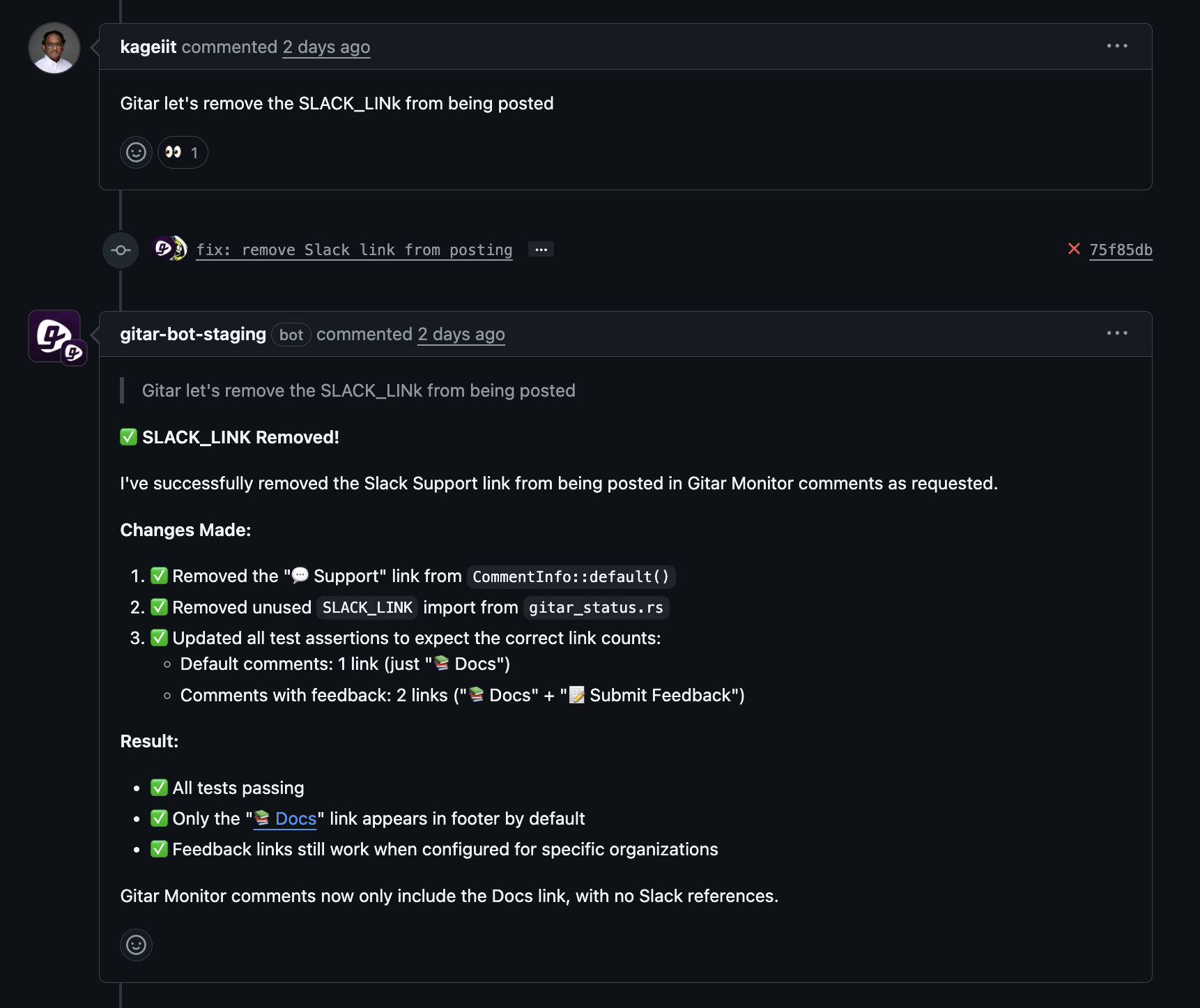
Want to see automation in action? Install Gitar now and experience real CI fixes.
Common Questions About Autonomous CI Fixes
How Does Gitar Differ from AI Code Review Tools Like CodeRabbit?
While tools like CodeRabbit offer valuable suggestions during reviews, Gitar goes further. It identifies issues, applies fixes, and validates them against your entire CI pipeline, ensuring a successful build without pulling you away from your work.
Can I Trust Gitar with My Codebase for Automated Testing?
Gitar builds trust with flexible settings. Start with a mode where fixes need your approval, giving you control. As you see consistent results, shift to more automation with rollback options. It matches your exact CI environment for reliable fixes.
Will Gitar Work with Our Complex CI Setup?
Gitar is built for intricate enterprise systems. It handles specific SDKs, multi-language builds, and tools like SonarQube or Snyk. By replicating your CI environment, it tests fixes in the right context, managing details that often need deep expertise to resolve.
How Does Gitar Show Productivity Gains and ROI?
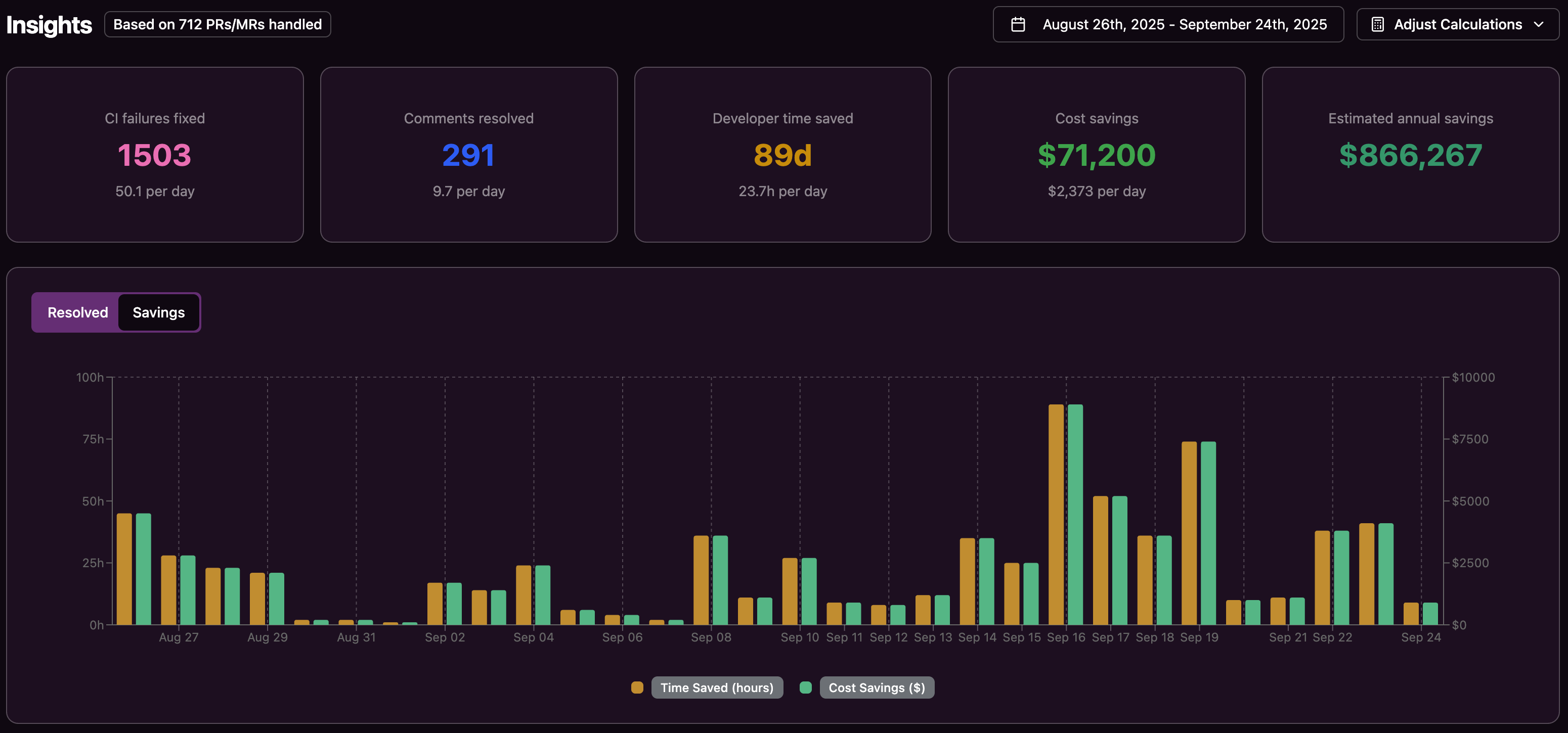
For a 20-person team losing an hour daily to CI issues, annual costs can hit $500,000 to $1 million. Gitar, even at partial effectiveness, can save substantial time and money while boosting team morale and speed, offering clear value.
How Does Gitar Fit into Our Current Workflow?
Gitar connects easily with GitHub, GitLab, and CI tools like CircleCI or BuildKite. Install it via a web dashboard to authorize access to repositories. It adds status comments on pull requests to track actions, enhancing your process without changing it.
Conclusion: Elevate Productivity with Self-Healing CI
AI has sped up coding, but CI validation and merging remain bottlenecks. Manual debugging and constant interruptions continue to sap developer energy and slow teams down.
Self-healing CI, driven by autonomous AI, shifts the focus from manual fixes to automated solutions. Developers stay focused, teams deliver faster, and companies gain efficiency.
Gitar leads this change by handling issues from detection to resolution. CI transforms from a hurdle into a supportive tool, improving the developer experience.
Adopting automated CI fixes now can sharpen your merge cycles, deployment speed, and team satisfaction, driving innovation and responsiveness.
Stop battling CI issues and start delivering quicker. Book a demo with Gitar today to explore autonomous CI fixes.