
Key Takeaways
- Manual CI failure resolution now creates significant, recurring costs through lost developer time, context switching, and delayed releases.
- Automated test failure resolution focuses on autonomous fixes, not just suggestions, which reduces mean time to resolution and protects developer focus.
- A simple ROI model that multiplies hours saved by loaded hourly cost shows that even conservative automation can unlock hundreds of thousands of dollars per year.
- Gitar’s autonomous CI healing engine handles complex enterprise environments, from flaky tests to dependency conflicts, while fitting into existing CI workflows.
- Engineering leaders can start capturing these benefits quickly by installing Gitar to automatically fix broken builds and reduce CI-related toil.
The Escalating Cost of Inaction: Why Manual CI Failure Resolution is Unsustainable
The financial impact of manual CI failure resolution extends far beyond the time spent fixing red builds. When organizations first implement CI/CD testing as a build gate, approximately 23 percent of builds fail initially. These early failures become a recurring drag on productivity.
For a 20 developer team, even one hour per day spent on CI failures and code review rework adds up to roughly 5,000 hours annually. At an average loaded cost of 200 dollars per hour, that is about 1 million dollars each year in productivity that does not move new features forward.
The context switching tax amplifies this loss. A developer submits a pull request, starts a new task, then gets pulled back by a CI failure. Fixing a small lint error may take 15 minutes, yet the interruption can consume an hour of productive time once ramp up and mental overhead are included.
More than half of teams struggle with flaky, unreliable tests that slow down deployment cycles. These systemic issues delay releases, weaken reliability, and erode customer trust.
Install Gitar to automatically fix broken builds and reduce the recurring productivity losses created by manual CI failure handling.
Understanding Automated Test Failure Resolution: Beyond Suggestions
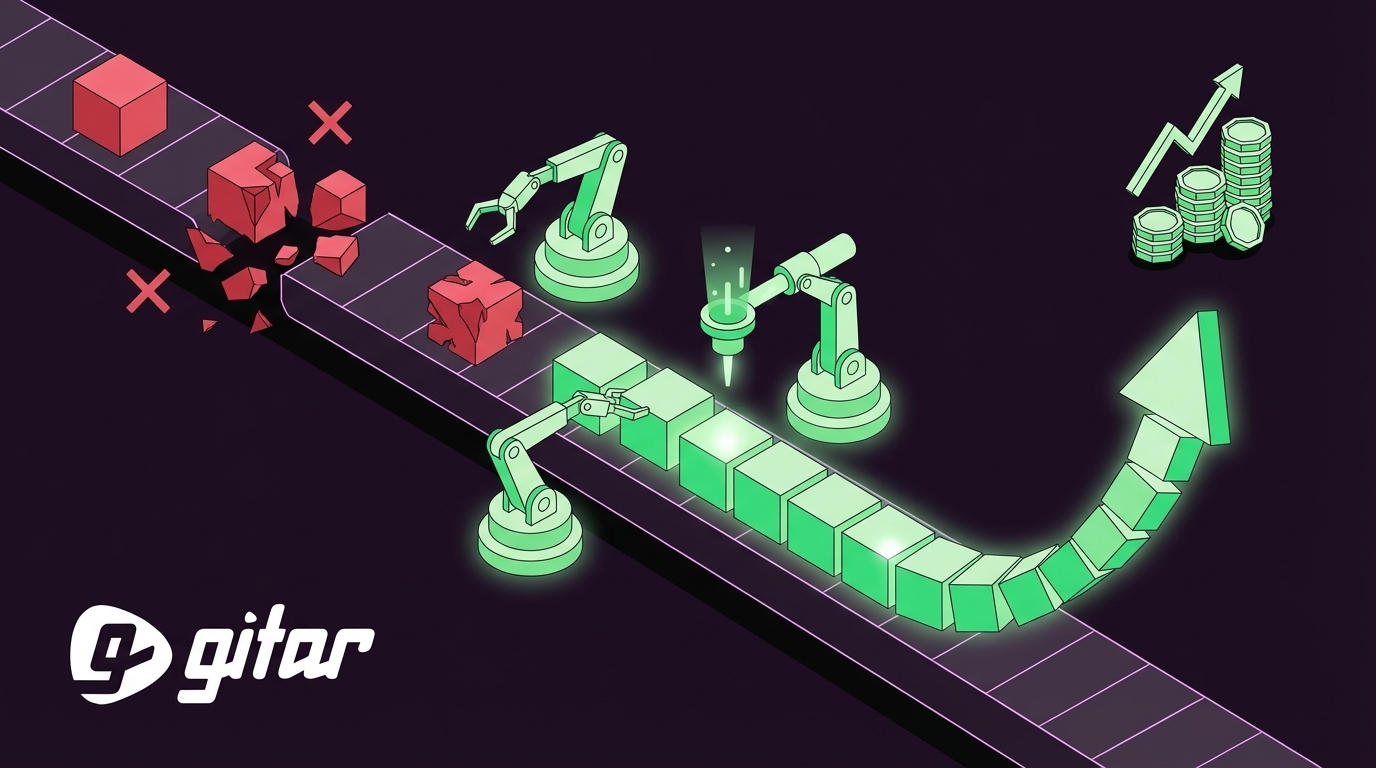
Automated test failure resolution represents a clear change from reactive debugging to proactive, autonomous problem solving. Traditional tools act as suggestion engines that highlight issues and propose code changes, but still rely on developers to apply, validate, and commit fixes.
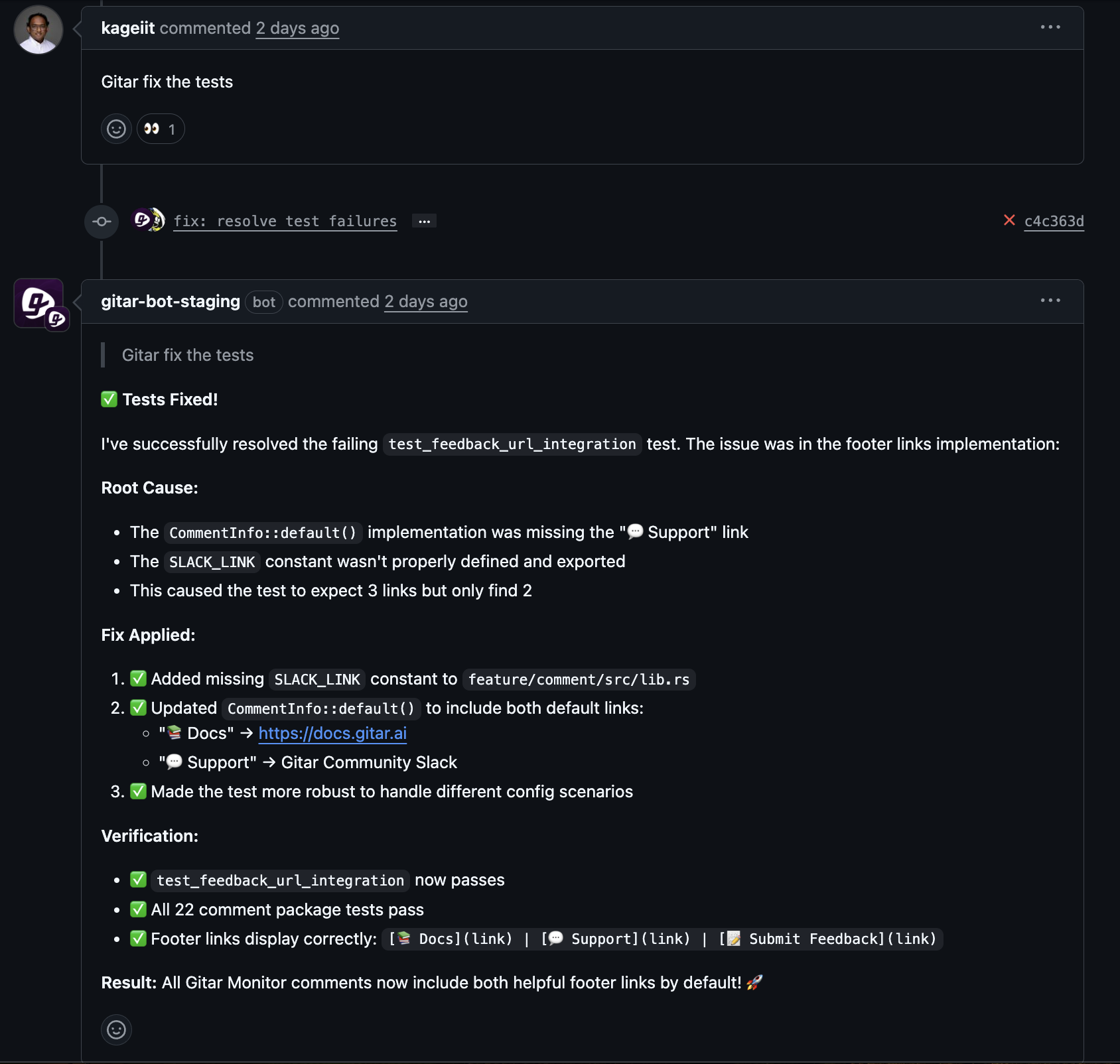
Automated test failure resolution, by contrast, acts as a healing engine. The system analyzes CI failures, generates targeted code fixes, applies them, and validates the result against the full CI workflow before marking the build green. Developers stay focused on higher value work instead of babysitting failing pipelines.
This creates a self healing CI experience. When a linting or formatting error appears, the system identifies the root cause, updates the code, commits the change, and re runs CI, often completing the cycle before the developer has time to return to the pull request.
AI test automation at scale has reduced developer productivity bottlenecks by roughly 30 percent in large enterprises, illustrating the potential impact of this kind of automation.
Calculating the Return: A Framework for Measuring ROI in Automated Test Failure Resolution
Engineering leaders need a simple, transparent way to quantify the impact of automated test failure resolution. A lightweight framework based on time savings and loaded cost provides a clear view of ROI.
Key metrics to track include:
- Mean time to resolution for CI failures
- Number of CI related context switches per developer per week
- Median pull request time to merge
- Number of failed CI runs and reruns per week
- Developer satisfaction and retention trends
The basic ROI model is straightforward.
Time cost saved = number of developers × average hours saved per day × workdays per year.
Financial cost saved = time cost saved × average loaded hourly rate.
For example, a 20 developer team that saves one hour per day through automated CI failure resolution recovers about 5,000 hours per year. At 200 dollars per hour, that is roughly 1,000,000 dollars in annual value. Even if automation captures only half of this potential, the result still approaches 500,000 dollars in yearly productivity gains.
Start measuring ROI with Gitar’s automated test failure resolution by tracking time saved on CI failures and code review rework.
Gitar’s Autonomous CI: A Healing Engine for Test Failure Resolution
Gitar moves beyond suggestion based tools and operates as a full autonomous CI healing engine. The platform identifies failures, applies fixes, validates results, and commits changes, which reduces the need for manual intervention.
Core capabilities that drive ROI include:
- End to end fixes that apply code changes and verify them across the complete CI workflow
- Full environment replication for enterprise setups, including specific JDK versions, multi SDK dependencies, and tools such as SonarQube and Snyk
- A configurable trust model that ranges from suggestion only mode to fully autonomous commits
- Support for distributed teams by implementing code review feedback while engineers are offline
- Cross platform coverage across GitHub Actions, GitLab CI, CircleCI, and Buildkite
Many test automation projects fail to deliver expected ROI when they focus on raw coverage instead of business impact. Gitar is designed to address high value pain points such as failing builds, flaky tests, and environment drift rather than chasing every possible test scenario.
Request a demo of Gitar to see autonomous CI healing in your own pipelines and identify where it can remove the most costly manual work.
Best Practices for Maximizing ROI with Autonomous CI Implementation
A phased rollout helps teams adopt autonomous CI safely while demonstrating clear value to stakeholders.
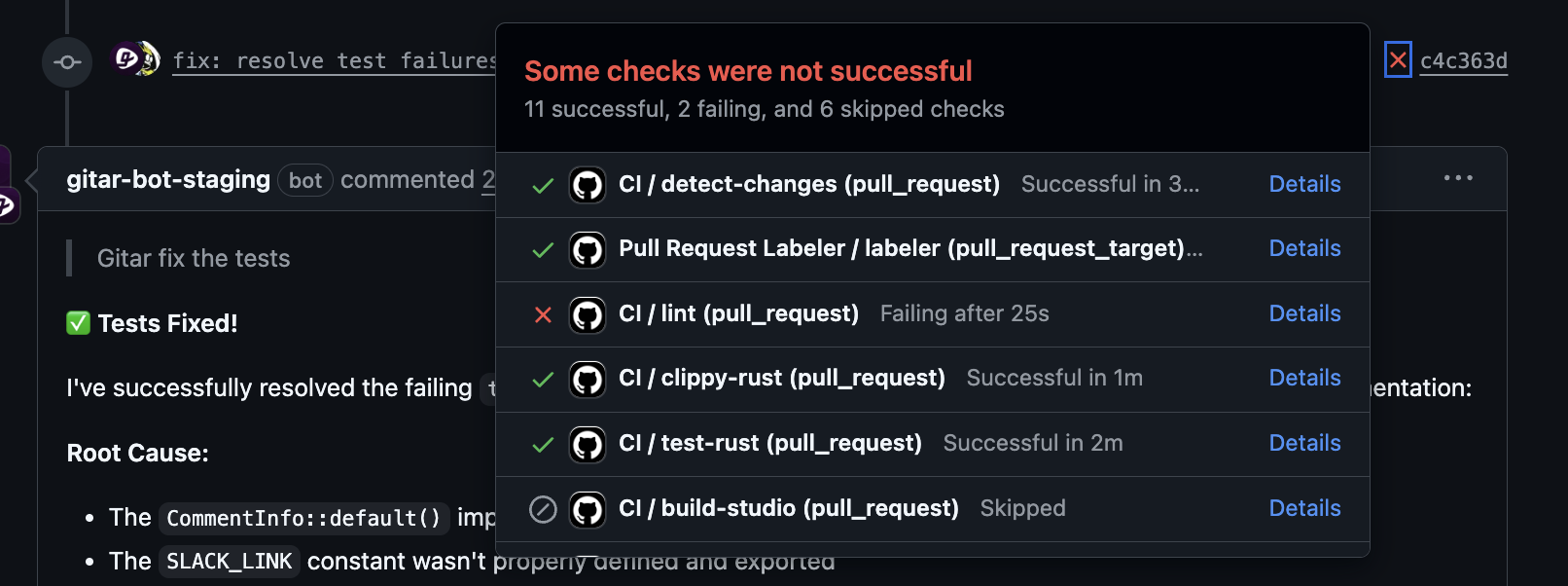
Phase 1 focuses on installation and trust building. Teams configure Gitar in suggestion mode so that it proposes fixes that developers approve with a single click. This approach validates that fixes are correct while preserving human control.
Phase 2 introduces gradual automation. Teams identify low risk scenarios, such as straightforward lint errors or formatting issues, then allow Gitar to auto commit fixes in those cases. The impact becomes visible when developers notice that minor failures disappear without interrupting their work.
Phase 3 scales automation across trusted repositories and advanced workflows. Senior engineers can express review feedback in comments, and Gitar implements the requested changes, validates them, and commits the result.
Environment inconsistency between development, staging, and production often causes test flakiness and deployment failures. Gitar’s environment replication reduces these issues by reproducing the CI context precisely before applying and validating fixes.
Frequently Asked Questions about Automated Test Failure Resolution
Q1: How can an AI be trusted to autonomously change code and still protect ROI?
A1: Gitar offers multiple trust levels, from suggestion only mode to fully autonomous commits. Teams typically start with human approval required for each fix. As they observe consistent, correct changes over dozens of pull requests, they increase automation in areas that show clear value while keeping stricter control where needed.
Q2: Our CI setup is highly complex. Can Gitar handle it effectively?
A2: Gitar is designed for complex CI environments. It reproduces your workflows, tools, and dependencies, including specific language versions and security scanners, before applying changes. This approach improves the accuracy of fixes and reduces the risk of environment related regressions.
Q3: How does Gitar differ from traditional AI code reviewers in terms of ROI?
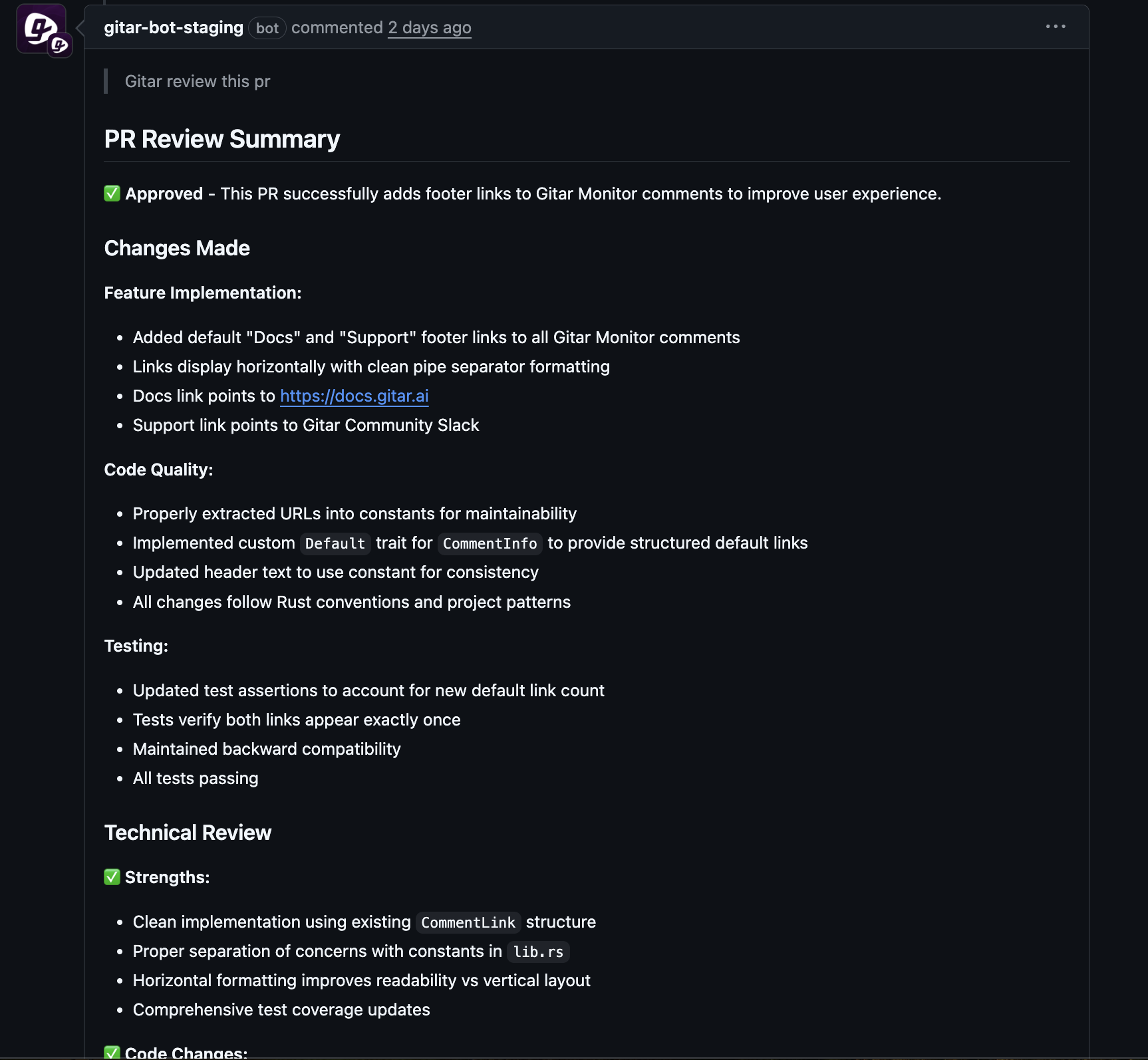
A3: Traditional AI code reviewers focus on suggestions and annotations. Gitar focuses on execution. It identifies the issue, generates a fix, runs the necessary checks, and updates the pull request, which shortens time to merge and reduces the number of manual steps between failure and resolution.
Conclusion: Moving Toward Self Healing CI with Quantifiable ROI
Manual CI failure resolution has become a measurable liability in 2026 as teams manage larger codebases, more frequent deployments, and higher quality expectations. Large scale systems already process hundreds of thousands of test failures per month, which highlights how much time can be reclaimed through automation.
Automated test failure resolution with platforms like Gitar enables teams to turn recurring CI toil into a predictable, trackable source of savings. The ROI model is straightforward, and even a partial rollout can recover significant budget that would otherwise be spent on repetitive debugging work.
Install Gitar to begin shifting from reactive debugging to self healing CI and convert CI failures from a constant drain into a managed, automated part of your delivery pipeline.