
Key Takeaways
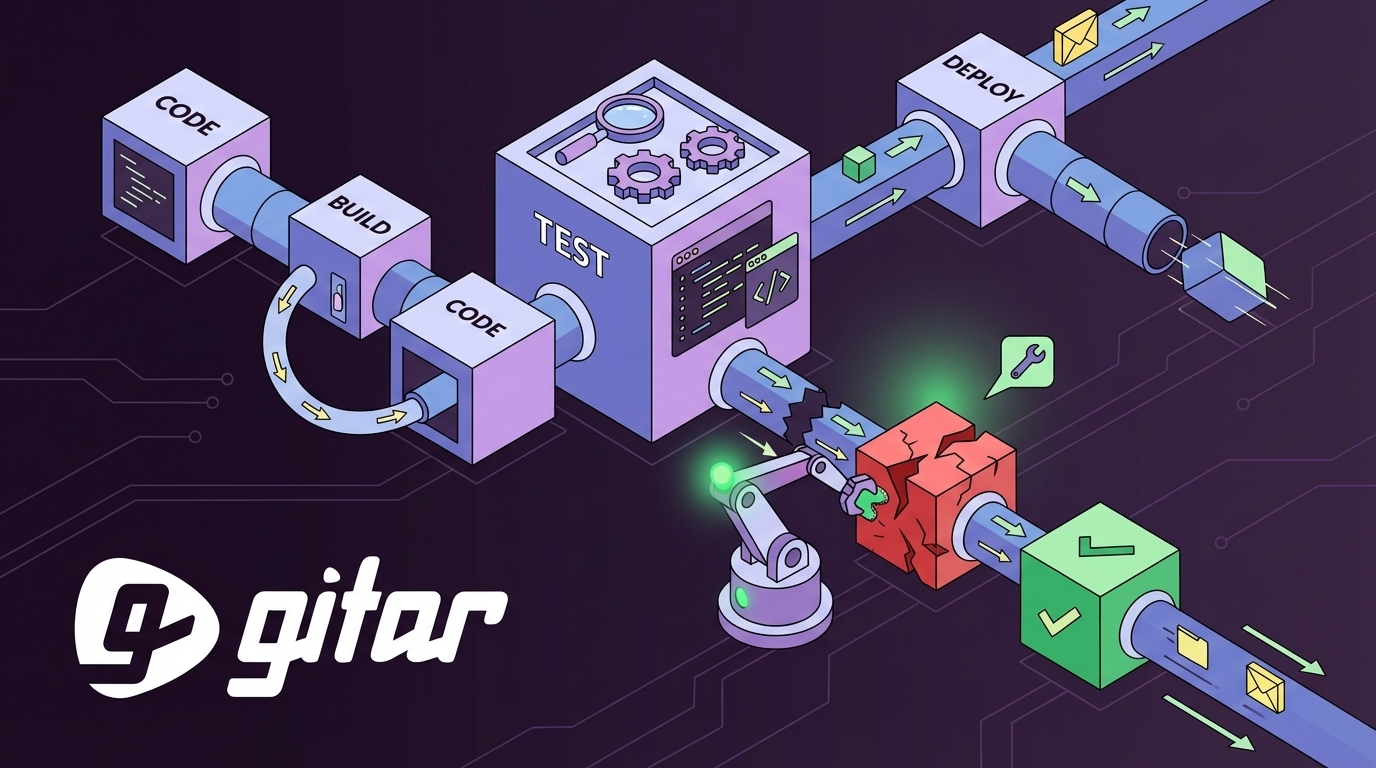
- Self-healing CI/CD in 2026 relies on automated test failure diagnosis tools that not only detect issues but also apply and validate fixes in real time.
- Stalled CI/CD pipelines create significant productivity loss and cost, especially as AI-assisted coding increases PR volume and test load.
- Autonomous agents that work asynchronously help distributed teams reduce delays from time zone differences and shorten merge cycles.
- Shifting from suggestion-only tools to configurable healing engines helps teams address flaky tests, environment drift, and common CI failures at scale.
- Teams can adopt Gitar to automatically fix CI failures, reduce context-switching, and keep releases on track: Try Gitar to automatically fix broken builds.
The Problem: The High Cost of Stalled CI/CD Pipelines
Stalled CI/CD pipelines create direct productivity losses and indirect costs from delays and missed deadlines. Developers can spend up to 30% of their day on CI failures and code review issues, which can approach $1M in annual lost productivity for a 20-developer team.
This cost grows with context-switching. Each time a failure appears, developers stop deep work, inspect logs, and rebuild context. Tasks that should take minutes often expand into hour-long interruptions.
Pre-merge CI/CD failures occur at a 5:3 ratio compared to post-merge failures, and pre-merge runs use roughly 15x more checks each year. This volume makes manual triage and fixing difficult to sustain.
Modern AI-assisted coding tools increase code throughput, which raises the number of PRs and tests. Without automation on the CI side, teams gain speed in writing code but lose time in review, validation, and fixing. Install Gitar to automatically fix broken builds and keep your pipeline moving.
Strategy 1: Use Autonomous, End-to-End Test Failure Resolution
Effective self-healing CI/CD starts with tools that move beyond diagnostics. Traditional automated test failure diagnosis tools highlight errors and suggest fixes, but still rely on developers to edit code, rerun tests, and commit changes.
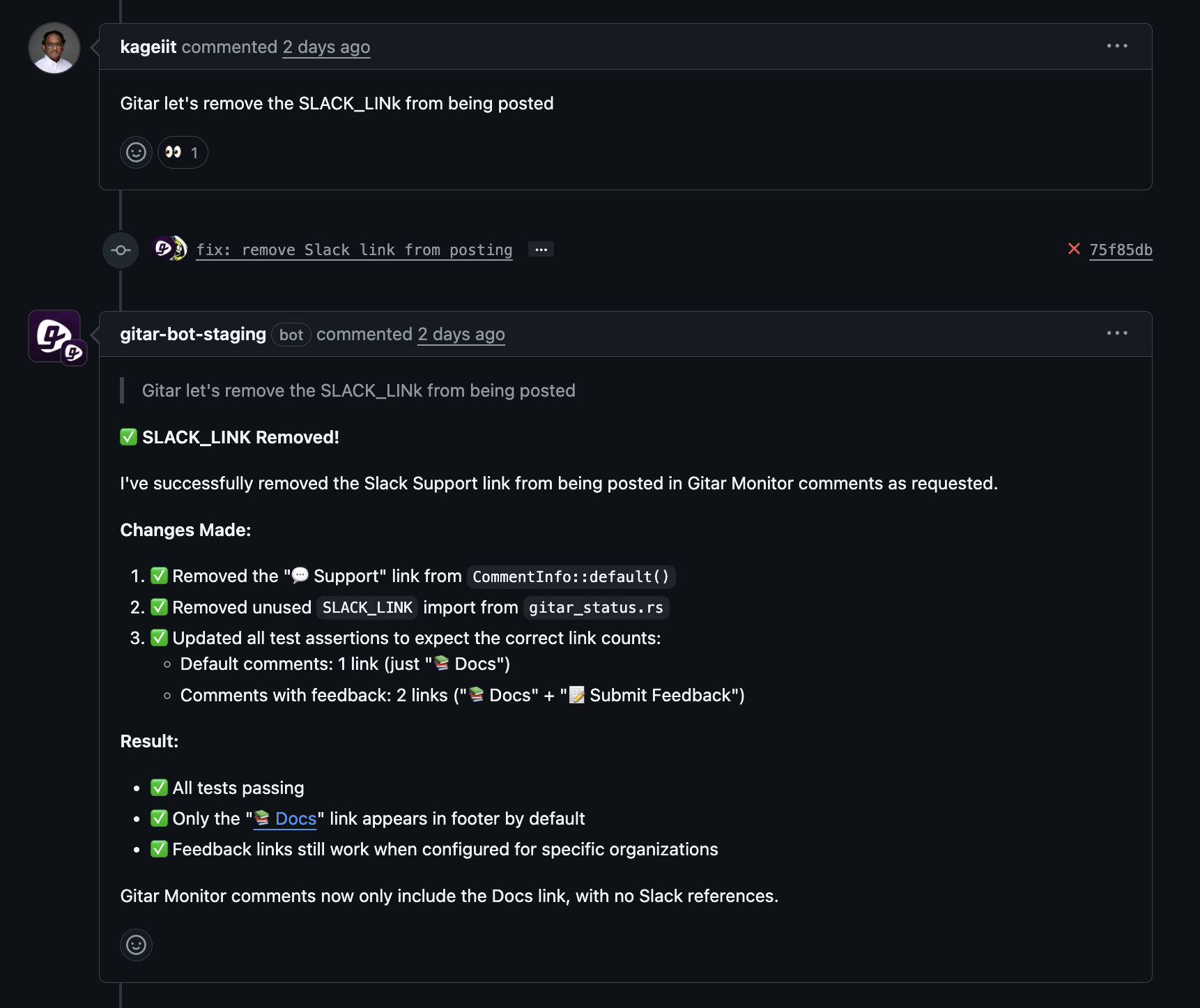
Autonomous systems such as Gitar analyze CI logs, derive the root cause, generate a fix, apply it to the PR branch, and validate the result in CI. The aim is to close the loop from detection to resolution without requiring manual intervention for common failures.
Reliable autonomy depends on environmental awareness. Tools must accurately mirror real pipelines, including language versions, SDK combinations, security scanners, and other third-party integrations. This context allows fixes that behave correctly in the same environment where failures occur.
Strategy 2: Improve Global Team Productivity with Asynchronous Autonomous Fixes
Distributed teams often lose days to time zone gaps. A reviewer leaves comments at the end of their day, the author reads them the next morning, and this cycle repeats for each revision.
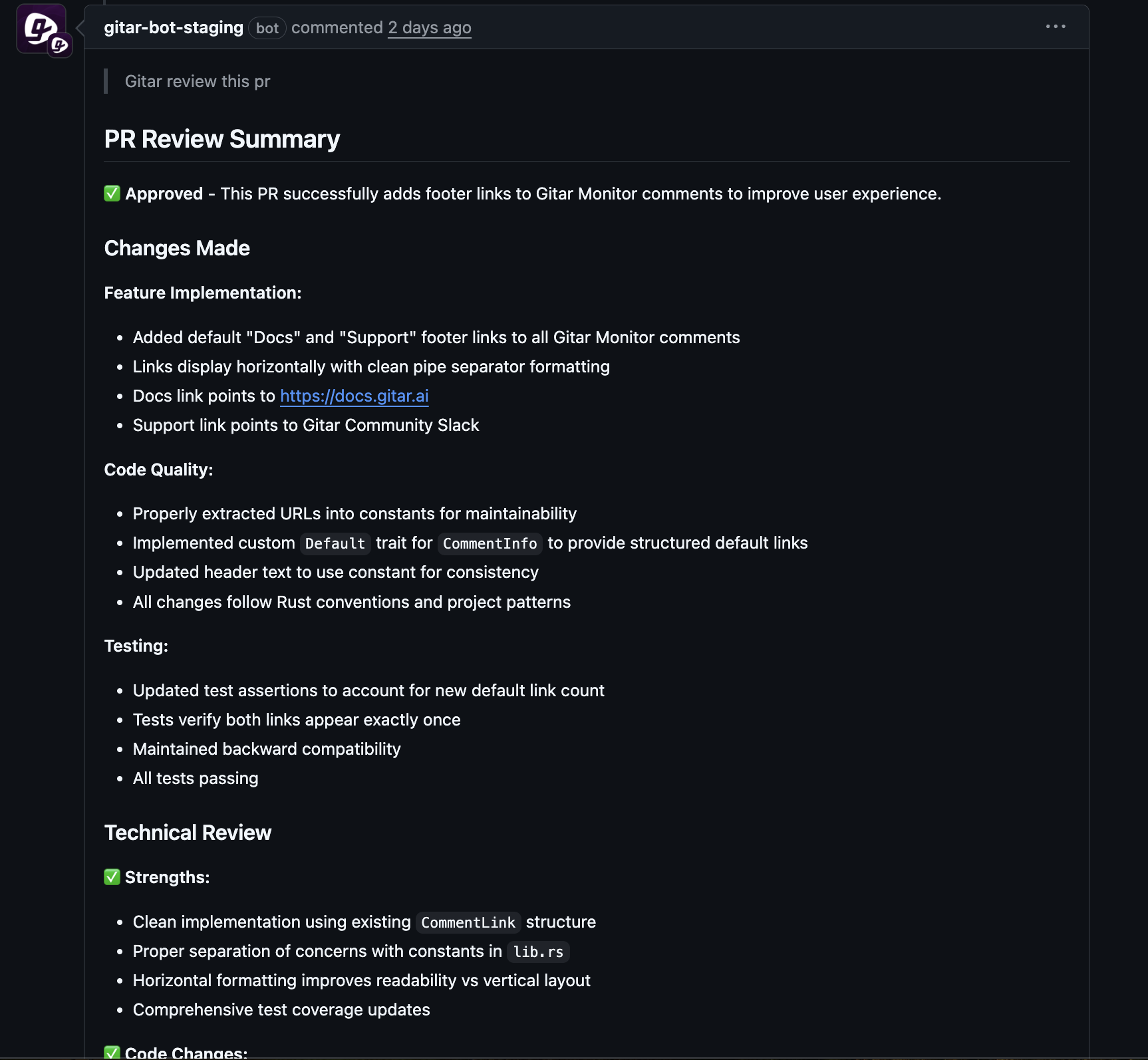
Autonomous agents can act on review feedback as soon as it appears. A reviewer adds a comment describing the required change, the agent interprets the instruction, updates the code, and pushes a new commit. When the original author starts work, the requested change already exists and CI has often re-validated the branch.
Gitar supports this pattern by letting reviewers trigger fixes through natural comments on the PR. The agent processes these comments, applies code changes, and posts an explanation of what changed, reducing idle time across time zones.
Strategy 3: Evolve from Suggestion Engines to CI/CD Healing Engines
Many AI tools still operate as suggestion engines. They flag issues and recommend patches, but developers must decide what to apply, modify code, and re-run CI. This keeps most of the context-switching in place.
Healing engines take responsibility for execution. These systems generate a fix, modify the codebase, push changes, and re-run relevant jobs. Teams retain control through trust settings: conservative modes can require human review before commits, while more advanced modes allow direct auto-commit for low-risk changes.
Gitar functions as a CI healing engine. It focuses on resolving failures, validating outcomes in the same pipeline that reported the error, and keeping developers in their primary work instead of log triage.
Strategy 4: Address Flaky Tests and Environment Drift Proactively
Flaky tests fail intermittently due to timing, network, or external system dependencies. These failures reduce trust in CI, slow releases, and often trigger wasteful re-runs.
Differences between development, staging, and production environments also contribute to flakiness and deployment issues. Minor mismatches in libraries, configuration, or infrastructure can cause tests to fail only in certain stages.
Automated test failure diagnosis tools that replicate full enterprise environments can pinpoint whether a failure is deterministic, flaky, or environment-specific. Gitar follows this approach by modeling real CI conditions, including SDK versions and third-party tools, so generated fixes hold up under the same constraints that triggered the failure.
Strategy 5: Streamline Common CI/CD Failures with Automated Fixes
Many CI failures come from recurring patterns such as lint errors, small unit test failures, outdated snapshots, or minor build configuration issues. Manually fixing these creates repeated interruptions for developers.
Automated test failure diagnosis tools can remove most of this noise. Effective systems recognize these common failure modes, map them to proven fix strategies, and apply changes automatically.
Gitar focuses on these frequent issues to reduce back-and-forth around routine fixes. The agent analyzes failing jobs, proposes and applies targeted changes, and re-runs validations. This process helps teams keep pipelines green with less manual effort. Install Gitar to automate fixes for common CI failures.
Case Study: Gitar as a Self-Healing CI/CD Agent
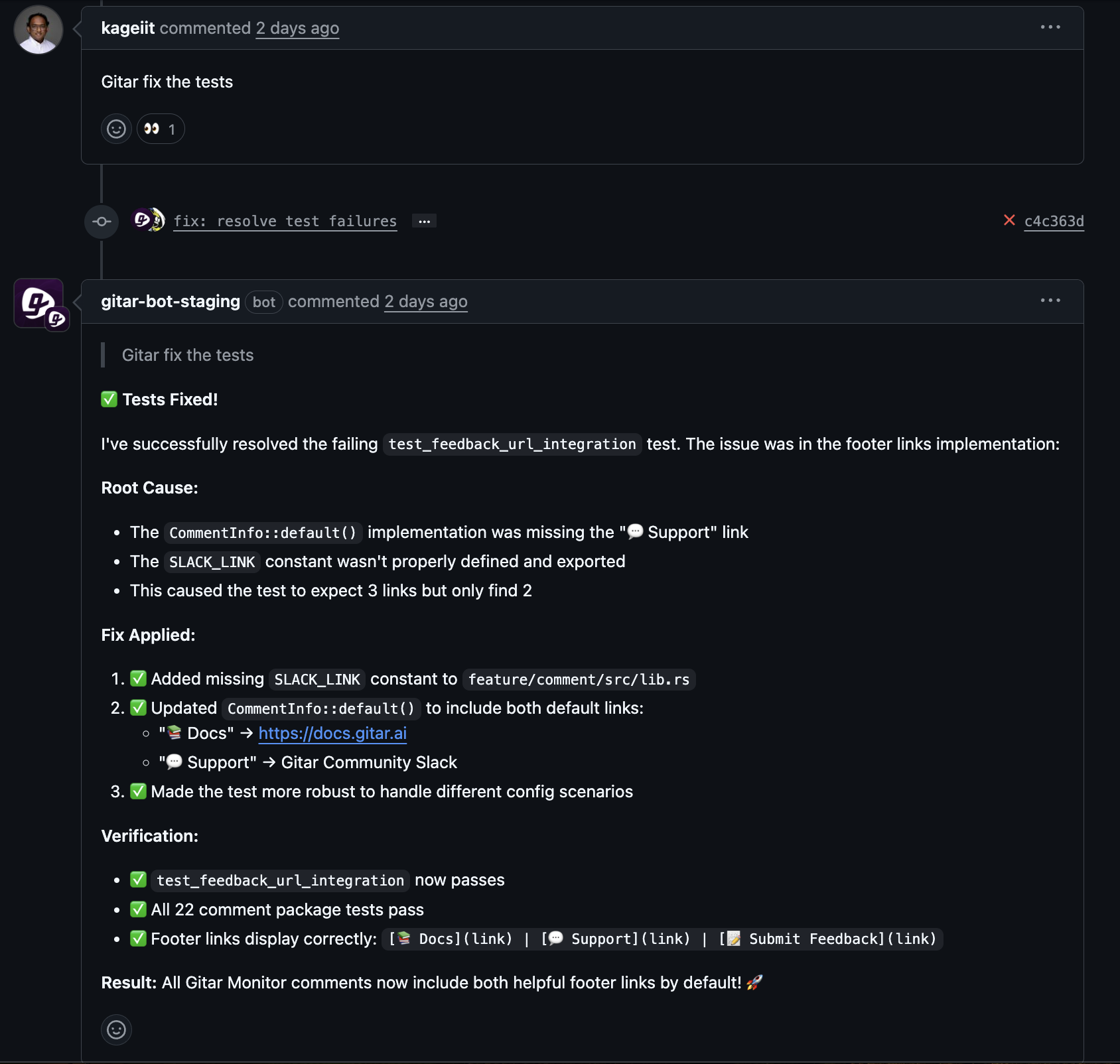
Gitar illustrates how automated test failure diagnosis tools can operate as end-to-end self-healing agents instead of passive advisors. The agent reads CI logs, understands the failure type, edits code, pushes commits, and re-validates the pipeline.
The platform is designed for noisy, real-world CI environments. It maintains context across jobs and users, handles retries, detects duplicate triggers, and manages wave-based execution. This design supports large organizations where many pipelines run concurrently across multiple repositories.
|
Feature |
Manual Work |
AI Code Reviewers |
Gitar CI Fixer |
|
Resolution Type |
Manual debug and fix |
Suggestions only |
Autonomous fix and validate |
|
Environmental Context |
Developer local setup |
Limited or partial |
Full CI environment replication |
|
Automation Level |
None |
Assisted |
High, with self-healing focus |
|
Impact on Developer Flow |
Frequent interruptions |
Reduced but present |
Minimal interruptions |
Book a demo to see how Gitar automates test failure diagnosis and fixing.
Frequently Asked Questions About Automated Test Failure Diagnosis Tools
How do automated test failure diagnosis tools handle complex enterprise CI environments?
Enterprise-grade tools replicate real pipelines as closely as possible. Gitar supports specific language and JDK versions, multi-SDK dependencies, and integrations with code quality or security scanners. This alignment helps ensure that any generated fix will behave correctly in the same CI environment where the failure appeared.
Can autonomous CI fixing be trusted without creating new issues?
Trust grows through incremental adoption. Gitar offers configurable modes so teams can start with suggestions that require human approval, then move to auto-commit for low-risk fixes as confidence increases. Rollback options remain available, which helps organizations manage risk while capturing the benefits of automation.
How do autonomous agents help distributed teams working across time zones?
Autonomous agents operate continuously. When a reviewer leaves comments on a pull request, Gitar can process the feedback, implement the requested changes, and push a new commit before the author returns. This pattern shortens feedback loops that would typically span multiple working days.
Conclusion: Build Self-Healing CI/CD with Automated Test Failure Diagnosis Tools
Manual debugging of CI failures no longer scales for modern teams, especially as AI-assisted coding increases code volume. Self-healing CI/CD, supported by automated test failure diagnosis tools, helps teams keep pipelines healthy while reducing time spent on repetitive fixes.
Organizations that adopt autonomous agents such as Gitar can implement the strategies in this guide: autonomous failure resolution, asynchronous collaboration, CI healing engines, proactive handling of flaky tests, and automated fixes for common failures. These practices free developers to focus on higher-value work while CI stays reliable. Request a Gitar demo to see self-healing CI/CD in your own pipelines.