
Key Takeaways
- Persistent CI/CD failures and slow code reviews create a measurable productivity drag, with many teams losing significant engineering time each week to rework and broken builds.
- Manual fixes in complex pipelines slow releases, increase cloud and tooling spend, and place additional pressure on both developers and DevOps teams.
- Autonomous “healing engines” extend traditional code quality gates by not only detecting issues but also applying and validating fixes inside the CI environment.
- Configurable automation, cross-platform support, and support for complex enterprise stacks make autonomous CI fixing practical for real-world organizations.
- Teams that want to reduce CI toil and ship more reliable software can adopt Gitar for autonomous fixing and code review support by installing it at https://gitar.ai/fix.
The Problem: The High Cost of Manual CI/CD Fixes in Deployment Automation
Developer Toil and Constant Context Switching
Developers often lose an average of one hour per day debugging CI failures and implementing code review feedback, which breaks their focus. AI-assisted code generation produces more pull requests, which creates more potential failures and more follow-up work. This repeated context switching damages concentration, reduces deep work, and raises delivery risk.
Delayed Time-to-Market and Business Impact
CI/CD pipeline failures play a central role in delayed projects for about 60% of companies. These delays push back feature releases, slow customer feedback loops, and undermine plans that depend on predictable delivery schedules.
Overwhelmed DevOps and Flaky Pipelines
DevOps teams must manage complex pipelines, environment drift, and tools that occasionally fail in non-obvious ways. Root-cause analysis for failures can consume large parts of the workday. These issues reduce confidence in the pipeline, lower productivity, and increase operating costs for compute, storage, and third-party services.
Limitations of Traditional Suggestion Engines
Many AI review tools act as suggestion engines. They point out problems and recommend changes, but developers still implement and validate those fixes manually. This leaves the most expensive part of the workflow, the last mile of fixing and re-running CI, entirely on the team.
The Solution: Gitar as an Autonomous CI Fixer and Healing Engine
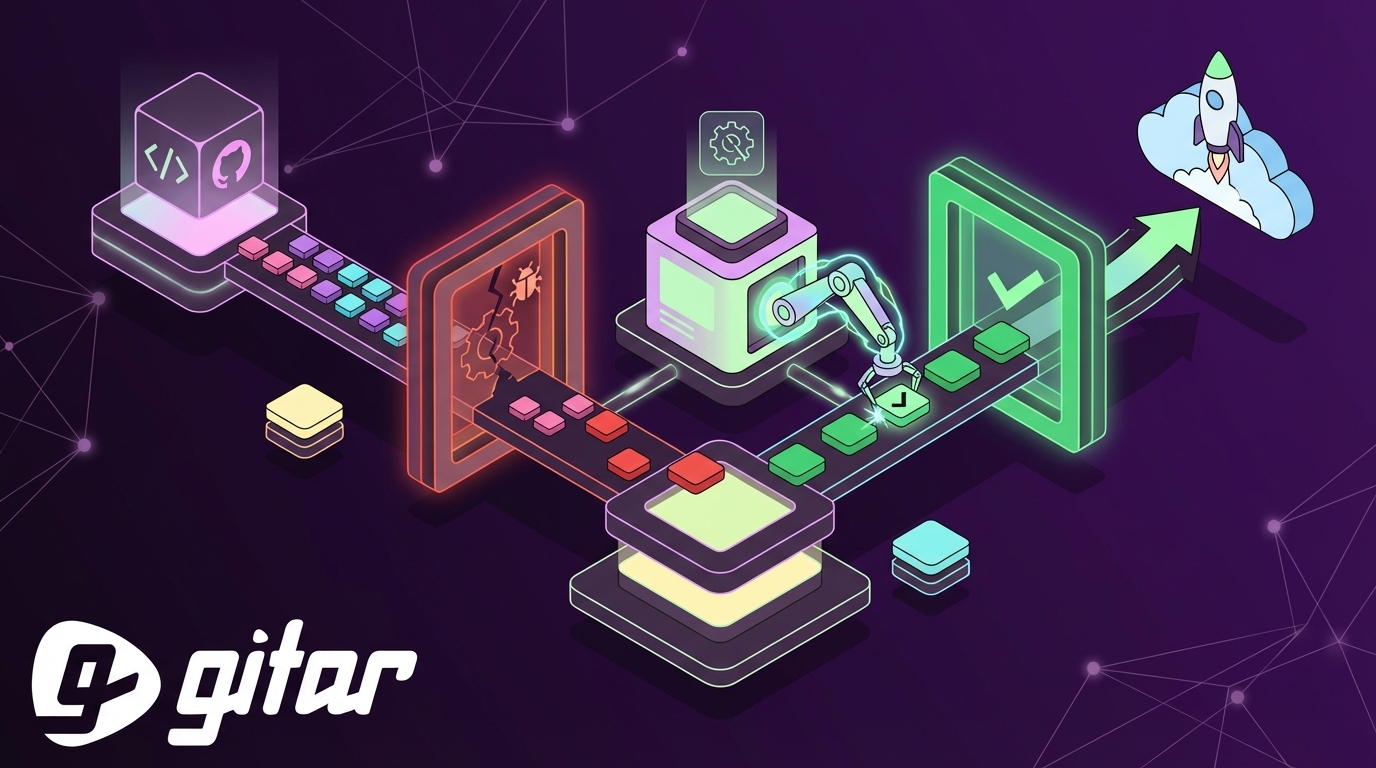
Gitar provides an autonomous layer on top of existing CI/CD systems. It closes the gap between detection and resolution, so code quality gates do not only flag issues but also repair them inside the pipeline.
End-to-End Fixing for Green Builds
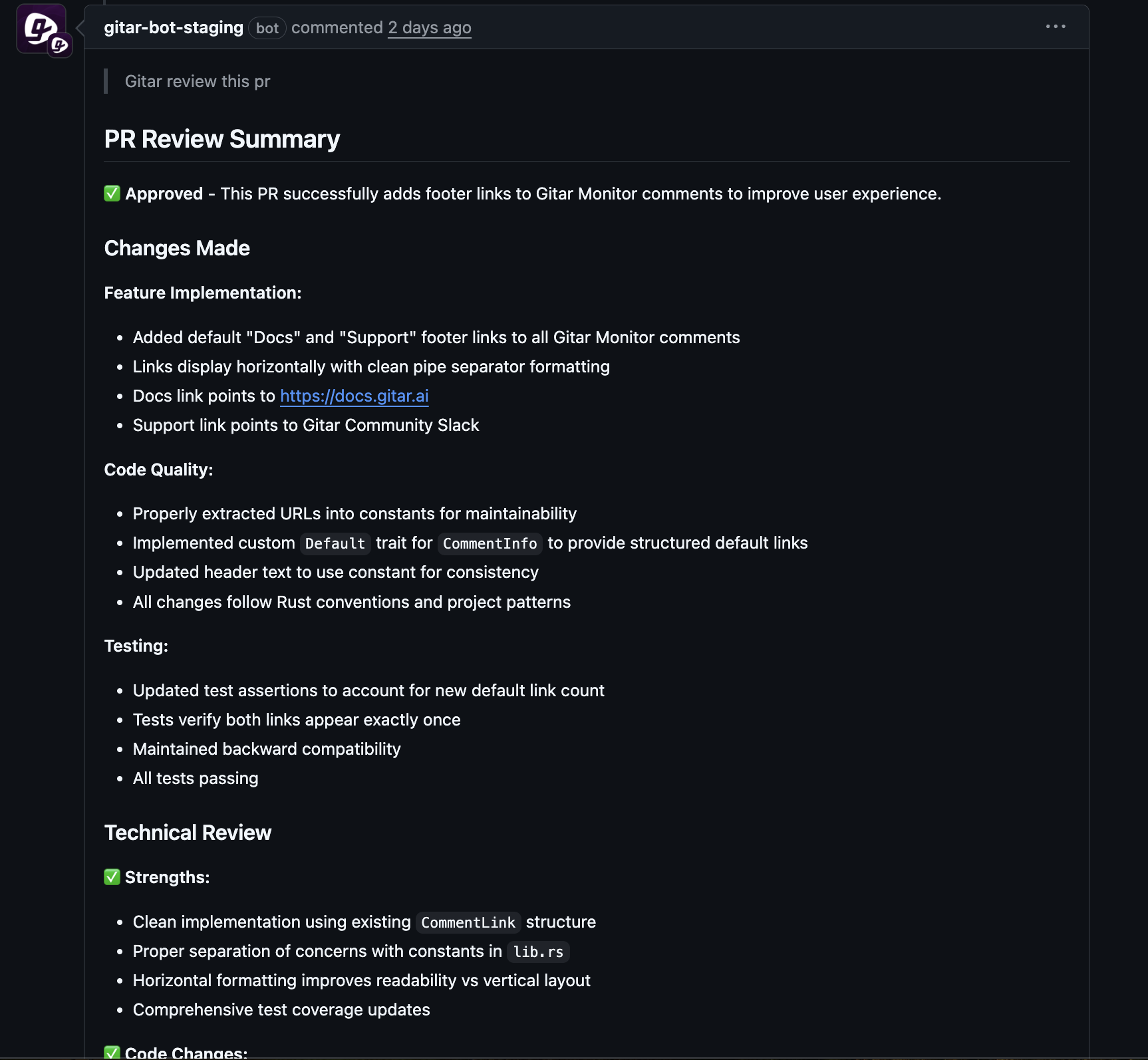
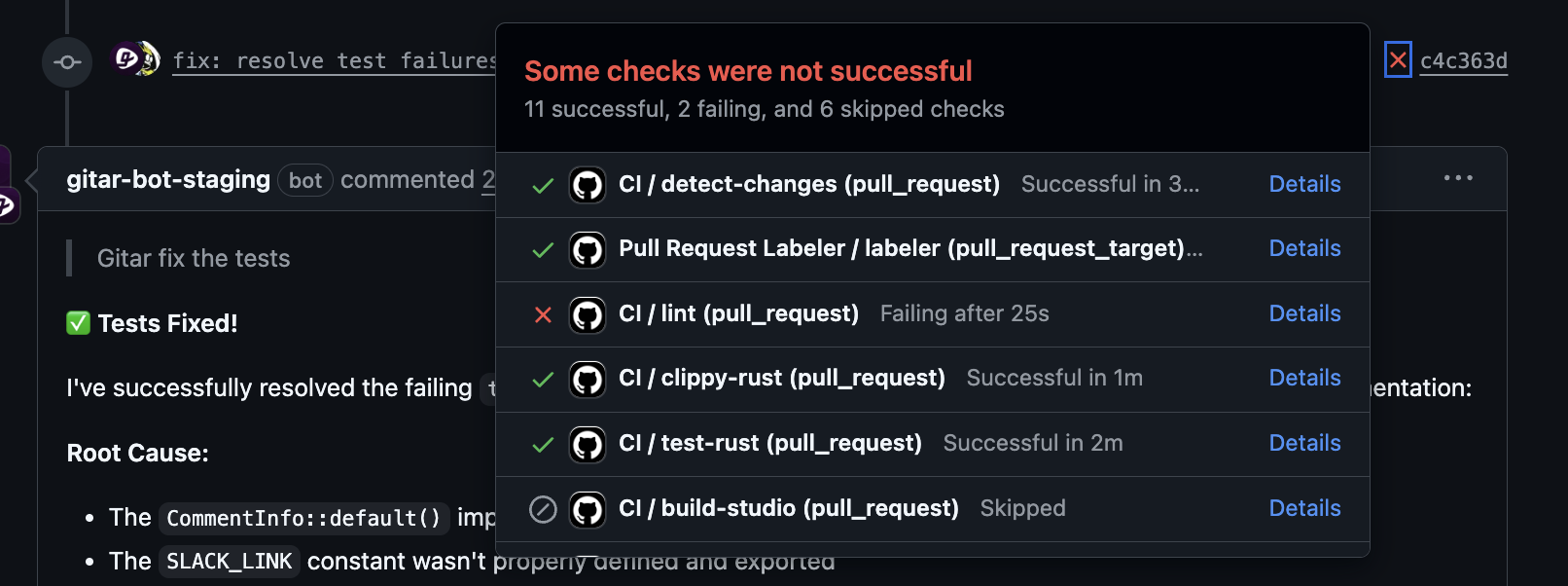
Gitar moves beyond suggestions by applying fixes, validating them against the full CI workflow, and confirming that all CI jobs pass. When a CI check fails, Gitar analyzes the logs, formulates a code change, applies that change, and commits the fix back to the pull request branch. It can address issues such as:
- Linting and formatting violations
- Unit and integration test failures
- Build and compilation errors
Full Environment Replication for Complex Workflows
Gitar supports complex enterprise environments that depend on specific SDK versions, language runtimes, dependency graphs, and security scans. It works with tools such as SonarQube and Snyk while respecting the configuration of each CI system. This approach allows Gitar to generate fixes that run correctly in the same environment that gates production releases.
Intelligent Code Review Assistant
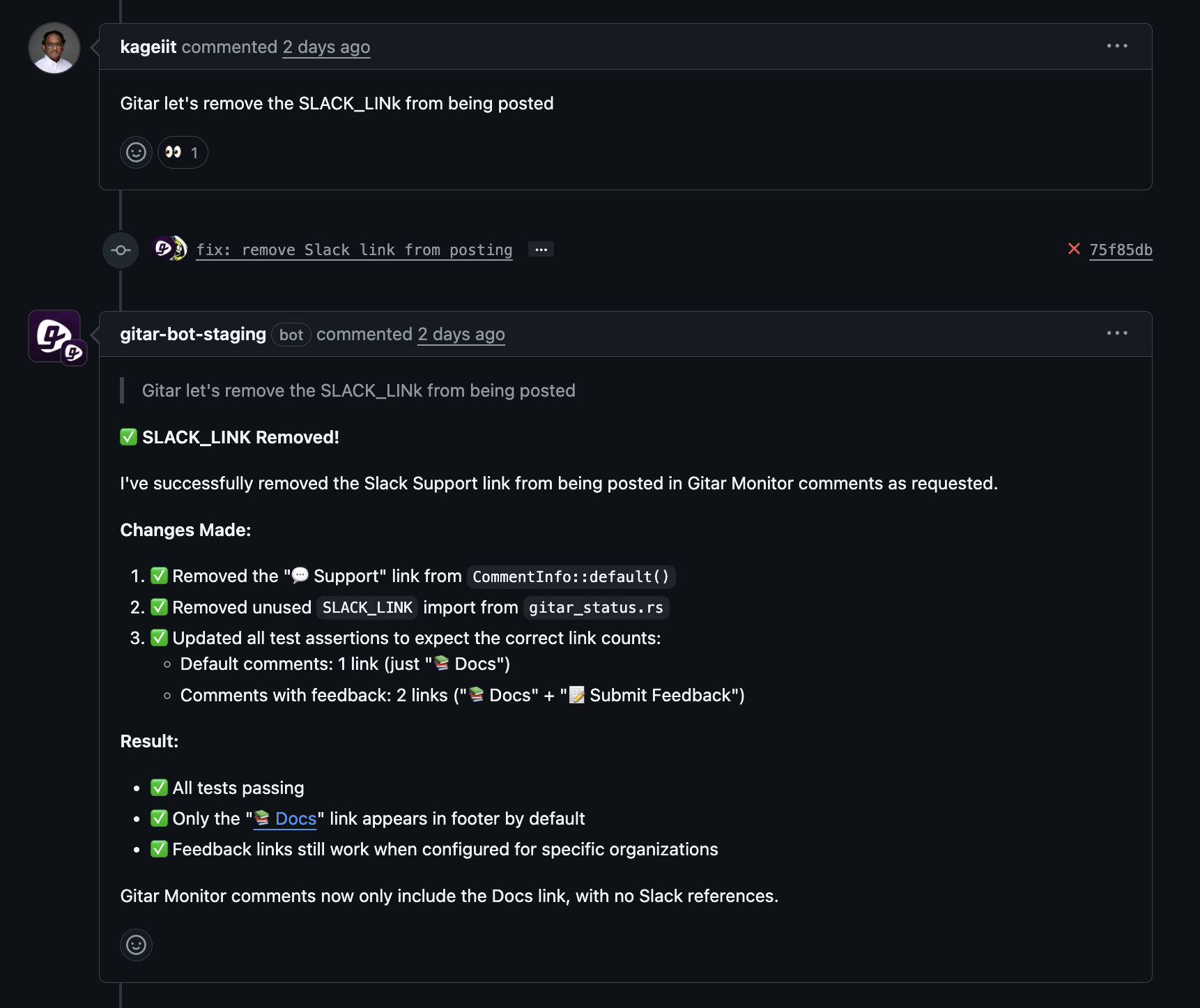
Gitar provides an automated first-pass review and also updates code in response to reviewer comments. For example, a reviewer can tag Gitar to remove a feature, adjust a configuration, or refactor a block, and Gitar will implement the requested change and push a commit. This workflow cuts down back-and-forth cycles, which is especially useful for distributed teams that work across time zones.
Configurable Trust Model for Gradual Adoption
Gitar includes a flexible automation model so teams can adopt autonomous fixing at their own pace:
- Conservative mode posts fixes as suggestions, so developers review and accept changes with a single click.
- More automated modes allow Gitar to commit fixes directly, with controls to require approvals and options for rollback.
This model helps teams gain confidence while retaining governance and compliance standards.
Cross-Platform Support for Diverse CI Ecosystems
Gitar integrates with common CI providers, including GitHub Actions, GitLab CI, CircleCI, and BuildKite. Teams can use a single healing engine across multiple repositories, languages, and pipelines without locking into one platform.
Teams that want to explore autonomous fixing can install Gitar at https://gitar.ai/fix and connect it to existing repositories and CI workflows.
How Autonomous Code Quality Gates Change Deployment Automation
From Detection to Resolution with Self-Healing CI
Gitar shifts CI/CD from passive detection to active resolution. When a build fails, Gitar can identify the cause, propose a change, apply it, and re-run the checks. Many teams notice the impact when a failing pull request turns green with a new commit, without direct human intervention. This shorter feedback loop reduces time to merge and makes CI failures less disruptive.
Reclaiming Developer Productivity and Focus
Gitar reduces context switching by fixing many issues in the background. Developers stay focused on feature work instead of moving back and forth between new tasks and older failing branches. This improvement lowers cognitive load and helps teams protect blocks of uninterrupted work.
Faster Releases and Lower Operational Costs
Gitar helps remove bottlenecks that occur between the first commit and the final merge. Fewer failed test runs and fewer manual retries reduce CI usage and cloud spend. Faster merges support more frequent releases, which improves responsiveness to product requirements and customer feedback.
Healing Engines vs Suggestion Engines in Code Quality Gates
|
Feature or Aspect |
Traditional Suggestion Engines (for example, AI code reviewers) |
Gitar as an Autonomous Healing Engine |
|
Core function |
Identifies issues and provides feedback or suggested patches |
Identifies, fixes, and validates issues inside the CI pipeline |
|
Developer action required |
Implements suggested fixes, re-runs CI, and validates results |
Reviews and optionally approves validated fixes, often with a single click |
|
Impact on CI pipeline |
Can still produce repeated failures and manual re-runs |
Aims for green builds by applying and validating fixes in place |
|
Outcome |
Reduces some review effort but keeps most toil with developers |
Reduces manual toil, speeds merges, and supports self-healing pipelines |
Frequently Asked Questions about Automated Code Quality Gate Solutions
How Gitar Differs from Existing AI Reviewers
Many AI reviewers act as suggestion engines and do not guarantee working fixes. Gitar functions as a healing engine. It applies fixes, validates them across the full CI workflow, and works to ensure builds are green before developers return to the pull request.
Handling Complex, Enterprise-Grade CI Environments
Gitar is designed for environments with many dependencies, language versions, and security or quality integrations. It respects specific SDK versions and toolchains and works with platforms such as SonarQube and Snyk. This design helps Gitar produce fixes that match the realities of complex enterprise pipelines.
Building Trust in Automated Code Changes
Many teams prefer to review automated changes before merging. Gitar supports this by allowing organizations to require approvals on pull requests and by offering conservative modes that keep humans in the loop. Teams retain control and visibility while still gaining the benefits of automated fixing.
Impact on Time from First Commit to Final Merge
Gitar shortens the path from pull request creation to merge by resolving many failures without manual intervention. It fixes CI issues, keeps builds green, and can implement reviewer feedback. Distributed teams that work across multiple time zones often see fewer delays because less work waits for the next overlap window.
Integration with Existing Toolchains and CI Platforms
Gitar connects to GitHub Actions, GitLab CI, CircleCI, BuildKite, and other common CI systems without replacing existing tools. Teams maintain current quality standards and checks while adding autonomous fixing as an extra capability.
Conclusion: Unlocking the Value of Automated Code Quality Gates
Developer toil and manual CI/CD fixes create a real productivity and cost burden for modern software teams. Automated code quality gates that include autonomous healing reduce this burden by turning failures into opportunities for fast, reliable fixes.
Teams that want to reduce CI noise, shorten merge times, and support more reliable releases can start by installing Gitar at https://gitar.ai/fix and connecting it to their existing CI/CD workflows.