
Key Takeaways
- Automated PR review and fix tools reduce manual CI/CD work, so developers spend less time on log digging, retries, and small fixes.
- Self-healing CI pipelines shorten the path from first commit to merge, which improves release speed and predictability.
- Environment-aware automation improves CI reliability by validating fixes in conditions that match real enterprise workflows.
- Distributed teams benefit from faster, asynchronous code review cycles, which limits time zone delays and rework.
- Teams can use Gitar to automatically fix CI failures and review feedback, reclaim developer time, and keep builds green by installing it at https://gitar.ai/fix.
Why Automated PR Review And Fix Tools Matter For Modern DevOps
DevOps teams still spend considerable time on manual CI/CD triage and code review fixes. For a 20-person engineering team, time lost to CI failures and PR rework can reach about 30% of developer capacity, which often exceeds $1 million per year in fully loaded costs.
This cost comes from a repeated pattern: each pull request triggers a cycle of log inspection, context switching to apply fixes, and waiting for pipeline reruns. AI coding tools increased the volume of code and pull requests by 2024 and 2025, so deployment speed and reliability now depend on how quickly teams can clear this bottleneck.
Automated PR review and fix tools change this workflow. These tools move from simply reporting problems to resolving many of them automatically, which turns a reactive process into a more autonomous, self-healing system.
How Gitar Supports Automated PR Review And Fixes
Gitar acts as an autonomous CI assistant that focuses on fixing failing pipelines and resolving code review feedback so developers can focus on product work.
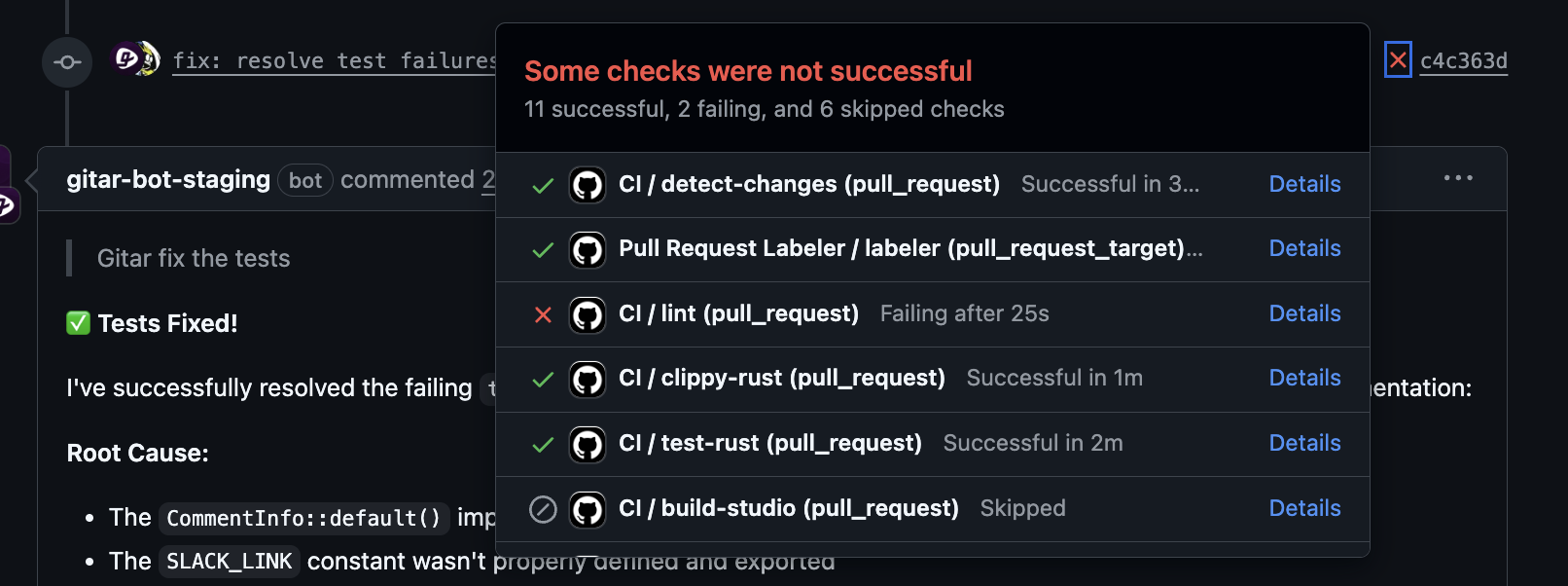
- Self-healing CI: Gitar inspects failing jobs, identifies issues such as lint problems, test failures, and build errors, then proposes or applies code changes directly to the pull request.
- Code review assistant: Gitar reads reviewer comments and applies requested changes to the PR, so reviewers and authors avoid long back-and-forth cycles.
- Environment replication: Gitar mirrors enterprise CI workflows, including language runtimes and external tools, to generate context-aware fixes.
- Configurable trust model: Teams can start with suggestion mode for manual review, then graduate to auto-commit with rollback options.
- Cross-platform support: Gitar integrates with GitHub Actions, GitLab CI, CircleCI, BuildKite, and other major CI platforms.
Teams can see Gitar in action and trial automated PR review and fix workflows by visiting https://gitar.ai/fix.
The 5 Ways Automated PR Review And Fix Tools Change DevOps
1. Reducing Developer Toil And Context Switching
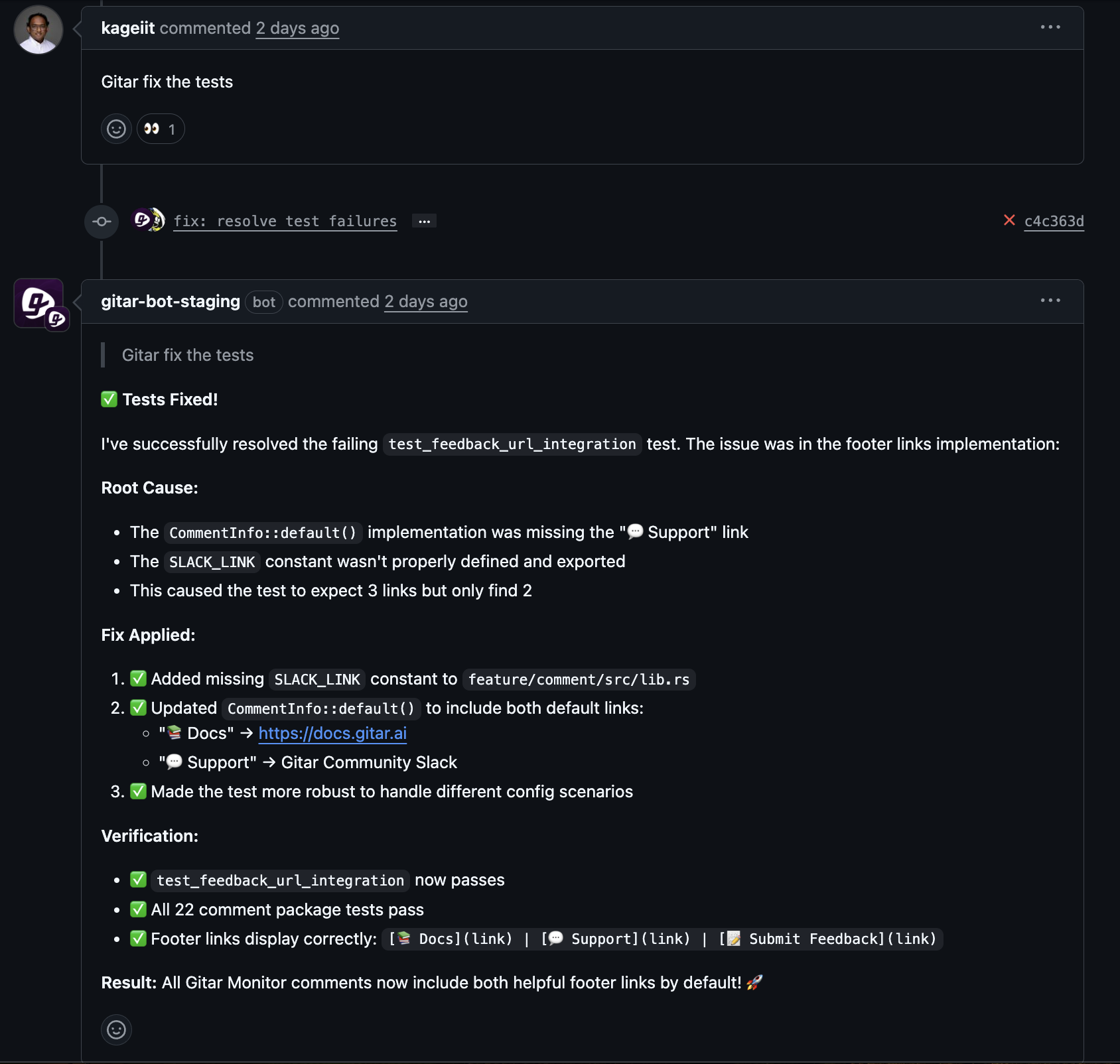
Developers often push a PR, wait for CI, study logs, patch minor issues, and repeat. Automated PR review and fix tools cut much of this cycle by resolving common failures without manual work. When a lint or formatting error appears, Gitar can understand the failure, produce the appropriate change, and update the PR branch.
Teams report that this reduction in small, interrupt-driven tasks helps developers stay in a flow state and can free roughly an hour per day that would have gone to debugging and retries.
2. Shortening Time-To-Market With Self-Healing CI
Growing use of AI code generation increased the number of PRs, which exposed CI as a frequent blocker between code and production. Automated PR review and fix tools address this by turning CI into a system that can recover from many failures on its own.
When a unit test fails, Gitar reads the logs, identifies the likely root cause, and proposes or commits a code change that fixes the test. The pipeline reruns with the updated code, which moves the PR toward a green build without waiting for a developer to return to the branch. This shorter loop directly reduces the time from first commit to merge.
3. Improving CI/CD Reliability And Efficiency
Enterprise CI/CD pipelines often depend on specific SDK versions, security scanners, and quality tools. Diagnosing failures in these environments can be slow and difficult.
Gitar addresses this by replicating the CI environment when generating fixes. It can account for language versions and tools such as static analysis or security scanners. This approach reduces trial-and-error runs and leads to fewer repeated failures, which improves both pipeline reliability and infrastructure efficiency.
4. Supporting Distributed Teams With Faster PR Cycles
Distributed teams lose time when PR feedback waits for overlapping work hours. A comment that asks for a small change can stretch a review across several days.
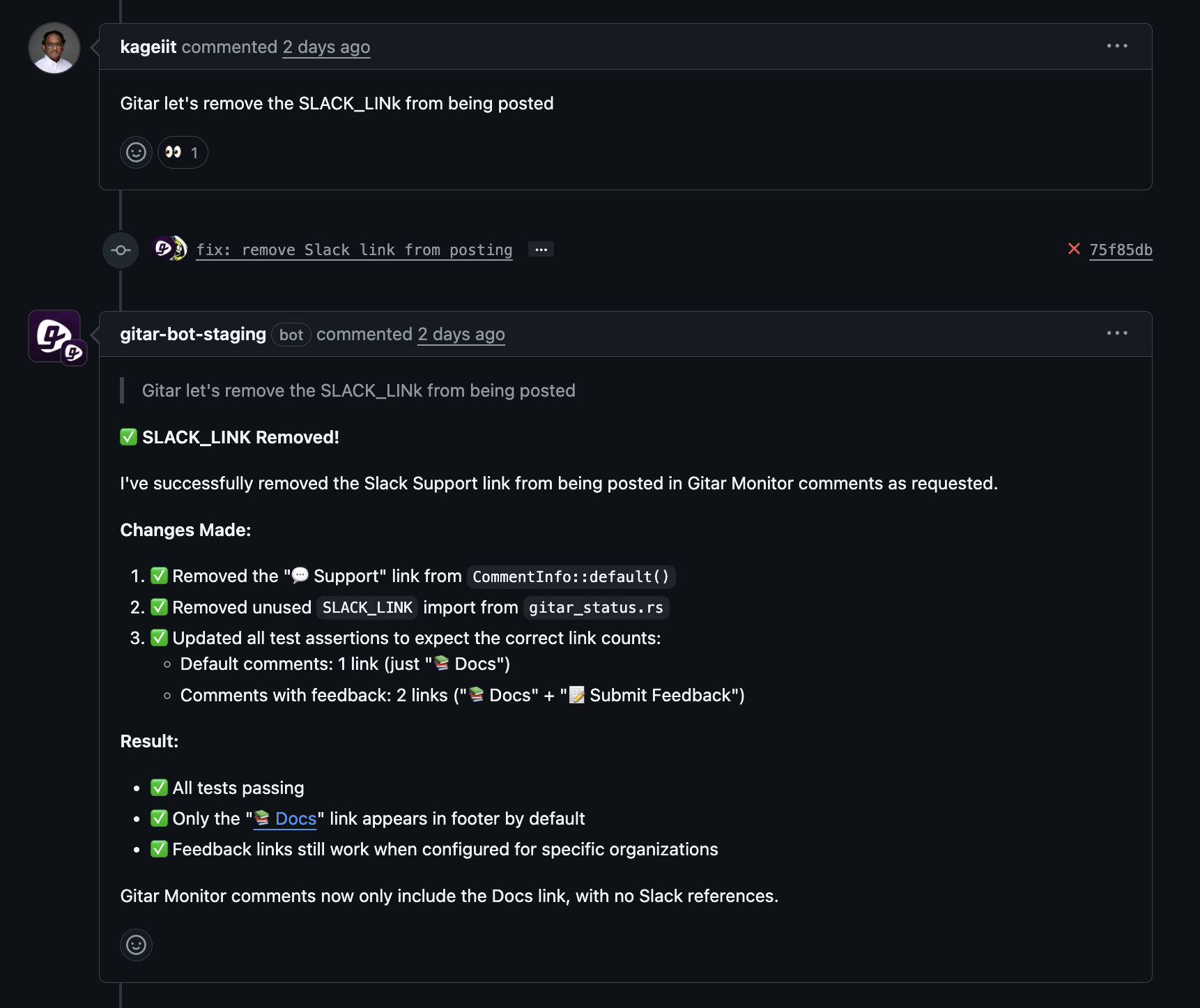
Automated PR review and fix tools let reviewers capture intent in a comment, which Gitar can use as an instruction. A reviewer can write a note such as “@gitar review this PR” or describe a change request. Gitar then updates the PR while the author is offline, so work is ready for final review when the author returns.
5. Enforcing Consistent Quality And Compliance At Scale
Large codebases require consistent enforcement of style, testing, and security standards. Manual enforcement often breaks down as teams grow.
Gitar helps apply organization rules in CI by fixing lint issues, adding or updating tests when needed, and validating changes against the full pipeline before merge. New engineers benefit from this guardrail because CI enforces expectations and resolves many issues automatically, which reduces onboarding friction.
How Gitar Differs From Suggestion-Only Tools
Many tools stop at explaining why a build failed or suggesting code changes. Gitar focuses on applying, validating, and committing fixes so that developers do not have to close the loop manually.
|
Feature |
Gitar (Healing Engine) |
Suggestion Tools |
|
Fix application |
Applies, validates, and commits fixes directly to pull requests |
Provides advice that developers must apply and verify |
|
CI validation |
Runs fixes through full CI workflows to reach a green build |
May not run full workflows, so teams rerun CI manually |
|
Environment replication |
Replicates enterprise environments for context-aware fixes |
Often operates on partial context |
|
Developer toil |
Reduces context switching by closing CI and review loops |
Leaves much of the manual work with developers |
Gitar’s autonomous focus turns many multi-step CI and review tasks into a single comment or action, which supports faster and more predictable delivery.
Key Questions About Automated PR Review And Fix Tools
How do these tools handle complex CI workflows?
Tools like Gitar model the CI environment, including dependencies, language versions, and external tools. Fixes run through the same workflow that guards production, so teams can trust that changes consider the real constraints of their pipeline.
Can automated fixes avoid regressions?
Teams control how much autonomy they grant. Many start with suggestion mode, where Gitar proposes changes for human review. As confidence grows, they enable auto-commit for selected repositories or failure types. Every fix runs through CI before merge, which reduces the risk of regressions.
What ROI can teams expect?
Developer hours currently spent on CI failures, small review fixes, and retries shift toward feature work. For a 20-person team, reclaiming even a fraction of the time historically lost to CI and PR friction can equate to hundreds of thousands of dollars in recovered productivity each year, along with faster delivery timelines.
Moving Toward Autonomous DevOps With Gitar
Automated PR review and fix tools mark a clear step toward more autonomous DevOps practices. Teams reduce manual CI/CD work, accelerate releases, support distributed collaboration, and maintain consistent quality as codebases grow.
Gitar focuses on this problem space by automatically fixing CI failures and handling many code review changes inside existing workflows. Teams that want to reclaim developer time and keep pipelines healthy can install Gitar at https://gitar.ai/fix and begin moving toward a more autonomous DevOps model in 2026.