
Key Takeaways
- Manual merge request resolution consumes significant developer time, disrupts focus, and slows modern software delivery.
- Enterprise CI and CD pipelines introduce complex dependencies and approvals that magnify delays when builds fail.
- Automated merge request resolution reduces context switching, stabilizes pipelines, and shortens release cycles.
- Gitar’s autonomous healing engine applies and validates fixes inside real CI environments across major platforms.
- Teams can use Gitar to automatically fix broken builds, resolve review comments, and accelerate deployments, get started with Gitar.
The Problem: Manual Merge Request Resolution Bottlenecks Your Deployment Automation
Developer Productivity Drain: The High Cost of Manual CI Fixes
Manual CI fixes create a recurring productivity drain. Developers push code, see failing pipelines, and must stop feature work to read logs, patch issues, and rerun jobs. Sluggish pipelines quietly reduce delivery speed, team morale, and business momentum, including the capacity to experiment and respond to market shifts.
Context switching amplifies this cost. A quick lint or test failure can disrupt a deep work session, and the time to regain focus often matches or exceeds the time spent on the fix. Suggestion-only tools still require developers to apply patches and validate builds, so much of this productivity loss remains.
Install Gitar to automatically fix broken builds and keep developers focused on feature work.
The Enterprise CI and CD Gauntlet: Complexity and Delays
Enterprise CI and CD pipelines intensify these issues. Single microservice changes can trigger thousands of automated steps across services, security tooling, and compliance checks. A single merge request can touch many systems, each with its own validation rules and approval paths.
Distributed teams add further friction. Linear merge strategies break down when contributors work across time zones and independent deployment paths. One failing step can stall many teams, stretching what should be quick merges into multi-day efforts.
The Solution: Gitar’s Autonomous Healing Engine for Self-Healing CI
Gitar improves automated merge request resolution by acting as an autonomous healing engine. The system does more than suggest changes. It applies fixes, validates them in your CI environment, and moves merge requests forward with minimal manual work.
Key capabilities that distinguish Gitar’s automated merge request resolution include:
- End-to-end autonomous fixing: Applies and validates fixes against full CI workflows so builds return to green without developer intervention.
- Full environment replication: Mirrors complex enterprise environments with specific SDK versions, multi-language dependencies, and third-party integrations.
- Cross-platform support: Works with GitHub Actions, GitLab CI, CircleCI, BuildKite, and other major CI platforms.
- Configurable trust model: Supports a conservative suggestion mode and a fully automated auto-commit mode with safeguards.
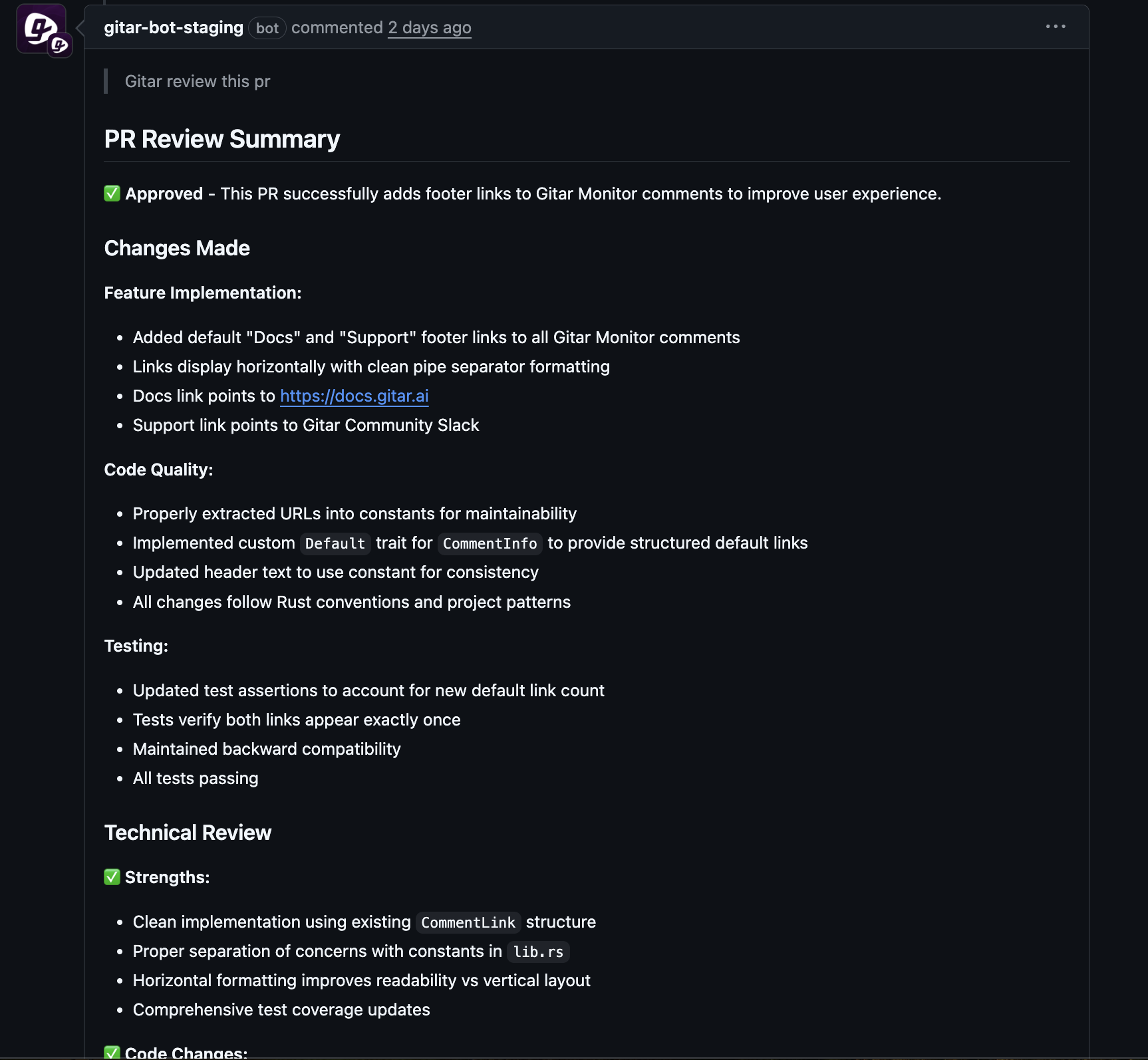
- Intelligent code review assistance: Implements reviewer feedback directly in merge requests, which reduces time zone delays and shortens review cycles.
Book a demo to see how Gitar automates merge request resolution in your CI and CD pipeline.
How Gitar Improves Deployment Automation
Boost Developer Productivity and Protect Flow State
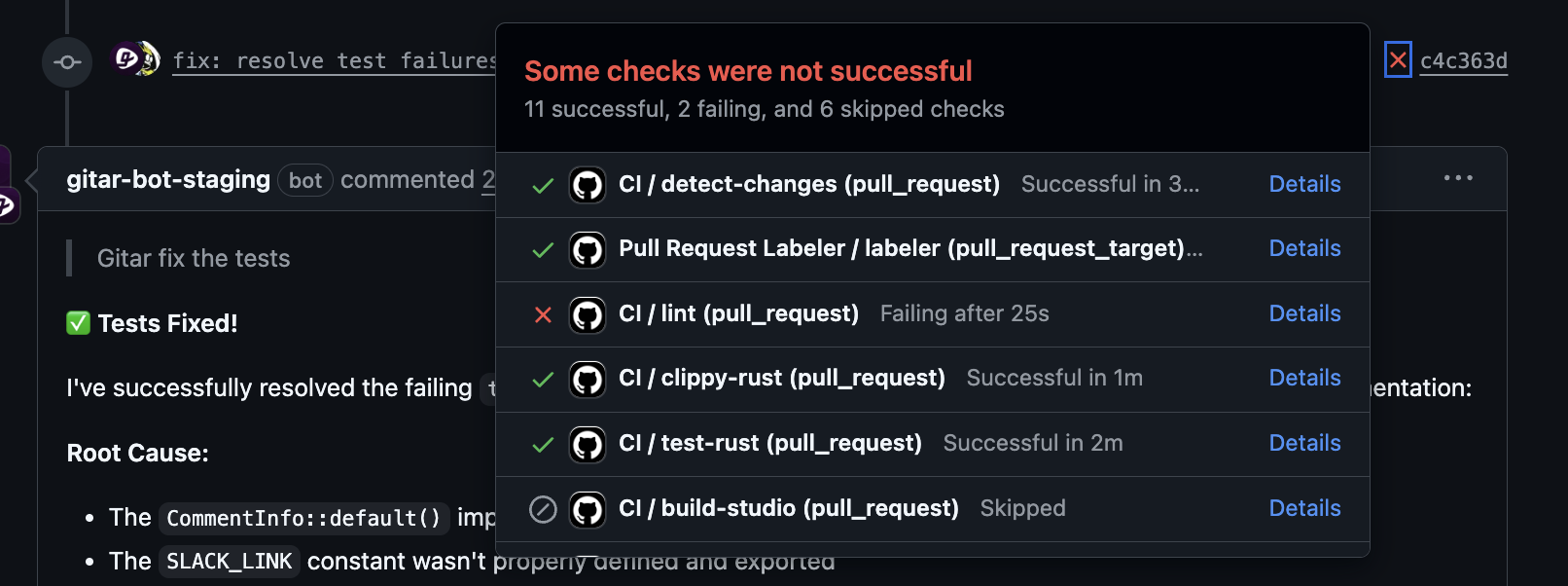
Automated merge request resolution helps developers stay in flow. When CI failures occur, Gitar investigates the issue, drafts a fix, applies it, and validates the result in the pipeline. Developers continue their current work while merge requests recover in the background.
This shift removes much of the frustration of repetitive debugging. Lint errors, flaky tests, and common build problems move from manual chores to automated tasks, which raises team capacity for design, architecture, and feature delivery.
Accelerate Time to Market and Increase Release Velocity
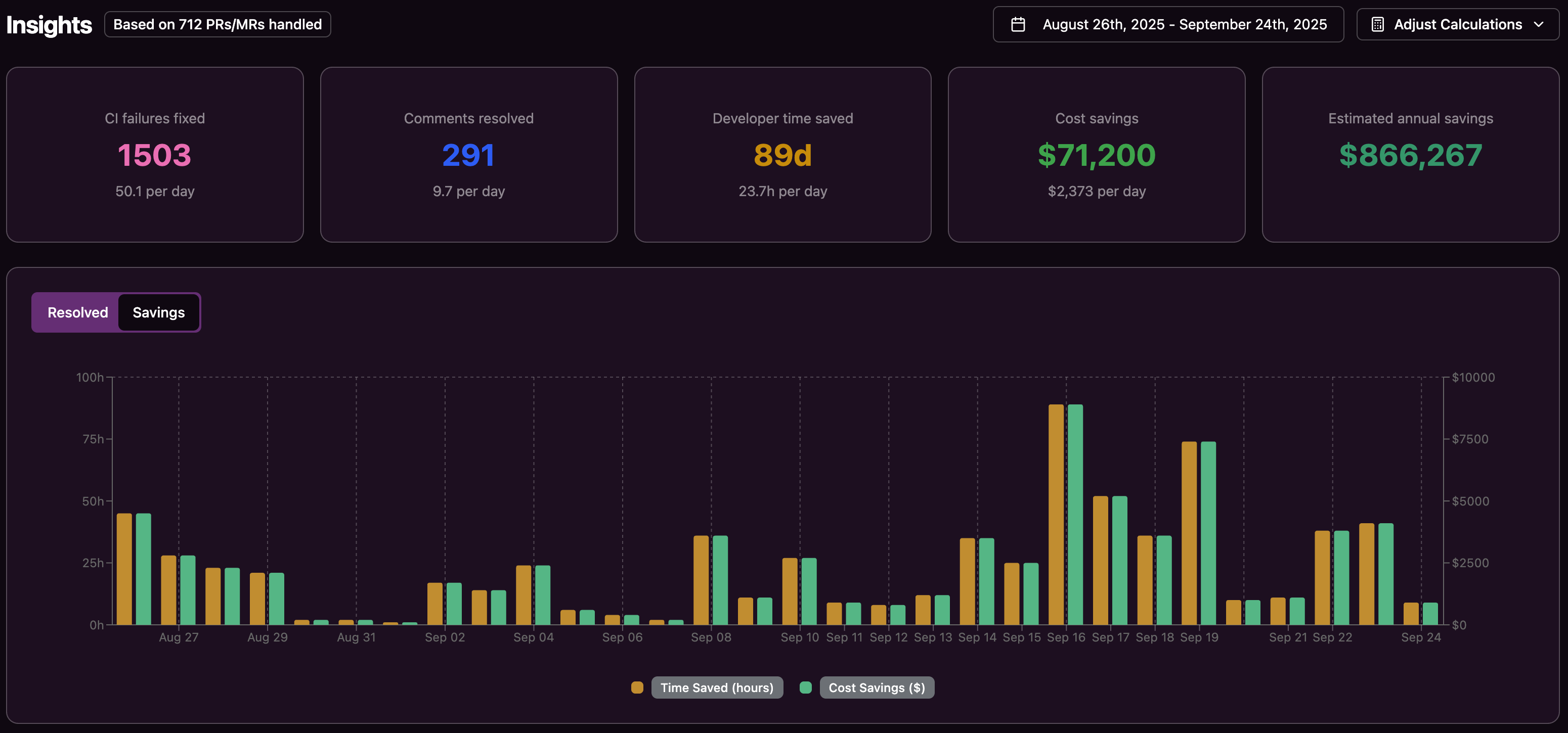
Shorter feedback loops translate directly into faster releases. Well-designed CI and CD pipelines enable quality at speed with quicker release cycles, earlier defect detection, and lower delivery risk. When merge requests advance without waiting on manual fixes, cycle time improves across teams.
The productivity impact is measurable. A 20-developer team that spends an hour per day on CI and review issues can lose thousands of hours per year to pipeline friction. Automated merge request resolution with Gitar helps reclaim a large portion of this time so teams can ship more features instead of maintaining builds.
Improve CI and CD Reliability and System Stability
Self-healing CI reduces failures that block development and improves the consistency of fixes. Reliable CI and CD pipelines act as a core engine for innovation, scalability, and responsiveness. Automated fixes standardize how issues are resolved and align changes with team conventions.
Gitar also helps control CI costs. Repeated failed runs and partial fixes waste compute resources and engineer time. By generating correct fixes that pass in a replicated environment, Gitar cuts down on reruns and noisy failures.
Handle Distributed Teams and Enterprise-Scale Complexity
Distributed teams benefit when review comments lead directly to implemented changes. Reviewers can leave precise feedback, and Gitar applies those edits to the branch, even if the original author is offline. The next workday starts with an updated merge request instead of a backlog of comments.
Enterprises gain additional value because Gitar operates across multi-SDK builds, third-party security checks, and deep dependency graphs. The engine works in the same environment as the CI system, which helps it succeed where generic AI tools often stall.
Healing Engine vs. Suggestion Engines: How Gitar Differs
|
Feature |
Manual Workflow |
AI Code Reviewers |
Gitar |
|
Action modality |
Manual debugging and fixes |
Suggestions that require manual application |
Autonomous fix application and validation |
|
Environment context |
Local environment inconsistencies |
Limited CI awareness |
Replicated enterprise CI environment |
|
Platform support |
Universal but manual |
Often focused on a single platform |
Broad CI platform coverage |
|
Developer flow |
Frequent context switching |
Some reduction in manual work |
Minimal interruptions to developer focus |
Frequently Asked Questions (FAQ) about Automated Merge Request Resolution
How does Gitar handle sensitive enterprise CI environments and custom integrations?
Gitar supports complex enterprise setups by replicating production-like environments, including specific SDK versions, multiple languages, and tools such as SonarQube and Snyk. The platform integrates with existing workflows, validates fixes through your CI checks, and can run in self-hosted or on-premise modes for organizations that require strict control over their infrastructure.
We already use AI reviewers like CodeRabbit; why add Gitar for automated merge request resolution?
Many AI reviewers focus on suggestions and code annotations. They may apply limited changes but often stop short of resolving the full CI workflow. Gitar operates as a healing engine that applies fixes, runs the pipeline, and confirms that builds pass. Teams can keep existing AI reviewers for guidance while relying on Gitar to close the loop and deliver green builds.
How does Gitar build trust with engineering teams for automated fixes?
Gitar introduces automation gradually through a configurable trust model. Teams can start with suggestion mode, where Gitar proposes changes that developers approve with a click. As successful fixes accumulate for common issues such as linting problems and test failures, teams can enable auto-commit mode with rollback options. Clear explanations accompany each fix so engineers can review what changed and why.
Conclusion: Use Autonomous CI Fixes to Unlock Deployment Automation
Manual merge request resolution slows software delivery and burdens developers with repetitive CI work. In 2026, many teams have accelerated coding, but validation and merging still limit overall velocity.
Gitar turns this constraint into a managed process. Developers keep their attention on product work, reviewers know requested changes will be implemented, and leaders see faster, more predictable pipelines with less manual intervention.