
Key Takeaways
- Merge conflicts appear in a significant share of Git-based merges and create costly context switching for developers in automated GitHub workflows.
- Smaller, short-lived branches and atomic pull requests reduce conflict frequency and make remaining conflicts easier to resolve.
- Consistent formatting, linting, and predictive analytics in CI/CD pipelines reduce avoidable conflicts and highlight high-risk pull requests earlier.
- Autonomous CI agents can analyze logs, propose or apply fixes, and keep pull requests in a merge-ready state with less manual effort.
- Teams can use Gitar to automatically fix many CI failures inside GitHub, cutting down on manual merge and review work.
The Hidden Cost: Manual Merge Conflicts Slow GitHub Automation
Merge conflicts appear in approximately 19% of all merges in Git-based projects, so most active teams deal with them regularly. Each conflict interrupts flow, forces developers to reload context, and delays automated pipelines.
Git marks conflicted files and stops the merge process. Developers must resolve each conflict manually before the merge can continue, which turns a fully automated CI/CD pipeline into a partially manual one.
Conflicts such as content conflicts, delete-modify conflicts, and directory-file conflicts all demand attention. A 20-person team that spends about one hour per day on conflict resolution can burn through hundreds of hours each month on non-feature work, which often equals hundreds of thousands of dollars in annual productivity loss.
How Gitar Adds Autonomous Fixes to Your GitHub CI/CD
Gitar is an autonomous AI agent that works inside GitHub to handle many CI failures and code review changes. The agent analyzes failure logs, generates code fixes, and updates pull requests so developers can focus on feature work.
The system reproduces complex environments, including language runtimes, dependencies, and SDK versions, to keep fixes accurate. Teams can choose conservative modes that only suggest changes or more automated modes that commit directly to branches after validation.
Gitar focuses on common CI issues such as lint failures, test failures, and build errors. When a check fails, it reviews logs, prepares a patch, runs checks, and commits the change back to the pull request when configured to do so. Developers then review a green PR instead of first diagnosing failures.
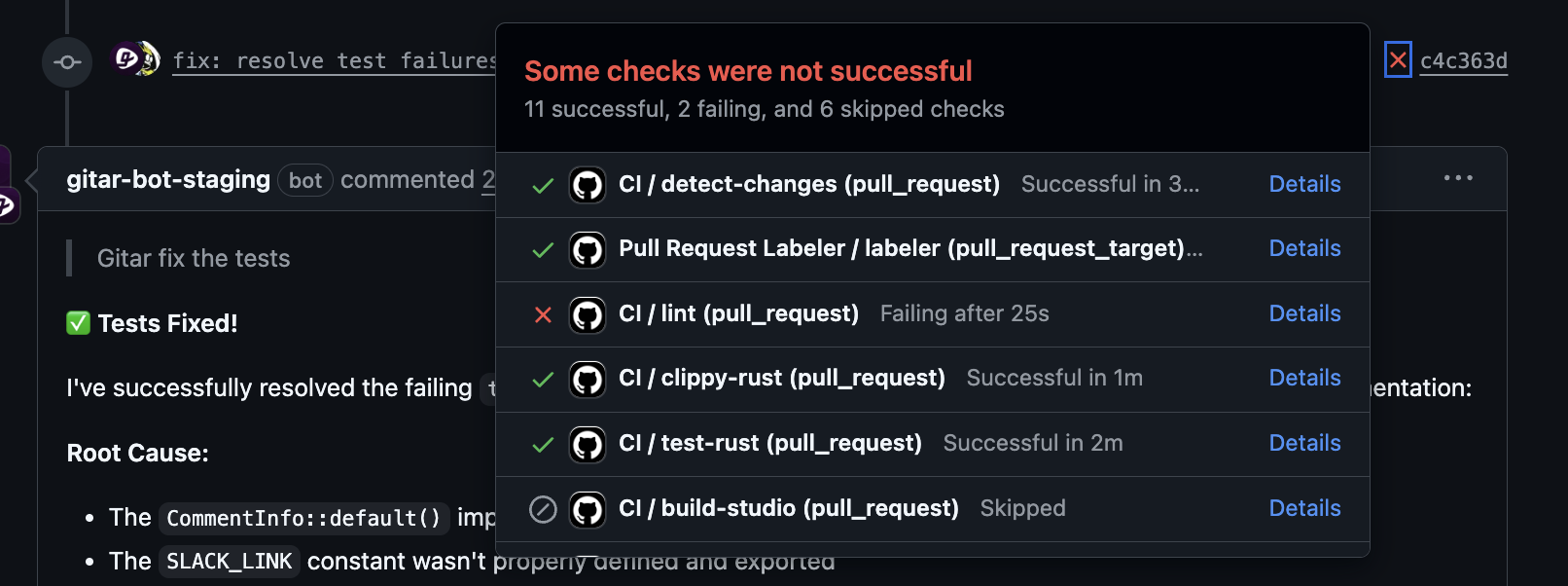
Install Gitar to automatically fix broken builds and reduce manual CI work.
1. Use Small, Frequent Commits and Atomic Pull Requests
Smaller pull requests reduce conflict risk and make reviews easier. When developers integrate changes often, fewer lines diverge at the same time, which limits the surface area for conflicts.
Large pull requests that modify 50 or more files increase conflict likelihood, because more developers touch the same files during the same time window. Atomic commits that cover one logical change clarify intent and simplify merges.
Teams that enforce smaller PRs usually see faster reviews and less time spent on conflict clean-up. Automated tools, including Gitar, perform better on focused changes because diagnosing and fixing failures on a compact diff is simpler.
2. Short-Lived Branches Keep Divergence Low
Short-lived feature branches limit how far code drifts from the main branch. Frequent merges or rebases keep each branch close to the current state of production or trunk.
Teams that keep branches open for only a few days reduce the number of parallel changes affecting the same files. Developers who sync with main at least daily usually face fewer and simpler conflicts.
Autonomous agents such as Gitar fit well into this approach. As soon as a CI failure appears on a feature branch, the agent can investigate and attempt a fix. Developers then merge or rebase clean branches instead of pausing to debug failures from earlier commits.
3. Standard Formatting and Linting Remove Noisy Conflicts
Consistent formatting prevents many trivial conflicts. Different IDE settings or style preferences can cause format-only changes that look like meaningful differences in Git.
Formatting changes cause merge conflicts in a small but measurable share of merges, which still consumes developer time. Standard tools such as Prettier, Black, and ESLint align style across contributors.
Teams that enforce formatting through pre-commit hooks and CI checks remove these issues before they reach main. Gitar can also repair lint and format violations so pull requests pass checks without manual edits.
4. Predictive Analytics Highlight High-Risk Pull Requests
Predictive analytics in CI/CD pipelines help teams focus on the pull requests most likely to generate difficult merges. Machine learning models can predict merge conflict difficulty and expected resolution time from code and process metrics.
Signals such as number of files changed, overlap with other in-flight branches, and historical conflict patterns point to risky work. Teams can then review and merge these changes earlier, or assign experienced reviewers before conflicts block the pipeline.
Combining this insight with autonomous tools improves results. A system like Gitar can prioritize CI fixes for high-risk branches so they stay mergeable and do not hold back downstream work.
Install Gitar to pair predictive monitoring with automated fixes in your GitHub workflows.
5. Autonomous Agents Reduce Manual CI Failure Resolution
Autonomous CI agents now handle many failures that previously required manual log review and patching. Instead of reading CI output, developers can delegate routine diagnosis and repair to a specialized system.
When a check fails, Gitar reads logs, identifies the likely cause, prepares a code change, and re-runs checks when configured to do so. The agent documents what changed and why in pull request comments so reviewers can approve with confidence.
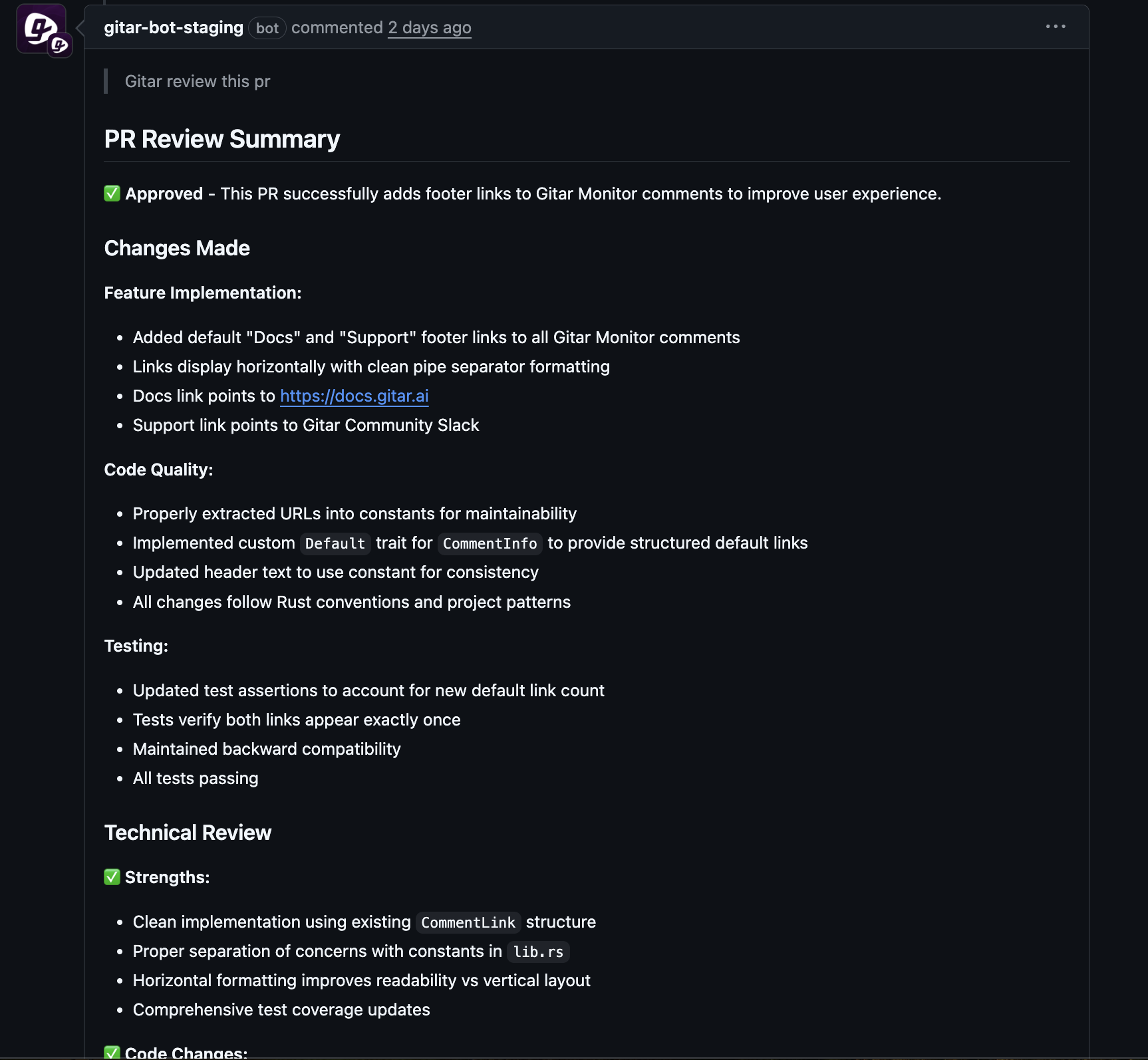
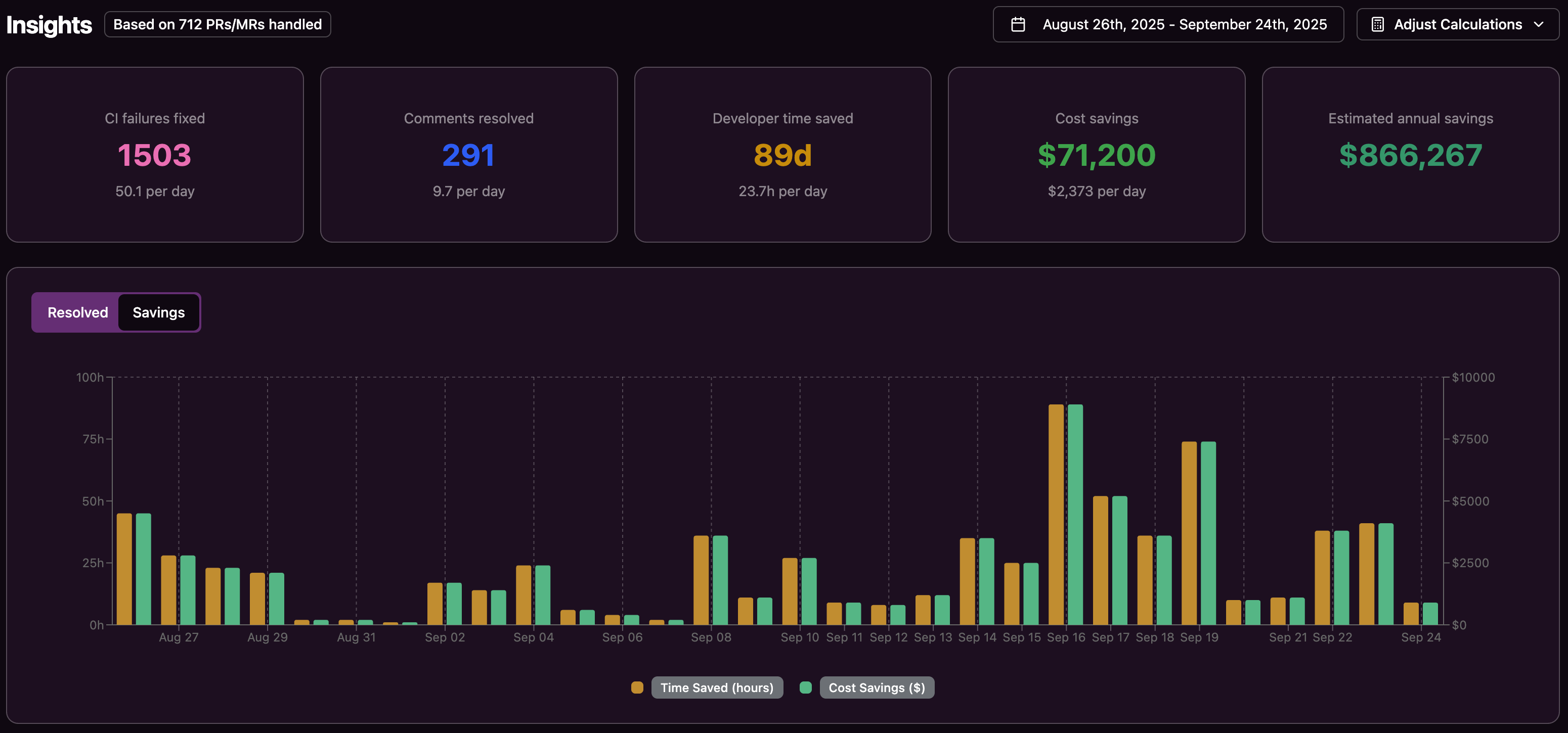
Teams gain two main benefits. Individual developers spend less time investigating CI failures, and organizations avoid pipeline stalls where no one owns a failing build. Over time, this creates more predictable delivery in 2026-scale engineering teams.
Install Gitar to introduce autonomous CI failure handling into your GitHub automation.
Frequently Asked Questions about Automated Merge Conflict Resolution
How often do merge conflicts occur in Git projects?
Merge conflicts appear in about 19% of merges in collaborative Git projects, which means nearly one in five integrations can require extra effort. Teams that practice small, frequent merges and use automation tend to experience far fewer disruptions from these conflicts.
Do formatting inconsistencies meaningfully contribute to conflicts?
Formatting issues cause a minority of conflicts but still waste time because they add noise without changing behavior. Automated formatters and linters, combined with tools like Gitar that can correct style violations, almost eliminate this category of conflict.
Is it safe to automate CI failure resolution?
Safety depends on configuration. Gitar supports conservative modes that only propose fixes and more automated modes that commit changes after checks pass. Clear audit trails, configuration by repository, and the ability to roll back changes let teams adopt automation gradually while keeping developer oversight.
Conclusion: Bringing Autonomy to GitHub Workflows in 2026
Manual merge conflict resolution and CI failure debugging still consume significant time for many teams in 2026. Smaller commits, short-lived branches, consistent formatting, and predictive analytics all reduce the number and impact of conflicts.
Autonomous agents such as Gitar extend these practices by handling many CI failures directly inside GitHub. Developers keep focus on product work while the system manages a large share of the integration, testing, and fix cycle.
Teams that adopt this combination of workflow design and automation now can improve delivery speed and reduce unplanned work across the rest of 2026.
Install Gitar to reduce manual merge and CI failure work in your GitHub pipelines.