
Key Takeaways
- Manual CI/CD fixes create recurring bottlenecks that slow deployment automation and consume a large share of developer time.
- Automated code fix platforms keep pipelines healthy by diagnosing failures in real time and applying validated fixes to pull requests.
- Self-healing CI reduces context switching, shortens feedback loops, and helps distributed teams avoid multi-day delays.
- Configurable trust models and built-in quality features allow teams to adopt automation at a controlled pace while maintaining code standards.
- Engineering teams in 2026 can use Gitar to automatically fix CI failures and code review feedback directly in their pull requests, improving deployment automation with less manual effort.
Why Manual CI/CD Fixes Slow Your Deployment Automation
Manual CI/CD fixes create major bottlenecks that drain developer time and organizational resources, with costs compounding as teams and codebases grow. Developers can waste up to 30% of their time dealing with issues related to CI and code review, which directly reduces deployment velocity for most teams.
This friction appears whenever a CI pipeline fails. Developers must stop their current task, switch context to debug error logs, implement fixes, and restart validation. This fire-and-forget cycle can turn a quick fix into an hour-long disruption that breaks flow and delays features.
The impact extends beyond single incidents. Common CI/CD failures include automated testing failures, build errors, deployment pipeline breakdowns, and dependency conflicts that require consistent attention. For distributed teams, these issues combine with time zone delays, stretching simple review cycles across days and eroding trust in the delivery pipeline.
How Gitar Uses AI to Create Self-Healing CI
Gitar is an autonomous AI agent that automatically fixes failing CI pipelines and resolves code review feedback. It reduces the daily hours developers spend trying to push changes through CI and review gates and creates a self-healing CI experience.
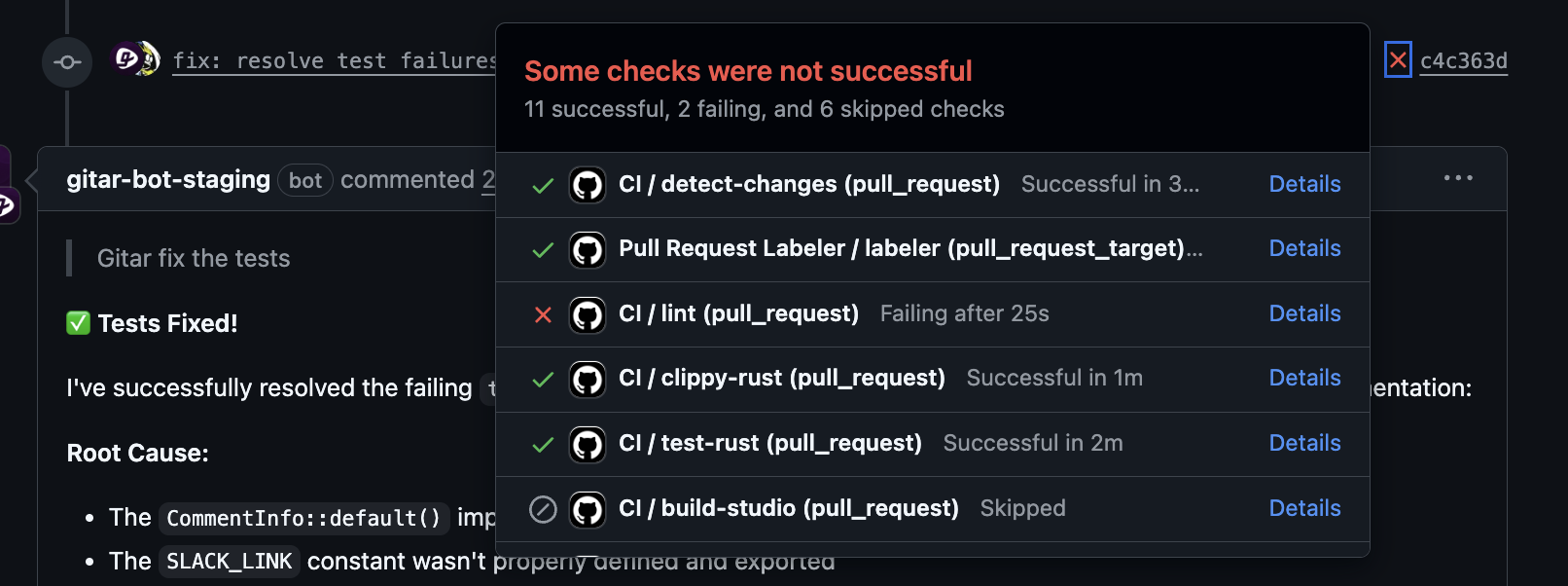
Traditional tools focus on suggestions; Gitar acts as a healing engine. When a CI check fails, whether from lint errors, test failures, or build issues, Gitar analyzes the logs, generates the correct code change, applies it to the pull request branch, and commits the fix. The result is a green build and a smoother deployment path without constant manual intervention.
End-to-End Fixing for Automated Code Fix Generation
Gitar handles the full path from failure detection to resolution. It detects issues such as linting errors or test failures, creates an appropriate fix, applies the change to the codebase, and commits updates to pull request branches. This reduces the manual debugging cycle and keeps pipelines moving.
Full Environment Replication for Accurate Fixes
Enterprise CI environments often include complex dependencies, specific SDK versions, security scanners, and third-party integrations. Gitar replicates these workflows so that fixes are validated in conditions that match production, which improves reliability.
Configurable Trust Model for Gradual Automation
Teams can scale automation through configurable modes. Conservative mode posts fixes as suggestions that require one-click approval, while more aggressive settings allow direct commits with rollback options. This flexibility supports gradual adoption in environments with different risk profiles.
Install Gitar to automatically fix broken builds and reduce CI-related manual work.
1. Use Proactive Failure Remediation to Keep Pipelines Moving
Proactive failure remediation helps teams address CI/CD issues before they disrupt deployment schedules. Instead of waiting for developers to interpret error messages, modern platforms analyze failures in real time and generate fixes quickly.
Short feedback loops correlate with higher deployment frequency. Teams with pipelines under 10 minutes deploy about twice as often as teams with slower setups, which underscores the value of fast remediation.
Enterprise-scale examples show what is possible. LogSage processed over 1.07 million CI/CD executions at ByteDance with end-to-end precision exceeding 80%, demonstrating that autonomous diagnosis and fixing can operate at large scale.
Implementation: Configure Proactive Fixes for Common Failures
Teams can start by targeting the most frequent failure patterns. Linting errors, dependency conflicts, and test failures often account for most CI issues. Configure the platform to handle these first, then expand coverage to more complex failures as confidence grows.
2. Reduce Context Switching to Protect Developer Productivity
Context switching ranks among the most expensive hidden costs in software development. When CI failures interrupt deep work, the impact exceeds the time spent on the fix itself. A short debugging session can still consume significant time once mental overhead and flow recovery are included.
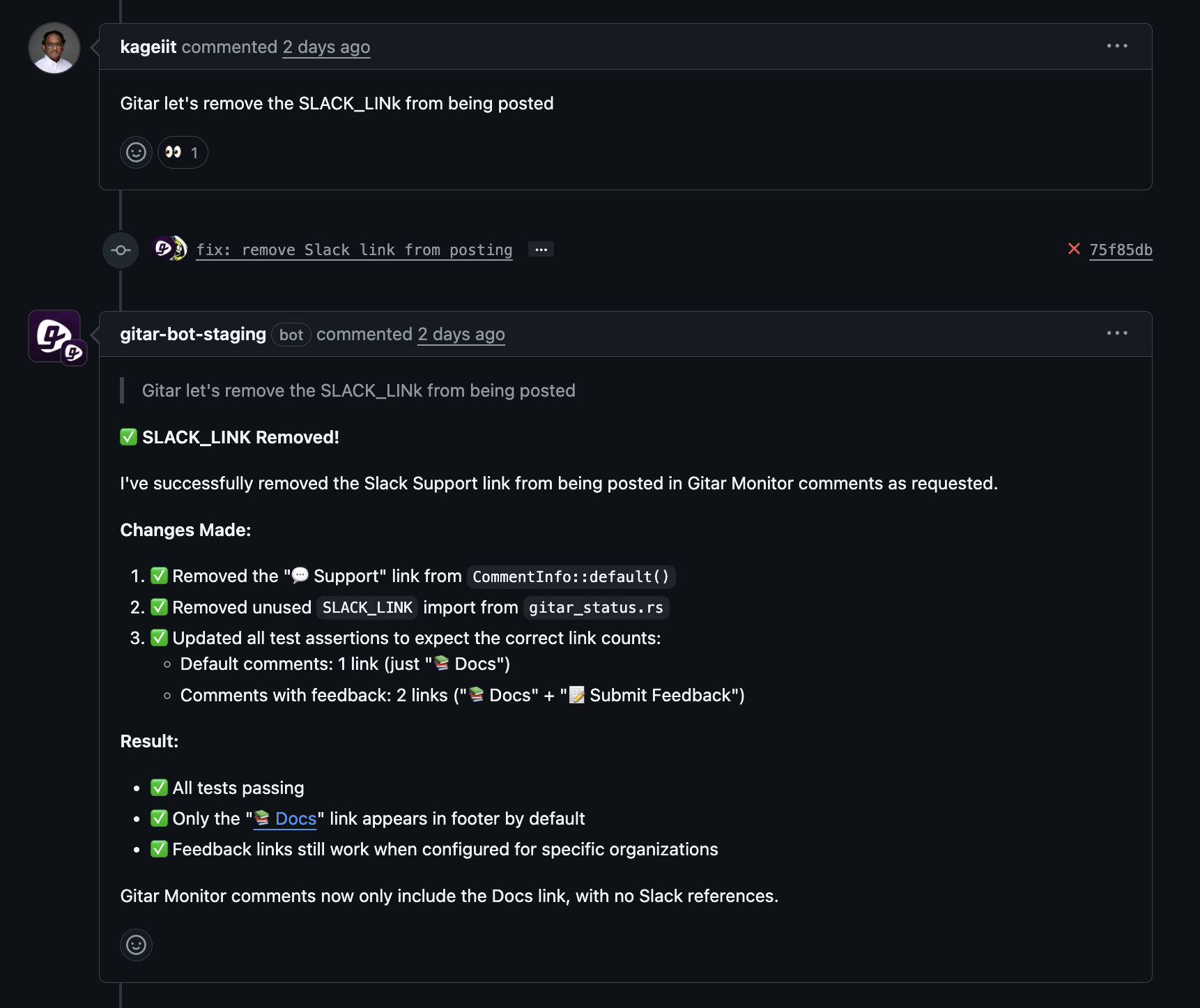
Automated code fix platforms reduce these interruptions. When a CI check fails, platforms like Gitar can review logs, propose or apply fixes, and re-run checks while developers continue their current tasks.
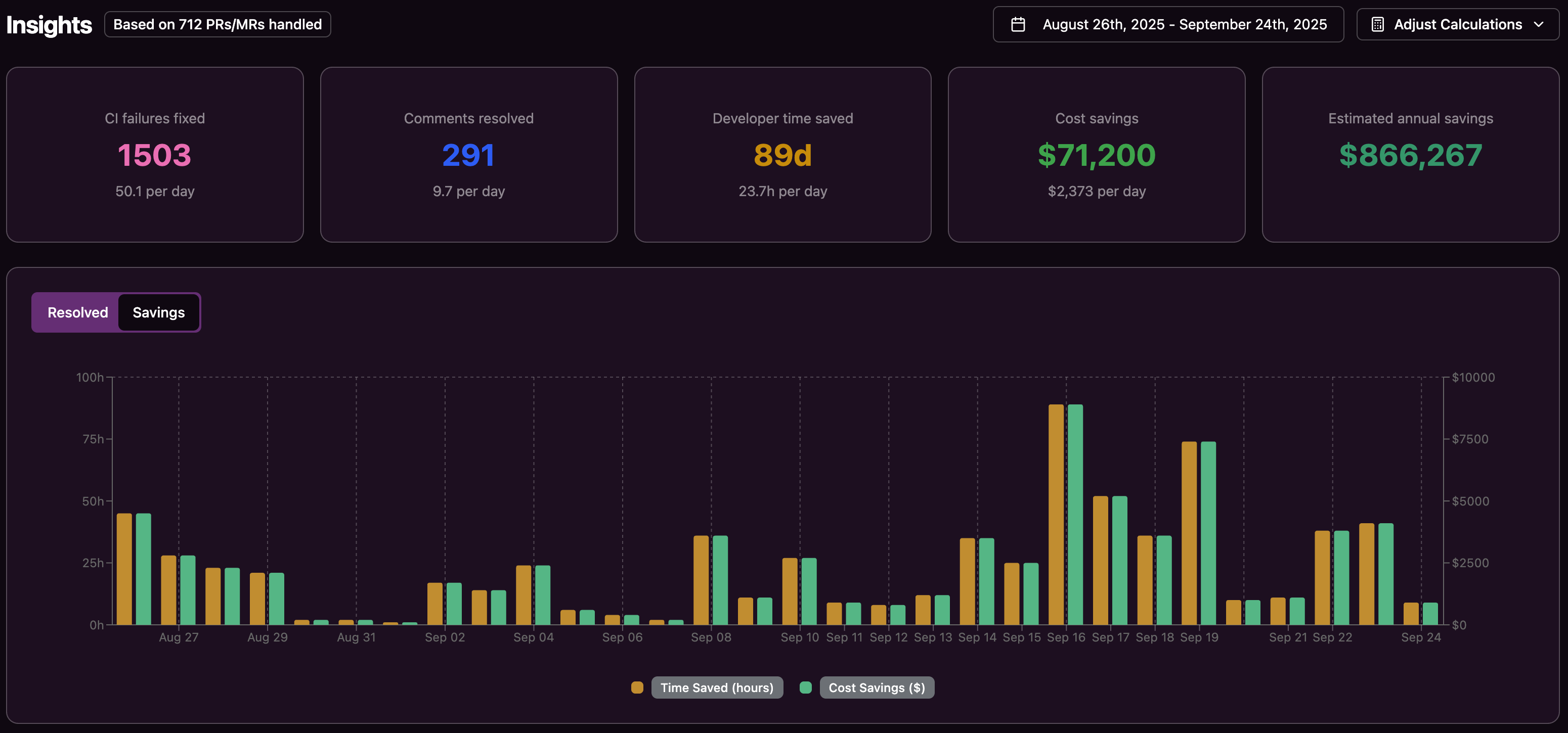
The financial effect is meaningful for engineering organizations. For a team of 20 developers that experiences typical CI friction, lost productivity can reach about $1 million per year. Teams that automate even half of these fixes can reclaim hundreds of thousands of dollars in time while improving satisfaction for developers.
Implementation: Integrate Automation Into Existing Workflows
Teams can begin integration with low-risk repositories or branches. Configure the platform to handle simple formatting and linting issues first, then extend automation to test failures and build errors as trust increases. Monitor developer feedback and success rates to tune the rollout.
3. Shorten Time-to-Market With Self-Healing CI
Faster remediation of CI failures supports shorter release cycles and better time-to-market. Slow CI/CD pipelines act as a persistent productivity bottleneck that compounds across sprints.
Self-healing CI positions the pipeline as resilient infrastructure. Failures trigger automatic investigation and fixes, rather than long back-and-forth cycles. This matters most for distributed teams that span time zones, where a single review comment can delay progress by an entire workday.
Consider a reviewer in India who leaves feedback for a developer in San Francisco. In a traditional workflow, the fix often waits until the next overlap window. With a platform like Gitar, reviewer feedback can be implemented and validated in the background so that the updated code is ready when the original developer signs in.
Implementation: React to CI and Review Events in Real Time
Teams can configure their platform to respond to events such as failed CI checks, reviewer comments, and merge conflicts. Standard cases are handled automatically, while complex issues escalate to humans. Clear routing rules keep ownership visible while still reducing delay.
4. Improve Code Quality and Limit Technical Debt
Automated platforms now extend beyond failure fixes to proactive quality improvements. They can enforce style guides, improve consistency, and add tests when prompted.
Increased use of AI-assisted coding raises throughput, which also increases validation work. More generated code means more pull requests, more tests, and more potential CI failures. Automation that enforces standards and adds coverage helps maintain quality as volume grows.
Gitar can, for example, add missing tests for critical logic or apply style fixes across a pull request. This limits the accumulation of technical debt while preserving delivery speed.
Implementation: Use Automation for Tests and Standards
Teams can start with automated test generation for high-value paths, then expand to style and formatting enforcement. Clear prompts and shared guidelines help the platform apply consistent rules across repositories.
5. Scale Deployment Automation With Configurable Trust Models
Trust often represents the main barrier to adopting automated fixes. Teams want strong control over code changes, especially in regulated or mission-critical environments. Configurable trust models address this concern.
Most platforms offer modes that range from suggestion-only to fully autonomous. In a conservative mode, fixes appear as suggestions that require review and approval. As teams gain confidence, they can enable more aggressive modes where fixes are applied and validated automatically, with rollback options available.
This adaptive approach aligns with enterprise priorities. Effective test failure reduction strategies emphasize minimizing upfront work and focusing on urgent issues, which fits well with graduated automation.
Implementation: Increase Automation as Confidence Builds
Teams can begin with suggestion-only mode on critical repositories and higher automation levels on development branches. Over time, monitoring success rates, error patterns, and developer feedback supports informed decisions about where to increase automation.
Install Gitar to scale automated CI fixes with configurable trust levels across your repositories.
Frequently Asked Questions About Automated Code Fix Generation Platforms
How do automated code fix platforms handle complex, enterprise-grade CI environments?
Platforms like Gitar replicate the CI environment used in production, including SDK versions, dependencies, security scans, and build tools. This alignment ensures that generated fixes are validated under realistic conditions and behave reliably in production pipelines.
What is the primary difference between a CI healing engine and a CI suggestion engine?
A CI suggestion engine identifies problems and recommends fixes, but implementation and validation still fall to developers. A CI healing engine such as Gitar generates, applies, and validates fixes in the CI pipeline, then presents a passing build or a clear failure result, closing the loop from detection through resolution.
How can automated code fix platforms help distributed teams with time zone challenges?
Automated platforms remove idle waiting time between comments and fixes. When reviewers leave feedback or CI reveals an issue, a system like Gitar can implement and validate changes immediately, so updated code is ready for review when team members in other time zones come online.
What is the typical ROI for implementing an automated CI fix generation platform?
For a 20-developer team, annual productivity loss from CI-related friction can exceed $1 million. If an automated platform such as Gitar reduces even half of this waste, the result can be savings near $500,000 per year, along with faster releases and less burnout from repetitive CI work.
Conclusion: Advance Deployment Automation With Self-Healing CI
Deployment automation in 2026 benefits from moving repetitive CI fixes out of the critical path. Automated code fix platforms address common bottlenecks, reduce context switching, and support faster, more predictable releases.
Teams that use self-healing CI reclaim engineering capacity and limit the impact of failures on delivery timelines. Instead of spending hours on repetitive debugging, developers can focus on product improvements while automation handles routine fixes.