

Written by: Ali-Reza Adl-Tabatabai, Founder and CEO, Gitar
Key Takeaways
- AI code generation has surged PR volume by 23% year over year, increasing review times 91% and adding up to $1M in annual toil.
- Native GitHub tools like CodeQL catch issues but require manual fixes, while Copilot and bots like CodeRabbit suggest rather than implement solutions.
- Gitar’s healing engine auto-fixes CI failures and review feedback, reaching 70–80% automation with validated commits that keep builds green.
- Teams using Gitar cut CI and review time from 1 hour per developer per day to 15 minutes, reducing PR cycles by 43% and saving $750K yearly for 20‑developer teams.
- Start your 14-day free Team Plan trial with Gitar to automate PR reviews and ship faster.
Why PR Automation Becomes Essential in 2026
Development activity has outpaced human review capacity. Code pushes reached nearly 1 billion commits in 2025, up 25.1% year over year, while comments on issues and PRs remained flat at just +0.35%. This gap shows how AI tools generate more code while human reviewers struggle to keep up.
Teams report that 60% of deployment delays stem from CI failures, while logic bugs in AI-generated code have increased 75%. Traditional code review tools charge $15–30 per developer monthly for suggestions that still require manual implementation. This model leaves teams paying premium prices for incremental improvements. Developers accept approximately 30% of AI suggestions on average, so 70% of paid recommendations never reach production.
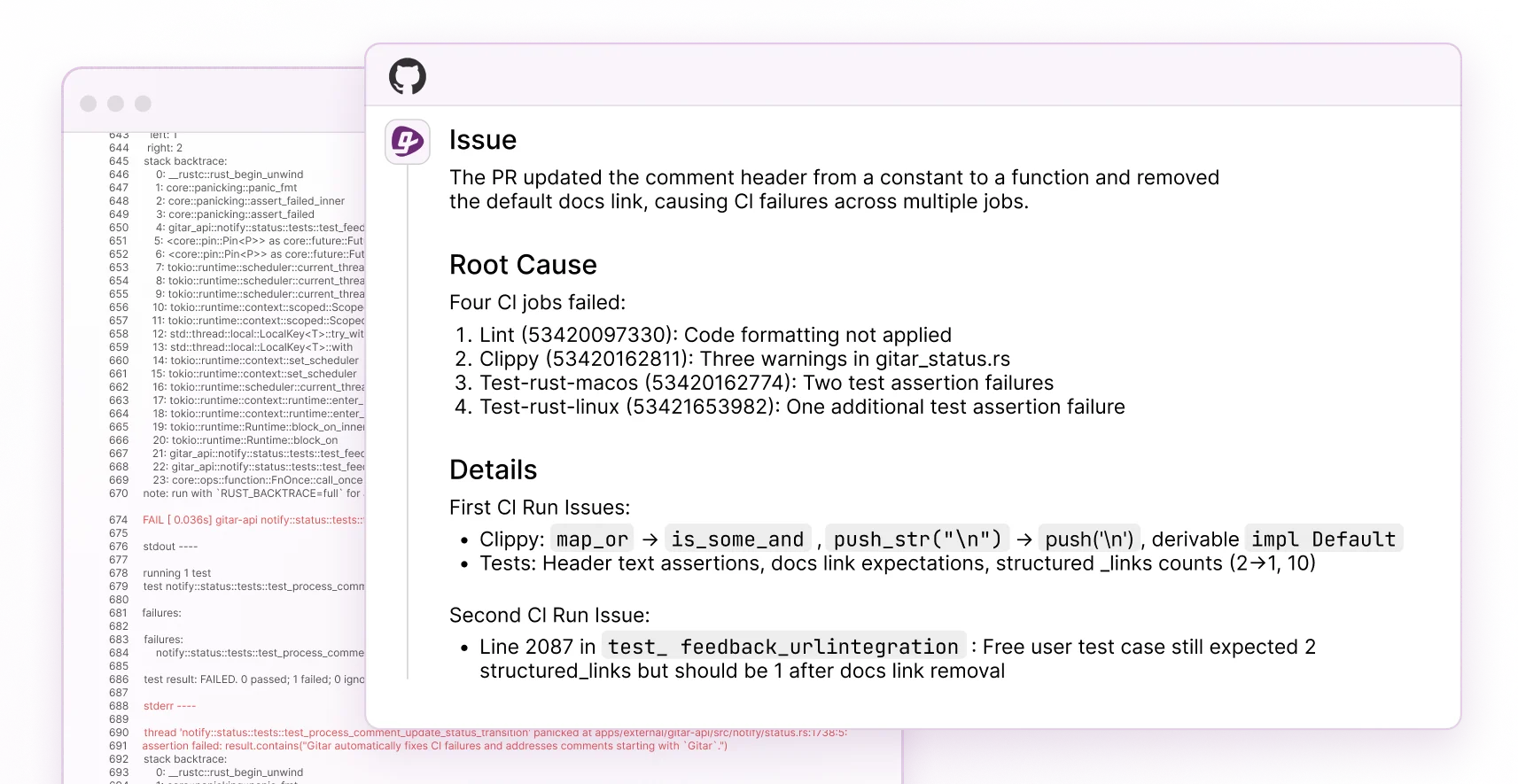
Gitar changes this pattern by auto-committing validated fixes instead of leaving suggestions unimplemented. Start a 14-day Team Plan trial with no seat limits so your entire team can experience true automation.
Baseline: What Native GitHub Tools Handle Today
GitHub’s built-in security and code quality tools provide the foundation for automated reviews. GitHub Advanced Security includes CodeQL for semantic code analysis, dependency scanning, and secret detection. These tools catch common security vulnerabilities and code quality issues without requiring third-party integrations.
Here is a basic CodeQL workflow to get started:
name: “CodeQL Analysis” on: push: branches: [ main, develop ] pull_request: branches: [ main ] jobs: analyze: runs-on: ubuntu-latest steps: – uses: actions/checkout@v4 – uses: github/codeql-action/init@v3 with: languages: javascript, python – uses: github/codeql-action/analyze@v3
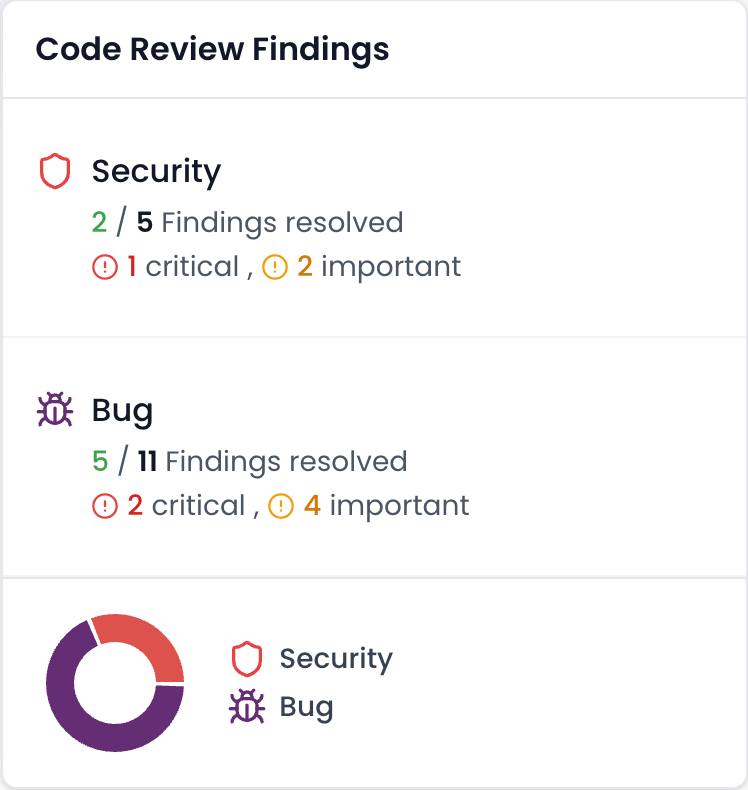
Native tools work well for security scanning but stop at detection. They identify problems but do not fix them. CodeQL generates alerts that developers must manually address, and the high false-positive rate creates notification fatigue. For teams processing hundreds of PRs monthly, manual triage becomes a bottleneck that erases much of the time saved by AI code generation.
AI Review Layer: Copilot and Marketplace Bots
GitHub Copilot’s code review features, introduced as a premium add-on in 2025–2026, provide AI-generated PR summaries and suggested fixes. Copilot Autofix showed success with developers accepting fixes for security issues in 6,000+ repositories monthly by mid-2025.
These gains come with clear constraints at scale. Copilot only supports GitHub, offers no GitLab or Bitbucket support, generates review comments that still require developer review, and costs $39 per user for teams. Most critically, it focuses on suggestions rather than validated fixes, which ties back to the 30% acceptance rate for AI suggestions mentioned earlier.
Popular marketplace alternatives like CodeRabbit and Greptile integrate directly into GitHub pull requests, posting structured review comments automatically. CodeRabbit processes 13 million+ PRs across 2 million repositories, while BugBot reviews 2 million+ PRs monthly. Despite impressive reach, these tools share the same limitation. They suggest fixes but do not validate or implement them, so many recommendations remain unshipped.
Python and Multi-Language Pipelines with Gitar
Python teams face unique challenges with dependency management, virtual environments, and testing frameworks. Gitar supports Python, JavaScript, TypeScript, Java, Go, Rust, and more across GitHub Actions, GitLab Pipelines, Buildkite, CircleCI, and Bitrise.
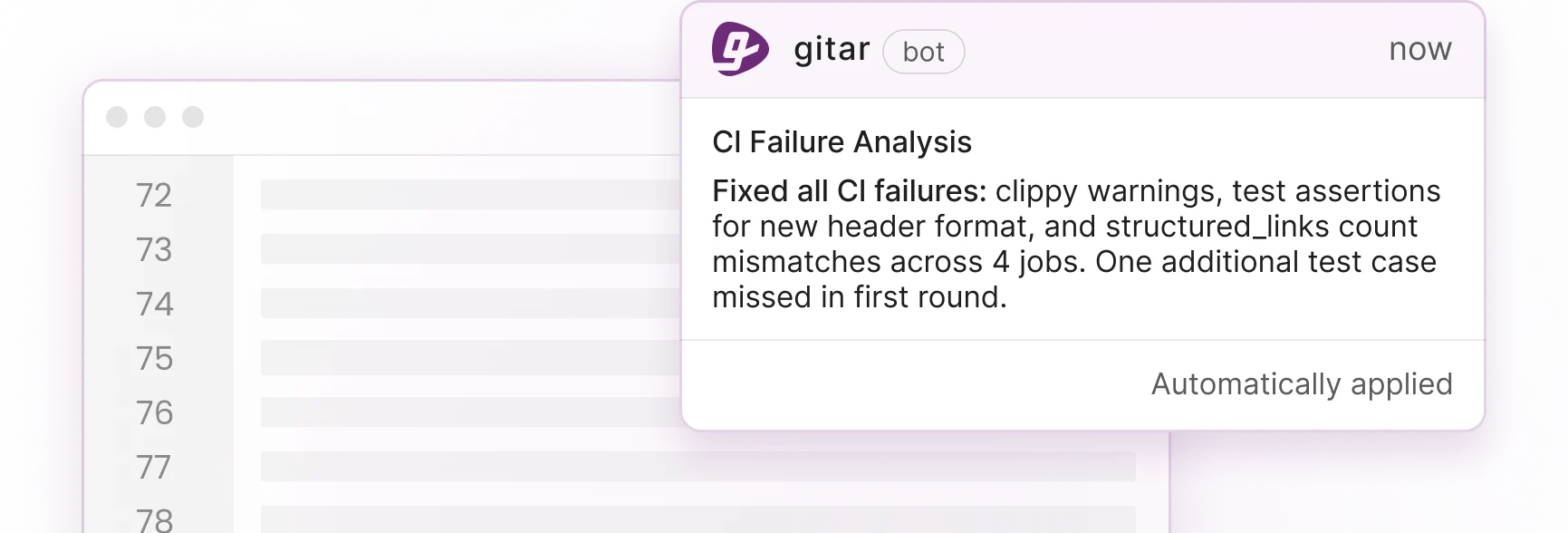
Common pitfalls include flaky CI systems, false positive alerts, and notification spam from chatty review bots. Gitar addresses these issues with a single, updating comment that consolidates all findings and reduces cognitive load compared to scattered inline suggestions.
ROI & Proof of Automated PR Reviews
Automated PR reviews with Gitar cut daily developer toil and shorten review cycles, building on the productivity gains outlined earlier. The comparison below shows how these improvements translate into time and cost savings for a typical team.
|
Metric |
Before Gitar |
After Gitar |
Annual Savings |
|
Time on CI/review issues |
1 hour/day/dev |
15 min/day/dev |
$750K for 20-dev team |
|
PR cycle time |
24+ hours |
90 minutes |
43% reduction |
|
Context switching interrupts |
Multiple daily |
Near-zero |
Improved focus time |
Vercel reduced PR cycle times by 43% by optimizing their review pipeline, matching the 43% reduction shown above. At the same time, organizations with high AI adoption saw median PR cycle times drop by 24%, reinforcing the impact of automated review workflows.
Conclusion: From Suggestions to Healing Engines
Native GitHub tools provide essential security scanning but lack the automation depth needed for modern development velocity. Suggestion-based AI tools deliver incremental improvements while charging premium prices for fixes that still require manual effort. Gitar changes this equation by delivering 70–80% automation through validated auto-fixes, CI healing, and comprehensive workflow integration.
The shift from code generation to code validation represents the next frontier in development productivity. As AI-generated code volumes continue growing, teams that embrace healing engines rather than suggestion engines will maintain competitive advantage by resolving issues automatically instead of accumulating technical debt from unimplemented suggestions. Install Gitar now, automatically fix broken builds, and start shipping higher quality software faster.
FAQ
How does Gitar differ from CodeRabbit or Greptile?
The fundamental difference lies in execution capability. CodeRabbit and Greptile analyze code and leave suggestions in comments, requiring developers to manually implement fixes and hope they work. Gitar’s healing engine generates fixes, validates them against your CI environment, and commits working solutions automatically. You are not paying for suggestions, you are getting actual problem resolution.
What does the 14-day free trial include?
The trial provides full access to Gitar’s Team Plan features: unlimited users, auto-fix capabilities for CI failures and review feedback, custom automation rules, PR summaries and deep code analysis, and integrations with GitHub, GitLab, Jira, and Slack. The trial includes no seat limits or feature restrictions.
Can I trust automated commits to my codebase?
Gitar offers configurable automation levels. You can start in suggestion mode where you review and approve each fix to build confidence. Once you trust the system’s accuracy for specific failure types like lint errors or test fixes, you can enable auto-commit selectively. You maintain complete control over automation aggressiveness and can revert to manual approval at any time.
Does Gitar work with complex CI environments?
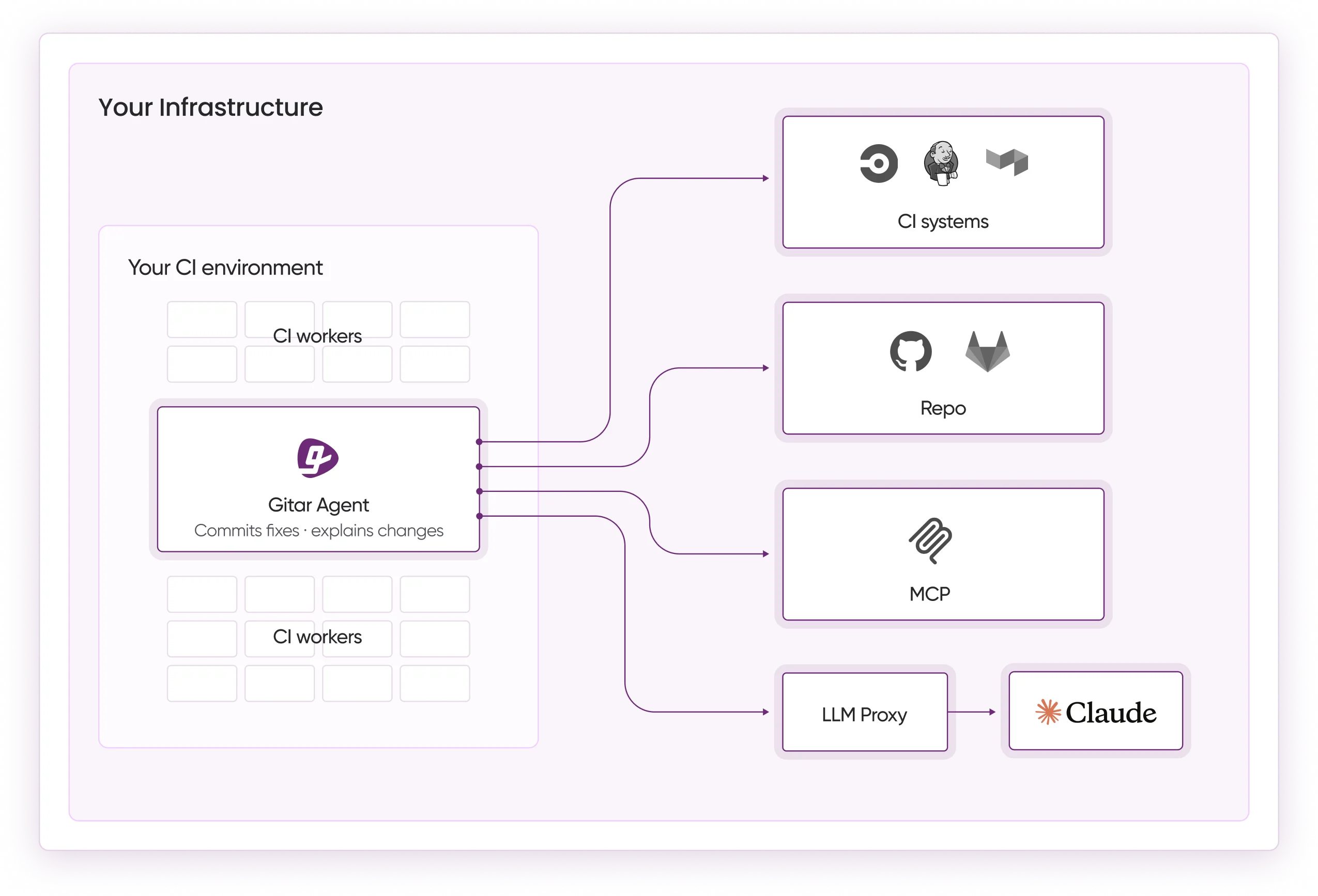
Gitar works well with complex setups by emulating your full CI environment including specific SDK versions, multi-dependency builds, and third-party security scans. The Enterprise tier runs the healing agent inside your own CI infrastructure with access to your secrets and caches. This approach ensures fixes work in production environments rather than isolated test conditions.
How long does setup take?
Initial setup takes approximately 30 seconds to install the GitHub App and configure basic automation. Advanced features like custom rules and enterprise integrations can be configured gradually as your team builds familiarity with the platform. Complete setup documentation is available in Gitar’s setup guide.