
Written by: Ali-Reza Adl-Tabatabai, Founder and CEO, Gitar
Key Takeaways
- AI coding tools increase developer speed 3-5x but create CI bottlenecks with 29% more PRs and 91% longer reviews, costing teams $1M annually.
- Traditional AI reviewers like CodeRabbit and Greptile only suggest changes, so teams still manually fix 1.7x more defects in AI-generated code.
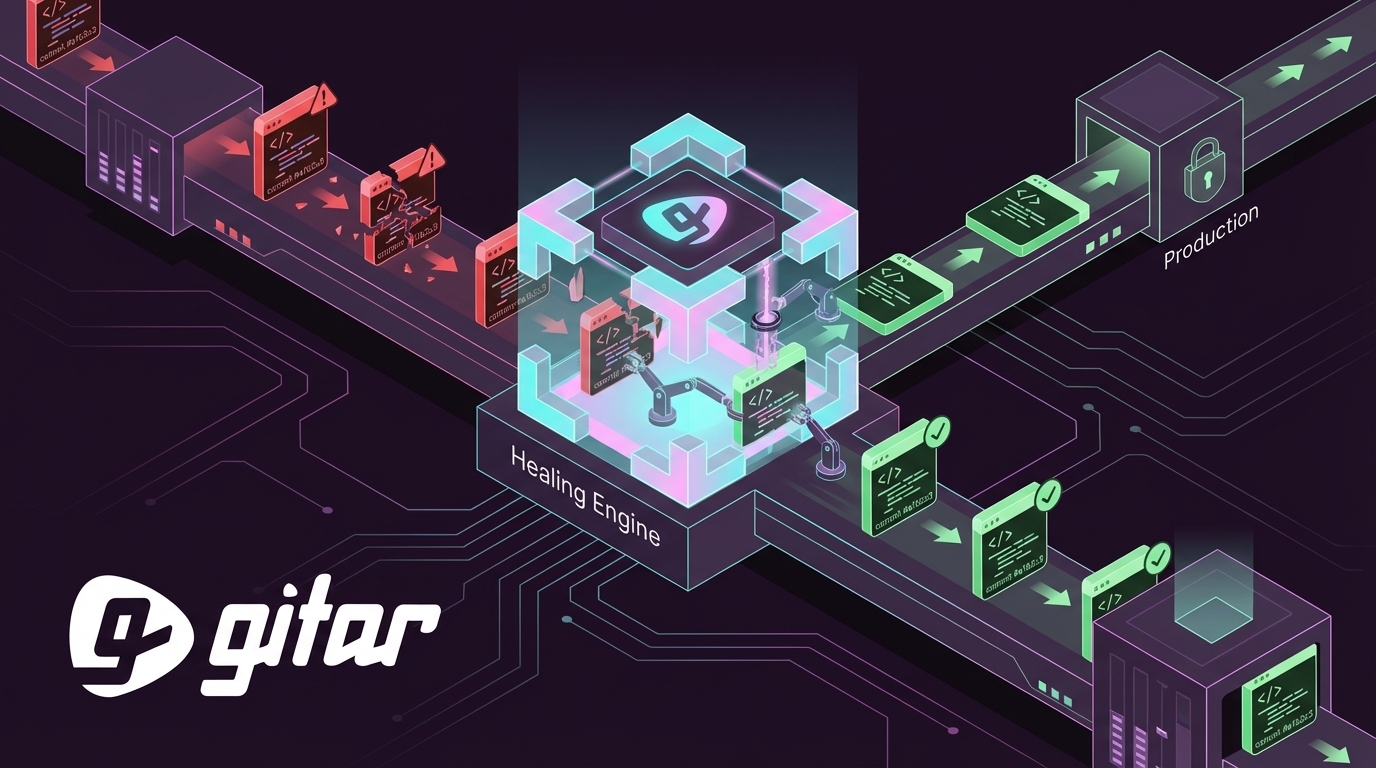
- Gitar’s healing engine automatically fixes CI failures, commits validated solutions, and replaces noisy threads with a single updating dashboard comment.
- Teams can raise commit quality through a 7-step workflow that uses pre-commit hooks, GitHub Actions, CI thresholds, and natural language rules.
- Gitar delivers stronger auto-fixes, higher ROI, and better support for complex CI setups, so install Gitar today to keep builds green and ship faster with fewer manual loops.
The Problem: AI-Accelerated Coding, Slower Shipping
AI-accelerated development has turned into a productivity trap. Developers write code 3-5x faster, yet CI failures and manual review loops slow down sprints. 66% of developers report spending more time fixing AI-generated code that is “almost right, but not quite”. This extra rework creates review burdens that traditional suggestion-only tools cannot clear.
CodeRabbit and Greptile charge $15-30 per developer for comment-based reviews that flood inboxes with notifications and still require manual implementation. AI-generated code contains 1.7x more defects than human-written code, and logic issues increase by 75% in AI-authored PRs. This manual overhead becomes especially costly as defect volume grows. The result is a suggestion trap where teams pay premium prices for tools that surface problems but never resolve them.
Forum discussions describe notification hell from chatty AI reviewers. At the same time, GitHub’s 2025 Octoverse shows commit inflation from easier code generation, which leads to larger and more frequent PRs. Teams code faster yet ship slower because review and CI pipelines cannot keep up with the volume.
This bottleneck demands a different approach that moves beyond pointing out issues and instead delivers working fixes directly into your pipeline.
The Solution: Gitar, The Healing Engine That Fixes Your CI
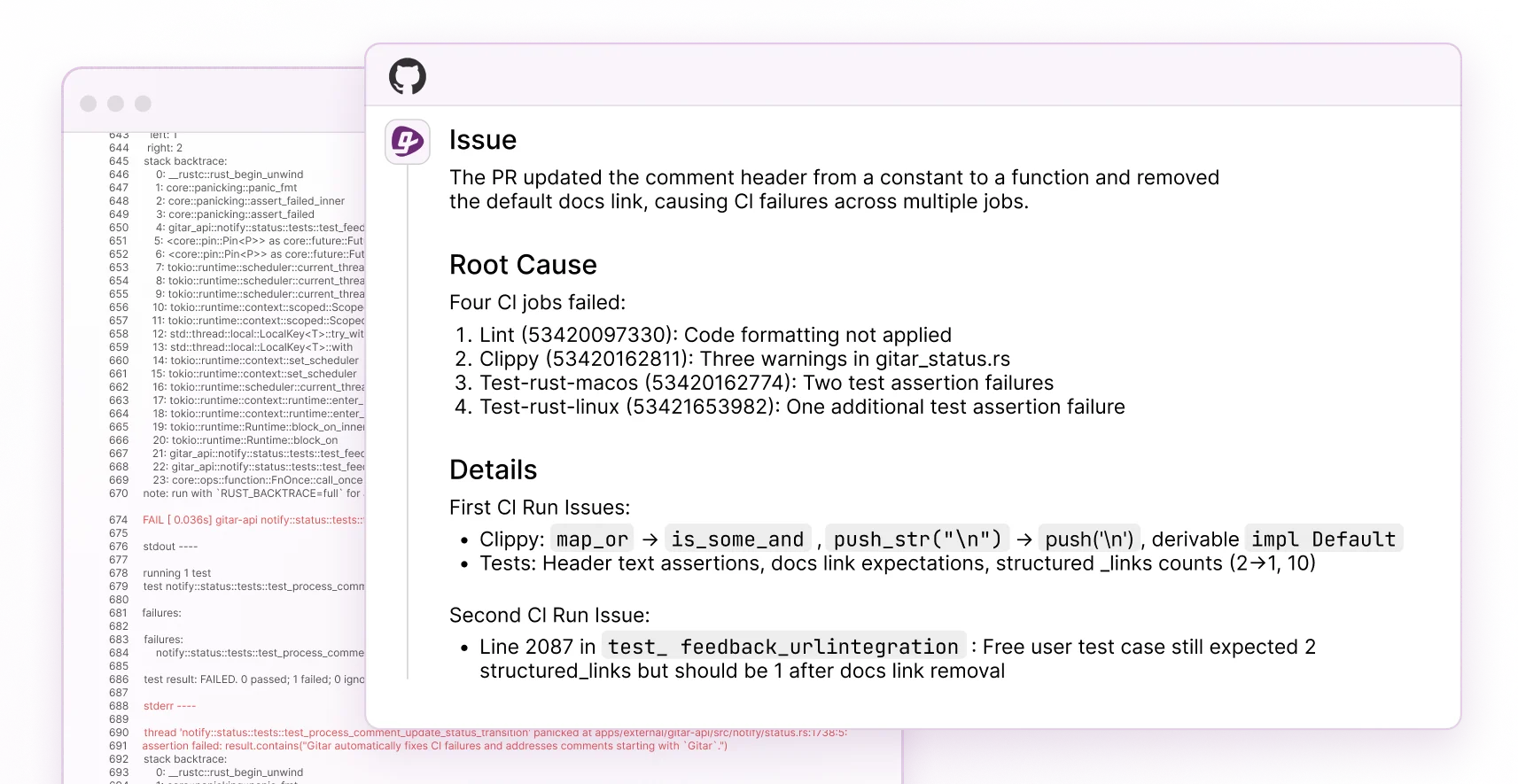
Gitar turns code review from suggestion-heavy commentary into autonomous problem-solving. Competing tools leave long threads of comments that require manual edits. Gitar’s AI platform instead fixes CI failures, addresses review feedback, and commits validated solutions on your behalf. The system posts a single updating dashboard comment that consolidates all findings, which cuts notification noise while preserving full support for GitHub, GitLab, and CircleCI.
Key differentiators start with auto-analysis of failing builds and validated commits, which ensures that proposed fixes actually work in your environment. This validation becomes accessible through natural language rules that remove YAML complexity and make advanced automation easier to adopt. Teams can test these capabilities through a comprehensive 14-day Team Plan trial with no seat limits. Gitar’s repository rules enable automated actions through natural language markdown files. CI failure analysis then provides real-time insights that refresh as new commits land. Learn more in the Gitar documentation.
Start your free Gitar trial today and see how autonomous fixes remove manual review loops from your CI. The trial focuses on real fixes instead of more suggestions.
7-Step Workflow to Automate Code Reviews With Gitar
This 7-step workflow gives your team a clear path from basic checks to fully automated healing in CI.
1. Configure Pre-commit Hooks
Set up ESLint, Prettier, and automated formatting so developers catch simple issues before pushing code. Gitar then focuses on complex failures that require contextual understanding once issues reach CI. See the Gitar documentation for detailed setup guidance.
2. Add a GitHub Actions Workflow for PR Quality Gates
Create quality gates in your CI workflows so every pull request runs consistent checks. After you install Gitar through the GitHub App or GitLab integration, Gitar analyzes failures in these workflows and commits fixes automatically.
name: Code Quality Gate on: [pull_request] jobs: quality-check: runs-on: ubuntu-latest steps: – uses: actions/checkout@v4 – name: Run Gitar Analysis uses: gitar-ai/action@v1 with: auto-fix: true coverage-threshold: 80
3. Define CI Thresholds and Let Gitar Enforce Them
Set a minimum coverage target such as 80% so teams share a clear quality bar. Integrate security scanning with tools like Semgrep or SonarQube to catch vulnerabilities early. Configure Gitar to respond when thresholds fail by proposing or applying fixes instead of only reporting the problem.
4. Enforce Commitlint Standards for Clear History
Adopt conventional commit messages and enforce them automatically so your history stays readable and searchable. Gitar supports higher commit quality by pairing structured messages with meaningful, validated changes in each review.
5. Apply AI Reviews to Copilot and AI-Generated Code
AI-generated code needs deeper review because logic issues appear more often. Gitar’s contextual analysis inspects how changes interact with existing code and dependencies. This approach catches patterns that traditional static analysis tools often miss.
6. Replace Complex YAML With Natural Language Rules
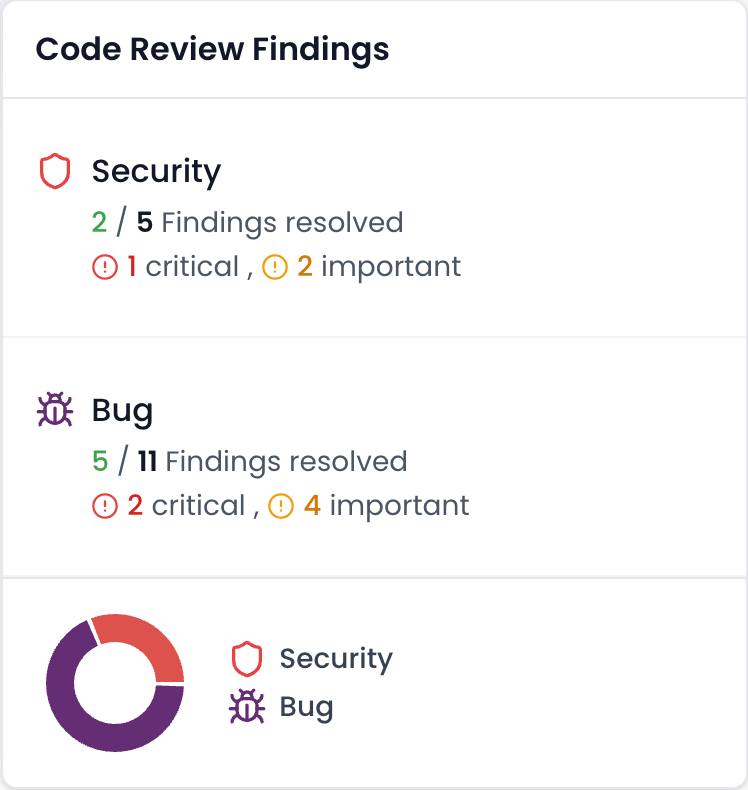
Use natural language rules to describe automation in plain terms instead of dense YAML. For example, a security review rule can look like this:
— title: “Security Review” when: “PRs modifying authentication or encryption code” actions: “Assign security team and add label” —
These rules make it easier for developers and security teams to understand and adjust review policies without wrestling with configuration syntax.
7. Turn On Merge Analytics and Smart Approvals
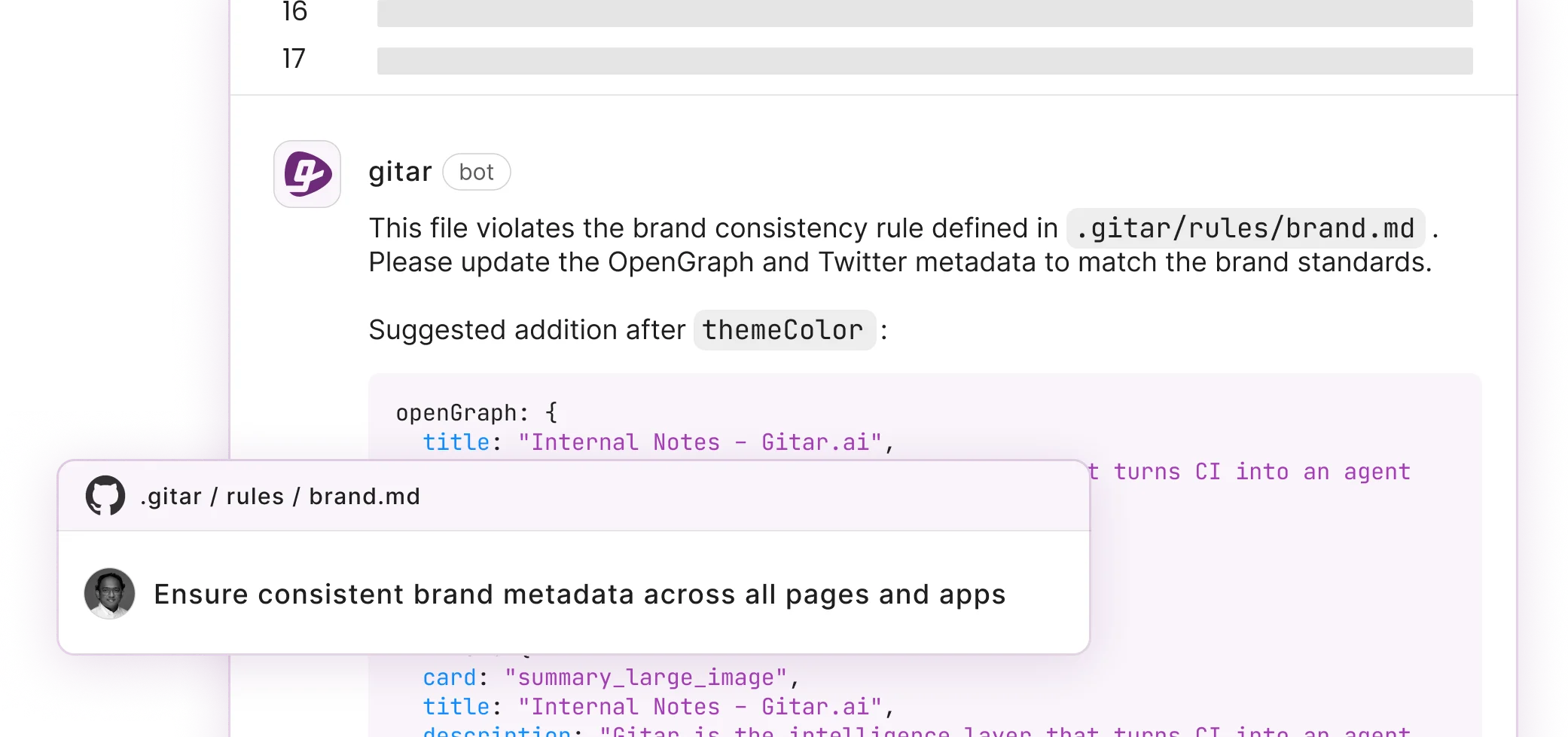
Track quality metrics over time so you can see how automated fixes affect your pipeline. Automate approvals for low-risk changes once Gitar confirms that checks pass and thresholds hold. Gitar’s single dashboard comment consolidates all findings and provides a clear signal about merge readiness. Refer to the Gitar docs for configuration details.
Escape Notification Hell With a Single Source of Truth
Reddit discussions often describe notification fatigue from AI review tools that comment on every line. Gitar addresses this problem with consolidated reporting that updates in place as new commits arrive. Teams see fewer alerts, experience lower cognitive load, and still maintain comprehensive coverage across each pull request.
Why Gitar Wins Against CodeRabbit, Greptile, and SonarQube
The comparison below shows how Gitar’s healing engine delivers stronger financial and operational results than suggestion-only or flag-only tools across four core capabilities.
|
Capability |
CodeRabbit/Greptile |
SonarQube |
Gitar |
|
Auto-apply Fixes |
No |
No |
Yes |
|
CI Healing |
No |
Flags only |
Yes (validates) |
|
Single Comment |
Noisy inlines |
N/A |
Yes |
|
ROI (20-dev team) |
$450-900/mo manual |
Incremental |
$750K annual savings |
Gitar’s healing engine model delivers superior ROI because it fixes problems instead of only flagging them. Customer feedback highlights concise summaries that replace noisy comment threads. Users also report that Gitar’s ability to detect failures from unrelated PRs saves significant debugging time. Gitar’s CI agent maintains full context from PR open to merge. That continuous context enables intelligent fixes that competing tools cannot match.
Frequently Asked Questions
What is the most effective code review automation for commit quality?
Gitar’s healing engine surpasses suggestion-focused tools by implementing fixes instead of leaving only comments. CodeRabbit and Greptile charge $15-30 per developer while still relying on manual edits. Gitar validates fixes against your actual CI environment and then commits working solutions. The 14-day Team Plan trial lets you compare autonomous problem-solving with traditional commentary in your own pipeline.
How can I automate code reviews with GitHub Actions?
Use Gitar’s GitHub App integration to connect your repository. Gitar analyzes CI failures inside your workflows, generates contextual fixes, and commits validated solutions. The integration supports custom rules and can block merges automatically when quality gates fail.
How does Gitar compare to CodeRabbit for automated fixes?
CodeRabbit provides suggestions that still require manual implementation. Gitar instead applies and validates fixes so developers spend less time editing and re-running builds. Teams can choose between suggestion-only, hybrid, and full automation modes, which allows a gradual trust ramp. This healing engine approach removes the manual loop that makes suggestion tools expensive relative to their impact.
Can teams trust automated commits that reach production?
Teams can start with Gitar’s suggestion mode and review every fix before enabling auto-commit. The system validates all changes against your full CI environment, including complex dependencies and third-party integrations. Enterprise deployments run the agent inside your own CI with access to secrets and caches. This setup ensures that fixes work in your real production context instead of a simplified test sandbox.
How does Gitar handle complex or unique CI setups?
Gitar performs especially well in complex environments by emulating your full stack, including specific SDK versions, multi-dependency builds, and third-party security scans. The Enterprise tier runs agents inside your CI pipeline with complete access to configurations and secrets. This approach produces fixes that behave correctly in production, unlike tools that operate only in reduced or isolated environments.
Conclusion: Restore Engineering Velocity With Self-Healing CI
The AI coding wave created a review and CI bottleneck that suggestion-centric tools cannot clear. Teams now need automated code reviews that deliver working fixes instead of more comments. Gitar’s healing engine resolves CI failures, applies review feedback, and keeps builds green while competitors leave expensive manual work in place.
Stop paying premium prices for suggestion engines that generate extra tasks and notification noise. Install Gitar now to start shipping higher quality software faster with a comprehensive 14-day trial that proves ROI through autonomous problem-solving.