
Written by: Ali-Reza Adl-Tabatabai, Founder and CEO, Gitar
Key Takeaways: Fix the Review Bottleneck, Not Just the Code
- AI coding tools increased PR review times by 91%, even though they generate code 3–5x faster.
- GitLab features like approval rules, CODEOWNERS, and CI pipelines add structure but still rely on manual fixes.
- GitLab Duo provides AI-powered suggestions at $0.25 per review, yet developers must implement every change and resolve CI failures.
- Gitar AI delivers validated auto-fixes, CI healing, a single dashboard comment, and natural language rules that cut review time by more than half.
- Teams reach consistently green builds and higher delivery speed, and you can see this in your own projects with a free 14-day Gitar trial.
The Problem: AI-Driven PR Floods Slow Teams Down
AI coding tools created a surge of pull requests that teams now struggle to review. DevSecOps professionals lose 7 hours per week per team member to inefficient processes, and much of that time goes into manual review work that has not scaled with AI output.
Teams spend more than an hour every day on CI failures, lint errors, and applying review feedback. Logic and correctness issues are 75% more common in AI-generated PRs, yet most review tools only suggest fixes instead of validating and applying them.
Development moves 3–5x faster, but sprint velocity stays flat because engineers sit in review queues and chase broken builds instead of shipping features.
Native GitLab Code Review Automation as a Starting Point
GitLab ships several built-in features that help organize and gate reviews.
Merge Request Approval Rules: Configure required approvers, approval counts, and eligible approver groups in Project Settings > Merge requests > Approval rules.
CODEOWNERS Integration: Create a .gitlab/CODEOWNERS file to automatically assign reviewers based on file paths:
# Global owners * @team-leads # Frontend code /frontend/ @frontend-team /src/components/ @ui-team # Security-sensitive areas /auth/ @security-team /config/secrets/ @security-team @devops-team
Merge Request Gates: Enable “Pipelines must succeed” and “All discussions must be resolved” in merge checks to block premature merges.
These features organize who reviews what and when, but they still leave every fix, refactor, and CI repair to human effort.
Automating Checks with GitLab CI/CD Pipelines
GitLab CI/CD pipelines add another layer of automation by running quality checks before code reaches human reviewers.
GitLab CI/CD pipelines enable automated code quality checks through .gitlab-ci.yml configuration:
stages: – lint – test – security lint-code: stage: lint script: – flake8 –format=gitlab src/ – eslint –format gitlab frontend/ artifacts: reports: codequality: gl-code-quality-report.json rules: – if: $CI_PIPELINE_SOURCE == “merge_request_event” security-scan: stage: security script: – bandit -r src/ -f json -o bandit-report.json artifacts: reports: sast: bandit-report.json allow_failure: false
Advanced setups add parallel jobs, fail-fast behavior, and artifact collection. These pipelines still only detect problems, so developers must diagnose and fix every failure by hand.

GitLab Duo Code Review: Helpful Suggestions, Manual Fixes
GitLab 18.7 introduces Custom Flows using YAML-defined sequences to orchestrate AI agents for automated review tasks. GitLab’s Agentic Code Review, released in GitLab 18.10, automates merge request reviews at $0.25 per review.
Setup starts with enabling Duo features in project settings and defining review behavior:
# .gitlab/duo-config.yml code_review: enabled: true auto_review: true focus_areas: – security – performance – maintainability exclude_paths: – “*.md” – “docs/”
|
Feature |
GitLab Duo |
Limitations |
|
PR Analysis |
Yes |
Suggestions only |
|
Auto-fix |
No |
Manual implementation required |
|
CI Healing |
No |
No failure resolution |
|
Cost |
$0.25/review |
Costs grow quickly with high PR volume |
Duo improves review quality with AI insights, yet it still stops at recommendations and leaves teams with the same manual workload.
The Solution: Gitar AI Auto-Fixes for GitLab Code Reviews
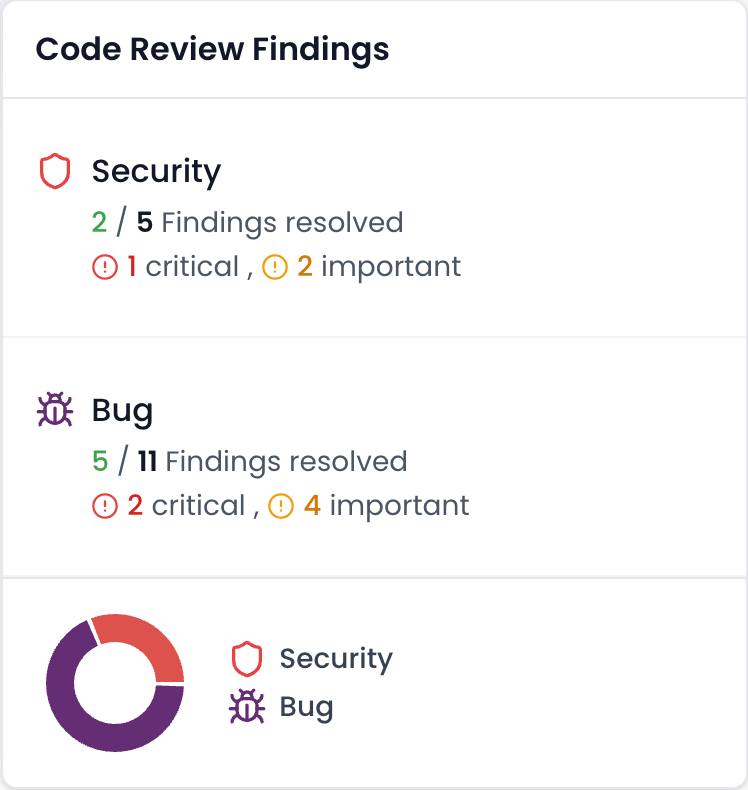
Gitar turns GitLab code reviews into action-based automation by identifying issues and applying working fixes. Gitar enables configurable PR merge blocking based on code review verdict severity and then automatically implements the changes required to pass those gates. See the Gitar documentation for configuration details.
Key differentiators include:
- A single living “Dashboard” comment that consolidates all findings
- CI failure analysis that inspects failures and surfaces clear insights
- Auto-commit of validated fixes directly to PRs
- Natural language workflow rules instead of complex YAML definitions
4-Step Gitar Setup:
- Install the Gitar GitLab integration.
- Start a 14-day Team Plan trial with full auto-fix access.
- Begin in suggestion mode to build trust in the agent’s behavior.
- Configure repository rules using natural language prompts.
# .gitar/rules/security.md — title: “Security Review” when: “PRs modifying authentication or encryption code” actions: “Assign security team and add label” — When sensitive code is modified: – Assign @security-team as reviewer – Add “security-review” label – Run additional SAST scans
Experience validated auto-fixes in your own GitLab projects with a 14-day Gitar Team Plan trial.
Advanced GitLab AI Review Workflows with Gitar
Gitar supports advanced workflows that go far beyond basic AI review comments.
@gitar Commands: Natural language instructions in PR comments trigger targeted actions:
- @gitar fix lint errors
- @gitar refactor this to use async/await
- @gitar add error handling to this function
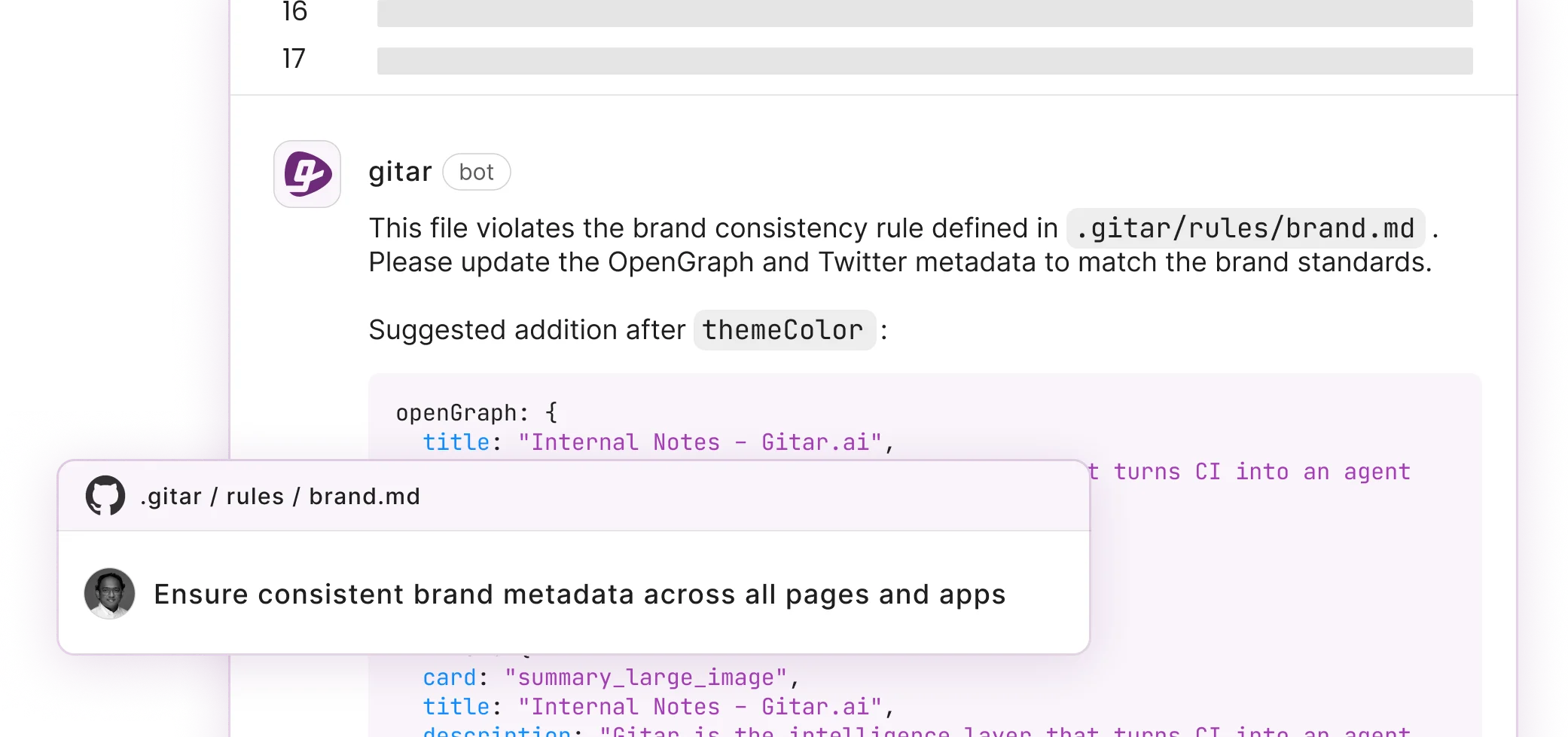
CI Healing Integration: Gitar’s CI agent maintains full context from PR opening to merge and works continuously to keep CI green. The documentation explains how to configure CI healing for your pipelines.
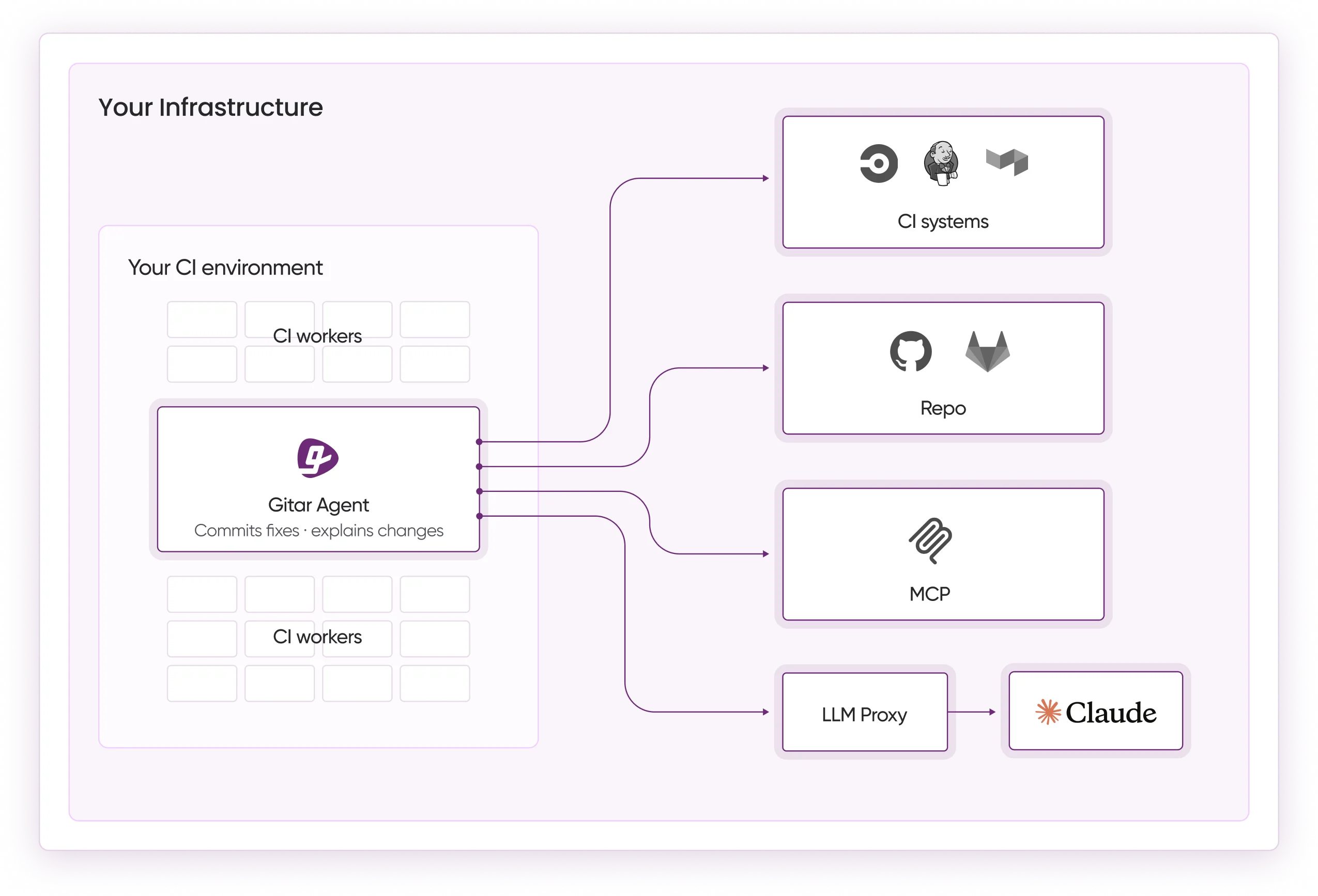
Repository Rules: Teams describe complex workflows as prompts so agents can reason about context and automate tasks that previously required custom scripts. Examples and syntax live in the repository rules section of the documentation.
Gitar vs. GitLab Duo and CodeRabbit in 2026
The comparison below highlights the gap between suggestion-only tools and platforms that deliver validated fixes. Gitar is the only option in this group that both heals CI and guarantees green builds.
|
Capability |
GitLab Duo |
CodeRabbit |
Gitar |
|
Auto-Fix |
No |
No |
Yes |
|
CI Healing |
No |
No |
Yes |
|
Green Build Guarantee |
No |
No |
Yes |
|
Single Comment UI |
No |
No |
Yes |
Gitar reduces unresolved issues by roughly three quarters through validated auto-fixes, while suggestion-only tools leave implementation and verification to developers.
Real-World ROI: Faster Reviews and Fewer Broken Builds
Teams that pair Gitar with GitLab report measurable gains in speed and stability that support the earlier 50%+ time savings claim.
|
Metric |
Before Automation |
After Gitar |
|
Daily CI/Review Time |
1 hour/developer |
15 minutes/developer |
|
Annual Cost (20 devs) |
$1M in lost productivity |
$250K |
|
PR Cycle Time |
2–3 days |
4–6 hours |
|
Build Success Rate |
60% |
95%+ |
These improvements reflect a sharp drop in manual toil and translate into faster feature delivery and lower developer frustration.
Frequently Asked Questions
What is the leading GitLab code review bot in 2026?
Gitar stands out as the leading GitLab code review automation platform because it fixes code instead of only suggesting changes. Tools like CodeRabbit and GitLab Duo focus on analysis and recommendations, while Gitar implements fixes, validates them against CI, and commits working solutions. This auto-fix capability removes the manual work that suggestion-only tools still require and gives teams a complete solution for AI-heavy review workloads.
How do I set up GitLab Duo code review, and when should I move to Gitar?
GitLab Duo code review setup involves enabling AI features in project settings, configuring the .gitlab/duo-config.yml file with focus areas and exclusions, and defining Custom Flows for automated review triggers. Duo then provides AI suggestions at $0.25 per review but does not apply fixes or heal CI. Teams typically upgrade to Gitar when they need automatic implementation of fixes, CI failure resolution, and reliable green builds. Gitar’s 14-day free trial lets you compare suggestion-only reviews with fully automated fixes.
Can I automate GitLab code reviews with CI pipelines alone?
GitLab CI pipelines can run linting, security scans, and quality gates on merge request events, which gives you basic automation. Native CI automation still only identifies issues and never applies fixes. Engineers must handle every lint error, test failure, and security finding manually. Gitar adds an auto-fix layer on top of your existing CI so the system can resolve many issues on its own.
Should I trust Gitar’s automatic commits to my repositories?
Gitar supports configurable trust levels so teams can adopt auto-fixes gradually. You can start in suggestion mode and review every proposed change before it lands. As confidence grows, you can enable auto-commit for specific categories such as lint errors or straightforward test fixes. Gitar validates each change against your CI environment before committing, and you control which fix types are automated and when to fall back to suggestion-only behavior.
How does Gitar work with complex GitLab CI setups?
Gitar handles complex environments by emulating your full CI setup, including SDK versions, dependency graphs, and third-party integrations. The Enterprise tier runs the Gitar agent directly inside your CI pipeline with access to secrets, caches, and custom configuration. This approach ensures that fixes succeed in your real environment instead of a simplified sandbox. Over time, Gitar learns your coding standards and patterns, which improves the relevance of its fixes.
Conclusion: Turn GitLab into a Self-Healing Review System
Modern AI development requires more than suggestion-based review tools. GitLab’s native features and Duo provide a solid foundation, but teams now need workflows that repair code, stabilize CI, and keep builds green without constant human intervention.
Gitar closes this gap by converting GitLab code reviews from manual bottlenecks into an automated, self-healing process. The combination of intelligent analysis, validated auto-fixes, and natural language rules delivers the productivity gains that AI coding promised but has not yet realized for most teams.