
Key Takeaways
- Manual code review and CI failures consume a large share of developer time, often creating a measurable drag on delivery speed and morale.
- AI-assisted code generation has shifted the main bottleneck from writing code to validating, reviewing, and safely merging it.
- Autonomous CI and code review systems work best when introduced in phases that build trust, reduce false positives, and respect existing workflows.
- Engineering leaders can quantify ROI from automation through reduced context switching, shorter time to merge, and fewer stalled PRs.
- Teams can use Gitar to automatically fix CI failures and code review feedback inside version control, improving flow and reclaiming engineering time; get started with Gitar here.
Why Manual Code Review is a Bottleneck for Engineering Productivity
Manual code review and CI triage impose a heavy tax on engineering time. Developers can spend up to 30% of their time dealing with CI and review-related issues, which can approach $1M per year in lost productivity for a 20-developer team.
AI code generation tools have shifted the constraint from writing to validating and merging code. The core problem has become efficient validation and merge as tools like GitHub Copilot and Cursor increase PR volume and complexity.
Context switching during CI failures further increases cost. A developer who has moved on to a new task must reload mental context when a pipeline fails or a review comment arrives, turning a quick fix into a long interruption. For distributed teams, asynchronous back-and-forth extends review cycles from hours to days.
Install Gitar to automatically fix broken builds, reduce unplanned interruptions, and keep developers focused on high-value work.
How Gitar Reduces CI Bottlenecks Inside Version Control
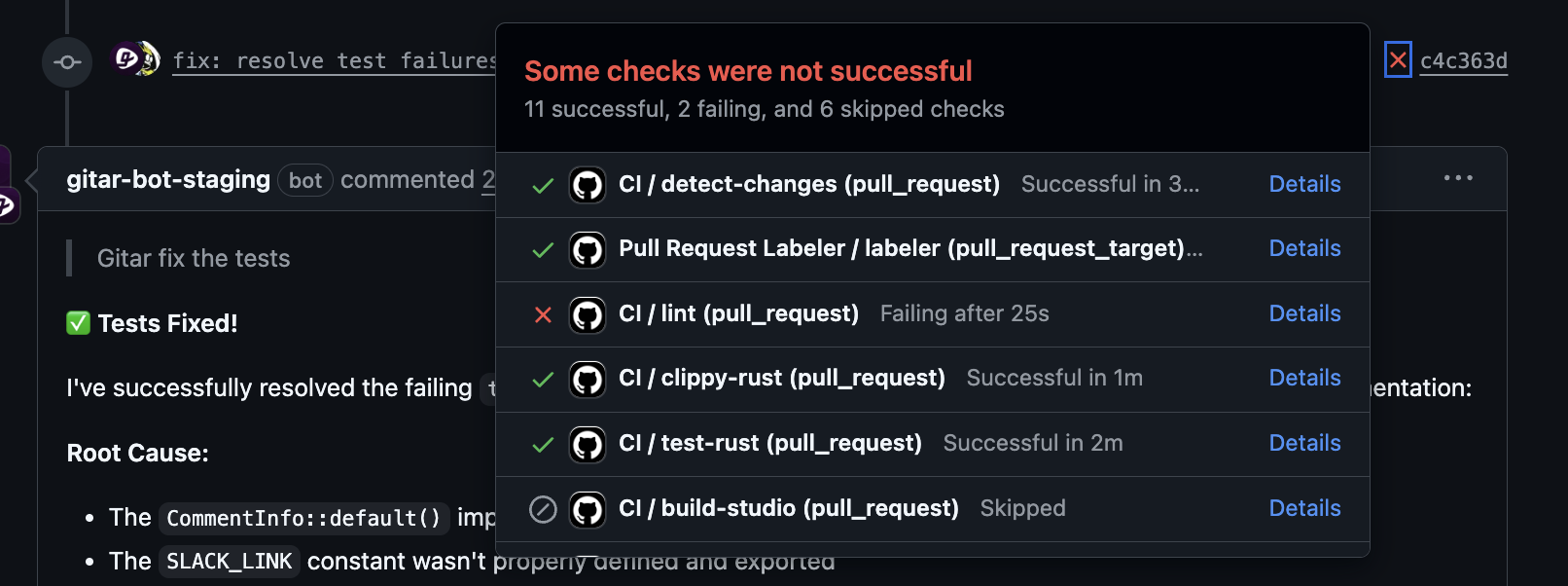
Gitar runs as an autonomous AI agent that fixes CI failures and resolves code review feedback directly in your version control system. Instead of stopping at suggestions, it applies and validates changes so builds return to a passing state.
- End-to-end autonomous fixing that resolves and validates CI failures without manual intervention
- Full environment replication for complex CI workflows, including specific JDK versions, multi-SDK builds, and third-party security or compliance scanners
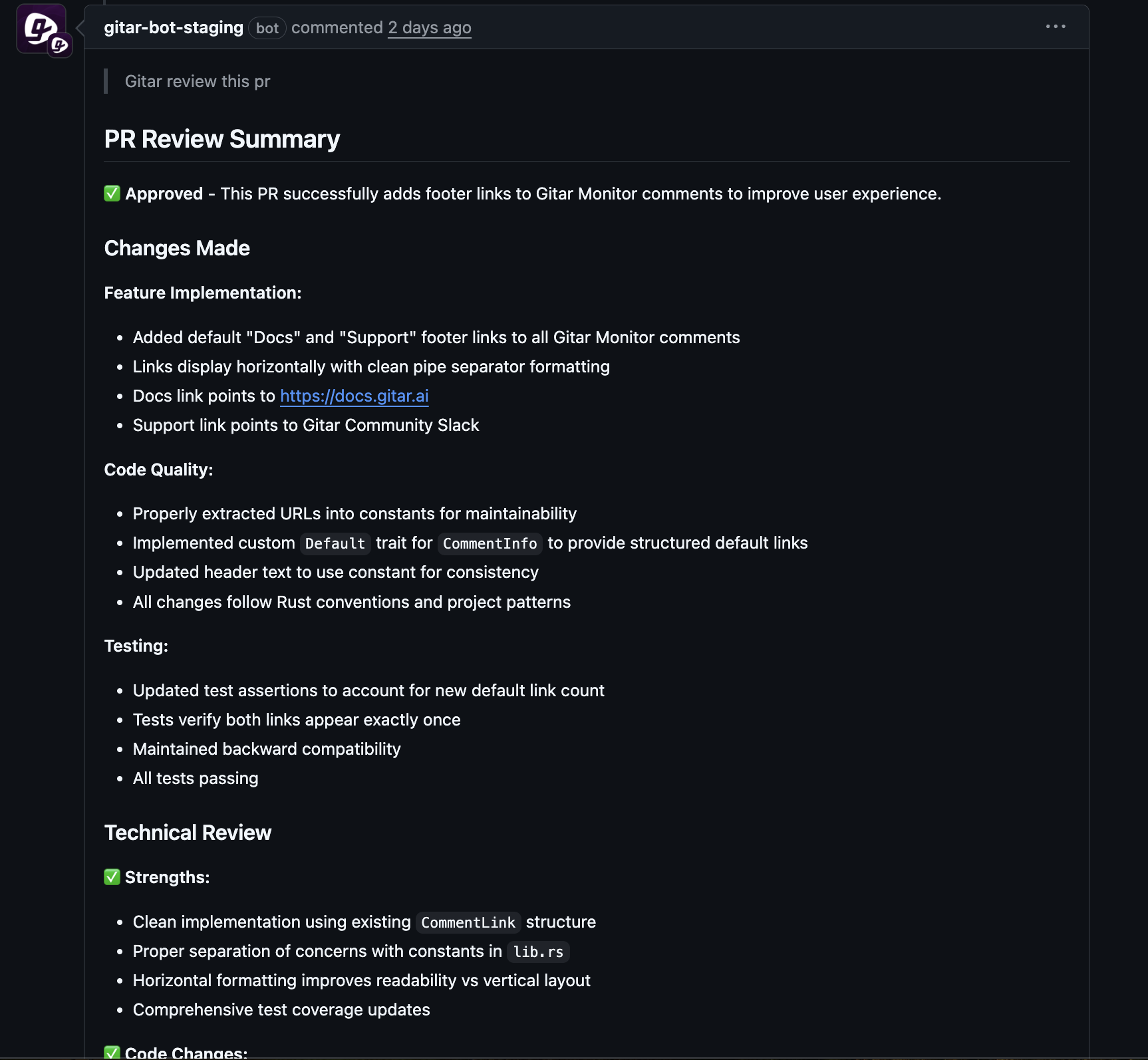
- Intelligent code review assistance that applies reviewer comments inside PRs and updates the code for final approval
- Configurable trust levels that support suggestion-only flows, autonomous commits, and safe rollback options
- Developer-in-the-loop controls that align automation depth with each team’s risk profile
Book a demo of Gitar to replace repetitive CI debugging and review changes with automated, validated fixes.
Strategic Considerations for Adopting Autonomous Code Review
Engineering leaders face build-versus-buy decisions when evaluating automation. Roughly 60% of companies report project delays tied to CI pipeline failures, so direct savings in incident time and schedule risk often justify specialized tools.
Key benefits include reclaimed developer hours, shorter feedback loops, and fewer stalled branches. Reduced context switching also supports higher quality work and better developer satisfaction, outcomes that are visible in delivery metrics and retention trends.
Gitar vs. Manual Work vs. AI Suggestion Engines
|
Feature |
Gitar (Autonomous Healing Engine) |
Manual Work (Status Quo) |
AI Code Reviewers (Suggestion Engines) |
|
CI Failure Resolution |
Autonomously fixes, commits, and validates |
Manual debugging, fixing, and re-pushing |
Suggests fixes, developer applies and validates |
|
Code Review Feedback |
Applies feedback directly in PRs |
Developer implements requested changes |
Proposes edits, developer must integrate |
|
Developer Context Switching |
Minimizes interruptions |
Frequent and costly task switching |
Reduces some overhead but still needs manual steps |
|
Time-to-Merge Impact |
Meaningfully accelerates merges |
Slowed by manual review loops |
Improves speed, but manual bottlenecks remain |
The main distinction is that Gitar owns both the change and the validation step, while suggestion-only tools still depend on developers to complete the workflow.
Evaluating Readiness for Automated CI and Code Review
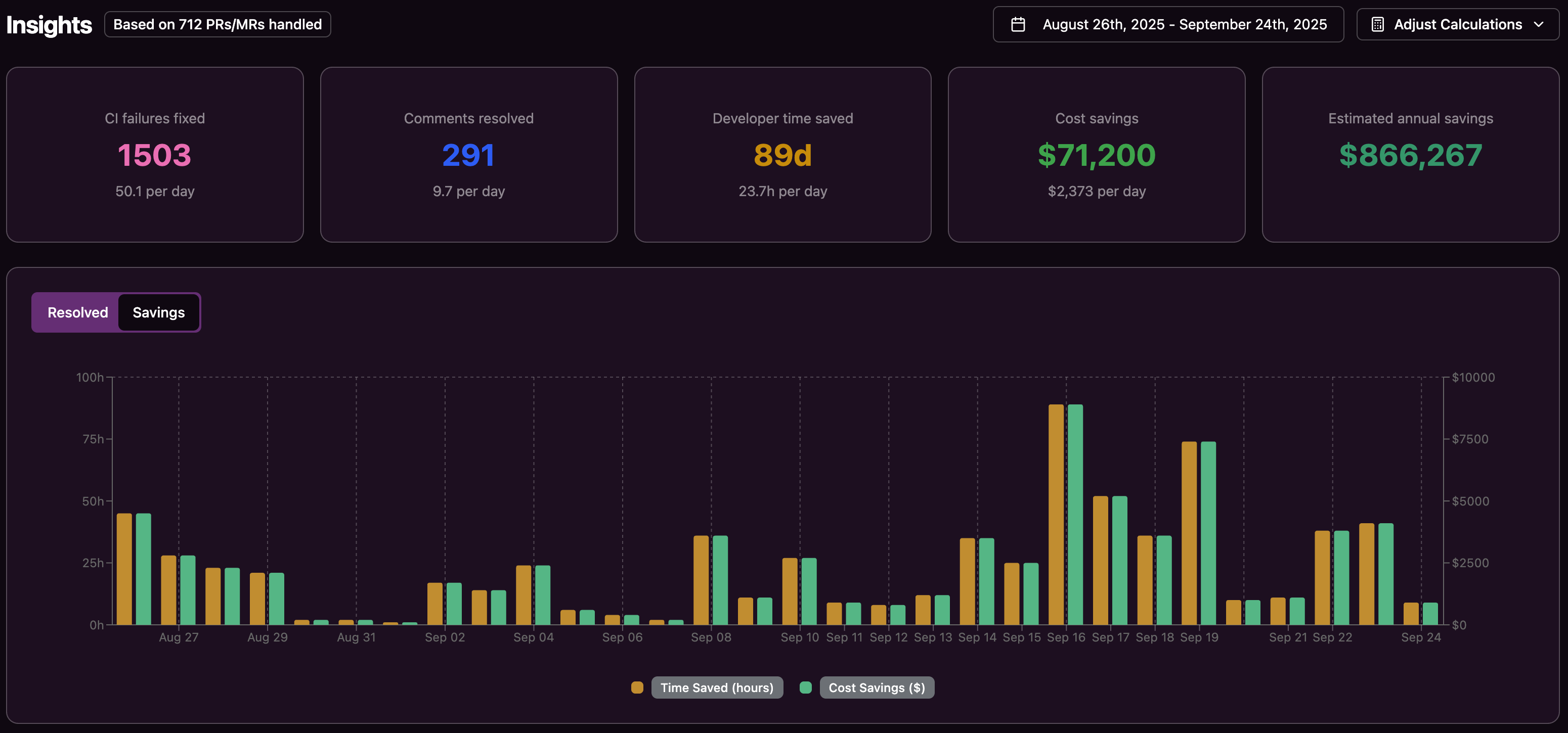
Successful adoption depends on the maturity of CI/CD practices and review norms. Engineering leaders, individual contributors, and platform teams each need clear benefits, such as measurable time savings, fewer interruptions, and better CI reliability.
A phased rollout usually performs best. Teams often begin in suggestion-only mode on a subset of repositories, measure accuracy and time savings, then expand to autonomous commits as confidence grows. Modern AI review tools already identify many real-world runtime bugs that traditional static analyzers miss, so extending them into autonomous fixes builds on familiar concepts.
Teams that already use AI code review but still spend time applying suggestions are strong candidates for Gitar, since they feel the benefits of AI and the friction of manual follow-through.
How to Avoid Common Pitfalls with Autonomous Code Review
Many teams underuse automation by treating advanced tools as slightly better linters instead of systems that own the entire fix loop. A clearer goal is autonomous development operations, where the system not only flags issues but repairs them within agreed safety bounds.
False positives can erode trust when suggestions do not compile or fail tests. Gitar mitigates this risk with configurable aggression levels, so teams can begin with conservative suggestion flows and move toward autonomous commits only after observing reliable outcomes on real workloads.
AI-assisted effort estimation on PRs also helps prioritize where to apply automation first, focusing Gitar on high-impact changes where the time savings are largest.
Complex enterprise CI environments require tools that replicate the full build and test context. Gitar’s environment modeling allows it to operate reliably even with multi-language monorepos, multiple SDKs, and layered security checks.
Start your autonomous CI rollout with Gitar and expand automation as your team gains trust in its fixes.
Frequently Asked Questions about Autonomous CI Fixes and Code Review
How does Gitar build trust in automated fixes, especially for complex or critical codebases?
Gitar uses configurable aggression modes to match your risk tolerance. In Conservative Mode, it posts proposed fixes as suggestions, and developers accept them with a single click. As teams see consistent accuracy, they can enable more autonomous modes where Gitar commits changes directly while keeping rollback options available. This staged approach lets you validate performance before granting broader autonomy.
Our CI setup is highly customized and uses niche tools. Can Gitar handle this complexity?
Gitar is built for complex CI environments. It emulates the full workflow, including specific language runtimes, multi-SDK dependencies, snapshot tests, and third-party scanners. By recreating your CI context, it can apply changes that compile, pass tests, and respect your existing compliance and security checks.
We already use AI code review tools like CodeRabbit. How is Gitar different?
AI review tools such as CodeRabbit focus on surfacing issues and suggesting improvements. Gitar acts as a CI healing engine that applies those fixes, pushes commits, and verifies the result in your pipelines. It closes the loop from detection to resolution, which removes much of the manual work that still exists with suggestion-only systems.
Can Gitar improve code quality beyond fixing immediate CI issues?
Gitar supports proactive improvements as well as reactive fixes. It can add or adjust tests based on simple instructions to raise coverage and catch regressions earlier. Over time, these small additions improve code health while also reducing the number of future CI failures.
How does Gitar help distributed teams working across time zones?
Distributed teams benefit when review comments lead to fast, reliable changes while colleagues are offline. A reviewer can leave instructions for Gitar in a PR, and the system implements the requested changes so the original author sees a ready-to-approve update at the start of their next workday. This pattern reduces idle time and shortens review cycles without requiring overlapping hours.
Conclusion: Improving Developer Flow with Automated Code Review and CI
Growing AI-assisted code generation makes validation and merging the primary constraint on delivery. Manual review and CI triage slow teams, increase context switching, and delay value reaching production.
Gitar helps teams recover that lost time by autonomously fixing CI failures and applying review feedback inside version control, even in complex enterprise environments. To reduce manual review effort and accelerate your engineering velocity, request a Gitar demo and move your CI from reactive firefighting toward predictable, automated healing.