
Written by: Ali-Reza Adl-Tabatabai, Founder and CEO, Gitar
Key Takeaways
- AI coding tools increase code generation 3–5x but also drive 91% longer PR review times and 98% higher PR volumes, which slows delivery.
- Teams can automate code review with safe rollback in seven steps using AI rules, CI auto-fixes, health checks, GitHub Actions, blue-green deploys, database patterns, and observability.
- Gitar’s healing engine auto-fixes CI failures, applies review feedback, and keeps builds green through a single dashboard comment instead of scattered suggestions.
- Reliable rollback plans use blue-green deployments, canary releases, health monitoring, and feature flags to achieve zero-downtime recovery.
- Teams using Gitar cut CI and review time from 1 hour per developer per day to 15 minutes, saving about $750K annually for 20 developers—start your 14-day Gitar Team Plan trial today.
The Problem: AI Coding Bottleneck Crushing Sprint Velocity
AI coding tools accelerate code creation but create downstream bottlenecks that cost engineering teams significant time and money. High-AI-adoption teams experienced a 98% surge in pull request volume while review capacity remained static. Industry reports indicate that developers lose roughly 30% of their time to CI friction, with 60% of project delays tied to pipeline failures.
For a 20-developer team, this productivity loss translates to approximately $1 million annually. Comments on issues and pull requests increased by only 0.35% year-over-year while pull request volume exploded, which shows that review capacity has not kept pace with AI-generated code volume.
Beyond the capacity mismatch, the quality of AI-assisted reviews also suffers from a fundamental flaw: confirmation bias. AI reviewers that rely on the same models used to generate the code create systematic blind spots. High AI adoption correlates with a 9% increase in bugs per developer, while suggestion-only tools like CodeRabbit and Greptile still require developers to implement fixes manually, which often fails to resolve root causes.
The Solution: Automate Code Review with Safe Rollback in 7 Steps
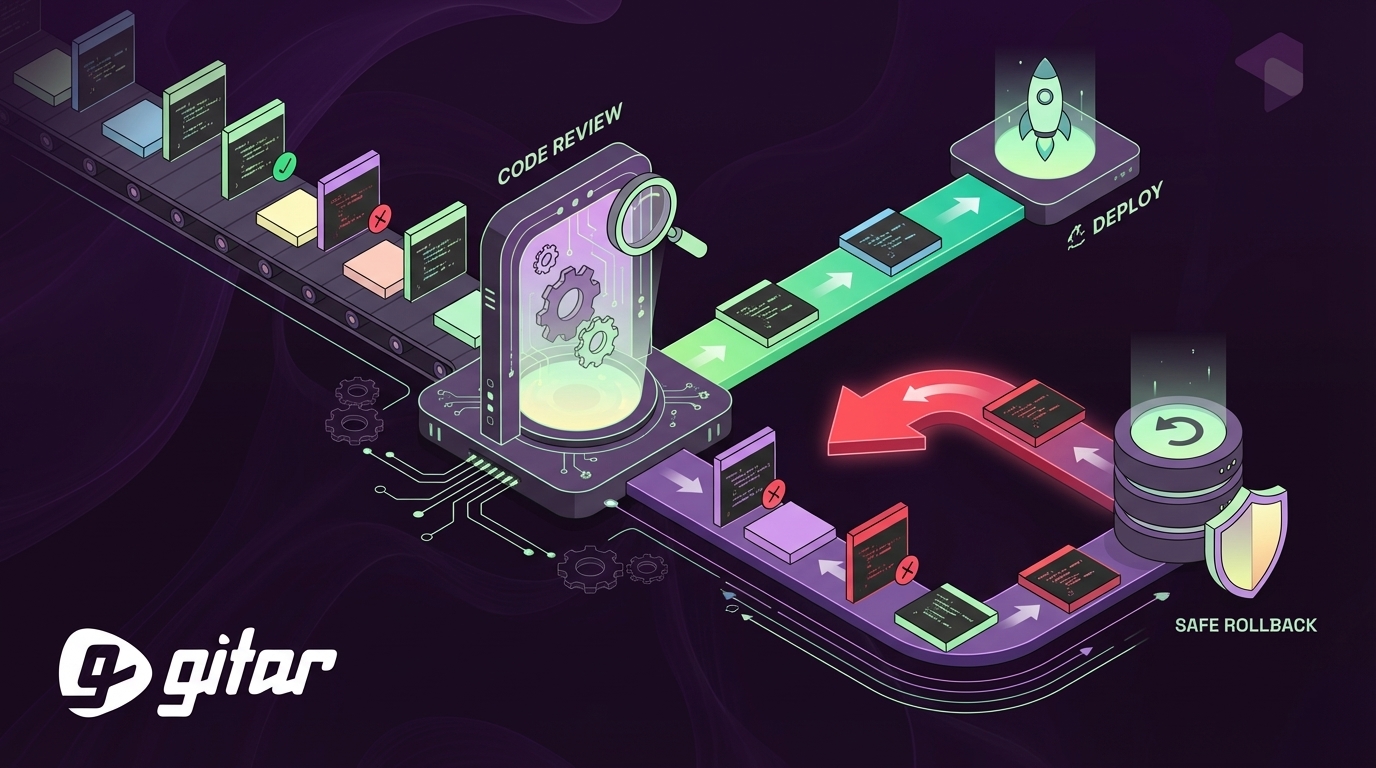
Teams can restore velocity by combining automated code review with safe rollback so every change is analyzed, fixed, validated, and recoverable. The seven steps below outline a practical path from AI review setup to production-safe deployments.
1. Set up AI code review: Install Gitar and define natural language rules in .gitar/rules/*.md files that trigger on specific PR events. For example:
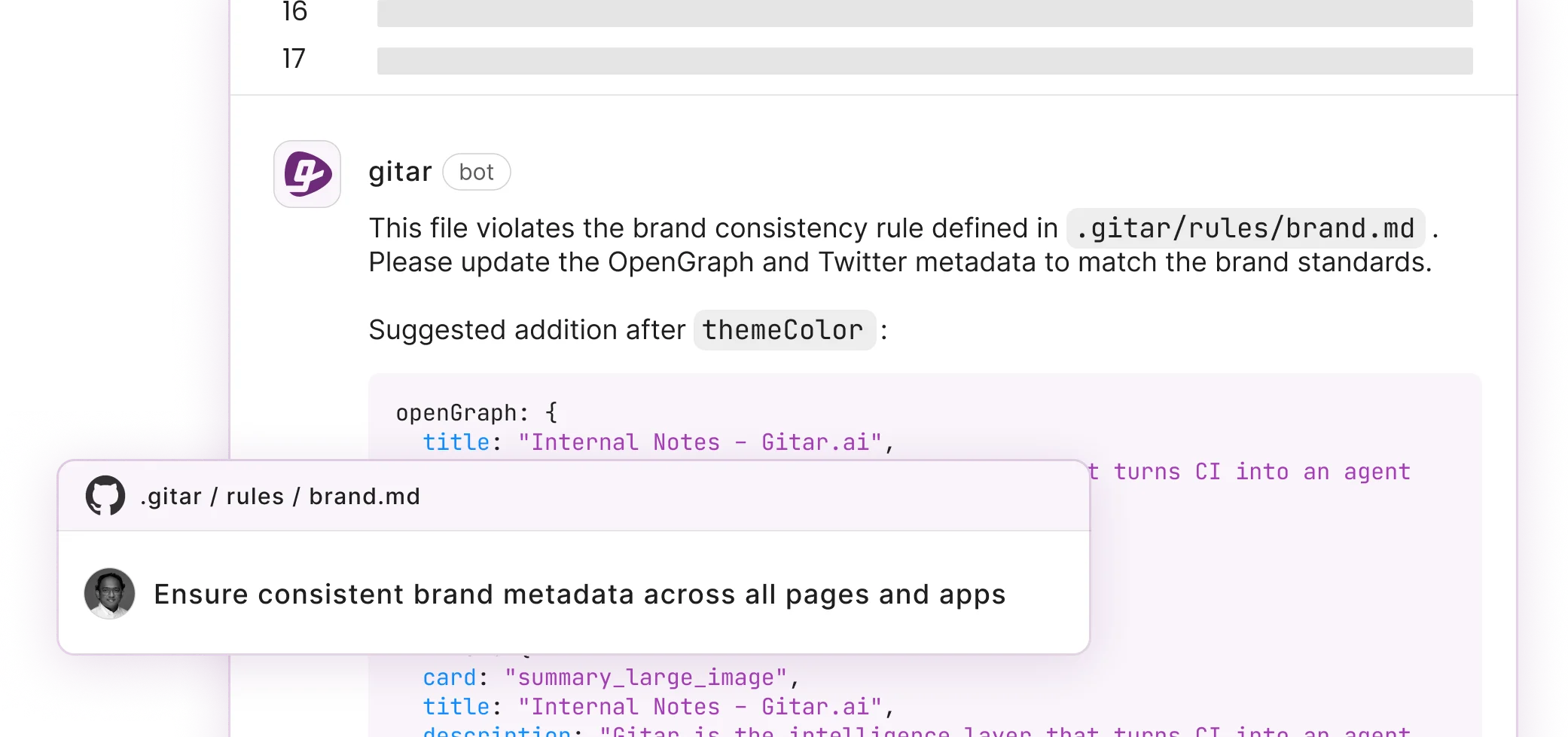
2. Integrate CI failure auto-analysis and fix: Gitar’s CI failure analysis examines failures and posts insights in a single dashboard comment. Long-running agents validate fixes against your actual environment and handle force pushes and concurrent operations. See the Gitar documentation for setup details.

3. Define rollback triggers: Configure health checks, readiness probes, and error rate thresholds that automatically trigger rollbacks when deployments fail validation. Health checks confirm that the application responds correctly, readiness probes verify that dependencies are available, and error rate thresholds detect degradation that slips past individual checks. Together these signals provide comprehensive failure detection.
4. Build GitHub Actions YAML for auto-rollback: Create automated rollback workflows that respond immediately to deployment failures. For example:
5. Implement blue-green deploys with feature flags: Salesforce reduced global rollback time from 8–12 hours to roughly 10 minutes using blue-green deployment with Kubernetes service label changes. Feature flags then control exposure at a granular level so teams can disable risky functionality without reverting the entire release.
6. Apply database-safe patterns: Use backwards-compatible schema changes and roll-forward strategies instead of direct rollbacks for database deployments. Implement expand-contract patterns so new schemas roll out safely and old structures retire only after traffic fully migrates.
7. Add observability and drills: Gitar’s intelligence layer helps engineering teams ship faster with less friction by providing analytics and maintaining context across the entire PR lifecycle. Regular rollback drills validate that alerts, triggers, and workflows behave as expected. See the Gitar documentation for more details. Install Gitar now to fix broken builds automatically and keep CI green.
How to Automate Code Review Process with Gitar
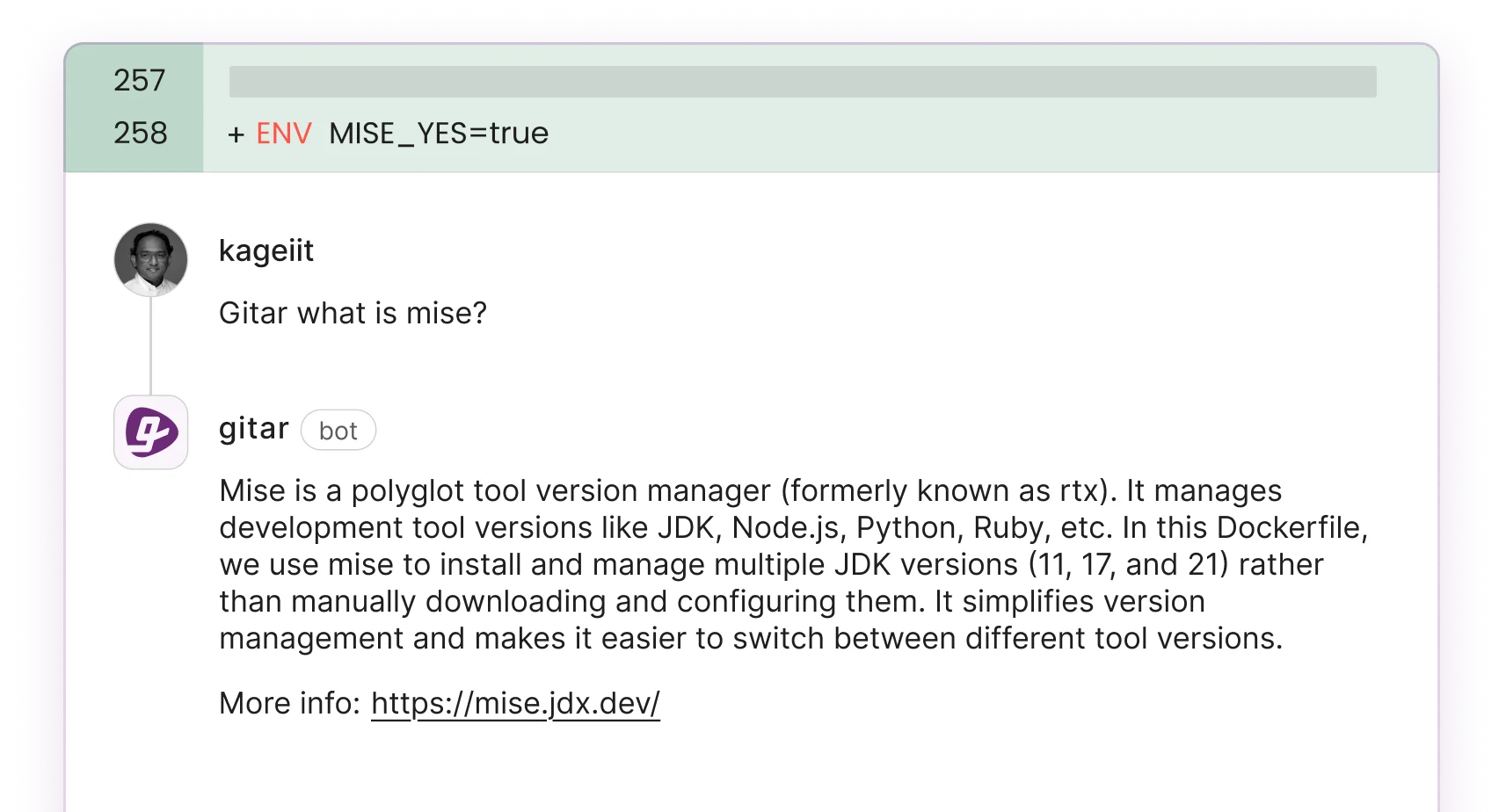
Effective automation connects AI analysis with production safety so every PR receives consistent, context-aware review. Gitar provides PR summaries, inline suggestions, and Jira and Slack integrations to keep stakeholders aligned. The automation handles diff analysis, security scanning, performance review, and bug detection while still validating changes against your CI environment.
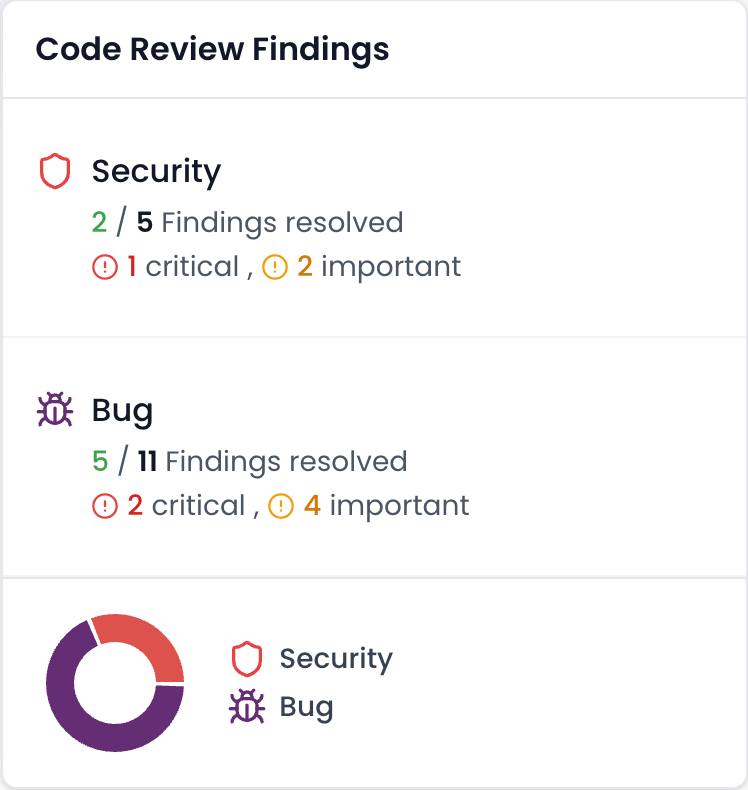
To prevent automated checks from becoming new bottlenecks, automation must respond quickly. Aim for sub-2-second response times for routine checks and under 30 seconds for deeper analysis. Teams using AI code review tools achieve 2–3x faster code review turnaround times by automatically analyzing, summarizing, and flagging key issues before human review.
Best Practices for a Rollback Plan That Actually Works
Safe rollback plans rely on multiple deployment strategies and automated health monitoring working together. Each strategy covers different failure scenarios so teams can react quickly without downtime.
Blue-green deployments: Maintain two identical production environments and switch traffic instantly between versions when problems appear. Salesforce’s implementation, mentioned in step 5, keeps the prior version at full scale as a warm standby on EKS clusters, which enables instant traffic switching.
Canary releases: Flagger performs canary analysis with 30-second intervals, shifting traffic up to 50% weight in 10% steps while monitoring metrics and rolling back automatically if request success rate drops below 99%. This approach catches issues before they affect all users.
Health metrics monitoring: Google Cloud Deploy runs verification jobs after deployment finishes. These jobs allow teams to retry or manage failed verifications while keeping rollback behavior consistent.
Feature flags: Harness FME supports flexible rollback paths that match failure types. Teams can flip feature flags for feature-specific issues or use pipeline rollback for broader deployment problems.
AI Tool for Code Review: Gitar vs Suggestion-Only Tools
Modern AI tools for code review differ significantly in how they handle fixes and automation. The table below highlights the gap between suggestion-only tools and Gitar’s auto-fix approach, focusing on capabilities that close the loop from detection to resolution.
|
Capability |
CodeRabbit/Greptile |
Gitar |
|
Auto-apply fixes |
No |
Yes (Trial/Team) |
|
CI failure auto-fix |
No |
Yes |
|
Guarantee green builds |
No |
Yes |
Gitar’s CI agent maintains full context from pull request opening until merge and works continuously to keep CI green by finding root causes of failures, fixing them, and verifying results. Unlike suggestion-only tools, Gitar’s healing engine validates fixes against your actual CI environment before applying changes.
The single comment approach also reduces notification spam. Competing tools scatter inline comments across diffs, while Gitar consolidates CI analysis, review feedback, and rule evaluations into one dashboard comment that updates in place.
Guarantee Green PRs and Zero-Downtime Rollbacks with Gitar
Automated code review combined with safe rollback delivers measurable ROI for engineering teams. For a typical 20-developer team, the time savings translate directly into cost reduction by cutting annual CI and review overhead from $1M to $250K.
|
Metric |
Before Gitar |
After Gitar |
|
Time on CI/review |
1hr/day/dev |
15min/day/dev |
|
Annual cost (20 devs) |
$1M |
$250K |
This velocity boost comes from eliminating context switching between CI failures and manual fix implementation. Webaroo achieved a 94% reduction in feature cycle time using AI agents that remove PR bottlenecks, which shows how powerful continuous, automated remediation can be.
Gitar addresses common pitfalls through configurable auto-commits that build trust gradually, environment emulation that validates fixes against your specific setup, and deep CI integration across GitHub, GitLab, CircleCI, and Buildkite. See the ROI for your team with a 14-day trial.
Frequently Asked Questions
What is automated rollback?
Automated rollback is a deployment safety mechanism that reverts applications to a previous stable version when health checks, performance metrics, or error rates show that the new deployment is failing. This process removes the need for manual intervention during critical incidents and reduces mean time to recovery by restoring service availability quickly.
What is rollback testing in software testing?
Rollback testing confirms that automated rollback mechanisms behave correctly under different failure scenarios. Teams test rollback triggers such as failed health checks, performance degradation, and error rate spikes, and they verify that the rollback process completes successfully without data loss or service interruption. Regular drills keep rollback procedures reliable during real incidents.
How do you automate rollbacks in CI/CD?
Teams automate rollbacks in CI/CD by integrating health monitoring with deployment pipelines. They configure verification jobs that run post-deployment health checks, set automated triggers based on metrics like error rates and response times, and implement rollback mechanisms such as Kubernetes rollout undo commands or blue-green traffic switching. Rollback automation must meet the same reliability standards as the deployment process.
What is the best AI tool for code review?
The most effective AI tool for code review goes beyond suggestions and actually fixes code while keeping builds green. Gitar stands out by providing a healing engine that resolves CI failures, implements review feedback, and validates fixes against your CI environment. Suggestion-only tools still leave a gap between identifying issues and resolving them, while Gitar closes that gap for teams facing AI-driven PR bottlenecks.
Conclusion: Fix the Post-AI Bottleneck Today
The 91% spike in PR review times after AI adoption requires a structured solution that combines automated code review with safe rollback. The seven-step approach in this guide, from AI review setup through blue-green deployments and observability, gives teams a practical framework to protect production while keeping delivery fast.
Gitar’s healing engine separates itself from suggestion-only competitors by fixing code, validating changes against CI, and keeping builds green. The platform’s single comment approach, natural language rules, and broad CI integration make it a strong choice for teams struggling with post-AI bottlenecks. Start your 14-day Gitar Team Plan trial to ship faster, safer.