

Last updated: March 10, 2026
Key Takeaways
- AI coding tools cause 91% longer PR review times and $1M annual losses for 20-dev teams due to timezone friction.
- Async code reviews enable flexible feedback across timezones using small PRs, video explainers, emoji norms, and AI auto-fixes to eliminate Zoom fatigue.
- Gitar’s AI healing engine automatically fixes CI failures and review feedback overnight, validating against your actual build environment, unlike suggestion-only tools.
- Track key metrics like review cycle time and defect rates; teams using Gitar reduce CI and review toil from 1 hour per day per developer to 15 minutes, saving $750K annually.
- Apply these seven strategies today and install Gitar for a 14-day full Team Plan trial to scale async reviews and ship faster.
Async Code Reviews for Remote Engineering Teams
Asynchronous code reviews let distributed teams examine code on flexible schedules using pull requests, inline comments, and video explanations across time zones. Companies like Spotify and Netflix use async reviews to maintain code health at scale with automated tools like SonarQube, ESLint, and Pylint for instant feedback on low-level issues.
Async reviews remove Zoom fatigue, support global collaboration, and expand review capacity. They can also create notification overload from AI tools and unvalidated fixes that later fail CI.
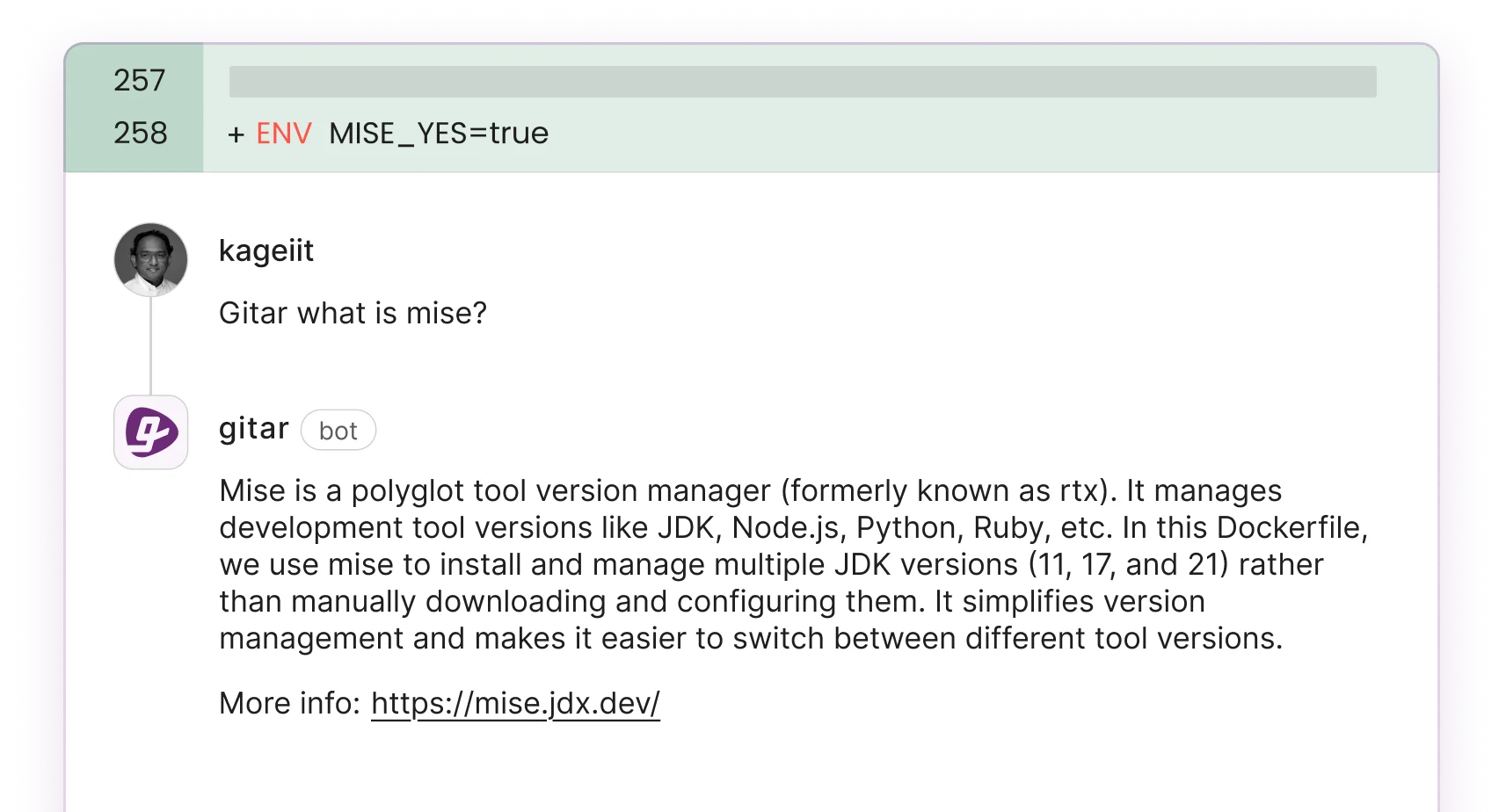
Key strategies for success:
- Keep PRs small and atomic for quick timezone reviews
- Use AI auto-fixes that validate against CI
- Set clear norms with emojis and blocking labels
- Add video context for complex changes
How Gitar Scales Async Reviews with AI Healing
Gitar upgrades async code reviews by automatically fixing CI failures and applying review feedback instead of only suggesting changes. Competing tools often charge $15-30 per developer for suggestions that still require manual work, while Gitar validates fixes in your real CI environment and commits working solutions. See the Gitar documentation for details on the healing engine.
Core capabilities include natural language rules in .gitar/rules/*.md files, native integrations with Jira, Slack, and Linear, and a single updating dashboard comment that prevents notification spam. The 14-day Team Plan trial gives full access to all features with no seat limits. Review the documentation for setup and trial information.
|
Capability |
CodeRabbit/Greptile |
Gitar |
|
Auto-apply fixes |
No |
Yes |
|
CI auto-fix |
No |
Yes |
|
Single comment |
Noisy inline |
Yes |
|
Free trial |
Limited |
14-day full Team |
Install Gitar now, automatically fix broken builds, and start shipping higher quality software faster. Explore the full documentation for setup guidance.
1. Keep PRs Small and Atomic for Faster Reviews
Small, focused pull requests keep async reviews moving across time zones. Keep PRs tight, use merge queues or bots, set team SLAs like 24-hour initial feedback, and time feedback within the author’s working hours.
Use pre-commit hooks and linters to catch basic issues before human review. For remote teams, atomic changes allow quick reviews during short timezone overlaps. Configure CI to enforce size limits, typically 200-400 lines of code changes.
Gitar supports this approach by auto-fixing lint errors and formatting issues before reviewers open the PR. This pre-screening removes low-level noise so reviewers can focus on architecture and business logic during their limited review windows.
Use feature flags to slice large features into smaller, reviewable chunks. Each PR should represent one logical change that reviewers can understand and approve independently, regardless of timezone.
2. Use Short Video Explainers for Complex Changes
Short videos add clarity to async reviews and reduce back-and-forth across time zones. Record 2-5 minute Loom videos that walk through complex changes, architectural decisions, or UI updates to cut misunderstandings and speed up reviews.
Record your screen while you explain the code, highlight key lines or functions, and share why you chose a specific implementation. This method works especially well for UI changes, algorithms, and refactors.
Gitar pairs with video explainers by generating rich PR summaries that capture intent and impact. The AI reads commit messages, code diffs, and linked Jira tickets to create context that reviewers can scan quickly.
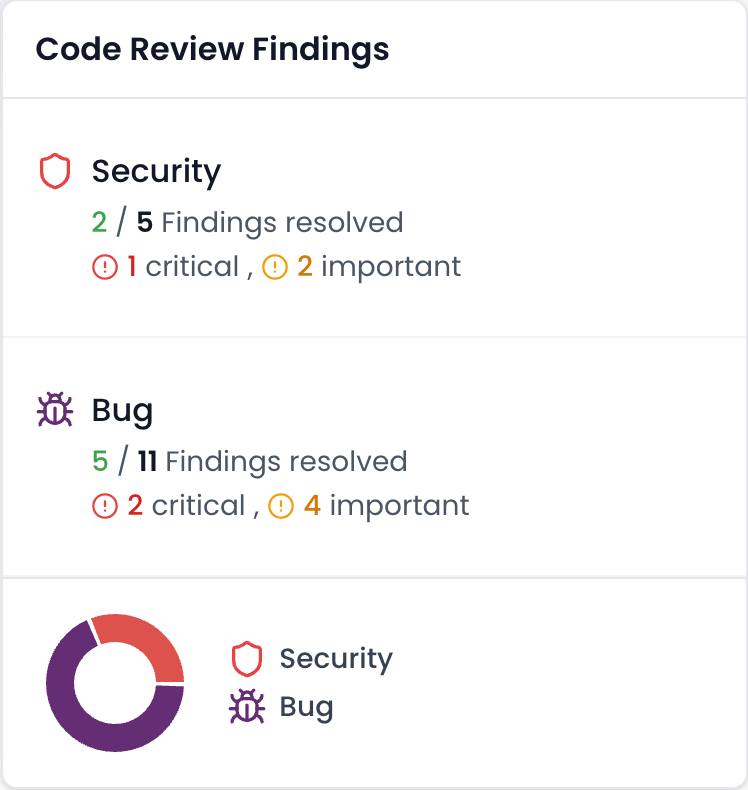
Store videos in a searchable space and link them in PR descriptions. This habit builds a knowledge base that future teammates can reuse when working on related features or debugging issues.
3. Set Clear Review Norms with Emojis and SLAs
Clear communication rules keep async reviews predictable across time zones. Use emoji-based approval systems (👁️ for “reviewing”, ⏳ for “waiting on author”, 👍 for “approved”), blocking labels for critical issues, and 24-hour SLA windows for first feedback.
Use collaborative language in feedback, such as “we” instead of “you”, to keep the tone positive in async remote reviews. Set a two-trip limit so that PRs needing more than two rounds move to a short synchronous discussion.
Gitar’s single updating comment cuts notification noise compared with traditional inline systems. Teams report that concise summaries improve review efficiency by keeping all findings in one place.
Document review standards in a shared wiki, including style rules, security expectations, and performance targets. This documentation keeps feedback consistent regardless of who reviews the code.
4. Use Gitar AI Auto-Fixes to Heal CI Overnight
AI auto-fixes remove repetitive toil from async reviews and keep pipelines green while teams sleep. Gitar’s healing engine fixes CI failures, applies review feedback, and validates solutions in your real build environment.
When a test fails or a lint error appears, Gitar reads the logs, generates a contextual fix using your full codebase, validates the change, and commits it directly to the PR. This process runs automatically across time zones while your team is offline.
Adjust Gitar’s aggression levels to match your comfort with automation. Start in suggestion mode for critical paths, then enable auto-commit for trusted fixes such as formatting, imports, and straightforward test corrections.
5. Standardize a GitHub Async Review Template
A consistent GitHub PR template keeps async reviews structured and predictable. Include emoji-based status indicators, reviewer assignments, and timezone-aware deadlines so everyone understands expectations.
Add sections for change description, testing steps, deployment notes, and a reviewer checklist. Include timezone indicators for urgent work and estimated review time so reviewers can prioritize their queue.
Gitar connects directly with GitHub workflows and updates PR status based on CI results and applied feedback. The platform supports GitHub Actions, GitLab CI, CircleCI, and Buildkite for broad coverage.
Standardize PR descriptions with links to documentation, design mockups, and related tickets. This context supports deep async reviews without extra meetings.
6. Track Async Review Metrics and ROI
Review Cycle Time, Time to First Review, Reversal Rate, and Defect Escape Rate give a clear picture of code review performance.
Time-to-first-review and review turnaround correlate closely with faster, safer releases.
|
Metric |
Before Gitar |
After Gitar |
|
Time on CI/review issues |
1 hour/day/dev |
15 min/day/dev |
|
Annual productivity cost |
$1M |
$250K |
|
Context switching interrupts |
Multiple/day |
Near-zero |
Gitar’s analytics dashboard shows review bottlenecks, CI failure patterns, and productivity trends in real time. Use these insights to refine your async process and prove ROI to engineering leaders.
Install Gitar now, automatically fix broken builds, and start shipping higher quality software faster with complete metrics tracking.
7. Automate Escalations with Natural Language Rules
Automation rules keep async reviews moving without manual coordination. Use natural language rules in .gitar/rules/*.md files to define workflow decisions without complex YAML.
Example rule: “When PRs modify authentication or encryption code, assign security team and add security-review label.” Gitar runs these rules automatically so sensitive changes always reach the right reviewers across time zones.
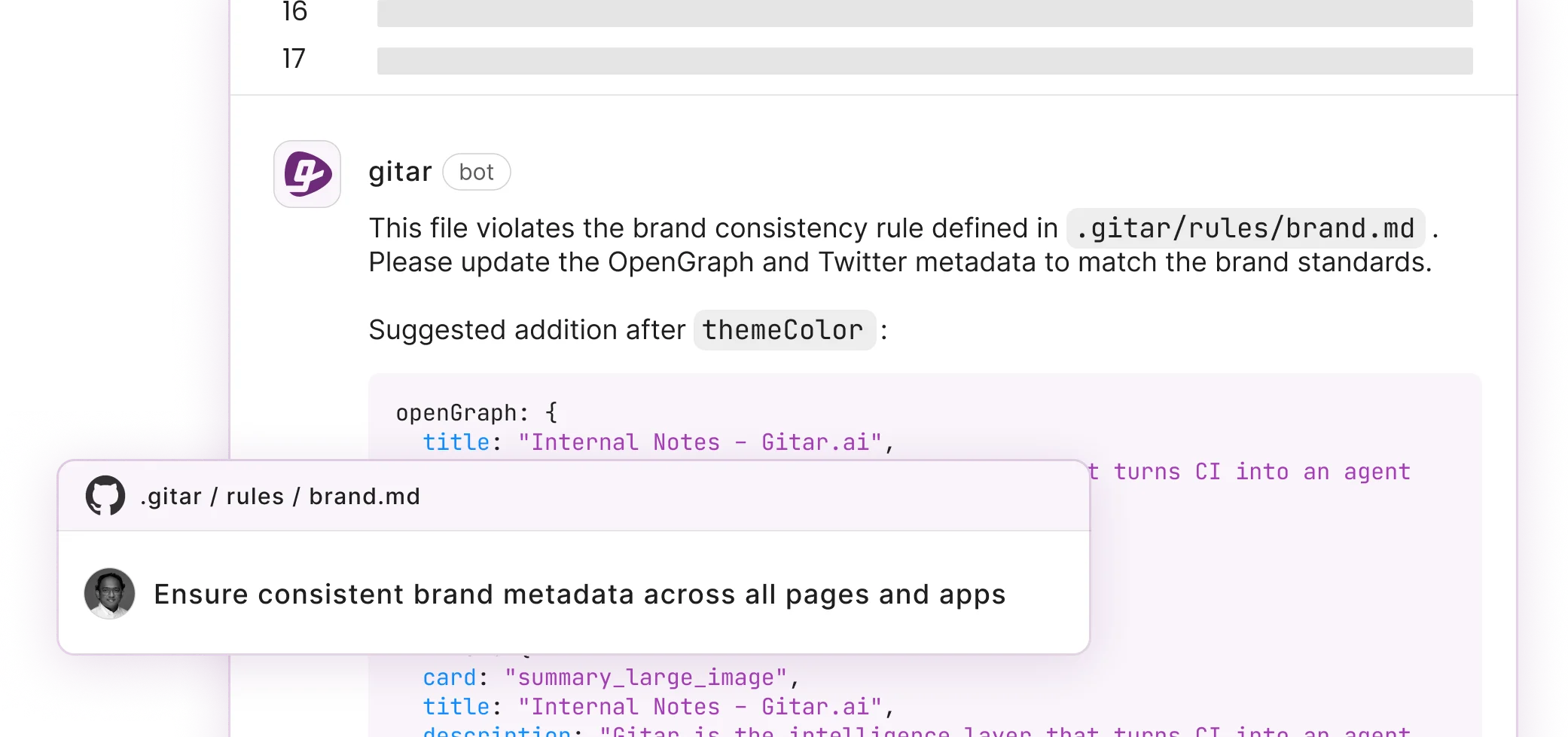
Set automatic escalations when PRs exceed the two-trip limit or sit unreviewed beyond SLA windows. This protection keeps async reviews from stalling due to timezone gaps or reviewer absence.
Use Gitar’s Jira, Slack, and Linear integrations to notify stakeholders when escalation rules fire. These alerts create accountability without constant manual queue checks.
Best Tool Stack for Async Code Reviews
A focused tool stack keeps async reviews efficient and predictable. Core tools include Gitar for AI-powered auto-fixes and CI integration, Loom for video explainers, GitHub for pull requests, and ESLint for automated quality checks.
Secondary tools include SonarQube for security scanning, Slack for notifications, and Jira for traceability. CodeRabbit connects with GitHub and GitLab for AI-powered PR analysis and comments on bugs, security, and performance, but it does not provide the auto-fix capabilities that make Gitar effective for async workflows.
Choose tools that plug into your existing CI/CD pipeline and show clear savings in manual effort. Gitar’s platform replaces multiple point tools by combining review automation, workflow rules, and analytics in one system.
FAQ
How does Gitar handle complex CI environments?
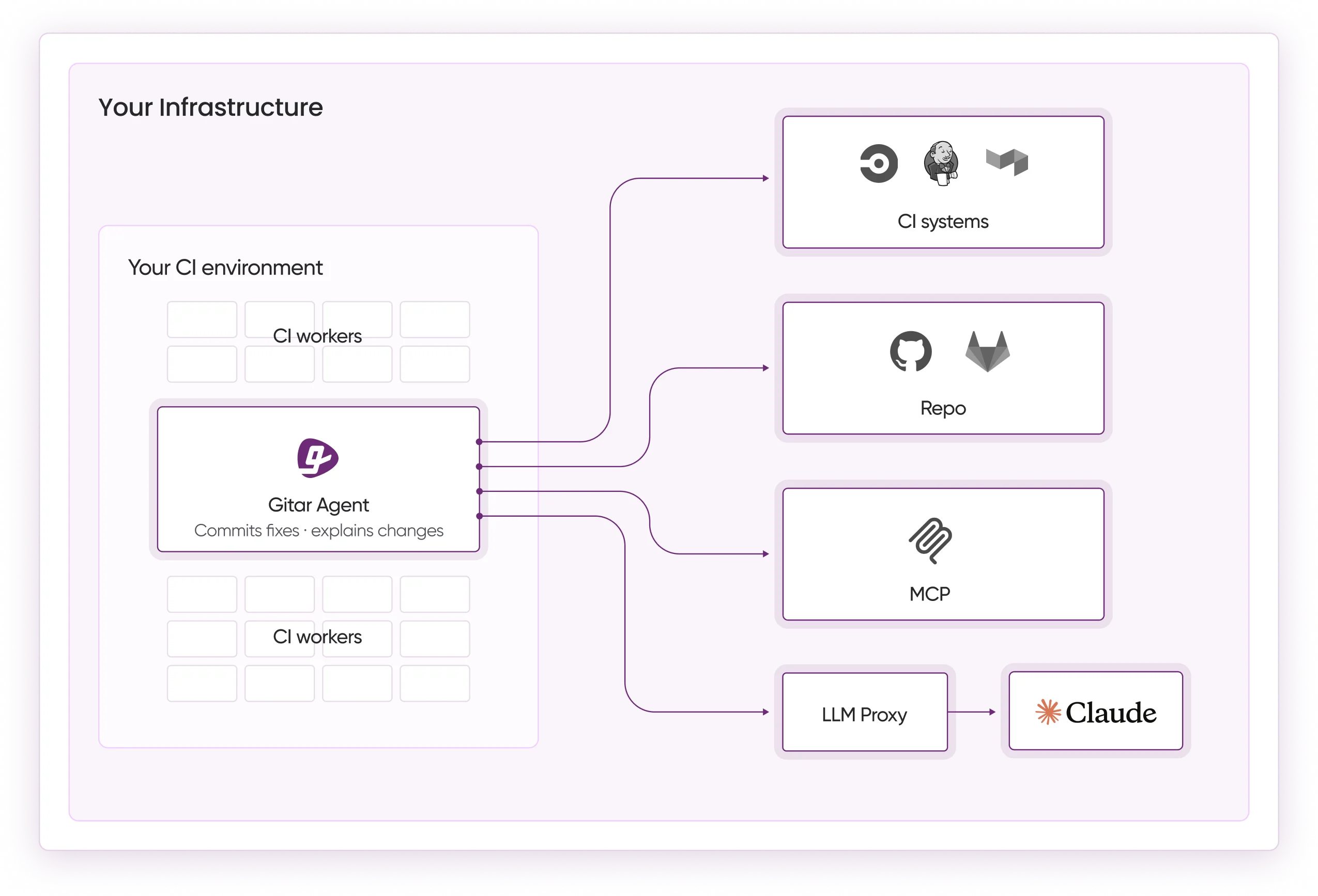
Gitar emulates your full CI environment, including SDK versions, multi-dependency builds, and third-party security scans. The Enterprise tier runs the healing agent inside your CI pipeline with access to your secrets and caches, so fixes work in production, not just in isolation. This setup validates solutions against your real build constraints instead of generic environments.
Is the 14-day trial really full access with no limitations?
The Team Plan trial includes unlimited users, repositories, and all features, including auto-fix, custom rules, and integrations with GitHub, GitLab, CircleCI, Buildkite, Jira, Slack, and Linear. The trial has no seat limits or feature restrictions, so you can test the complete platform with your real workflows.
How does Gitar compare to CodeRabbit and other suggestion-based tools?
CodeRabbit and similar tools analyze code and leave suggestions in comments that still require manual changes and validation. Gitar’s healing engine applies fixes, validates them against CI, and commits working solutions. This approach removes the manual effort that suggestion tools leave behind and delivers real automation.
What is the most effective way to run async code reviews across time zones?
Combine small, atomic PRs with clear norms such as emoji status indicators, 24-hour SLAs, and video explainers for complex work. Add AI auto-fixing to handle routine issues overnight so reviewers can focus on architecture and business logic during their working hours. Use single updating comments instead of scattered inline notes to reduce notification fatigue.
Can Gitar actually scale code reviews with AI to reduce manual toil?
Gitar fixes CI failures, applies review feedback, and validates solutions in your build environment. This automation covers tasks like formatting, imports, test corrections, and basic refactors so human reviewers can focus on architecture and security.
Conclusion: Turn Async Reviews into a Remote Advantage
Async code reviews work best when teams pair proven practices with targeted AI automation. Small PRs, clear norms, video context, and automated fixes create a review system that supports global teams.
Gitar’s healing engine cuts the 91% review backlog growth by fixing issues overnight so teams ship higher quality software faster. These seven strategies turn async reviews from a bottleneck into an advantage for distributed engineering groups.
Install Gitar now, automatically fix broken builds, and start shipping higher quality software faster with a risk-free 14-day Team Plan trial that demonstrates ROI through measurable productivity gains.