
Key Takeaways
- Amazon Q Developer runs AI code reviews in VS Code, JetBrains, GitHub, and GitLab after a quick extension install and sign-in.
- Prompts like
/q review changes onlyand/q review this PR for security and performancekeep reviews focused on recent edits and specific risks. - GitHub and GitLab integrations trigger automatic PR and MR reviews, adding threaded comments with suggested fixes in your IDE or repo UI.
- Amazon Q has limits with large repos, lacks direct CI integration, and requires manual fix application, unlike fully autonomous tools.
- Upgrading to Gitar’s 14-day free Team Plan trial adds autonomous CI failure fixes, green build guarantees, and end-to-end workflow automation.
Set Up Amazon Q in VS Code and JetBrains for Fast Reviews
Amazon Q Developer setup in your IDE takes under five minutes when you meet the version requirements. VS Code must run version 1.90 or later, and JetBrains IDEs must run 2025 or later.
- Install the Extension: Open the Extensions Marketplace in VS Code, search for “Amazon Q”, and install the AWS Toolkit extension.
- Authenticate: Click the Q icon in the sidebar and authenticate using AWS Builder ID (free) or IAM Identity Center for Pro subscriptions.
- Open Chat Panel: Open the Amazon Q chat interface from the sidebar or the command palette.
- Start Code Reviews: Run
/q review changes onlyso Amazon Q focuses on your current modifications. - Apply Suggestions: Open the Code Issues tab and click the wrench icon to apply recommended fixes.
- Verify Connection: Confirm you have an active internet connection so all features work correctly.
- Troubleshoot Authentication: If sign-in fails, restart your IDE and check your network connection.
For JetBrains IDEs, install the AWS Toolkit from the Marketplace, configure AWS Core, restart the IDE, and accept the privacy notice. The authentication flow matches VS Code but uses the JetBrains plugin interface.
Common issues include failed authentication, missing IAM roles, and network problems that block communication with AWS services. Restarting the IDE, using Builder ID or Identity Center, and checking connectivity usually resolves them.
Amazon Q on GitHub: Automated Pull Request Reviews
Amazon Q Developer connects to GitHub to run automated pull request reviews on every new or reopened PR. The setup uses a simple app installation and console registration.
- Install GitHub App: Add the Amazon Q Developer GitHub App to your repository.
- Register in Console: Configure the integration in the AWS console.
- Automatic Reviews: Amazon Q automatically reviews code when pull requests are created or reopened.
- Interactive Commands: Use
/q review this PR for security and performancein PR comments for targeted analysis.
These prompts work especially well on GitHub:
/q review changes onlyfor a review focused on modified code./q explain this findingfor detailed explanations of flagged issues./q review this PR for security and performancefor security and performance checks in one pass.
Amazon Q adds threaded comments with suggested fixes that you can review and commit from the GitHub interface. Automatic reviews only run on PR creation or reopen, not on later commits, so you must trigger new reviews manually after pushing updates.
Teams that want automated fixes instead of manual application can install Gitar to repair broken builds automatically and ship higher quality software faster.
Amazon Q on GitLab: Merge Request Reviews and Commands
Amazon Q Developer integrates with GitLab in a similar way to GitHub. You install the app, enable automatic reviews on merge requests, and use /q commands in MR comments for interactive analysis.
The GitLab workflow triggers reviews when merge requests are created. You can then use the same commands: /q review changes only, /q review this MR for security and performance, and /q explain this finding for deeper explanations.
GitLab users see threaded comments and suggested fixes similar to GitHub. The interface differs slightly, but the review behavior and prompts remain consistent.
High-Impact Amazon Q Prompts and Manual Fix Workflow
Specific prompts make Amazon Q reviews faster and more actionable.
/q review changes onlyfor a focused review of your latest edits./q review this PR for security vulnerabilitiesfor security-focused analysis./q review for performance issuesfor performance improvement suggestions./q explain the importance of this findingfor context on why an issue matters./q suggest AWS best practicesfor AWS-specific recommendations.
The usual flow starts with a chat review, then moves to the Code Issues tab, where you inspect findings and apply fixes using the wrench icon. Amazon Q performs especially well on AWS-related code because it uses AWS service knowledge and best practices.
Limits of Amazon Q and the Auto-Fix Upgrade Path
Amazon Q Developer has several limits that slow teams working in large or complex codebases. Large repositories cause context loss, so Amazon Q guesses relevance and often misses distant context.
The tool is also restricted to a single workspace or repository with a 200,000-token window. This limit prevents reliable analysis of multi-repository systems.
Amazon Q supports code insertion and agentic fixes in IDEs and GitHub PRs. Teams still need manual review and commit steps, which keeps it behind fully autonomous CI-integrated fixing.
| Capability | Amazon Q | Gitar |
|---|---|---|
| PR summaries | Yes | Yes (Trial/Team) |
| Inline suggestions | Yes | Yes |
| Auto-apply fixes | Via IDE/PRs | Yes |
| CI failure auto-fix | No | Yes |
| Guarantee green builds | No | Yes |
Why Teams Choose Gitar for Autonomous Fixes
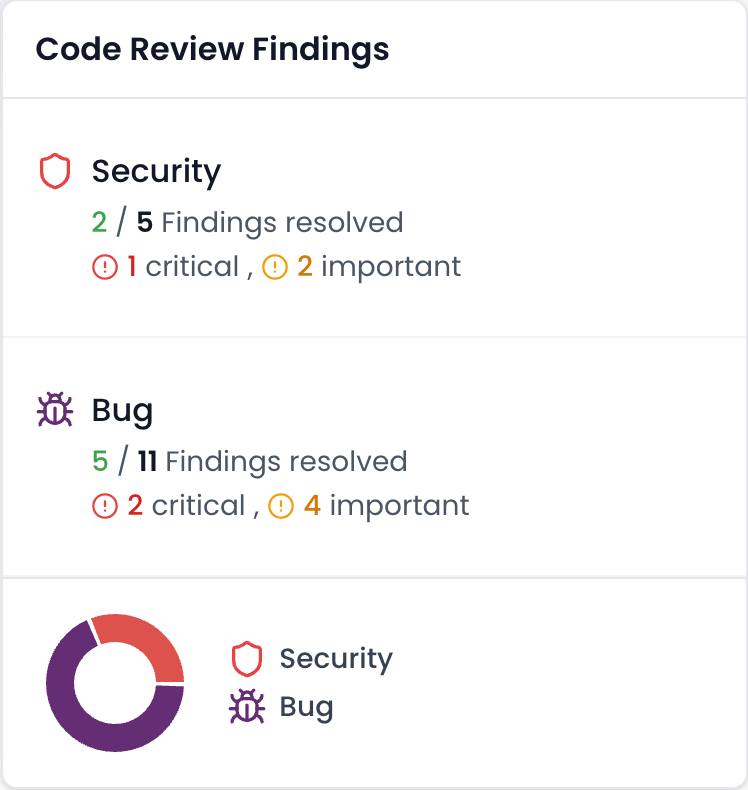
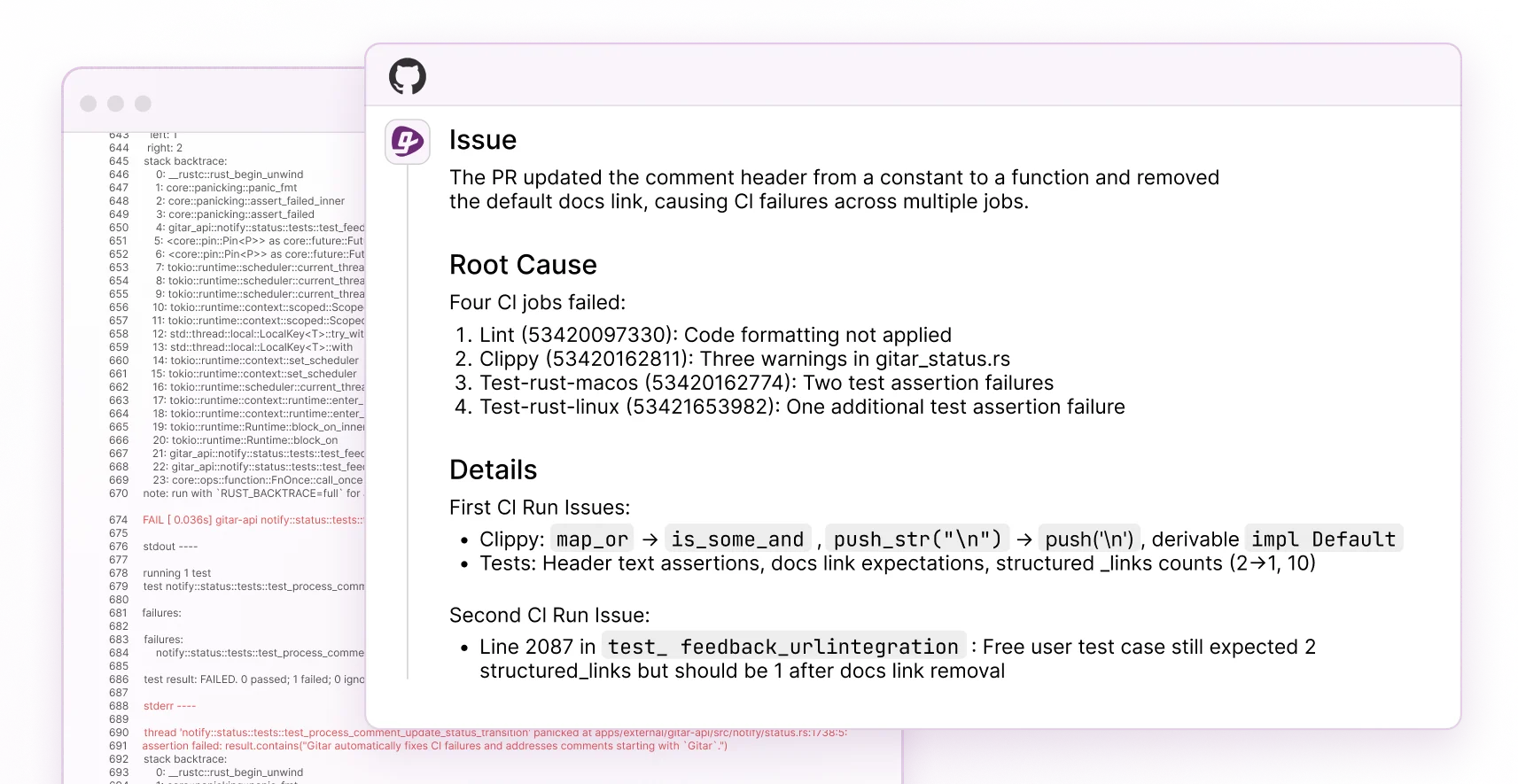
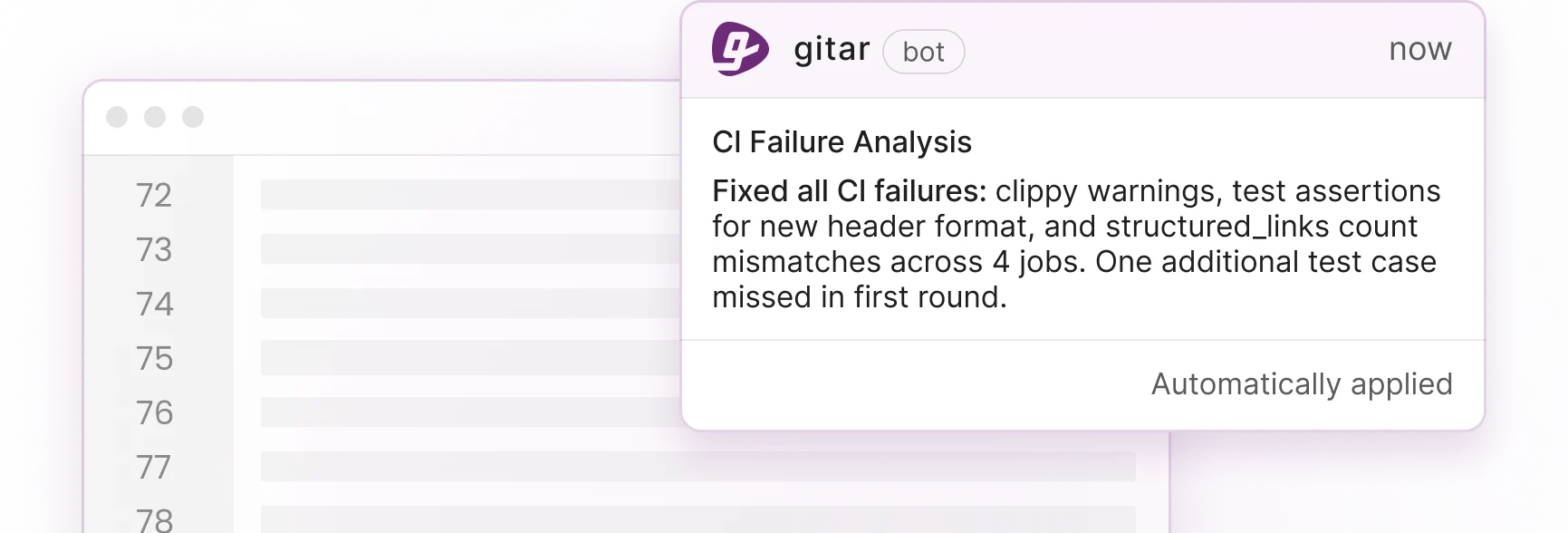
Gitar’s Healing Engine reads CI logs, generates validated fixes, and commits them automatically across GitHub, GitLab, CircleCI, and Buildkite. Teams save about 45 minutes per developer per day, which equals roughly $750,000 per year for a 20-developer team.
Many competitors charge $15 to $30 per seat for suggestion-only tools. Gitar instead offers a full 14-day free Team Plan trial with no feature limits.
- Installation: Install the Gitar GitHub App and start your trial.
- Suggestion Mode: Review and approve fixes so your team builds trust in the system.
- Auto-Commit: Turn on autonomous fixes for failure types you consider safe.
Gitar acts as an AI code review platform that actually fixes your code. It resolves CI failures, addresses review feedback, and automates development workflows while other tools stop at comments. Start Gitar’s 14-day free Team Plan trial to experience the difference between suggestions and production-ready solutions.
FAQ
Does Amazon Q integrate with CI pipelines for automated fixes?
No. Amazon Q Developer does not connect directly to CI pipelines to fix failures automatically. It provides code review suggestions in IDEs and repositories, supports code insertion, and can create GitHub PRs, but developers must review and commit changes.
Gitar, in contrast, analyzes CI logs, generates validated fixes, and commits them automatically, so it behaves as a true auto-fix system.
What are the best Amazon Q prompts for pull request reviews?
Effective Amazon Q prompts include “/q review changes only” for focusing on modifications and “/q review this PR for security and performance” for targeted checks. “/q explain this finding” gives detailed explanations, and “/q suggest AWS best practices” provides AWS-specific improvements.
These prompts work in both GitHub pull requests and GitLab merge requests and return structured feedback through threaded comments.
How does Amazon Q compare to Gitar for automated code fixes?
Amazon Q suggests changes, supports code insertion, and can open GitHub PRs after human review. Gitar automatically applies fixes and validates them against CI runs.
Amazon Q offers CI-like checks through GitHub integration but lacks direct CI integration, full auto-commit without review, and build guarantees. Gitar’s Healing Engine analyzes failure logs, uses full codebase context, validates fixes, and commits them automatically, which turns suggestions into autonomous solutions that guarantee green builds.
How can I start using Gitar for autonomous code fixes?
Getting started with Gitar takes about 30 seconds. Install the GitHub App or GitLab integration, start your 14-day free Team Plan trial, and let Gitar post dashboard comments on PRs.
Begin in suggestion mode to build confidence, then enable auto-commit for selected failure types. Gitar supports GitHub, GitLab, CircleCI, Buildkite, and other major tools with broad workflow automation.
What are the main limitations of Amazon Q for large codebases?
Amazon Q struggles with large repositories because of its 200,000-token context window. This limit causes context loss and inaccurate guesses about relevant code.
It cannot reliably analyze multi-repository systems and often misses distant parts of the codebase.
Amazon Q Developer still gives a solid starting point for AI-assisted reviews across VS Code, JetBrains IDEs, GitHub, and GitLab. Its design, however, leaves key implementation steps to developers. Amazon Q starts reviews, and Gitar finishes them autonomously. Start Gitar’s 14-day free Team Plan trial to fix code autonomously in 30 seconds. For full setup details and advanced features, visit docs.gitar.ai and review the Gitar documentation.