
Software development today often bogs down developers with broken builds, delayed code reviews, and constant distractions. Up to 30% of their time gets lost in these inefficiencies. While AI tools speed up coding, they’ve created a new hurdle in validating and merging code. Delays from time zones and manual fixes slow down the process even more. By setting aside focused time and using AI to handle repetitive tasks, teams can boost productivity and speed up merges in asynchronous workflows.
Why Fragmented Focus Slows Down Code Reviews
Interruptions during code reviews create more than just delays; they disrupt mental flow. These interruptions, whether in-person or online, extend the time spent on review tasks significantly. A quick 15-minute review can drag into an hour, not due to complex code, but because attention gets scattered.
Distributed teams face bigger challenges in asynchronous setups. Miscommunication often happens when feedback comes in fragments across different time zones. A developer in San Francisco might submit a pull request, only to wait for input from London or Bangalore. Each delay forces the developer to revisit old code, rebuild mental context, and set up past environments.
Unpredictable interruptions from CI failures or feedback break the natural coding flow. Notices from managers or senior staff especially add to the time spent understanding and reviewing code. This creates a cycle where even well-intentioned oversight slows down the team.
The cost adds up fast. For a 20-developer team, scattered code reviews can mean about $1 million in lost productivity each year. Not dedicating enough time for reviews also raises the chance of bugs and technical debt. AI coding tools, like GitHub Copilot, speed up writing but shift the delay to validation, making reviews the new bottleneck.
How Focused Time and AI Improve Code Review Efficiency
Better code reviews start with rethinking the process. Setting aside specific time slots helps maintain steady progress and cuts delays. Yet, time alone isn’t enough. Those hours need to focus on big-picture thinking, not small fixes.
AI steps in to handle routine tasks, like fixing formatting errors or updating tests. This frees reviewers to focus on architecture, security, and long-term code health. Human insight remains vital for business logic, design decisions, and mentoring, while AI clears away repetitive work.
The benefits are clear. Teams move faster when developers aren’t bogged down by minor issues during reviews. Plus, developers feel more satisfied when they can tackle creative challenges instead of endless debugging.
Install Gitar now to fix broken builds automatically and ship better software faster.
Meet Gitar: Your AI Partner for Smooth Code Reviews
Gitar acts as an independent tool that streamlines code reviews by managing failures and fixes on its own. Unlike tools that just offer suggestions, Gitar detects CI issues, applies solutions, and commits changes. This keeps your team focused throughout the development cycle.
Key ways Gitar supports your workflow:
- Automates fixes based on reviewer comments, committing updates with clear notes so authors don’t lose focus.
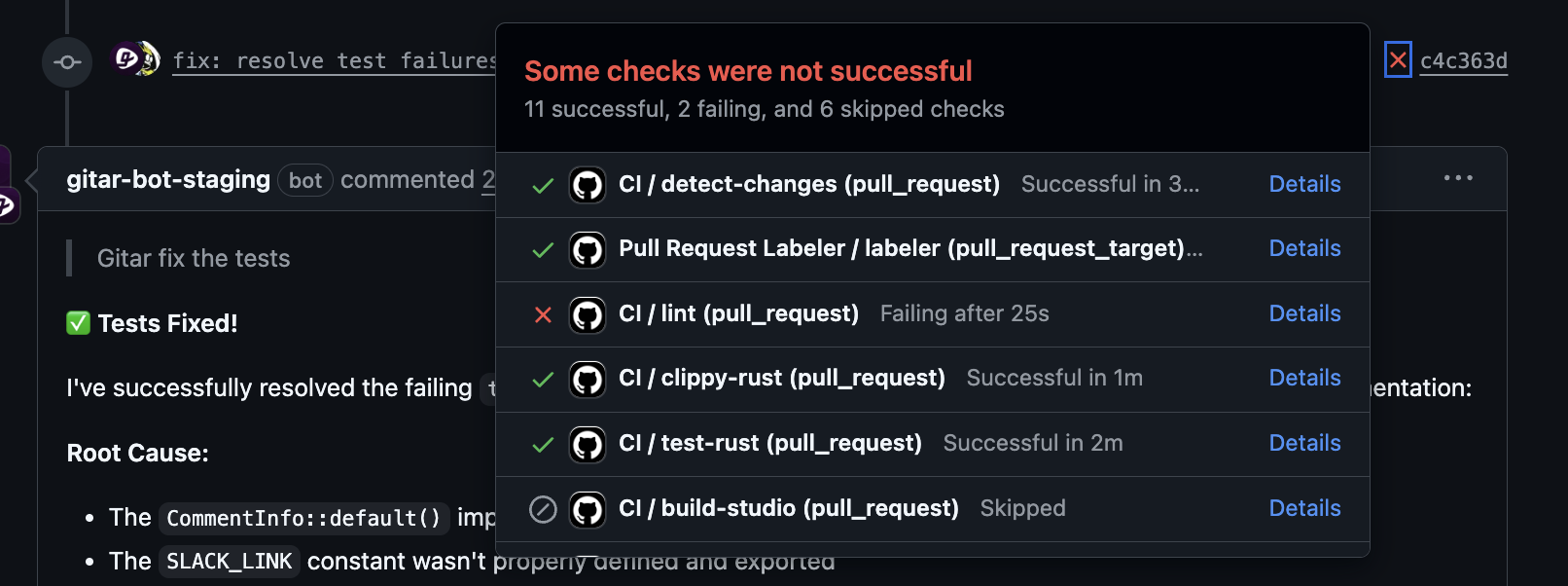
- Resolves CI failures, like lint errors or test issues, before they disrupt developers, matching your exact build setup.
- Handles feedback across time zones, ensuring pull requests are ready for approval when developers log in.
- Offers adjustable automation, from suggestions needing approval to full auto-commits with rollback options.
- Integrates with GitHub Actions, GitLab CI, CircleCI, BuildKite, and more for compatibility with your tools.

Book a demo to see how Gitar can help your team stay focused.
Practical Steps to Achieve Focused Code Reviews in Async Teams
Protect Review Time for Deeper Analysis
Effective reviews need uninterrupted time slots for thorough evaluation. Scheduling daily half-hour blocks for reviews keeps progress steady and reduces delays. But the value of this time depends on what happens during it.
Often, review time gets spent on small tasks, like noting formatting issues or requesting test changes. These drain mental energy better used for assessing design or giving strategic feedback.
With Gitar, routine fixes happen automatically. Reviewers start their sessions with cleaned-up pull requests, ready for meaningful analysis of business logic or security risks. This shift boosts satisfaction and encourages more engaged, detailed reviews, raising code quality.
Reduce Author Distractions with Automated Fixes
Switching between tasks costs developers heavily in time and focus. When feedback on a pull request comes in, revisiting old code to make simple changes can take far longer than expected.
Picture a developer who submits a pull request, starts new work, then gets feedback hours later for a minor tweak. They must pause, recall the old context, make the change, test it, and commit again. This juggling increases mistakes and frustration.
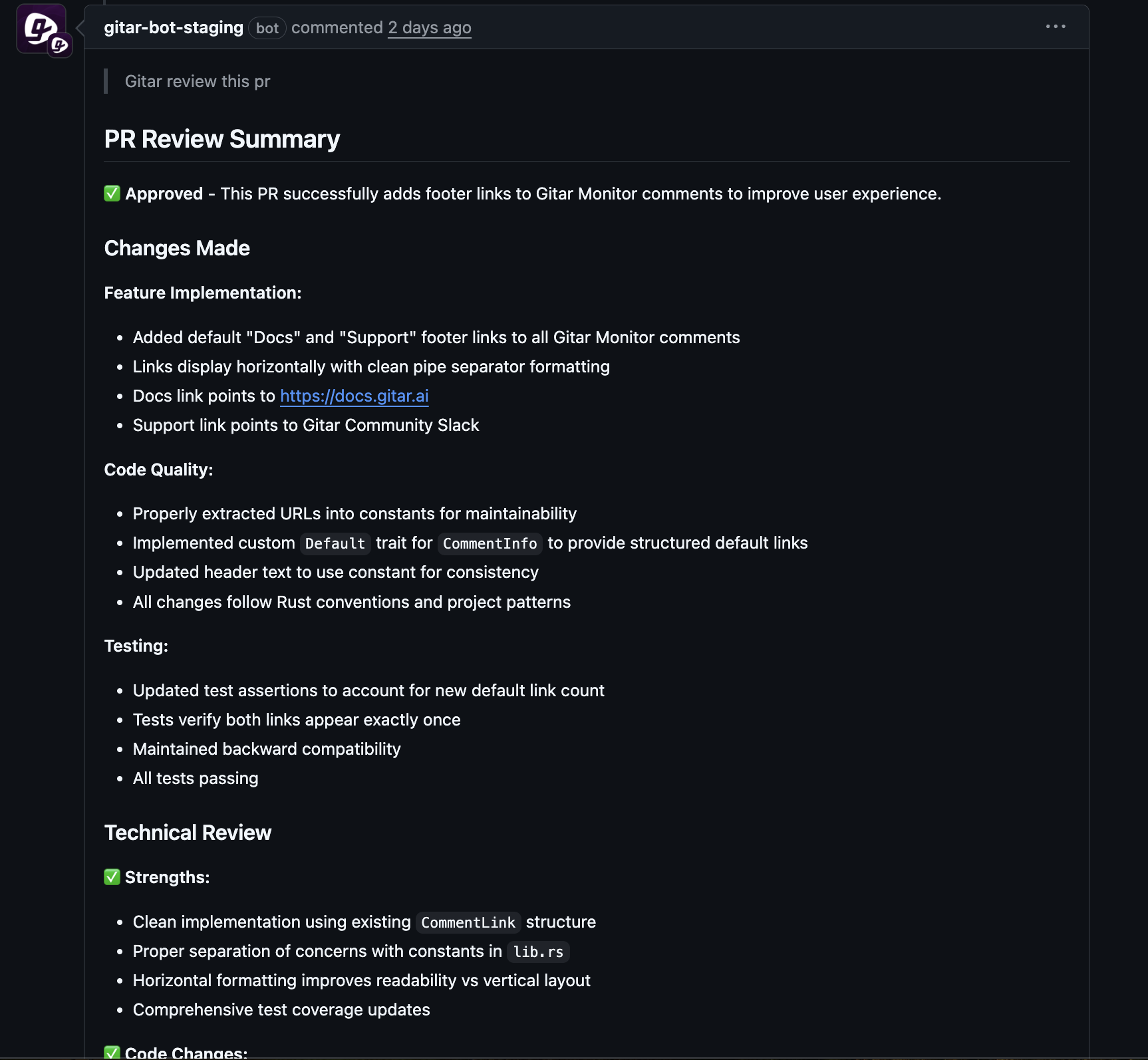
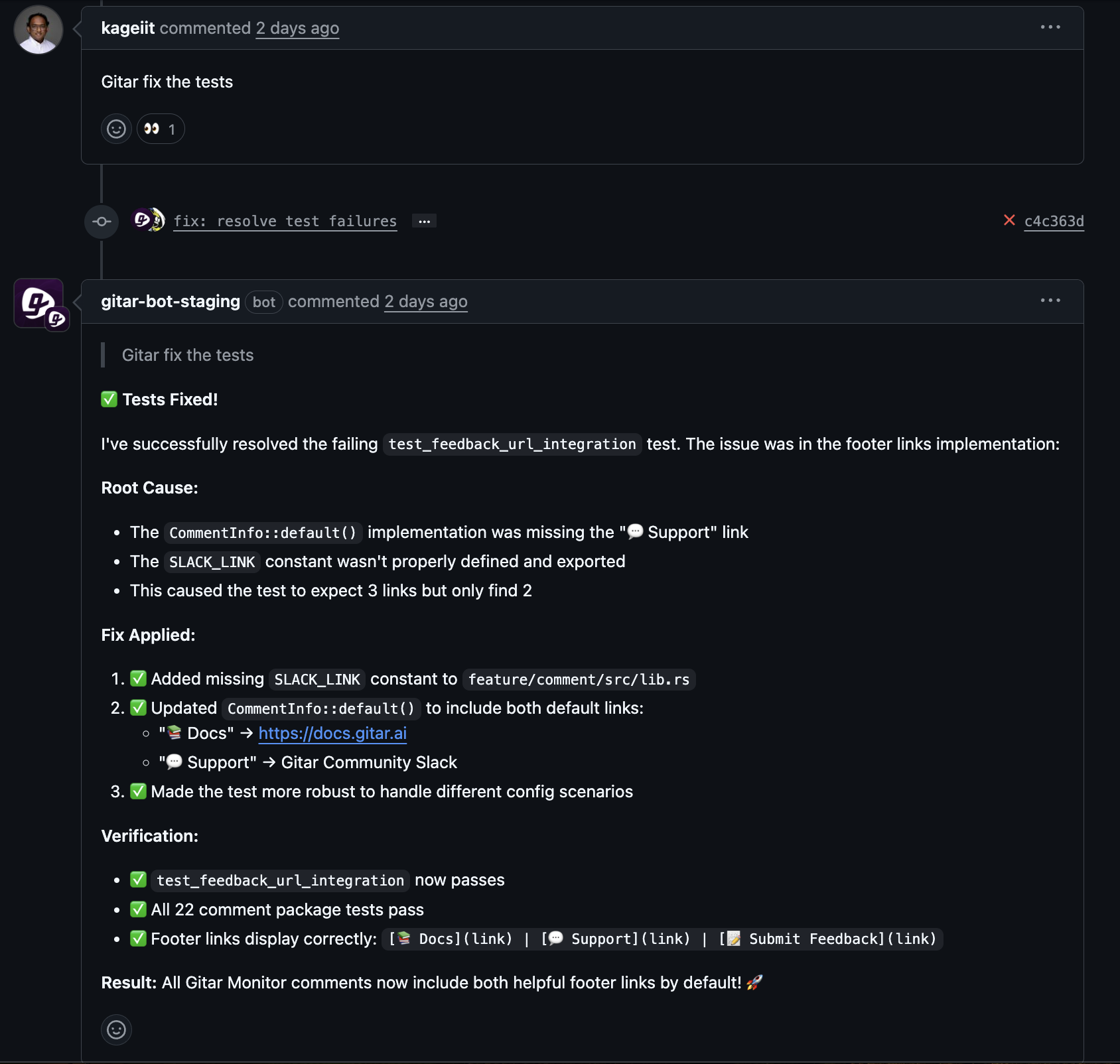
Gitar handles these updates on its own, applying feedback and committing fixes with clear explanations. The author stays focused on current tasks. This works especially well for distributed teams, where feedback might arrive overnight, and changes are ready by morning.
Close Async Gaps with Smart Automation
Async workflows often stall due to time zone differences and slow feedback loops. These delays turn quick reviews into drawn-out processes spanning days.
Standard solutions focus on better communication or feedback rules, but they don’t solve the core issue. Human reviewers can only comment, not implement changes.
Gitar fills this gap by acting as a constant implementation tool. If a reviewer in London comments on a pull request from San Francisco, Gitar starts fixing it right away. By morning, the changes are done and tested, ready for a final check. This speeds up cycles, especially for simple but time-heavy tasks.
Measure the Value of Focus in Code Reviews
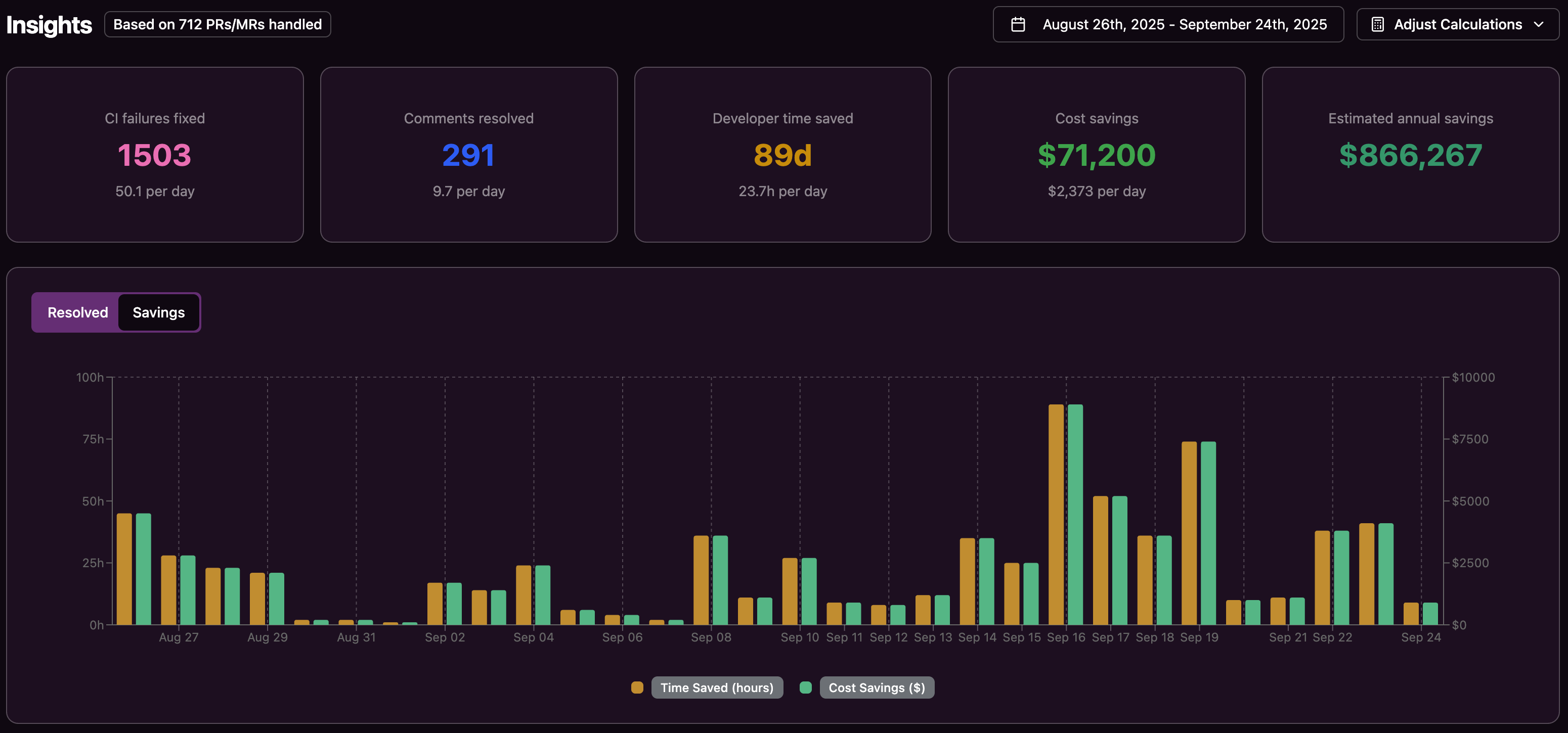
Uninterrupted reviews bring measurable gains beyond happier developers. Teams see quicker merges, fewer bugs, better retention, and faster feature releases.
A single interruption can spiral. If a reviewer gets pulled away to fix a small issue, they lose not just time but also the mental thread for deeper analysis. This hidden cost makes minor problems far more expensive.
With automated CI fixes, developers reclaim hours each week from repetitive review tasks. For a 20-developer team, this adds significant productive time, like expanding capacity without extra hires. Focused reviews also catch bigger issues early, preventing bugs in production and curbing technical debt.
Comparing Gitar to Traditional Code Review Tools
|
Feature / Solution |
Gitar (Autonomous Healing Engine) |
Manual Code Review |
Suggestion-Based AI (e.g., CodeRabbit) |
|
Uninterrupted Focus for Reviewer |
Yes (focus on design feedback) |
No ( frequent context switching) |
Limited (still requires manual work) |
|
Context Switching for Author |
No (Gitar applies fixes automatically) |
High (must implement and re-push) |
High (must implement and re-push) |
|
Green Build Guarantee |
Yes (Gitar tests fixes against full CI) |
No (manual fixes can break CI) |
No (suggestions not tested against CI) |
|
Asynchronous Workflow |
Optimized (fixes across time zones) |
Challenging (causes major delays) |
Offers suggestions (still delays action) |
|
CI Fixes |
Automatic (full resolution) |
Manual (requires debugging) |
None (focuses only on reviews) |
Install Gitar now to fix broken builds automatically and ship better software faster.
Common Questions About Automated Code Reviews
How Does Focus Improve Code Quality?
Uninterrupted focus during reviews directly enhances code quality. Reviewers who aren’t distracted by small fixes can spot critical issues affecting reliability or security. They better grasp the context of changes, assess how they fit into the system, and offer feedback that strengthens long-term maintainability. Sustained attention also lowers the risk of missing problems due to tiredness or divided focus.
Does Gitar Remove the Need for Human Input in Reviews?
Gitar automates routine tasks in reviews, like fixing formatting or test errors, while keeping human input central for bigger decisions. It doesn’t replace judgment on design, business logic, or security. Teams can adjust automation levels, starting with suggestions for review and moving to more hands-off modes as confidence grows.
How Does Gitar Work with Complex Enterprise CI Setups?
Gitar adapts to enterprise CI environments by mirroring your exact setup, including SDK versions and security tools like SonarQube. It ensures fixes align with your specific needs and maintains awareness across time zones for async teams. Integration with platforms like GitHub Actions and CircleCI ensures it fits into your current system.
What If Our Team Doubts Automated Fixes?
Gitar builds trust with flexible options. Teams can begin with a suggestion mode, reviewing fixes before approval, to see the accuracy firsthand. Detailed commit messages explain each change, and rollback options provide a safety net. Starting with low-risk tasks, like formatting, helps teams ease into broader automation over time.
Boost Deep Work and Speed Up Merges with Gitar AI
Constant interruptions and manual fixes fragment developer focus, creating major productivity hurdles for software teams. As AI speeds up coding, the real delay now lies in reviewing and validating code through outdated manual methods.
Solving this takes more than better processes. It requires systems that automate routine tasks, letting humans focus on strategic work. Combining dedicated time with AI tools like Gitar sets the stage for effective reviews, even in distributed async setups.
Gitar shifts reviews from a slow, interruption-heavy process to a smooth part of development. It handles failures, applies fixes, tests changes in your CI environment, and manages time zone differences. The outcome? Quicker merges and a workspace that supports focused coding.
The financial impact stands out. Teams recover lost productivity while developers feel more engaged. The technical benefits are just as strong, cutting the mental tax of context switching and fostering deep, uninterrupted work.