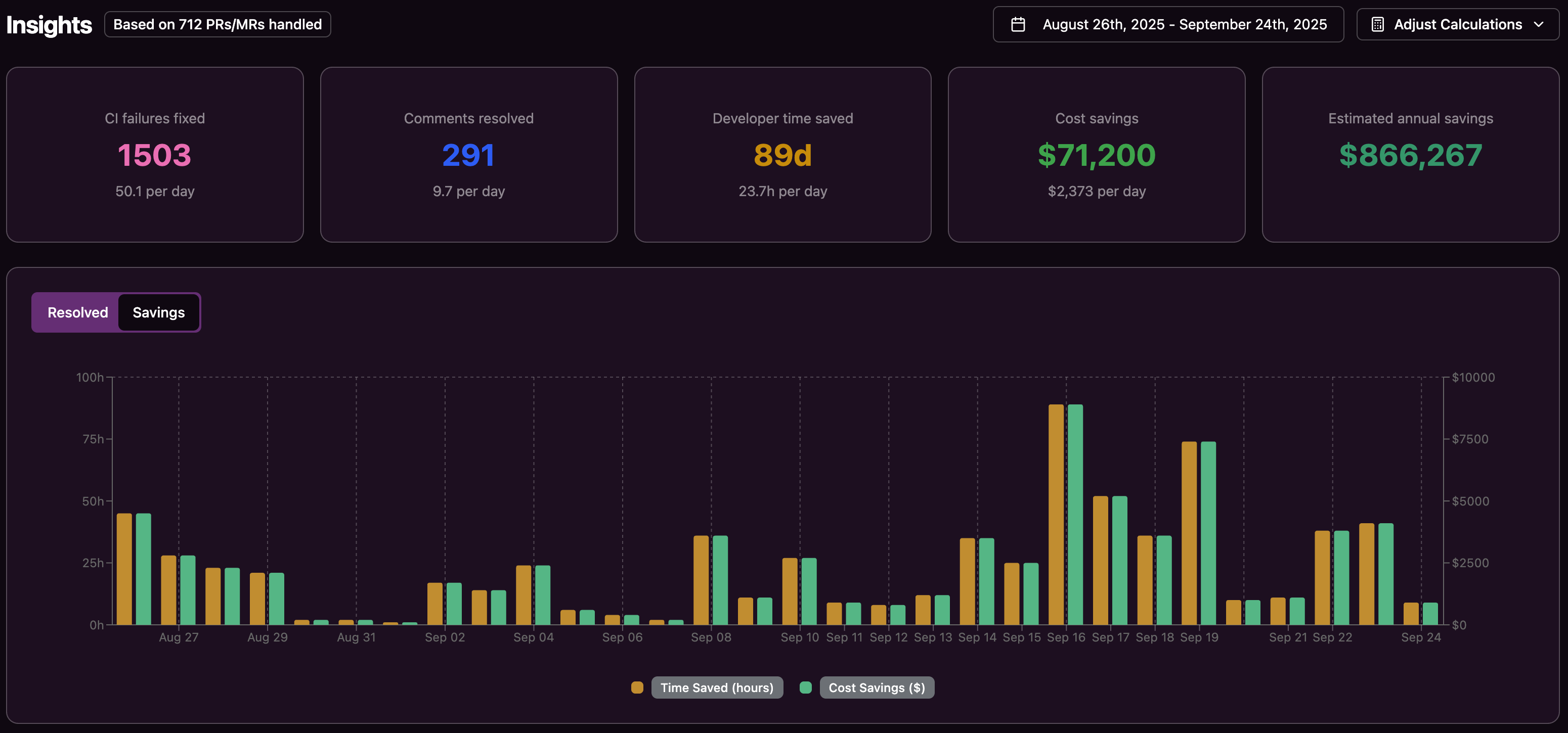
Software development teams face a growing productivity challenge in the CI/CD pipeline. While AI tools like GitHub Copilot speed up code creation, developers still spend significant time manually fixing broken builds, addressing flaky tests, and responding to feedback, as noted in recent surveys on CI failure debugging. This repetitive work disrupts focus and slows down delivery.
Self-healing continuous integration (CI), powered by AI automation, offers a solution. Gitar, an AI agent, detects, analyzes, and resolves CI issues in real time. This hands-off approach keeps developers focused and accelerates project timelines. Ready to simplify your pipeline? Install Gitar now to fix builds automatically and deliver quality software faster.
Why Manual CI Maintenance Slows Teams Down
CI failures create a frustrating loop for developers. You submit a pull request, only to face build errors from flaky tests, script issues, or dependency conflicts, as outlined in common CI failure causes. Fixing these involves reading error logs, adjusting code, and waiting for the pipeline to rerun, costing valuable time.
These issues impact entire teams, not just individuals. Monolithic builds that run all steps sequentially often fail in cascades, especially with inconsistent environments or complex dependencies, according to analysis of CI/CD bottlenecks. As AI speeds up code writing, the volume of pull requests grows, amplifying the risk of failures during validation.
Silent failures add another layer of risk. These undetected issues can lead to faulty deployments, requiring deep investigation to resolve, as detailed in reports on silent pipeline failures. For distributed teams, such delays can stretch fixes across days due to time zone differences.
What Gitar Offers: AI-Powered CI Automation
Gitar redefines CI maintenance with self-healing automation. Instead of developers manually addressing failures, this AI agent monitors pipelines and applies fixes instantly, keeping workflows uninterrupted.

Explore how Gitar streamlines your process. Install Gitar today to automate fixes and boost delivery speed.
How Gitar Solves CI Challenges with Key Features
Gitar goes beyond identifying issues by actively fixing them. Here are the core capabilities that make it effective for CI maintenance:
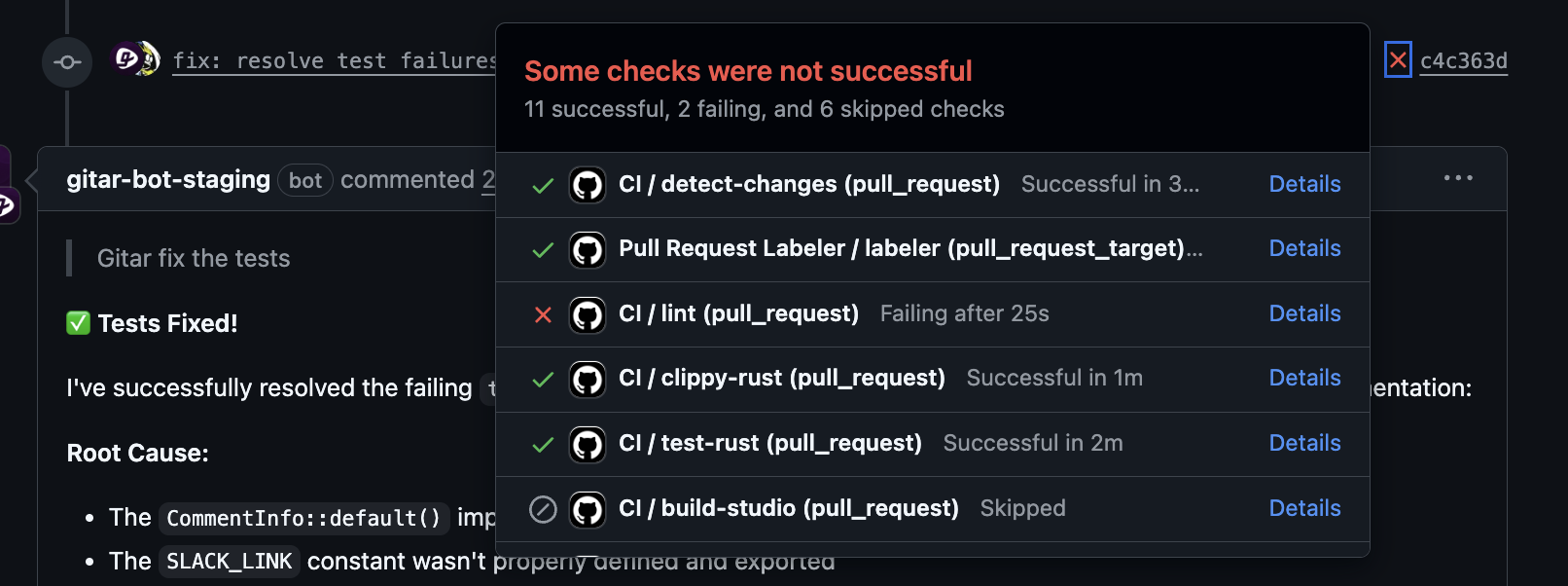
- Complete Fix Implementation: Gitar applies fixes, runs them through your CI tests, and confirms success before delivering a passing build.
- Environment Accuracy: It mirrors your specific setup, including SDKs, dependencies, and tools like SonarQube, ensuring fixes fit your context.
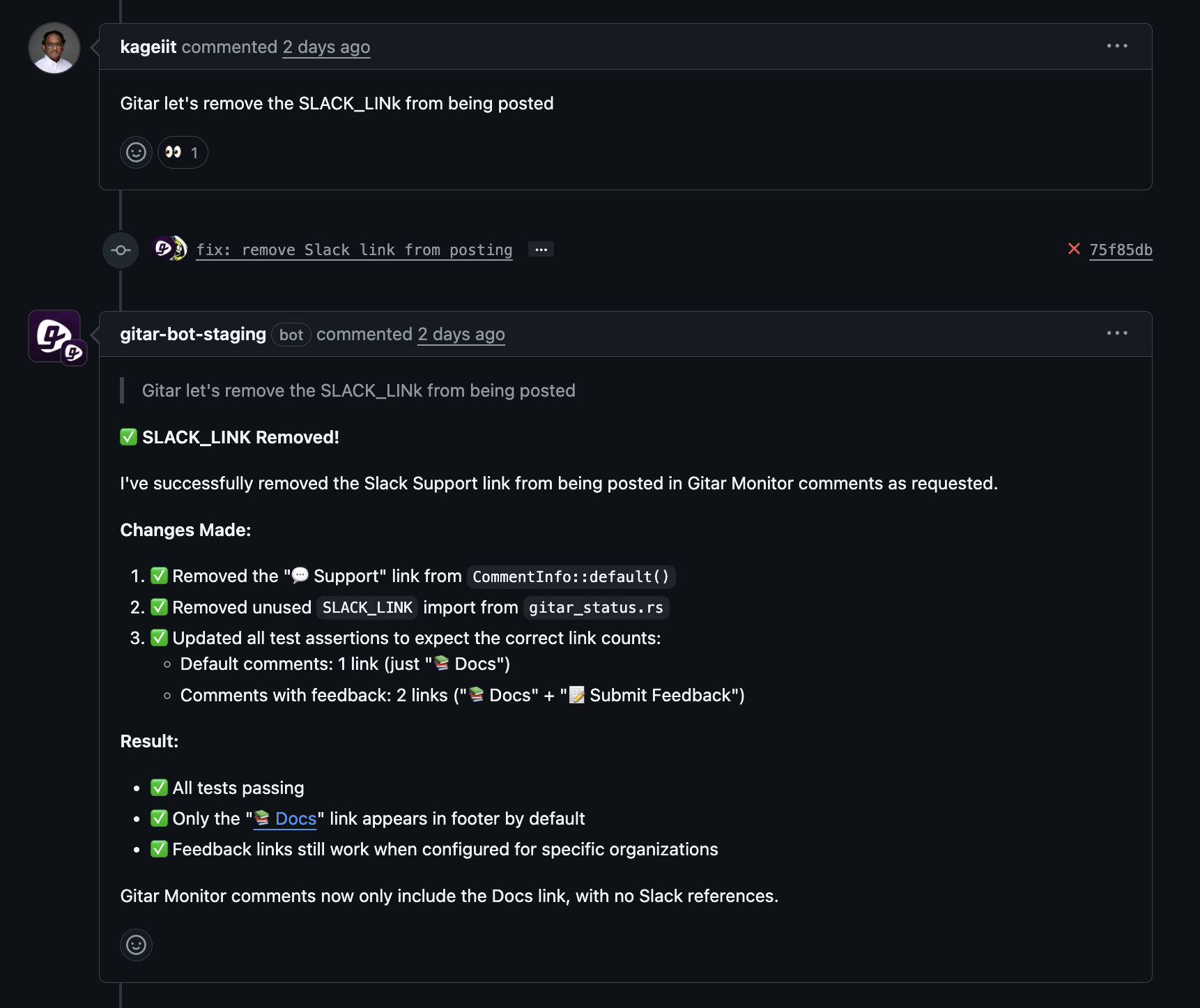
- Feedback Action: Gitar interprets reviewer comments, makes requested changes, and documents updates for clarity.
- Flexible Control: Choose between ‘Conservative Mode’ for suggested fixes or ‘Aggressive Mode’ for automatic commits with rollback options.
- Platform Compatibility: Works with GitHub Actions, GitLab CI, CircleCI, and more, fitting into your existing systems.
How Gitar Automates CI Maintenance for Better Results
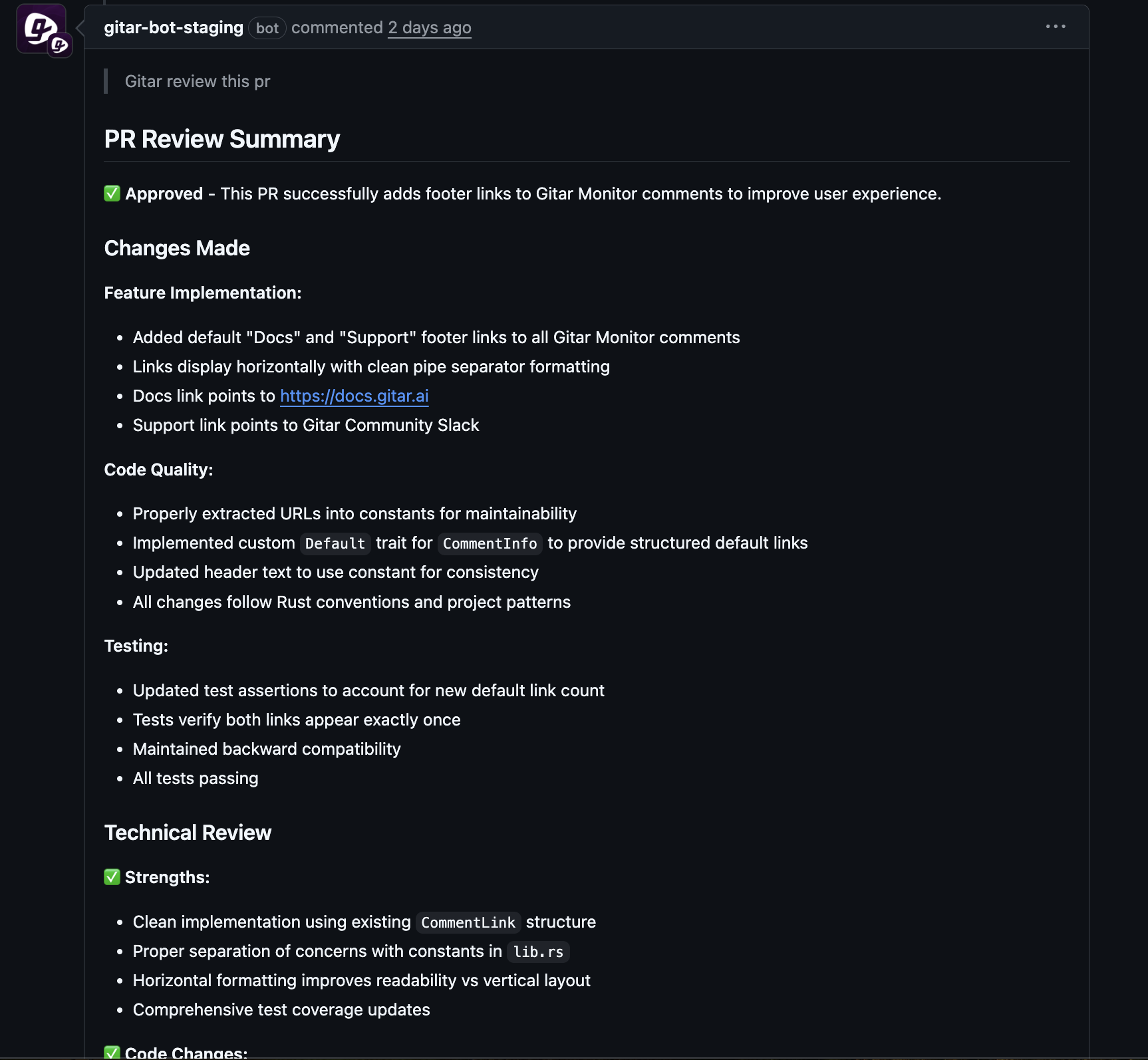
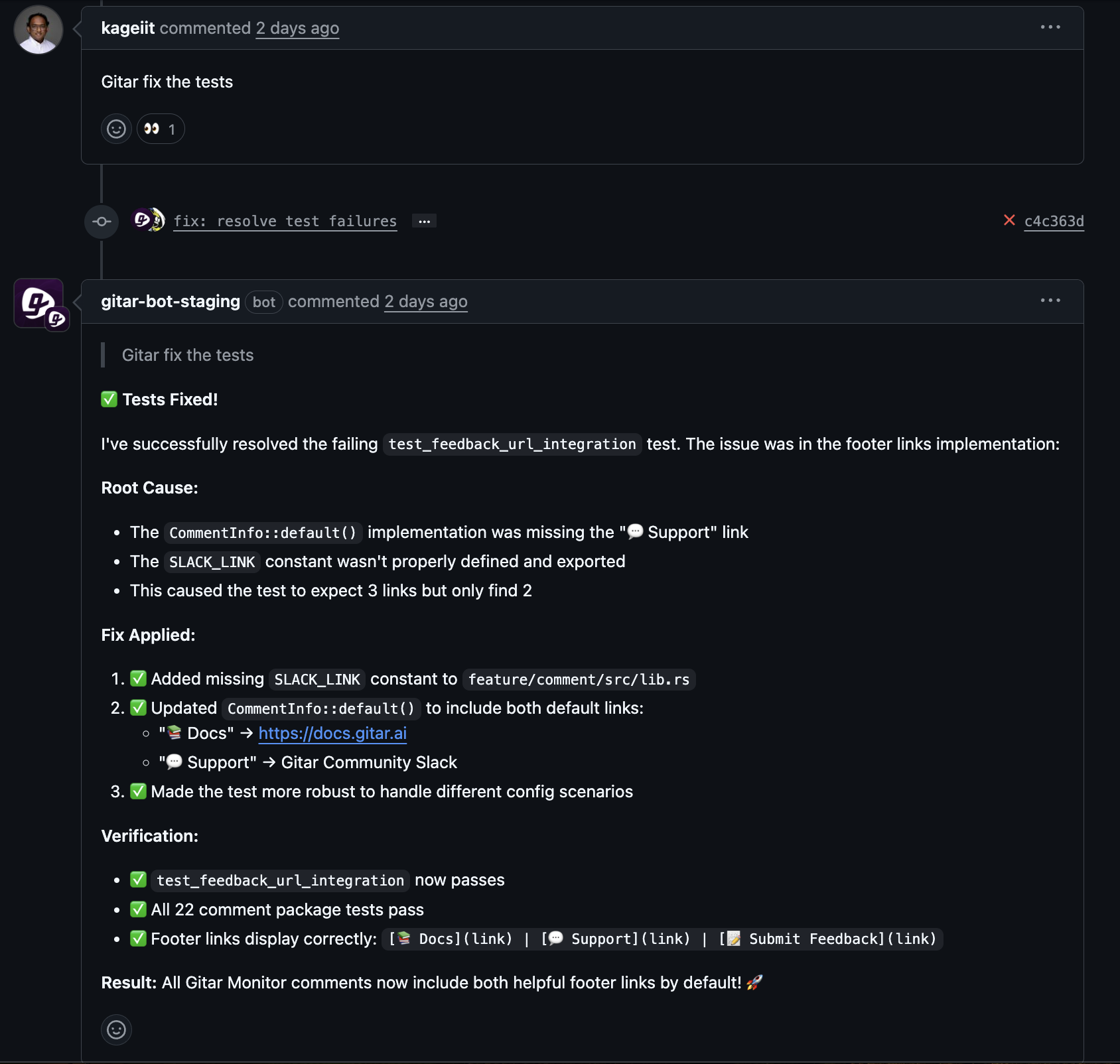
Gitar shifts CI maintenance from manual fixes to automated resolution. When a pipeline fails, it analyzes the issue, creates a solution, and tests it against your full workflow. This reduces downtime and keeps projects moving.
Common issues handled include:
- Linting Errors: Fixes code style issues automatically.
- Build Problems: Corrects dependency or script errors.
- Test Issues: Updates snapshots and resolves broken assertions.
Who Benefits from Gitar’s Self-Healing CI?
For Developers: Gitar prevents interruptions from CI failures, letting you stay focused on coding. It handles repetitive tasks like linting fixes, freeing up time for meaningful work. Pull requests move to merge faster, speeding up delivery.
For Engineering Leaders: Gitar boosts team output by removing pipeline delays. It cuts costs, with potential savings of around $1M yearly for a 20-developer team. Plus, reducing tedious tasks improves morale and retention.
For DevOps Teams: Pipeline reliability improves with less manual oversight. Gitar manages complex setups, easing maintenance. New hires onboard faster without needing to learn intricate CI configurations.
Gitar vs. Traditional CI Maintenance: A Clear Difference
|
Feature / Approach |
Manual Fixing |
AI Suggestion Tools |
Gitar (AI Agent) |
|
Problem Detection |
Manual log review |
Automatic, needs review |
Automatic and precise |
|
Solution Creation |
Manual coding |
AI suggestions |
AI-generated fix |
|
Validation Process |
Manual CI rerun |
Manual CI rerun |
Automated CI check |
|
Fix Application |
Manual action |
Suggested action |
Autonomous fix |
|
Developer Focus |
Frequently disrupted |
Still disrupted |
Uninterrupted |
|
Fix Duration |
Hours to days |
Minutes to hours |
Seconds to minutes |
|
Cost and Delay |
High labor, slow releases |
Moderate labor cost |
Low cost, fast delivery |
Ready to cut delays and costs? Install Gitar now to automate CI fixes and ship software faster.
Common Questions About Gitar and Self-Healing CI
How does Gitar manage unique enterprise CI setups? It replicates your exact environment, including SDKs and tools like SonarQube, ensuring fixes work in your specific context. This handles complex builds and security integrations effectively.
What sets Gitar apart from other AI code review tools? Unlike tools that only suggest fixes, Gitar applies solutions and validates them through your full CI pipeline. This eliminates manual steps, delivering a passing build directly.
Can we control Gitar’s automation level? Yes, start with ‘Conservative Mode’ for suggested fixes needing approval. Move to ‘Aggressive Mode’ for automatic commits with rollback options as trust builds.
Does Gitar address flaky tests? Absolutely. It fixes timing issues, updates outdated snapshots, and corrects broken assertions, reducing a major source of pipeline delays.
How does Gitar fit into existing workflows? It integrates as a GitHub or GitLab app, monitoring pipelines without needing process changes. Compatible with major CI platforms, Gitar works in the background seamlessly.
Ready to simplify CI maintenance? Install Gitar now to fix builds automatically and improve delivery speed.
Why Self-Healing CI with Gitar Is the Future
AI has sped up code creation, but validation and integration remain bottlenecks. Manual fixes and suggestion-based tools can’t keep pace with modern development demands. Gitar’s self-healing CI changes this by automating maintenance, reducing friction in pipelines.
Teams gain more than just speed. Developer satisfaction rises with less repetitive work. Delivery times shorten, and costs drop by minimizing manual effort. For leaders, Gitar offers a way to increase output while cutting operational expenses.
Adopting self-healing CI now positions teams ahead in a competitive field where speed and reliability drive success. Don’t let pipeline issues slow you down. Install Gitar today to automate fixes and transform your CI process.