
Continuous Integration (CI) build failures slow down software development, waste engineering time, and delay releases. Complex CI/CD pipelines and debugging challenges often create bottlenecks. This article covers how AI-driven automation can identify, fix, and validate CI issues, helping teams maintain productivity and streamline workflows.
Why CI Build Failures Slow Down Your DevOps Pipeline
Broken Builds and Flaky Tests Drain Resources
CI failures, like broken builds, are a common frustration for developers. These issues often stem from syntax errors, mismatched dependencies, or setup problems, halting progress in the pipeline. Debugging becomes even tougher when failures happen in CI environments that differ from local setups, leading to the familiar “it works on my machine” dilemma.
Flaky tests add another layer of difficulty. They fail inconsistently due to timing issues or external dependencies, passing locally but failing in CI. This unpredictability wastes time as the same code might pass one run and fail the next. Such intermittent issues are a major cause of CI job failures in large-scale settings.
These failures don’t just impact one developer. They block entire teams, delay releases, and create a growing backlog of unresolved work.
Context Switching Slows Developers Down
Submitting a pull request (PR) rarely means the job is done. Developers often move to other tasks, only to be pulled back by CI failures or review feedback. Switching focus to fix a small issue might take 30 minutes, but the mental shift can cost an hour of productive time.
AI-generated code adds to this challenge. While it speeds up writing, it can increase the volume of PRs and tests, slowing down validation. Faster coding doesn’t always mean faster delivery when CI bottlenecks persist.
Financial Losses and Delayed Releases
CI failures carry a steep cost beyond debugging time. Consider a team of 20 developers spending one hour daily on CI and review issues:
- Time Lost: 20 developers x 1 hour/day x 250 work days = 5,000 hours per year
- Cost Impact: 5,000 hours x $200/hour average rate = $1 million in lost productivity annually
These failures delay projects for many organizations, extending the time from commit to merge. Late releases can mean missed market opportunities, reduced competitive edge, and significant revenue impacts. Beyond costs, constant debugging leads to developer burnout, inconsistent releases erode customer trust, and slow responses to market needs hurt agility.
Ready to stop CI failures from slowing you down? Install Gitar now to automate fixes for broken builds.
Meet Gitar: AI-Powered Fix for CI Build Failures
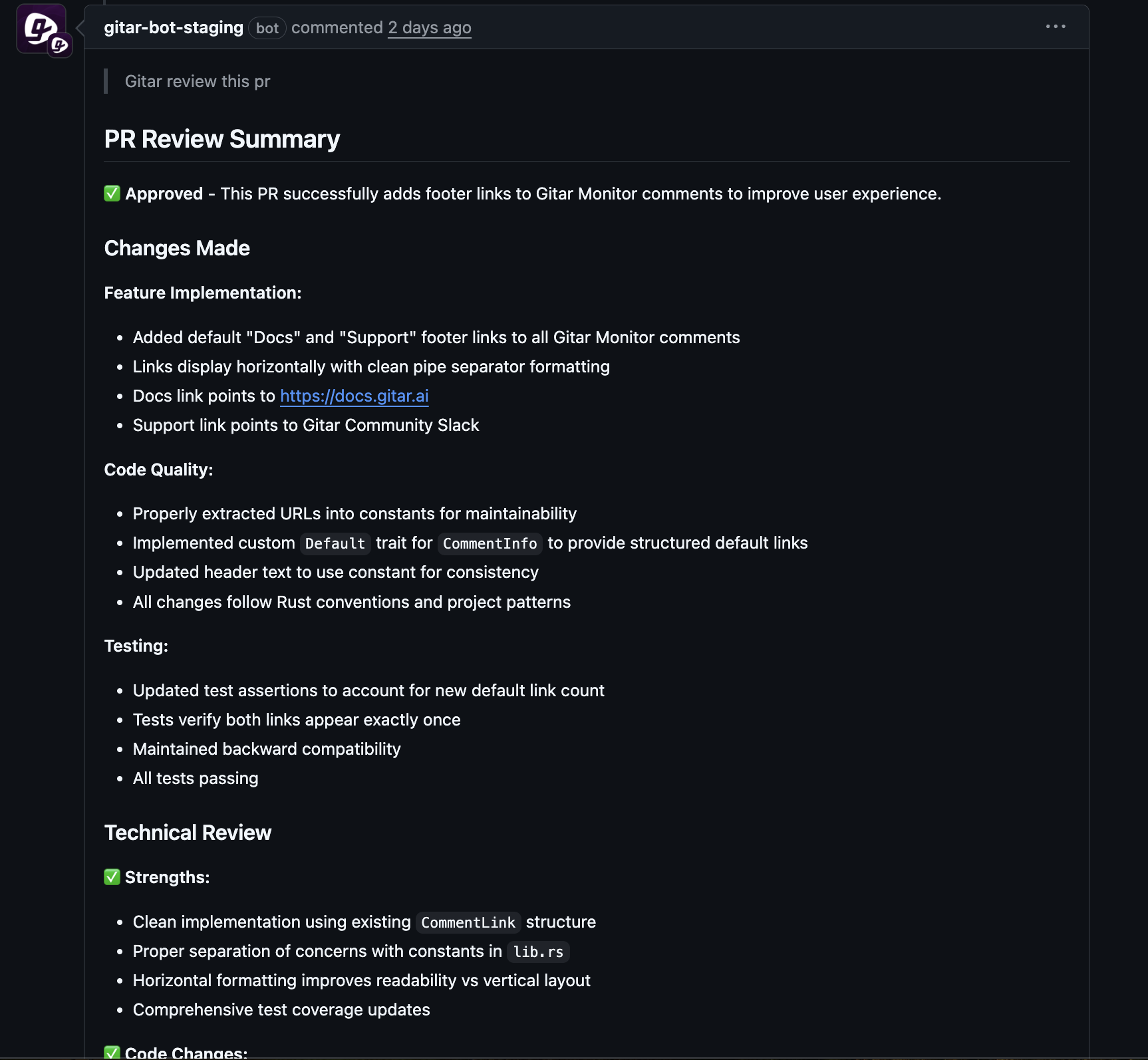
Gitar is an AI agent that automatically resolves failing CI pipelines and handles code review feedback, saving developers hours of manual effort. Unlike tools that only offer suggestions, Gitar acts independently, applying fixes, validating them in CI workflows, and keeping builds stable without developer intervention.
When a PR faces CI failure or review comments, Gitar steps in. It analyzes the issue, creates a solution, and updates the PR with the fix. This turns a time-intensive manual process into a hands-free, automated resolution.

How Gitar Solves CI Issues Effectively
Gitar offers practical features that go beyond basic recommendations. Here’s what it can do for your team:
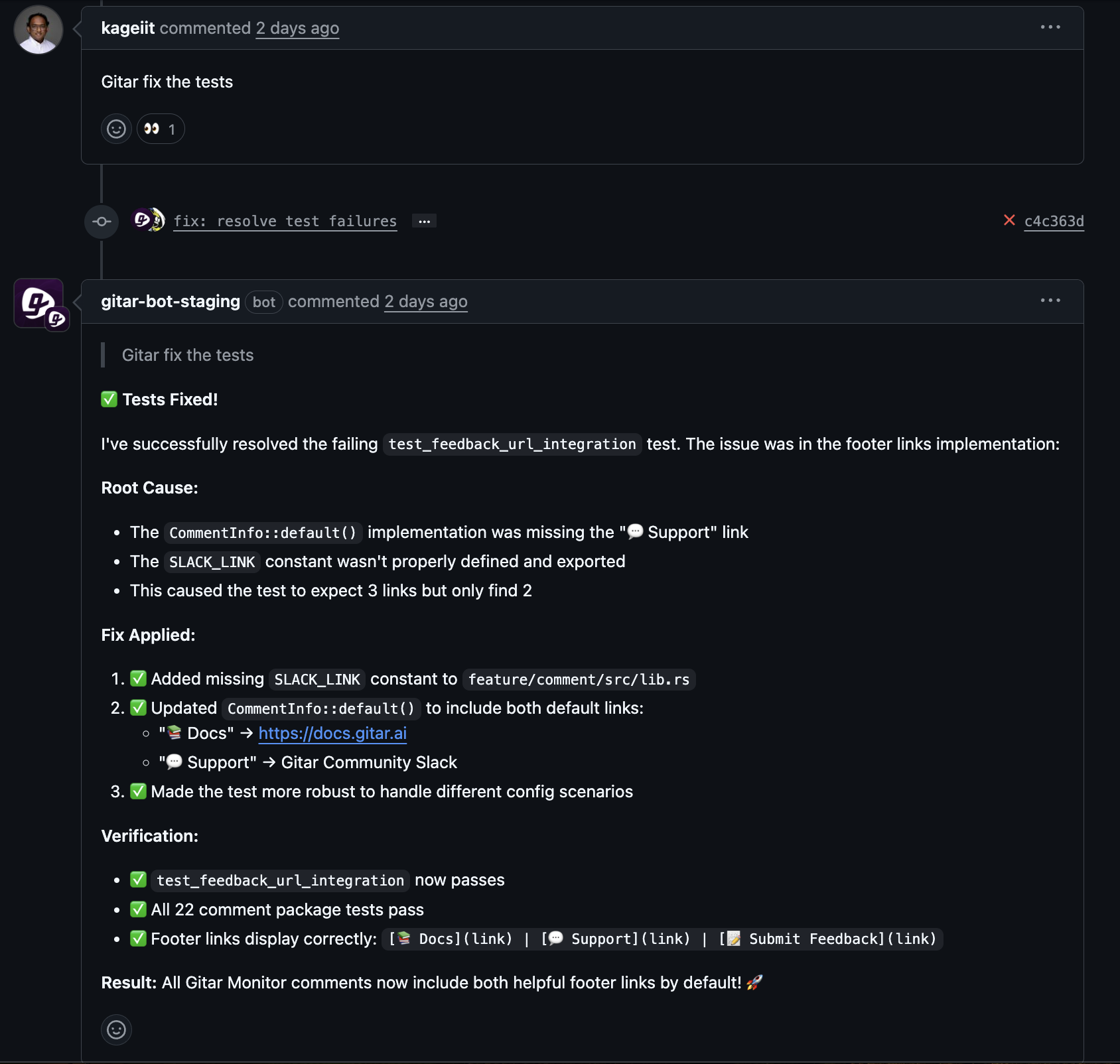
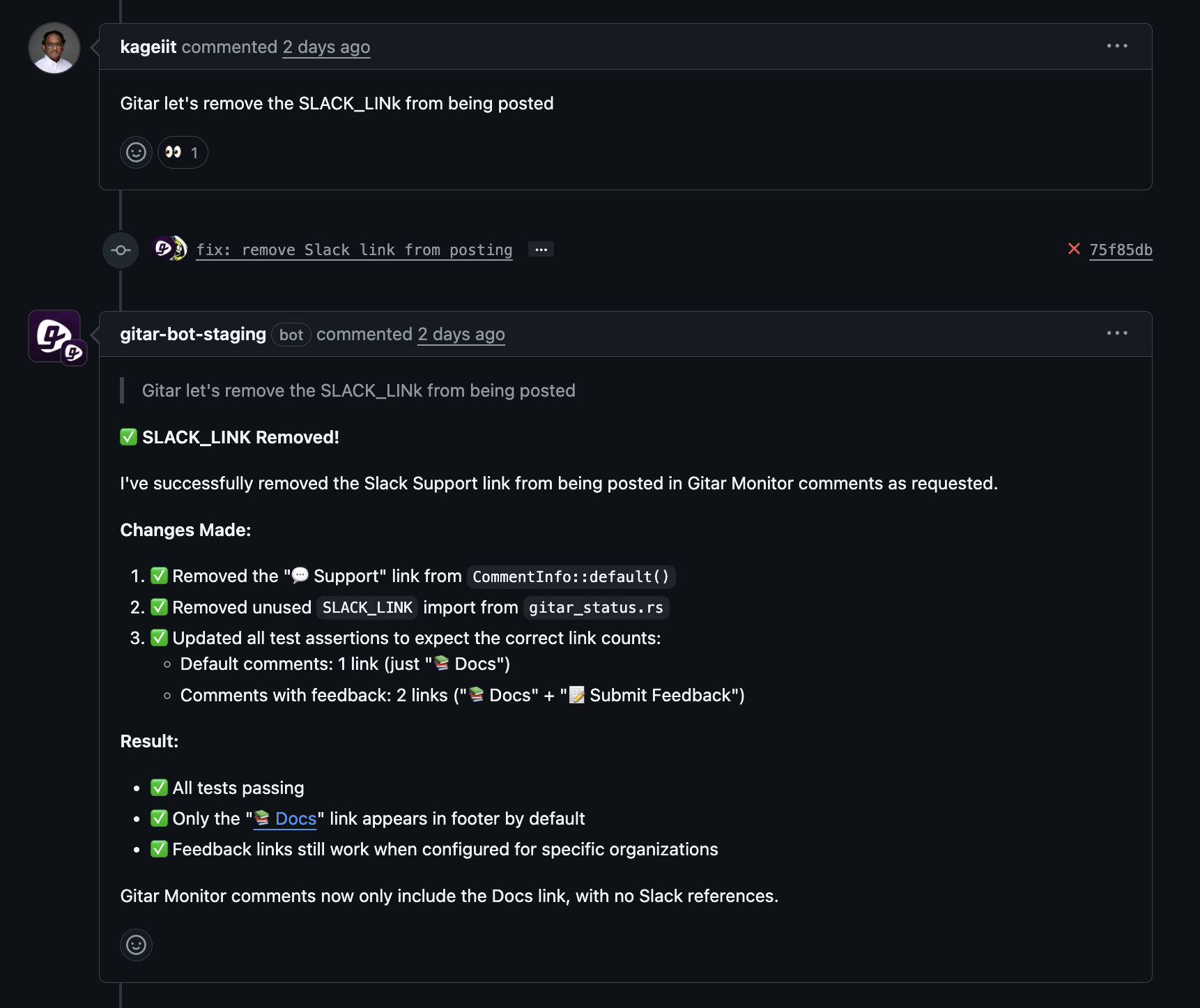
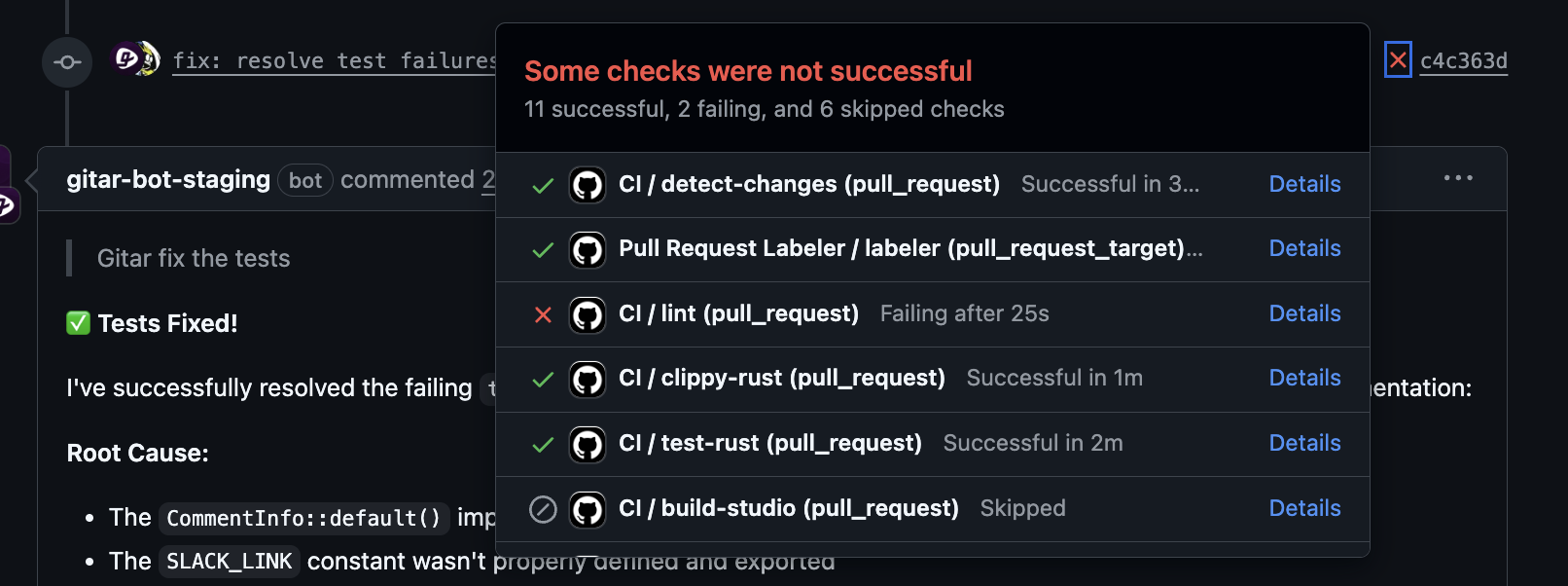
- Complete Fixes: For CI failures like linting errors or test issues, Gitar identifies the root cause, applies a code change, and commits it to the PR branch.
- Accurate Environment Matching: It replicates complex setups, including specific software versions and third-party tools, to ensure reliable fixes.
- Customizable Automation: Teams can choose conservative mode for suggested fixes needing approval or aggressive mode for direct commits with rollback options.
- Wide Platform Compatibility: Gitar integrates with GitHub Actions, GitLab CI, CircleCI, and BuildKite, supporting diverse workflows.
- Code Review Support: Reviewers can request Gitar to review PRs or make specific changes, like removing features, with automated commits and clear explanations.
Want to experience automated CI fixes? Install Gitar now to resolve broken builds effortlessly.
How Gitar Improves Your CI/CD Workflow
Keep Developers Focused by Removing Manual Fixes
Gitar handles CI issues before they disrupt developers, preserving focus on coding. If a linting error pops up, Gitar fixes and commits the solution, often before anyone notices. This keeps developers in their creative zone, free from routine debugging.
For distributed teams, the impact is even bigger. Gitar resolves issues overnight, so developers start their day with stable builds instead of a list of problems to fix, no matter the time zone.
Speed Up Merges with Consistent Build Success
Gitar cuts down the time from commit to merge by fixing CI failures automatically. Developers move from a repetitive cycle of pushing and fixing to a smooth push-and-merge process. Faster cycles get features to users sooner and enable quick responses to business needs.
Scale CI Reliability for Large Teams
Enterprise CI setups often involve complex dependencies and multiple tools. Gitar manages these by matching exact environments and ensuring fixes work across workflows. This reduces costs from failed CI runs and keeps pipelines stable through ongoing monitoring and automated fixes.
Improve Team Morale and Onboarding
Eliminating repetitive CI tasks boosts developer satisfaction. Focusing on meaningful work instead of debugging reduces stress and improves retention. For new hires, Gitar simplifies learning curves by handling CI complexities, letting them contribute to projects faster.
Gitar vs. Other AI Tools: Automation That Works
Many AI tools offer suggestions, but Gitar stands out by automatically applying and validating fixes. Here’s how it compares:
|
Feature |
Gitar (Autonomous Fixes) |
AI Review Tools |
On-Demand Fix Tools |
|
CI Failure Resolution |
Automatic Fixes with Validation |
Suggestions Only |
Requires Manual Activation |
|
Environment Awareness |
Full Replication |
Limited Context |
Basic Context |
|
Action on Issues |
Applies and Tests Fixes |
Recommends Changes |
Uses Client CI Resources |
|
Impact on Workflow |
No Interruptions |
Needs Manual Effort |
Disrupts for Activation |
While other tools provide advice or require manual steps, Gitar automates the entire process across multiple CI platforms. It offers flexibility with modes for suggestions or direct fixes.
See the value of real automation. Install Gitar now to fix builds without the hassle.
Common Questions About AI-Driven CI Fixes
What Does Self-Healing CI Mean with Gitar?
Self-healing CI is a system that detects and fixes issues automatically. Gitar monitors CI runs, analyzes failures, creates solutions, validates them, and updates PRs. This turns hours of manual work into a quick, automated process, often resolving issues before developers notice.
How Does Gitar Manage Complex Enterprise CI Setups?
Gitar replicates detailed enterprise environments, including specific software versions and third-party scans. This ensures fixes are compatible with unique workflows and maintain reliability across large-scale systems.
Can Teams Rely on Gitar’s Automated Fixes?
Gitar builds trust with customizable settings. Start with a mode where fixes are suggested for approval. As confidence grows, switch to direct commits with options to revert changes if needed.
How Does Gitar Help Distributed Teams with CI Issues?
For teams across time zones, Gitar resolves CI failures and review feedback instantly. A reviewer can leave comments, and Gitar updates the PR right away, ensuring no delays for the developer the next day.
Which CI Failures Does Gitar Fix Automatically?
Gitar addresses common issues like linting errors, test failures, and build problems from missing dependencies or script issues, saving significant debugging time.
Conclusion: Streamline CI/CD with Gitar’s Automation
Manually fixing CI failures wastes time and money, slowing down modern software delivery. Gitar shifts teams from manual debugging to automated solutions, speeding up releases and improving developer experience.
By automating CI fixes, Gitar helps teams save effort, deliver faster, and maintain stability at scale. Stop losing productivity to broken builds.
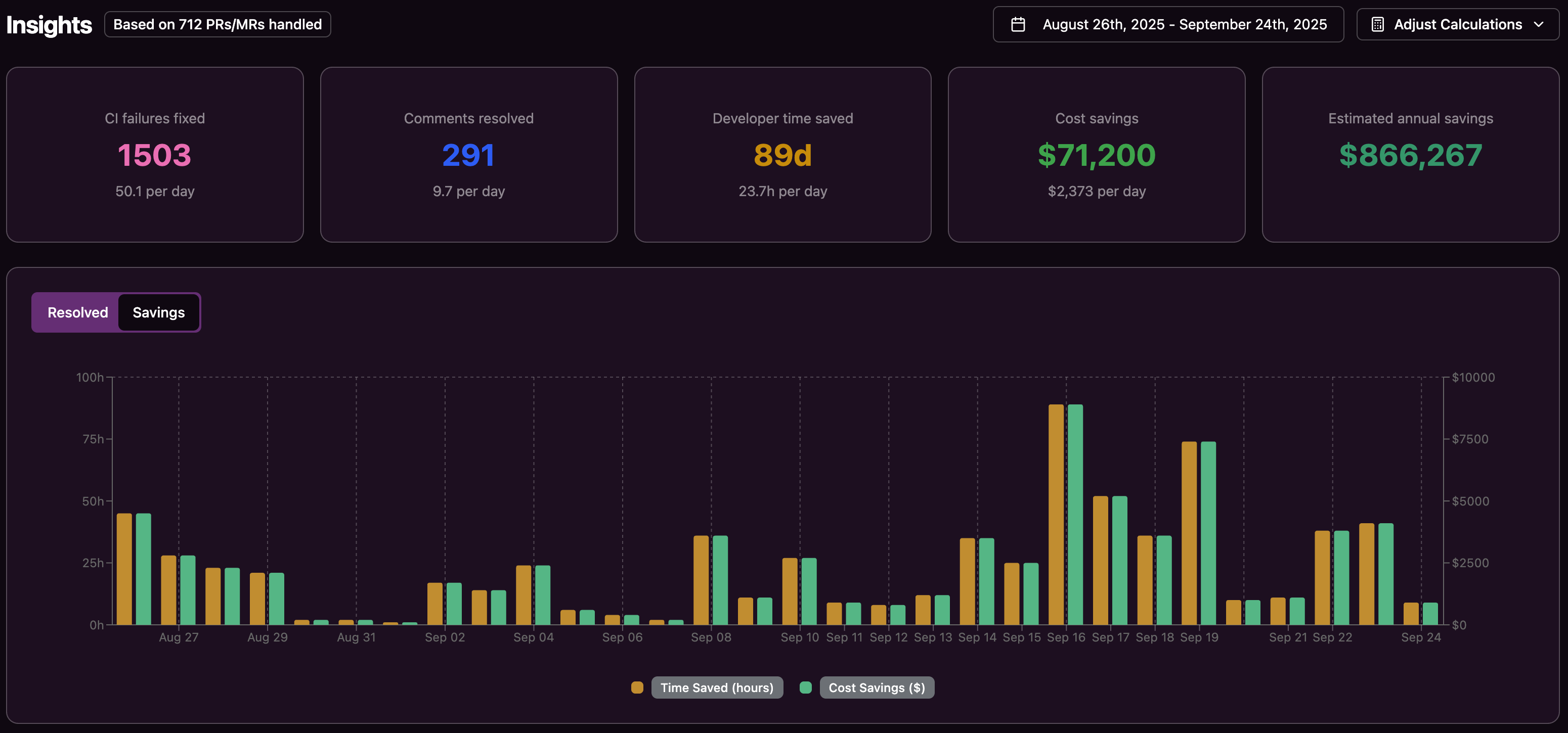
Move from fixing to shipping. Install Gitar now to automate your CI pipeline.