
Written by: Ali-Reza Adl-Tabatabai, Founder and CEO, Gitar
Key Takeaways
- AI coding tools generate code 3-5x faster but increase PR review time by 91%, which slows teams down.
- Static analysis tools like SonarQube catch syntax and style issues but miss complex logic, architecture, and AI-generated code problems.
- AI code review adds context-aware analysis, catching runtime bugs with 42-48% accuracy and surfacing architectural risks.
- Gitar’s healing engine auto-fixes PRs and validates changes against CI, while many competitors only provide suggestions.
- Teams that combine static gates with Gitar’s AI ship PRs faster and with higher quality, supported by a 14-day free trial.
Static Analysis in PRs: Strengths and Gaps
Static analysis tools like SonarQube, ESLint, and PMD scan code for bugs, duplications, and rule violations during CI without executing the program. Because they operate on code structure instead of runtime behavior, these tools excel at fast, consistent syntax checks and basic security patterns. This deterministic behavior turns them into reliable gates that catch obvious issues like unused variables, formatting violations, and simple security anti-patterns.
However, static analysis struggles with architectural intent, cross-service dependencies, and compliance in enterprise environments. The tools often generate false positives because they lack full business logic and system architecture context. When AI-generated code introduces complex dependency chains or subtle logic errors, static analysis may miss many of the real problems.
A typical PR scenario illustrates this limitation. Static analysis flags a lint error in AI-generated authentication code but ignores that the code breaks runtime dependencies or fails integration tests. Developers spend time fixing cosmetic issues while critical CI failures remain unresolved.
This gap between surface checks and real code quality sets the stage for AI code review.
AI Code Review in PRs: Context and Auto-Fix
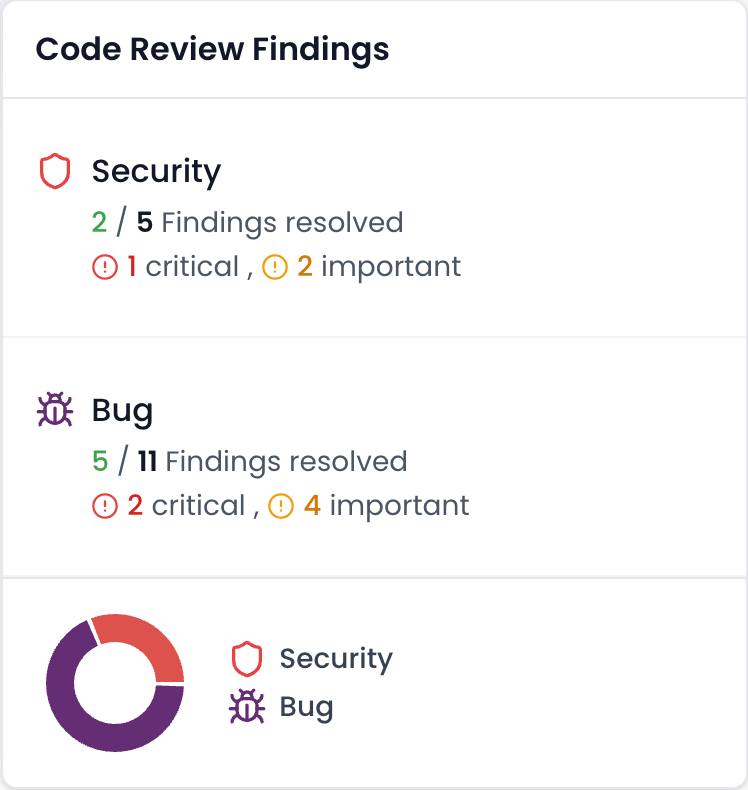
AI code review tools like Gitar and CodeRabbit use large language models to analyze pull requests with full codebase context. These tools interpret code intent, catch logic errors, identify security vulnerabilities, and provide architectural feedback that static analysis cannot reach.
AI code review delivers context-aware analysis that summarizes changes, catches bugs, verifies architecture, and suggests fixes in seconds rather than hours. Leading tools achieve 42-48% accuracy for catching real-world runtime bugs, which significantly outperforms static analysis on complex logic.
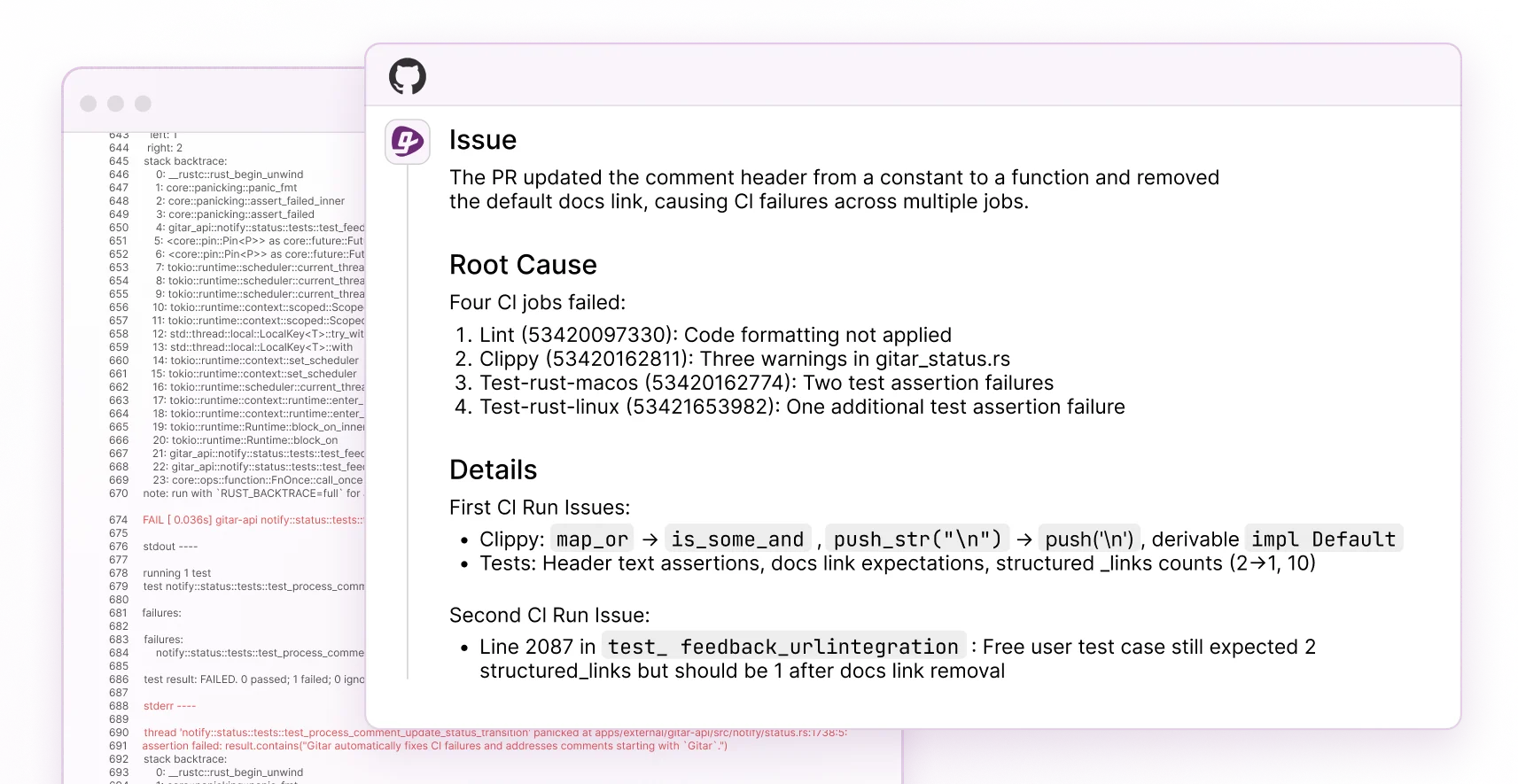
The critical difference appears in execution. Most AI tools only suggest fixes, while Gitar’s healing engine automatically implements and validates corrections against CI. When a test fails or a build breaks, Gitar analyzes the failure, generates the fix, validates that it works, and commits the solution, all within a single updating comment. See this auto-healing behavior in action with a free 14-day Gitar trial.
To understand how meaningful this execution advantage is, compare AI and static analysis across core PR metrics.
AI Code Review vs Static Analysis: Head-to-Head Comparison
The fundamental difference between static code analysis and AI becomes clear when examining PR-specific metrics. Static analysis wins on simple syntax checks, while AI with auto-fix capabilities like Gitar reshapes the entire review workflow. The table below highlights how Gitar’s auto-fix capability changes the value compared to traditional static analysis.
|
Metric |
Static Analysis (SonarQube) |
AI Code Review (Gitar) |
|
Speed (Simple PRs) |
Fast |
Moderate |
|
Accuracy (AI-Code Logic) |
Lower on complex logic |
High |
|
CI Integration |
Sophisticated quality gates |
Auto-heal and validate |
|
Auto-Fix Capability |
None |
Yes (CI-guaranteed) |
AI-enhanced code review significantly improves on traditional rule-based static analysis. This execution advantage, where Gitar not only identifies issues but also resolves them, separates AI-driven workflows from legacy approaches.
Real PR Workflows: Static vs Gitar in Practice
Static code analysis for pull requests works well for simple scenarios, such as catching lint errors, enforcing coding standards, and detecting basic security patterns. A straightforward bug fix with clear style violations gets flagged quickly and consistently.
Now consider a complex AI-generated feature that introduces async and await patterns, updates dependencies, and modifies database queries. In this scenario, static analysis might catch a missing semicolon but completely miss that the async implementation creates race conditions, because those issues only appear at runtime. It also cannot detect that dependency updates break downstream services without understanding the broader system architecture.
Gitar excels in these complex situations by using full context. When CI fails because of test timeouts caused by improper async handling, Gitar analyzes the failure logs, identifies the root cause, implements the correct async and await pattern, and validates that the fix passes all tests. The developer receives a single comment that states: “Fixed async implementation causing test timeouts. All checks now pass.”
Reddit discussions about ai code review vs static analysis reddit highlight recurring pain points such as notification spam from multiple tools, low trust in automated suggestions, and time wasted on false positives. Gitar addresses these concerns with a single updating comment and CI-validated fixes that consistently produce green builds.
Gitar vs Competitors in 2026: Auto-Fix as the Differentiator
The best code review tools for pull requests in 2026 differentiate on auto-fix capabilities and CI integration. While competitors focus on suggestions, Gitar delivers working solutions. The comparison below shows why Gitar’s CI-validated auto-fix approach deserves evaluation even against free or cheaper alternatives.
|
Tool |
Auto-Fix/CI Heal |
Price |
Key Limitation |
|
Gitar |
Yes (14-day trial) |
Free trial |
None during trial |
|
CodeRabbit |
Suggestions only |
$15/seat |
No validation |
|
SonarQube |
Static only |
Free tier |
Limited context for complex logic |
|
Greptile |
No validation |
$30/seat |
Expensive suggestions |
The coderabbit vs sonarqube debate misses the core issue, because both still require manual work after analysis. As the comparison shows, competitors stop at suggestions while Gitar completes the work. Gitar’s natural language rules and platform vision extend beyond review into broader development intelligence. Trial Gitar now to feel the difference between commentary and automation.
The Winning Hybrid: Static Gates Plus Gitar AI
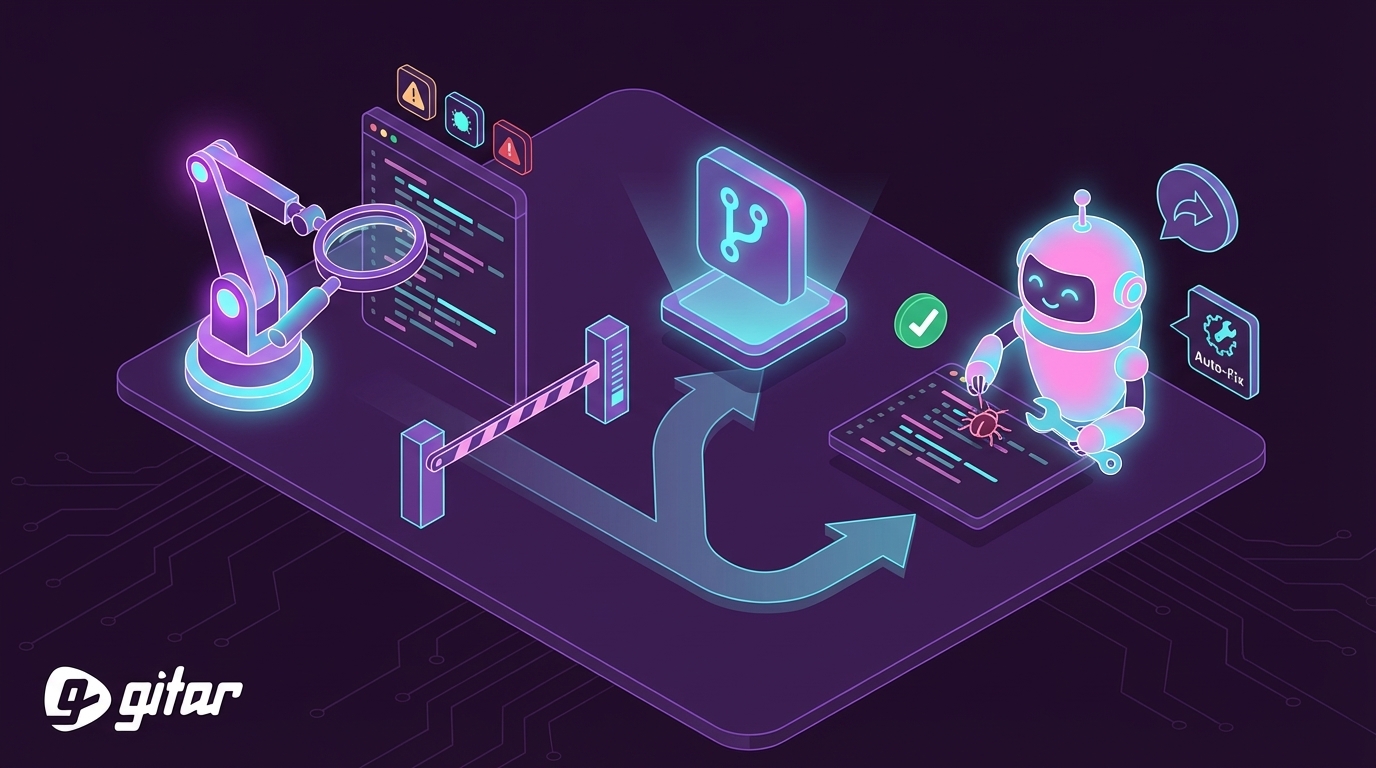
The recommended hybrid approach uses static tools for rules and AI for architecture and intent. Smart teams run static analysis as basic quality gates and rely on Gitar for the heavy lifting, such as fixing CI failures, implementing review feedback, and automating complex workflows.
This static code analysis and AI combination maximizes strengths. Static tools catch obvious violations quickly, while Gitar handles nuanced problems that require context and automated fixes. The result is faster PRs with higher quality outcomes. Teams can experience this hybrid approach firsthand with Gitar’s trial.
For teams considering this hybrid model, the business case becomes clear when they review actual productivity gains.
ROI and Implementation for Faster PRs
Teams report dramatic productivity improvements when they move from suggestion-based tools to Gitar’s auto-fix approach. A 20-developer team that spends 1 hour per day on CI and review issues loses roughly $1M annually in productivity. Gitar reduces this time to about 15 minutes per day per developer, which delivers around $750K in annual savings.
Implementation follows a simple path. Install the GitHub app, start your 14-day trial, and watch Gitar automatically resolve CI failures. Configure custom rules using natural language in your repository, and integrate with Jira and Slack for complete workflow automation. The Gitar documentation guides teams through advanced configurations and detailed setup instructions.
Customer testimonials highlight specific benefits. Collate’s engineering team reports that Gitar’s “unrelated PR failure detection” saves significant time by distinguishing infrastructure issues from code bugs. Tigris notes that Gitar’s PR summaries are “more concise than Greptile/Bugbot,” which reduces cognitive load compared to competitor notification spam.
Conclusion: From Suggestions to Self-Healing PRs
AI code review tools now go far beyond static analysis for 2026 pull request workflows. Static analysis still provides value as a basic gate, while Gitar’s healing engine represents the next step by actually fixing code instead of only commenting on it. Teams face a clear choice between paying for suggestions that require manual work or adopting automated fixes that consistently deliver green builds. Start your free trial today to transform your PR workflow from bottleneck to competitive advantage.
Frequently Asked Questions
What is the main difference between AI code review and static analysis for pull requests?
Static analysis tools like SonarQube scan code for syntax errors, style violations, and security patterns using contextual analysis such as path traversal. They run quickly and behave deterministically but often miss complex issues without full business logic understanding. AI code review tools analyze code with full codebase context, understand intent and architecture, and can catch logic errors and security vulnerabilities that static analysis misses. The key advantage of advanced AI tools like Gitar is auto-fix capability, which means they implement corrections instead of only suggesting them.
Can AI code review tools replace static analysis completely?
No. The most effective approach combines both tools in a hybrid workflow. Static analysis excels at fast, consistent checks for basic syntax, formatting, and simple security patterns. AI code review handles complex logic analysis, architectural review, and contextual understanding. The optimal setup uses static analysis as quality gates for obvious issues and deploys AI tools like Gitar for nuanced problems that require fixes and validation. This layered approach maximizes code quality while reducing false positives and manual work.
How accurate are AI code review tools compared to static analysis?
AI code review tools achieve significantly higher accuracy on complex code issues than static analysis. Static tools excel at deterministic syntax checks but struggle with architectural intent and miss more issues in AI-generated code compared to human-written code. As code complexity increases, the accuracy gap widens, which makes AI tools essential for modern development workflows.
What are the cost implications of AI code review versus static analysis?
Static analysis tools often have lower upfront costs, and many offer free tiers, but hidden costs appear through manual fix implementation and false positive management. AI code review tools typically charge $15-30 per developer monthly for suggestion-only capabilities. Tools with auto-fix capabilities like Gitar deliver substantial ROI, because a 20-developer team can save about $750K annually by reducing CI and review time from 1 hour to 15 minutes per developer daily. Teams gain the most value from tools that fix problems instead of only identifying them, which removes the manual work that makes cheaper tools expensive in practice.
How do AI code review tools integrate with existing CI/CD pipelines?
Modern AI code review tools integrate directly with popular CI/CD platforms including GitHub Actions, GitLab CI, CircleCI, and Buildkite. Advanced tools like Gitar go beyond basic integration by analyzing CI failure logs, generating fixes automatically, validating corrections against the full test suite, and committing working solutions. This creates a self-healing CI pipeline where failures get resolved automatically instead of waiting for developer intervention. Integration typically involves installing a GitHub or GitLab app and configuring webhook permissions, while enterprise deployments allow the AI agent to run within existing CI infrastructure for maximum security and context access.