
Key Takeaways
- AI-generated GitLab merge requests face 4.6x longer review times and 32.7% acceptance rates, so teams need advanced auto-fixing tools instead of basic suggestion engines.
- Gitar leads as the top free AI code review platform with validated autofix features, CI integration, and single-comment consolidation that removes notification spam.
- Among seven tools tested, GitLab Duo offers native integration but no auto-fixing, while CodeRabbit and Greptile provide suggestions at high per-user costs without CI validation.
- Teams achieve 91% PR time reduction and up to $1M annual savings with Gitar’s healing engine, while paid alternatives deliver limited ROI.
- Teams can start with Gitar’s 30-second GitLab installation and 14-day autofix trial at Gitar.ai to reach guaranteed green builds and ship faster.
How We Tested GitLab AI Code Review Tools
Our 2026 testing used real GitLab repositories and real merge requests. We evaluated each tool on GitLab MR integration depth, auto-fix capabilities versus CI validation, contextual code analysis, pricing and ROI impact, setup complexity, notification management, and enterprise scalability. Our analysis draws on Gitar documentation, 2026 performance benchmarks, and real-world user feedback on productivity gains and pain points.
Seven GitLab AI Code Review Options at a Glance
Our evaluation covers seven leading solutions: 1. Gitar (free healing engine with auto-fixes), 2. GitLab Duo (native platform integration), 3. CodeRabbit (suggestion-based with GitLab support), 4. Greptile (repository-wide analysis at premium pricing), 5. Panto AI (self-hosted option), 6. SonarQube (security-focused scanning), and 7. Snyk (vulnerability detection). Each tool approaches GitLab merge request workflows differently, from basic suggestions to near-complete workflow automation.
GitLab AI Code Review Tools Ranked
Gitar: Best Free AI Code Review for GitLab Teams
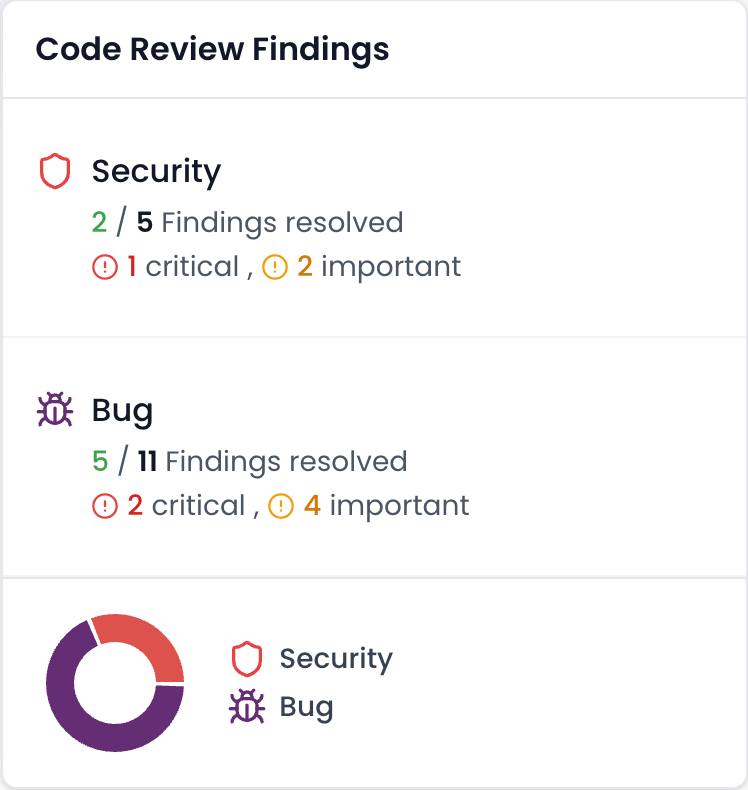
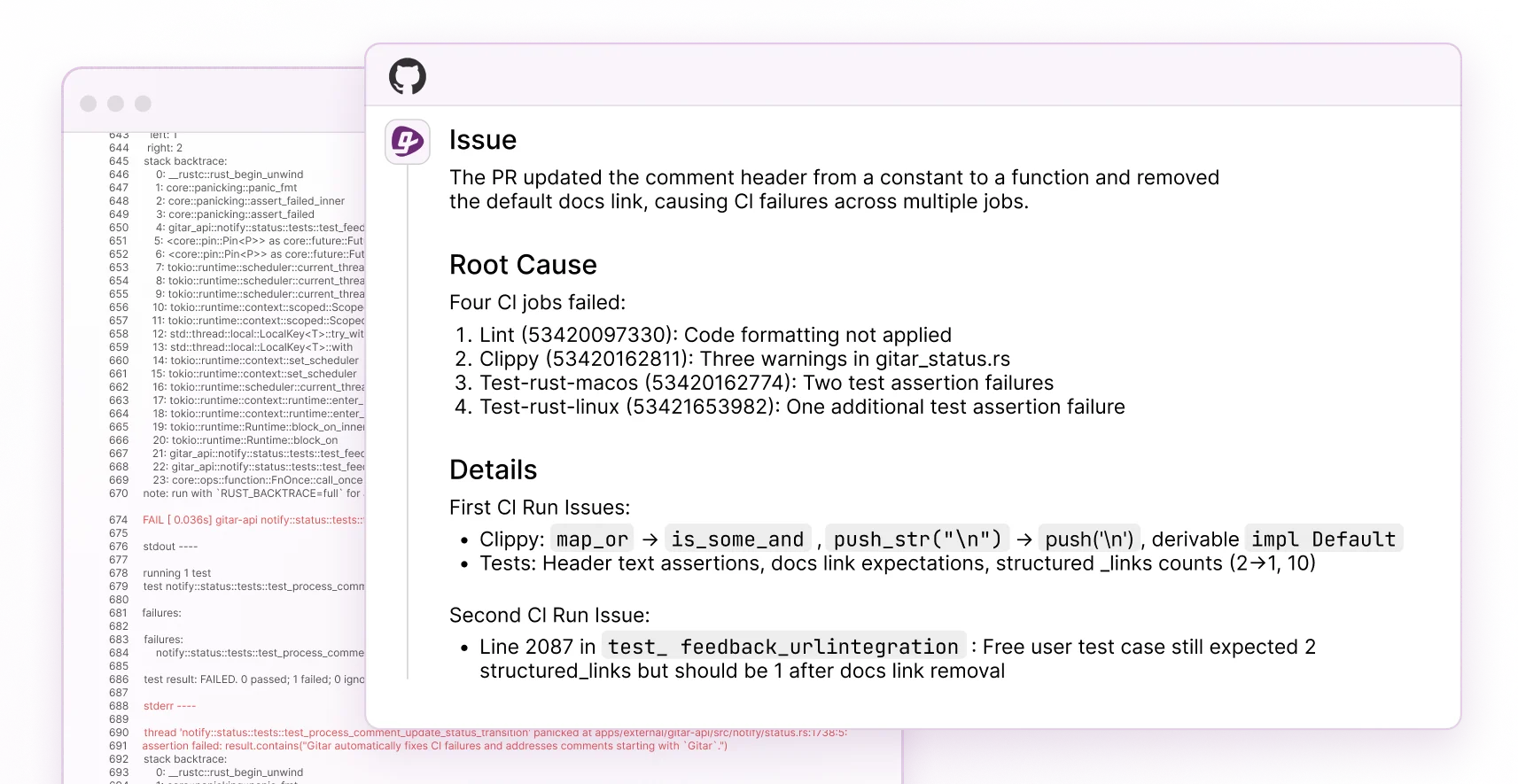
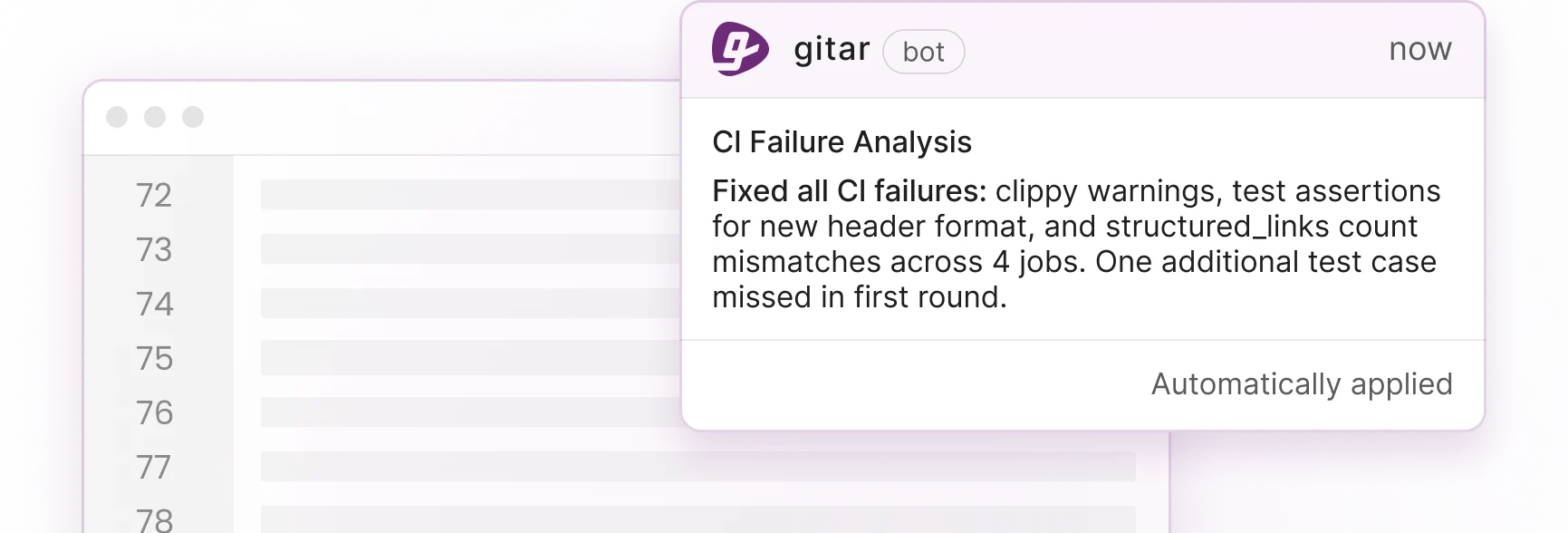
Gitar stands apart as the free AI code review platform that fixes code instead of only suggesting changes. The platform integrates with GitLab merge requests through a single updating comment that consolidates all findings, including CI analysis, review feedback, and rule evaluations, which keeps notification noise low. When CI failures occur, Gitar analyzes failure logs, generates validated fixes, and commits them directly to your MR. The 30-second installation requires no credit card, supports unlimited repositories, and includes natural language workflow rules. Autofix features include a 14-day free trial. Gitar delivers guaranteed green builds and scales to enterprise levels, handling more than 50 million lines of code with thousands of daily PRs. This makes it ideal for GitLab teams that want automated fixes and predictable CI outcomes.
GitLab Duo Code Review for Native Integration
GitLab Duo provides native AI code review directly inside the GitLab merge request workflow with contextual suggestions and security scanning. The tool uses GitLab’s existing infrastructure, so deployment feels seamless for current GitLab users. Duo does not support auto-fixing, so engineers must manually apply suggested changes. Pricing follows GitLab’s subscription tiers, which works well for GitLab Premium and Ultimate customers but remains limited compared to dedicated AI review platforms that handle both analysis and implementation.
CodeRabbit for Multi-Platform Suggestions
CodeRabbit supports GitLab, GitHub, Bitbucket, and Azure DevOps, and offers line-by-line comments with severity rankings and one-click fixes. The platform integrates more than 20 linters and security scanners and offers self-hosted enterprise options. CodeRabbit still operates as a suggestion engine without CI validation, so teams must verify every change. Pricing at $24 to $30 per user each month creates significant costs for larger teams and the multiple inline comments can overwhelm developers during busy review cycles.
Greptile for Deep Repository Analysis
Greptile focuses on deep codebase analysis for broad bug detection across GitHub and GitLab repositories. The platform handles complex codebases and cross-file dependencies well, which helps with legacy or monolithic systems. Pricing starts at $30 per developer each month for unlimited reviews. Greptile does not provide auto-fixing or CI integration, so it remains a suggestion-based tool that cannot resolve build failures on its own.
Panto AI for Self-Hosted Control
Panto AI targets teams that need self-hosted deployment, strict data control, and custom infrastructure configurations. The platform offers AI-assisted code review with variable resource requirements that depend on your environment. Panto AI focuses mainly on GitHub workflows and offers limited GitLab-specific tuning. Setup complexity and infrastructure costs place it out of reach for many smaller teams and early-stage companies.
SonarQube Community Edition for Security and Quality
SonarQube Community Edition delivers free, self-hosted code quality analysis and can integrate with AI tooling. Infrastructure costs range from $800 to $1,500 monthly for 50-developer teams, with 6 to 13 weeks of initial setup time. SonarQube excels at security scanning and static analysis but does not offer modern AI-powered review or auto-fixing features, so teams still handle fixes manually.
Snyk for Security-First Scanning
Snyk specializes in vulnerability detection and security-focused code review and integrates with GitLab CI pipelines for automated security checks. The platform delivers strong security insights but limited general code review capabilities. Teams often use Snyk as a complementary security layer alongside a broader AI review solution rather than as a complete review platform.
| Tool | GitLab Integration/Auto-Fix | Pricing/MR Speed Impact | Noise/Scalability |
|---|---|---|---|
| Gitar | Yes/Yes (14-day free trial) | Free/91% PR time reduction | Single comment/Enterprise scale |
| GitLab Duo | Native/No | Premium tier/Moderate | Platform integrated/Good |
| CodeRabbit | Yes/No | $24-30/user/Limited | Multiple comments/Moderate |
| Greptile | Yes/No | $30/user/Limited | Inline spam/Enterprise scale |
Cost, Automation, and Developer Experience Tradeoffs
Free and paid ROI calculations show large gaps in total cost of ownership. Gitar delivers up to $1 million in annual savings for 20-developer teams through automated CI fixes, while paid alternatives like CodeRabbit and Greptile cost $450 to $900 monthly without delivering actual fixes. The suggestion versus healing difference defines the core tradeoff, because Gitar validates fixes against CI before committing, while competitors only provide suggestions that may or may not work.
Engineering leaders focus on velocity improvements and developer satisfaction, while individual engineers want tools that cut context switching and reduce manual fix work. Teams can address trust concerns around automated commits through configurable approval workflows and gradual automation rollouts that start with suggestions and move toward full auto-fixing.
Frequently Asked Questions
Best Free AI Code Review Tool for GitLab Merge Requests
Gitar provides the most comprehensive free AI code review for GitLab, including unlimited repository analysis, PR summaries, security scanning, bug detection, and performance review. Autofix capabilities include a 14-day free trial. Unlike paid alternatives that only suggest changes, Gitar implements fixes and validates them against CI before merging.
How GitLab Duo Compares to Other AI Review Tools
GitLab Duo offers native platform integration but lacks auto-fixing capabilities that define advanced AI review tools. The experience works well for existing GitLab Premium customers but still functions as a suggestion engine that requires manual implementation of recommended changes. This places it closer to CodeRabbit and Greptile, although it does not match their broader analysis features.
Time Required to Set Up AI Code Review for GitLab
Gitar installs in about 30 seconds through the GitLab integration and does not require credit cards or complex configuration. The platform immediately begins analyzing merge requests and posting consolidated dashboard comments. Auto-fixing features activate through a 14-day free trial so teams can test healing workflows quickly.
Expected ROI from AI Code Review Tools
Teams that use auto-fixing AI review tools like Gitar report 91 percent reductions in PR review time and large drops in CI failure resolution time. These productivity gains translate into significant cost savings, up to $1 million annually for 20-developer teams, while also removing subscription costs from paid suggestion-based tools.
Migration Path from CodeRabbit and Other Paid Tools
Migration to Gitar starts by installing the GitLab integration alongside existing tools so teams can compare results directly. Most teams find Gitar’s auto-fixing and consolidated commenting approach more effective than paid suggestion engines. This side-by-side setup supports a gradual transition without workflow disruption.
Security Requirements for AI Code Review in Enterprises
Enterprise AI code review requires strict control over data handling, code access permissions, and automated commit behavior. Gitar provides configurable security settings, SOC 2 compliance, and enterprise deployment options that run agents inside your own CI infrastructure for maximum data sovereignty.
Conclusion: Ship Faster with Gitar’s Healing Engine
Gitar combines free comprehensive code review, validated auto-fixing, and full GitLab platform integration to deliver strong value for development teams. Competing tools charge premium prices for suggestion engines that still require manual work, while Gitar covers the full path from analysis to implementation at no license cost. Install Gitar today to reach guaranteed green builds and accelerate development velocity across your GitLab projects.