
Key Takeaways
- AI coding tools generate code 3-5x faster, yet PR review times have surged in 2026 due to more issues, code churn, and CI failures.
- Suggestion-only tools like CodeRabbit and Greptile flag problems but still require manual fixes, which creates costly verification loops.
- Gitar focuses on automatic CI failure analysis, validated refactoring, and direct PR commits across GitHub, GitLab, and CircleCI.
- Teams using auto-fix tools like Gitar cut PR cycle times by 24% and save up to $750K annually in productivity compared to suggestion tools.
- Start your 14-day Gitar Team Plan trial at Gitar.ai to experience automatic CI fixes and ship higher quality code faster.
The 2026 Code Review Slowdown from AI-Created Code
AI coding assistants increased output, but they also increased risk. AI-coauthored PRs now show 1.7x more issues than human-only PRs, and up to 30% of AI-generated code snippets contain security issues. Teams feel this as higher CI failure rates and longer review cycles.
The cost adds up quickly. A 20-developer team that spends one hour per day on CI and review issues loses about $1 million in annual productivity. At the same time, trust in AI-generated code dropped to 29% in 2025. Engineers respond by manually re-checking AI output, which erases much of the speed gain from AI coding tools.
Traditional code review tools often make this worse. They provide suggestions without validation. When CodeRabbit or Greptile leaves a comment recommending a fix, developers still implement the change, push a new commit, and wait to see if CI passes. This suggestion trap creates expensive manual loops and costs teams $450-900 monthly for tools that do not guarantee working solutions.
9 AI Code Review Tools That Support Refactoring and CI Fixes
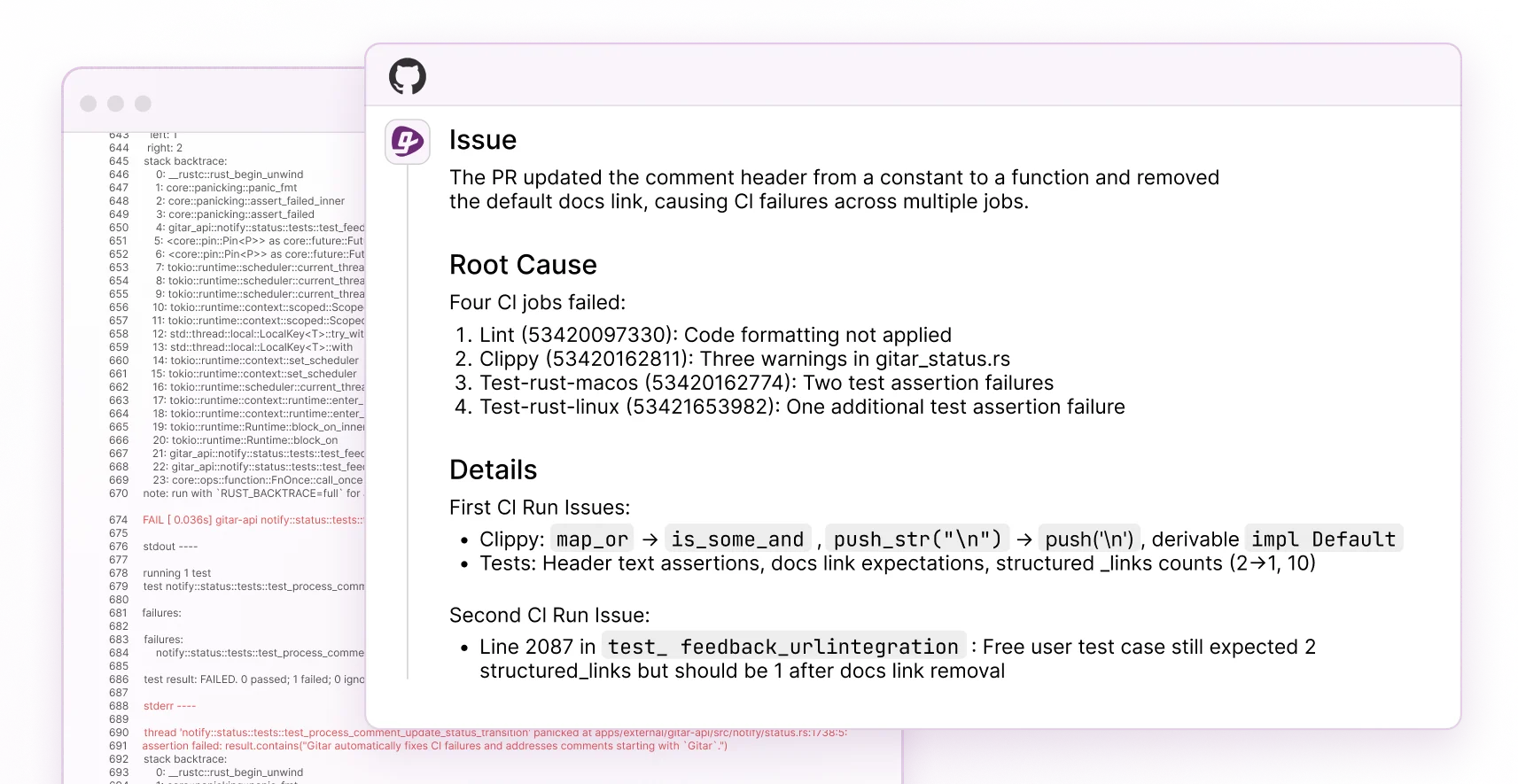
1. Gitar – Gitar acts as a healing engine for your CI pipeline. It automatically analyzes CI failures, generates validated fixes, and commits working solutions to PRs. When lint errors, test failures, or build breaks appear, Gitar identifies the root cause, refactors code with full codebase context, validates fixes against your environment, and updates PRs with a single clean comment. Features include natural language workflow rules, Jira and Slack integration, and cross-platform support for GitHub, GitLab, CircleCI, and Buildkite. Gitar offers a 14-day Team Plan trial with full access. See the Gitar documentation for setup instructions.
2. CodeRabbit – CodeRabbit provides one-click commits for easy fixes and “Fix with AI” for harder ones, but it does not perform automatic CI failure analysis or validation. Pricing ranges from $15 to $30 per developer monthly. It remains a suggestion-first tool that still requires manual verification.
3. Greptile – Greptile offers deep codebase context and strong search capabilities. It still operates as a suggestion-only tool. It does not apply fixes automatically or integrate deeply with CI. Pricing is $30 per developer monthly for analysis without guaranteed solutions.
4. CodeScene ACE – CodeScene ACE provides fact-checked refactoring features and some automation. Its strength lies in code health metrics and hotspot analysis. CI failure resolution remains limited compared to full healing engines like Gitar.
5. Refact.ai – Refact.ai focuses on IDE-based refactoring with AI assistance. It integrates with GitHub, GitLab, and Docker to run autonomous tasks, including pull request management. It still centers on developer-driven workflows inside the IDE.
6. Ellipsis – Ellipsis implements reviewer comments by generating commits with fixes after running tests. It handles minor refactors and style fixes well. It focuses on implementing comments rather than proactively resolving CI failures.
7. Cursor/Bugbot – Cursor and Bugbot offer Cmd+K inline language edits for precise refactors and an agent mode for multi-file tasks. They function mainly as IDE tools. CI integration is secondary, so they do not operate as full CI healing platforms.
8. Aider – Aider supports multi-file refactors that keep tests and docs in sync, including symbol renames and function extraction. It runs in a terminal-based workflow. Teams must wire it into CI manually, and it does not detect failures automatically.
9. PR-Agent – PR-Agent offers a self-hosted AI-powered code review solution for data sovereignty. Teams can run it locally with external AI API keys. It focuses on analysis and review comments rather than automatic fix application.
How Gitar Compares to Suggestion-Only Tools
| Capability | Gitar | CodeRabbit | Greptile | Others |
|---|---|---|---|---|
| PR summaries | Yes | Yes | Yes | Varies |
| Auto-apply fixes | Yes | Limited | No | No |
| CI failure analysis | Yes | No | No | No |
| Cross-platform support | Yes | Limited | Limited | Limited |
Adding AI Auto-Fixes into Your CI Workflow
Modern AI code review with automatic refactoring depends on tight CI integration across GitHub Actions, GitLab CI, and CircleCI. The most effective setup installs tools that understand your full environment instead of running in isolation.
For GitHub Actions, Gitar installs as a GitHub App in under 30 seconds. After installation, it monitors CI failures and applies fixes without extra YAML configuration. When a CI failure occurs, such as a lint error, test failure, or build break, Gitar analyzes the logs, reads the codebase context, generates a fix, validates it, and commits the working solution. Refer to the Gitar documentation for step-by-step integration guidance.
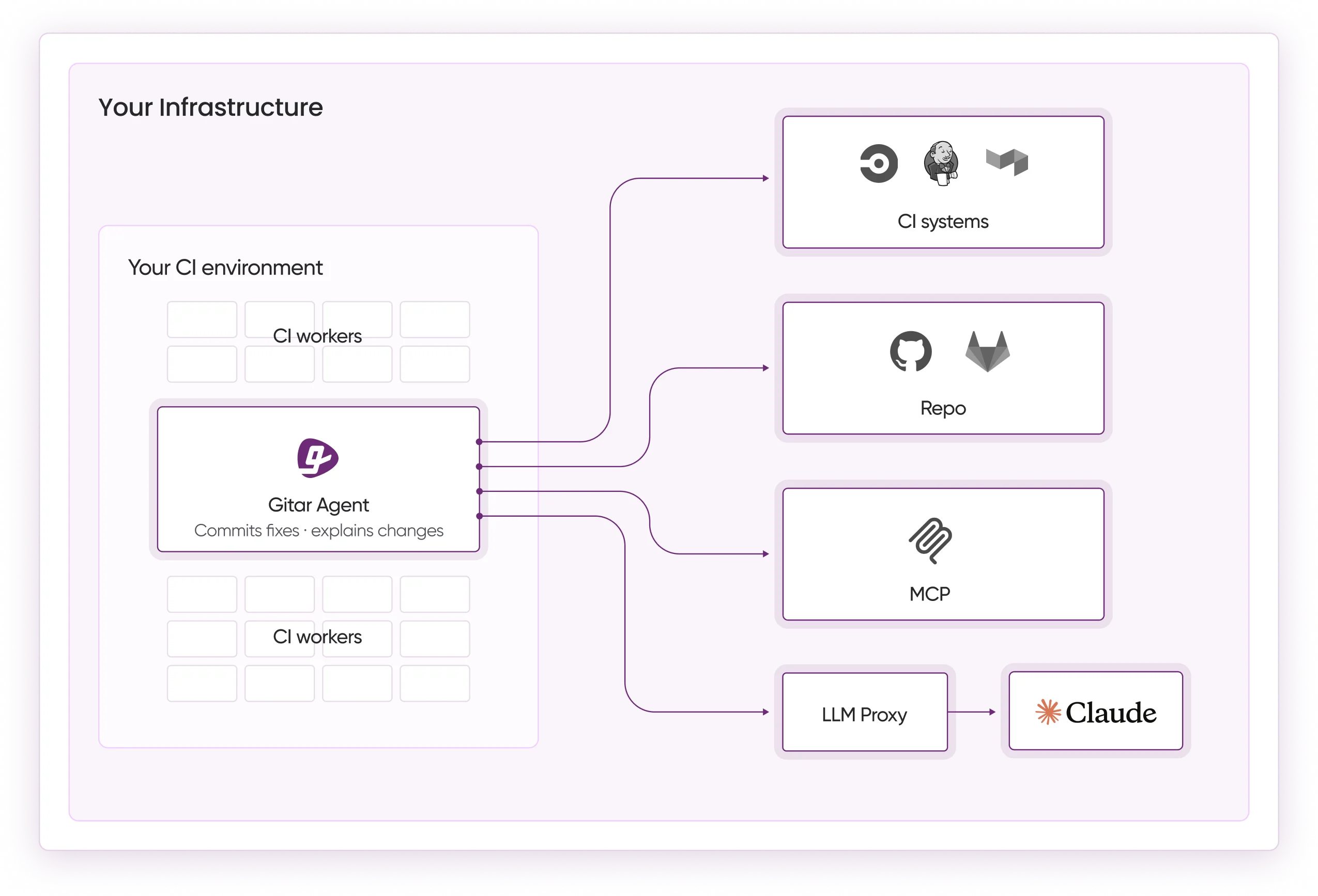
The workflow stays simple for developers. They push code, CI runs, failures trigger automatic analysis and fixes, and PRs update with validated solutions. This replaces the old cycle of failure notification, manual debugging, fix implementation, and repeated testing that consumes hours of engineering time.
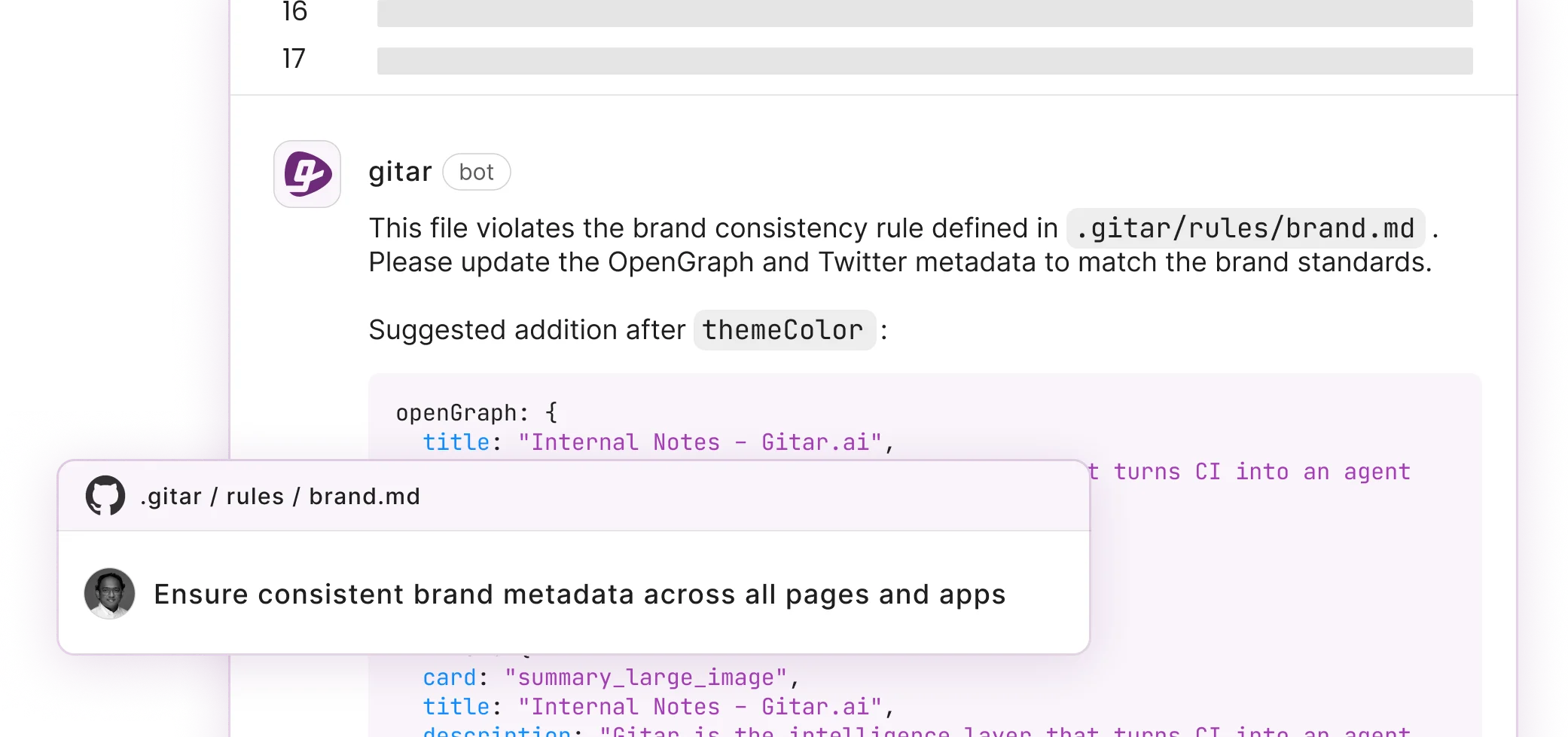
Teams that need custom automation can use Gitar’s natural language rules system. They define workflows without complex YAML. For example, a rule such as “When PRs modify authentication code, assign security team and add security-review label” runs automatically based on code changes.
ROI of Auto-Fix Platforms Compared to Suggestion Engines
Automatic fix platforms deliver stronger economic results than suggestion-only engines. Organizations with high AI adoption saw median PR cycle times drop by 24%, from 16.7 to 12.7 hours. These gains appeared only when tools resolved issues, not when they simply identified them.
For a 20-developer team, the cost comparison looks like this:
| Metric | Before AI Fixes | With Gitar | With Suggestion Tools |
|---|---|---|---|
| Time per CI/review issue | 1 hour/day/dev | 15 min/day/dev | 45 min/day/dev |
| Annual productivity cost | $1M | $250K | $750K |
| Tool cost (20 devs) | $0 | Trial period | $3,600-10,800 |
Teams that rely on suggestion-only tools at $15-30 per developer monthly still lose significant time to manual fix implementation. The verification burden stays high because trust in AI-generated code dropped to 29%. Engineers must validate nearly every suggested change.
AI Code Review and CI Fixes: Common Questions
Best AI Platform for Automatic CI Failure Fixes
Gitar stands out as the only platform that automatically analyzes CI failures, generates validated fixes, and commits working solutions. Unlike suggestion-only tools, Gitar’s healing engine targets green builds by validating fixes against your complete environment before applying them. The 14-day Team Plan trial gives full access so you can test automatic CI fixes across your repositories.
How AI Code Review Tools Fit into GitHub Workflows
Effective tools install as GitHub Apps that monitor PR events and CI status automatically. Gitar installs in under 30 seconds and immediately begins analyzing PRs and CI failures without workflow changes. The platform posts a single dashboard comment that updates in place, which reduces notification noise while still providing complete fix summaries.
Team Trials for AI Code Review Tools
Most AI code review tools charge per developer from day one. Gitar instead offers a 14-day Team Plan trial with full access to automatic fixes, custom rules, and all integrations. This trial lets teams measure real productivity impact and ROI before they commit to a paid plan.
Python-Specific CI Fixes with AI
Advanced AI platforms like Gitar support Python and can resolve CI failures such as lint errors, test failures, and build breaks. Gitar maintains context about your codebase, environment, and coding standards so it can generate fixes that work reliably in your setup.
Security of Automatic AI Code Commits
Security depends on platform design and configuration. Gitar offers configurable trust levels. Teams can start in suggestion mode for review and approval, then enable automatic commits for specific failure types as confidence grows. Enterprise deployments run the AI agent inside your own CI infrastructure, so code never leaves your environment, while maintaining SOC 2 Type II compliance.
Next Steps for Teams Facing CI and PR Bottlenecks
AI code review with automatic refactoring and CI fixes marks the next phase of development automation. Suggestion-only tools create manual loops, while platforms like Gitar deliver autonomous fixes that keep builds green.
For engineering teams overwhelmed by AI-generated PRs and frequent CI failures, the choice between suggestion engines and healing engines shapes whether AI becomes a multiplier or a bottleneck. A 14-day trial gives teams a low-risk way to measure impact before committing budget.