
Key Takeaways
- AI coding tools like Copilot speed up code generation 3-5x, yet PR review times grow 91% because millions of lines still need validation.
- Teams lose about $1M each year from CI failures and review bottlenecks, while traditional tools only suggest changes instead of fixing them.
- Gitar offers free, unlimited AI code review with auto-fixing for CI failures, security scanning, and PR summaries across GitHub and GitLab.
- Unlike paid competitors that charge $15-30 per developer, Gitar auto-applies validated fixes, cuts issue resolution time by 75%, and handles 50M+ lines daily.
- Follow the 7-step playbook to roll it out, and install Gitar now for free review plus a 14-day autofix trial to remove bottlenecks.
Why AI Code Review Matters for Massive Codebases
Modern AI code review systems deliver clear, measurable gains when you work with enterprise-scale codebases containing millions of lines.
| Advantage | Impact |
|---|---|
| Immediate feedback | 40-60% faster cycles on millions of lines |
| Consistency | No human fatigue or bias across repositories |
| Security scanning | Catches Copilot-missed vulnerabilities |
| CI integration | Auto-green builds, reduced manual toil |
68% of developers in 2025 trust AI-assisted code reviews more than peer reviews for catching syntax and mechanical issues. This stat highlights AI strength in detailed, line-by-line attention without fatigue. The 91% increase in PR volume now requires automated review that scales beyond human capacity.
Gitar: Free AI Code Review That Also Fixes Your Code
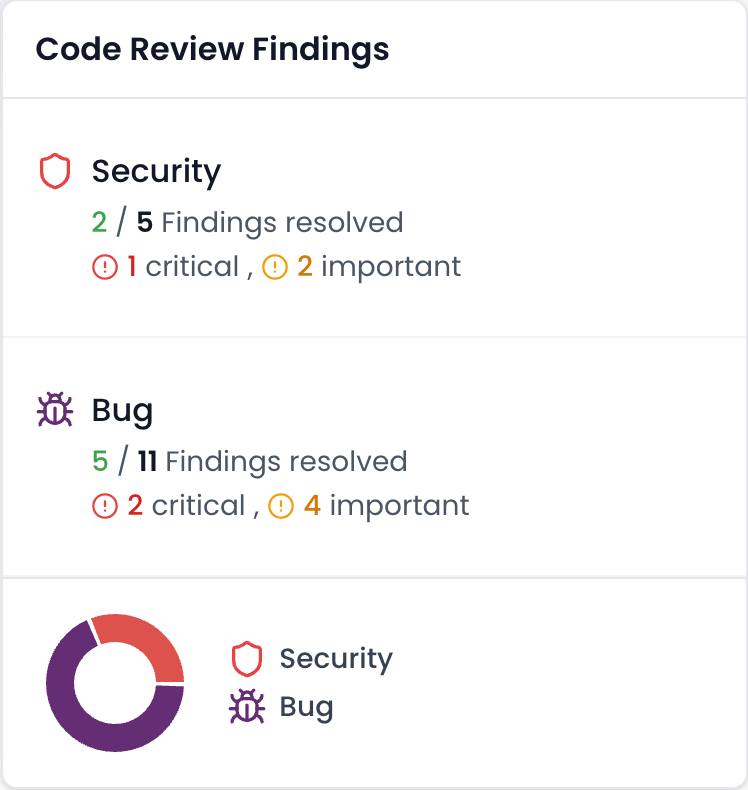
Gitar is the first free AI code review platform that goes beyond comments and actually fixes code. Competing tools charge $15-30 per developer for suggestion-only workflows, while Gitar delivers unlimited code review, PR summaries, security scanning, and bug detection at no cost across GitHub and GitLab repositories.
The platform’s healing engine resolves CI failures by reading error logs, generating contextual fixes, and committing validated solutions. Teams get a 14-day free trial of autofix features to test this behavior in real workflows. When reviewers leave feedback, Gitar applies the requested changes directly instead of posting suggestions that developers must re-implement.
This model already works at enterprise scale. Pinterest runs more than 50 million lines of code through Gitar every day, which proves the infrastructure is production-ready. See the Gitar documentation for a deeper look at healing engine capabilities.
Key differentiators include a single updating comment that consolidates all findings, which replaces notification spam from competing tools. Gitar supports GitHub Actions, GitLab CI, CircleCI, and Buildkite, and it uses natural language workflow rules in .gitar/rules/ directories so teams avoid complex YAML. The 14-day free trial of autofix lets teams measure impact before paying for advanced features.
Comparing Top AI Code Review Tools in 2026
The AI code review market now splits into suggestion engines and true healing platforms with automatic fixes.
| Capability | CodeRabbit/Greptile | Gitar |
|---|---|---|
| Price | $15-30/dev | Free review, 14-day trial autofix |
| Fixes | Suggestions only | Auto-applies and validates fixes (trial) |
| CI Integration | Available | Full auto-fix support |
| Scale | Enterprise-capable | 50M+ lines, unlimited usage |
Gitar delivers $0 monthly cost compared with $450-900 for typical competitor setups, while still cutting issue resolution time by 75%. CodeRabbit supports over 2 million repositories and 13 million PRs, yet it does not provide automatic fixing that removes manual implementation work. Free AI code review that actually resolves issues marks the next stage beyond suggestion-only platforms.
7-Step Playbook for AI Code Review on Millions of Lines
Teams can roll out AI code review at enterprise scale by following this practical sequence.
- Install the Gitar app – Complete a 30-second GitHub or GitLab integration with no credit card required.
- Turn on suggestion mode – Review and approve proposed fixes first so the team builds trust in automatic behavior.
- Enable autofix for lint and tests – Start with low-risk failures such as formatting issues and basic test errors.
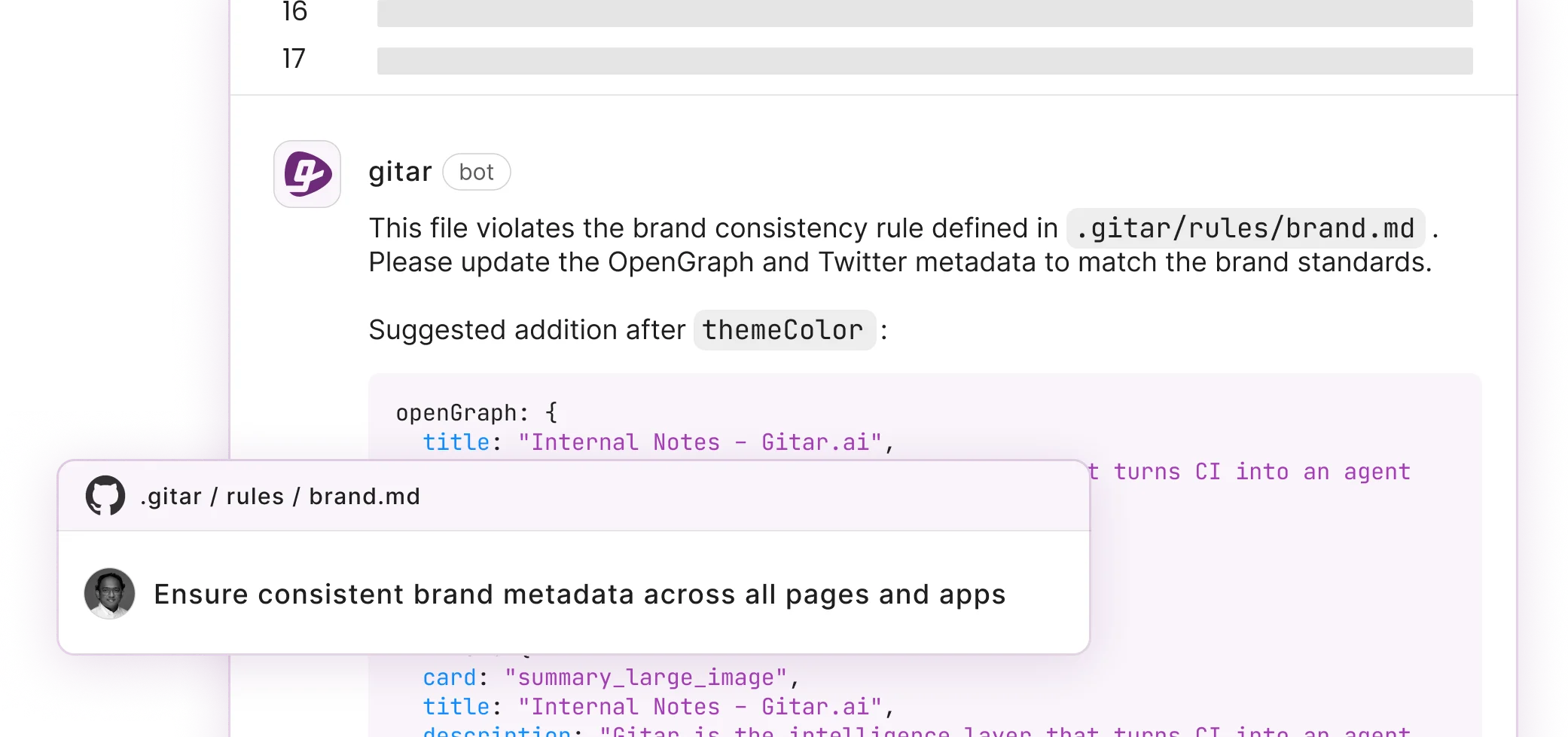
- Set natural language rules – Add workflow automation in .gitar/rules/ directories using plain English. See the Gitar documentation for configuration examples.
- Connect tool integrations – Link Jira, Slack, and Linear so context and notifications flow across platforms.
- Watch the analytics dashboard – Track CI failure patterns and resolution metrics to keep improving review speed.
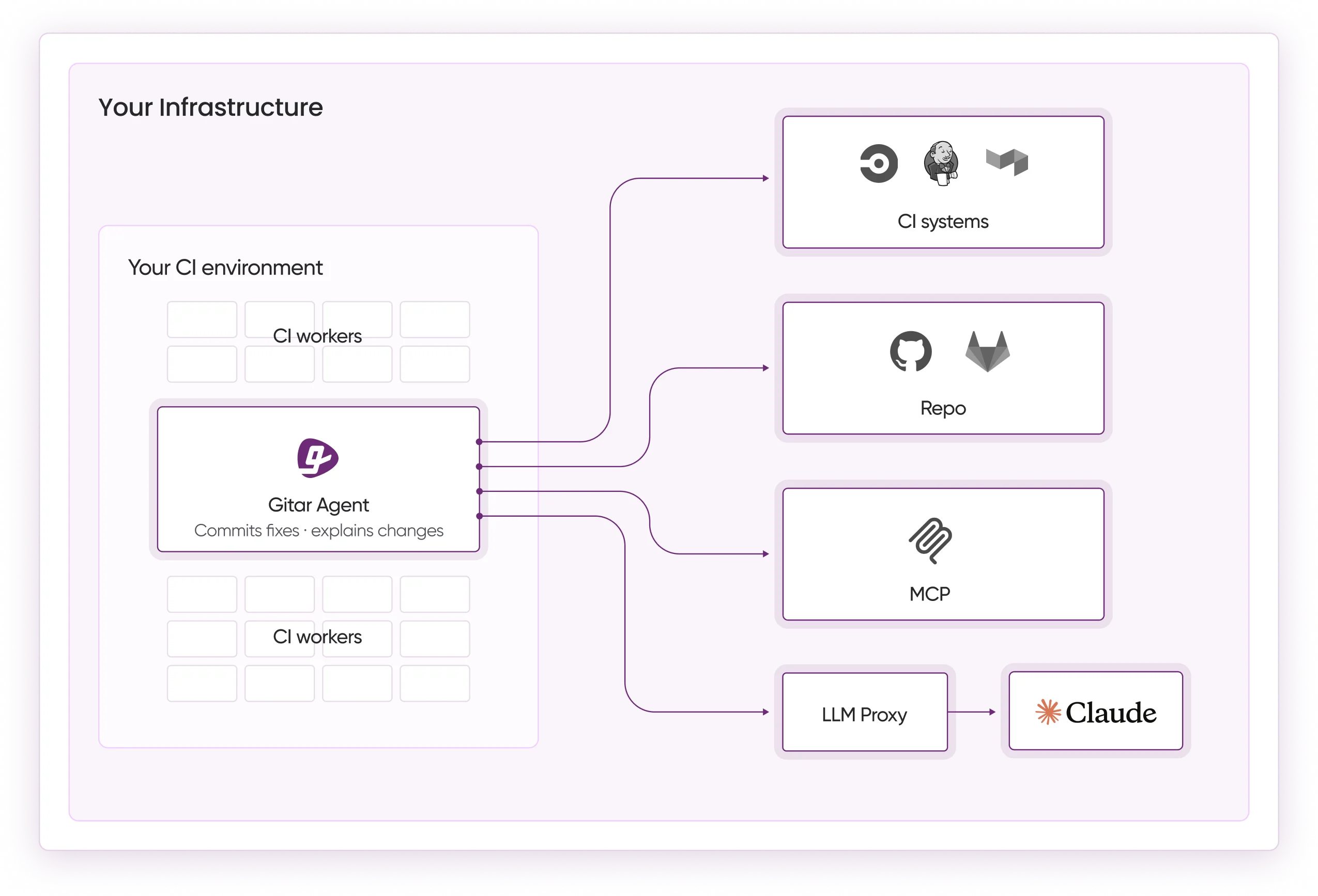
- Deploy self-hosted agents – Enterprise teams can run agents inside their own CI for maximum security and richer context.
This playbook works across GitHub Actions, GitLab CI, CircleCI, and Buildkite. It supports languages from Python and JavaScript to Go and Rust. The cross-platform design helps teams avoid vendor lock-in while scaling review automation across their full development stack.
Best Practices for AI-Assisted Code Review
Readable Natural Language CI Rules
Teams should replace dense YAML with clear, readable workflow definitions. Example rule: “When PRs modify authentication code, assign security team and add security-review label.” This style reduces onboarding friction and lets non-DevOps engineers create useful automation.
Detecting Unrelated CI Failures
Collate’s engineering team reports that Gitar reliably separates infrastructure flakiness from code-related failures. This behavior saves hours of debugging time. Developers avoid chasing issues that sit outside their control.
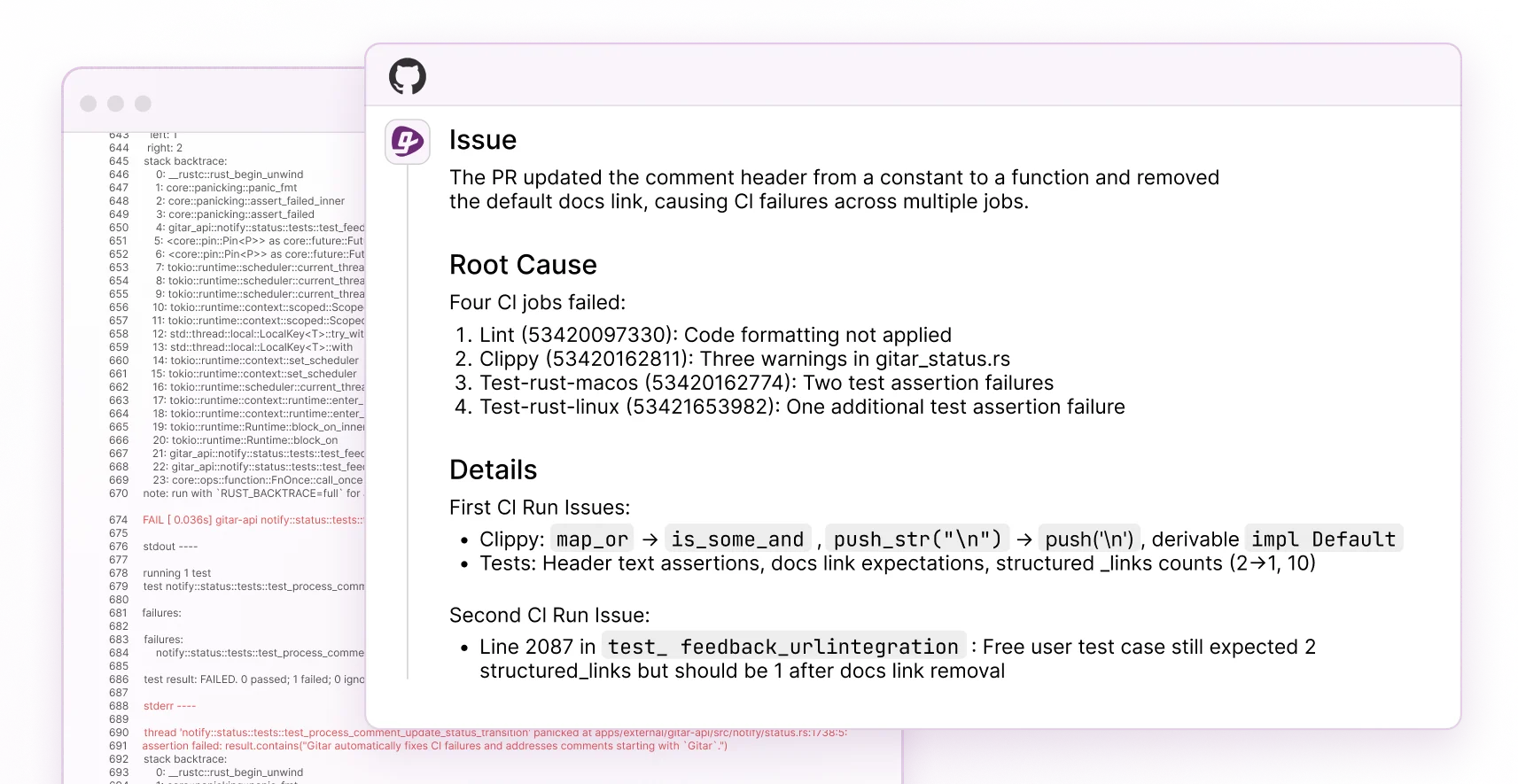
Clear, Concise PR Summary Comments
The Tigris team found that Gitar PR summaries stay more concise than Greptile and Bugbot alternatives. A single updating comment gathers findings, security alerts, and fix status in one place instead of scattering notes across the diff.
Full-loop automation also includes analytics dashboards for CI pattern recognition and deep integrations that share context between development tools. Install Gitar now to automatically fix broken builds and ship higher quality software faster.
ROI and Social Proof from Enterprise Teams
Enterprise deployments show clear productivity and cost improvements after adopting Gitar.
| Metric | Before | After Gitar |
|---|---|---|
| Time/dev | 1hr/day | 15min |
| Cost | $1M/year | $250K |
Pinterest’s 50+ million line codebase sends thousands of PRs through Gitar each day, which confirms reliability at large scale. Security case studies show Gitar catching high-severity vulnerabilities in Copilot-generated code that the original AI missed. These examples highlight the value of independent AI review for AI-generated code.
AI Code Review FAQs
How does Gitar scale to millions of lines of code for free?
Gitar treats code review as core infrastructure instead of a premium add-on. Revenue comes from advanced workflow automation, enterprise analytics, and self-hosted deployment options. The platform still offers unlimited repositories and user seats for core review features. This approach turns basic code review into a commodity, which builds trust and adoption before teams pay for higher-value capabilities.
Are automatic fixes safe for production codebases?
Gitar includes several safety controls. Teams can start in suggestion-only mode, enable autofix only for specific failure types, and rely on CI validation that confirms all tests pass before commits land. Enterprise customers can run agents inside their own CI with access to secrets and build caches, so fixes match real production environments instead of isolated sandboxes.
How does Gitar compare to CodeRabbit and other paid tools?
CodeRabbit and similar tools charge $15-30 per developer each month for suggestion-only reviews that still require manual edits. Gitar offers free code review with comparable analysis depth plus automatic fixing that validates against CI systems. Teams save on license costs and developer time while resolving issues faster.
Can Gitar handle complex CI environments and custom build processes?
Gitar’s agent architecture emulates full CI environments, including specific SDK versions, multi-dependency builds, and third-party security scans. Enterprise deployments run agents inside customer CI systems with access to private registries, secrets, and build caches. This setup keeps fixes aligned with production behavior instead of failing because of environment gaps that simpler tools cannot bridge.
What happens to our code and data when using Gitar?
Free tier workloads run in Gitar’s managed cloud under zero data retention policies. Enterprise customers can deploy agents inside their own infrastructure so code never leaves their security perimeter. The platform maintains SOC 2 Type II and ISO 27001 certifications for teams that need formal compliance. Self-hosted options give customers full control over data handling and processing.
The AI coding wave solved code generation speed but created new review bottlenecks that suggestion engines cannot clear. Teams now need healing platforms that fix issues automatically instead of leaving comments that demand more manual work. Gitar’s free code review and automatic fixing capabilities signal a shift away from expensive suggestion tools toward platforms that keep builds green and restore development velocity. Install Gitar now to automatically fix broken builds and ship higher quality software faster.