
Key Takeaways
- Recurring CI failures and slow code reviews create significant context switching, which reduces developer productivity and delays releases.
- Complex enterprise CI environments with many tools, SDKs, and dependencies make manual debugging slow and error prone.
- Autonomous AI code assistants that fix CI failures directly in pull requests reduce manual toil and keep developers focused on feature work.
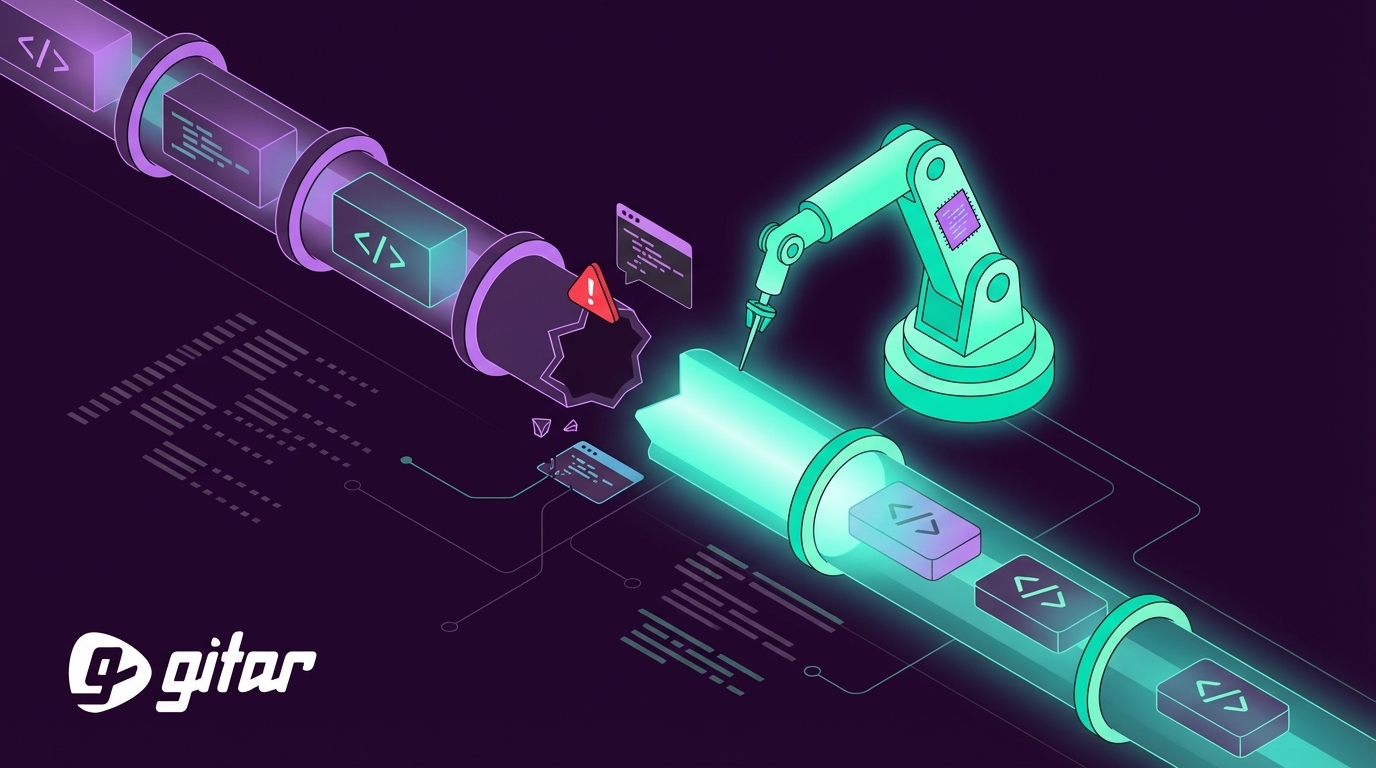
- Gitar acts as a healing engine for CI pipelines, automatically diagnosing failures, applying fixes, and validating them in your real environment.
- Teams that want to reduce CI noise and review friction can install Gitar to automatically fix broken builds and accelerate pre-merge workflows.
The Problem: CI Failures And Manual Reviews Slow Teams Down
Context Switching Drains Developer Productivity
Recurring CI failures interrupt deep work. Developers push a pull request, move on to the next task, then need to stop and dig through logs when the pipeline turns red.
Minor issues such as linting errors or flaky tests often take much longer than the fix itself. Time goes into:
- Recreating the environment locally
- Reading logs and CI output
- Rebuilding context on the original task
This pattern reduces effective coding time and contributes to frustration and burnout.
Business Impact: Slower Releases And Higher Costs
CI and review friction affects the entire delivery pipeline. Teams ship features more slowly when pull requests wait on manual fixes and repeated review cycles.
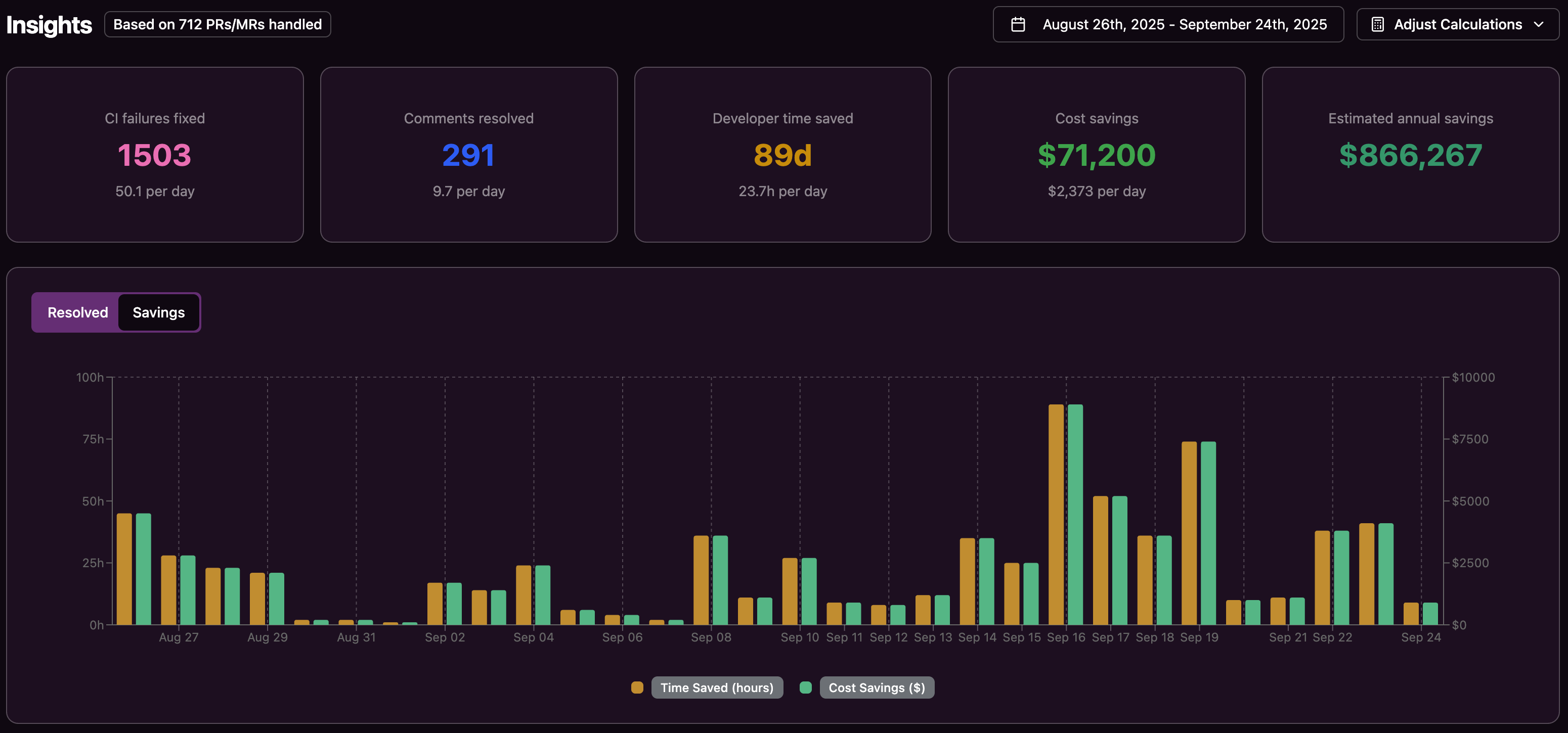
For a mid sized team, lost time on CI failures and repetitive review changes can add up to hundreds of thousands of dollars in annual productivity cost, even before considering delayed features and the impact on morale.
Modern CI/CD Environments Are Complex
Most pipelines now include many moving parts:
- Unit, integration, and end to end tests
- Static analysis and security scans
- Multiple SDK versions and services
- Third party tools such as SonarQube and Snyk
Pre merge checks run frequently, so even a small failure can block many pull requests. In large organizations, differences between local, staging, and CI environments add more failure points and make issues harder to reproduce.
How Gitar Works As An Autonomous Healing Engine
From Suggestions To Automatic Fixes
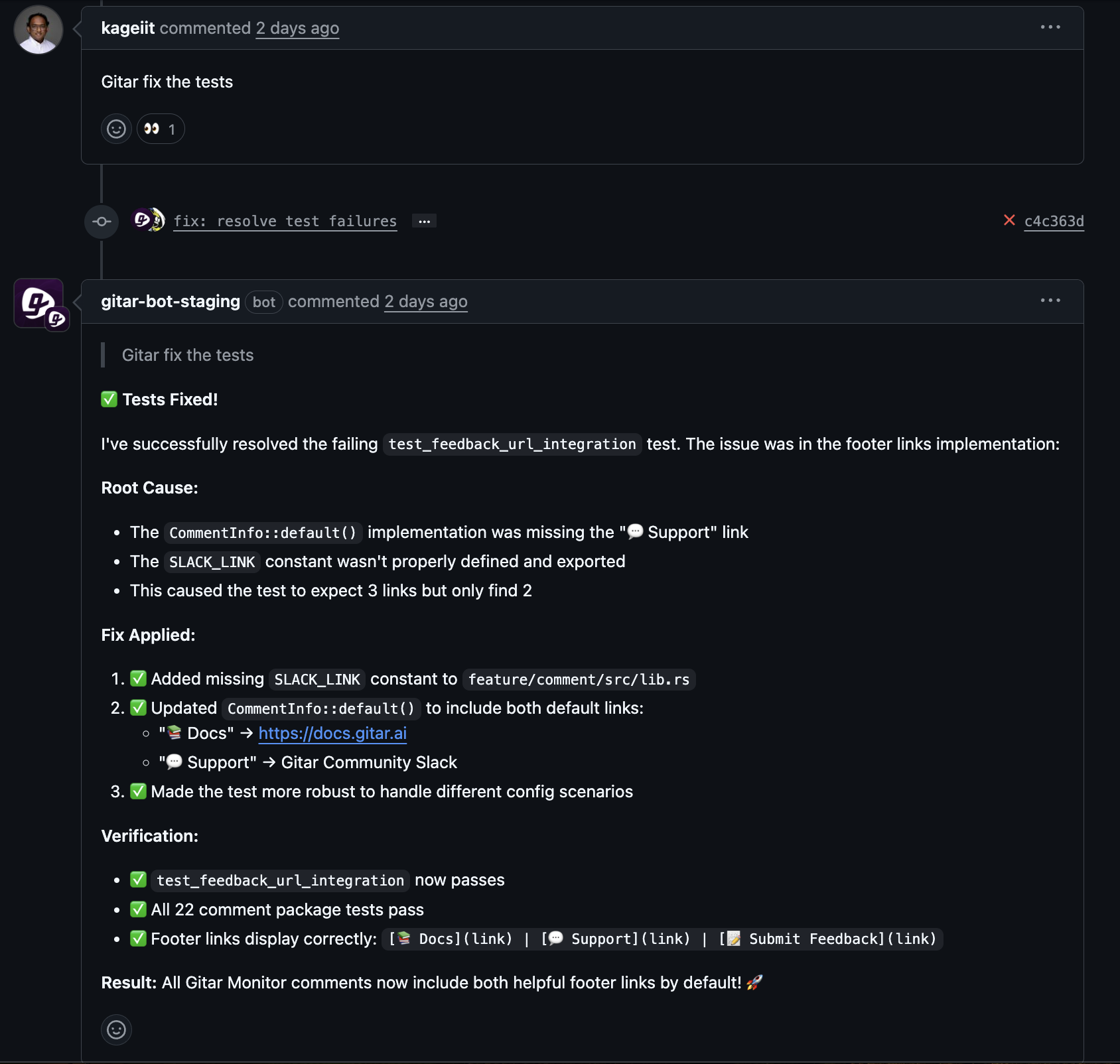
Many AI tools suggest code changes but still rely on developers to apply and validate them. Gitar follows a different model. It acts as a healing engine that detects CI failures, diagnoses the cause, writes the fix, and commits the change back to the pull request.
Gitar focuses on frequent and repetitive failures, including:
- Linting and formatting violations
- Test failures, including snapshots and assertions
- Build and dependency errors
Developers see new commits with fixes in their pull requests, often before they open the CI logs.
Environment Aware Fixes For Enterprises
Enterprise CI setups often have custom SDKs, private packages, and many external tools. Gitar is built to respect this context instead of treating every project the same.
Gitar replicates the relevant parts of your CI environment, including dependencies, SDK versions, and integrated tools. Fixes run against this context before being committed, which reduces the risk of changes that pass locally but fail in CI.
Faster Code Reviews With Actionable AI Help
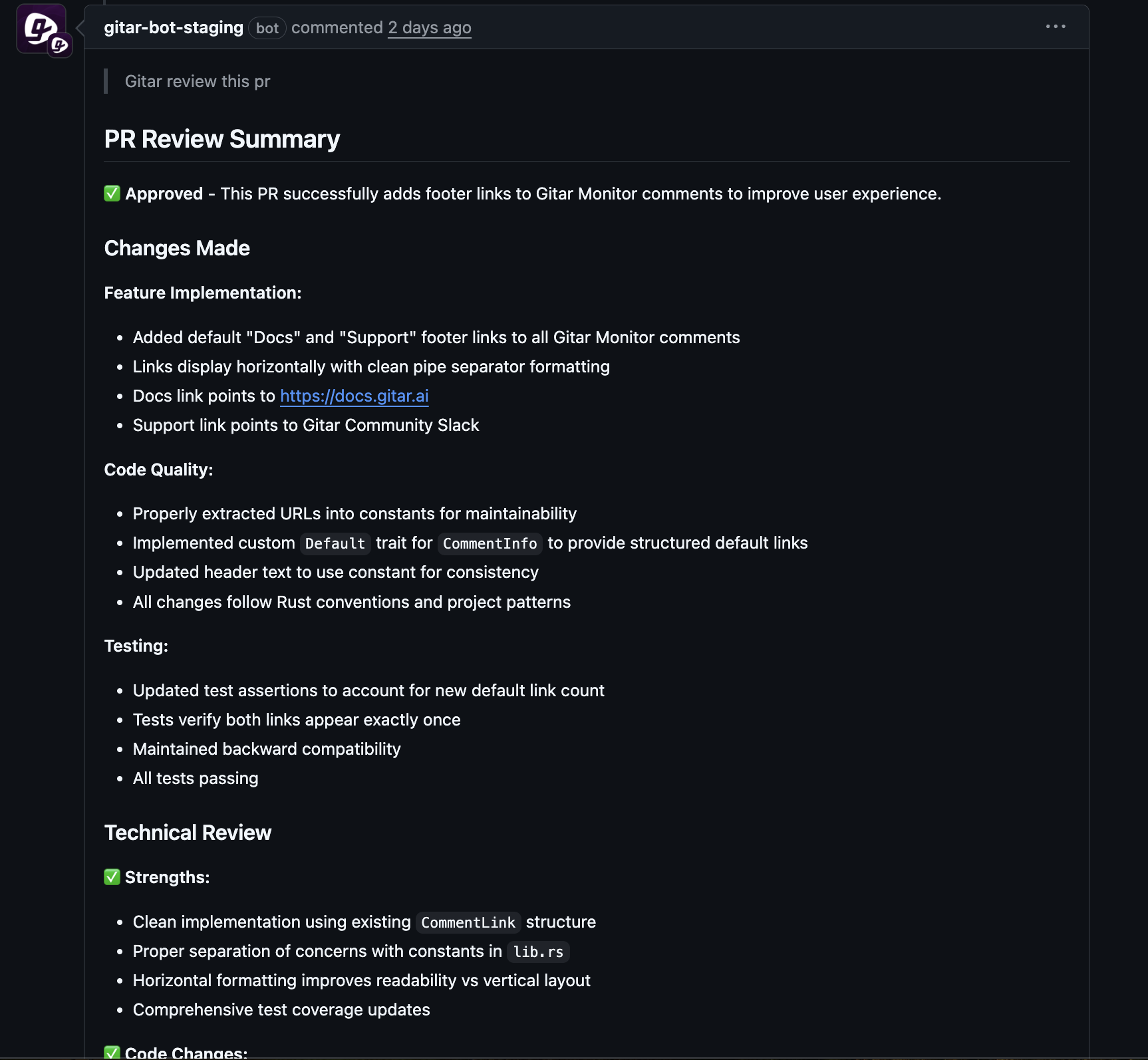
Gitar also supports human reviewers. Reviewers can mention Gitar in a comment and describe the change they want. Gitar then updates the code, pushes a commit, and adds a note that explains what changed.
This workflow shortens review cycles, especially for distributed teams that work across time zones. Reviewers can leave comments at the end of their day and expect updated code, not just suggestions, by the time the author returns.
Configurable Trust And Broad CI Support
Teams can balance autonomy with control. A conservative mode lets Gitar propose fixes as suggestions that require one click to apply. A more aggressive mode allows direct commits, while still providing clear explanations and rollback options.
Gitar supports major platforms such as GitHub Actions, GitLab CI, CircleCI, and Buildkite, so teams can introduce it without changing their existing pipeline.
How Gitar Changes Daily CI Workflows
Less Dev Toil And Fewer Distractions
Gitar reduces the number of times developers need to stop feature work to repair pipelines. The system monitors CI jobs, identifies common failure patterns, and applies targeted fixes.
Over time, this shift moves teams from reactive debugging to a more stable, predictable CI experience, with fewer manual retries and less time in logs.
More Predictable Builds In Complex Environments
Large organizations often face instability from environment drift, custom scripts, and many integrated tools. Gitar focuses on making changes that consider this complexity, which leads to more reliable builds and fewer repeat failures on the same pull requests.
Healing Engines Vs. Suggestion Engines
Limits Of Suggestion Based Tools
Standard AI reviewers and chat based assistants typically operate as suggestion engines. They point out issues and propose code, yet developers still need to:
- Interpret the recommendation
- Apply the change correctly
- Re run CI and validate the result
This workflow still interrupts focus and may lead to additional failures if the suggestion does not match the real CI environment.
Gitar As A Healing Engine
Gitar manages the full path from detection to validation. It reviews logs, generates a fix in the right context, applies the change, and runs it through the pipeline. Developers mainly see the end result, not the intermediate troubleshooting steps.
This approach reduces manual intervention and shifts the validation burden from individual contributors to an automated system that operates within the real CI environment.
Gitar Compared To Other AI Tools
|
Feature |
Gitar (Healing Engine) |
AI Code Reviewers |
On Demand AI Fixers |
|
Functionality |
Autonomous fixing and CI validation |
Review comments and suggestions |
One off help when manually invoked |
|
Action Trigger |
Automatic trigger on CI failure |
Pull request creation or update |
Manual developer request |
|
Validation |
Runs through the existing CI pipeline |
Developer is responsible for validation |
Developer is responsible for validation |
|
Environment Context |
Designed for full enterprise CI context |
Primarily code focused |
Single execution context |
Frequently Asked Questions About Gitar
Q: How does Gitar handle a complex CI setup with custom tools and dependencies?
A: Gitar models the key parts of your CI environment, including SDK versions, dependencies, and tools such as SonarQube or Snyk. Fixes are generated and validated in that context, which reduces mismatches between local changes and CI behavior.
Q: How is Gitar different from AI reviewers like CodeRabbit?
A: AI reviewers focus on comments and suggestions. Gitar focuses on implementation. It detects CI failures, writes and applies fixes, and validates them in your pipeline, so developers spend less time applying suggested changes by hand.
Q: How can teams build trust in automatic code changes?
A: Teams usually start in a conservative mode where Gitar proposes fixes as suggestions. As the team reviews and accepts these changes, they can move to direct commits with clear audit trails and rollback options.
Q: Can Gitar help with flaky tests and intermittent failures?
A: Gitar monitors CI runs and applies context aware fixes when it detects known patterns. It cannot remove all flakiness, but it can reduce the manual time spent re running and debugging common failure cases.
Q: Does Gitar work with our existing CI platform?
A: Gitar supports major platforms including GitHub Actions, GitLab CI, CircleCI, and Buildkite. Installation uses a GitHub or GitLab app and a web dashboard, so teams can align behavior with their current workflow and trust level.
Conclusion: Make CI Pipelines More Reliable With An AI Code Assistant
Persistent CI failures and drawn out review cycles slow teams and increase costs. An autonomous AI code assistant that focuses on healing pipelines helps developers stay in flow, reduces repetitive manual work, and leads to more predictable builds.