
CI/CD pipeline failures and pull request delays slow down development teams, waste time, and disrupt focus. Autonomous AI tools like Gitar tackle these issues by automating fixes, cutting down on manual debugging, and speeding up merge times. This guide explains how such tools help engineering teams streamline workflows, reduce interruptions, and deliver software faster.
Why CI/CD Failures and PR Delays Hurt Teams
Losing Focus with Constant Interruptions
Modern development often involves battling pipeline failures and waiting on code reviews. Developers expect a clear path to production when pushing changes, but instead face failed builds and delayed feedback that break their concentration.
CI failures interrupt developer focus, stretching simple bug fixes from 20 minutes to over 90 due to debugging and context switching. This disruption goes beyond time loss; it affects mental clarity and workflow.
Switching contexts multiple times daily is draining. A developer might be deep into designing a feature when a CI failure forces them to revisit past work, decode error logs, and fix issues before trying to refocus. This cycle repeats, making focused work challenging.
The frustration adds up. Constant interruptions by technical glitches turn a straightforward process of merging code into a daily struggle, impacting morale and productivity.
Delays in Projects and Challenges for Distributed Teams
CI failures and slow reviews delay more than just one developer’s work. When pull requests stall due to issues, entire features and project timelines suffer.
Distributed teams face extra hurdles. A developer in one time zone might push a PR needing input from a teammate across the globe. If CI fails or feedback is needed, time zone differences can turn a quick fix into a multi-day wait, adding 12 to 24 hours per cycle.
This problem grows with unreliable CI issues that teams accept as normal, often rerunning builds instead of fixing root causes. Such habits waste time on preventable problems rather than improving systems.
Every delayed merge blocks not just one person but also teammates waiting on those changes. Dependencies between tasks amplify the impact, creating bottlenecks across the organization.
Financial Costs and Growing Technical Debt
CI/CD inefficiencies carry a high price tag. For a 20-person engineering team, productivity losses from pipeline failures and review delays can add up to about $1 million yearly, factoring in time spent fixing issues and missed innovation opportunities.
Technical debt slows down future changes, with every hour spent on avoidable fixes costing potential growth. Developers stuck on CI issues can’t focus on building new features, hurting competitiveness.
The wider impact is massive. Software bugs cost the US economy $2.41 trillion annually, covering operational failures, rework, and lost market chances. These numbers reflect delays and reduced innovation across the tech sector.
Smaller teams feel this strain even more. For startups, a single major bug or delay can be disastrous, potentially derailing critical product launches. Limited resources make every lost hour a risk to hitting market deadlines.
Pre-Merge CI as the Main Roadblock
The pre-merge stage stands out as the biggest obstacle in development workflows. This phase brings the most job failures, wait times, and debugging challenges for developers. It’s where focus gets disrupted the most.
Data highlights the issue’s scale. Pre-merge CI failures occur 67% more often than post-merge, consuming the bulk of CI resources and developer attention. This makes it a key area for improvement.
Common causes include flaky tests, build errors, dependency problems, and misconfigurations, with flaky tests being a major pain point. Many of these stem from environmental issues, pulling focus away from coding.
Most teams still rely on manual debugging or informal help channels, leading to inconsistent and slow resolutions. This approach wastes time and depends too much on individual expertise.
Want to stop these delays and boost productivity? Install Gitar to fix builds automatically and ship software faster.
How Autonomous AI Fixes CI/CD and Feedback Issues
Moving Past Suggestions to Real Fixes
Many AI tools in software development offer code suggestions, but they’re just a starting point. Autonomous AI takes it further by applying and testing fixes, shifting from mere assistance to actual problem-solving.
Standard AI tools for code review stop at recommendations, leaving developers to implement changes and deal with context switching. Autonomous AI, however, acts as a complete solution. It identifies issues, applies solutions, and confirms they work within the specific CI setup.
The difference lies in testing. While basic tools might suggest a fix for a formatting error, they can’t ensure it fits the full pipeline. Autonomous AI mimics the build environment, applies changes, runs all tests, and only delivers proven solutions, avoiding downstream failures.
These tools also adapt to team needs with adjustable settings. Teams can begin with manual approval of fixes to build trust, then move to automatic commits as confidence grows. This balance keeps control in the team’s hands while easing into automation.
Clear Advantages of AI-Driven CI/CD
Autonomous AI brings specific gains for development teams. Here’s what stands out:
- Faster cycles from commit to merge by cutting out manual debugging. Issues get fixed in minutes, not hours, which matters in rapid development settings.
- Better focus and morale for developers. Constant bug-fighting leads to burnout and turnover, creating knowledge gaps. Automation handles routine tasks, freeing up time for meaningful work.
- Higher code reliability. Fixes are tested across the full CI pipeline, lowering the chance of new errors or regressions.
- Cost reductions. Less time on failures means more capacity for innovation. For larger teams, this speeds up product delivery and cuts expenses.
- Stronger collaboration. For distributed teams, AI resolves issues across time zones, readying changes for review without delays, supporting async workflows.
What Gitar Offers for Enterprise CI/CD
Meet Gitar: Automating CI Fixes and Reviews
Gitar is an AI agent designed to fix failing CI pipelines and handle code review feedback automatically. Unlike tools focused on code suggestions, Gitar targets the post-commit phase, ensuring code passes CI checks and reviews before merging.
Its strength lies in turning frustrating manual fixes into a hands-off process. Gitar doesn’t just suggest changes; it applies and validates them across the full CI workflow for reliable results.

How Gitar Creates a Self-Fixing CI Process
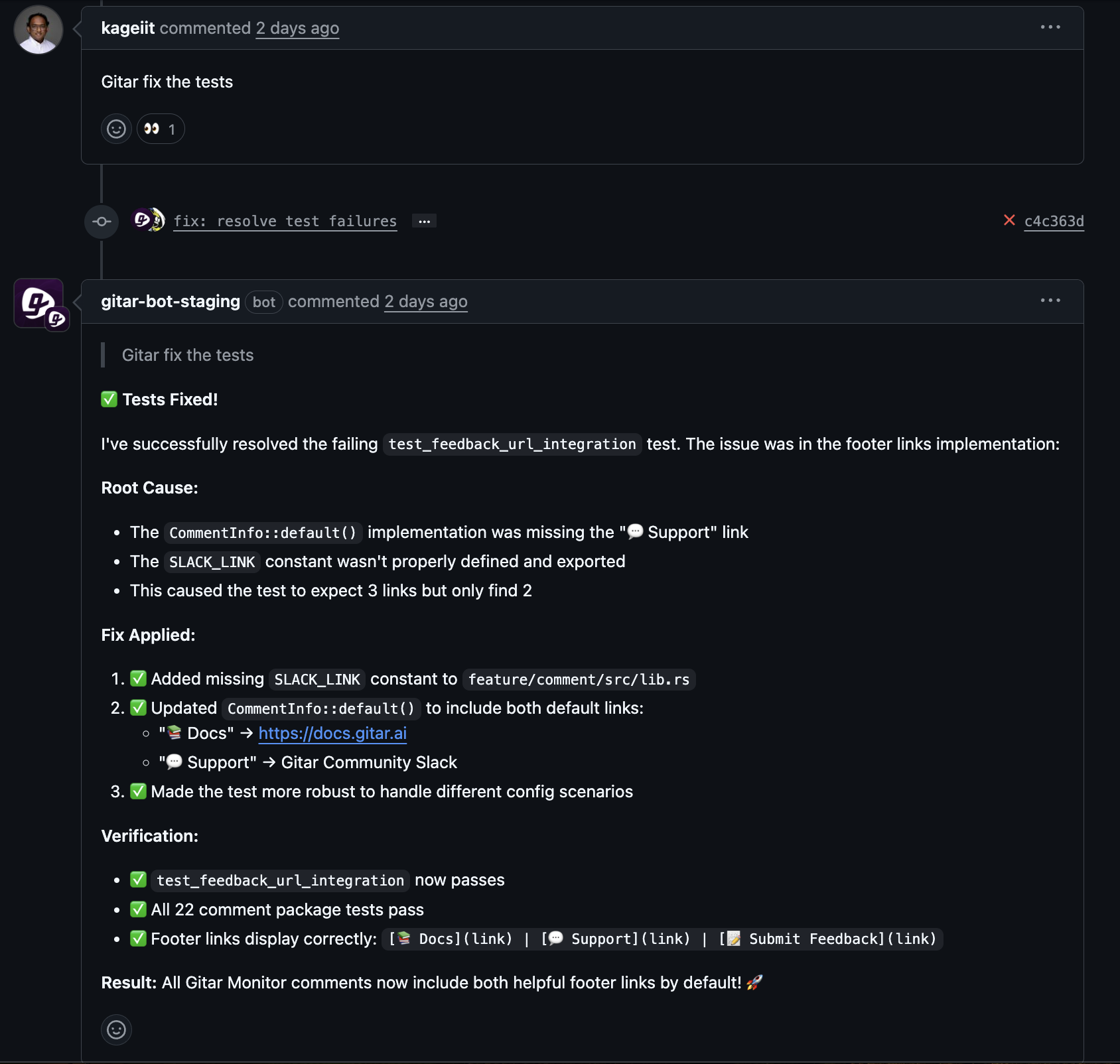
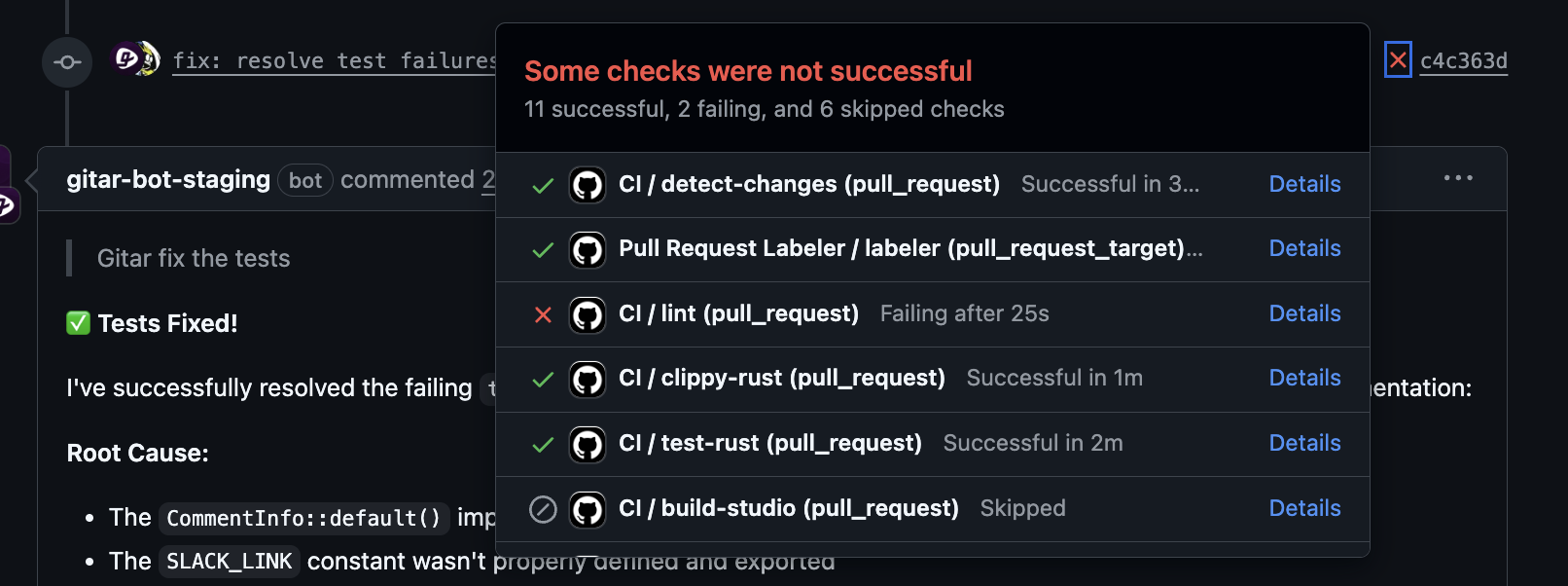
Gitar tackles various CI issues automatically. When a build fails due to formatting, tests, or other errors, it analyzes logs, finds the cause, applies a fix, and updates the pull request, often before the developer notices.
It works within the team’s specific setup, matching SDK versions, dependencies, and tools like SonarQube or Snyk. This ensures fixes align with the real environment, avoiding mismatches.
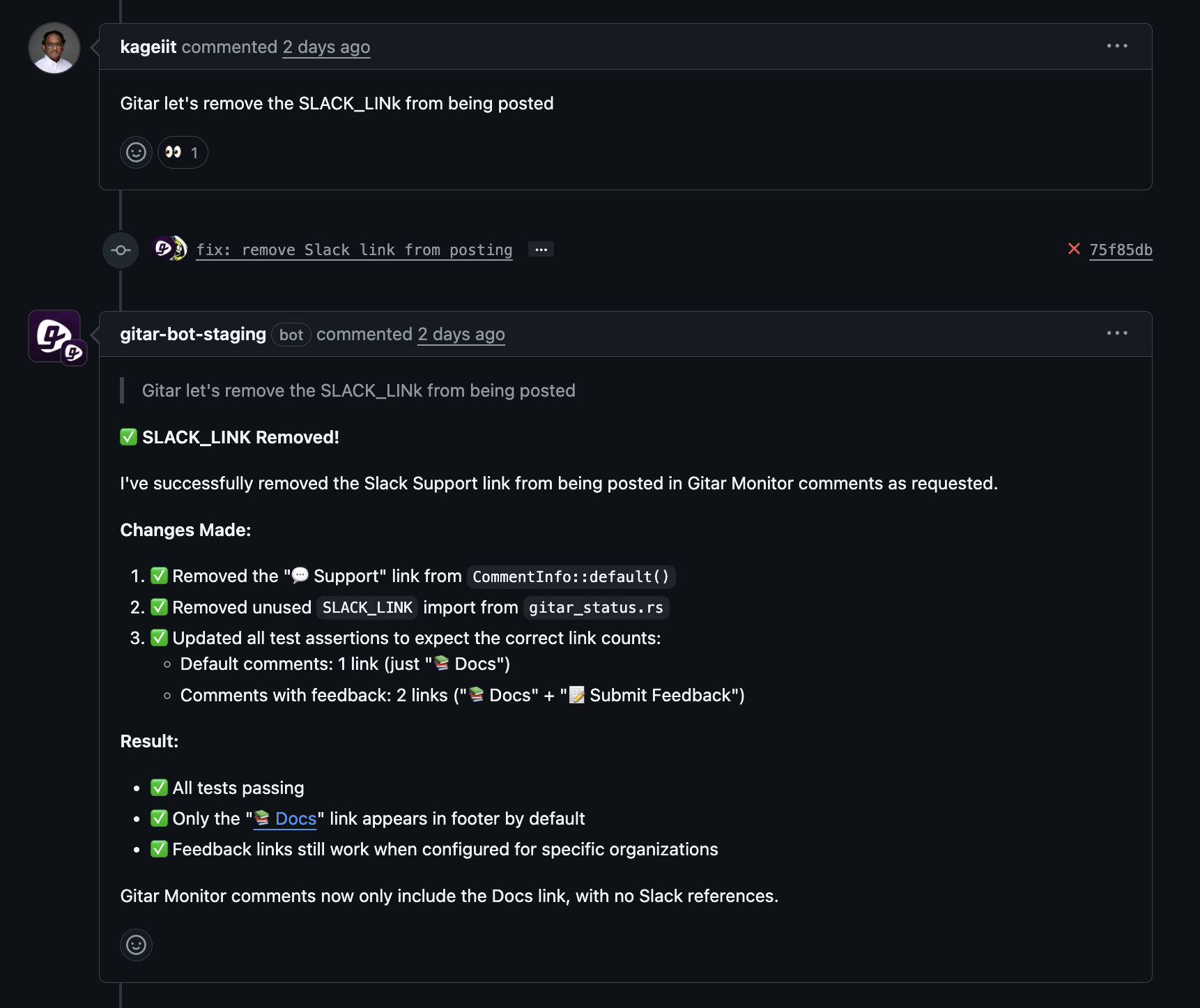
Beyond CI, Gitar aids code reviews. Reviewers can tag it for initial feedback or to apply specific comments, like removing unwanted features from a PR. Gitar then commits the change with a clear explanation.
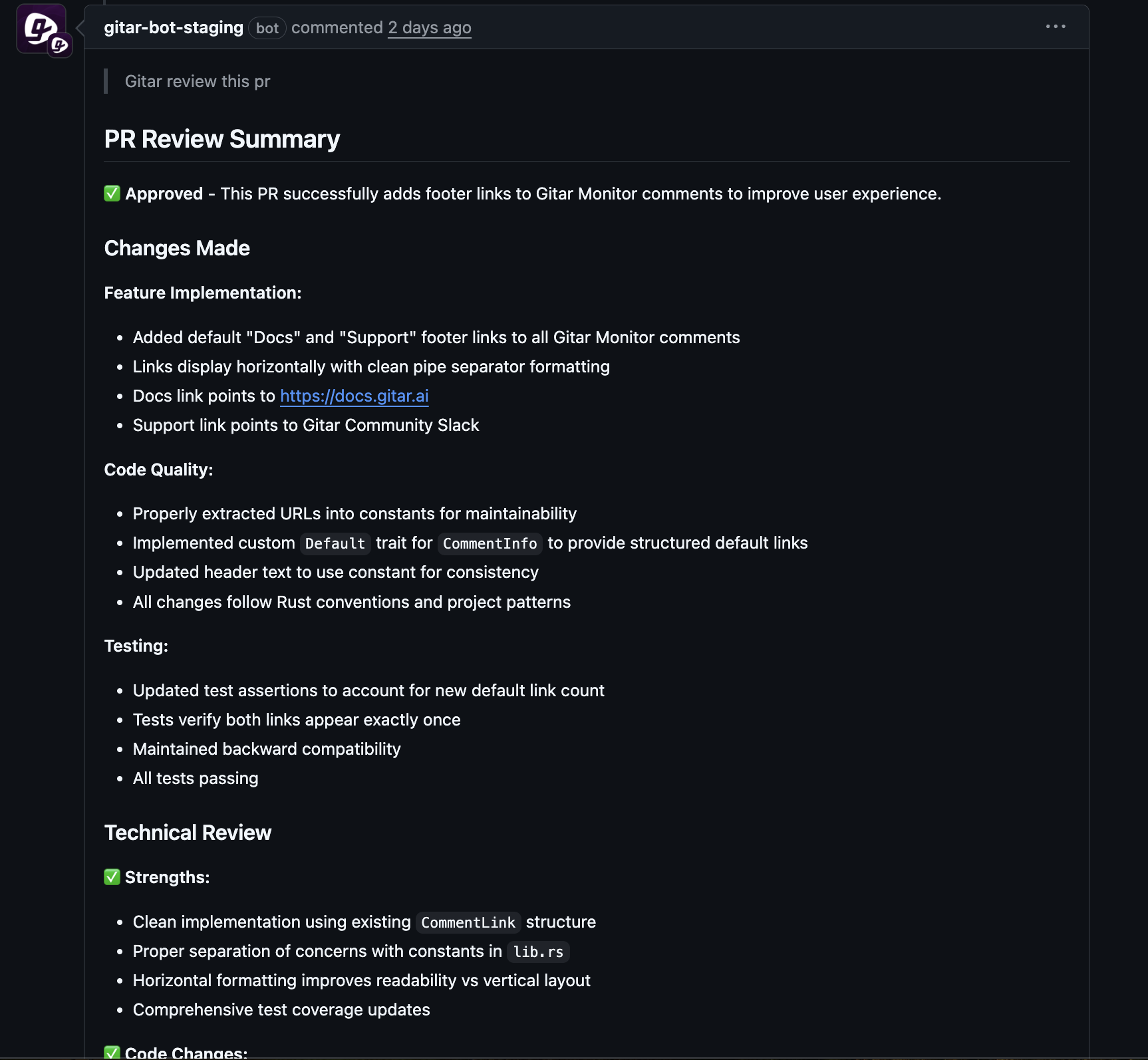
Teams can customize trust levels, starting with suggested fixes for approval and moving to auto-commits as they gain confidence. This keeps automation manageable.
Gitar also integrates with platforms like GitHub Actions, GitLab CI, CircleCI, and BuildKite, fitting into existing setups without disruption.
Interested in automated CI fixes? Request a demo of Gitar to see it in action.
Why Gitar Outperforms Traditional Tools
Comparing Autonomous AI to Manual and Suggestion Tools
|
Feature/Approach |
Manual Work |
AI Code Reviewers |
Gitar (Autonomous AI) |
|
Problem Resolution |
Manual investigation |
Suggestions only |
Automated fixes |
|
Validation |
Human-dependent |
Not validated |
Validated against CI |
|
Developer Interruption |
High |
Moderate |
Minimal/None |
|
Context Switching |
High |
Moderate |
Reduced |
|
Time for Fix |
Hours/Days |
Still manual |
Minutes |
|
CI Environment Replication |
None |
Limited |
Full replication |
|
PR Merge Acceleration |
Slow |
Still slow |
Accelerated |
Addressing Concerns About Autonomous AI
Some teams wonder how Gitar differs from existing AI reviewers like CodeRabbit or Claude. While those tools offer suggestions and limited fix applications, Gitar fully automates the process, testing fixes against the CI pipeline to ensure builds pass with little to no manual input.
Others worry about complex CI setups. Gitar handles this by mirroring the entire workflow, including dependencies and integrations like SonarQube or Snyk, ensuring fixes match the unique environment.
How Gitar Improves Team Dynamics
Preserving Focus and Lifting Team Spirit
Gitar keeps developers in their flow by fixing CI issues automatically. Seeing a failure like a lint error resolved without intervention builds trust in the tool and reduces daily stress.
Less friction means better morale. Teams spend more time on creative tasks instead of repetitive debugging, creating a healthier work environment.
Speeding Up Merges and Overall Progress
Gitar cuts down merge times by addressing CI failures and feedback quickly. For distributed teams, it resolves issues across time zones, so changes are ready for review without delay.
New team members also benefit. Gitar handles routine CI problems, letting onboarding developers focus on learning core systems rather than setup struggles.
Delivering Value for Leaders and DevOps
Engineering leaders gain clear benefits with Gitar. It increases team speed and could save around $500K yearly for a 20-person team at half effectiveness. Speed drives modern development, with CI as a key practice for staying competitive. Gitar smooths out CI/CD hurdles.
For DevOps, Gitar lightens the load by managing common failures, freeing up time for system improvements. It supports intricate pipelines without adding stress.
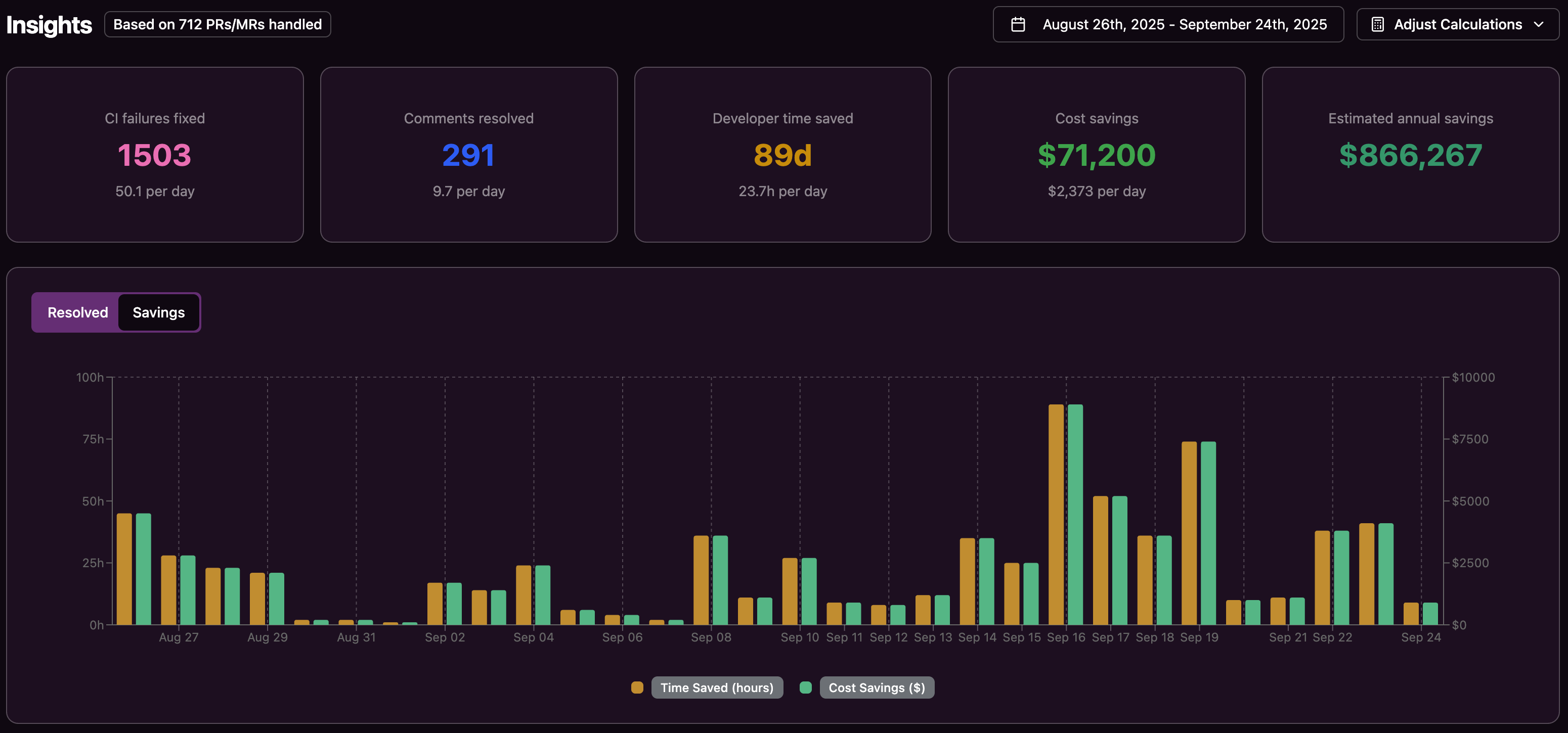
Ready to boost your team’s output? Install Gitar now to fix builds automatically and ship faster.
Common Questions About Autonomous CI/CD
How Does Gitar Differ from Other AI Review Tools?
Gitar stands out by fully automating fixes and confirming they work in your CI setup. Unlike tools like CodeRabbit or Claude that mainly suggest changes, Gitar minimizes developer involvement by ensuring builds succeed.
Can Gitar Manage Complex CI Environments?
Yes, Gitar adapts to intricate setups by replicating your full workflow, including SDKs, dependencies, and tools like SonarQube or Snyk. This ensures fixes fit your specific environment.
How Does Gitar Support Team Collaboration?
Gitar streamlines teamwork by automating CI fixes, cutting down on endless debugging chats. For remote teams, it resolves issues instantly across time zones, aiding async work and focusing discussions on bigger goals.
What CI Issues Can Gitar Fix Automatically?
Gitar addresses many failures, including formatting errors, test issues like snapshot updates, and build problems like dependency conflicts. It targets routine issues to avoid altering core functionality.
How Does Gitar Avoid New Bugs in Fixes?
Gitar tests fixes in a mirrored CI environment, running full checks before applying them. Teams can start with manual approval modes and have rollback options, reducing risks of errors.
Maximizing Team Speed with Autonomous AI
CI failures and PR delays drain productivity in software development. The pre-merge phase brings the heaviest burden with frequent failures and debugging demands. These issues disrupt focus, delay projects, and cost money.
Manual fixes and basic AI suggestions still require developer intervention. Gitar changes this by autonomously handling CI issues and feedback, delivering a self-fixing CI process.
For leaders, Gitar means quicker delivery, lower costs, and happier teams. The financial impact is noticeable, with substantial yearly savings possible.
Want to see self-fixing CI in action? Request a free demo of Gitar today.