
Key Takeaways
- CI/CD failures create significant hidden costs by increasing context switching, delaying releases, and reducing developer focus.
- Traditional CI/CD and AI suggestion engines still require manual intervention, which limits efficiency and slows delivery.
- Autonomous AI agents enable self-healing CI by diagnosing, fixing, and validating pipeline issues without breaking audit or governance requirements.
- Successful adoption of autonomous CI/CD depends on cultural readiness, clear trust boundaries, and a staged rollout that builds confidence over time.
- Gitar gives engineering teams a practical way to add autonomous CI/CD fixes in 2026, with a fast path to value: Install Gitar to automatically fix broken builds.
The Strategic Imperative: Mastering CI/CD Efficiency
The High Cost of Inefficient CI/CD
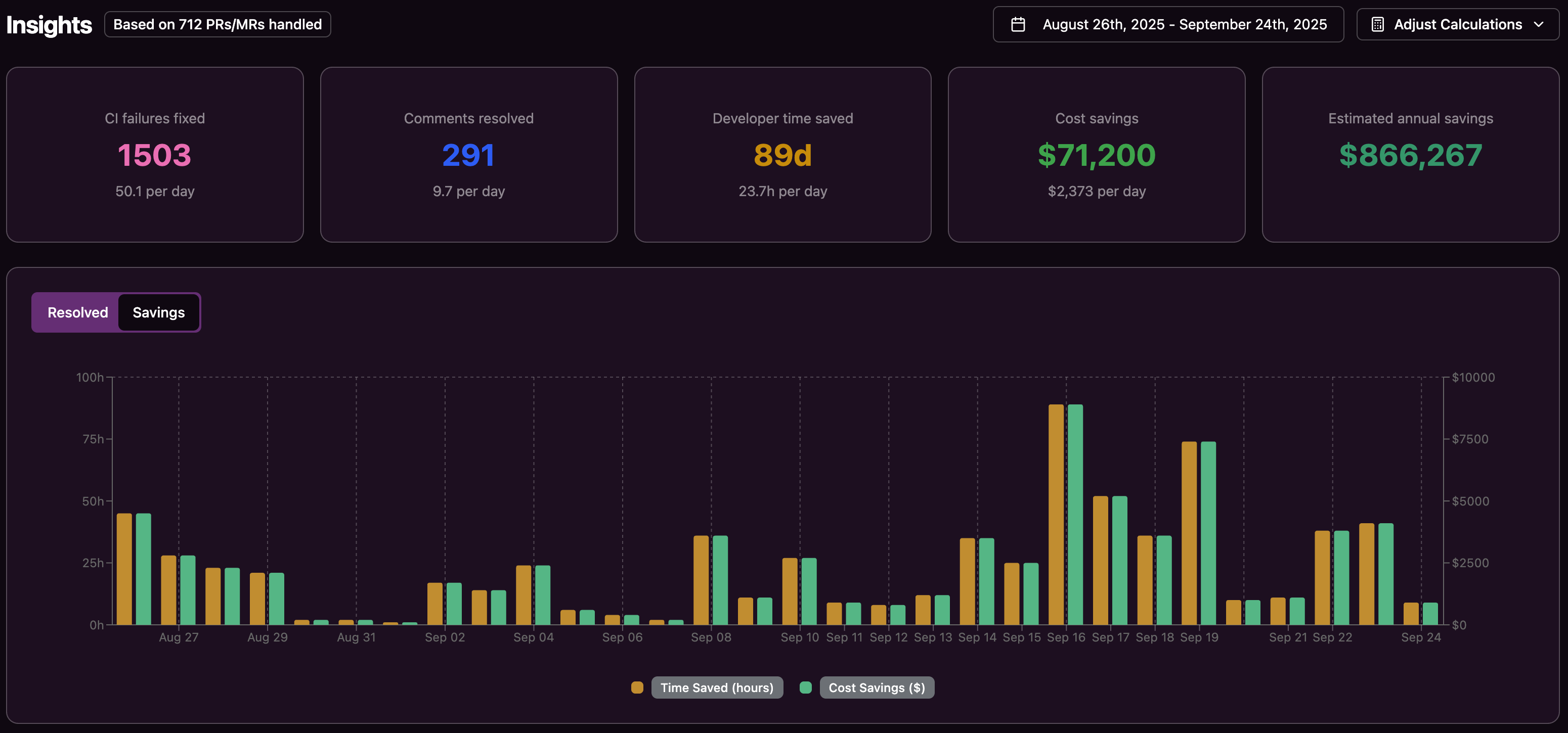
Inefficient CI/CD pipelines create direct financial and productivity losses. For a team of about 20 developers, the combined impact of failed builds, manual debugging, and context switching can approach $1M per year in lost time and delayed output.
Each failed build pulls developers out of deep work, turning small issues into long interruptions. These delays ripple into slower feature delivery, missed timelines, and higher burnout as teams constantly respond to pipeline fires.
Why Traditional CI/CD Falls Short
Traditional CI/CD relies on static rules and predefined workflows. Pipelines detect failures, but usually cannot interpret context, create safe fixes, and validate those fixes on their own.
This structure keeps humans in the critical path for most failures. The result is a gap between the promise of automation and the day-to-day reality of manual investigation, patching, and re-running jobs.
The Imperative of Autonomous CI
Autonomous CI systems reduce time-to-market by closing this gap. They diagnose failures, propose and apply fixes, rerun tests, and surface results with traceable logs.
Teams that adopt autonomous CI can scale development without a proportional increase in operations overhead. They ship more frequent changes while keeping build health stable and developer focus high.
Autonomous AI Agents: The New Mental Model for Self-Healing CI
Defining Self-Healing CI
Self-healing CI describes pipelines that identify, fix, and validate issues without requiring constant developer input. The system operates within clear guardrails, keeps audit trails, and respects organizational policies.
Failure alerts shift from urgent interruptions to informative updates. Developers stay focused on product work while the system handles most routine CI issues in the background.
Autonomous AI as a Problem-Solver
Autonomous AI agents move beyond suggestion engines. Instead of only pointing to possible fixes, they take responsibility for executing changes, verifying results, and updating the codebase when configured to do so.
This behavior requires robust context and state management, support for concurrent events, and the ability to reason across complex environments and toolchains.
Core Principles of Autonomous Systems
Effective autonomous CI systems typically follow three core principles:
- Immediate response to failures without waiting for human action
- Protection of developer flow by reducing interruptions and context switching
- Shorter time from commit to production while maintaining reliability
Gitar as a Practical Path to Autonomous CI
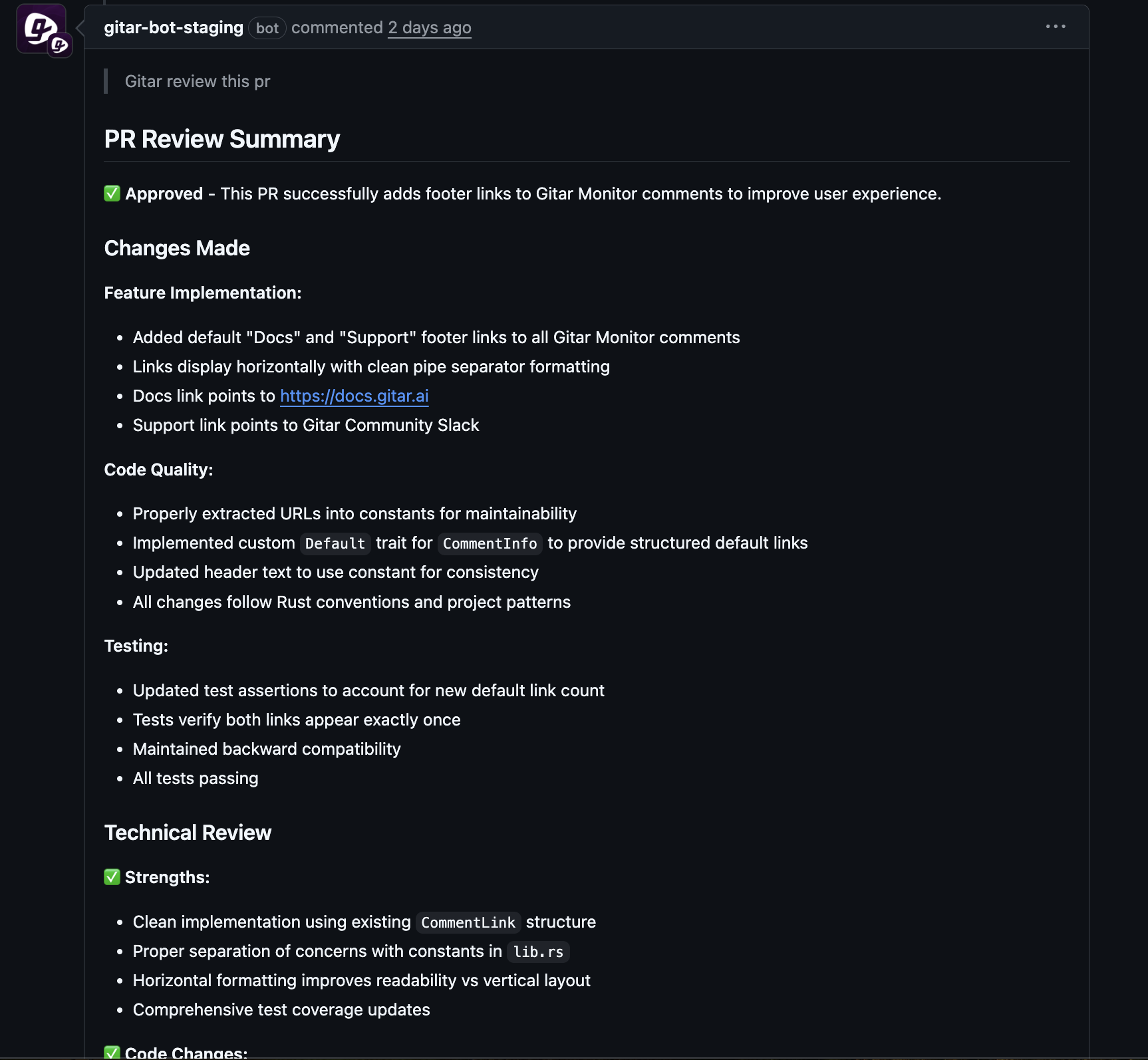
Gitar applies these principles by acting as an autonomous agent inside existing CI/CD flows. When failures occur, it analyzes logs and code, proposes fixes, validates changes, and, when configured, commits updates without manual intervention.
This approach shifts work from developers to the agent while keeping humans in control of automation levels and approval workflows.
Evolution of CI/CD: Addressing Modern Challenges
From Manual to Autonomous: The CI/CD Journey
Teams often progress from manual fixes, to scripted automation, to systems that detect failures automatically. Autonomous agents represent the next stage, where the system also takes on the work of resolving those failures.
This evolution builds on existing CI/CD tools rather than replacing them. Autonomous agents sit on top of current pipelines, using their outputs as signals.
The Rise of AI-Driven CI/CD
Wider AI adoption has prepared organizations for more intelligent CI behavior. Models can now interpret logs, reason about code, and coordinate multi-step workflows across tools.
These capabilities give AI agents the context they need to handle many CI failures end to end instead of handing them back to humans after detection.
Why Suggestion Engines Fall Short
Suggestion engines still depend on developers to read recommendations, change code, rerun pipelines, and validate results. Context switching remains high, and the risk of incomplete fixes persists if the engine does not fully understand the environment.
Self-healing CI requires agents that carry fixes through to validation while respecting constraints such as branch protection rules and code review processes.
Strategic Considerations for Integrating Autonomous Capabilities
Build vs. Buy: Optimizing for Efficiency
Internal development of autonomous CI agents demands significant work in agent design, environment replication, security, and ongoing maintenance. These efforts rarely match the core mission of most product teams.
Adopting a purpose-built solution such as Gitar gives teams access to an existing agent framework, tuned for CI/CD, with lower implementation risk and faster value.
Organizational Readiness for Autonomous CI/CD
Technical integration alone is not enough for success. Teams need clear policies for when the agent can act, how to review changes, and how to escalate complex cases.
Many organizations start with read-only or suggestion modes, then gradually move to auto-fix and auto-commit for well-understood failure types.
Measuring ROI in Autonomous Systems
Useful ROI metrics include deployment frequency, lead time for changes, mean time to recovery, and the share of failures resolved without human action.
Business stakeholders can also track indicators such as fewer after-hours firefights, higher developer satisfaction, and more predictable release schedules.
Security and Compliance in Autonomous CI/CD
Autonomous systems must align with existing governance. Required controls often include role-based access, audit logs for each change, and configuration options that limit which branches and repositories the agent can modify.
Gitar supports these needs by providing detailed records of actions and configurable trust levels that fit enterprise security expectations.
Gitar: A Structured Approach to CI/CD Efficiency
Gitar’s Architecture for CI/CD Fixes
Gitar uses an agentic harness with persistent memory and context management built for live CI environments. It tracks ongoing jobs, reacts to new events, and adapts to scenarios such as force pushes and parallel pull request comments.
This design helps the agent stay aligned with the latest state of the codebase and pipeline, which reduces conflicts and flakiness.
How Gitar’s Healing Engine Improves CI Fixes
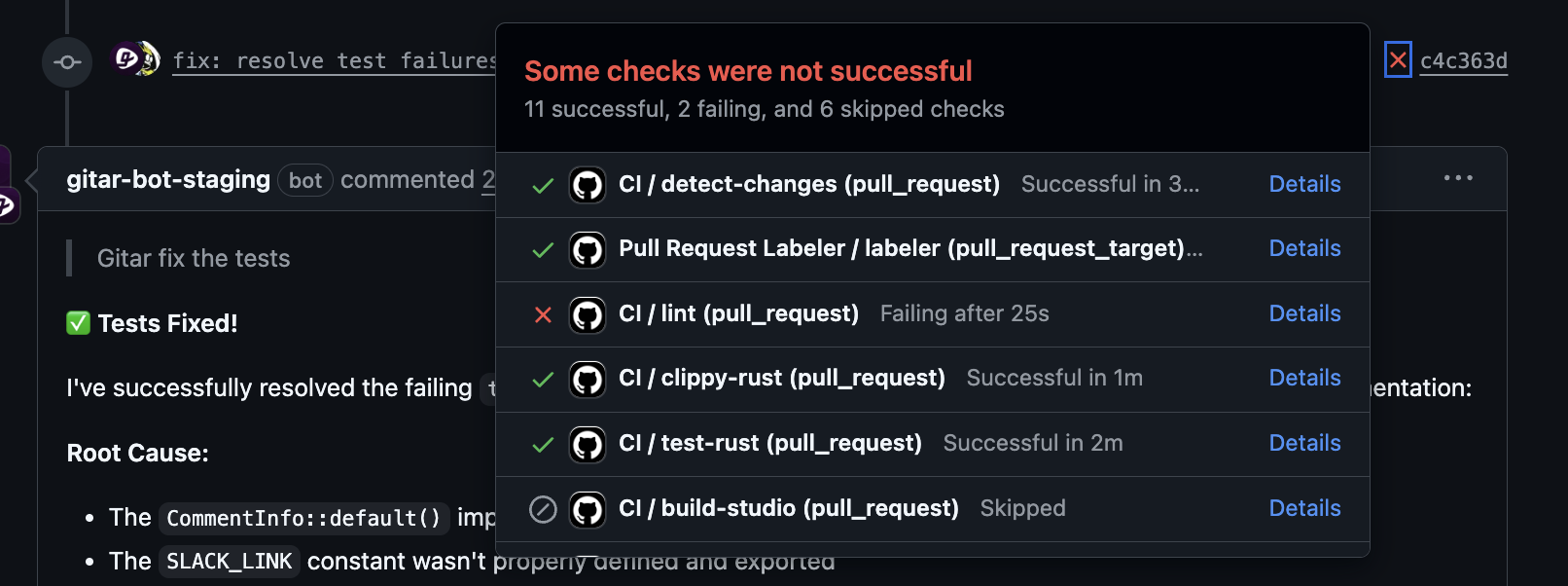
Gitar acts as a healing engine for CI. It applies fixes, reruns relevant checks, and confirms that builds succeed before reporting back.
Install Gitar to automatically fix broken builds and reduce manual debugging. This approach lowers context switching and keeps developers focused on core product work.
Key Capabilities for CI/CD Efficiency
Gitar supports CI/CD efficiency through capabilities such as:
- End-to-end fixing of many failures, including applying and validating changes
- High-fidelity environment replication across SDK versions and integrations
- Configurable trust models that range from suggestions to auto-commits
- Support for distributed teams that work across time zones and schedules
Implementation Readiness: A Framework for Autonomous CI/CD
Maturity Model for Autonomous CI/CD
Most organizations move through three stages: reactive (manual fixes), proactive (automated detection with manual fixes), and autonomous (self-healing with targeted human oversight).
Knowing the current stage helps teams plan realistic milestones, from initial pilots to broader rollout.
Identifying Stakeholders for Autonomous CI Adoption
Productive adoption requires alignment among developers, DevOps, security, and leadership. Each group has specific needs, such as control over changes, environment safety, or clear reporting on value.
Sharing early results from pilot projects helps address concerns and refine policies before wider deployment.
Sequencing Initiatives for Successful Integration
Effective rollouts start with high-volume, low-risk issues such as linting, formatting, and simple test fixes. Teams then expand to more complex failures as trust grows.
This sequencing builds confidence and gives stakeholders time to adapt workflows to the new automation.
Strategic Pitfalls for Teams Implementing Autonomous CI
Over-Reliance on Manual Debugging
Teams that continue to treat every failure as a manual task miss the value of autonomous agents. Routine issues stay time-consuming, and engineers have less capacity for design and long-term improvements.
Underestimating Organizational Change
Autonomous CI affects ownership, on-call expectations, and collaboration patterns. Teams that skip intentional change management often see partial usage and unclear responsibility when incidents occur.
Ignoring Trust Building
Trust in automation grows over time. Gitar’s adjustable modes allow teams to start with conservative settings, observe behavior, and then enable more automation where results are reliable.
Lack of Holistic Environmental Replication
Agents that do not mirror real CI environments can introduce fixes that pass locally yet fail in shared pipelines. Gitar focuses on environment-aware execution to reduce these mismatches.
Comparison: Gitar, AI Suggestion Engines, and the Status Quo in CI Efficiency
|
Feature |
Gitar (Autonomous AI Agent) |
AI Suggestion Engines |
Manual (Status Quo) |
|
CI Efficiency |
Autonomous fixes in near real time |
Partially improved, manual steps required |
Fully manual, limited by human capacity |
|
Fixes Execution |
Applies and validates fixes within guardrails |
Suggests fixes, humans implement |
Humans debug, patch, and rerun builds |
|
Context Switching Reduction |
Minimizes interruptions |
Reduces some investigation time |
High, frequent context switching |
|
Developer Flow State |
Helps preserve focus on feature work |
Improves, but interruptions remain |
Regularly disrupted by CI issues |
Conclusion: Moving Toward Self-Healing CI with Gitar
Efficient CI/CD in 2026 depends on more than detection; it requires reliable, auditable automation for fixing failures. Manual workflows and suggestion-only tools no longer keep pace with modern delivery expectations.
Gitar offers engineering leaders a concrete way to introduce autonomous fixes into existing pipelines while maintaining control and visibility. Teams gain faster feedback, fewer interruptions, and more time for product development.
To see autonomous CI in your own environment, install Gitar and start automatically fixing broken builds.
Frequently Asked Questions (FAQ) about CI/CD Automation
How does Gitar handle real-time CI failures?
Gitar tracks CI events in real time, interprets logs and code, and runs multi-step workflows that apply fixes and rerun checks. Its agent harness and memory keep context throughout the process so pipelines recover without manual steps in many cases.
How does Gitar manage complex enterprise environments?
Gitar replicates CI environments with awareness of specific JDK or SDK versions, dependency trees, and tools such as SonarQube and Snyk. This context helps it produce fixes that behave consistently in shared pipelines and production-like conditions.
How does Gitar support developer focus?
Gitar resolves many CI and code-review issues on its own, which reduces the number of times developers must stop feature work to diagnose builds or apply small patches. Developers stay in flow longer and spend more time on design and implementation.
How does Gitar integrate with existing CI/CD tools?
Gitar integrates with platforms such as GitHub Actions, GitLab CI, CircleCI, and Buildkite. It listens for events from these tools, maintains context across jobs and users, and acts through standard workflows like pull requests and checks.
What security and compliance considerations are important when implementing autonomous systems?
Security and compliance requirements often include strong access controls, clear boundaries on where the agent can act, and detailed logs of every automated change. Gitar supports these needs with role-based permissions, audit trails, and configurable automation levels that align with internal policies.