
Last updated: January 19, 2026
Key Takeaways
- AI coding tools speed up code creation 3–5x, yet they slow CI/CD with 91% longer PR reviews and falling test coverage.
- AI-generated code creates 4x more duplication, 48% security vulnerabilities, and 75% more logic errors, which overwhelms manual fixes.
- Gitar’s AI platform auto-fixes CI failures, guarantees green builds, and offers free full PR analysis, unlike $15–30 per developer suggestion tools.
- Use five strategies, including automated testing, refactoring for testability, real dependencies, critical path focus, and small-chunk delivery to raise coverage without losing speed.
- Adopt four DevOps practices with Gitar’s self-healing CI to ship higher quality software faster: continuous integration, pipeline tuning, DORA monitoring, and team autonomy.
The Coverage and Delivery Impact of AI-Driven Coding
AI coding now shapes most modern software teams. AI adoption among software development professionals reached 90% in 2025, and 41% of all code is now AI-generated or AI-assisted. Productivity during coding has surged, yet serious downstream bottlenecks have appeared.
GitClear’s analysis of 153 million lines of code links AI-assisted coding to 4x more code duplication. At the same time, 66% of developers spend more time fixing “almost-right” AI code than they save writing it. Quality problems stack up quickly. At least 48% of AI-generated code contains security vulnerabilities, and logic errors appear 75% more often in AI-generated pull requests.
Traditional tools struggle because they only suggest fixes instead of applying them. Manual CI troubleshooting forces constant context switching and drains focus. Expensive review tools like CodeRabbit charge $15–30 per developer and still leave comments that engineers must implement by hand. Teams see sprint velocity stall, even as code generation speeds up, because the real bottleneck now sits in validation and merging.
Large enterprises feel this pressure most. Pinterest handles thousands of PRs every day across more than 50 million lines of code while still enforcing strict coverage standards. Manual fixes and suggestion-only tools cannot keep pace with this volume and still protect quality and delivery speed.
Gitar’s Healing Engine: From Suggestions to Guaranteed Green Builds
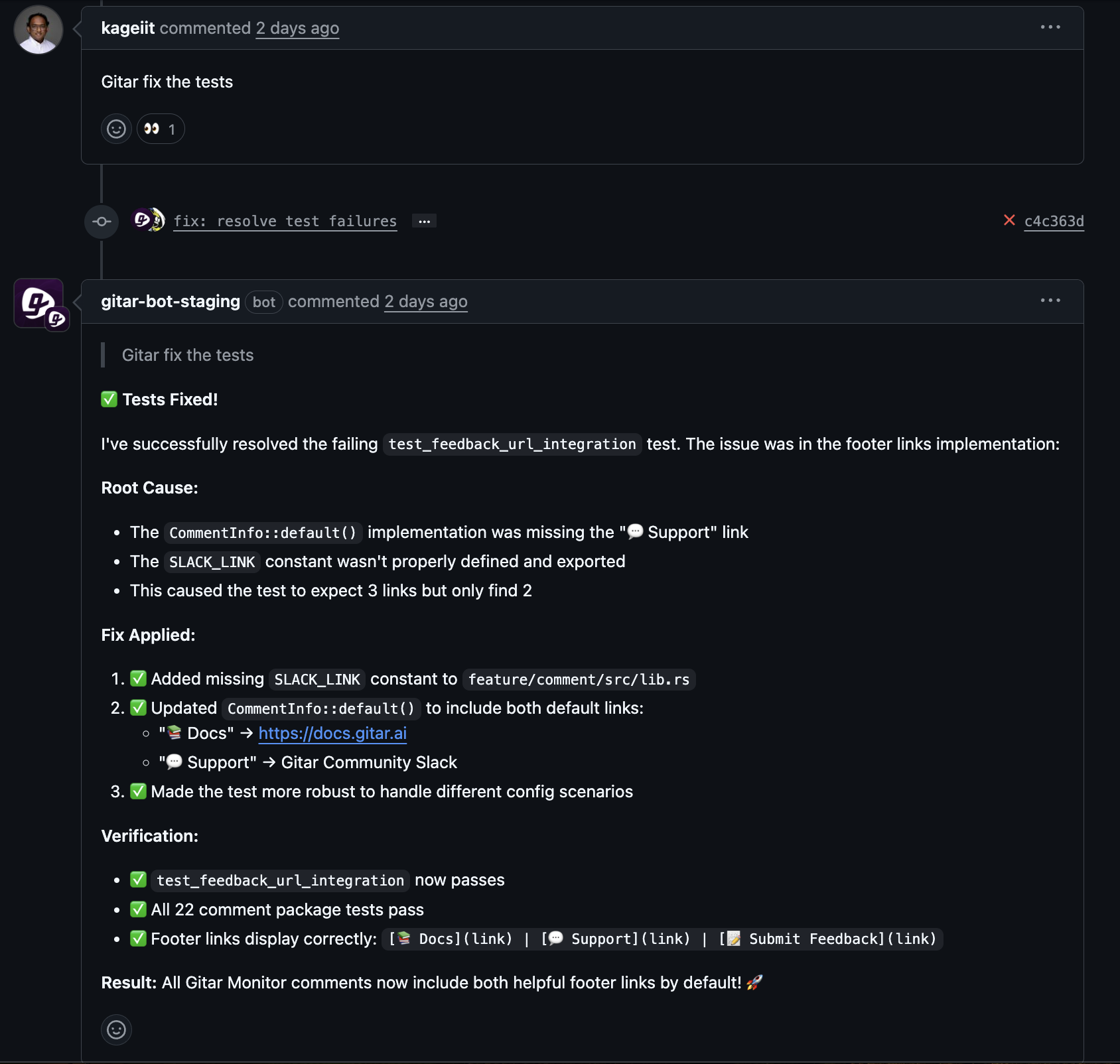
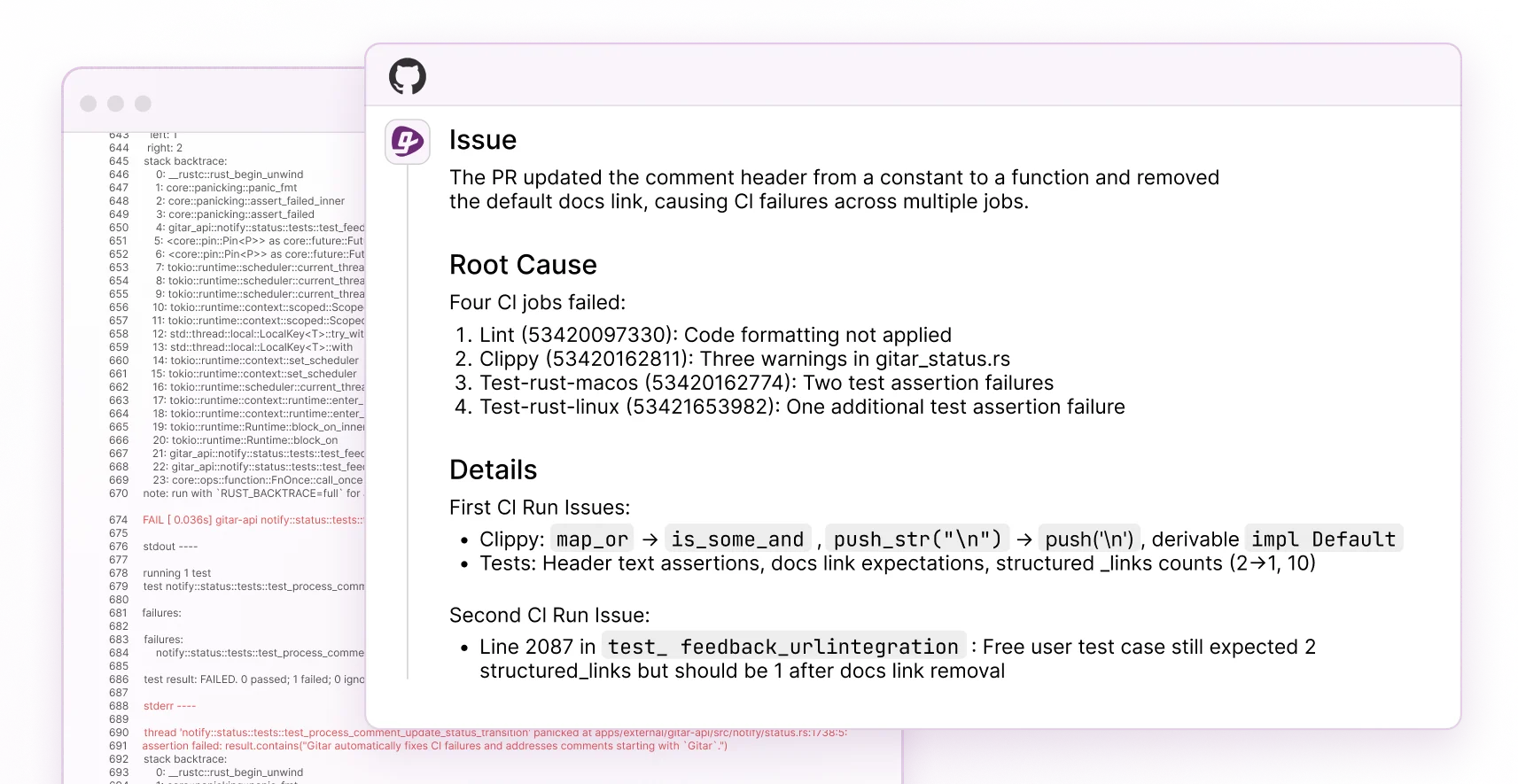
Gitar shifts code review from suggestion engines to healing engines. Competing tools charge premium prices for basic comments. Gitar instead delivers full AI code review for free and then automatically fixes broken code. When CI fails, Gitar reads the failure logs, generates validated fixes, and commits them directly to the pull request. Teams receive green builds without manual intervention.
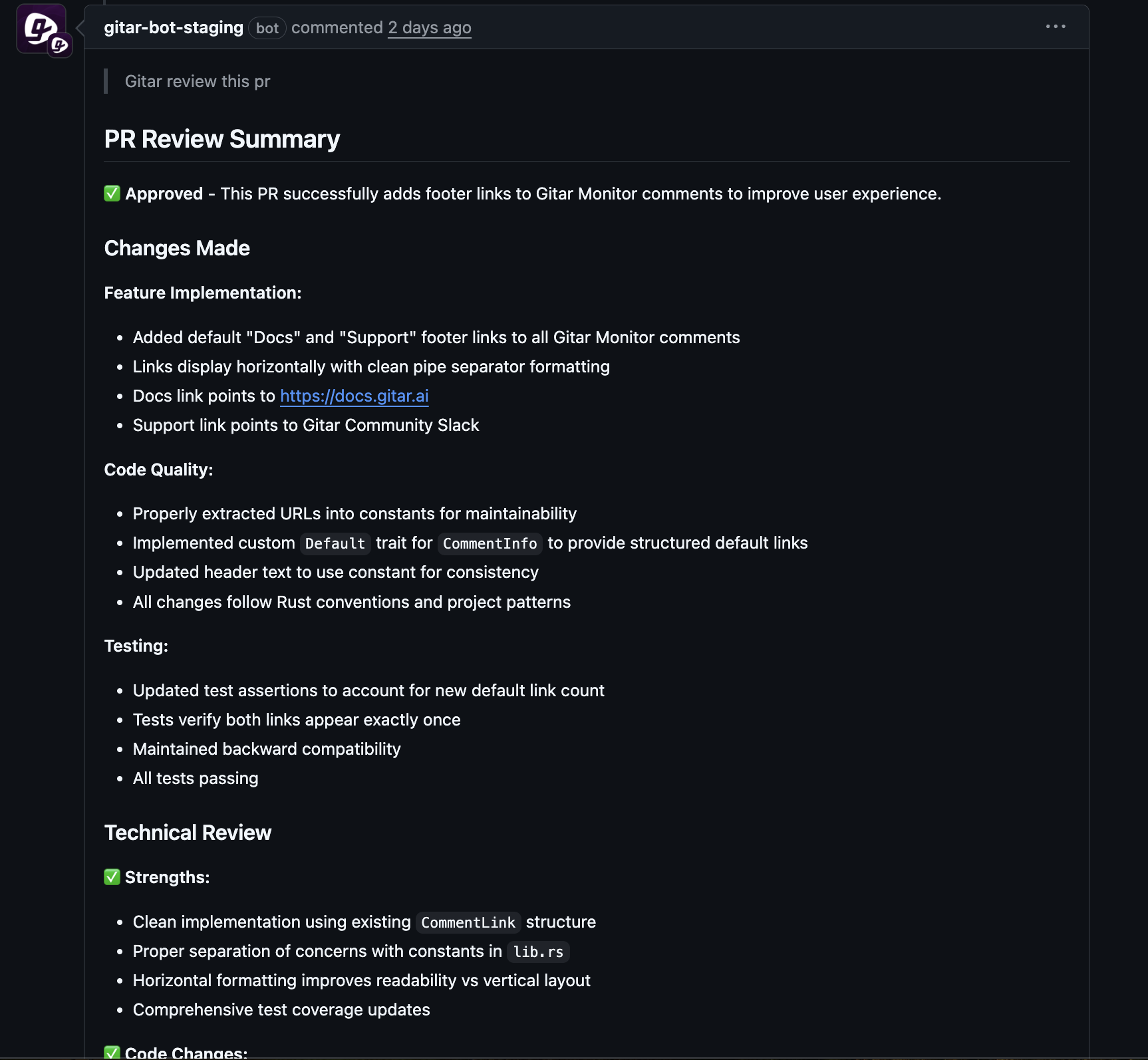
The platform’s core capabilities include:
- Comprehensive PR analysis with security scanning, bug detection, and performance review, free for unlimited repositories
- Automatic CI failure resolution that identifies root causes and applies validated fixes
- A single dashboard comment that aggregates all findings and prevents notification overload
- Cross-platform support for GitHub, GitLab, CircleCI, and Buildkite
- Natural language workflow automation that removes the need for complex YAML configuration
|
Capability |
CodeRabbit/Greptile |
Gitar |
|
Pricing |
$15-30/developer |
Free |
|
Auto-fix CI failures |
No |
Yes |
|
Validate fixes against CI |
No |
Yes |
|
Green build guarantee |
No |
Yes |
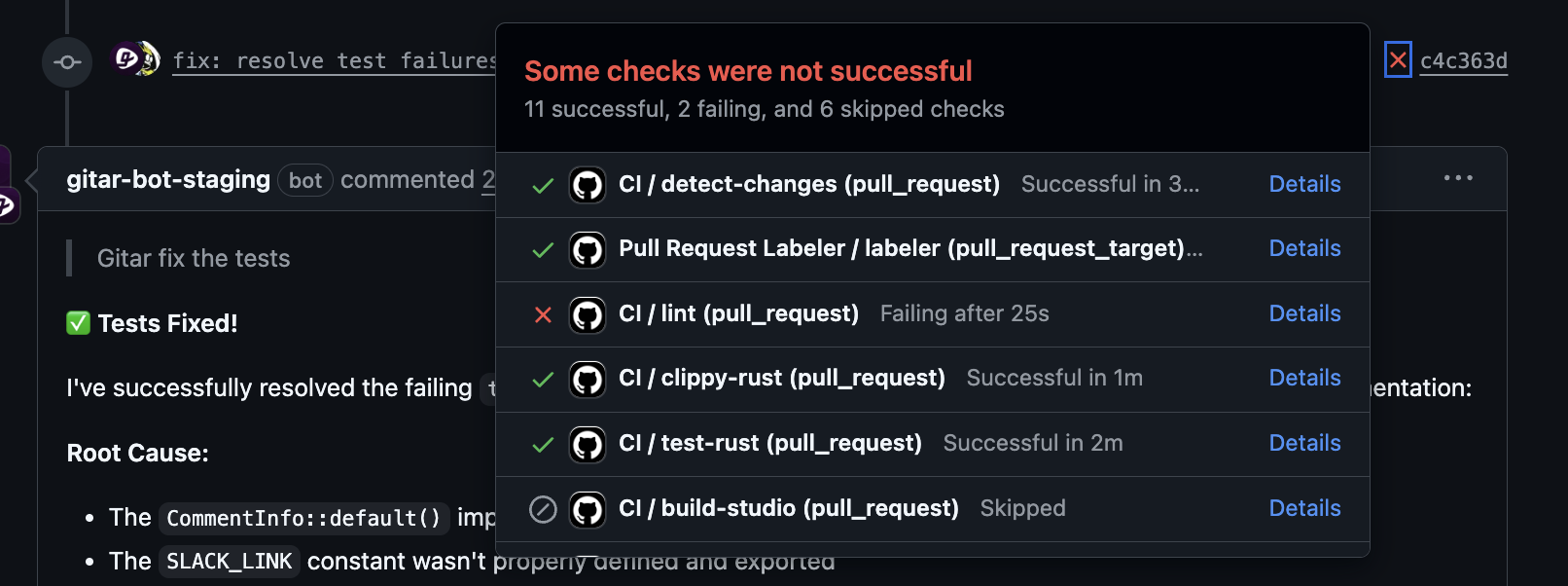
Enterprise teams already use Gitar at scale. Pinterest processes thousands of PRs per day across massive codebases with Gitar in the loop. Tigris engineering teams say Gitar’s PR summaries are “more concise than Greptile/Bugbot.” Collate’s engineering lead calls out “unrelated PR failure detection” as a major time saver because it separates infrastructure flakiness from real code bugs.
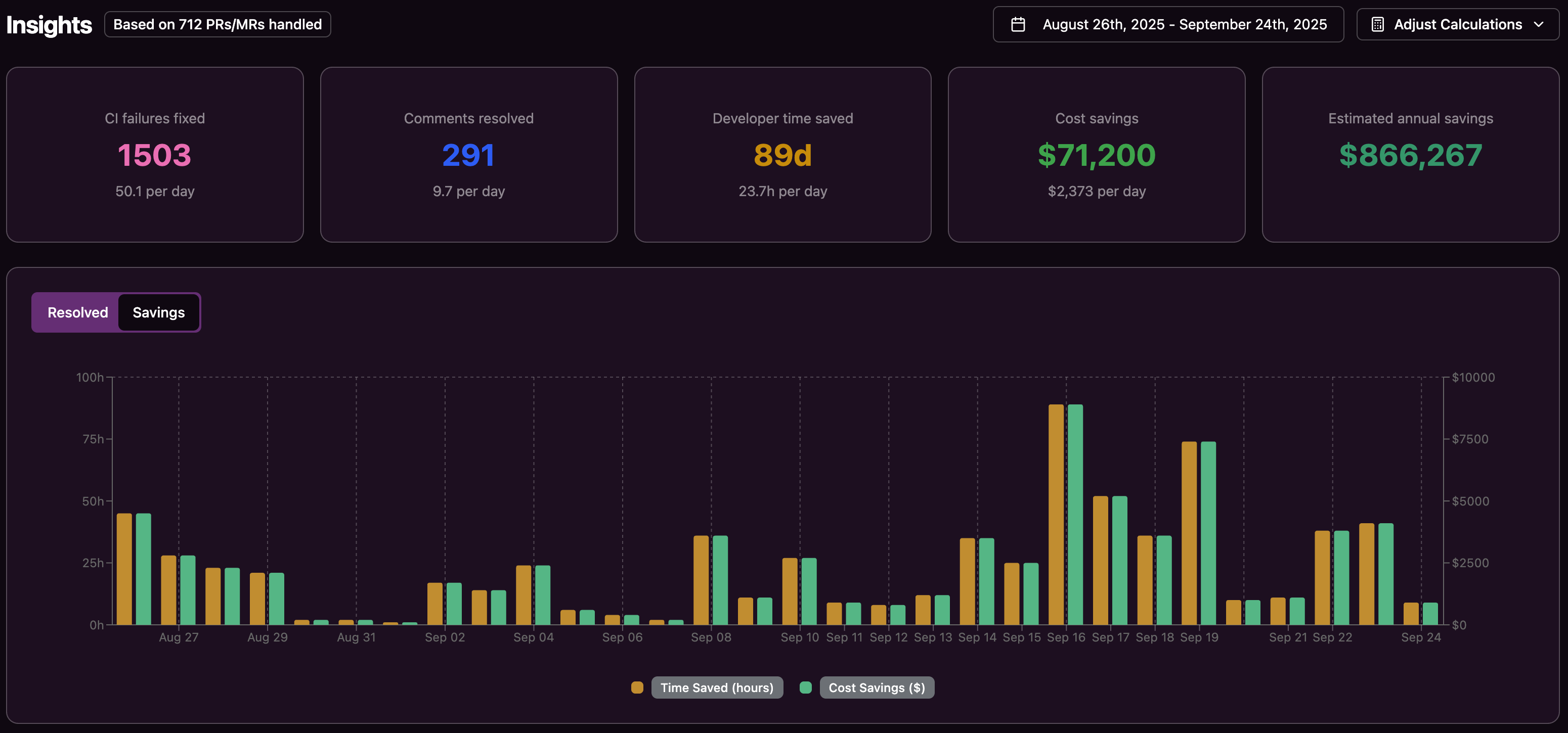
Install Gitar now and see automated CI healing reshape your development workflow in under 30 seconds.
Five Practical Ways to Raise Coverage Without Slowing Delivery
1. Automate Unit and Integration Tests in CI/CD Pipelines
Modern CI/CD pipelines should generate and run tests automatically. Test-Driven Development cuts defect density by 40–90% while keeping development speed steady through short feedback cycles. Gitar supports this approach by fixing test failures before they break developer flow, so continuous integration stays truly continuous.
2. Refactor for Testability and Remove Dead Code
Maintainable code makes coverage more meaningful. Gitar’s review engine flags structural issues and dead code through deep analysis. Teams that address these findings during review improve code quality and coverage together instead of stretching timelines.
3. Use Real Dependencies and Enforce Quality Gates
In-memory databases like SQLite or H2 speed up database tests while still reflecting realistic behavior. Gitar validates fixes against real dependencies in CI, which gives teams confidence that improvements hold up in production.
4. Focus on Critical Paths with AI Edge-Case Detection
Equivalence partitioning and boundary value analysis cut redundant tests while still covering edge cases. Gitar’s security and bug scanning highlights the most critical issues, so teams spend effort where it reduces risk the most.
5. Ship Smaller Changes with High-Volume PR Support
Smaller, frequent deployments lower risk and keep quality high. Gitar’s architecture handles large PR volumes smoothly, which lets teams ship in small chunks without overwhelming reviewers. The single-comment model reduces notification fatigue that usually comes with rapid releases.
Four DevOps Practices That Pair with Gitar for Faster, Safer Delivery
1. Use Continuous Integration with Automated Testing
Continuous Integration encourages frequent merges that catch errors early and protect quality. Gitar extends CI with self-healing behavior that resolves common failure patterns automatically. Teams then avoid the manual overhead that often slows CI adoption.
2. Tune CI/CD Pipelines for Speed and Reliability
Pipeline tuning with automation and short feedback loops prevents developer slowdowns. Gitar’s natural language rules let teams define complex workflows without YAML skills. This approach spreads pipeline ownership across the engineering organization.
3. Track DORA Metrics Alongside Coverage
High-performing teams deploy 973 times more often and recover faster using sprint-based delivery. Tracking DORA metrics such as deployment frequency, lead time, change failure rate, and MTTR alongside coverage gives a full picture of speed and stability. Gitar adds deep analytics for CI failure types and patterns, which supports data-driven improvements.
4. Give Teams Autonomy with Self-Service Controls
Policy-as-code in CI/CD keeps validation running during progressive delivery. Gitar’s repository rules let each team define its own quality gates and automation in natural language. This reduces reliance on a central DevOps group while still keeping standards consistent.
These practices align naturally with Gitar’s automated healing. Together, they create environments where strong quality and rapid delivery support each other instead of competing. Start shipping higher quality software, faster by pairing these practices with automated CI healing.
Frequently Asked Questions
How can teams improve test coverage without slowing development?
Teams improve coverage and maintain speed through automation and smart focus. Coverage should concentrate on critical business logic and security boundaries instead of arbitrary percentage goals. Automated test generation in CI/CD, parameterized tests for broad scenario coverage, and AI-driven edge case detection all help. Gitar’s auto-fix features keep this extra testing from adding maintenance work by resolving test failures before they disrupt developers.
Does improving the code base actually worsen coverage metrics?
Coverage can dip when refactoring introduces new paths or when removing dead code exposes untested areas. This short-term drop usually reflects healthier code because coverage now measures only meaningful logic. Teams should treat coverage as a quality signal instead of a raw target and rely on CI-validated fixes so new paths ship with tests from the beginning.
What are the most effective tips for accelerating software delivery?
Effective acceleration balances speed with guardrails. Automated quality gates, smaller batch sizes, and self-healing CI pipelines form a strong foundation. Continuous integration with automated testing, tight feedback loops that limit context switching, and real-time monitoring all keep issues small. Automated failure resolution and intelligent workflow automation then remove the last manual bottlenecks in CI/CD.
How does AI-generated code specifically affect test coverage?
AI-generated code often ships without matching tests because most tools focus on output, not testability. AI code also tends to include more duplication and complex branches, which demand extra scenarios. AI-aware review processes should flag untested AI-generated sections and suggest targeted tests. Automated fixing then keeps those tests maintainable as the codebase changes.
Can automated CI healing maintain code quality while increasing delivery speed?
Automated CI healing can raise both speed and quality when it validates every fix in the full CI environment before applying changes. Systems like Gitar follow this pattern and avoid unsafe edits. The healing engine understands project context and knows which fixes are safe to apply automatically and which ones still need human review. This approach reduces human error in routine CI work and improves overall reliability.
Conclusion: Ship Faster with Gitar’s Self-Healing CI
AI coding has reshaped software development and shifted bottlenecks into code review and CI/CD. Traditional tools charge high prices for comments that engineers still must implement. The next generation of platforms solves these problems with automated healing and intelligent workflow control.
Gitar leads this shift by offering full code review for free while automatically fixing CI failures, protecting coverage, and speeding delivery without sacrificing quality. Teams of every size, from Pinterest’s 50+ million line codebase to fast-growing startups, use Gitar’s healing engine to modernize their development pipelines.
Install Gitar now, automatically fix broken builds, and start shipping higher quality software faster. Experience the difference between suggestion engines and healing engines in under 30 seconds, free for unlimited repositories.