CI/CD pipeline failures slow down software development, costing teams valuable time and money. Even with AI helping to write code, validating and merging it through CI checks and reviews remains a bottleneck. This article dives into the real cost of pipeline issues and explores self-healing CI, a method that uses AI to automatically detect and fix problems. Learn how tools like Gitar can make pipelines more dependable, letting your team focus on creating rather than debugging.
Why CI/CD Failures Hurt: The Real Cost of Manual Fixes
How Pipeline Issues sap Developer Time
Pipeline failures steal hours from developers every week. On average, developers spend over 17 hours weekly on maintenance instead of building new features. CI/CD problems play a big role in this lost time.
Picture this: a developer submits a pull request, expecting it to pass, but it fails due to a missing dependency or a small style error. They must then dig through logs, switch back to their local setup, tweak the code, commit again, and wait for the pipeline to rerun. This cycle wastes effort and breaks concentration.
Context switching adds a hidden toll. Even a quick 30-minute fix for a CI issue can eat up an hour of productive time as developers refocus. This mental overhead disrupts deep work and slows progress.
For teams spread across time zones, delays grow worse. A pull request submitted in one region might wait days for review in another, stretching a simple process and piling on more context-switching costs.
Wider Impacts: Delays, Costs, and Trust Issues
CI/CD failures affect entire organizations, not just individual developers. About 60% of companies face project delays due to pipeline issues. These delays can hurt revenue and market position.
Consider a team of 20 developers spending one hour daily on CI and review fixes. At $200 per hour per developer, that’s $1 million yearly. This doesn’t even factor in missed opportunities from late releases or the strain of developer burnout.
Unreliable pipelines weaken trust, delay urgent fixes, increase recovery time, and risk losing customers. Teams may hesitate to update code, leading to outdated systems and more technical debt.
Common CI/CD Pain Points and Their Effects
Pipeline failures often come from build errors, dependency issues, mismatched environments, or complex setups. Frequent causes include misconfigurations, old dependencies, slow deployments, and weak test coverage.
Sequential pipelines with flaky tests create cascading failures that block releases. Rerunning builds to bypass unreliable tests wastes resources and delays insights.
Environment differences between local, staging, and production setups also cause failures. Code might work locally but break in CI due to configuration gaps, and debugging these often requires skills many developers don’t have.
Try Gitar to fix broken builds automatically and ship better software faster, tackling these issues before they slow your team down.
Solving the Problem: What Self-Healing CI Offers
Understanding Self-Healing CI for Stronger Pipelines
Self-healing CI shifts away from manual troubleshooting. It uses smart systems to spot, analyze, and fix pipeline issues on their own, without pulling developers away from their work.
This method involves spotting failures instantly, finding the root cause, creating fixes, and checking them against CI processes. It builds a pipeline that adapts and recovers without constant oversight.
Unlike basic automation, which follows rigid steps and stops at unexpected errors, self-healing CI uses AI to grasp context and craft tailored solutions. This flexibility matters in fast-changing development settings.
Why Automatic Fixes Matter Now
Speed defines success in software development. Automating checks can lower failure rates and save costs. Relying on manual fixes puts teams at a disadvantage when frequent deployments drive growth.
Teams with pipelines under 10 minutes deploy twice as often. Quick fixes keep deployment pace competitive.
Today’s apps need fast responses to bugs and feedback. Manual steps cause delays. With AI coding tools boosting code output, automated CI validation becomes essential to manage the volume.
Modern tech stacks, like microservices and cloud setups, make manual fixes tougher. Automated tools handle diagnostics faster and with more precision than people can.
Moving to AI-Driven Pipeline Management
Some AI tools offer suggestions or partial automation, still needing developers to step in for fixes and checks.
Self-healing systems take it further. They apply fixes, test them against CI workflows, and confirm builds pass, cutting out the gap between spotting issues and solving them.
Tools requiring manual effort still disrupt focus. Self-healing systems work independently, letting developers stay on creative tasks while CI problems resolve on their own.
Meet Gitar: Your AI Agent for Automated CI/CD Fixes
Gitar leads in self-healing CI, built to boost engineering team output. Unlike AI tools that only recommend fixes, Gitar acts on its own, handling CI failures and review feedback without developer input.
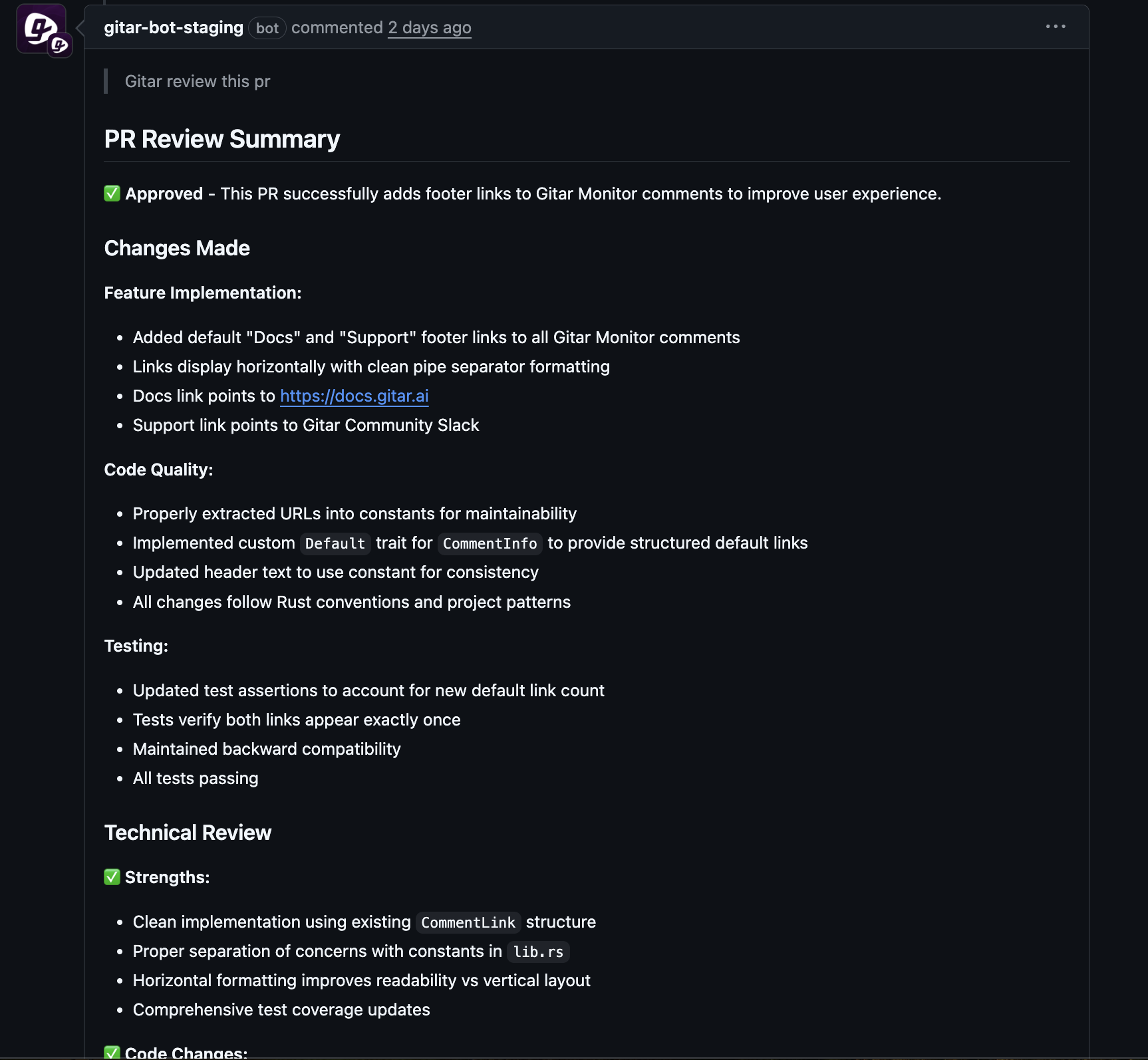
When a pull request fails a CI check or gets feedback, Gitar steps in. It analyzes the problem, creates a solution, updates the request, and ensures CI checks pass, often before developers even notice.

Key Ways Gitar Improves Your Workflow
Gitar offers specific features to streamline CI/CD processes:
- Complete Fix Process: Gitar doesn’t just suggest fixes. It applies them, tests against full CI workflows, and ensures builds pass. For example, it corrects linting errors and verifies all checks.
- Accurate Environment Matching: Gitar mirrors complex setups, including specific JDK versions and third-party scans like SonarQube, so fixes fit real-world conditions.
- Flexible Trust Settings: Choose ‘Conservative Mode’ for suggested fixes to review, or ‘Aggressive Mode’ for direct commits with rollback options, giving control as trust grows.
- Smart Review Support: Reviewers can tag Gitar to handle tasks like refactoring code, cutting delays by making changes instantly, especially for remote teams.
- Wide Platform Compatibility: Gitar works with GitHub Actions, GitLab CI, CircleCI, BuildKite, and others, supporting self-healing across different tools.
Install Gitar today to save developer time and improve CI/CD reliability.
How Gitar Boosts CI/CD Reliability and Team Output
Keeping Builds Green with Automated Action
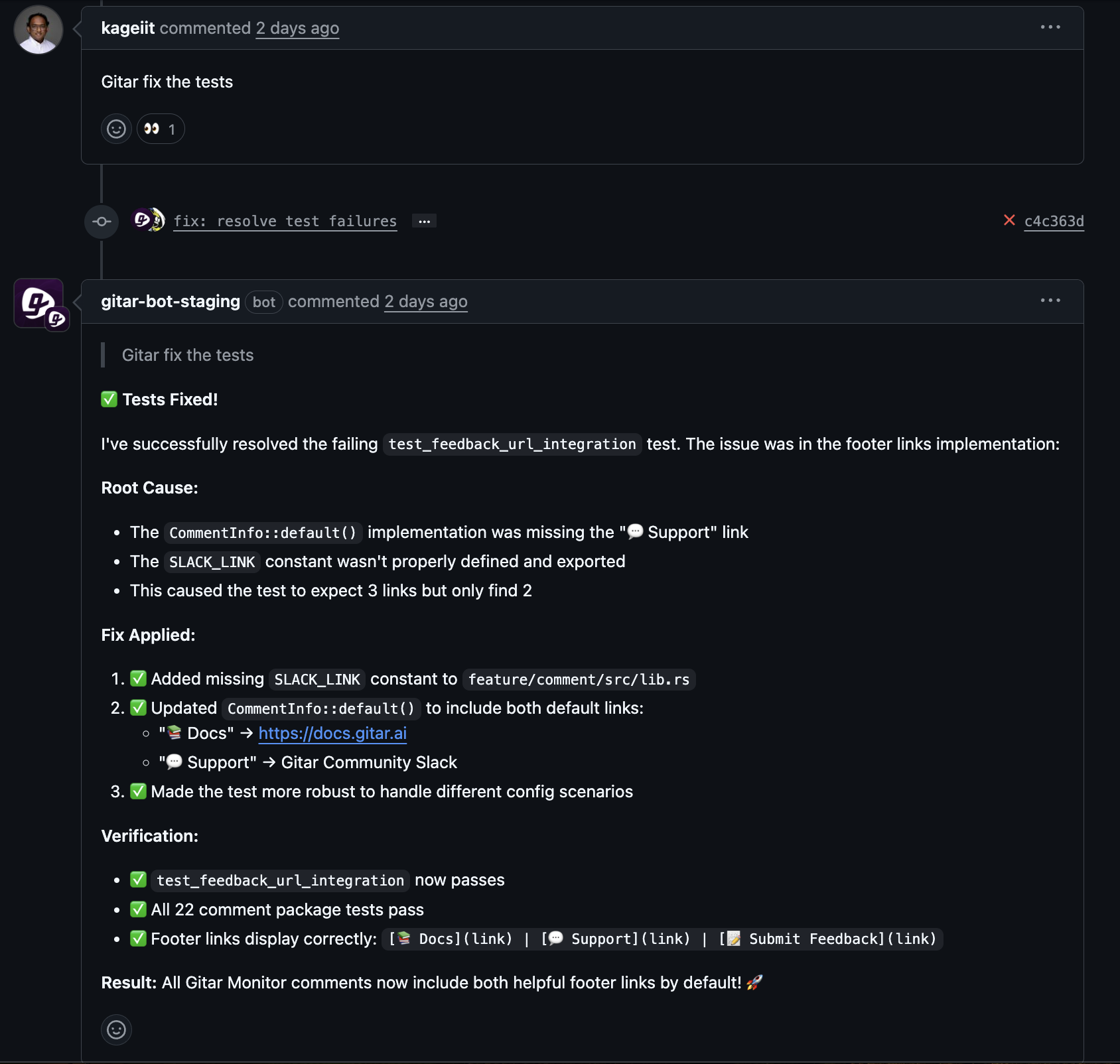
Typical workflows involve repeated failures and manual fixes. Gitar changes this by ensuring builds stay green automatically, keeping developers in their flow without interruptions.
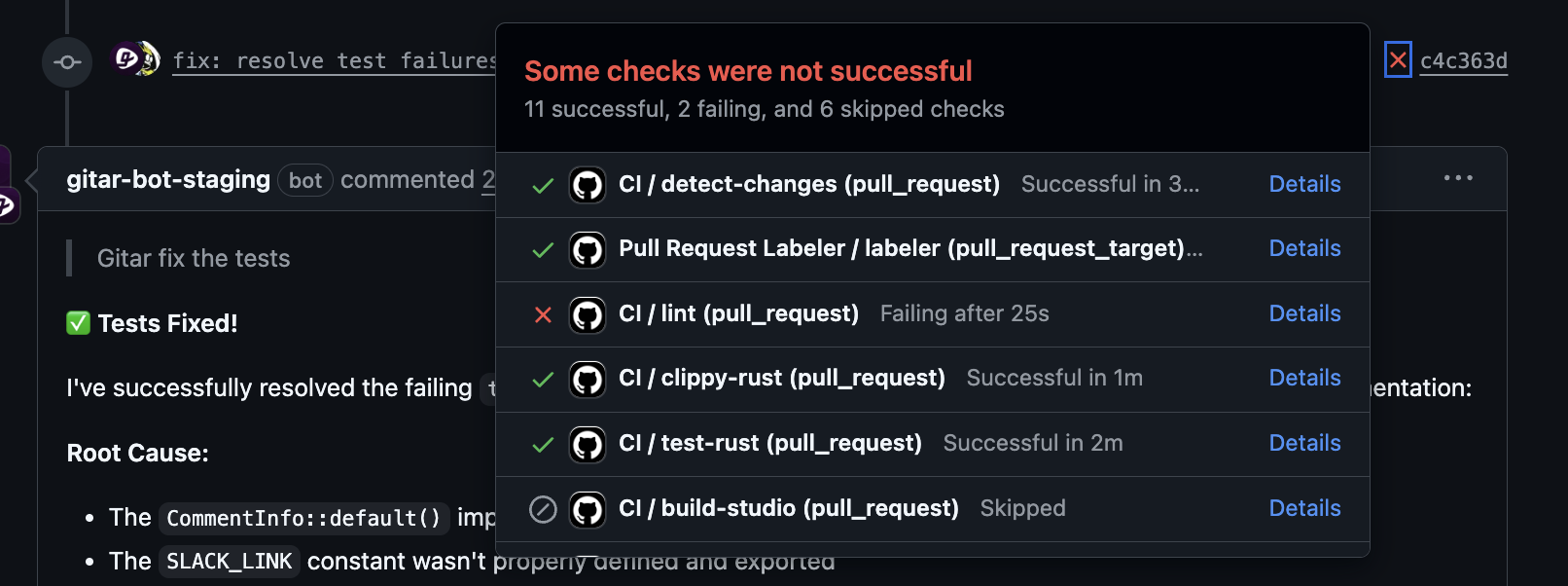
For a linting error or test failure, Gitar reviews logs, finds the cause, applies a fix, and commits it. It notifies the team of the updated pull request, often before they switch focus.
This approach avoids context switching, letting developers tackle creative tasks. Gitar manages linting, tests, dependencies, and other routine CI issues on its own.
Boosting Productivity and Speeding Up Releases
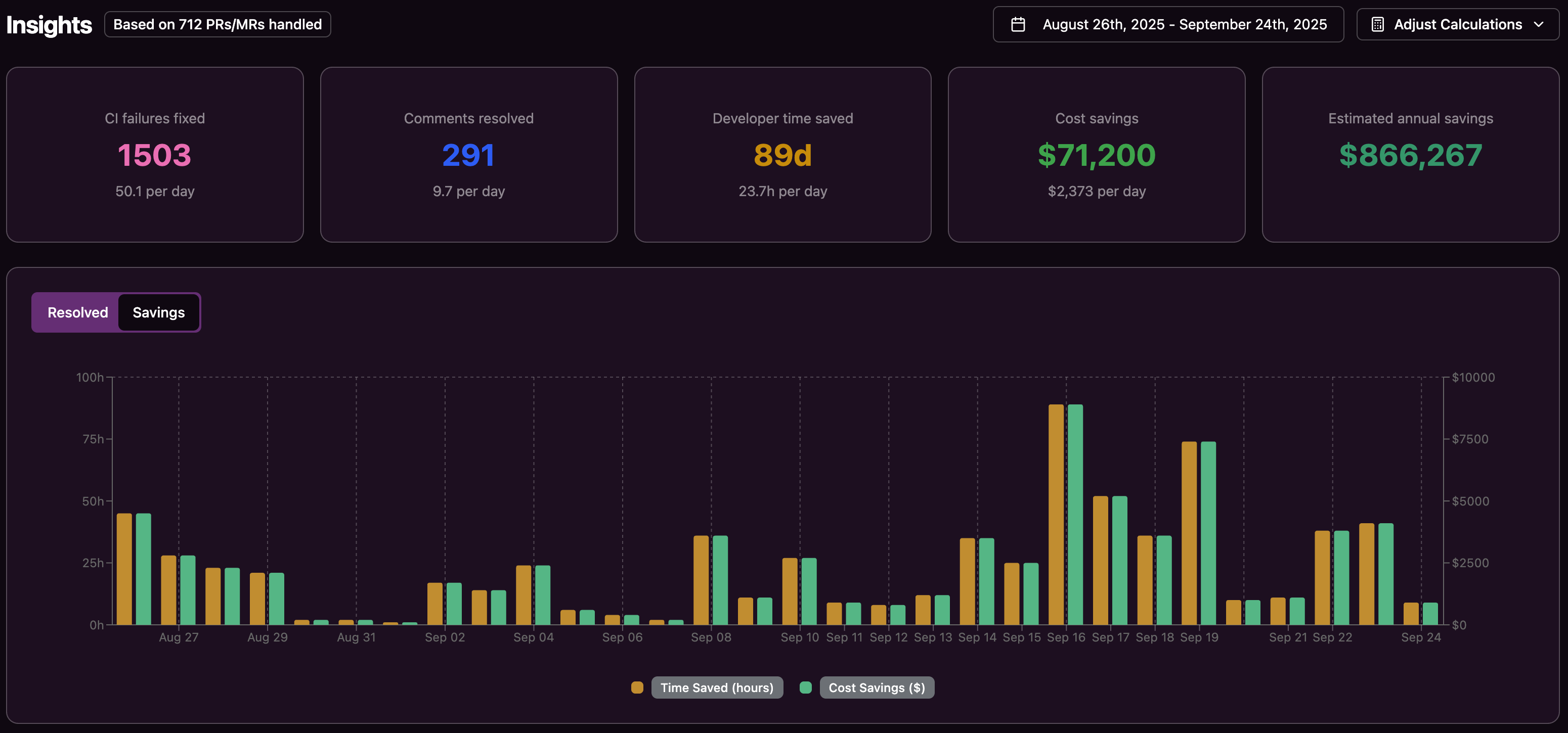
Gitar’s value goes beyond single fixes. By cutting context switching, teams gain noticeable productivity improvements and faster development cycles.
For a 20-developer team losing $1 million yearly to CI issues, Gitar can reduce costs significantly, even if it resolves half the problems. It also lifts team morale and reduces exhaustion.
For distributed teams, Gitar applies feedback instantly across time zones. Fixes are ready for approval sooner, shrinking time-to-merge.
Start with Gitar now to fix broken builds and deliver quality software faster, enhancing your team’s output and speed.
Reducing Risks with Thorough Checks
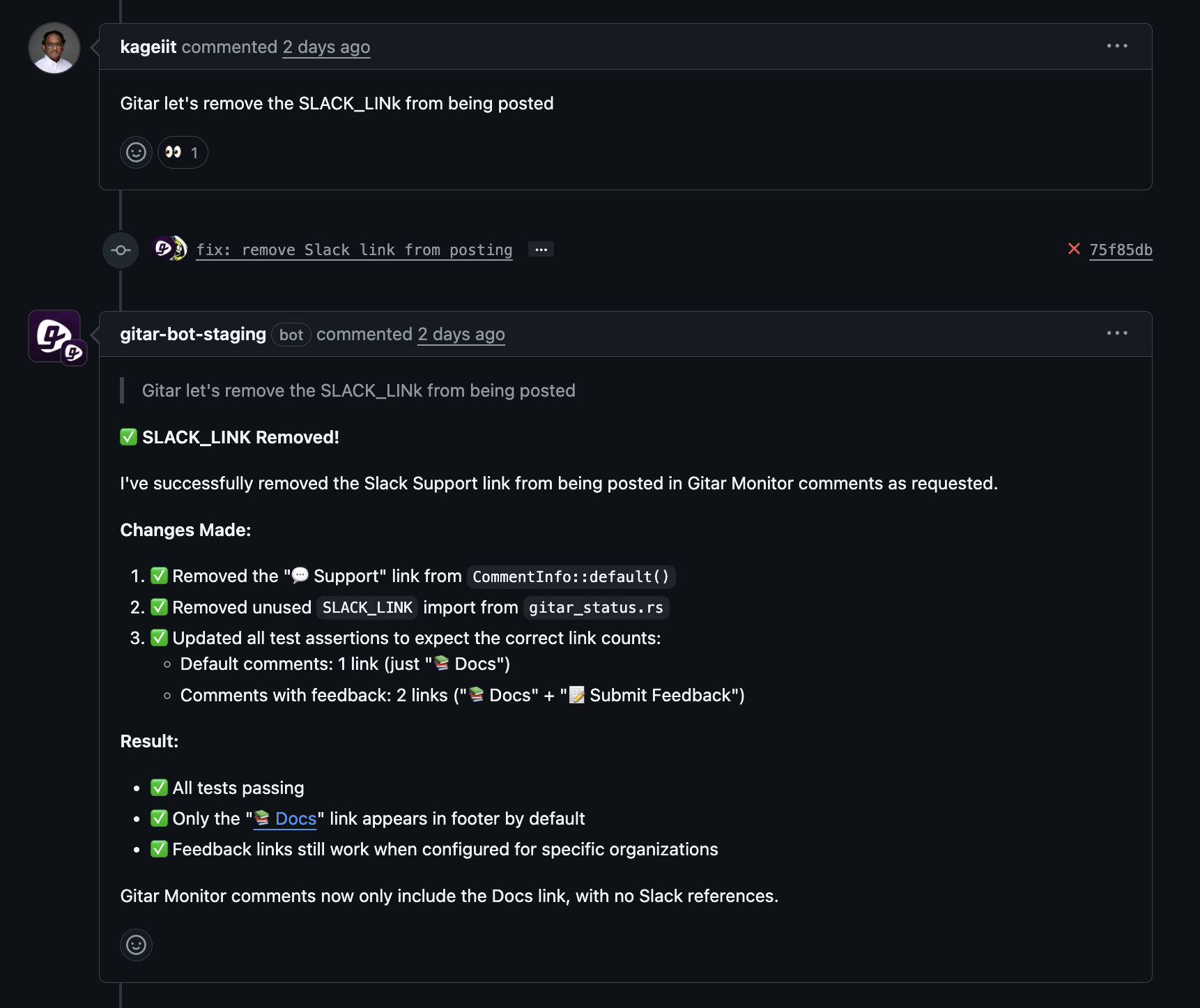
Gitar tests every fix against the complete CI workflow, confirming it passes all stages, including linting and security scans. This builds trust in automated changes.
Teams can begin with Conservative Mode to review fixes, then switch to Aggressive Mode for direct commits. Audit trails provide oversight and the ability to undo changes if needed.
Clear error logs are key to spotting issues quickly. Gitar includes detailed records of all actions for transparency.
Comparing Approaches: Gitar vs. Traditional and AI-Assisted Methods
|
Feature/Solution |
Manual Fixes (Current Norm) |
AI Code Reviewers (e.g., CodeRabbit) |
Gitar (Automated CI Healing) |
|
Problem Solving |
Manual research, coding, and updates |
Offers suggestions, needs manual application |
Automatic detection, fix creation, and testing |
|
Testing |
Local setups, often inconsistent |
Depends on tool; may miss full CI testing |
Complete CI workflow testing, ensures green builds |
|
Context Switching |
High; frequent disruptions from failures |
Depends; often still needs developer input |
Low or none; operates independently |
|
Environment Fit |
Manual matching, error-prone |
Depends; may struggle with specific setups |
Full emulation of enterprise workflows |
This table highlights the gap between suggestion-based tools and fully automated systems. AI reviewers improve on manual work but often need oversight, while Gitar confirms fixes through complete testing.
Large projects with multiple teams increase troubleshooting difficulty. Gitar’s environment matching ensures fixes suit actual conditions.
Common Questions About Gitar
How Does Gitar Keep Control Over Automated Fixes?
Gitar provides a flexible trust model. In Conservative Mode, it suggests fixes for review. In Aggressive Mode, it commits fixes directly with options to undo and detailed logs for tracking and reversal if necessary.
Can Gitar Manage Complex CI/CD Setup With Custom Scripts?
Yes, Gitar supports enterprise needs by matching specific setups, custom scripts, and third-party tools, ensuring fixes align with your unique CI workflows.
What Sets Gitar’s Self-Healing CI Apart From AI Code Reviewers?
AI code reviewers propose fixes that often need manual effort. Gitar independently creates, applies, and tests fixes against full CI workflows, avoiding interruptions and ensuring builds succeed.
Final Thoughts: Speed Up Delivery with Reliable Self-Healing CI
Manual CI/CD fixes drain time and hinder progress. Developers lose over 17 hours weekly to maintenance tasks, and 60% of companies see project delays from pipeline failures.
Self-healing CI with Gitar changes how teams handle pipelines. It cuts context switching, keeps builds green, and frees up time for innovation.
For a 20-developer team, automated CI fixes can save significant costs each year, while boosting morale and speeding up releases.