
Key Takeaways
- CI failures and slow code reviews in GitHub can consume thousands of developer hours each year.
- Autonomous DevOps tools now diagnose CI issues, propose fixes, and validate changes with minimal manual effort.
- Gitar replicates your CI environment, fixes broken builds, and applies code review feedback directly in pull requests.
- Teams gain higher engineering velocity, lower CI costs, and fewer context switches for developers and reviewers.
- You can reduce GitHub toil today by installing Gitar to automatically fix CI failures and review changes: Install Gitar.
The Problem: How CI Failures and Manual Review Hurt Teams
How Broken Builds Destroy Developer Focus and Flow
Most engineers know the cycle. You push a pull request, a build fails on a missing dependency, a flaky test, or a linter issue, and your attention snaps away from the work you just started.
Each failure forces you back into logs, into your local environment, and through another push and pipeline run. A simple fix that should take minutes often stretches into an hour because of context switching and lost flow. Across a team, this pattern turns into a large, recurring productivity loss.
How CI and Review Delays Slow Releases and Impact the Business
Failed checks and slow reviews push back release dates and slow time to market. Faster code generation from AI tools increases pressure on validation and merging, so CI and review queues quickly become the new bottleneck.
Distributed teams feel this even more. A developer in one region might wait a full day for a review, then another day for changes to be applied and re-checked. Simple feedback loops stretch from hours into days because of time zones and manual handoffs.
Hidden Costs from Silent Failures and Reruns
Not every problem surfaces as an obvious red build. Some jobs pass while still hiding subtle errors, which trigger later reruns and extra investigation. When you add the time spent on reruns and manual fixes, a 20 person engineering team can lose close to one million dollars in effective productivity each year.
Teams that want to escape this pattern need automation that not only points out failures but also fixes and verifies them. Install Gitar to automatically repair broken builds and keep pipelines moving.
The Solution: Gitar for Autonomous CI Fixes and In PR Code Changes
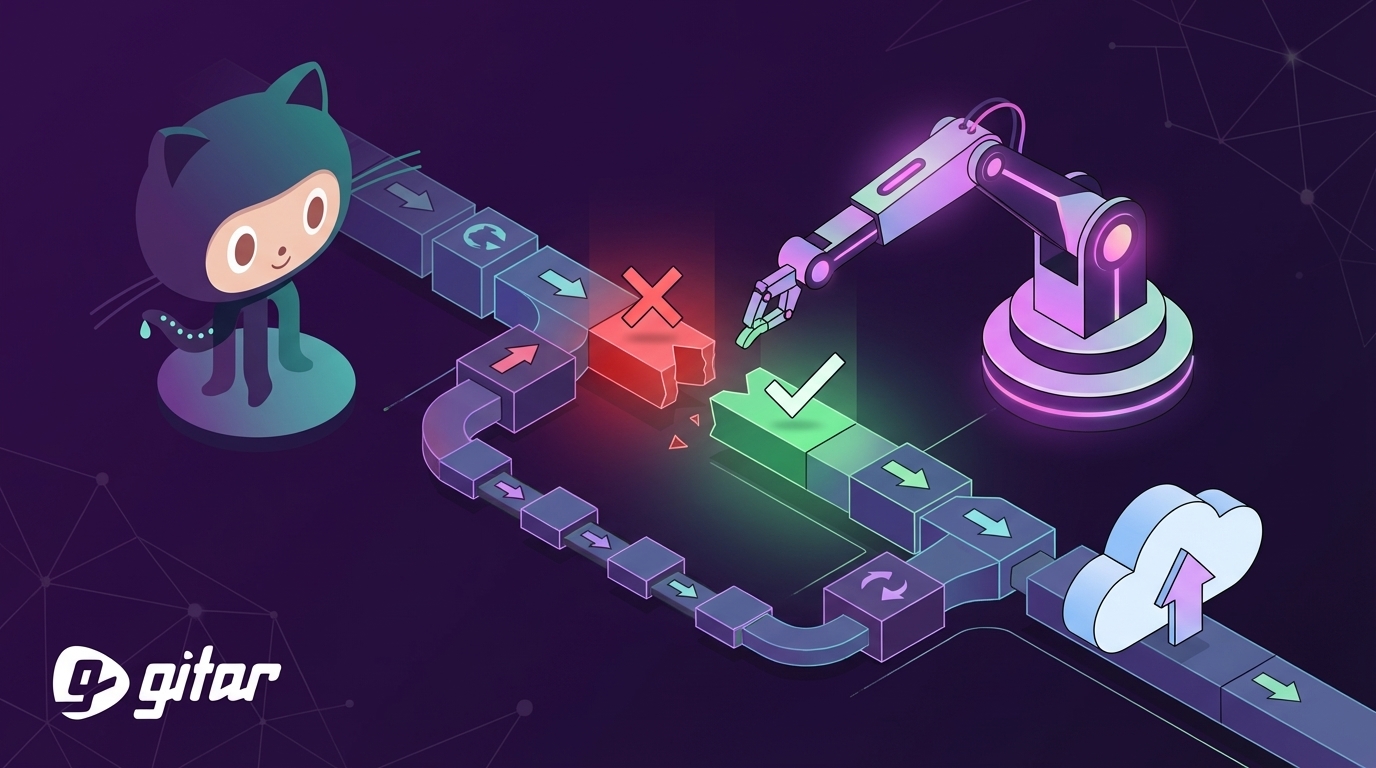
Gitar moves teams from suggestion only tools to autonomous DevOps automation. It sits inside your GitHub workflows, watches CI runs, diagnoses failures, proposes edits, applies changes, and validates them before you merge.
- End to end CI fixing: Gitar inspects failing checks, analyzes logs, proposes code changes, commits the fix to the pull request branch, and reruns the pipeline until checks pass.
- Environment aware debugging: The system mirrors your CI setup, including language runtimes, SDK combinations, security scans like SonarQube or Snyk, and snapshot tests, so fixes match the real environment.
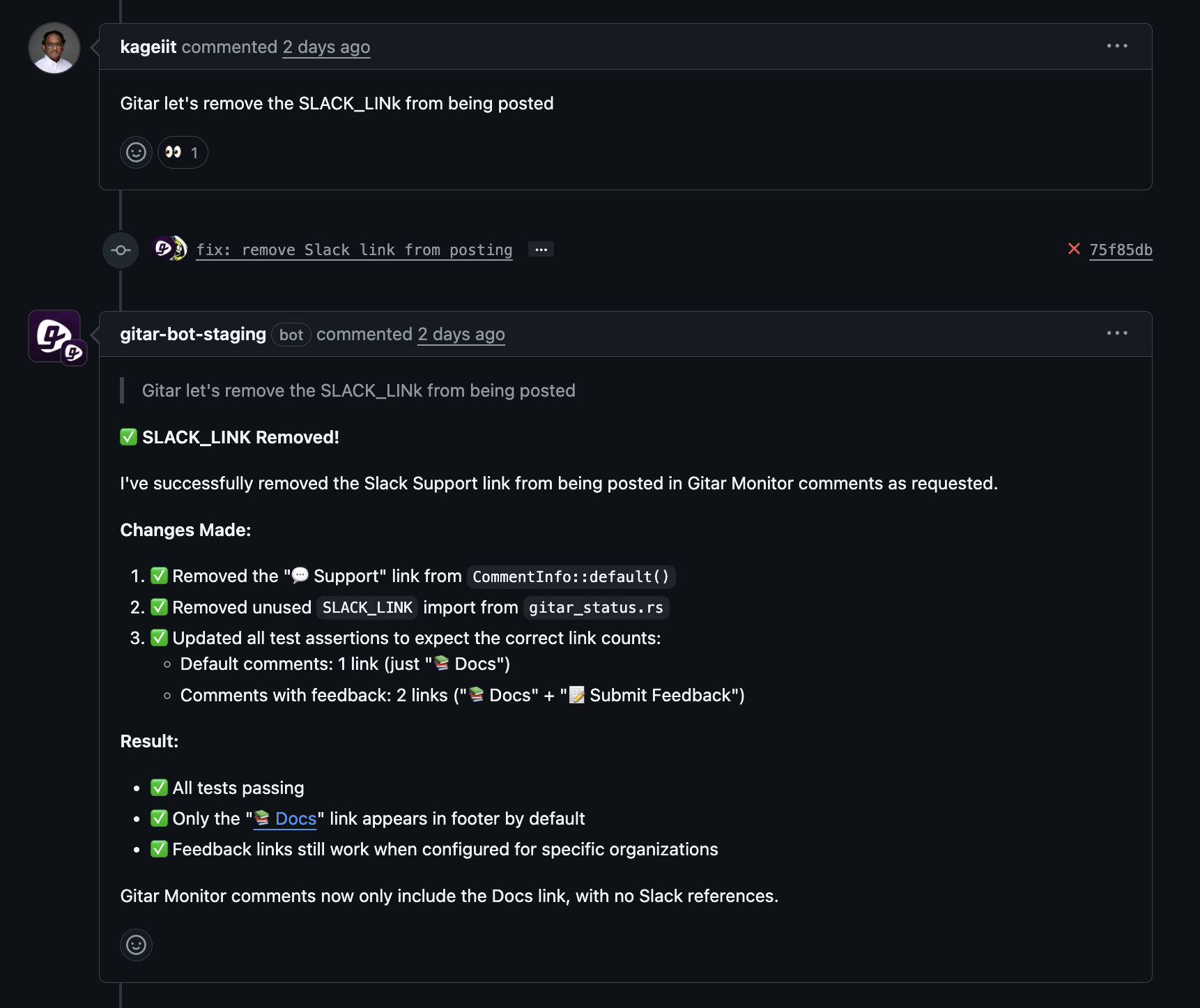
- Code review implementation: Reviewers can leave comments such as “remove this feature from this PR,” and Gitar edits the code, commits the change, and explains what it did.
- Configurable trust levels: Teams can start in a conservative mode where changes appear as suggestions, then shift to auto commit mode with rollback once they are confident.
- Multi platform support: Gitar works with GitHub Actions, GitLab CI, CircleCI, Buildkite, and other common CI tools rather than locking you into a single platform.
Teams that adopt this model reduce time spent on CI firefighting and manual review edits. Install Gitar to turn failing checks into automatically fixed pull requests.
Benefits: What Gitar Changes for Developers and the Business
For Software Engineers: Fewer Interruptions and Faster Merges
Engineers can stay focused on feature work while Gitar handles routine breakages and minor review changes. Many failures, including lint errors and straightforward test issues, get resolved and recommitted before a developer even leaves their current task.
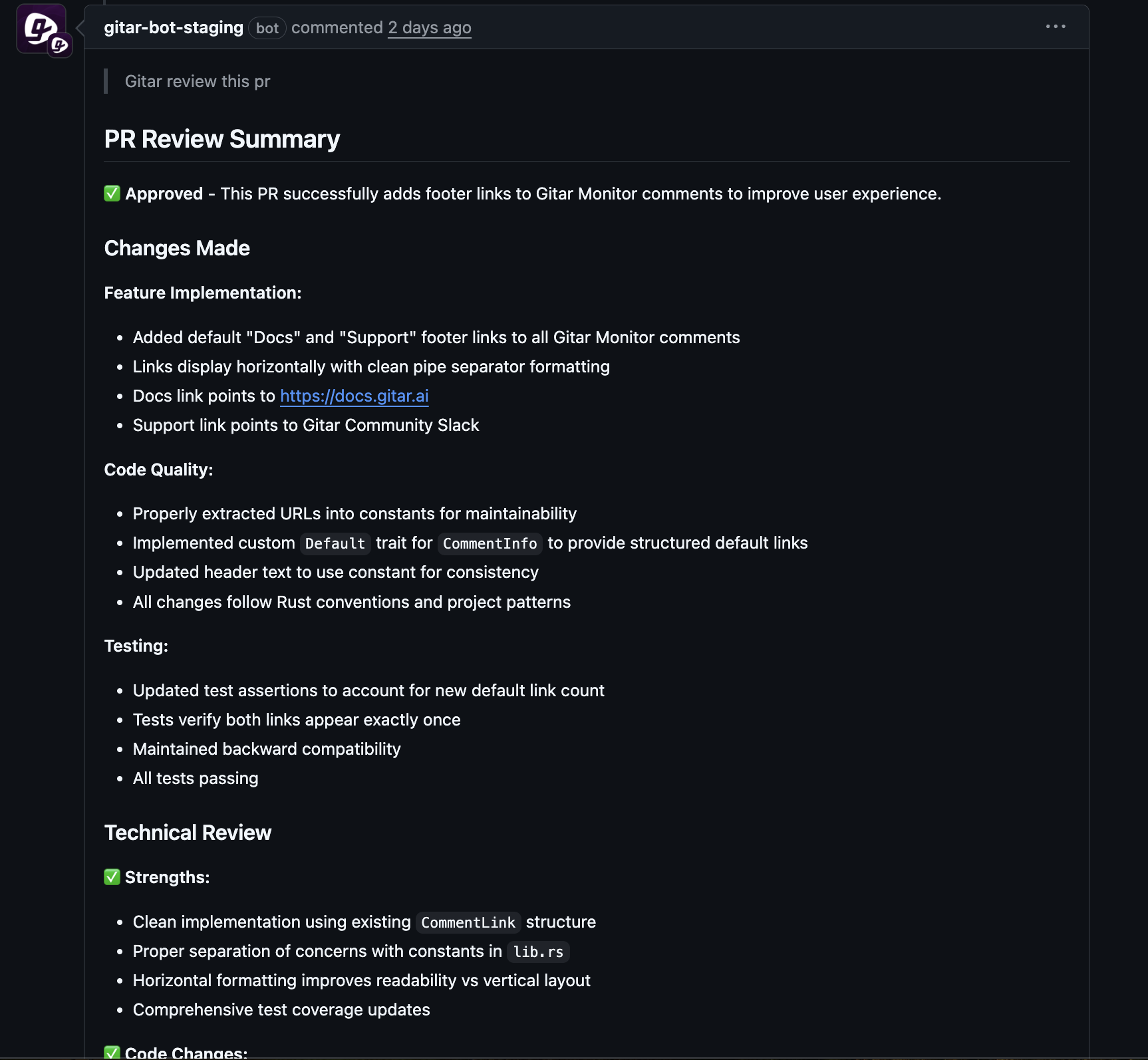
This reduction in context switching helps preserve flow state and shortens the time from first commit to merged pull request. Developers spend less time debugging CI pipelines and more time solving product problems.
For Engineering Leaders: Higher Throughput and Lower Wasted Spend
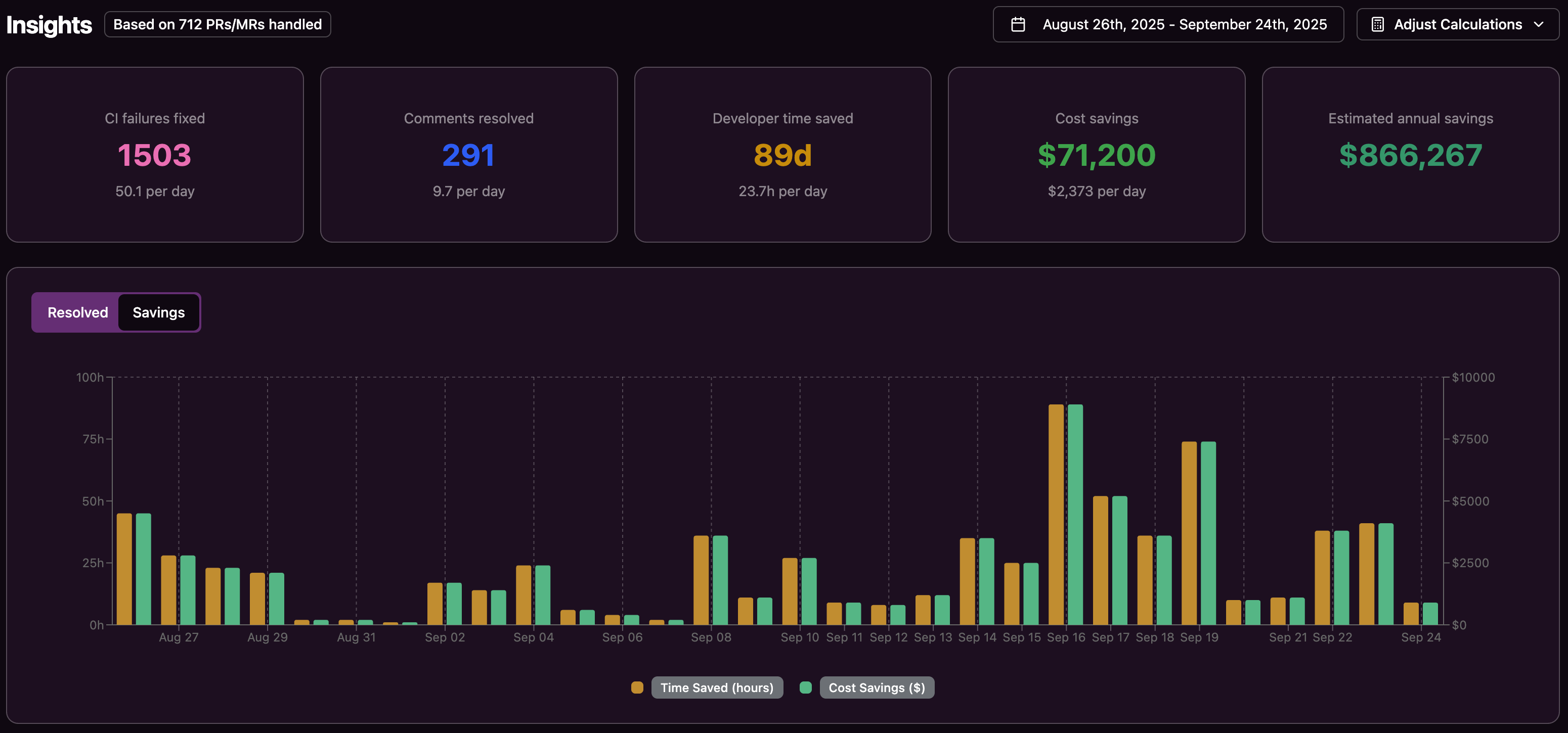
Leaders see higher throughput when daily friction around CI failures and review edits disappears. For a 20 person team that spends about an hour per day on CI or review issues, automation can reclaim thousands of hours per year and a significant share of salary cost that was previously lost to overhead.
Gitar also improves morale. Developers onboard faster, deal with fewer repetitive tasks, and experience a smoother path from pull request to production.
For DevOps and Platform Teams: More Reliable, Efficient CI CD
Platform engineers gain a partner that helps keep pipelines healthy at scale. Gitar continually tests and repairs the edges of complex CI environments, which reduces recurring breakage caused by configuration drift, dependency updates, or test flakiness.
Fewer failed runs and reruns lower infrastructure spend and cut noise in operational dashboards. New engineers can contribute without fully mastering every detail of the CI system on day one, since Gitar helps catch and correct many mistakes automatically.
Why an Autonomous Healing Engine Beats Manual Fixes and Simple Suggestions
Most AI tools act as suggestion engines. They highlight issues and propose edits, but a human still needs to apply changes, rerun CI, and debug follow up problems. Gitar takes a different approach as a healing engine that both fixes and validates issues in context.
|
Feature |
Gitar (Healing Engine) |
AI Code Reviewers |
Manual Work |
|
Core functionality |
Autonomous fixes and validation |
Suggestions and analysis |
Manual debugging and fixing |
|
CI failure resolution |
Automatically applies fixes, reruns checks, and targets green builds |
Suggests fixes, developer applies and reruns |
Manual investigation, coding, and re push |
|
Code review feedback |
Implements review comments and commits changes |
Provides notes and recommendations only |
Human back and forth with manual edits |
|
Environment context |
Replicates CI environment for accurate fixes |
Limited to code context |
Relies on local setup |
This shift from suggestions to verified actions removes an entire layer of manual effort. Developers review and approve results instead of rebuilding each fix themselves. Install Gitar to upgrade from suggestion only tools to a healing engine.
Frequently Asked Questions (FAQ) about Autonomous DevOps Automation
How do autonomous DevOps tools like Gitar differ from traditional AI code review tools?
Traditional AI code review tools focus on analysis and suggestions. Gitar goes further by applying fixes, running the full CI workflow, and presenting a pull request that is already passing checks whenever possible. Developers stay in control through review, but much of the repetitive work disappears.
Can Gitar handle complex CI environments with custom dependencies?
Gitar is built for complex enterprise setups. It mirrors your CI environment, including language versions, multi SDK dependencies, and third party tools such as SonarQube or Snyk. This context allows it to produce fixes that match your actual pipelines instead of guessing from code alone.
How does Gitar reduce silent failures and wasted CI resources?
Gitar analyzes logs and behavior across jobs, which helps it detect issues that might otherwise pass as successful runs. By fixing root causes and limiting the need for repeated pipelines, it reduces wasted compute and the time engineers spend on reruns.
How can teams control how much automation Gitar uses?
Teams can start in a conservative mode where Gitar opens pull request suggestions that require human approval. Once they are comfortable with the quality of changes, they can enable more aggressive auto commit behavior with rollback options. This staged approach builds trust while maintaining control.
How does Gitar help distributed teams working across time zones?
Distributed teams can use Gitar as an always on collaborator. When a reviewer leaves comments outside a developer’s working hours, Gitar can implement the requested changes and update the pull request so progress continues overnight. Review cycles become shorter even when team members rarely overlap.
Conclusion: Move Toward Automated, Self Healing GitHub Automation
Manual CI firefighting and repetitive code review edits slow teams and increase costs. Gitar introduces autonomous DevOps automation that fixes CI failures, implements review feedback, and validates results in your real environment so developers can focus on higher value work.
Teams that adopt this approach see faster merges, more predictable releases, and happier engineers. You can start that shift in your own GitHub workflows today. Install Gitar to automatically fix broken builds and streamline code review.