
Key Takeaways
- GitHub code generation tools increase pull request volume, which makes CI failures and review latency a bigger bottleneck than writing code.
- Autonomous handling of CI failures and code review feedback reduces context switching, shortens time-to-merge, and protects developer focus.
- Reusable workflows, clear policies, and accurate environment replication keep automation consistent and reliable across enterprise teams.
- Teams gain measurable ROI when automation cuts time spent on CI triage and review loops, especially in globally distributed organizations.
- Gitar delivers autonomous CI healing and review implementation for GitHub workflows; install Gitar to start fixing failing builds automatically.
The Bottleneck: Why Traditional GitHub Automation Falls Short
Modern development pipelines generate more code, pull requests, and tests, which increases the chance of CI failures. Developers can spend up to 30% of their time on CI and review issues, and a 20-developer team may lose about $1M per year in productivity to this rework and context switching.
GitHub Actions enables end-to-end automation from code to deployment, but most tools still leave the final implementation and validation of fixes to humans. Distributed teams feel this most, because a pull request raised in one time zone often waits a full day for review and corrections in another.
The main problem has shifted from writing code to validating and merging it quickly. CI and CD failures delay projects for many teams and extend the path from first commit to merge, especially as AI-assisted coding increases pull request volume.
Introducing Gitar: Autonomous AI for GitHub Workflow Mastery
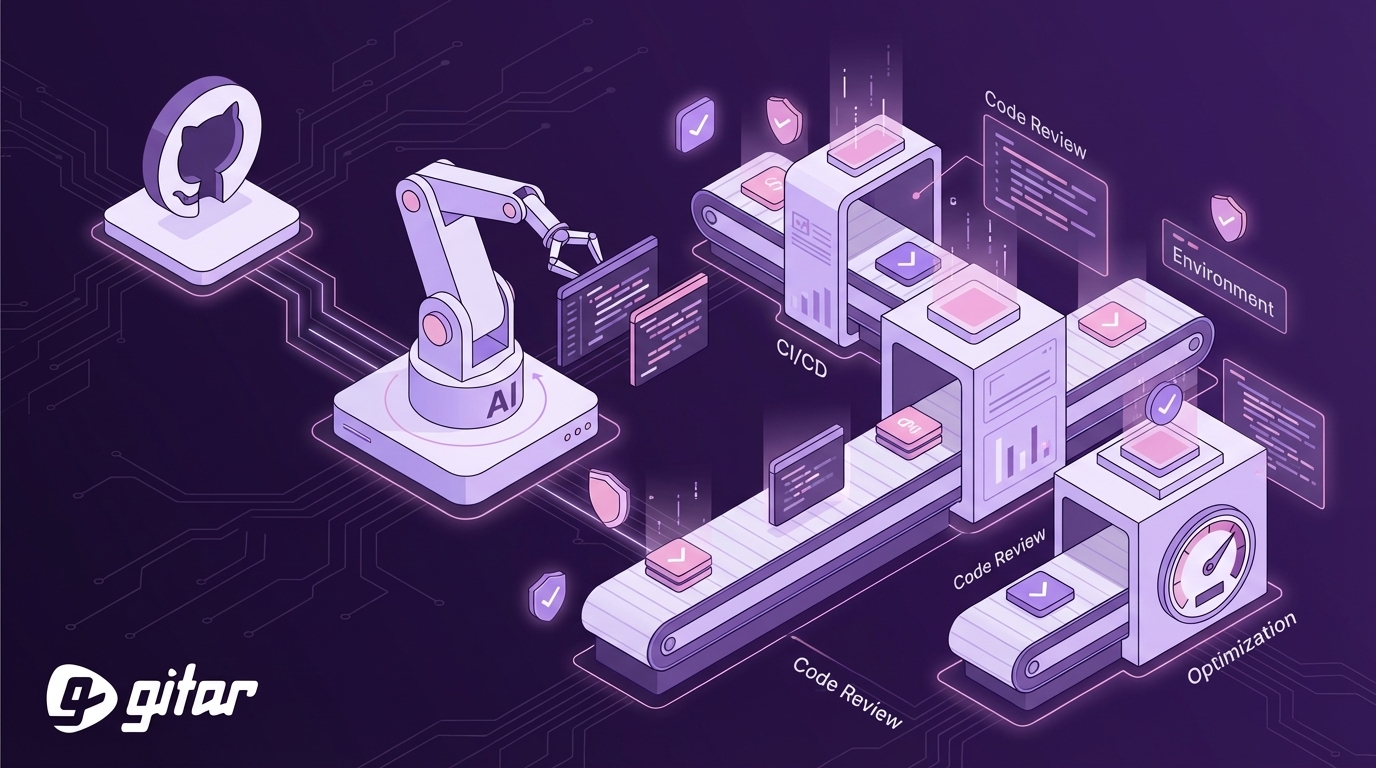
Gitar focuses on autonomous GitHub workflow automation and acts as a CI healing engine rather than a suggestion engine. It does not only identify issues; it also applies fixes, validates them in CI, and updates the pull request.
- Autonomous CI Fixes: Automatically resolves linting, formatting, build, and test failures.
- Intelligent Code Review Assistant: Implements code changes based on human review comments.
- Full Environment Replication: Emulates complex enterprise CI environments, including specific JDK versions, multi-SDK dependencies, and third-party integrations.
- Configurable Trust Model: Offers modes from conservative suggestions to direct commits so teams can adopt automation at their own pace.
- Cross-Platform CI Support: Works with GitHub Actions, GitLab CI, CircleCI, BuildKite, and other common CI platforms.
Ready to improve your GitHub workflow? Install Gitar now to automate fixes for broken builds.
Best Practice 1: Eliminate CI Failures with Self-Healing Pipelines
Concept and impact
Persistent CI failures interrupt developer flow and slow delivery. A self-healing pipeline detects failures, identifies root causes, and applies fixes automatically so developers stay focused on feature work instead of log analysis.
Even a simple lint issue or flaky test can consume significant time when developers must stop their current task, debug, implement a fix, and restart the pipeline. Multiplied across teams and sprints, this effort turns small issues into large productivity losses.
Gitar’s autonomous solution
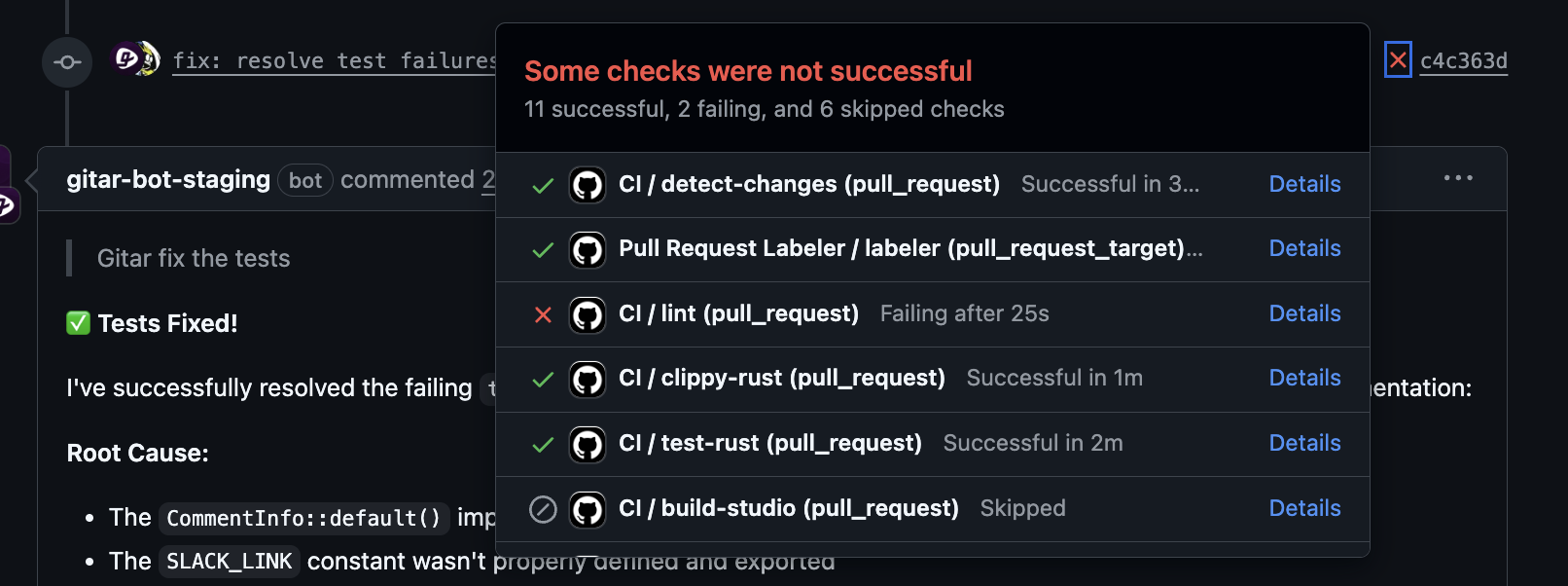
Gitar reads CI logs, identifies lint, test, and build errors, proposes code changes, applies them, and commits directly to the pull request branch. Teams can select conservative modes where Gitar posts suggestions or more aggressive modes where it auto-commits fixes after validation.
Developers see new commits that explain the fix and restore a green build, often before they notice a failure. This reduces manual triage and keeps pipelines moving.
Best Practice 2: Accelerate Code Review Feedback Loops Autonomously
Concept and impact
Slow code review cycles are a major bottleneck for GitHub workflows. Latency increases when teams work across time zones, and simple review comments can stretch into multi-day exchanges if each change requires manual implementation and another review pass.
Traditional AI review tools surface suggestions but still rely on developers to apply and test changes, which preserves the bottleneck instead of removing it.
Gitar’s autonomous solution
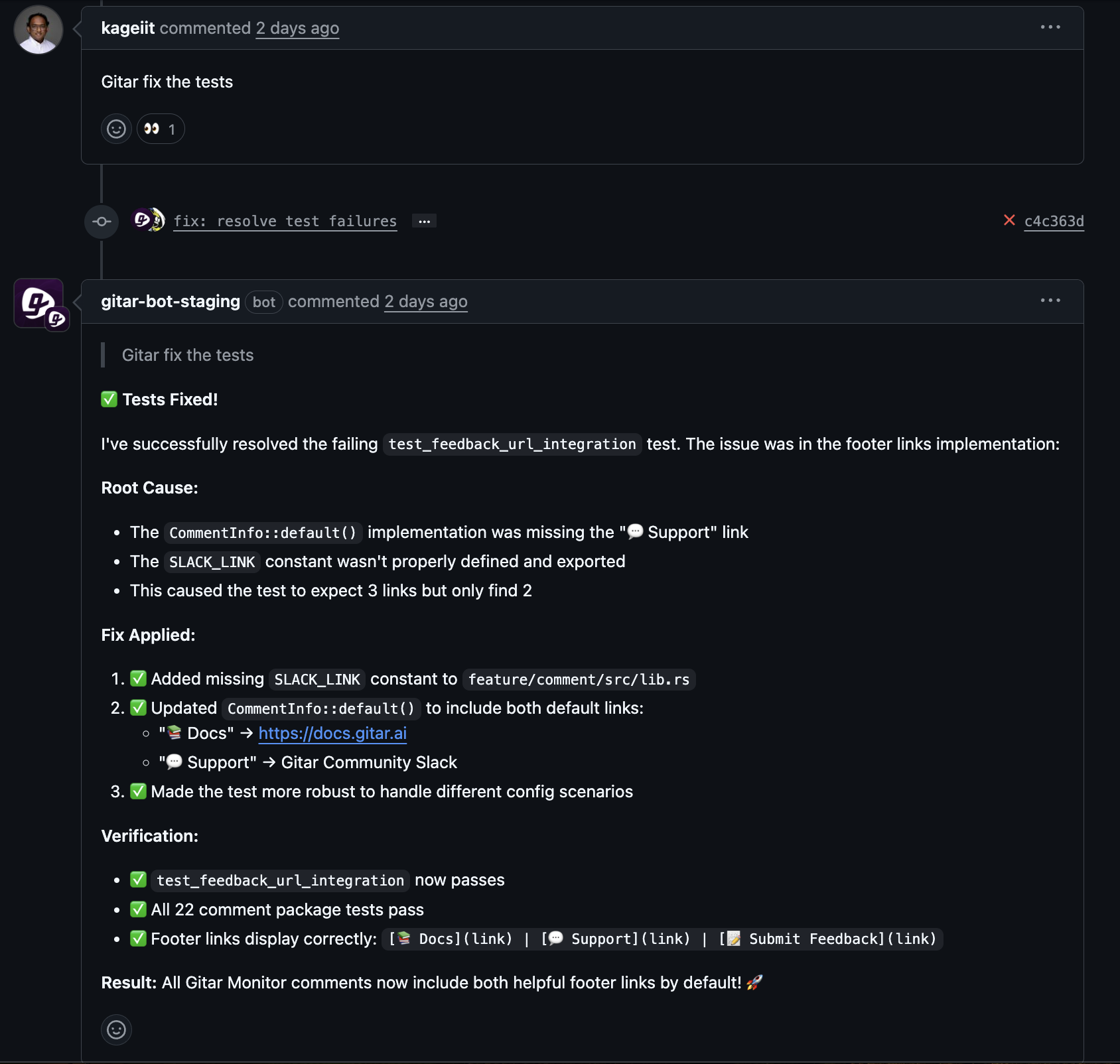
Reviewers can tag Gitar inside pull requests to run an initial AI review or to act on specific comments. Gitar interprets the instructions, edits the code, and updates the pull request with changes that already pass CI.
Distributed teams benefit because a reviewer can leave feedback at the end of their day, and Gitar can apply and validate those changes before the author returns, compressing review loops from days to hours.
Best Practice 3: Standardize and Reuse Enterprise Workflow Automation
Concept and impact
Enterprise teams need consistent workflows across many repositories. Reusable workflows and modular automation logic reduce duplication, make pipelines easier to maintain, and simplify onboarding for new engineers.
Reusable workflows in GitHub Actions help standardize automation patterns and syntax, but complex YAML files can still be difficult to manage at scale.
Gitar’s autonomous solution
Gitar uses an agent-based architecture that reacts to events in CI and GitHub. Teams describe policies and behaviors as instructions instead of maintaining large, fragile scripts.
This approach supports consistent fixes that align with organizational standards across repositories, which is important for scaling workflow automation in enterprise environments.
Best Practice 4: Achieve Environment Fidelity and Compliance
Concept and impact
Automation that does not match the real CI and production environment often produces fixes that pass locally but fail later. Enterprise teams need tools that honor specific SDK versions, dependency trees, and security controls so that automated changes are reliable and compliant.
Enterprise-grade security expectations include SOC 2 readiness, granular permissions, encryption, and flexible deployment models for GitHub tooling. Automation must fit into these constraints.
Gitar’s autonomous solution
Gitar emulates full enterprise environments, including language runtimes, multi-SDK dependencies, container setups, and integrations with tools such as SonarQube and Snyk. Fixes run through the same CI path as human changes.
Deployment options include cloud, self-hosted, and air-gapped modes so security teams can choose the model that matches their requirements.
Best Practice 5: Optimize Developer Flow and Reduce Productivity Loss
Concept and impact
Effective GitHub automation protects developer flow by reducing interruptions and manual toil. When developers spend less time on CI triage and review chores, they can focus on design, implementation, and collaboration.
For a 20-developer team, time spent on CI failures and review friction can reach roughly $1M per year in lost productivity. Enterprise GitHub automation tools are expected to show clear reductions in cycle time and delivery delays to justify adoption.
Gitar’s autonomous solution
Gitar reduces context switching by fixing many issues before they interrupt the developer. Self-healing CI and autonomous review implementation mean fewer blocked pull requests and less time spent on repetitive fixes.
Even partial automation can yield significant savings in engineer hours and help teams ship features faster while improving developer satisfaction.
Install Gitar to start reducing CI toil and speeding up pull request merges.
Comparison: Gitar vs. Traditional GitHub Automation Tools
|
Feature / Tool |
Manual Workflow |
AI Code Reviewers |
Gitar |
|
CI Fixes |
Manual investigation and fix |
Suggestions only |
Autonomous fixes |
|
Code Review Feedback |
Manual implementation |
Suggestions only |
Autonomous implementation of actions |
|
Validation |
Human-driven |
Human-driven |
Full CI environment validation |
|
Environment Context |
Developer local knowledge |
Limited |
Full enterprise environment replication |
|
Autonomy |
None |
Low |
High (configurable) |
|
Cross-Platform CI |
Varies |
Often GitHub-only |
GitHub Actions, GitLab CI, CircleCI, BuildKite |
Frequently Asked Questions
How does Gitar handle sensitive information and security in enterprise GitHub workflows?
Gitar supports cloud, self-hosted, and air-gapped deployment models so security teams can choose the right level of control. It integrates with tools such as SonarQube and Snyk, and all automated fixes run through existing CI pipelines, giving teams a clear audit trail of changes.
My team already uses GitHub Copilot. How does Gitar complement existing AI coding tools?
GitHub Copilot assists during the pre-commit phase inside the IDE. Gitar operates after code is pushed, focusing on resolving CI failures and implementing review feedback so code generated by tools like Copilot passes quality gates with less manual effort.
We have a very complex CI/CD setup with multiple SDKs and custom processes. Can Gitar truly replicate this environment?
Gitar is designed for complex CI setups. It can mirror build environments that include specific JDK versions, multiple SDKs, Docker configurations, and external scanners. Its agent architecture handles concurrent jobs and asynchronous events so fixes reflect the real pipeline context.
How does Gitar’s configurable trust model work for teams new to automation?
Teams usually start in a conservative mode where Gitar posts proposed fixes as comments or pull request updates. Developers review and approve these changes. As confidence grows, teams can enable more autonomous modes where Gitar commits fixes directly, while still retaining standard Git history and rollback options.
What kind of ROI can teams expect from implementing Gitar?
A team that spends about an hour per developer per day on CI and review issues can recover a significant portion of that time when automation addresses even half of the problems. Savings appear in reduced context switching, faster time-to-merge, and fewer delays to feature delivery.
Conclusion: Move Toward Autonomous GitHub Automation with Gitar
GitHub workflow automation in 2026 increasingly depends on autonomous systems that can act on CI and review signals without constant human input. Best practices around self-healing pipelines, standardized workflows, environment fidelity, and developer flow all point toward this direction.
Gitar operates as an autonomous AI agent inside GitHub workflows, focusing on CI failures and review feedback. By moving from suggestion-only tools to systems that apply and validate fixes, teams can reduce manual work and shorten the path from commit to merge.
Install Gitar to begin adopting autonomous CI healing and faster GitHub workflows.