
Key Takeaways
- Failing CI pipelines in GitHub interrupt developer flow, increase context switching, and slow delivery across the entire engineering organization.
- Hidden costs from CI failures and review issues can reach hundreds of thousands of dollars annually for mid-sized engineering teams.
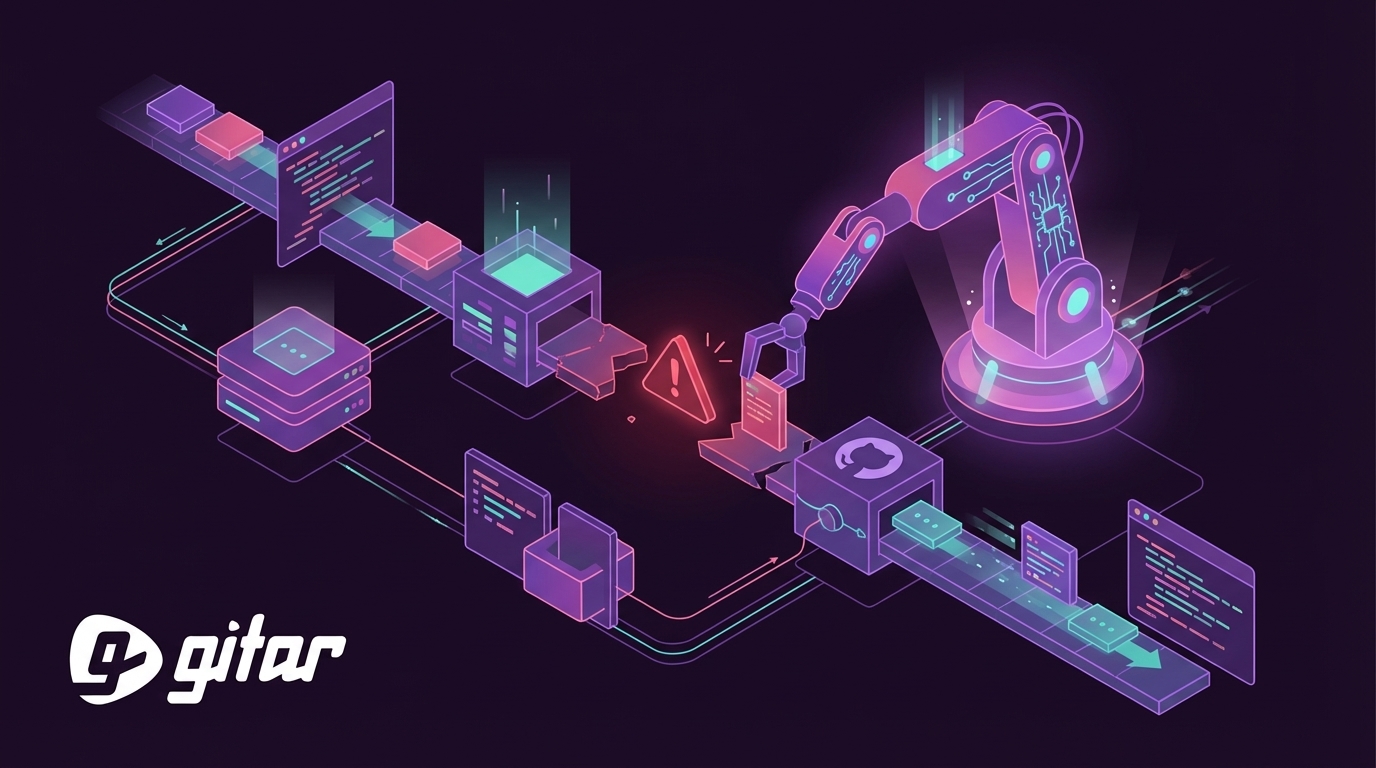
- Autonomous AI agents can move CI from reactive firefighting to proactive, self-healing pipelines that resolve many failures without manual work.
- Gitar acts as a CI healing engine that detects failures, applies fixes, validates them in your workflow, and updates pull requests automatically.
- Teams that want to cut CI debugging time and protect developer focus can start using Gitar at https://gitar.ai/fix.
The Problem: CI Pipeline Debugging in GitHub Automation as a Productivity Black Hole
Lost Developer Flow and Context Switching
Most developers do not submit a pull request and walk away until merge. They submit a PR, move on to another task, then get pulled back when CI fails. Each interruption breaks focus and forces a full mental reset.
A 30-minute CI fix can consume an hour or more of productive time once context switching overhead enters the picture. These small interruptions compound across a team and across many builds per day.
Escalating Operational Costs and Project Delays
CI debugging affects far more than a single engineer’s schedule. A team of 20 developers who each spend one hour per day on CI failures and review-related fixes can lose close to $1 million in annual productivity. CI and CD failures slow feedback loops, extend build times, and delay releases, which makes it easier for competitors to ship improvements faster.
The Rise of Right-Shift Bottlenecks
Tools that accelerate code creation, such as GitHub Copilot and Cursor, have shifted the bottleneck in many teams. The main constraint no longer sits at writing code. It now sits in reviewing, validating, and merging more pull requests, with more tests and more CI runs.
Common Failure Points That Drain Time
Most CI pipelines fail for a predictable set of reasons:
- Unit, integration, or end-to-end test failures
- Build and compilation errors
- Flaky tests that pass locally but fail in CI
- Misconfigured YAML or pipeline settings
- Environment variable and secret issues
- Dependency conflicts and version drift
- Breakdowns in deployment steps or post-deploy checks
Each failure type pulls developers into logs, config files, and ad hoc fixes that rarely teach new skills yet still consume valuable time.
The Unseen Cost of Flaky Tests
Flaky tests cause some of the most frustrating CI failures. These tests pass on a laptop yet fail in shared CI due to timing, concurrency, or external systems. Engineers then rerun jobs, add retries, or spend hours isolating the issue, often without improving product quality.
Teams that do not address flaky tests directly end up accepting noise as normal and waste large amounts of time rerunning pipelines.
Teams that want to reduce these recurring CI headaches can start by adding autonomous assistance. Install Gitar to begin automatically fixing a large share of broken builds.
The Solution: Autonomous AI for CI Pipeline Resolution
Moving Beyond Reactive Firefighting
Traditional CI debugging waits for a human to notice a failure, read logs, guess the cause, attempt a fix, and rerun the job. This process is reactive and slow.
Autonomous AI agents change this pattern. These agents watch CI pipelines, identify failure patterns, propose fixes, apply them, and re-run the workflow. Many failures never require a developer to stop what they are doing.
Immediate Feedback Loops
Fast feedback keeps delivery moving. When an AI agent can analyze a failure, update code or configuration, and re-run CI within minutes, teams avoid long feedback gaps. Pull requests spend less time blocked on red builds, and reviewers see green checks more often.
Protecting Developer Flow State
Flow matters for complex engineering work. When CI self-heals a large portion of failures, developers stay focused on product and architecture decisions instead of routine fixes. The result is fewer interruptions, higher satisfaction, and faster progress on meaningful work.
Gitar: The Autonomous AI Agent for Self-Healing GitHub CI Pipelines
Gitar turns CI debugging from a manual chore into an automated workflow. The system operates as a healing engine inside your GitHub automation, not just as a code suggestion tool.
- End-to-end fixing and validation: Gitar applies code or config changes, triggers your CI workflow, and waits for a green build before reporting success.
- Full environment replication: Gitar mirrors enterprise environments, including language versions, multi-SDK stacks, internal tools, and security scanners, so fixes match real-world conditions.
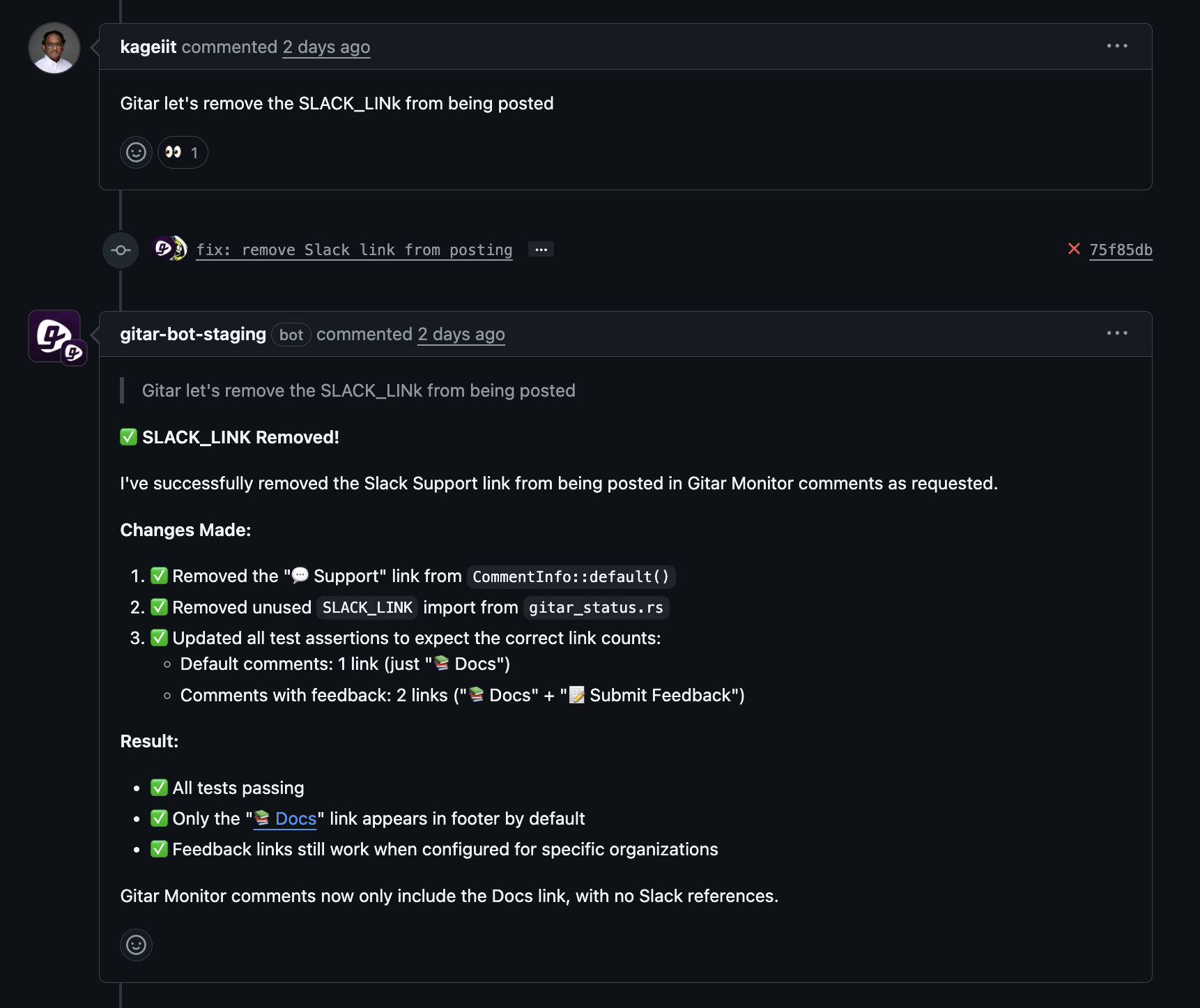
- Actionable code review support: Reviewers can instruct Gitar to implement changes directly in the pull request, which removes back-and-forth for straightforward edits.
- Configurable trust model: Teams can start in a suggestion-only mode and then move to automatic commits as confidence in Gitar’s fixes grows.
- Cross-platform CI support: Gitar works with GitHub Actions, GitLab CI, CircleCI, Buildkite, and other major CI systems.
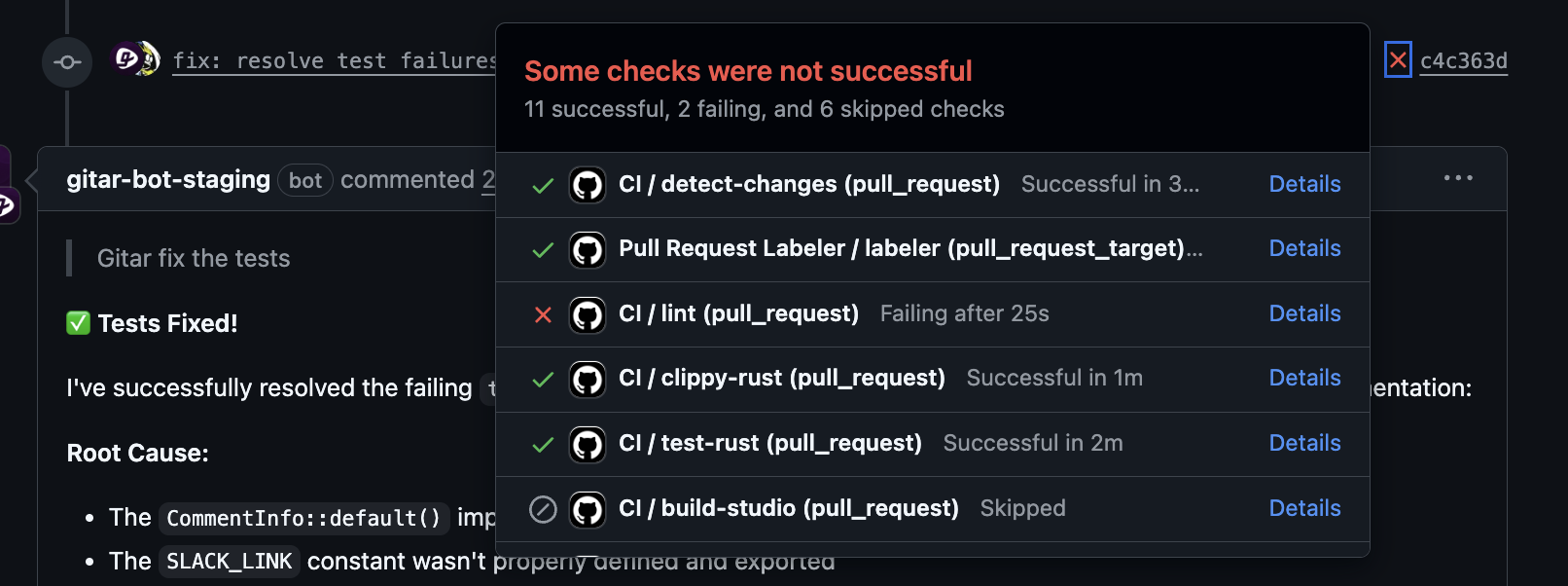
Teams that want to reclaim time lost to CI can explore this approach in their own pipelines. Book a demo of Gitar to see autonomous CI fixes in action.
How Autonomous AI Transforms CI Pipeline Efficiency in GitHub
Eliminating Common CI Bottlenecks Automatically
Flaky test resolution: Gitar identifies patterns of intermittent failures, inspects test behavior in CI, and applies targeted fixes or stability improvements. This approach reduces reruns and restores trust in test results.
Configuration and dependency management: Gitar analyzes configuration files, environment settings, and dependency graphs to spot conflicts or mistakes behind many CI failures. Fixes can include version updates, syntax corrections, or adjustments to environment variables.
Reducing Pre-Merge Feedback Latency
Most CI load and many failures occur before merge. Pull requests sit open while developers fix failing jobs. Gitar shortens this cycle by detecting failures on each run and applying immediate, automated fixes.
Faster merges: When Gitar brings more builds back to green without manual changes, reviewers spend more time on code quality and less time waiting for a passing pipeline.
Improving Developer Experience and Onboarding
Engineering teams that remove repetitive debugging tasks usually see better morale and stronger retention. Developers focus on design and problem solving, not chasing transient CI issues.
Onboarding speed: New hires do not need to master every detail of a complex CI setup on day one. Gitar guides them through failures, suggests fixes, and handles many issues automatically, which helps them ship useful changes sooner.
Comparing Solutions: Healing Engines vs. Suggestion Engines for CI Debugging
|
Feature or Tool |
Gitar (Healing Engine) |
Traditional Manual Debugging |
AI Code Reviewers (for example, CodeRabbit) |
|
Problem solving |
Detects issues, applies fixes, and re-runs CI automatically |
Engineers investigate logs and patch issues by hand |
Highlights issues and suggests code changes |
|
Validation |
Runs the full CI workflow and aims for a green build before reporting success |
Relies on developers to re-run CI and verify results |
Validation depth varies by product and setup |
|
Integration depth |
Operates across CI and Git workflows such as GitHub Actions, CircleCI, and others |
Depends on each developer’s local tools and scripts |
Often integrates at the pull request level |
|
Context awareness |
Replicates enterprise environments and workflows to inform fixes |
Relies on human knowledge of systems, logs, and documentation |
Context level depends on repository and configuration |
Frequently Asked Questions (FAQ) about Reducing CI Pipeline Debugging Time
How Gitar differs from AI code review tools for CI debugging
Tools like CodeRabbit focus on comments and suggestions in code review. Gitar operates as a healing engine: it applies code or configuration changes, runs them through your CI workflow, and works toward a green build with minimal manual intervention.
Support for complex and customized CI setups
Gitar is built to handle complex enterprise pipelines. The system can work with specific JDK and SDK versions, multi-language monorepos, internal build tools, and third-party integrations such as static analysis or security scanners, so fixes align with your real environment.
How teams build trust in automated fixes
Teams can start with a conservative configuration where Gitar proposes changes inside pull requests. Developers review and accept those changes before merge. As confidence grows, teams can enable more automation, including direct commits with full audit history and rollback options.
Impact on code review for distributed teams
Reviewers can leave structured instructions for Gitar in PR comments. Gitar then implements the requested edits, commits them, and updates the thread. Distributed teams benefit because progress continues across time zones without waiting for both reviewer and author to be online together.
Return on investment for using Gitar
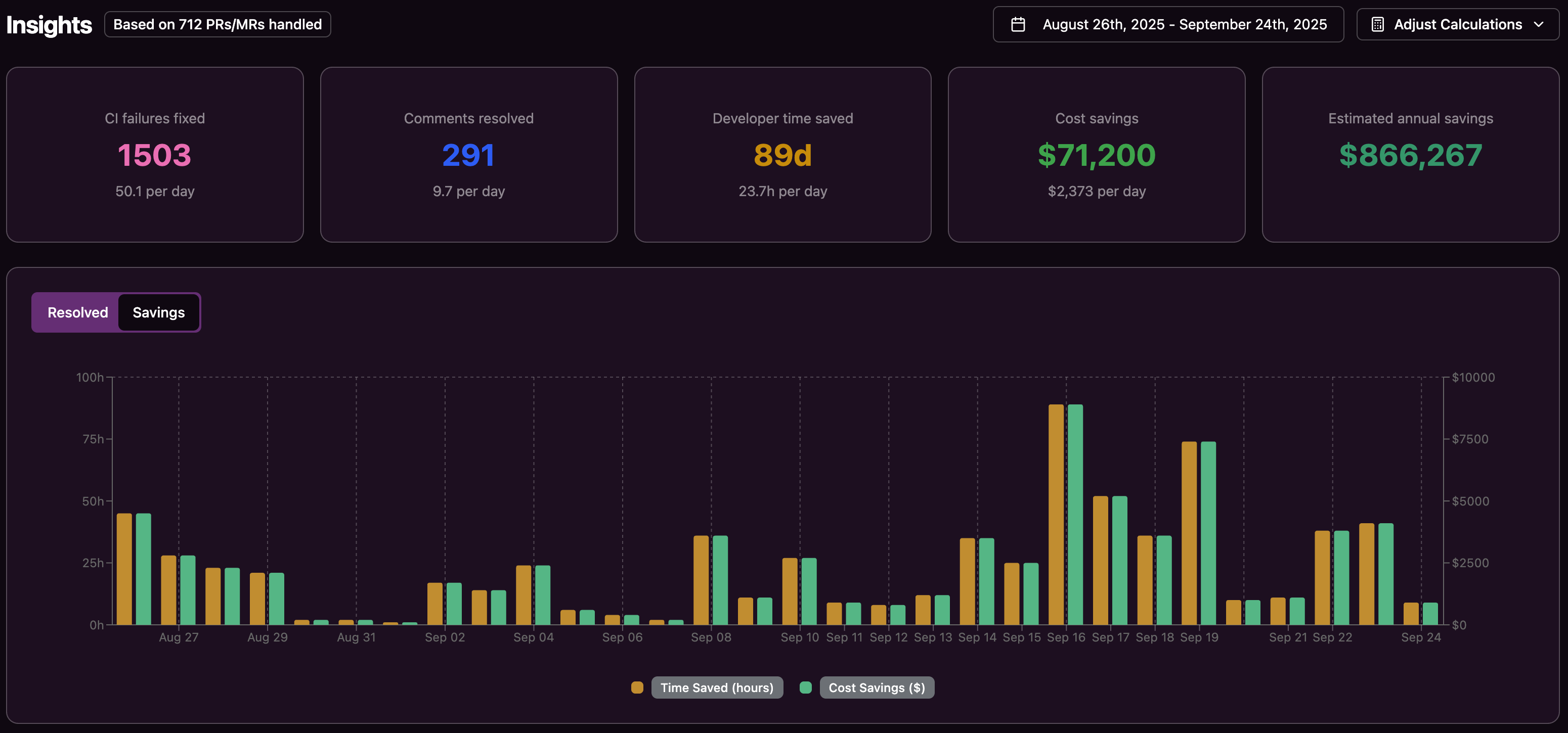
A team of 20 developers who each spend an hour per day on CI failures and review-related fixes can lose around $1 million in yearly productivity. If Gitar removes even half of that time sink, the organization saves roughly $500,000 per year while improving experience and delivery speed.
Conclusion: Reclaim Developer Time and Accelerate Delivery with Autonomous CI
Persistent CI debugging drains time, attention, and budget from software teams. Gitar reduces that drain by identifying, fixing, and validating many CI failures in GitHub automation, while also applying straightforward code review feedback.
Teams that shift from reactive debugging to proactive, autonomous resolution gain shorter release cycles, more focused engineers, and lower operational costs.
Teams ready to adopt self-healing CI can start now. Request a Gitar demo to reduce CI pipeline debugging time and streamline your GitHub CI and CD workflows.