
Key Takeaways
- GitHub Actions reliability has a direct impact on developer productivity, release speed, and engineering costs.
- Unreliable CI pipelines create frequent context switching, slow feedback cycles, and lower developer focus.
- Autonomous remediation and environment-aware fixes offer a practical path to more stable, self-healing CI pipelines.
- Leaders can track reliability gains with clear metrics such as failure rates, mean time to recovery, and merge speed.
- Teams can adopt Gitar to introduce autonomous CI fixing and self-healing workflows; get started at Gitar.
Why GitHub Actions Reliability Matters for Growing Teams
The High Cost of Unreliable Pipelines
Unreliable pipelines create a productivity bottleneck that affects revenue, developer morale, and project timelines. The cumulative impact of CI failures reaches beyond individual engineers and contributes to a broader productivity gap. For a team of 20 developers, this effect can reach roughly $1M per year in lost productivity.
The context-switching tax, the mental overhead of leaving deep work to debug CI failures, can turn a quick fix into a major loss of focused time. As AI-assisted coding accelerates code generation and increases pull request volume, the number of CI runs and potential failures also grows.
The Evolution of CI/CD and Traditional Limitations
Many teams still depend on manual intervention to keep GitHub Actions reliable. This pattern creates repetitive firefighting instead of systematic prevention. Manual processes also struggle with systemic issues and complex environments, which increases the need for automated, intelligent remediation.
How Gitar Improves GitHub Actions Reliability with Autonomous Fixes
Gitar’s Role: Reducing Toil and Accelerating Delivery
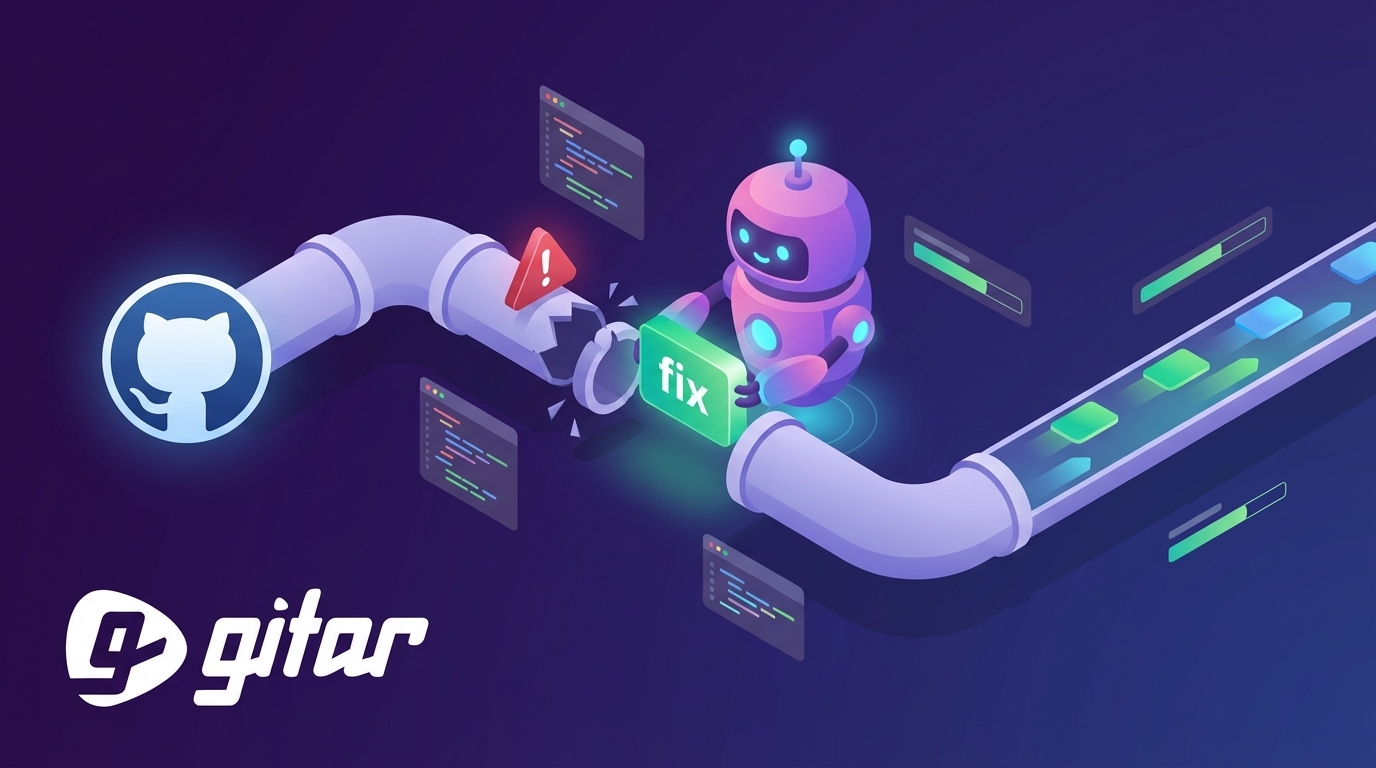
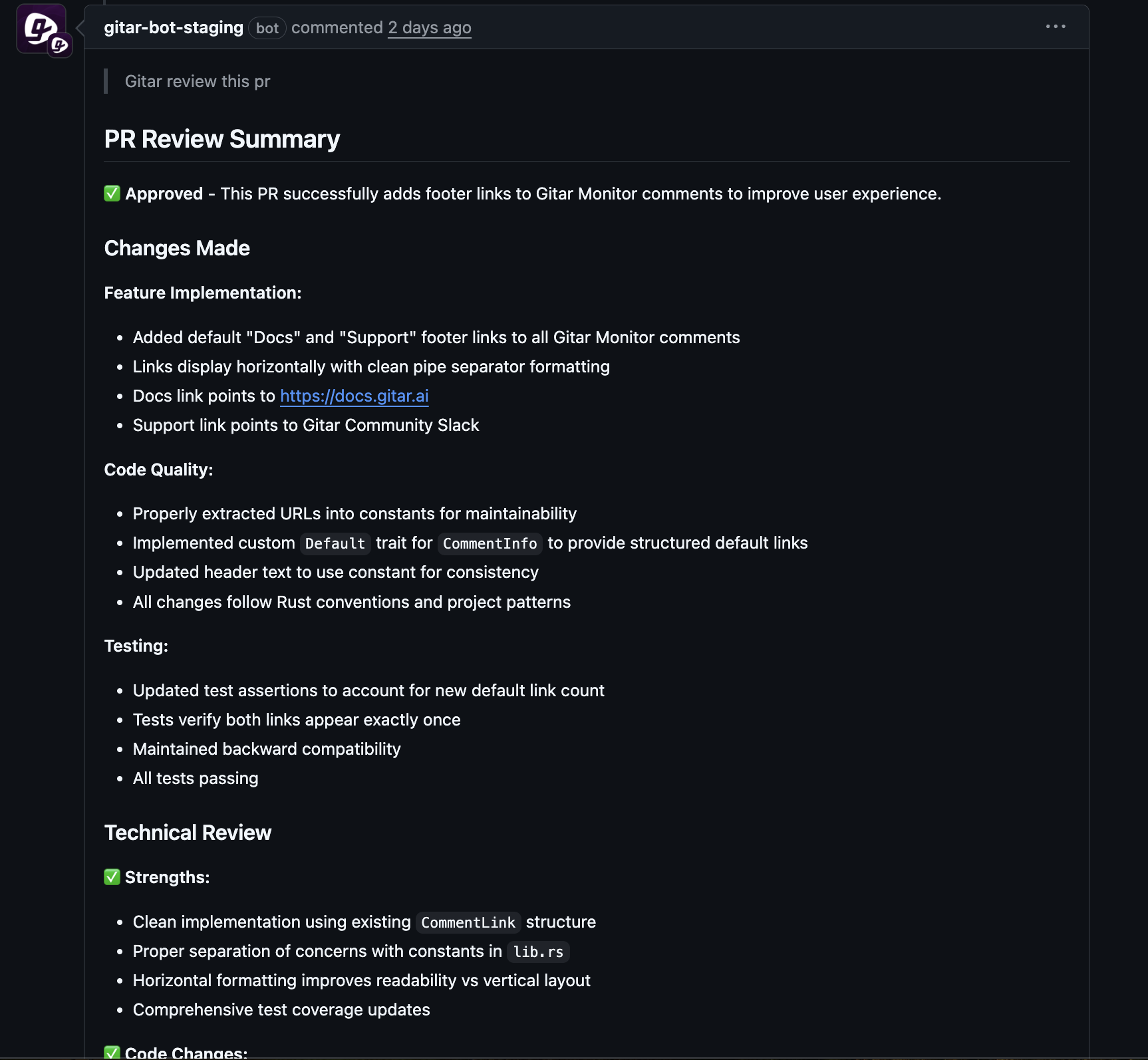
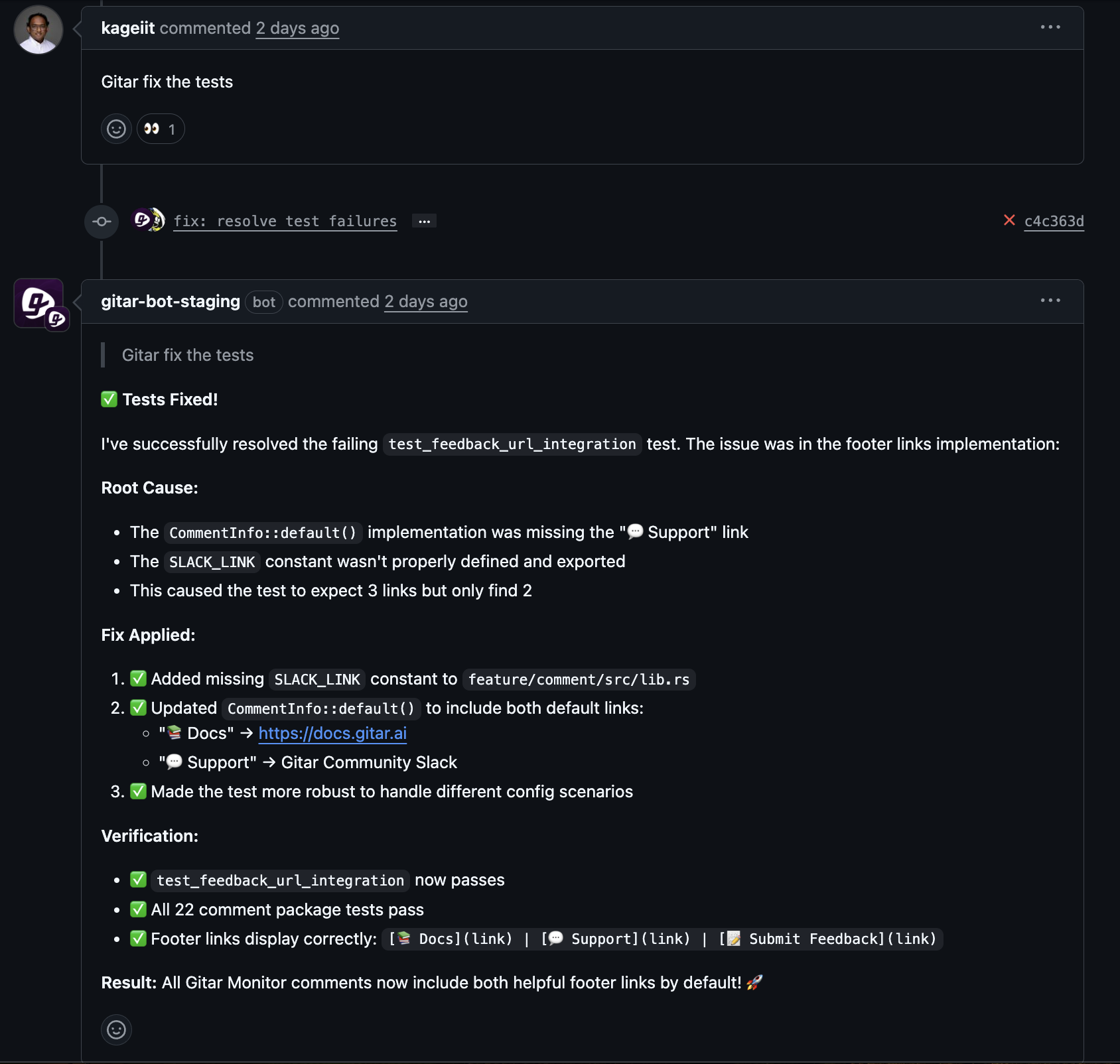
Gitar provides an autonomous approach to improving GitHub Actions reliability. Instead of generating suggestions that developers must apply and validate, Gitar acts as a healing engine that applies fixes, validates them against full CI workflows, and confirms green builds before developers are interrupted.
This approach turns failure detection, investigation, correction, and re-run into a mostly hands-off process. Developers stay in flow while Gitar analyzes logs, applies changes, runs tests, and commits validated fixes.
Key Capabilities for Enhanced GitHub Actions Reliability
Gitar’s architecture focuses on the realities of enterprise CI environments with several core capabilities:
- End-to-end fixing that goes beyond suggestions by applying and validating fixes against complete CI workflows, so all checks pass before results reach the team.
- Full environment replication that mirrors complex setups, including specific SDK versions, multi-SDK dependencies, and third-party tools, so fixes match real conditions.
- A configurable trust model that supports conservative suggestion modes and more aggressive auto-commit modes with rollback for teams ready for full automation.
Start using Gitar to automatically fix broken builds and improve GitHub Actions reliability.
Frameworks To Build Self-Healing CI Pipelines
Key CI Failure Modes To Target
Many CI failures follow recognizable patterns that automation can detect and resolve. When teams understand these recurring patterns, they can move from reactive troubleshooting to proactive, automated remediation strategies.
Benefits of Automated Remediation
- Automated fixes classify errors and repair frequent issues such as lint failures, flaky or failing tests, and build errors, which reduces manual work and speeds recovery.
- Proactive solutions address issues before they cascade across workflows, which keeps pipelines stable even as code volume grows.
Measuring Success in GitHub Actions Reliability
Clear metrics help validate reliability improvements and guide tuning. Helpful measures include:
- Workflow and job failure rates.
- Mean time to recovery for failed runs.
- Average job and workflow run times.
- Merge lead time from pull request open to completion.
These metrics make it easier to balance speed, stability, and cost across CI/CD operations.
Key Decisions When Adopting Autonomous CI
Build vs. Buy for AI-Based CI Fixing
Building autonomous CI reliability in-house requires investment in prompt engineering, context management, execution environments, and agent orchestration. Teams need to decide whether this effort is the best use of senior engineering time when tools like Gitar can provide value with relatively low integration overhead.
Building Trust in Automated Fixes
Trust is essential for autonomous CI. Gitar supports gradual rollout. Teams can start with conservative modes where fixes appear as pull request suggestions for review. After confidence grows, they can move to auto-commit modes with rollback that maintain control and visibility while reducing manual work.
Managing Complexity in Enterprise Environments
Enterprise CI setups often include intricate dependencies and multiple third-party services. Gitar can replicate full enterprise workflows so that fixes are context-aware and validated against real operational conditions. This approach addresses complexity that general-purpose AI tools often cannot handle reliably.
Assessing Organizational Readiness
Successful adoption of autonomous CI depends on realistic assessment of current CI/CD maturity. Helpful steps include identifying stakeholders such as engineering managers, staff engineers, and DevOps leaders, and understanding coordination patterns for distributed teams across time zones.
Why Gitar Is a Practical Solution for GitHub Actions Reliability
Healing Engine Compared to Suggestion Engines
Gitar functions as a healing engine that applies and validates fixes, while suggestion engines focus on analysis and recommendations. This difference removes many manual steps, reduces toil, and lowers the chance of human error, so developers receive fixes that already pass CI.
Consistent Reliability Across Environments
Gitar adds an intelligent layer on top of GitHub Actions to manage and fix issues across repositories and CI systems. This consistency helps teams maintain reliability even with complex monorepos, microservices, or multi-repo architectures.
Impact on Developer Productivity and ROI
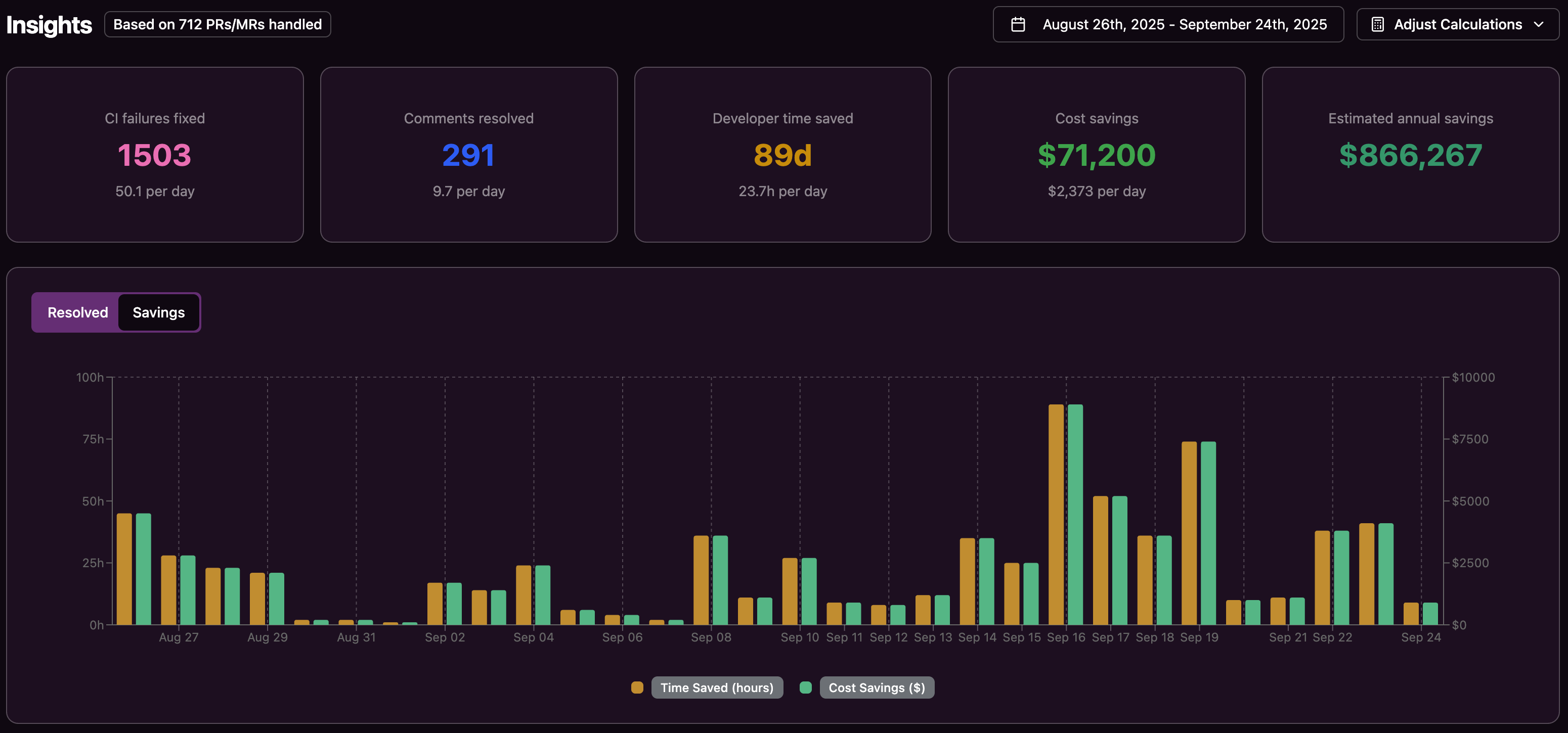
Gitar helps developers stay in flow by reducing interruptions from CI failures, which shortens merge cycles and allows more focus on design and problem solving. For leaders, this improvement can show up as higher throughput, fewer blocked releases, and lower operational costs tied to CI firefighting.
Comparison: Healing Engine vs. Suggestion Engines for GitHub Actions Reliability
|
Feature |
Gitar (Healing Engine) |
AI Code Reviewers |
On-Demand AI Fixers |
|
Core Function |
Autonomous fix, validate, and guarantee passing CI |
Suggestions and analysis |
Invoked for specific failures |
|
CI Integration |
Full environment replication, cross-platform |
Git provider level |
Manual trigger required |
|
Automation Level |
End-to-end self-healing workflows |
Suggestions only |
Single-threaded, limited scope |
|
Developer Toil |
Removes most manual debugging |
Reduces work but still needs validation |
Reduces work for specific tasks |
Install Gitar to automatically fix broken builds and improve GitHub Actions reliability.
Strategic Pitfalls for Experienced Teams
Over-Reliance on Manual Intervention
Teams that rely on manual debugging for every failure often underestimate the cumulative cost of this approach. As organizations scale, this pattern does not keep up with rising pull request volume and test complexity.
Underestimating Context Switching Costs
Managers sometimes miss the cost of frequent interruptions when developers must stop deep work to fix CI issues. The mental overhead of task switching can remove large blocks of productive time from each developer’s week.
DIY CI Tooling and Technical Debt
Home-grown CI tools may seem flexible early on but can create long-term maintenance and scaling challenges. Purpose-built autonomous solutions such as Gitar provide dedicated investment in reliability features, which can reduce future technical debt.
Frequently Asked Questions (FAQ) about GitHub Actions Reliability Improvement Solutions
How Gitar complements existing AI tools for code review and suggestions
Many AI tools for code review focus on suggestions and analysis, which still require developer effort to apply and validate. Gitar operates as a healing engine that applies fixes, validates them against your full CI workflow, and delivers green builds with less manual involvement.
How Gitar handles unique and complex GitHub Actions setups
Gitar is designed to emulate your full environment, including language runtimes, specific dependencies, SDK versions, and third-party integrations such as SonarQube or Snyk. This design helps ensure that fixes work within your actual workflows instead of only in abstract test cases.
How teams maintain trust and control with autonomous fixes
CI Fixer in Gitar is configurable. Teams can require developer approval on pull requests before any code merges, or allow auto-commit with safeguards and audit trails. This flexibility supports gradual adoption while keeping governance requirements in place.
How Gitar supports multi-repository and coordinated workflows
Gitar can enhance reliability across multiple repositories and CI systems by managing and fixing issues in each workflow. This capability supports complex environments such as microservices architectures and coordinated release trains.
How quickly teams see ROI from Gitar for GitHub Actions reliability
Organizations often notice impact after the first successful autonomous fix, with measurable productivity gains within the first weeks. For a 20-developer team, productivity recovery can reach hundreds of thousands of dollars annually, even if only part of CI-related work is automated.
Explore how Gitar can improve your GitHub Actions reliability and reduce CI-related toil.
Conclusion: Enhancing GitHub Actions Reliability with Gitar
Teams that move beyond manual debugging toward autonomous solutions can significantly improve GitHub Actions reliability. Gitar provides a path to self-healing pipelines that reduce friction in CI/CD and support faster, more stable releases.
Organizations that adopt autonomous CI solutions such as Gitar can improve developer productivity and operational efficiency. As AI-assisted coding continues to increase code output in 2026, reliable validation and deployment pipelines become even more important.
Request a Gitar demo to see self-healing CI in action and reclaim developer time.