
Key Takeaways
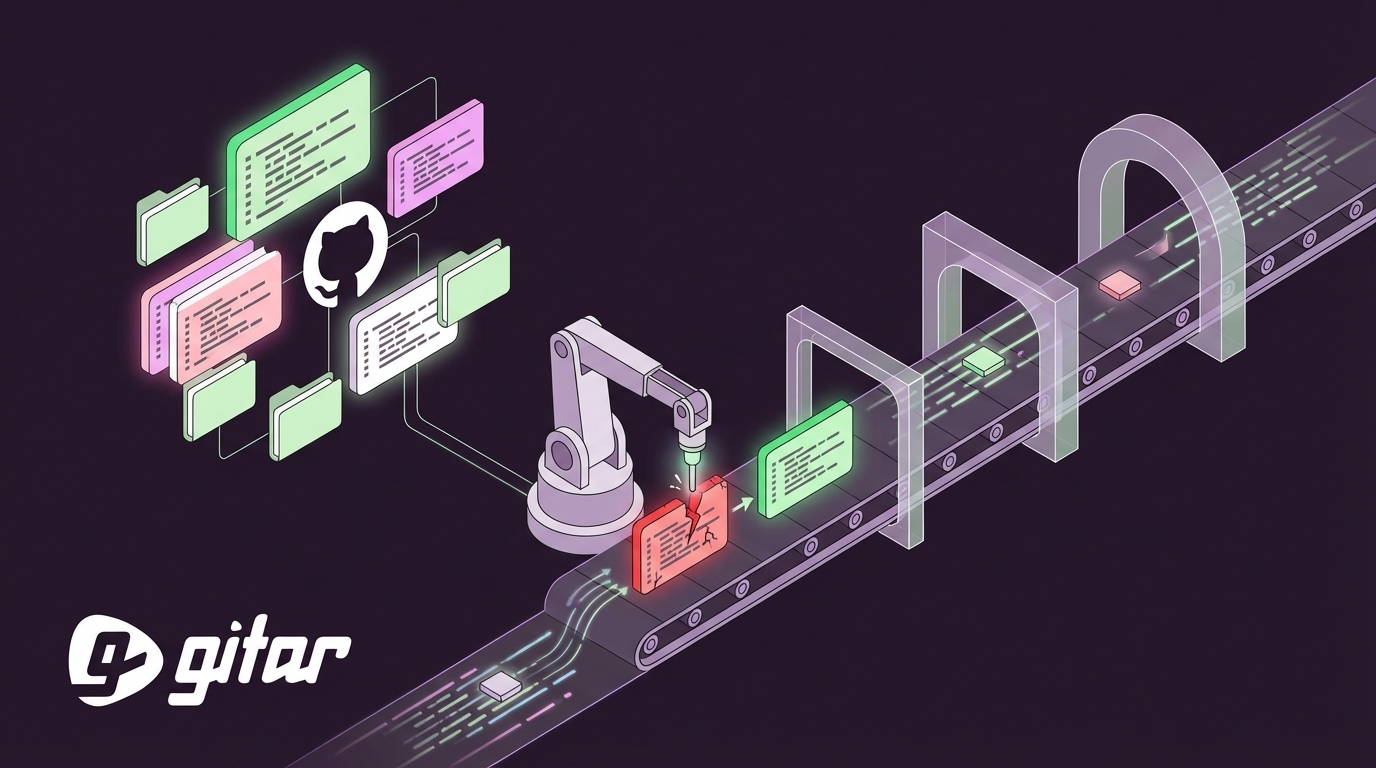
- Traditional CI pipelines often fail under growing code volume and complexity, which leads to wasted developer time and slower releases.
- AI-powered continuous integration tools reduce manual fixes, shorten feedback loops, and keep pipelines healthy with fewer interruptions.
- Accurate environment replication and context-aware fixes help large engineering teams maintain reliable CI across complex tech stacks.
- Protecting developer focus by offloading repetitive CI and review work to AI supports better productivity and lower burnout.
- Teams can adopt Gitar, an autonomous AI assistant for GitHub CI, to automatically fix failures and apply reviewer feedback with a simple, low-friction workflow from https://gitar.ai/fix.
The Problem: Why Traditional GitHub Automation and CI Efforts Fall Short
Many teams rely on CI setups that detect issues but still require developers to handle every fix. Developers can spend up to 30% of their time dealing with automation and testing bottlenecks, as shown in this overview of CI/CD pipeline challenges. For a 20-developer team, this wasted time can approach $1M a year in lost productivity and delayed delivery.
Growth in AI-assisted coding tools, such as GitHub Copilot, shifted the main constraint from writing code to validating and merging it. More pull requests mean more CI runs, more failures, and more review back-and-forth. Each interruption forces developers out of their flow, which slows feature work and increases frustration.
Developer Productivity Bottlenecks
Frequent CI failures interrupt deep work. A developer may push a change, start another task, then return hours later to fix a lint rule, dependency issue, or flaky test. Every return to an old context requires rebuilding mental state, which reduces both speed and code quality.
Operational Challenges for CI/CD
Inconsistent environments across development, staging, and production contribute to flaky tests and failed deployments, as highlighted in this analysis of CI pipeline issues. Toolchain fragmentation and multiple CI systems per organization add overhead for platform teams and slow onboarding for new engineers.
Introducing Gitar: Autonomous AI for Self-Healing GitHub CI
Gitar is an autonomous AI agent for GitHub that focuses on fixing CI problems and implementing code review feedback, not just identifying issues. The system watches pipelines, understands failures, and applies validated fixes so developers can keep shipping code without constant interruptions.
Core Capabilities That Support Continuous Integration
- End-to-end fixing, where Gitar proposes, applies, and validates changes against the full CI workflow before presenting results.
- Full CI environment replication, including language runtimes, multi-SDK builds, and integrations with tools such as SonarQube and Snyk.
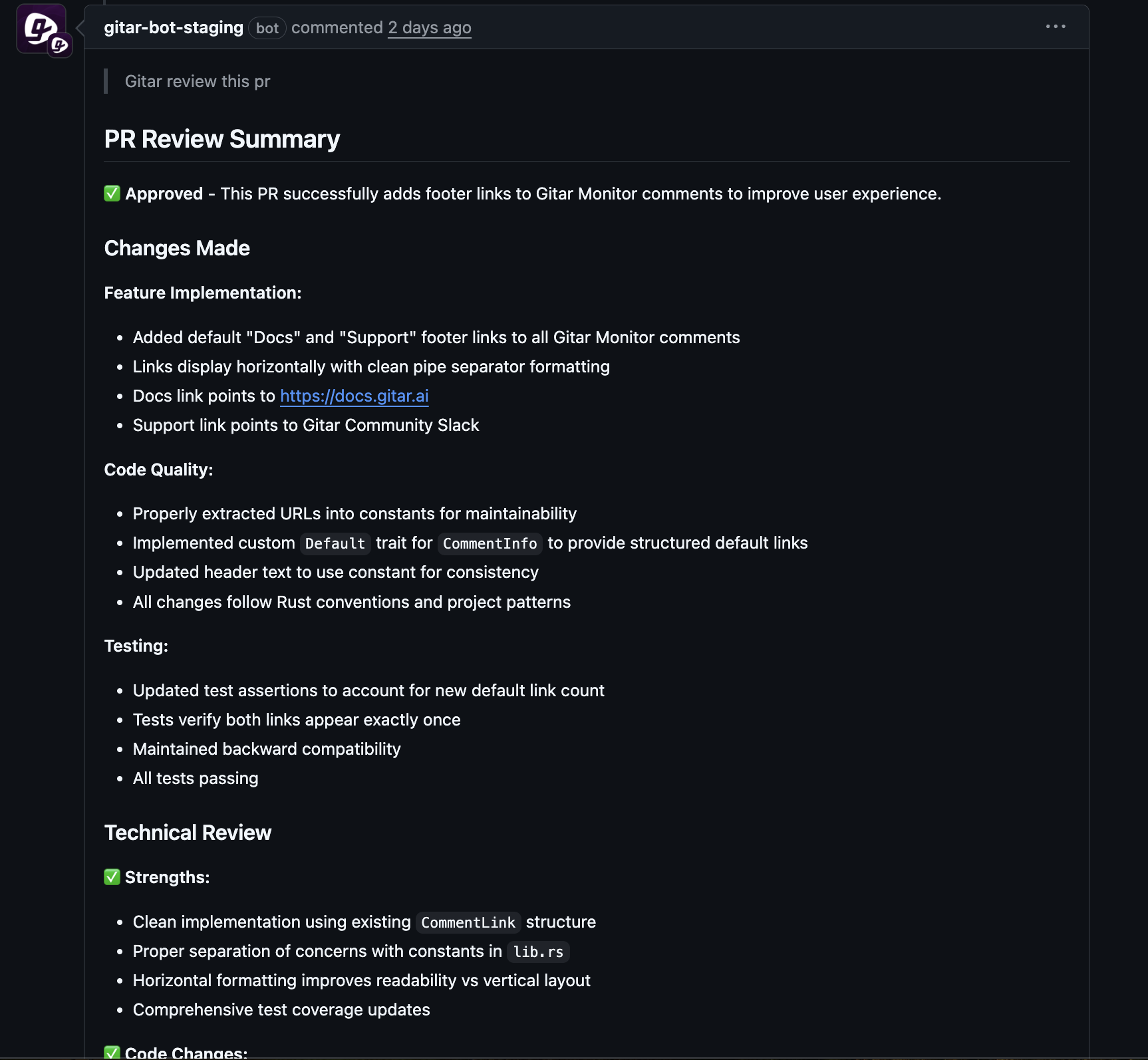
- Comment-driven code review assistance, where reviewers can ask Gitar to make specific edits or run a full review through pull request comments.
- A configurable trust model that supports suggestion-only mode first, then optional auto-commit once teams gain confidence.

1. Achieving Self-Healing CI with AI-Driven Fixes
How Self-Healing CI Reduces Manual Work
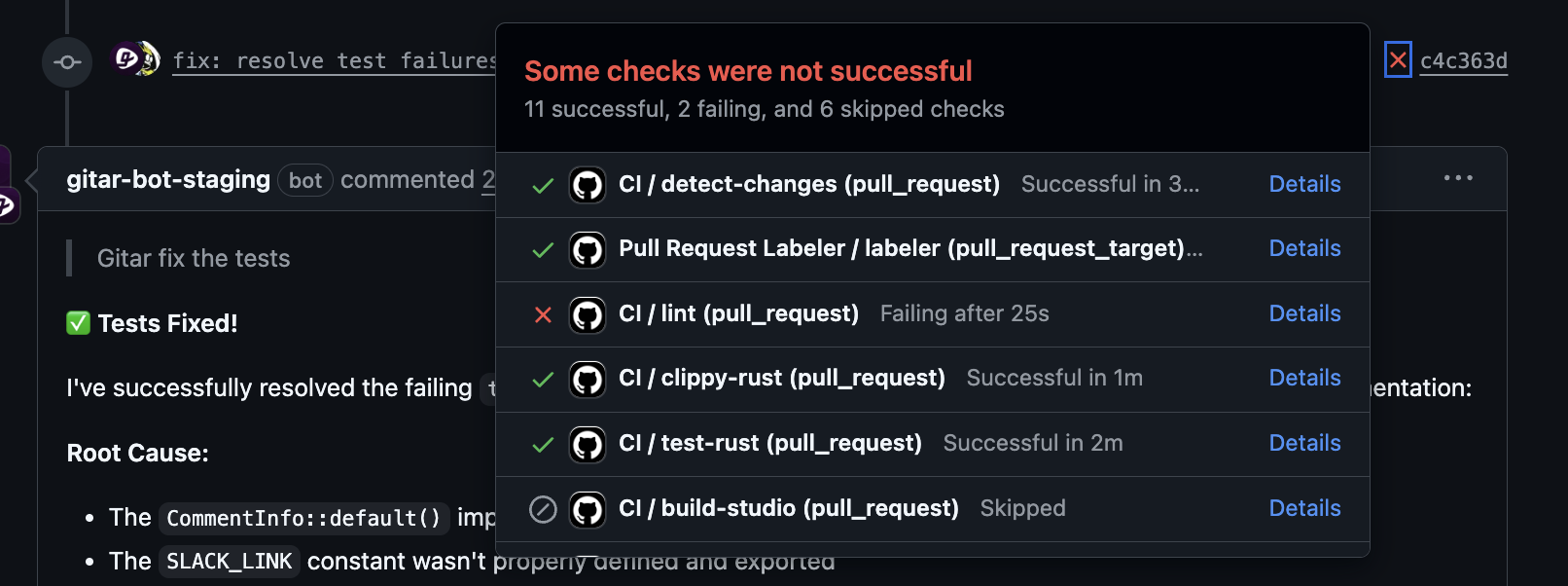
AI-powered continuous integration tools move past simple error alerts and work toward automatic recovery. Self-healing CI identifies failures, isolates root causes, and applies targeted fixes for common issues such as lint errors, formatting problems, dependency conflicts, and straightforward test failures.
Teams that adopt self-healing behavior see fewer red builds, shorter merge times, and fewer repeated pipeline runs. Manual deployment and fix workflows often rely on ad hoc scripts and file transfers, which creates friction that AI-enabled CI can remove.
How Gitar Implements Self-Healing in GitHub
Gitar tracks CI jobs in real time, parses logs, and maps failures to code changes. When a lint rule breaks a build, Gitar pinpoints the violation, updates the code, and pushes a new commit with a clear explanation. Many issues resolve before the developer even returns to the pull request.
2. Accelerating Code Review with AI-Powered Feedback Implementation
Shortening Review Cycles for Distributed Teams
Code review delays frequently slow merges more than the coding work itself. Each comment that waits for a response across time zones can add a full day to the cycle. AI-powered continuous integration tools address this bottleneck by implementing straightforward reviewer feedback automatically.
Teams that allow AI to handle routine review edits can keep reviewers focused on design and risk. Pull requests close faster, and engineers avoid repetitive back-and-forth over minor changes.
How Gitar Applies Reviewer Comments
Reviewers can tag Gitar in a comment and describe the desired change in natural language. Gitar interprets the instruction, updates the relevant files, and commits the change back to the branch.
Distributed teams gain particular value. A reviewer in one region can leave comments at the end of their day, and Gitar can apply them before the author signs on. The pull request then moves straight to final review instead of idling for another round of edits.
3. Managing Complex Enterprise CI Environments with AI
Why Context and Environment Fidelity Matter
Large organizations often run multi-language builds, custom tooling, and strict quality gates. Many issues appear only in CI because the environment does not match local development. Environment mismatches across dev, staging, and production increase test flakiness and reduce trust in automated checks.
AI-powered CI tools that understand this environment context can propose fixes that respect real constraints, such as specific SDK versions, security scanners, and static analysis rules.
Gitar’s Context-Aware Approach
Gitar maintains a long-lived picture of each repository and its CI environment. The agent tracks job waves, shared state, and asynchronous events across pipelines. Fixes must pass in this full context, not just in a narrow local view.
This approach allows Gitar to handle complex scenarios, such as multi-module builds or repositories wired into tools like SonarQube and Snyk, while keeping changes compliant with organizational standards.
4. Protecting Developer Flow and Reducing Burnout
The Human Impact of Smarter Continuous Integration
Frequent interruptions for trivial CI issues erode engagement and increase burnout. Developers who need to stop creative work to chase down a formatting error or rerun flaky tests often report lower satisfaction and slower progress on complex tasks.
AI-powered CI tools support healthier work patterns by absorbing repetitive chores. Developers can plan work around meaningful units of progress instead of surprise fixes.
How Gitar Supports Focused Work
Gitar handles debugging of simple failures, log inspection, and routine code edits that follow clear rules. Teams can choose conservative settings where Gitar only suggests fixes first, then move to auto-commit modes for specific repositories or workflows.
As developers see CI problems resolve automatically, confidence grows and resistance to automation decreases. The result is a culture that spends more time on design, architecture, and experimentation, and less time on mechanical corrections.
5. Scaling ROI for Engineering Leaders with AI-Powered CI
Connecting CI Automation to Business Outcomes
Leadership teams need clear metrics to justify new tools. A 20-developer team that spends one hour per day on CI and review issues loses about 5,000 hours a year. Even small reductions in this overhead can unlock the equivalent of several full-time engineers for feature work.
AI-powered CI tools help reduce red builds, shorten merge times, and avoid duplicate fixes, which in turn supports faster releases and more predictable roadmaps.
Where Gitar Delivers Measurable Gains
Gitar cuts down on redundant builds triggered by minor fixes, and reduces the time senior engineers spend on routine review comments. Managers can reallocate that time to cross-cutting improvements, such as performance, reliability, or security initiatives.
Over time, this shift turns CI from a cost center into a source of leverage for the organization.
AI-Powered Continuous Integration vs Traditional Approaches
Key Differences in How Work Gets Done
|
Feature or capability |
Gitar (autonomous healing engine) |
Other AI tools |
Manual fixing (status quo) |
|
Level of automation |
Detects, fixes, and validates within CI |
Recommendations or partial automation |
Developers perform all steps |
|
Environment context |
Replicates full CI environments |
Limited or tool-specific context |
Local development environment |
|
Validation |
Runs full pipelines to confirm green builds |
Often relies on manual re-runs |
Manual local runs and CI checks |
|
Impact on developer flow |
Minimizes context switching |
Mixed impact by tool |
Frequent interruptions and delays |
Frequently Asked Questions (FAQ) about AI-Powered Continuous Integration Tools
How AI-Powered CI Differs from AI Code Review
Many AI review tools focus on suggestions. Gitar operates as a healing engine that applies fixes, validates them against the full CI workflow, and updates the pull request. The developer receives a passing build, not just a list of ideas.
How Teams Control Automated Fixes
Gitar offers multiple modes so teams can manage risk. You can begin with suggestion-only changes that require approval, then enable auto-commit for well-understood patterns once trust is established. Full history and rollback remain available through Git.
Support for Unique and Complex CI Setups
Gitar is built to emulate real CI environments, including custom dependencies, language versions, and integrations with tools like SonarQube or Snyk. Fixes must work inside that specific pipeline, not just in a generic sandbox.
Security Considerations for AI-Powered CI
Modern AI CI agents work within existing access controls and audit trails. Gitar can operate under dedicated service accounts, respect repository permissions, and integrate with existing security checks so automated changes follow the same rules as human commits.
Onboarding Effort and Learning Curve
Most teams connect Gitar to GitHub through OAuth and configure it on selected repositories first. The tool runs in the background and responds to CI events and comments, so developers can keep using their usual Git workflows.
Conclusion: Moving Toward Self-Healing GitHub Automation
Rising code volume and system complexity make manual CI triage and review loops increasingly expensive. AI-powered continuous integration offers a practical way to keep pipelines healthy, shorten feedback cycles, and protect developer time.
Teams that shift from reactive fixes to autonomous, validated healing gain faster delivery and a better developer experience. Gitar provides one path to that model by combining self-healing CI, comment-driven code edits, and environment-aware automation for GitHub. To explore how this approach could fit your workflows, visit https://gitar.ai/fix.