
Key Takeaways
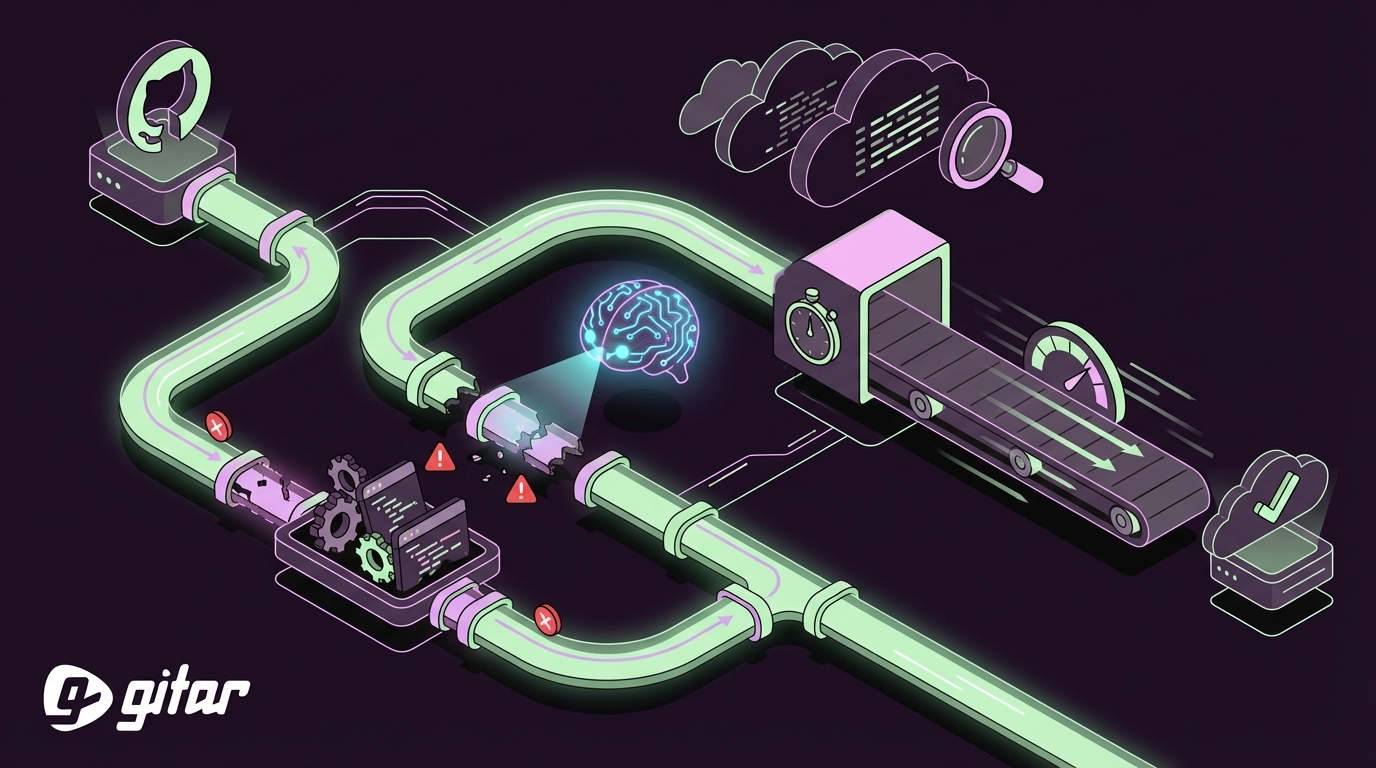
- Traditional GitHub Actions pipelines create hidden costs through queueing delays, non-reproducible runs, and frequent CI failures that interrupt developer focus.
- AI DevOps automation platforms add an autonomous layer that detects, diagnoses, and fixes CI issues, which reduces manual debugging and review cycles.
- Gitar acts as an autonomous agent for GitHub Actions that replicates enterprise environments, validates fixes, and commits changes so teams can rely on deterministic builds.
- Engineering leaders gain clearer ROI, higher team throughput, and better compliance when they adopt an end-to-end AI platform instead of stitching together custom AI tools.
- Teams that want to reduce CI toil and fix failing workflows automatically in GitHub Actions can get started with Gitar at https://gitar.ai/fix.
The Unseen Costs: Why Traditional GitHub Actions CI/CD Falls Short
Standard GitHub Actions pipelines often hide significant productivity loss. Many developers spend close to an hour each day debugging CI failures and reacting to review comments, which can reach roughly 30% of working time in some teams. This time loss erodes focus, slows feature delivery, and increases frustration.
Context switching magnifies the impact. Developers expect a smooth path after opening a pull request. Instead, GitHub Actions queueing delays and failed runs interrupt deep work. A fix that should take minutes stretches into much longer when considering re-engagement time and mental overhead.
Enterprise environments add more complexity. Multi-SDK builds, long dependency chains, and fragile third-party integrations introduce more failure points. GitHub Actions non-reproducible re-runs create additional instability when force-pushed action versions silently change behavior. For distributed teams, these technical gaps translate directly into delayed releases and missed deadlines.
Install Gitar to cut CI firefighting time and keep developers focused on shipping features.
Gitar: An Autonomous AI Agent for Self-Healing CI/CD in GitHub Actions
Gitar upgrades GitHub Actions from basic automation to self-healing CI/CD. The platform operates as an autonomous agent that monitors pull requests and workflows, identifies CI failures, and applies validated fixes without requiring manual intervention.
Key capabilities include:
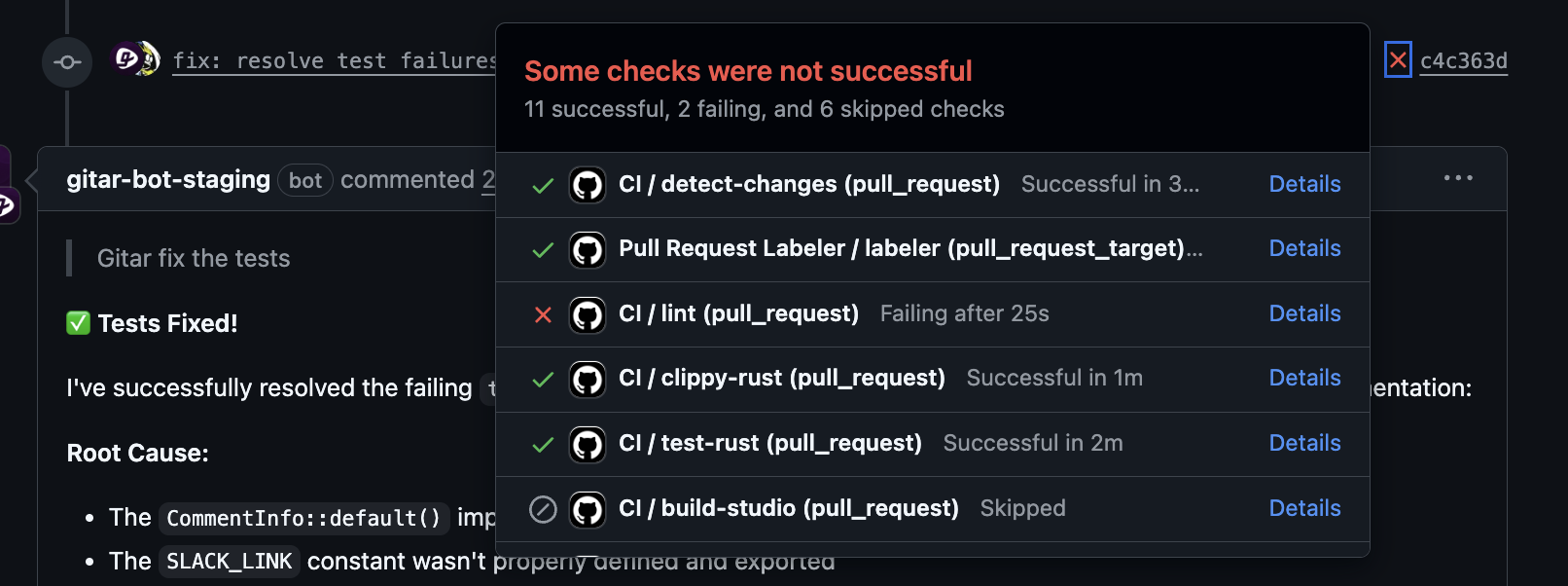
- End-to-end autonomous fixing that not only suggests changes but also applies, validates, and commits fixes for CI failures and review feedback.
- Full enterprise environment replication that mirrors SDK versions, services, and tools, including scenarios where GitHub Actions struggles with complex workflows.
- A configurable trust model that lets teams start with suggestion-only behavior, then move to automatic commits as confidence grows.
- Support for distributed teams by closing feedback loops automatically instead of waiting on time zone alignment.
- Native GitHub Actions integration that adds a living status monitor on pull requests and works within existing workflows.
This approach aligns with more layered pipelines enabled by GitHub Actions workflow nesting, which benefit from less manual management and more autonomous handling of failures.
Strategic Advantages: Improve Your GitHub Actions Workflow with AI Automation
Accelerate Time-to-Market with Shorter Lead Times
Self-healing CI/CD reduces the time between first commit and merged pull request. Automated diagnosis and repair of failures remove repeated manual debugging loops. Expanded workflow nesting in GitHub Actions allows more advanced pipelines, and an autonomous agent like Gitar keeps those pipelines moving without constant human attention.
Reclaim Developer Productivity and Flow State
Unexpected build failures disrupt deep work. When Gitar fixes lint issues, test failures, and dependency problems, developers stay focused on design and feature work instead of CI mechanics. Teams see fewer interruptions, clearer context, and higher-quality contributions.
Gain Measurable Cost Savings and ROI
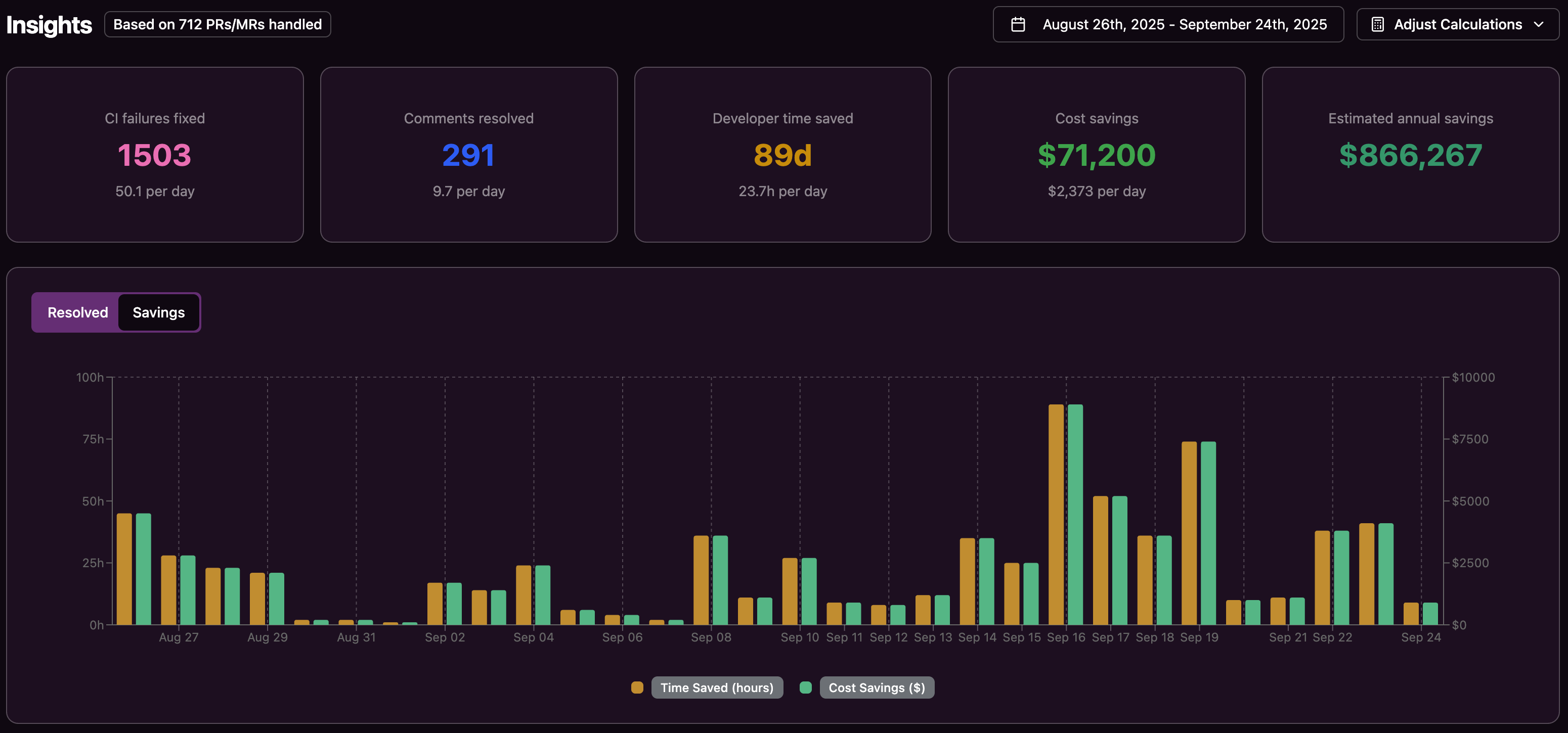
For a 20-person engineering team that loses roughly one hour per developer per day to CI issues and review churn, the annual productivity impact can approach seven figures in loaded cost. If Gitar removes even half of that friction, the savings reach hundreds of thousands of dollars per year, while also reducing idle time billing in GitHub Actions.
Improve CI/CD Reliability and Reproducibility
Deterministic builds are essential for debugging and compliance. Gitar addresses issues such as non-reproducible GitHub Actions re-runs by generating validated fixes that lead to consistent green builds. This behavior supports stricter audit requirements and reduces surprise regressions in production.
Strategic Considerations for Adopting AI DevOps Platforms in GitHub Actions
Choose an End-to-End Solution Instead of DIY Toolchains
Building a custom AI layer on top of GitHub Actions often requires significant work on prompts, context windows, and integration glue. Teams that assemble their own stack effectively maintain a small internal product. Gitar offers an end-to-end platform that already accounts for GitHub Actions limitations in complex workflows, so teams adopt a supported product instead of owning a fragile internal system.
Plan for Organizational Readiness and Trust
Adoption succeeds when teams can control how aggressive automation behaves. Gitar supports gradual rollout. Teams can begin with suggestion-only comments on pull requests, then advance to automatic commits once they confirm quality and reliability. This staged approach aligns with existing review practices and makes change management easier.
Close Security and Reproducibility Gaps
GitHub Actions has known gaps around dependency management and repeatability. Security flaws related to lockfiles and transitive dependencies can increase operational risk. Gitar reduces this exposure by validating fixes inside controlled environments and only committing changes that pass tests, which supports auditability and compliance.
Support Multi-Platform CI/CD Strategies
Many organizations rely on more than one CI provider. Large deployments across many repositories sometimes outgrow a single tool. Gitar supports GitHub Actions as well as other CI systems such as GitLab CI and CircleCI, so teams can maintain a consistent self-healing layer while their infrastructure evolves.
Install Gitar to introduce autonomous CI healing into your GitHub Actions pipeline.
Comparison: Gitar (Healing Engine) vs. Traditional Approaches for GitHub Actions
|
Feature or Approach |
Manual Intervention |
AI Reviewers |
Gitar (Autonomous AI Agent) |
|
CI failure resolution |
Manual debugging |
Text suggestions only |
Autonomous fix, validate, and commit |
|
Environment context |
Developer local machine |
Limited repository view |
Full enterprise environment replication |
|
Reproducibility |
Inconsistent |
Not guaranteed |
Deterministic, validated green builds |
|
Time-to-merge impact |
Slow, frequent delays |
Moderate delays |
Faster merges with fewer manual cycles |
Frequently Asked Questions about AI DevOps Automation Platforms
Gitar integration with existing GitHub Actions workflows
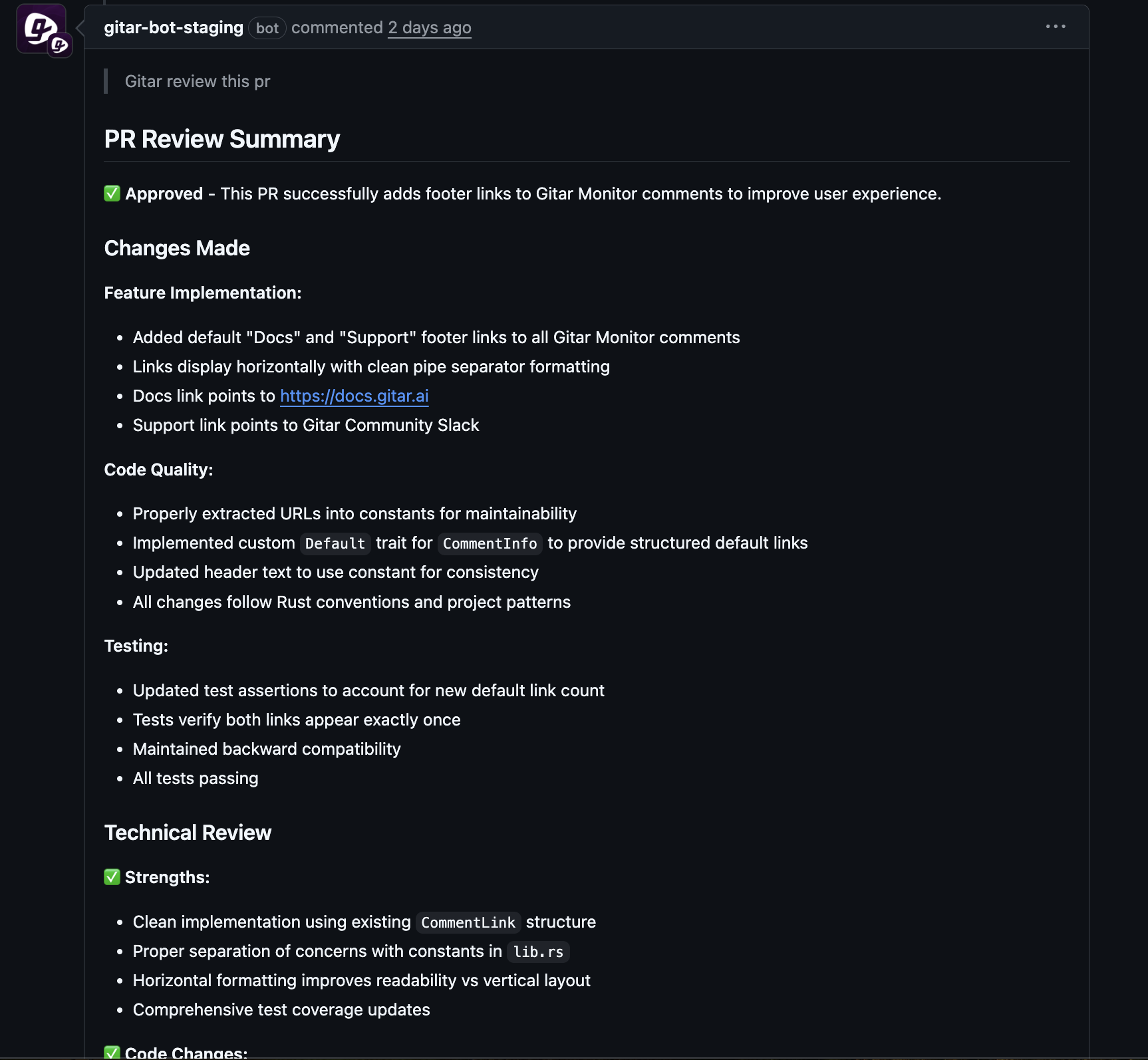
Gitar installs as a GitHub App that listens to pull request events and CI results. It posts a status comment on each pull request, then runs as an autonomous agent inside your workflows to generate and apply fixes. Most teams keep their existing GitHub Actions configuration and simply add Gitar to handle failures.
Support for complex, enterprise-grade GitHub Actions environments
Gitar is designed for large-scale CI setups with many dependencies and tools. The platform replicates build environments, including specific SDK versions, multi-SDK matrices, and tools such as SonarQube or Snyk. Fixes are tested in that replicated context, which increases the likelihood that they pass in your production CI pipelines.
ROI and security impact of implementing Gitar
Teams that spend significant time on CI failures and code review updates often see large productivity gains after adopting Gitar. The platform reduces manual intervention, shortens feedback loops, and cuts idle compute costs. At the same time, Gitar enforces automated validation and keeps clear audit trails of each change, which strengthens the security posture of GitHub Actions workflows instead of weakening it.
Conclusion: Implement Next-Generation AI DevOps Automation with GitHub Actions
Autonomous CI/CD marks the next stage in GitHub Actions maturity. Traditional automation reduces some manual work, but AI DevOps automation platforms like Gitar add an active healing layer that keeps pipelines healthy, reproducible, and fast.
Organizations that adopt this model gain higher velocity, lower operational cost, and a better developer experience. Engineering teams spend less time managing infrastructure and more time delivering product value.
Request a Gitar demo today to bring self-healing CI/CD to your GitHub Actions workflows.