
Key Takeaways
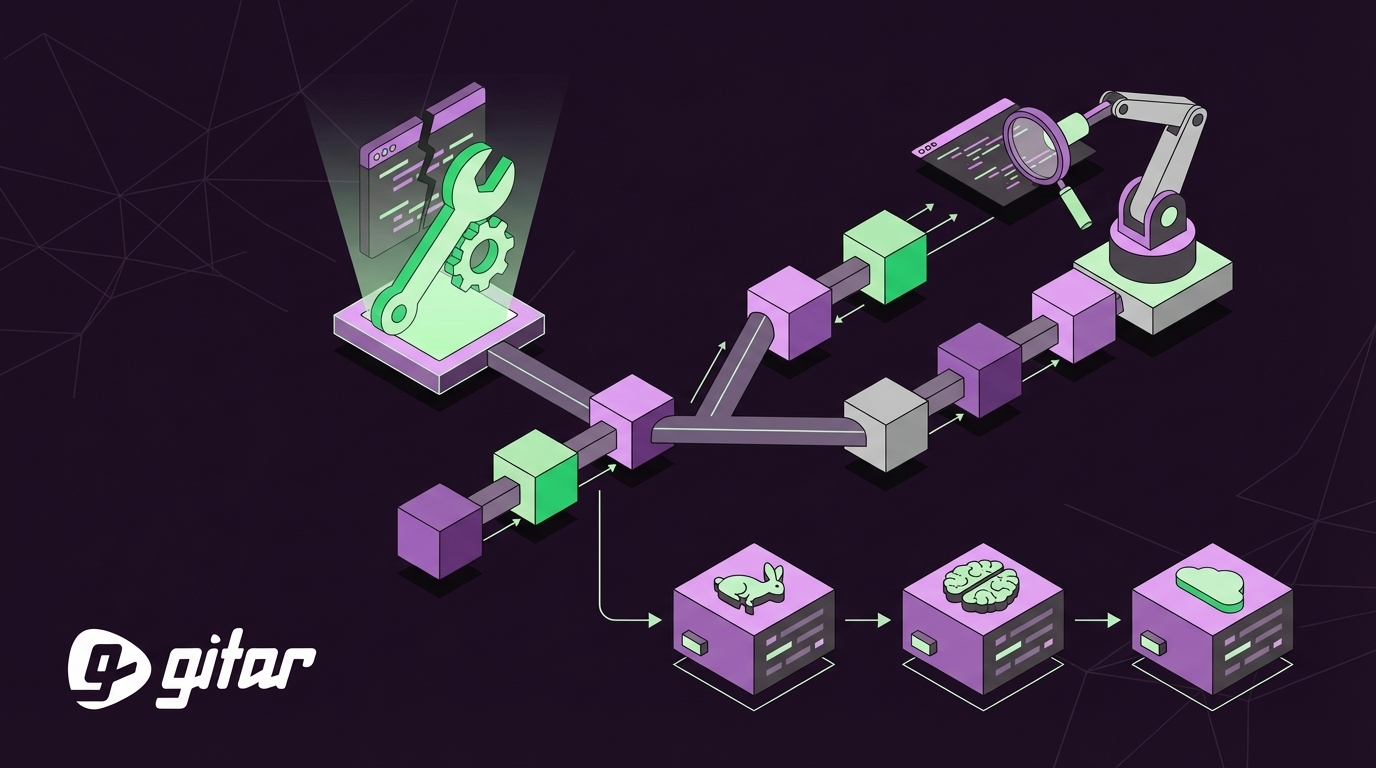
- Version control automation tools fall into two categories: suggestion engines that surface issues and potential fixes, and healing engines that apply and validate fixes inside CI.
- CI failures and code review cycles can consume a significant share of developer time, with some teams losing up to 30% of engineering capacity to these activities.
- Traditional AI assistants and code reviewers help during authoring and review, but they usually stop short of autonomously fixing and validating changes across full CI workflows.
- Gitar operates as an autonomous CI healing engine that replicates complex environments, applies fixes, and commits only when builds pass, which reduces context switching and time-to-merge.
- Teams that want to cut time spent on broken builds and review rework can try Gitar: Install Gitar to automatically fix CI failures and accelerate software delivery.
The Developer Productivity Bottleneck: Why Traditional Automation Falls Short
Developer productivity often suffers when CI fails and code reviews stall. Engineering research shows that CI and review issues can consume up to 30% of developer time, which creates a direct cost and a hidden tax on focus.
Every failed build forces a context switch. A developer working on a feature pauses to decode logs, locate the failing test or lint rule, patch the issue, and push a new commit. The visible work might take 20 to 30 minutes, yet the full impact can reach an hour once lost focus and recovery time are included.
Many version control automation tools act as suggestion engines. These tools surface problems and sometimes propose code changes, but developers still need to apply the fix, push it, and wait for CI to confirm that the issue is resolved. If the suggestion does not work, the cycle repeats.
Installing Gitar reduces this manual validation loop by automatically fixing broken builds so developers spend more time on planned work.
Understanding the Landscape of Version Control Automation Tools
Version control automation spans a range from fully manual workflows to autonomous healing systems. Each category affects developer focus, CI costs, and delivery speed in different ways.
Manual Work as the Baseline
Manual workflows require developers to investigate CI failures, write fixes, and repush changes. This pattern often triggers several cycles of trial and error, with each attempt consuming CI minutes and disrupting focus on roadmap work.
AI Code Reviewers (for example, CodeRabbit, Ellipsis)
AI code reviewers summarize pull requests and highlight potential issues during review. These tools help reviewers identify logic problems, style concerns, and potential regressions. Many of them still rely on developers to implement changes, create commits, and confirm that fixes address CI failures without side effects.
On-Demand AI Fixers (for example, Claude Code and Anthropic GitHub Action)
Some tools allow developers to request targeted help when CI breaks. They can generate patches for specific errors, yet they usually require manual triggering and run inside the customer’s CI environment. Limited context about intricate build setups and a single-threaded operating model make them less effective for large, multi-stage pipelines.
IDE-Based Coding Assistants (for example, GitHub Copilot)
IDE assistants support developers before commit time. They speed up implementation but do not act on post-commit events, such as CI failures or review feedback. Once code leaves the IDE, these tools no longer participate in the fix-and-validate cycle.
Gitar: Autonomous CI Healing To Reduce Developer Interruptions
Gitar shifts from suggestion-only behavior to autonomous problem resolution. Instead of only flagging errors, Gitar runs fixes inside an environment that mirrors your CI, validates the results, and commits successful changes back to the repository.
Key capabilities that distinguish Gitar include:
- End-to-end fixing that applies patches, runs full CI workflows, and shares results only after the build succeeds
- Full environment replication that respects enterprise-specific SDK versions, platform dependencies, and security or compliance scanners
- Cross-platform support across GitHub Actions, GitLab CI, CircleCI, BuildKite, and other major CI systems
- A configurable trust model that supports a gradual path from suggestions to fully autonomous commits
- Integration with AI agents so local developer tools and CI share context for more accurate fixes
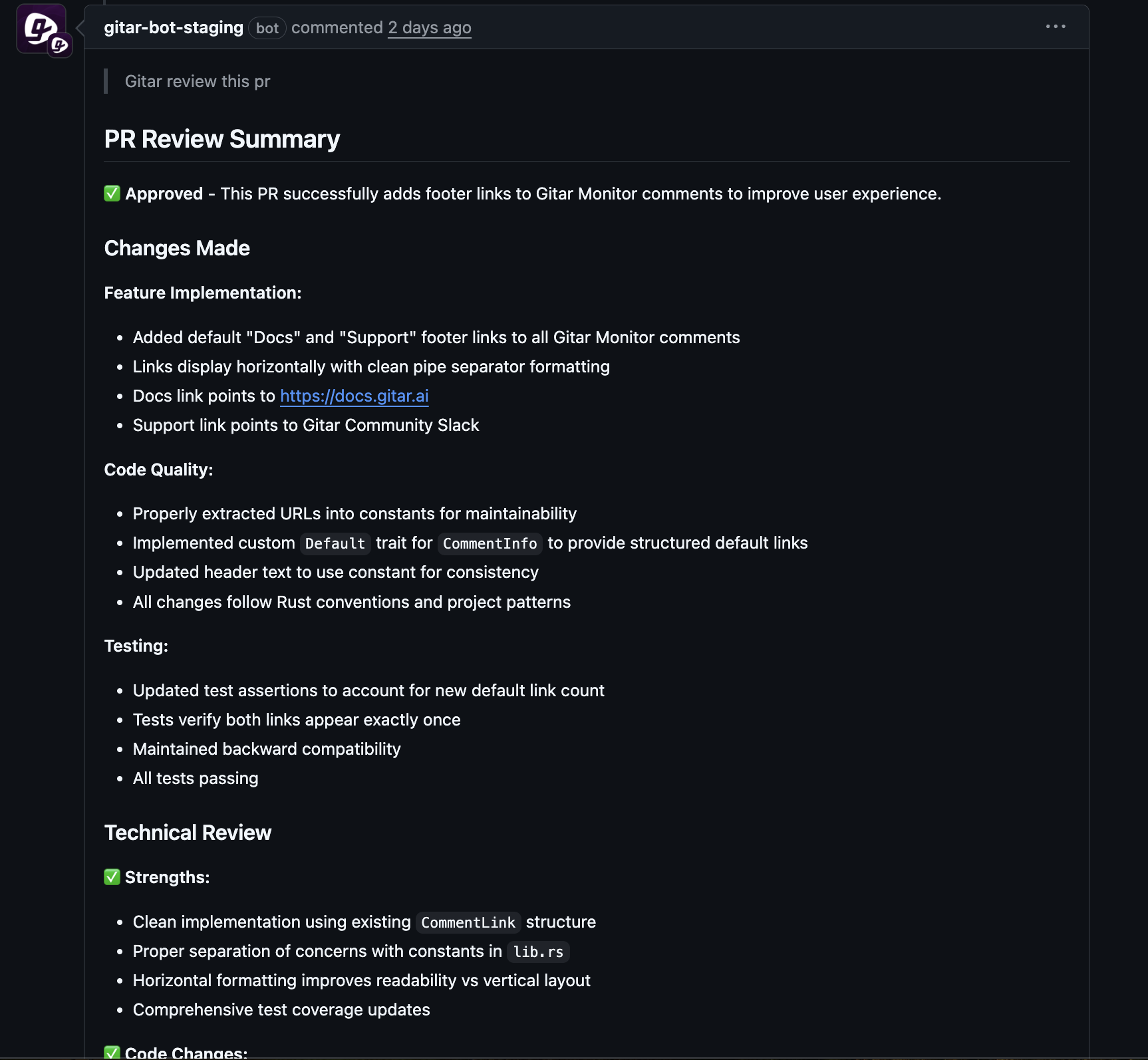
Book a demo of Gitar to see autonomous CI fixes running in real pull requests.
Head-to-Head Comparison: Gitar vs. AI Suggestion Engines
The main difference between suggestion engines and healing engines is whether they stop at detection or carry fixes through to validated commits.
|
Feature or Criterion |
AI Suggestion Engines |
Gitar (Autonomous CI Healing Engine) |
|
Automation Type |
Flags issues and offers suggestions that require manual application |
Applies, validates, and commits fixes with a focus on keeping builds green |
|
Fix Validation |
Provides proposals that may fail once applied, with limited pre-validation |
Runs fixes in a replicated CI environment and commits only after all checks pass |
|
Environment Replication |
Operates with partial awareness of build configuration and dependencies |
Emulates enterprise workflows, including specific SDKs and third-party tools |
|
Platform Integration |
Often tied to one platform, such as GitHub-only workflows |
Supports multiple CI platforms, including GitHub Actions, GitLab CI, CircleCI, and BuildKite |
Gitar reduces manual validation work that suggestion engines leave to developers, so CI failures become background tasks instead of urgent interruptions.
Real-World Impact and Total Value of Ownership with Gitar
Autonomous healing changes how teams plan work, staff projects, and manage delivery risk. The impact appears in time-to-merge, developer satisfaction, and operational cost.
Faster Time-to-Market for Startups
Startups that ship frequently feel CI friction immediately. Gitar shortens the path from first commit to merged code by resolving common failures without human intervention. Teams can focus on product decisions instead of routine CI cleanup.
Higher Developer Morale in Large Enterprises
Enterprise teams work inside complex CI environments with layered checks, from security scans to compliance gates. Gitar absorbs much of the repetitive debugging work so engineers can spend more time on features and architecture instead of infrastructure issues. This shift supports better engagement and retention.
Smoother Collaboration for Distributed Teams
Distributed teams often experience delays when review comments arrive outside normal working hours. A reviewer in one region can leave feedback for Gitar, and the system prepares fixes and new commits before the original author returns online. This pattern reduces time zone friction and helps global teams maintain flow.
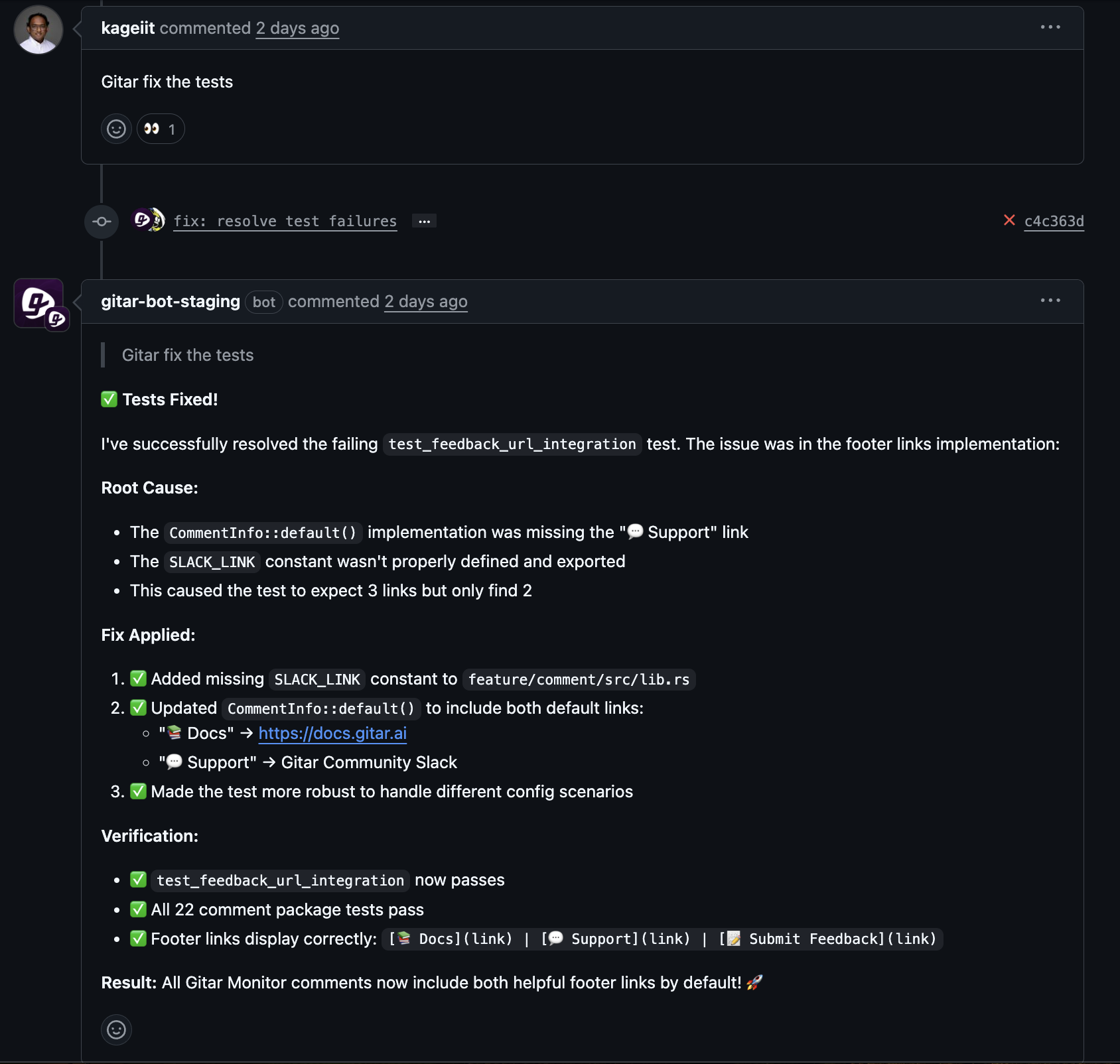
Teams also gain financial benefits. For a 20-developer organization, ROI modeling shows potential savings of hundreds of thousands of dollars per year from reclaimed engineering time, even when using conservative effectiveness assumptions.
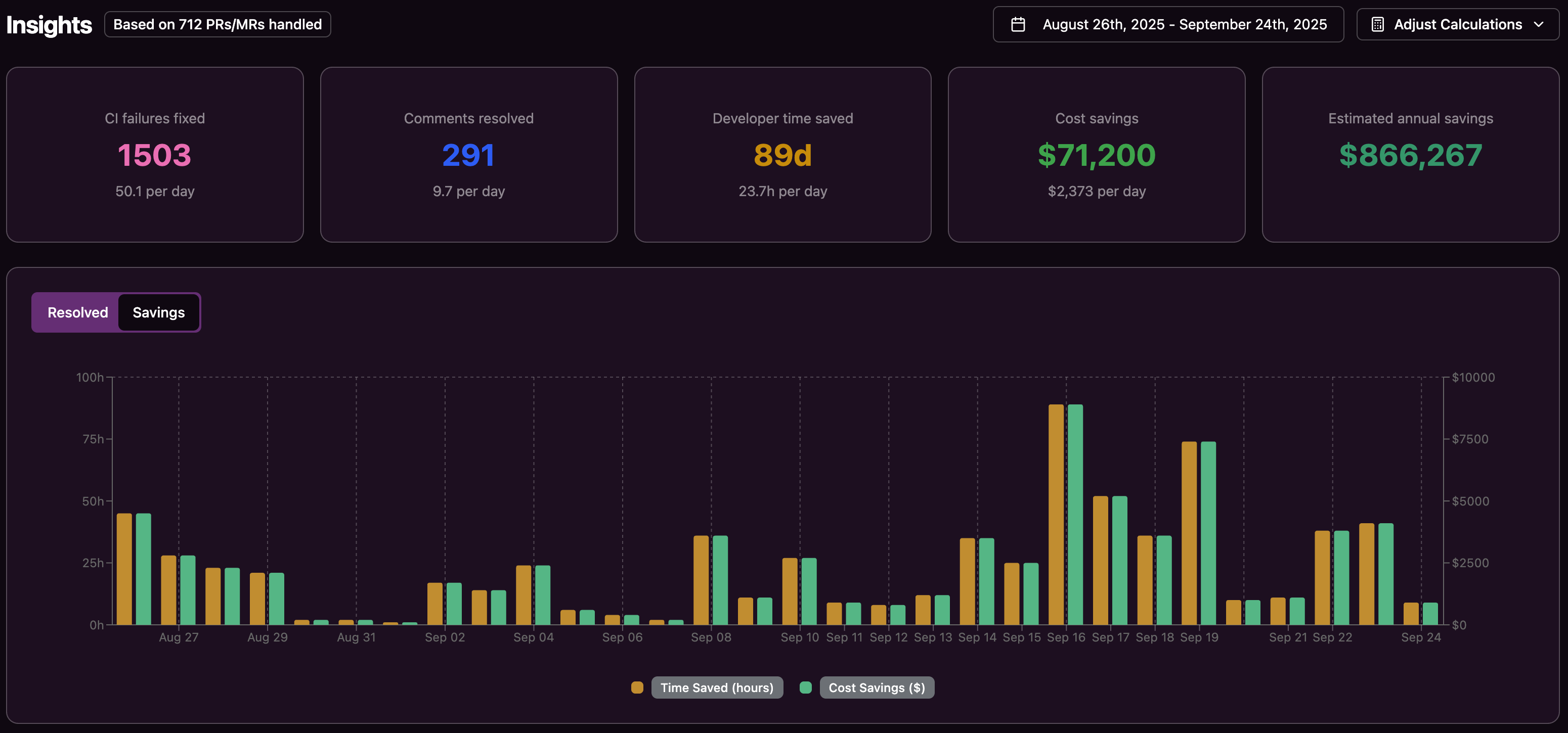
Install Gitar to automatically fix broken builds and reclaim developer hours across your organization.
Key Considerations About Autonomous CI Fixes
How Gitar Compares to Existing AI Code Reviewers
AI code reviewers mainly assist with analysis. They identify issues, suggest changes, and support human reviewers, yet they rarely own the full fix cycle. Gitar identifies issues, proposes changes, applies them, and validates fixes inside a replica of your CI environment. Developers see updated commits and passing builds instead of raw suggestions that still require manual work.
How Teams Maintain Control and Trust
Gitar supports a staged trust model. Teams can begin in a conservative mode where Gitar posts suggested fixes as comments or pull request updates. Developers review, adjust if needed, and accept changes with a single action. After the team gains confidence in fix quality, they can enable more automated modes where Gitar commits directly, while still retaining audit trails and rollback options.
How Gitar Handles Complex CI Environments
Complex CI setups are a primary design target for Gitar. The system replicates full workflows, including specific JDK or SDK versions, multi-language builds, Docker images, and external tools such as SonarQube or Snyk. This depth of context helps Gitar generate fixes that align with the real environment rather than generic code snippets.
Conclusion: Prioritize Healing Engines To Protect Developer Time
The choice between suggestion engines and healing engines defines how teams use developer time. Suggestion engines improve visibility yet leave the final and often most time-consuming steps to humans. Healing engines like Gitar apply and validate fixes, which turns many CI failures into automated background tasks.
Engineering organizations that adopt autonomous healing in 2026 can reduce context switching, shorten feedback loops, and improve delivery predictability compared with teams that rely only on suggestion-based tools.