
Key Takeaways
- GitHub Actions failures create costly context switching and toil that reduce effective developer time and contribute to burnout.
- Pipeline instability slows release cadence, increases operational risk, and erodes confidence in your delivery process.
- Autonomous CI/CD healing reduces manual debugging by detecting, fixing, and validating failures directly in GitHub Actions.
- A structured rollout with clear metrics helps engineering leaders prove ROI from lower failure rates and faster recovery times.
- Teams can use Gitar to automatically fix broken GitHub Actions builds and reduce time spent on CI failures.
How GitHub Actions Failures Slow Your Engineering Team
The Hidden Costs of Developer Context Switching and Toil
GitHub Actions failures interrupt focused work and create repeated context switches. Developers step away from feature work to inspect logs, re-run jobs, and debug test or build issues. This pattern reduces effective working time and makes complex tasks harder to complete efficiently. Frequent failures also increase frustration and can push engineering teams toward burnout.
Financial Drain: Escalating Engineering Costs and Missed Opportunities
Failure-driven interruptions add up across a team. A 20-developer team that spends about one hour per person per day on CI failures and review loops loses roughly 5,000 hours per year. At a loaded rate of $200 per hour, this equals about $1 million in lost productivity. GitHub Actions failures also consume compute resources, while product work slows. Every hour spent re-running pipelines is an hour not spent building features that create customer and business value.
Impact on Release Cadence and Customer Confidence
Unreliable pipelines undermine release predictability. Teams with unstable CI/CD systems experience slower release cycles and more difficult recoveries after failures. Frequent GitHub Actions issues encourage manual workarounds and rushed hotfixes, which increase technical debt and make each future release riskier.
Shifting From Reactive Debugging to Autonomous CI/CD Healing
Limits of Manual Debugging and Simple AI Suggestions
Manual debugging in GitHub Actions requires log inspection, guesswork, and repeated trial and error. Developers pause their actual tasks, interpret stack traces, adjust configuration or code, and run new builds until checks pass. Tools that only provide suggestions still require human attention and context switching, so the core productivity problem remains.
How Autonomous AI Agents Improve Pipeline Reliability
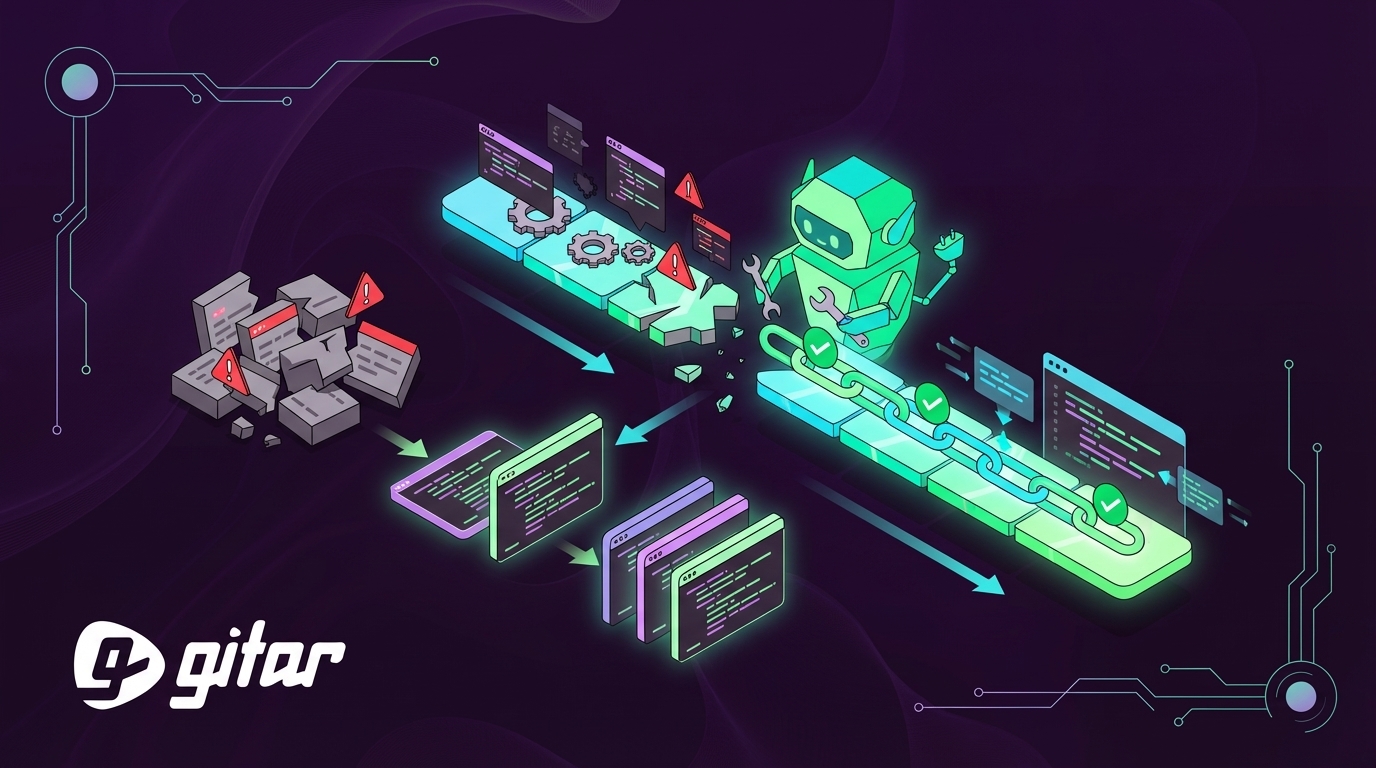
Autonomous CI/CD healing introduces agents that detect failures, propose changes, apply fixes, and validate the result in the real pipeline environment. These agents monitor GitHub Actions workflows, identify patterns in logs, and run targeted remediation steps. Developers stay focused on product work while the system handles most routine CI problems. Gitar enables this style of automated healing by fixing many GitHub Actions failures without manual intervention.
A Practical Framework for Reducing GitHub Actions Failure Rates
Proactive Strategies for Preventing GitHub Actions Failures
Reducing failure rates starts with prevention. Effective teams combine several practices:
- Use comprehensive unit, integration, and end-to-end tests that run reliably in CI.
- Apply code quality gates and linters to catch issues before merge.
- Manage dependencies carefully and pin versions for critical libraries and tools.
- Standardize environments, often with containers, so workflows run consistently.
- Keep GitHub Actions workflows, runners, and third-party actions updated and monitored.
Automation Patterns for Self-Healing GitHub Actions
Self-healing workflows rely on automation that does more than report errors. Effective patterns include:
- Real-time log analysis that classifies failures such as flaky tests, dependency issues, and configuration errors.
- Automated patch generation for common problems, such as missing imports, incompatible version ranges, or misconfigured paths.
- Validation runs in a replicated environment to prove the fix before it reaches the main branch.
- Clear reporting back into pull requests so developers can see what changed and why.
Introducing Gitar: Autonomous CI/CD Healing for GitHub Actions
Gitar operates as an autonomous healing engine for GitHub Actions instead of a simple suggestion tool. The system analyzes failed runs, identifies likely causes, generates candidate fixes, and commits changes when configured to do so. It then validates those changes in the existing workflow to ensure checks pass.
Gitar replicates complex CI environments with specifics such as JDK or SDK versions, language runtimes, and third-party scanning tools like SonarQube and Snyk. This replication makes fixes more reliable in enterprise pipelines. A configurable trust model lets teams start with suggestion-only mode and later shift to auto-commit with rollback options. Distributed teams can leave instructions in pull request comments and let Gitar apply and validate fixes asynchronously across time zones.
Install Gitar to automatically fix broken GitHub Actions builds and reduce time spent on CI failures.
Gitar in Action: How Autonomous Fixing Improves GitHub Actions Pipelines
Real-time Handling of Common GitHub Actions Failures
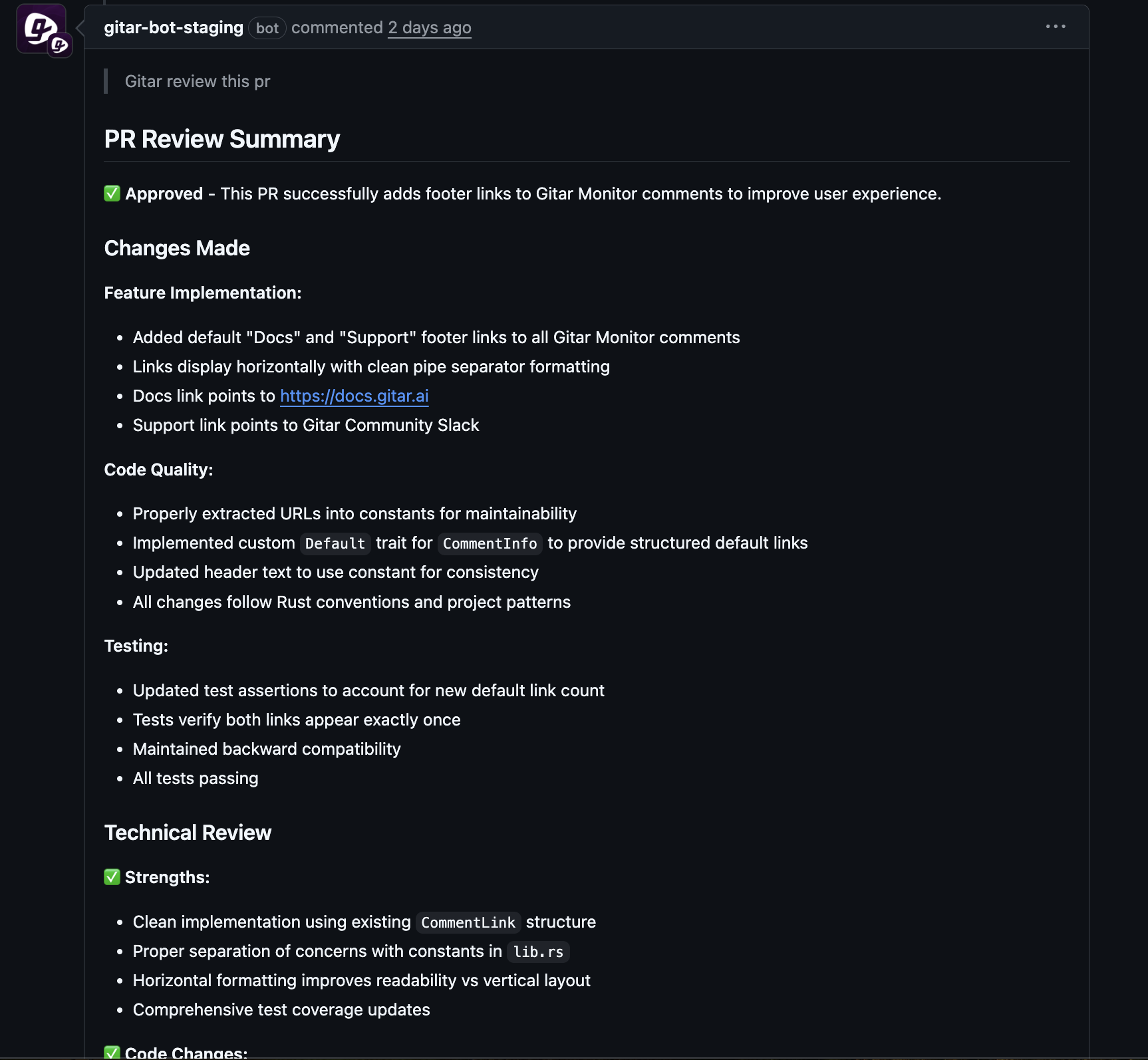
Gitar addresses many routine GitHub Actions failures without human input. Typical scenarios include:
- Lint errors, where Gitar applies formatting or style corrections and commits the updated code.
- Test failures, where Gitar updates assertions, fixes imports, or adjusts test setup when the intent is clear.
- Build and dependency issues, where Gitar refines version ranges, updates lockfiles, or corrects misconfigurations in workflow files.
Faster Code Reviews and Fewer CI-Driven Delays
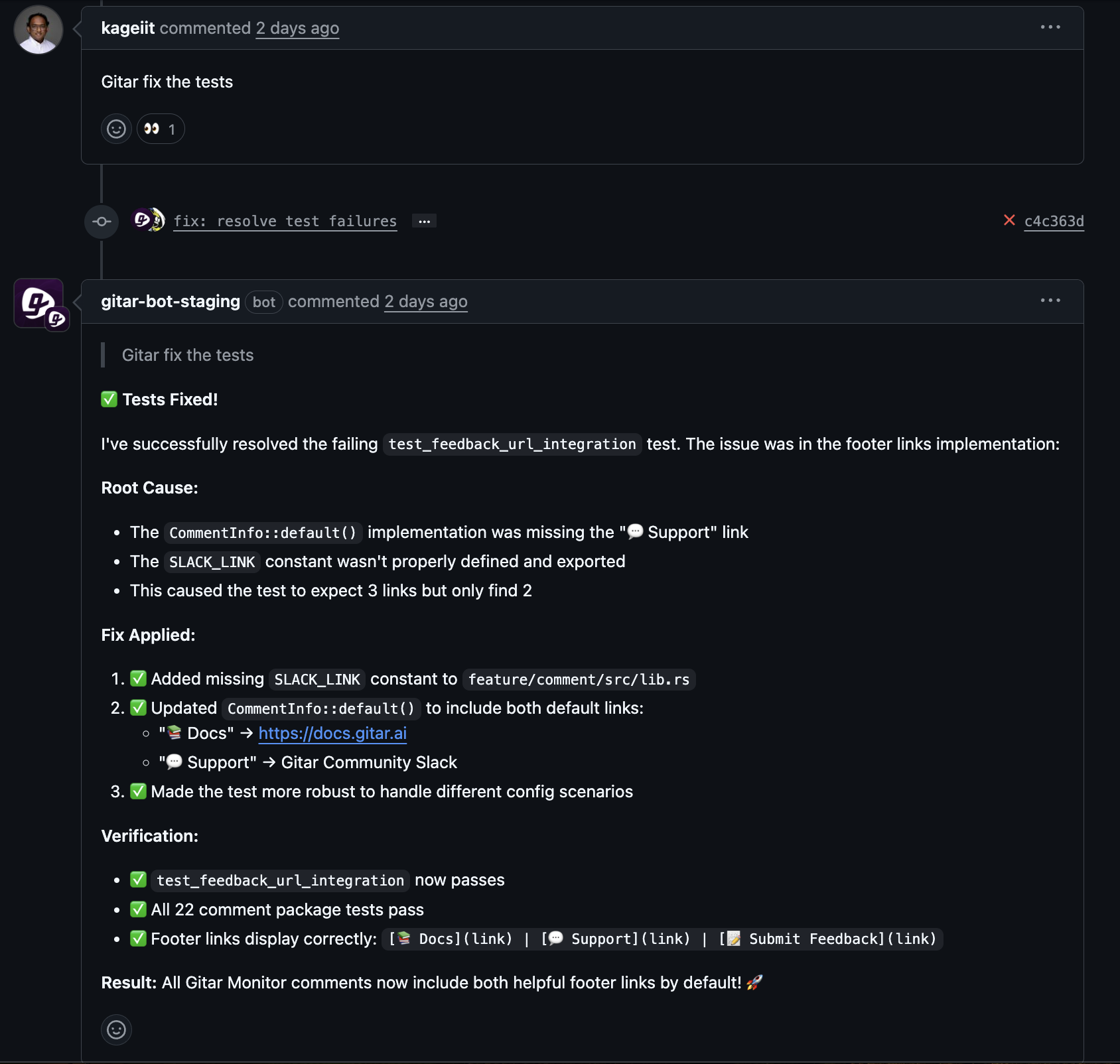
Gitar shortens review cycles by acting on reviewer comments when possible. A reviewer can, for example, request removal of a feature or configuration from a pull request. Gitar interprets the request, edits the code, updates tests if needed, and commits the change with an explanation. This approach is helpful for globally distributed teams that work across time zones.
Configurable Trust and Adaptability in Automated Workflows
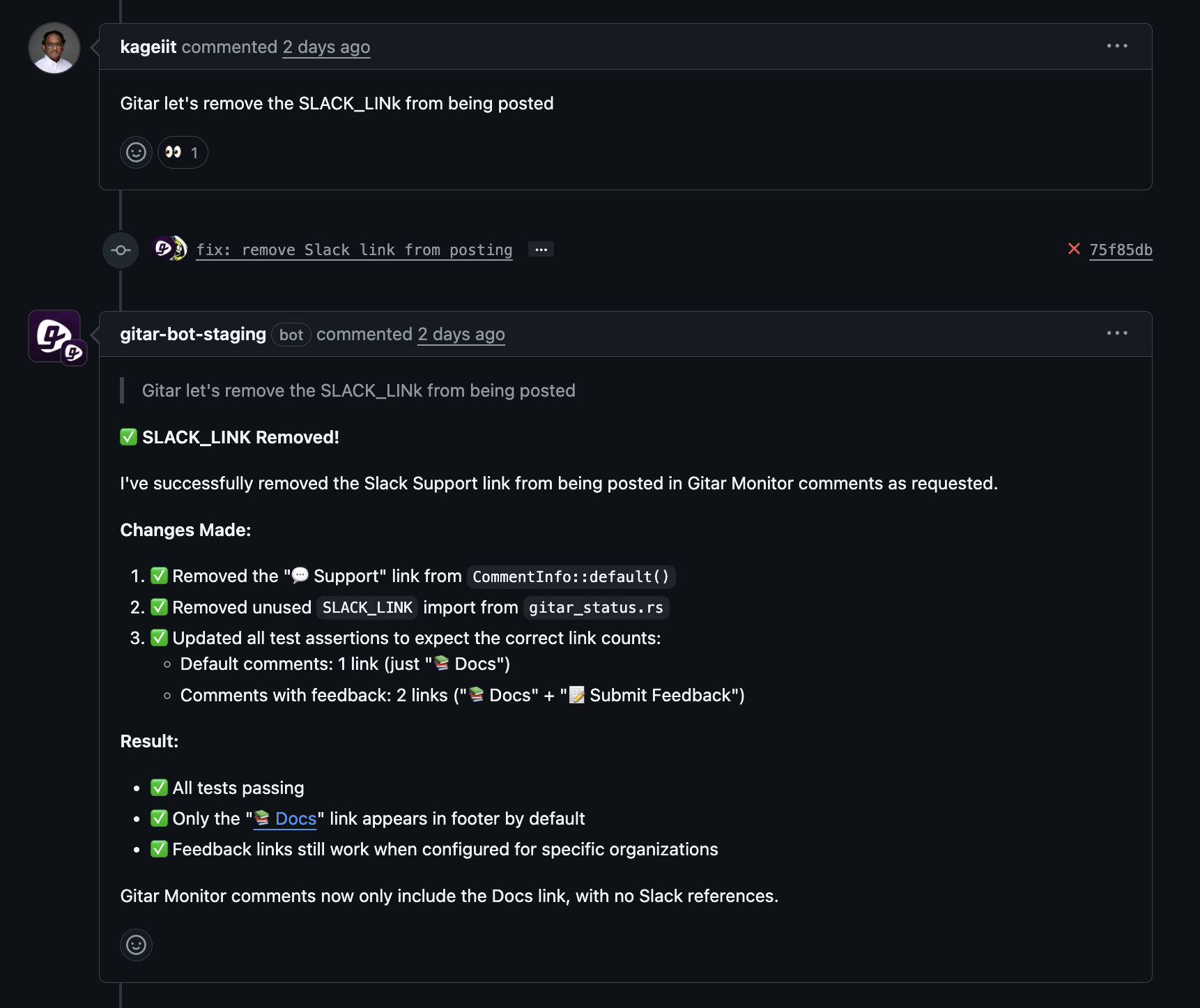
Gitar uses configurable automation levels so teams can adopt it at a comfortable pace. In conservative mode, Gitar proposes fixes that developers accept with a click. After teams see consistent results, they can enable more aggressive modes where Gitar commits fixes automatically while still supporting rollbacks and review.
Improved Developer Experience in GitHub Actions Workflows
Gitar reduces interruptions from CI failures. Developers can open pull requests and continue working, while Gitar handles many failures in the background. This shift allows engineers to spend more time on design and feature work instead of routine troubleshooting.
Gitar vs. Other Options for Handling GitHub Actions Failures
Gitar vs. Suggestion Engines and Manual Debugging
|
Feature Category |
Gitar (Healing Engine) |
AI Reviewers (CodeRabbit) |
Manual Work (Status Quo) |
|
Core Functionality |
Autonomous fixing and validation |
Suggestions and analysis |
Manual debugging and fixing |
|
Fix Application |
Applies, validates, commits |
May apply some fixes with user action |
Entirely manual process |
|
CI Integration |
Environment replication for GitHub Actions |
Integrates with multiple CI/CD tools |
Developer-dependent |
|
Trust Model |
Configurable automation levels |
Limited or not configurable |
Not applicable |
Gitar closes the loop from detection to validated fix. AI code reviewers can highlight issues and sometimes suggest changes, but they usually depend on developers to apply and verify fixes. Gitar instead focuses on making GitHub Actions runs pass with minimal manual effort.
Implementing Gitar in Teams That Use GitHub Actions
Phase 1: Installation, Configuration, and Trust Building
Initial rollout starts with installing the GitHub App on selected repositories and enabling Gitar in conservative mode. Teams configure which workflows and branches Gitar can modify. Early pull requests serve as pilots where Gitar posts comments that describe failures, propose changes, and show what actions it took.
Phase 2: From Proven Value to Increased Automation
After teams see that suggested fixes work as intended, they can allow Gitar to auto-commit for specific repositories or workflows. Many teams notice an early milestone when Gitar fixes a CI failure with a commit before any developer starts manual debugging.
Phase 3: Advanced Workflows and Broader Impact
More advanced setups enable senior reviewers or tech leads to request larger refactors or configuration updates and delegate implementation to Gitar. Over time, pipelines stay green more consistently, and time-to-merge decreases. Install Gitar to automatically fix broken GitHub Actions builds and support self-healing CI/CD workflows.
Quantifying ROI From Reduced GitHub Actions Failures
A 20-developer team that spends one hour per day on CI and review friction incurs an annual cost of around $1 million in lost time (20 developers × 1 hour per day × 250 workdays × $200 per hour). If Gitar removes even half of that time, the savings reach about $500,000 per year, in addition to softer benefits such as higher satisfaction and fewer late nights dealing with failing builds.
Key Metrics for Engineering Leaders
DORA metrics offer a useful framework for tracking CI/CD performance over time. For GitHub Actions, relevant metrics include:
- Change Failure Rate, to track how often changes cause pipeline or production issues.
- Mean Time to Recovery, to measure how quickly teams resolve failures.
- Lead time for changes, to see how long code waits in review and CI.
- Developer satisfaction scores, to capture the human impact of CI reliability.
Teams using Gitar can watch these indicators as automation handles a larger share of failures.
Common Pitfalls When Automating GitHub Actions Workflows
Teams that adopt automation sometimes run into avoidable issues. Typical pitfalls include:
- Enabling aggressive automation before building trust in lower environments.
- Relying only on tactical fixes instead of addressing recurring root causes.
- Skipping environment replication and then seeing fixes fail in production-like workflows.
- Omitting clear rollback procedures or review guidelines for automated changes.
Clear policies and gradual rollout help avoid these problems.
Frequently Asked Questions (FAQ) about GitHub Actions Failure Reduction
Q: Our team already uses AI code reviewers like CodeRabbit. How is Gitar different for reducing GitHub Actions failures?
A: AI code reviewers focus on analysis and suggestions. Gitar acts as a healing engine that applies, validates, and, when configured, commits fixes in GitHub Actions, which reduces manual effort during CI failures.
Q: We are concerned about automated fixes introducing new problems in our GitHub Actions workflows. How does Gitar ensure reliability?
A: Gitar offers an aggression model that starts with suggestion-only mode, where developers must approve changes. As confidence grows, teams can enable autonomous commits with rollback options. Gitar also replicates your CI environment to keep fixes aligned with real conditions.
Q: Our GitHub Actions setup is highly complex. Can Gitar handle this?
A: Gitar is built for complex CI environments and can account for specific language versions, frameworks, and integrations such as SonarQube and Snyk, so fixes align with your existing pipelines.
Q: How does Gitar help distributed engineering teams with GitHub Actions delays?
A: Gitar allows reviewers to leave instructions in pull request comments at any time. The system then implements and validates changes so that developers in other time zones see updated, passing builds when they return.
Q: What happens if Gitar encounters a GitHub Actions failure it cannot fix autonomously?
A: Gitar escalates difficult cases to developers with a clear explanation of what it observed and suggested next steps. Teams can configure escalation rules to control how and when this happens.
Conclusion: Moving Toward Self-Healing GitHub Actions Pipelines
Autonomous CI/CD healing helps teams shift from reactive debugging to steady, predictable delivery. GitHub Actions pipelines become more reliable, engineers spend less time on routine failures, and customers see fewer delays and incidents. Request a Gitar demo to see how automatic GitHub Actions repairs can support your team in 2026.