
Key Takeaways
- CI pipeline inefficiencies consume significant developer time and budget, which turns delivery pipelines into strategic liabilities instead of advantages.
- AI-assisted coding tools increase code volume, so validation, testing, and CI reliability now create a major bottleneck for fast delivery.
- Autonomous CI agents reduce context switching by diagnosing failures, applying fixes, and validating builds without requiring constant developer intervention.
- Engineering leaders can phase in autonomous CI through configurable trust models, clear governance, and measurable ROI metrics tied to developer productivity.
- Gitar provides autonomous CI healing that fixes failures, implements review feedback, and keeps pipelines green, and you can start today by installing Gitar for your team.
Why CI Pipeline Optimization Demands Executive Attention
CI pipeline performance now has direct impact on product delivery speed, engineering morale, and financial outcomes. Traditional manual CI management struggles to keep up with modern release velocity and AI-accelerated coding.
The High Cost of Inefficient CI/CD Pipelines
Developers can spend up to 30% of their time dealing with CI and code review issues, which can cost a 20-developer team around $1 million per year in lost productivity once context switching and delays are included.
These costs show up as missed deadlines, rushed hotfixes, higher security risk, and wasted infrastructure spend from repeated failed builds. Over time, CI that should protect quality instead slows down releases and weakens competitive positioning.
Emerging Bottlenecks from AI-Accelerated Code Generation
AI coding tools such as GitHub Copilot and Cursor shift the constraint from writing code to validating and merging it. Teams now face more pull requests, more test runs, and more opportunities for CI failures.
Many organizations still rely on manual triage, log digging, and re-runs. As code volume grows, this approach forces engineers to spend more time cleaning up after automated tools and less time on design, architecture, and customer impact.
From Manual to Autonomous: The Evolution of CI/CD Solutions
CI pipelines have moved from purely manual workflows to scripts, to basic automation, and now to autonomous agents that can understand context and act on their own. This evolution changes what engineering leaders can reasonably expect from their CI stack.
Common CI/CD Bottlenecks in Modern Teams
Even mature teams run into recurring CI problems that drain time and focus:
- Slow builds and long-running tests that delay feedback.
- Environment inconsistencies between development, staging, and production that create flaky tests and failed deployments.
- Compounding delays that push out release timelines and increase coordination costs.
- Cultural resistance, skill gaps, and security concerns that slow adoption of better practices.
- Tool sprawl that makes pipelines complex to manage and hard to troubleshoot.
Manual approaches cannot reliably keep these factors under control at the pace modern delivery requires.
Autonomous AI Agents as the Next Step in CI
Autonomous CI agents move beyond alerts. These systems inspect logs, infer root causes, propose code changes, run tests, and iterate on fixes until the pipeline passes, often without human involvement.
Developers stay focused on their current work instead of interrupting it to diagnose pipelines. This reduction in context switching protects deep work, shortens feedback loops, and increases throughput across the entire engineering organization.
Introducing Gitar for Autonomous CI Healing
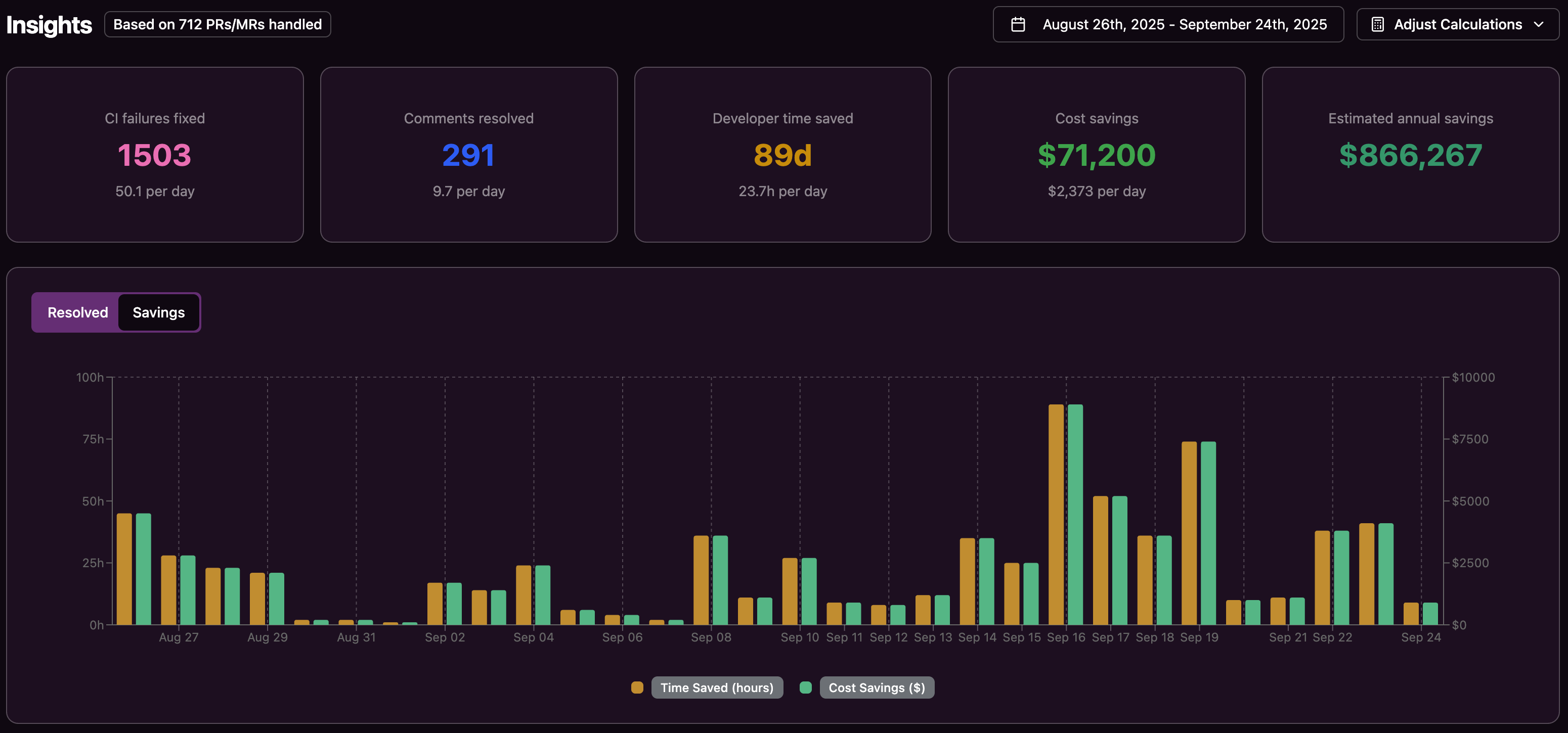
Gitar focuses on fixing CI failures and implementing review feedback rather than only surfacing issues. The platform acts as an autonomous agent that keeps builds green while fitting into existing workflows.
Key Capabilities of Gitar for Self-Healing CI
- End-to-end autonomous fixing. Gitar applies code changes, runs the full CI workflow, iterates on failures, and pushes successful results. Developers avoid repetitive debugging and re-runs.
- Full environment replication. The agent emulates specific JDK versions, multi-SDK dependencies, and tools such as SonarQube and Snyk, so fixes match production conditions instead of a generic sandbox.
- Configurable trust model. Teams can start with a conservative mode where Gitar suggests changes for review, then move to auto-commits once results prove reliable. Clear rollback options support safe experimentation.
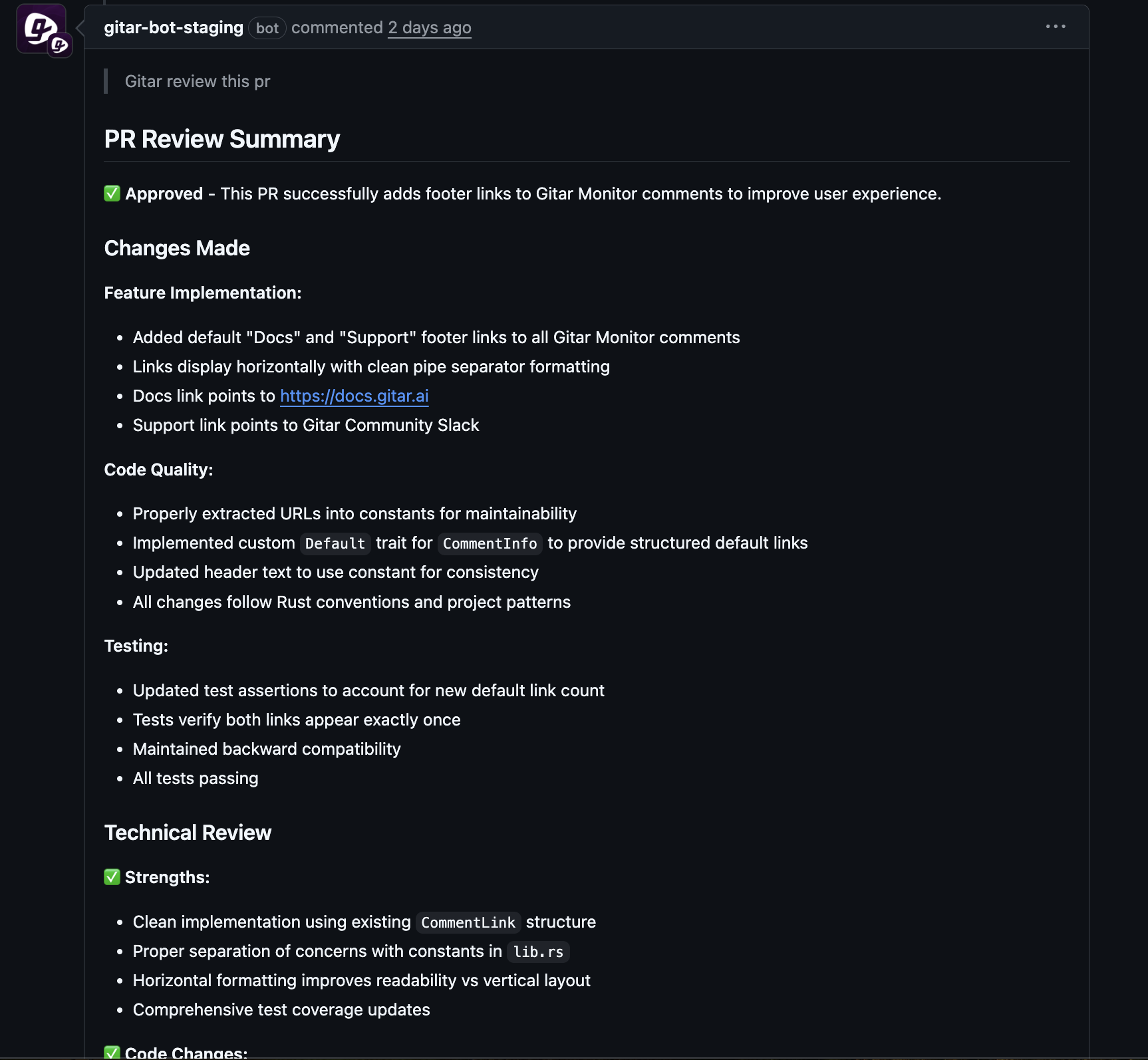
- Automated implementation of review feedback. Reviewers can leave comments that direct Gitar to make changes, and the agent updates the code and CI status without waiting for time zone alignment or manual edits.
Getting Started with Self-Healing CI
Teams can introduce Gitar on a subset of services or repositories, use conservative mode for initial deployments, and expand autonomy once the benefits are clear. This approach reduces risk while demonstrating value early.
Install Gitar to start converting CI interruptions into background automation.
Strategic Considerations for Autonomous CI Adoption
Successful adoption of autonomous CI depends on more than technical integration. Leaders need a clear business case, trust-building plan, and governance model.
Quantifying ROI Beyond Pipeline Speed
A 20-developer team that spends about one hour per day on CI and code review issues can lose roughly $1 million per year in productivity. Capturing even a portion of that time with autonomous remediation can create a strong financial case.
Key ROI drivers include:
- Reduced context switching and rework for developers.
- Faster time-to-merge and time-to-production.
- Lower infrastructure waste from repeated failed builds.
- Higher developer satisfaction and lower turnover risk.
Building Trust and Organizational Readiness
Adoption works best when teams understand how the agent makes decisions and where control remains with humans. A phased trust model, ongoing training, and transparent change logs help engineers feel confident in autonomous fixes.
Addressing cultural resistance and skill gaps early in the rollout increases the odds of long-term success.
Gitar vs. The Status Quo: Why Traditional Tools Fall Short
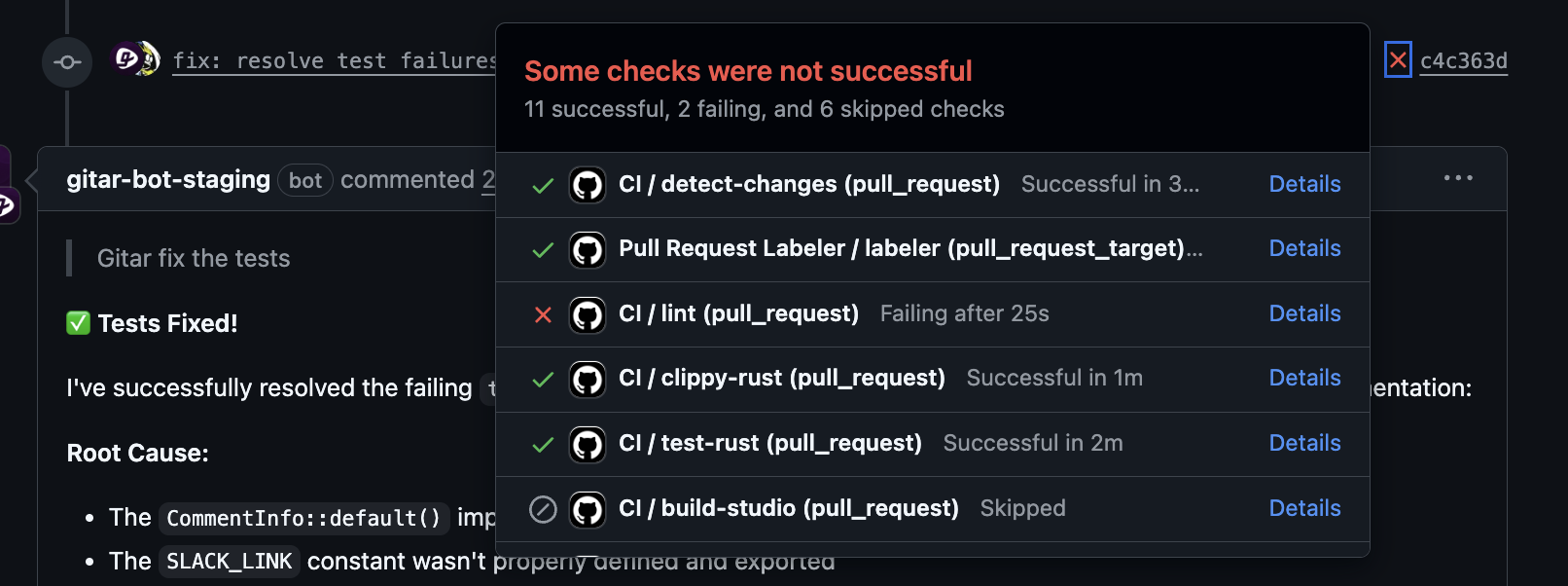
Many tools can flag issues, comment on pull requests, or suggest changes. Few take responsibility for driving the pipeline back to green without manual effort.
Manual, Suggestion, and Healing Engines for CI Optimization
|
Feature |
Manual Intervention |
AI Code Reviewers |
Gitar (Autonomous AI Agent) |
|
Fixes CI failures |
Manual debugging |
No |
Autonomous |
|
Implements review feedback |
Manual effort |
No |
Autonomous |
|
Keeps builds green |
Manual retries required |
No |
Yes |
|
Reduces context switching |
No |
No |
Yes |
This comparison shows how Gitar closes the loop between identifying problems and resolving them. Teams gain back time that would otherwise be spent on repetitive CI maintenance.
Install Gitar to experience autonomous CI healing in your existing workflows.
Conclusion: Self-Healing CI as the Next Step for Engineering Teams
Engineering organizations that rely only on manual CI management face increasing pressure as code volume, complexity, and release expectations grow. Autonomous CI agents offer a practical way to maintain quality while increasing delivery speed.
Gitar provides a self-healing CI experience that targets developer productivity, operational cost, and release reliability. Teams that adopt autonomous CI now can turn their pipelines into stable, efficient assets instead of recurring sources of friction.
Install Gitar to give your team an autonomous partner that keeps CI running smoothly.
Frequently Asked Questions on Autonomous CI Pipeline Optimization
Autonomous CI in Complex Enterprise Environments
Gitar uses an agent architecture that replicates the full CI environment, including language runtimes, SDK combinations, and tools such as SonarQube and Snyk. The agent maintains state across concurrent operations and wave-based executions, so fixes account for how enterprise pipelines actually run.
Typical ROI for an Autonomous CI Solution
Teams that currently lose around an hour per developer per day to CI and review issues can recover a meaningful share of that time. Even at partial effectiveness, Gitar can represent hundreds of thousands of dollars in annual value through reduced manual debugging, fewer delays, and faster merges.
How Gitar Differs from AI Code Reviewers
AI reviewers focus on analysis and suggestions. Gitar focuses on action. The agent applies fixes, validates them against the full CI workflow, and repeats until the pipeline passes or a clear stopping point appears. Developers can then review a clean, passing pipeline instead of wrestling with broken builds.
How Gitar Builds Trust Within Engineering Teams
Gitar offers conservative and aggressive modes. Teams can begin with suggestion-only behavior, where every change is visible and requires approval. Once results prove reliable, teams can enable auto-commits with full visibility and rollback options to match their risk tolerance.
Safeguards When a Fix Is Incorrect
Gitar validates changes against the complete CI pipeline before finalizing them. If a fix introduces new issues, the agent can roll back, adjust, or surface the problem with detailed logs. This feedback loop helps teams maintain control while benefiting from autonomous remediation.